
















GET HCM
magazine
Sign up for the FREE digital edition of HCM magazine and also get the HCM ezine and breaking news email alerts.
Not right now, thanksclose this window I've already subscribed!
Les Mills
Les Mills
Les Mills
Follow Health Club Management on Twitter Like Health Club Management on Facebook Join the discussion with Health Club Management on LinkedIn
FITNESS, HEALTH, WELLNESS

features

Retention: Does it matter what I say?

Dr Melvyn Hillsdon investigates the effectiveness of different types of interaction on member retention

By Dr Melvyn Hillsdon , University of Exeter | Published in Health Club Management 2016 issue 7
A positive interaction between a client and a member of staff has been shown to aid retention / PHOTO: SHUTTERSTOCK.COM
If all high-risk member visits received an effective interaction, 73 per cent of cancellations would be avoided

If fitness staff interact with members, they retain their membership longer than members who receive little or no interaction. This is something we’ve shown many times. But when presenting these results, we’re frequently asked: “Does it matter what I say?”

Here we examine different interactions, and whether or not they’re associated with differences in retention rates for members considered at high risk of cancelling. (See ‘Interaction categories A–E’, below, for the five types of interaction.)

Boosting attendance…
In the study, members made an average of 3.3 visits to their club each month. On average, one of these visits each month was classed as high risk. Only 15 per cent of members made no high-risk visits during the life of their membership.

Forty-eight per cent of high-risk visits involved no interaction. In the 52 per cent that did receive an interaction:

• 14 per cent were ineffective (type A)

• 43 per cent were effective non-commitment interactions (type B)

• 9 per cent were ineffective commitment interactions (type C)

• 17 per cent were seven-day effective commitment interactions (type D)

• 17 per cent were effective commitment interactions on the nominated day (type E)

Overall, 77 per cent of interactions led to a repeat visit either within seven days of the interaction, or else on the commitment date; effective interactions with high-risk members increase visit frequency – and this, we know from prior research, increases retention.

...And Driving Retention
So to what extent does it boost retention? Members who make a high-risk visit in any given month have approximately a 5 per cent chance of cancelling in the subsequent month. However, the type of interaction they receive at the club can positively impact this – and if the interaction leads to a subsequent visit in the next seven days, or on the date the member has committed to attending, the reduction in risk is significant.

Compared to members who receive no interaction at all:

• Those receiving a type A interaction have a 16 per cent lower risk of cancelling in the next month

• Those receiving a type B interaction have an 86 per cent lower risk

• Type C interactions make no difference – positive or negative – compared to no interaction at all

• Those receiving a type D interaction have a 19 per cent lower risk of cancelling in the next month

• And those receiving a type E interaction have a 55 per cent lower risk

If all high-risk member visits were to receive an effective interaction, 73 per cent of all cancellations in this group of members would be avoided.

The price of silence
Let’s estimate the lifetime income based on a sample of 1,000 members.

In Table 1, the number of members in each interaction group is based on the actual distribution in the full sample of 13,722 members. In Table 2, we’ve reduced the number of members who receive no interaction and increased the number who receive effective interactions.

The income is estimated by multiplying the number of members in each group by the length of membership (based on the retention rate for each group) and then by a monthly fee of £35.

For every 1,000 high-risk members, the revenue from membership dues would increase by approximately £112,595 – 36 per cent – if interaction levels were improved as indicated in these tables.

A change of role?
For every 12 effective interactions that fitness staff deliver during high-risk visits, one membership cancellation is prevented. It could therefore be argued that the primary role of fitness staff should be to sell repeat visits.

So what does it take to switch the focus of your staff in this way?
Fitness staff could be more successful at getting health club members to return within a week of speaking to them if they adopted motivational strategies that are integral to the technique of motivational interviewing (MI).

MI practitioners aim to elicit a client’s own reasons for change, known as ‘change talk’. This is because the more clients make their own case for change, the more likely they are to actually change. The reverse is also true: the more people feel they’re being coerced into a change of behaviour, the less likely they are to do it.

Similarly, if fitness staff were to become more skilled at eliciting members’ own reasons for making a repeat visit, the odds of it actually happening would be expected to increase – this compared to fitness staff advocacy for a repeat visit, which typically results in counter-argument from the member and a lack of change. The risk with the latter is that members agree to a repeat visit date simply to appease the staff, but without a genuine commitment to attend again.

This doesn’t need to be a complicated conversation; it could be as simple as asking the member to list some of the changes they’ve noticed since coming to the gym, which encourages them to recognise the benefits for themselves and be more open to a repeat visit. See Figure 1 (below).

Step forward technology?
An inevitable question in this digital age is whether these interactions could actually be automated – delivered by an app or wearable device. At this stage I would suggest not: research into the effectiveness of behaviour change interventions has consistently highlighted the positive effect of practitioner empathy, independent of other aspects of the intervention.
Digital interactions can be tailored, but cannot currently convey empathy or be as personalised as human interactions. In addition, although wearables incorporate behaviour change techniques including self-monitoring and feedback on performance, the focus is on providing external motivation.

Certainly, despite their ubiquity, there’s an absence of research into the impact that wearables may have on changes in physical activity, although some trials are currently underway.

It’s possible that the best solution is a combination of interpersonal and digital communication, although at present the best evidence is for the effect of interpersonal interactions on both changes in behaviour and membership retention.

However, improving both the quantity and the quality of fitness staff interactions with members won’t just happen by chance. Staff will need specific training, and clubs will need to invest in software solutions to assist fitness staff in identifying high-risk members, monitoring interaction levels and tracking progress.

Action points
• Identify at-risk members when they make a visit to your health club, and target them for interaction – the goal being to get them to commit to a subsequent visit within a week.

• Train health club staff in different types of member interactions, as well as different methods of motivating high-risk members to make a repeat visit.

• Monitor the types of interactions that health club staff have with high-risk members and the proportion of these interactions that lead to a repeat visit.

Interaction categories A–E

Fitness staff at clubs participating in the research regularly reviewed the ‘who’s in the club’ page of the software being used for the study. This displayed members’ photographs, risk of drop-out and any recent interaction history with staff at the facility. Armed with this information, staff could locate members at high risk of cancellation, have a conversation with them and then quickly and simply record the main points of each conversation on the software. 

Each high-risk club visit was classified as either receiving no interaction, or else one of the following five interaction types:

A. Ineffective interactions: An interaction that didn’t ask a member to commit to a repeat visit, and that didn’t lead to a repeat visit in the next seven days.

B. Effective interaction: An interaction that did lead to a repeat visit in the next seven days, even without asking the member to commit to one.

C. Commitment interaction: An interaction during which the member committed to attend again on a fixed date, but didn’t subsequently attend on that date or within seven days of the interaction.

D. Effective commitment interaction: An interaction during which the member committed to attend again on a fixed date – and although they didn’t actually attend on that date, they did attend within seven days of the interaction.

E. Successful commitment interaction: An interaction during which the member committed to attend again on a fixed date and did attend on that date.

Data for analysis included 13,722 members with joining dates between June 2010 and January 2012. Members were followed up to track cancellations between one and 14 months.

TABLE 1:

INCOME BASED ON CURRENT LEVELS OF INTERACTION

Calculations based on membership fees of £35 a month
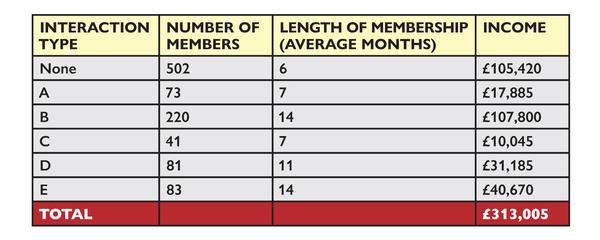
Table 1
Table 1

TABLE 2:

INCOME BASED ON IMPROVED LEVELS OF INTERACTION

Calculations based on membership fees of £35 a month
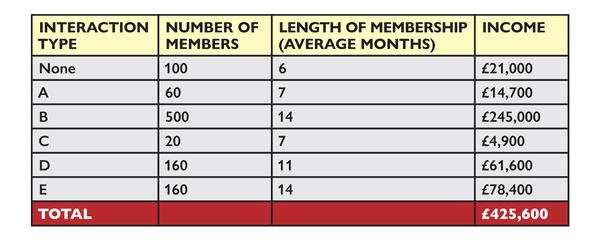
Table 2
Table 2

Figure 1:

Commitment interactions don't need to be complicated
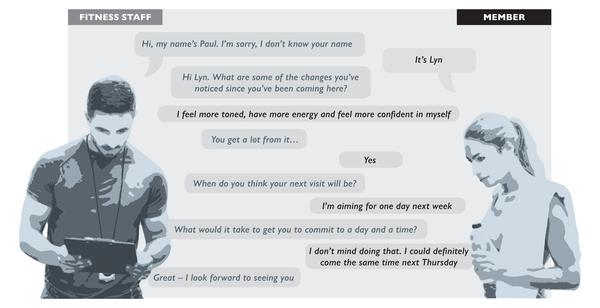
Figure 1
Figure 1

About the author

Dr Melvyn Hillsdon
Dr Melvyn Hillsdon

Dr Melvyn Hillsdon is associate professor of exercise and health at the University of Exeter, where he researches physical activity and population health. Since his landmark retention report in 2001 (Winning the Retention Battle), he has published numerous reports into the determinants of membership retention.

Sign up here to get HCM's weekly ezine and every issue of HCM magazine free on digital.
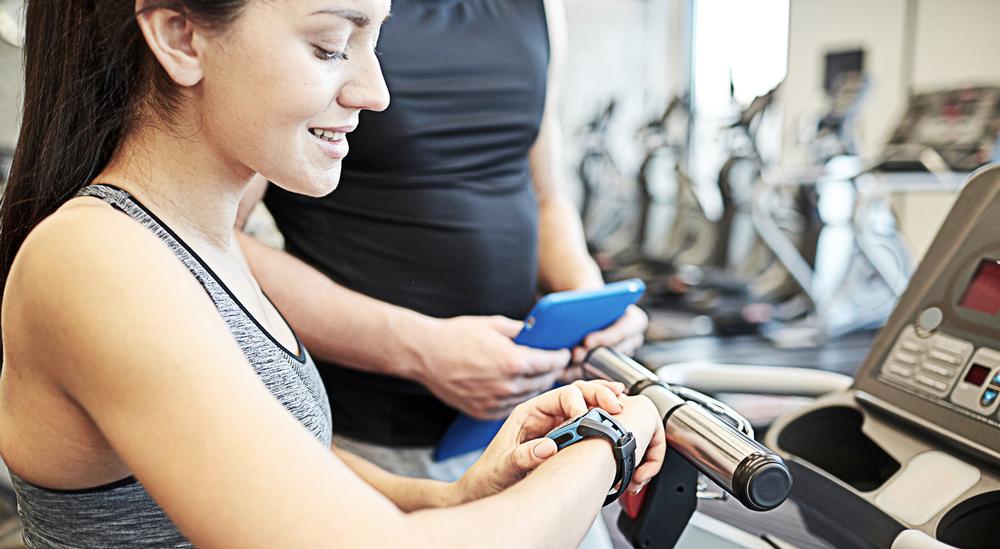
There’s currently an absence of research into the impact of wearables on behaviour change / PHOTO: SHUTTERSTOCK.COM
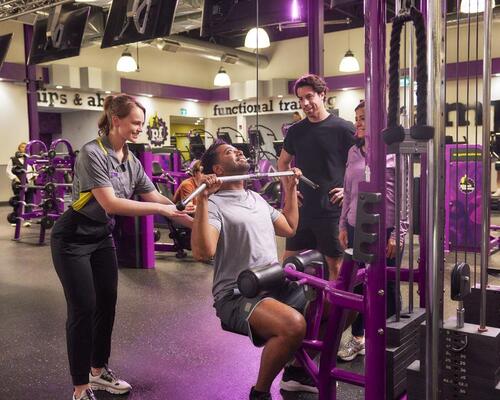
Train staff in motivating high-risk members to make a repeat visit / PHOTO: SHUTTERSTOCK.COM
https://www.leisureopportunities.co.uk/images/614413_797312.jpg
Does it matter what I say? Yes! Choose your words wisely to retain your gym members
Dr Melvyn Hillsdon, Associate professor of exercise and health at the University of Exeter,Retention, Melvyn Hillsdon, TRP10,000, interaction
HCM magazine
Small improvements to sleep, diet and physical activity have major benefits for the heart, according to new research from the University of Sydney
HCM magazine
For every member with a tripod and a big following, there are others irritated at the way equipment is being hogged or wary they’ll be in the background on someone’s Insta feed. Do influencers offer valuable, free marketing or are they just a nuisance? Kath Hudson finds out how operators are responding
HCM magazine
As the entrepreneur who started Wexer, Fresh Fitness, Fitness DK and Repeat, as well as being a former elite athlete, Rasmus Ingerslev’s life looked perfect from the outside, but onthe inside it was a different story. He talks to Kath Hudson about healing old wounds
HCM magazine
Raphael Cuomo explores the powerful link between addiction, health and behaviour change
HCM magazine
HCM People

Stephen Price

Founder, SP&Co Group
Working in public health over the last few years has lit up parts of my brain again
HCM promotional features
Sponsored
Third Space partnered with IndigoFitness to deliver a bespoke training space for its new club at The Whiteley
HCM promotional features
Sponsored
SnowDome Fitness has added 50 per cent more space with cutting-edge Technogym solutions
HCM promotional features
Sponsored
David Lloyd is stepping up its commitment to women’s health as it continues to explore what fit-for-purpose looks like for the female population
HCM promotional features
Sponsored
Starpool supports Olympic champion Marcell Jacobs, says Riccardo Turri
HCM promotional features
Sponsored
Greg Bradley looks at the shift towards strength training in gyms and advises on how operators can create the ultimate training environment
HCM promotional features
Sponsored
Find out how your gym can tap into the corporate wellness boom
HCM promotional features
Sponsored
EGYM has opened a new HQ in Paternoster Square, London and revealed a range of new launches
HCM promotional features
Sponsored
Pulse Fitness has created a new health club delivering an elevated wellness experience
HCM promotional features
Sponsored
Active IQ is calling for greater accountability in online fitness advice with the launch of a new trustmark
HCM promotional features
Latest News
Peloton has made the strategic acquisition of Pilates start-up, Skōp, to support the expansion of ...
Latest News
Crunch Fitness has announced the launch of Crunch Reform Pilates – its own reformer concept ...
Latest News
The 20th State of the Industry Report from LeisureDB has revealed a resilient, expanding and ...
Latest News
Purpose Brands has announced its entry into the Italian market, having sold the franchise rights ...
Latest News
Fitness First UK is integrating red light therapy into its yoga and Pilates classes through ...
Latest News
Nuffield Health has told HCM that it takes its responsibilities towards its colleagues seriously and ...
Latest News
Technogym has announced the launch of the Run X World Treadmill Championship, the first world ...
Latest News
Shocked by the UK loneliness statistics, charitable trust Mytime Active has been doubling down on ...
Opinion
promotion
Strength training has moved from the margins to the mainstream.
Opinion: Building smarter strength spaces for today’s operators
Featured supplier news
Featured supplier news: Elevate 2026 to mark 10-year anniversary with biggest ever waterfront drinks reception
Elevate is set to celebrate its 10th anniversary in style this June, with organisers confirming the event’s largest-ever drinks reception as registrations continue to run more than 10% ahead of last year.
Featured supplier news
Featured supplier news: CoverMe extends matching service to personal training, rewriting how members and personal trainers connect
CoverMe, the global leader in fitness workforce management, today launches CoverMe PT, an on-demand personal training platform that connects the right personal trainer to the right client in under 10 seconds.
Company profiles
Company profile: Innerva
Innerva are a UK manufacturer of ‘Power Assisted Exercise’ equipment for older adults, those with ...
Company profiles
Company profile: Life Fitness/Hammer Strength
Life Fitness, Hammer Strength, and ICG are global leaders in premium fitness solutions, trusted by ...
Supplier Showcases
Supplier Showcase - Future-proofing
Catalogue Gallery
Click on a catalogue to view it online
Featured press releases
GLL press release: GLL joins National Year of Reading as research reveals books beat social media for post-exercise recovery
GLL, the charitable social enterprise operating Libraries and Leisure Centres across the UK, has today (9 June 2026) announced that it will be supporting the National Year of Reading as a major campaign partner alongside national organisations, including BBC Sport, Audible, DC Thomson and Tesco.
Featured press releases
BLK BOX press release: Inside the build: Ironbound. Turning an empty underground space into a thriving functional fitness facility
When brothers Patrick and Kevin first approached BLK BOX, they had a vision and an unusual space. Beneath a building in Embrach, Switzerland, sat an underground facility with huge potential. What it needed was the right layout, the right equipment, and a partner who understood functional fitness.
Directory
Water experiences and hydrotherapy solutions
Aquaform s.r.l.: Water experiences and hydrotherapy solutions
Lockers
Crown Sports Lockers: Lockers
Hot tubs
MSpa International Ltd: Hot tubs
Fitness tracking platform
SpiviTech: Fitness tracking platform
Spa and beauty equipment
Oakworks Inc: Spa and beauty equipment
Industrial washing machines
Miele Company Limited: Industrial washing machines
Property & Tenders
Stratford, East London.
Lee Valley Regional Park Authority
Property & Tenders
Y Felinheli, LL56 4QN
Newmark
Property & Tenders
Diary dates
13-13 Jun 2026
Worldwide, Various,
Diary dates
21-24 Sep 2026
The Langham Huntington Pasadena , Pasadena, United States
Diary dates
06-08 Oct 2026
Messe Stuttgart, Stuttgart, Germany
Diary dates
22-22 Oct 2026
QEII Conference Centre, London,
Diary dates
26-29 Oct 2027
Koelnmesse Exhibition Centre, Cologne, Germany
Diary dates

features

Retention: Does it matter what I say?

Dr Melvyn Hillsdon investigates the effectiveness of different types of interaction on member retention

By Dr Melvyn Hillsdon , University of Exeter | Published in Health Club Management 2016 issue 7
A positive interaction between a client and a member of staff has been shown to aid retention / PHOTO: SHUTTERSTOCK.COM
If all high-risk member visits received an effective interaction, 73 per cent of cancellations would be avoided

If fitness staff interact with members, they retain their membership longer than members who receive little or no interaction. This is something we’ve shown many times. But when presenting these results, we’re frequently asked: “Does it matter what I say?”

Here we examine different interactions, and whether or not they’re associated with differences in retention rates for members considered at high risk of cancelling. (See ‘Interaction categories A–E’, below, for the five types of interaction.)

Boosting attendance…
In the study, members made an average of 3.3 visits to their club each month. On average, one of these visits each month was classed as high risk. Only 15 per cent of members made no high-risk visits during the life of their membership.

Forty-eight per cent of high-risk visits involved no interaction. In the 52 per cent that did receive an interaction:

• 14 per cent were ineffective (type A)

• 43 per cent were effective non-commitment interactions (type B)

• 9 per cent were ineffective commitment interactions (type C)

• 17 per cent were seven-day effective commitment interactions (type D)

• 17 per cent were effective commitment interactions on the nominated day (type E)

Overall, 77 per cent of interactions led to a repeat visit either within seven days of the interaction, or else on the commitment date; effective interactions with high-risk members increase visit frequency – and this, we know from prior research, increases retention.

...And Driving Retention
So to what extent does it boost retention? Members who make a high-risk visit in any given month have approximately a 5 per cent chance of cancelling in the subsequent month. However, the type of interaction they receive at the club can positively impact this – and if the interaction leads to a subsequent visit in the next seven days, or on the date the member has committed to attending, the reduction in risk is significant.

Compared to members who receive no interaction at all:

• Those receiving a type A interaction have a 16 per cent lower risk of cancelling in the next month

• Those receiving a type B interaction have an 86 per cent lower risk

• Type C interactions make no difference – positive or negative – compared to no interaction at all

• Those receiving a type D interaction have a 19 per cent lower risk of cancelling in the next month

• And those receiving a type E interaction have a 55 per cent lower risk

If all high-risk member visits were to receive an effective interaction, 73 per cent of all cancellations in this group of members would be avoided.

The price of silence
Let’s estimate the lifetime income based on a sample of 1,000 members.

In Table 1, the number of members in each interaction group is based on the actual distribution in the full sample of 13,722 members. In Table 2, we’ve reduced the number of members who receive no interaction and increased the number who receive effective interactions.

The income is estimated by multiplying the number of members in each group by the length of membership (based on the retention rate for each group) and then by a monthly fee of £35.

For every 1,000 high-risk members, the revenue from membership dues would increase by approximately £112,595 – 36 per cent – if interaction levels were improved as indicated in these tables.

A change of role?
For every 12 effective interactions that fitness staff deliver during high-risk visits, one membership cancellation is prevented. It could therefore be argued that the primary role of fitness staff should be to sell repeat visits.

So what does it take to switch the focus of your staff in this way?
Fitness staff could be more successful at getting health club members to return within a week of speaking to them if they adopted motivational strategies that are integral to the technique of motivational interviewing (MI).

MI practitioners aim to elicit a client’s own reasons for change, known as ‘change talk’. This is because the more clients make their own case for change, the more likely they are to actually change. The reverse is also true: the more people feel they’re being coerced into a change of behaviour, the less likely they are to do it.

Similarly, if fitness staff were to become more skilled at eliciting members’ own reasons for making a repeat visit, the odds of it actually happening would be expected to increase – this compared to fitness staff advocacy for a repeat visit, which typically results in counter-argument from the member and a lack of change. The risk with the latter is that members agree to a repeat visit date simply to appease the staff, but without a genuine commitment to attend again.

This doesn’t need to be a complicated conversation; it could be as simple as asking the member to list some of the changes they’ve noticed since coming to the gym, which encourages them to recognise the benefits for themselves and be more open to a repeat visit. See Figure 1 (below).

Step forward technology?
An inevitable question in this digital age is whether these interactions could actually be automated – delivered by an app or wearable device. At this stage I would suggest not: research into the effectiveness of behaviour change interventions has consistently highlighted the positive effect of practitioner empathy, independent of other aspects of the intervention.
Digital interactions can be tailored, but cannot currently convey empathy or be as personalised as human interactions. In addition, although wearables incorporate behaviour change techniques including self-monitoring and feedback on performance, the focus is on providing external motivation.

Certainly, despite their ubiquity, there’s an absence of research into the impact that wearables may have on changes in physical activity, although some trials are currently underway.

It’s possible that the best solution is a combination of interpersonal and digital communication, although at present the best evidence is for the effect of interpersonal interactions on both changes in behaviour and membership retention.

However, improving both the quantity and the quality of fitness staff interactions with members won’t just happen by chance. Staff will need specific training, and clubs will need to invest in software solutions to assist fitness staff in identifying high-risk members, monitoring interaction levels and tracking progress.

Action points
• Identify at-risk members when they make a visit to your health club, and target them for interaction – the goal being to get them to commit to a subsequent visit within a week.

• Train health club staff in different types of member interactions, as well as different methods of motivating high-risk members to make a repeat visit.

• Monitor the types of interactions that health club staff have with high-risk members and the proportion of these interactions that lead to a repeat visit.

Interaction categories A–E

Fitness staff at clubs participating in the research regularly reviewed the ‘who’s in the club’ page of the software being used for the study. This displayed members’ photographs, risk of drop-out and any recent interaction history with staff at the facility. Armed with this information, staff could locate members at high risk of cancellation, have a conversation with them and then quickly and simply record the main points of each conversation on the software. 

Each high-risk club visit was classified as either receiving no interaction, or else one of the following five interaction types:

A. Ineffective interactions: An interaction that didn’t ask a member to commit to a repeat visit, and that didn’t lead to a repeat visit in the next seven days.

B. Effective interaction: An interaction that did lead to a repeat visit in the next seven days, even without asking the member to commit to one.

C. Commitment interaction: An interaction during which the member committed to attend again on a fixed date, but didn’t subsequently attend on that date or within seven days of the interaction.

D. Effective commitment interaction: An interaction during which the member committed to attend again on a fixed date – and although they didn’t actually attend on that date, they did attend within seven days of the interaction.

E. Successful commitment interaction: An interaction during which the member committed to attend again on a fixed date and did attend on that date.

Data for analysis included 13,722 members with joining dates between June 2010 and January 2012. Members were followed up to track cancellations between one and 14 months.

TABLE 1:

INCOME BASED ON CURRENT LEVELS OF INTERACTION

Calculations based on membership fees of £35 a month

Table 1
Table 1

TABLE 2:

INCOME BASED ON IMPROVED LEVELS OF INTERACTION

Calculations based on membership fees of £35 a month

Table 2
Table 2

Figure 1:

Commitment interactions don't need to be complicated

Figure 1
Figure 1

About the author

Dr Melvyn Hillsdon
Dr Melvyn Hillsdon

Dr Melvyn Hillsdon is associate professor of exercise and health at the University of Exeter, where he researches physical activity and population health. Since his landmark retention report in 2001 (Winning the Retention Battle), he has published numerous reports into the determinants of membership retention.

Sign up here to get HCM's weekly ezine and every issue of HCM magazine free on digital.
There’s currently an absence of research into the impact of wearables on behaviour change / PHOTO: SHUTTERSTOCK.COM
Train staff in motivating high-risk members to make a repeat visit / PHOTO: SHUTTERSTOCK.COM
https://www.leisureopportunities.co.uk/images/614413_797312.jpg
Does it matter what I say? Yes! Choose your words wisely to retain your gym members
Dr Melvyn Hillsdon, Associate professor of exercise and health at the University of Exeter,Retention, Melvyn Hillsdon, TRP10,000, interaction
Latest News
Peloton has made the strategic acquisition of Pilates start-up, Skōp, to support the expansion of ...
Latest News
Crunch Fitness has announced the launch of Crunch Reform Pilates – its own reformer concept ...
Latest News
The 20th State of the Industry Report from LeisureDB has revealed a resilient, expanding and ...
Latest News
Purpose Brands has announced its entry into the Italian market, having sold the franchise rights ...
Latest News
Fitness First UK is integrating red light therapy into its yoga and Pilates classes through ...
Latest News
Nuffield Health has told HCM that it takes its responsibilities towards its colleagues seriously and ...
Latest News
Technogym has announced the launch of the Run X World Treadmill Championship, the first world ...
Latest News
Shocked by the UK loneliness statistics, charitable trust Mytime Active has been doubling down on ...
Latest News
Portugal’s leading operator, SC Fitness, is celebrating a milestone by reaching 100 gyms.  The company ...
Latest News
Australia’s fast-growing fitness network, Viva Leisure, is adding a low-cost gym brand to its already ...
Latest News
Speedflex has launched a strength training programme for 10 to 16-year-olds, to make it safer, ...
Opinion
promotion
Strength training has moved from the margins to the mainstream.
Opinion: Building smarter strength spaces for today’s operators
Featured supplier news
Featured supplier news: Elevate 2026 to mark 10-year anniversary with biggest ever waterfront drinks reception
Elevate is set to celebrate its 10th anniversary in style this June, with organisers confirming the event’s largest-ever drinks reception as registrations continue to run more than 10% ahead of last year.
Featured supplier news
Featured supplier news: CoverMe extends matching service to personal training, rewriting how members and personal trainers connect
CoverMe, the global leader in fitness workforce management, today launches CoverMe PT, an on-demand personal training platform that connects the right personal trainer to the right client in under 10 seconds.
Company profiles
Company profile: Innerva
Innerva are a UK manufacturer of ‘Power Assisted Exercise’ equipment for older adults, those with ...
Company profiles
Company profile: Life Fitness/Hammer Strength
Life Fitness, Hammer Strength, and ICG are global leaders in premium fitness solutions, trusted by ...
Supplier Showcases
Supplier Showcase - Future-proofing
Catalogue Gallery
Click on a catalogue to view it online
Featured press releases
GLL press release: GLL joins National Year of Reading as research reveals books beat social media for post-exercise recovery
GLL, the charitable social enterprise operating Libraries and Leisure Centres across the UK, has today (9 June 2026) announced that it will be supporting the National Year of Reading as a major campaign partner alongside national organisations, including BBC Sport, Audible, DC Thomson and Tesco.
Featured press releases
BLK BOX press release: Inside the build: Ironbound. Turning an empty underground space into a thriving functional fitness facility
When brothers Patrick and Kevin first approached BLK BOX, they had a vision and an unusual space. Beneath a building in Embrach, Switzerland, sat an underground facility with huge potential. What it needed was the right layout, the right equipment, and a partner who understood functional fitness.
Directory
Water experiences and hydrotherapy solutions
Aquaform s.r.l.: Water experiences and hydrotherapy solutions
Lockers
Crown Sports Lockers: Lockers
Hot tubs
MSpa International Ltd: Hot tubs
Fitness tracking platform
SpiviTech: Fitness tracking platform
Spa and beauty equipment
Oakworks Inc: Spa and beauty equipment
Industrial washing machines
Miele Company Limited: Industrial washing machines
Property & Tenders
Stratford, East London.
Lee Valley Regional Park Authority
Property & Tenders
Y Felinheli, LL56 4QN
Newmark
Property & Tenders
Diary dates
13-13 Jun 2026
Worldwide, Various,
Diary dates
21-24 Sep 2026
The Langham Huntington Pasadena , Pasadena, United States
Diary dates
06-08 Oct 2026
Messe Stuttgart, Stuttgart, Germany
Diary dates
22-22 Oct 2026
QEII Conference Centre, London,
Diary dates
26-29 Oct 2027
Koelnmesse Exhibition Centre, Cologne, Germany
Diary dates
Search news, features & products:
Find a supplier:
Les Mills
Les Mills
Partner sites