













Follow Health Club Management on Twitter Like Health Club Management on Facebook Join the discussion with Health Club Management on LinkedIn
FITNESS, HEALTH, WELLNESS

features

Research: Lockdown insight

Tracking consumers’ sentiment in relation to lockdowns gives valuable insights into members’ priorities. Leisure-net surveyed the first two UK lockdowns and is currently working on the third. Dave Monkhouse reports on results from the lockdown 2 survey

Published in Health Club Management 2021 issue 1
Leisure-net Solutions surveyed 33,000 people across 771 facilities run by 64 different operators
Over a third of customers said they felt significantly more comfortable about returning to the gym than to other public places

As health clubs and leisure centres in the UK prepared to re-open in December 2020, after nearly a month in lockdown, Leisure-net Solutions followed up its initial Post Lockdown Recovery Survey – undertaken in June 2020 as the UK prepared to come out of its first lockdown – with a follow-up survey to gauge consumer confidence about returning again to their exercise habits.

Although gyms closed again in January 2021 for lockdown 3, the results of these two surveys yield valuable data about how consumer perceptions changed between the UK’s lockdown 1 and lockdown 2, with significant increases in consumer confidence in the safety of gyms recorded.

This second piece of research, supported by Active IQ, questioned more than 33,000 people across 771 facilities run by 64 different operators, including private gyms, leisure centres, health clubs, schools and universities, to understand what had worked before and during lockdown 2, how customers planned to respond when lockdown 2 was reversed and what types of actions they expect from operators to keep them safe.

Leisure-net director Mike Hill says: “Once again we’ve had a fantastic response to our second lockdown insight questionnaire.

“Building on our original survey – carried out in June 2020 – these results offer considerable insight that will help inform challenging decisions around services and provision for the entire sector going forward in the new economic climate and inform decision-making in any future lockdowns.”

Customers eager to return
The research revealed consumer confidence about returning to facilities was extremely high, with just over three quarters (76.34 per cent) of members questioned saying they would return immediately when the doors to their health club or leisure centre opened, and a further 21 per cent saying they would return within three months; demonstrating the importance placed on getting back to indoor exercise.

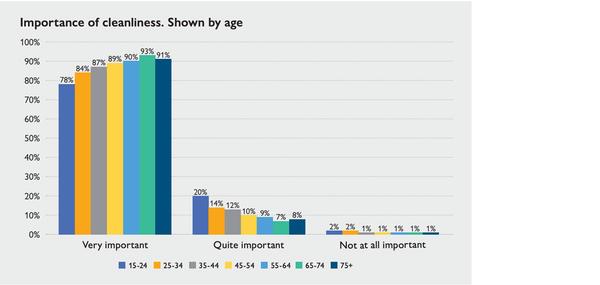
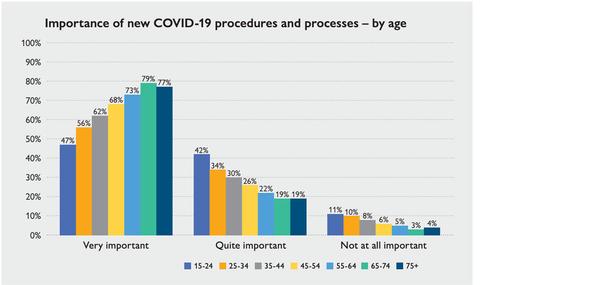
The gender and age differences were also clear in the survey, with older age groups more cautious about returning than younger age groups and women more concerned about safety procedures and cleanliness than men.

Respondents indicated faith in their operator’s ability to keep them safe while exercising, with more than 69 per cent of those who returned between July and November expressing great confidence in their facility’s COVID-related systems, processes and practices. In fact, over a third of customers (35 per cent) said they felt significantly more comfortable about returning to their club or centre than to other public places, compared to the June results (17.9 per cent). Only 12 per cent said they were not at all confident.

“First of all, congratulations to our facilities on doing such a great job between July and November. The research very clearly shows a jump in people’s confidence to return to their health club compared to other public places,” says Hill. “However, while this is a good news story, the sector can’t afford to lose 12 per cent of its customer base going forward, so more work needs to be done to reassure the minority who aren’t yet confident, particularly the older age groups, who are less at ease than younger people.”

This finding is in marked contrast with the findings of research in the US fitness market, where older people were more confident to return than younger people and where consumer confidence in the sector is far lower overall (see ClubIntel, p64).

Lockdown reduced activity levels
Leisure-net found activity levels dropped significantly during the November closures, with 69 per cent of respondents stating they had been less active, compared with 52 per cent during the first lockdown, and only 24 per cent of people who track their steps saying their step count had increased, compared to 38 per cent in June.

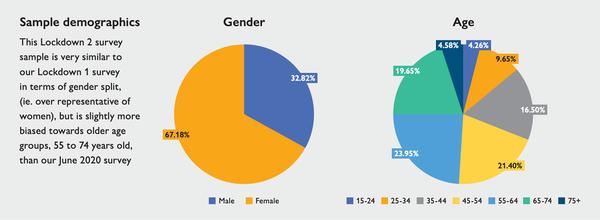
Analysis of the survey data needs to reflect the different age profiles of the two studies, with the sample from the first lockdown being from younger age groups than the sample from the second.

Younger people reported being consistent in the activities they participated in prior to the two different lockdowns, with the most popular activities being the gym, group exercise and swimming – in that order – while prior to lockdown 2, people in the older age groups used the gym and group exercise slightly less, but were swimming more, as confidence in that activity returned.

Older age groups were walking less prior to lockdown 2, but doing more online activities indoors, while those in younger age groups were running and jogging slightly more, likely due to the good weather.

The percentage of people across all age groups who said that they would be more likely to return to their local gym or leisure centre if it offered online classes as part of the membership, went down slightly during lockdown 2 when compared to lockdown 1.

This may be because some have taken up separate options and are not relying on their gym for these or perhaps because they have tried and not enjoyed them. However, the different was not significant.

Reasons for not returning to their facility related to reduced opening times or reduced programmes, as well as having less disposable income and fear of COVID-19.

In reporting home workouts, Leisure-net asked two questions: what activities did you do and what have you done more of?

In response to the first question, more people reported they had been doing home exercise in the second lockdown than the first, while in response to the second question – what have you done more of? – they reported they had done slightly less ‘additional’ home exercise – perhaps because this has now become part of their core routine.

Prior to second lockdown, the number of people reporting group exercise as their main activity reduced slightly, potentially reflecting the reduced capacity of classes and the closure of group exercise in some areas.

An important element for people considering a return to their club was the staff, with 66 per cent rating the friendliness of staff as very important and 63 per cent stating the support and guidance of the fitness and group exercise team is very important.

“Leisure facility colleagues, gym and fitness instructors must be placed front and centre when the industry re-opens its doors,” says Jenny Patrickson, Active IQ MD.

“The value of soft skills can’t be overstated – this report bears out the fact that we are a ‘people first’ industry and operators must ensure staff are given all the support and refresher training they need to return with confidence in their ability to fulfil their vital roles.”

Leisure-net’s survey results have been widely used to inform decision making, lobby local and central government and shape reopening guidance by organisations such as Sport England, ukactive, CLUK and CIMSPA. Operators also used the results to inform their decisions and maximise the impact of re-opening. The new consumer confidence scores will be used by 4global to inform the modelling of new projections for the sector.

Utku Toprakseven, director of Sports Intelligence at 4global, says: “During the previous lockdown, the confidence score for return to activity was fundamental in the development of our recovery modelling that predicted sector visit rates with 98 per cent accuracy before the second lockdown.

“We will use this new data to inform our predictive modelling and generate recovery curves taking the sector through 2021 and beyond. The depth of the data collected will allow us to adjust this model to reflect differing levels of social distancing measures and tiers of restrictions.

Find out more: www.HCMmag.com/Leisure-net2
Swimming as a person’s main activity rose by 8 per cent from lockdown 1 to 2 / Shutterstock
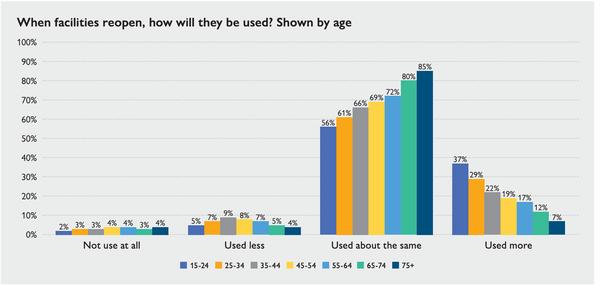
Older age groups said they would use facilities about the same amount / Shutterstock
https://www.leisureopportunities.co.uk/images/2021/437226_761159.jpg
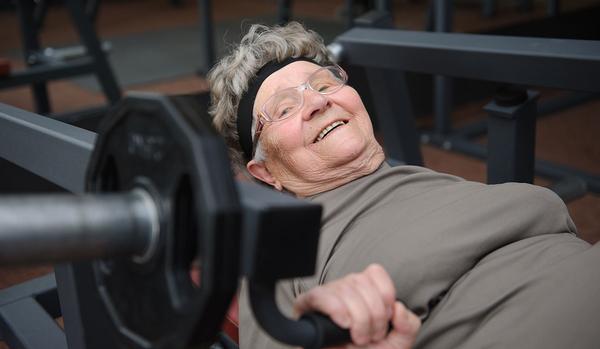
Leisure-net’s lockdown 2 survey yielded findings that will set a course for the UK industry as it comes out of lockdown 3
HCM magazine
Strength training is evolving, driven by changing consumer preferences. Julie Cramer talks to innovators about how their products are meeting this demand
HCM magazine
If the health service is to survive, we must recognise that it is a disease service – and that wellbeing rests with us, says the activity advocate and healthy ageing champion. He talks to Kate Cracknell
HCM magazine
Raphael Cuomo explores the powerful link between addiction, health and behaviour change
HCM magazine
Small improvements to sleep, diet and physical activity have major benefits for the heart, according to new research from the University of Sydney
HCM magazine
Collaborations with the medical profession and greater aspirations around wellbeing are creating a need for more experts in our sector. It’s time to reboot our thinking around the workforce
HCM promotional features
Sponsored
Third Space partnered with IndigoFitness to deliver a bespoke training space for its new club at The Whiteley
HCM promotional features
Sponsored
Starpool supports Olympic champion Marcell Jacobs, says Riccardo Turri
HCM promotional features
Sponsored
Greg Bradley looks at the shift towards strength training in gyms and advises on how operators can create the ultimate training environment
HCM promotional features
Sponsored
David Lloyd is stepping up its commitment to women’s health as it continues to explore what fit-for-purpose looks like for the female population
HCM promotional features
Sponsored
Find out how your gym can tap into the corporate wellness boom
HCM promotional features
Sponsored
SnowDome Fitness has added 50 per cent more space with cutting-edge Technogym solutions
HCM promotional features
Sponsored
EGYM has opened a new HQ in Paternoster Square, London and revealed a range of new launches
HCM promotional features
Promotion
BLK BOX has been reimagining elite performance spaces for more than a decade. Founder and former athlete, Greg Bradley, tells us what it takes
HCM promotional features
Promotion
Performance Health Systems, manufacturer of Power Plate, has a new CEO, with an ambitious vision for the company
HCM promotional features
Latest News
People taking GLP-1 weight loss medications such as Ozempic, Wegovy, Mounjaro and Zepbound may be ...
Latest News
Low-cost gym operator, PureGym, is trialling recovery zones at two of its UK sites, democratising ...
Latest News
In a milestone moment, mental health has become a core part of CIMSPA’s occupational professional ...
Latest News
US high-value, low-price chain, Eos Fitness, has announced plans to pilot reformer Pilates in three ...
Latest News
Preventive healthcare company Neko Health has added body composition analysis to its full-body health scan ...
Latest News
Chequan Lewis is the new CEO of Crunch Fitness, taking over from Jim Rowley, who ...
Latest News
Sea Lanes Canary Wharf has officially opened. The 50-metre, six-lane pool, which uses the natural ...
Latest News
London-based high-performance fitness club, ONE LDN, is raising funds for a multi-site expansion across London, ...
Opinion
promotion
Strength training has moved from the margins to the mainstream.
Opinion: Building smarter strength spaces for today’s operators
Featured supplier news
Featured supplier news: Supporting long-term health: why whole body vibration belongs in clinical settings
As healthcare continues to shift towards prevention, there’s a growing focus on helping people stay active, independent and feeling good for longer.
Featured supplier news
Featured supplier news: CoverMe extends matching service to personal training, rewriting how members and personal trainers connect
CoverMe, the global leader in fitness workforce management, today launches CoverMe PT, an on-demand personal training platform that connects the right personal trainer to the right client in under 10 seconds.
Company profiles
Company profile: The Fitness Group Education
The Fitness Group is a UK provider of fitness education, working with gyms and organisations ...
Company profiles
Company profile: Escape Fitness Ltd
Escape Fitness has driven fitness innovation for 20+ years. Founded by engineer Richard Januszek and ...
Supplier Showcases
Supplier Showcase - Future-proofing
Catalogue Gallery
Click on a catalogue to view it online
Featured press releases
Swim England press release: Swim England launches new Learn to Swim Growth Plan to support aquatic programme expansion
Swim England has strengthened its sector-leading Business Solutions offer with the launch of its Learn to Swim Growth Plan, designed to help aquatic providers unlock sustainable programme growth.
Featured press releases
CoverMe Ltd press release: CoverMe and Jobs In. Fitness partner to create end-to-end talent solution
CoverMe, the UK’s leading fitness workforce management and recruitment platform, has partnered with Jobs In. Fitness, the specialist executive search and advisory firm for the fitness and wellbeing sector, to give operators a single route to talent at every level – from frontline staffing to C-suite.
Directory
Hot tubs
MSpa International Ltd: Hot tubs
Spa and beauty equipment
Living Earth Crafts: Spa and beauty equipment
Industrial washing machines
Miele Company Limited: Industrial washing machines
Water experiences and hydrotherapy solutions
Aquaform s.r.l.: Water experiences and hydrotherapy solutions
Lockers
Crown Sports Lockers: Lockers
Fitness tracking platform
SpiviTech: Fitness tracking platform
Property & Tenders
Stratford, East London.
Lee Valley Regional Park Authority
Property & Tenders
Y Felinheli, LL56 4QN
Newmark
Property & Tenders
Diary dates
21-24 Sep 2026
The Langham Huntington Pasadena , Pasadena, United States
Diary dates
06-08 Oct 2026
Messe Stuttgart, Stuttgart, Germany
Diary dates
22-22 Oct 2026
QEII Conference Centre, London,
Diary dates
26-29 Oct 2027
Koelnmesse Exhibition Centre, Cologne, Germany
Diary dates

features

Research: Lockdown insight

Tracking consumers’ sentiment in relation to lockdowns gives valuable insights into members’ priorities. Leisure-net surveyed the first two UK lockdowns and is currently working on the third. Dave Monkhouse reports on results from the lockdown 2 survey

Published in Health Club Management 2021 issue 1
Leisure-net Solutions surveyed 33,000 people across 771 facilities run by 64 different operators
Over a third of customers said they felt significantly more comfortable about returning to the gym than to other public places

As health clubs and leisure centres in the UK prepared to re-open in December 2020, after nearly a month in lockdown, Leisure-net Solutions followed up its initial Post Lockdown Recovery Survey – undertaken in June 2020 as the UK prepared to come out of its first lockdown – with a follow-up survey to gauge consumer confidence about returning again to their exercise habits.

Although gyms closed again in January 2021 for lockdown 3, the results of these two surveys yield valuable data about how consumer perceptions changed between the UK’s lockdown 1 and lockdown 2, with significant increases in consumer confidence in the safety of gyms recorded.

This second piece of research, supported by Active IQ, questioned more than 33,000 people across 771 facilities run by 64 different operators, including private gyms, leisure centres, health clubs, schools and universities, to understand what had worked before and during lockdown 2, how customers planned to respond when lockdown 2 was reversed and what types of actions they expect from operators to keep them safe.

Leisure-net director Mike Hill says: “Once again we’ve had a fantastic response to our second lockdown insight questionnaire.

“Building on our original survey – carried out in June 2020 – these results offer considerable insight that will help inform challenging decisions around services and provision for the entire sector going forward in the new economic climate and inform decision-making in any future lockdowns.”

Customers eager to return
The research revealed consumer confidence about returning to facilities was extremely high, with just over three quarters (76.34 per cent) of members questioned saying they would return immediately when the doors to their health club or leisure centre opened, and a further 21 per cent saying they would return within three months; demonstrating the importance placed on getting back to indoor exercise.

The gender and age differences were also clear in the survey, with older age groups more cautious about returning than younger age groups and women more concerned about safety procedures and cleanliness than men.

Respondents indicated faith in their operator’s ability to keep them safe while exercising, with more than 69 per cent of those who returned between July and November expressing great confidence in their facility’s COVID-related systems, processes and practices. In fact, over a third of customers (35 per cent) said they felt significantly more comfortable about returning to their club or centre than to other public places, compared to the June results (17.9 per cent). Only 12 per cent said they were not at all confident.

“First of all, congratulations to our facilities on doing such a great job between July and November. The research very clearly shows a jump in people’s confidence to return to their health club compared to other public places,” says Hill. “However, while this is a good news story, the sector can’t afford to lose 12 per cent of its customer base going forward, so more work needs to be done to reassure the minority who aren’t yet confident, particularly the older age groups, who are less at ease than younger people.”

This finding is in marked contrast with the findings of research in the US fitness market, where older people were more confident to return than younger people and where consumer confidence in the sector is far lower overall (see ClubIntel, p64).

Lockdown reduced activity levels
Leisure-net found activity levels dropped significantly during the November closures, with 69 per cent of respondents stating they had been less active, compared with 52 per cent during the first lockdown, and only 24 per cent of people who track their steps saying their step count had increased, compared to 38 per cent in June.

Analysis of the survey data needs to reflect the different age profiles of the two studies, with the sample from the first lockdown being from younger age groups than the sample from the second.

Younger people reported being consistent in the activities they participated in prior to the two different lockdowns, with the most popular activities being the gym, group exercise and swimming – in that order – while prior to lockdown 2, people in the older age groups used the gym and group exercise slightly less, but were swimming more, as confidence in that activity returned.

Older age groups were walking less prior to lockdown 2, but doing more online activities indoors, while those in younger age groups were running and jogging slightly more, likely due to the good weather.

The percentage of people across all age groups who said that they would be more likely to return to their local gym or leisure centre if it offered online classes as part of the membership, went down slightly during lockdown 2 when compared to lockdown 1.

This may be because some have taken up separate options and are not relying on their gym for these or perhaps because they have tried and not enjoyed them. However, the different was not significant.

Reasons for not returning to their facility related to reduced opening times or reduced programmes, as well as having less disposable income and fear of COVID-19.

In reporting home workouts, Leisure-net asked two questions: what activities did you do and what have you done more of?

In response to the first question, more people reported they had been doing home exercise in the second lockdown than the first, while in response to the second question – what have you done more of? – they reported they had done slightly less ‘additional’ home exercise – perhaps because this has now become part of their core routine.

Prior to second lockdown, the number of people reporting group exercise as their main activity reduced slightly, potentially reflecting the reduced capacity of classes and the closure of group exercise in some areas.

An important element for people considering a return to their club was the staff, with 66 per cent rating the friendliness of staff as very important and 63 per cent stating the support and guidance of the fitness and group exercise team is very important.

“Leisure facility colleagues, gym and fitness instructors must be placed front and centre when the industry re-opens its doors,” says Jenny Patrickson, Active IQ MD.

“The value of soft skills can’t be overstated – this report bears out the fact that we are a ‘people first’ industry and operators must ensure staff are given all the support and refresher training they need to return with confidence in their ability to fulfil their vital roles.”

Leisure-net’s survey results have been widely used to inform decision making, lobby local and central government and shape reopening guidance by organisations such as Sport England, ukactive, CLUK and CIMSPA. Operators also used the results to inform their decisions and maximise the impact of re-opening. The new consumer confidence scores will be used by 4global to inform the modelling of new projections for the sector.

Utku Toprakseven, director of Sports Intelligence at 4global, says: “During the previous lockdown, the confidence score for return to activity was fundamental in the development of our recovery modelling that predicted sector visit rates with 98 per cent accuracy before the second lockdown.

“We will use this new data to inform our predictive modelling and generate recovery curves taking the sector through 2021 and beyond. The depth of the data collected will allow us to adjust this model to reflect differing levels of social distancing measures and tiers of restrictions.

Find out more: www.HCMmag.com/Leisure-net2
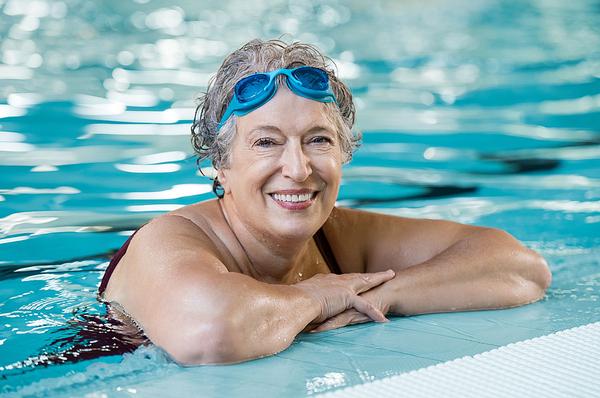
Swimming as a person’s main activity rose by 8 per cent from lockdown 1 to 2 / Shutterstock

Older age groups said they would use facilities about the same amount / Shutterstock
https://www.leisureopportunities.co.uk/images/2021/437226_761159.jpg
Leisure-net’s lockdown 2 survey yielded findings that will set a course for the UK industry as it comes out of lockdown 3
Latest News
People taking GLP-1 weight loss medications such as Ozempic, Wegovy, Mounjaro and Zepbound may be ...
Latest News
Low-cost gym operator, PureGym, is trialling recovery zones at two of its UK sites, democratising ...
Latest News
In a milestone moment, mental health has become a core part of CIMSPA’s occupational professional ...
Latest News
US high-value, low-price chain, Eos Fitness, has announced plans to pilot reformer Pilates in three ...
Latest News
Preventive healthcare company Neko Health has added body composition analysis to its full-body health scan ...
Latest News
Chequan Lewis is the new CEO of Crunch Fitness, taking over from Jim Rowley, who ...
Latest News
Sea Lanes Canary Wharf has officially opened. The 50-metre, six-lane pool, which uses the natural ...
Latest News
London-based high-performance fitness club, ONE LDN, is raising funds for a multi-site expansion across London, ...
Latest News
A new brain clinic has opened in London, which uses non-invasive brain stimulation to treat ...
Latest News
Good Boost’s digital exercise programmes are helping adults with MSK at a lower cost than ...
Latest News
With Prime Minister, Keir Starmer, announcing his resignation this morning and Andy Burnham as a ...
Opinion
promotion
Strength training has moved from the margins to the mainstream.
Opinion: Building smarter strength spaces for today’s operators
Featured supplier news
Featured supplier news: Supporting long-term health: why whole body vibration belongs in clinical settings
As healthcare continues to shift towards prevention, there’s a growing focus on helping people stay active, independent and feeling good for longer.
Featured supplier news
Featured supplier news: CoverMe extends matching service to personal training, rewriting how members and personal trainers connect
CoverMe, the global leader in fitness workforce management, today launches CoverMe PT, an on-demand personal training platform that connects the right personal trainer to the right client in under 10 seconds.
Company profiles
Company profile: The Fitness Group Education
The Fitness Group is a UK provider of fitness education, working with gyms and organisations ...
Company profiles
Company profile: Escape Fitness Ltd
Escape Fitness has driven fitness innovation for 20+ years. Founded by engineer Richard Januszek and ...
Supplier Showcases
Supplier Showcase - Future-proofing
Catalogue Gallery
Click on a catalogue to view it online
Featured press releases
Swim England press release: Swim England launches new Learn to Swim Growth Plan to support aquatic programme expansion
Swim England has strengthened its sector-leading Business Solutions offer with the launch of its Learn to Swim Growth Plan, designed to help aquatic providers unlock sustainable programme growth.
Featured press releases
CoverMe Ltd press release: CoverMe and Jobs In. Fitness partner to create end-to-end talent solution
CoverMe, the UK’s leading fitness workforce management and recruitment platform, has partnered with Jobs In. Fitness, the specialist executive search and advisory firm for the fitness and wellbeing sector, to give operators a single route to talent at every level – from frontline staffing to C-suite.
Directory
Hot tubs
MSpa International Ltd: Hot tubs
Spa and beauty equipment
Living Earth Crafts: Spa and beauty equipment
Industrial washing machines
Miele Company Limited: Industrial washing machines
Water experiences and hydrotherapy solutions
Aquaform s.r.l.: Water experiences and hydrotherapy solutions
Lockers
Crown Sports Lockers: Lockers
Fitness tracking platform
SpiviTech: Fitness tracking platform
Property & Tenders
Stratford, East London.
Lee Valley Regional Park Authority
Property & Tenders
Y Felinheli, LL56 4QN
Newmark
Property & Tenders
Diary dates
21-24 Sep 2026
The Langham Huntington Pasadena , Pasadena, United States
Diary dates
06-08 Oct 2026
Messe Stuttgart, Stuttgart, Germany
Diary dates
22-22 Oct 2026
QEII Conference Centre, London,
Diary dates
26-29 Oct 2027
Koelnmesse Exhibition Centre, Cologne, Germany
Diary dates
Search news, features & products:
Find a supplier:
Partner sites