






















EGYM
EGYM
EGYM
Follow Health Club Management on Twitter Like Health Club Management on Facebook Join the discussion with Health Club Management on LinkedIn
FITNESS, HEALTH, WELLNESS

features

Policy: New dawn

Duncan Wood-Allum explores how the public leisure sector can pivot into a sustainable model focused on active wellbeing in the upcoming local government reorganisation

Published in Health Club Management 2025 issue 6
Hold onto your hats 
because this is 
not going to be a
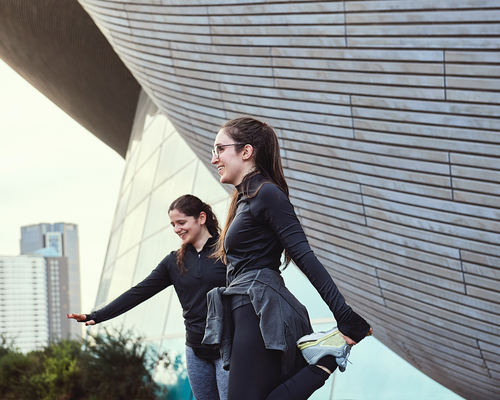
smooth transition / photo: Sport England / Duncan Nicholls
Hold onto your hats because this is not going to be a smooth transition / photo: Sport England / Duncan Nicholls
The way many traditional public leisure services are delivered remains outdated, fragmented and disconnected from broader health and wellbeing goals

Since 2020, the public leisure, sport, and physical activity sector has faced three major challenges: rising utility prices, higher National Insurance contributions and COVID-19.

These shocks have tested the resilience of local authorities and their operating partners.

More recently, spiralling construction costs have reduced potential returns on investment from renewing facilities and when you add in workforce recruitment and retention challenges, the sector has been seriously challenged.

Despite this, recent years have seen a bounce-back in usage and financial performance, helping many operators stay afloat. Larger operators with economies of scale and those using cost-saving models (such as the VAT-efficient Agency Model) have fared better, but the fundamental problem remains: according to Sport England’s Active Lives survey, levels of participation in physical activity have barely improved – especially among inactive groups – and so stubborn inequalities persist.

Sport England has invested £250m in its Place Expansion initiative under the Uniting the Movement Strategy and while this is gathering momentum for the 100 or so places awarded, it pales in comparison when it comes to the broader £1bn spent annually across the UK on public sector leisure – including open spaces, pitches, community and indoor facilities.

So why hasn’t this investment sparked more significant change? I believe a major factor is the way many services are structured and delivered, as this is often outdated, fragmented and disconnected from broader health and wellbeing ambitions.

Enter local government reorganisation
Local government reorganisation will see multiple local authorities merge into larger entities over the next four years, removing district and borough councils.

This process has been designed to decentralise power, streamline bureaucracy and better align services such as health and social care.

When seeking to predict the impact of such fundamental change, a critical question arises: is this the end of traditional leisure services, or a once-in-a-generation chance to reinvent them?

If mishandled, local government reorganisation could lead to mismanagement, neglected facilities or even service loss. Portfolios of inherited leisure assets could end up being the responsibility of new unitary authorities in a bizarre game of ‘pass the overly complex parcel’.

With the risk of a vacuum of leadership in these new organisations, there’s the potential for the future to be challenging, however, let’s not dwell on this, none of us is interested in seeing an erosion of services and physical activity participation levels – particularly amongst those who are less active or inactive.


On a more positive note, local government reorganisation offers a unique opportunity to reimagine the sector as delivering an active wellbeing service that is inclusive, sustainable and aligned with local health priorities.

Change as a catalyst
There are three compelling opportunities for public leisure services to transform into an active wellbeing service through the catalyst of local government reorganisation. These can be framed at local political level and executive level, where the real influence sits.

Firstly, we have the opportunity to create an active wellbeing service, secondly, to fund this from existing resources and thirdly, to increase participation levels, particularly among less active populations.


With the renewed focus on addressing health inequalities and social care, traditional leisure services are unlikely to be seen as a core service.

Creation of an active wellbeing service The idea of reimagining leisure services, adapting and pivoting them to become active wellbeing services is gaining real traction across the country.


In our work at SLC, at the vanguard of this pivot – alongside other progressive organisations – we’re finding it gets real support from elected members and system partners in health and adult social care, as well as the voluntary sector.

Active wellbeing services go way beyond health club and gym memberships and swimming pools. They’re integrated, collaborative systems designed to support community health through physical activity.

While there’s ‘no one size fits all’ solution, an active wellbeing service is likely to have some or all of the following elements:

Key components could include:

■ A commissioning team to coordinate across health and leisure sectors.

■ Data and insight functions to support the co-design of services.

■ Commercial leisure activities that generate income.

■ Integration with adult social care to support independent living.

■ Allied health professionals working alongside leisure staff.

■ Influence over local planning to embed active design and support more active communities.

■ A programme to support workforce transformation, to better support people with complex health needs.

■ Outreach and enabling support to schools, clubs and voluntary groups.

■ Strong programming and communications to activate local spaces and coordinate local resources.

This service would be outward-facing, enabling place-based working and featuring the delivery of commercial and inclusive facility-based provision, outreach and community engagement. It would be embedded, serving as a key delivery partner across multiple functions of the new local authority.

Financial sustainability is key
One thing is clear, future services must be financially sustainable. Reliance on health sector funding, while ideal in theory, is not realistic in the short-term. Instead, economies of scale will be essential.

In our experience, the merging of multiple councils’ leisure services can generate significant savings – up to £1.5 million-plus annually for a single authority. If scaled across larger new authorities, surpluses of £3-5 million per year are possible. These funds could be reinvested in outreach, health and social care alignment and addressing inequalities in participation.

There’s still a need to support operators in better understanding the potential of combining these roles and working more collaboratively. Encouragingly, we’re already seeing some of these behaviours through the partnerships we’ve supported in places such as Sheffield and Northumberland.

With the right commercial and place-based mindset, active wellbeing services can be both self-funding and socially impactful.

Active wellbeing services will need to generate the value themselves, combining an unapologetically commercial focus with a place-based and wider systems mindset.

Closing the participation gap
Despite billions invested, physical activity levels haven’t significantly improved, particularly among the least active populations. The collective potential of public and private sector leisure, facilities, pitches, parks and community spaces remains largely untapped. Addressing it is within our gift through designing this collaborative approach into governance, learning and workforce development, service models and organisational cultures, partnerships and specifications.

We suggest a stronger focus on:

■ Targeted investment into inclusive, revenue-generating activities.

■ Planning policy that supports active design and play.

■ Better data, monitoring and evaluation, using tools such as the Wellby social value measure.

■ Optimising local networks and infrastructure.

■ Reinvesting in sports development, particularly for young people.

■ Supporting voluntary and grassroots organisations.

■ Cultural changes that embed activity into public services, such as workplace wellness.

These steps can bridge the participation gap if backed by leadership, collaboration and a clear strategy.

So what should local authorities be doing now?
Some councils are already on this journey, but all local authorities – especially those forming new unitary authorities – need to act now.

Key steps:

1. Create an active wellbeing commissioning function: this team should influence strategy, connect with political leaders and link across public health, adult care, planning and more.

2. Develop a compelling, co-produced vision: show how active wellbeing improves lives and supports local priorities.

3. Influence and secure a seat of influence in the shadow unitary authority and seek to shape thinking around active wellbeing.

4. Protect local knowledge and memory: staff changes during reorganisation can lead to lost insights, so document and share what works.

5. Audit your assets: know what services and facilities you’ll inherit and assess their suitability.

6. Map local networks: identify potential partners and build collaborative plans.

7. Get involved early: position public leisure assets and your active wellbeing service at the centre of shadow authority discussions.

The road ahead
Hold onto your hats because this is not going to be a smooth transition.
It’s time to harness the collective potential of our existing assets, services and partnerships. The future is bright for those prepared to step forward to embrace and shape the opportunity that local government reorganisation presents.

Is this the end of public leisure services as we know it? Yes, but active wellbeing is our collective future – let’s win the argument for sustainable active wellbeing and then get on and deliver it.

photo: NIKKI GOODEVE

Duncan Wood-Allum is MD of SLC

www.slc.uk.com

The pivot towards active wellbeing is an opportunity for radical change / photo: Sport England / Duncan Nicholls
Local government reorganisation will radically change delivery / photo: Sport England
https://www.leisureopportunities.co.uk/images/2025/761843_102749.jpg
Duncan Wood-Allum says the UK’s plans for local government reorganisation will open up huge opportunities for the sector
HCM magazine
Raphael Cuomo explores the powerful link between addiction, health and behaviour change
HCM magazine
Collaborations with the medical profession and greater aspirations around wellbeing are creating a need for more experts in our sector. It’s time to reboot our thinking around the workforce
HCM magazine
For every member with a tripod and a big following, there are others irritated at the way equipment is being hogged or wary they’ll be in the background on someone’s Insta feed. Do influencers offer valuable, free marketing or are they just a nuisance? Kath Hudson finds out how operators are responding
HCM magazine
HCM People

Stephen Price

Founder, SP&Co Group
Working in public health over the last few years has lit up parts of my brain again
HCM magazine
Strength training is evolving, driven by changing consumer preferences. Julie Cramer talks to innovators about how their products are meeting this demand
HCM promotional features
Sponsored
David Lloyd is stepping up its commitment to women’s health as it continues to explore what fit-for-purpose looks like for the female population
HCM promotional features
Sponsored
SnowDome Fitness has added 50 per cent more space with cutting-edge Technogym solutions
HCM promotional features
Sponsored
Third Space partnered with IndigoFitness to deliver a bespoke training space for its new club at The Whiteley
HCM promotional features
Sponsored
Starpool supports Olympic champion Marcell Jacobs, says Riccardo Turri
HCM promotional features
Sponsored
Find out how your gym can tap into the corporate wellness boom
HCM promotional features
Sponsored
Greg Bradley looks at the shift towards strength training in gyms and advises on how operators can create the ultimate training environment
HCM promotional features
Sponsored
EGYM has opened a new HQ in Paternoster Square, London and revealed a range of new launches
HCM promotional features
Sponsored
Pulse Fitness has created a new health club delivering an elevated wellness experience
HCM promotional features
Promotion
Performance Health Systems, manufacturer of Power Plate, has a new CEO, with an ambitious vision for the company
HCM promotional features
Latest News
Nuffield Health has told HCM that it takes its responsibilities towards its colleagues seriously and ...
Latest News
Technogym has announced the launch of the Run X World Treadmill Championship, the first world ...
Latest News
Shocked by the UK loneliness statistics, charitable trust Mytime Active has been doubling down on ...
Latest News
Portugal’s leading operator, SC Fitness, is celebrating a milestone by reaching 100 gyms.  The company ...
Latest News
Australia’s fast-growing fitness network, Viva Leisure, is adding a low-cost gym brand to its already ...
Latest News
Speedflex has launched a strength training programme for 10 to 16-year-olds, to make it safer, ...
Latest News
Tewinbury Farm Hotel in Hertfordshire, UK is expanding its premium leisure proposition with the launch ...
Latest News

Work is underway in Madrid on one of Europe’s most significant multi-functional complexes, ...

Opinion
promotion
Strength training has moved from the margins to the mainstream.
Opinion: Building smarter strength spaces for today’s operators
Featured supplier news
Featured supplier news: W3Fit EMEA celebrates its fifth anniversary
Celebrating its milestone 5th anniversary, W3Fit EMEA returns in 2026 with an unmissable gathering of the Health & Fitness industry’s most influential leaders.
Featured supplier news
Featured supplier news: Reaching the people most gyms miss: Bedford Gym & Swim Campaign delivers 410 new members
One of the biggest mistakes the fitness industry still makes is advertising almost exclusively to people who already look and live like gym members.
Company profiles
Company profile: CET CryoSpas
CET have developed ice baths specifically for the fitness and wellness sectors in addition to ...
Company profiles
Company profile: Output Sports
Output Sports provides performance technology for modern training facilities. Our integrated platform combines testing, monitoring ...
Supplier Showcases
Supplier Showcase - Future-proofing
Catalogue Gallery
Click on a catalogue to view it online
Featured press releases
GYMNATION press release: Massive ‘Good Luck’ message appears in Saudi Desert as Green Falcons head to World Cup
Passengers flying out of Riyadh this week have been treated to an extraordinary sight from the skies after GymNation unveiled a giant desert sand mural supporting the Saudi Arabia National Football Team ahead of the FIFA World Cup in the United States.
Featured press releases
BLK BOX press release: BLK BOX strengthens European growth with the appointment of Germany country manager Timo Garrels
BLK BOX is proud to welcome Timo Garrels as Germany country manager, marking another important step in the brand’s continued growth across Europe.
Directory
Lockers
Crown Sports Lockers: Lockers
Fitness tracking platform
SpiviTech: Fitness tracking platform
Industrial washing machines
Miele Company Limited: Industrial washing machines
Water experiences and hydrotherapy solutions
Aquaform s.r.l.: Water experiences and hydrotherapy solutions
Spa and beauty equipment
Oakworks Inc: Spa and beauty equipment
Hot tubs
MSpa International Ltd: Hot tubs
Property & Tenders
Stratford, East London.
Lee Valley Regional Park Authority
Property & Tenders
Y Felinheli, LL56 4QN
Newmark
Property & Tenders
Diary dates
13-13 Jun 2026
Worldwide, Various,
Diary dates
21-24 Sep 2026
The Langham Huntington Pasadena , Pasadena, United States
Diary dates
06-08 Oct 2026
Messe Stuttgart, Stuttgart, Germany
Diary dates
22-22 Oct 2026
QEII Conference Centre, London,
Diary dates
26-29 Oct 2027
Koelnmesse Exhibition Centre, Cologne, Germany
Diary dates

features

Policy: New dawn

Duncan Wood-Allum explores how the public leisure sector can pivot into a sustainable model focused on active wellbeing in the upcoming local government reorganisation

Published in Health Club Management 2025 issue 6
Hold onto your hats 
because this is 
not going to be a
smooth transition / photo: Sport England / Duncan Nicholls
Hold onto your hats because this is not going to be a smooth transition / photo: Sport England / Duncan Nicholls
The way many traditional public leisure services are delivered remains outdated, fragmented and disconnected from broader health and wellbeing goals

Since 2020, the public leisure, sport, and physical activity sector has faced three major challenges: rising utility prices, higher National Insurance contributions and COVID-19.

These shocks have tested the resilience of local authorities and their operating partners.

More recently, spiralling construction costs have reduced potential returns on investment from renewing facilities and when you add in workforce recruitment and retention challenges, the sector has been seriously challenged.

Despite this, recent years have seen a bounce-back in usage and financial performance, helping many operators stay afloat. Larger operators with economies of scale and those using cost-saving models (such as the VAT-efficient Agency Model) have fared better, but the fundamental problem remains: according to Sport England’s Active Lives survey, levels of participation in physical activity have barely improved – especially among inactive groups – and so stubborn inequalities persist.

Sport England has invested £250m in its Place Expansion initiative under the Uniting the Movement Strategy and while this is gathering momentum for the 100 or so places awarded, it pales in comparison when it comes to the broader £1bn spent annually across the UK on public sector leisure – including open spaces, pitches, community and indoor facilities.

So why hasn’t this investment sparked more significant change? I believe a major factor is the way many services are structured and delivered, as this is often outdated, fragmented and disconnected from broader health and wellbeing ambitions.

Enter local government reorganisation
Local government reorganisation will see multiple local authorities merge into larger entities over the next four years, removing district and borough councils.

This process has been designed to decentralise power, streamline bureaucracy and better align services such as health and social care.

When seeking to predict the impact of such fundamental change, a critical question arises: is this the end of traditional leisure services, or a once-in-a-generation chance to reinvent them?

If mishandled, local government reorganisation could lead to mismanagement, neglected facilities or even service loss. Portfolios of inherited leisure assets could end up being the responsibility of new unitary authorities in a bizarre game of ‘pass the overly complex parcel’.

With the risk of a vacuum of leadership in these new organisations, there’s the potential for the future to be challenging, however, let’s not dwell on this, none of us is interested in seeing an erosion of services and physical activity participation levels – particularly amongst those who are less active or inactive.


On a more positive note, local government reorganisation offers a unique opportunity to reimagine the sector as delivering an active wellbeing service that is inclusive, sustainable and aligned with local health priorities.

Change as a catalyst
There are three compelling opportunities for public leisure services to transform into an active wellbeing service through the catalyst of local government reorganisation. These can be framed at local political level and executive level, where the real influence sits.

Firstly, we have the opportunity to create an active wellbeing service, secondly, to fund this from existing resources and thirdly, to increase participation levels, particularly among less active populations.


With the renewed focus on addressing health inequalities and social care, traditional leisure services are unlikely to be seen as a core service.

Creation of an active wellbeing service The idea of reimagining leisure services, adapting and pivoting them to become active wellbeing services is gaining real traction across the country.


In our work at SLC, at the vanguard of this pivot – alongside other progressive organisations – we’re finding it gets real support from elected members and system partners in health and adult social care, as well as the voluntary sector.

Active wellbeing services go way beyond health club and gym memberships and swimming pools. They’re integrated, collaborative systems designed to support community health through physical activity.

While there’s ‘no one size fits all’ solution, an active wellbeing service is likely to have some or all of the following elements:

Key components could include:

■ A commissioning team to coordinate across health and leisure sectors.

■ Data and insight functions to support the co-design of services.

■ Commercial leisure activities that generate income.

■ Integration with adult social care to support independent living.

■ Allied health professionals working alongside leisure staff.

■ Influence over local planning to embed active design and support more active communities.

■ A programme to support workforce transformation, to better support people with complex health needs.

■ Outreach and enabling support to schools, clubs and voluntary groups.

■ Strong programming and communications to activate local spaces and coordinate local resources.

This service would be outward-facing, enabling place-based working and featuring the delivery of commercial and inclusive facility-based provision, outreach and community engagement. It would be embedded, serving as a key delivery partner across multiple functions of the new local authority.

Financial sustainability is key
One thing is clear, future services must be financially sustainable. Reliance on health sector funding, while ideal in theory, is not realistic in the short-term. Instead, economies of scale will be essential.

In our experience, the merging of multiple councils’ leisure services can generate significant savings – up to £1.5 million-plus annually for a single authority. If scaled across larger new authorities, surpluses of £3-5 million per year are possible. These funds could be reinvested in outreach, health and social care alignment and addressing inequalities in participation.

There’s still a need to support operators in better understanding the potential of combining these roles and working more collaboratively. Encouragingly, we’re already seeing some of these behaviours through the partnerships we’ve supported in places such as Sheffield and Northumberland.

With the right commercial and place-based mindset, active wellbeing services can be both self-funding and socially impactful.

Active wellbeing services will need to generate the value themselves, combining an unapologetically commercial focus with a place-based and wider systems mindset.

Closing the participation gap
Despite billions invested, physical activity levels haven’t significantly improved, particularly among the least active populations. The collective potential of public and private sector leisure, facilities, pitches, parks and community spaces remains largely untapped. Addressing it is within our gift through designing this collaborative approach into governance, learning and workforce development, service models and organisational cultures, partnerships and specifications.

We suggest a stronger focus on:

■ Targeted investment into inclusive, revenue-generating activities.

■ Planning policy that supports active design and play.

■ Better data, monitoring and evaluation, using tools such as the Wellby social value measure.

■ Optimising local networks and infrastructure.

■ Reinvesting in sports development, particularly for young people.

■ Supporting voluntary and grassroots organisations.

■ Cultural changes that embed activity into public services, such as workplace wellness.

These steps can bridge the participation gap if backed by leadership, collaboration and a clear strategy.

So what should local authorities be doing now?
Some councils are already on this journey, but all local authorities – especially those forming new unitary authorities – need to act now.

Key steps:

1. Create an active wellbeing commissioning function: this team should influence strategy, connect with political leaders and link across public health, adult care, planning and more.

2. Develop a compelling, co-produced vision: show how active wellbeing improves lives and supports local priorities.

3. Influence and secure a seat of influence in the shadow unitary authority and seek to shape thinking around active wellbeing.

4. Protect local knowledge and memory: staff changes during reorganisation can lead to lost insights, so document and share what works.

5. Audit your assets: know what services and facilities you’ll inherit and assess their suitability.

6. Map local networks: identify potential partners and build collaborative plans.

7. Get involved early: position public leisure assets and your active wellbeing service at the centre of shadow authority discussions.

The road ahead
Hold onto your hats because this is not going to be a smooth transition.
It’s time to harness the collective potential of our existing assets, services and partnerships. The future is bright for those prepared to step forward to embrace and shape the opportunity that local government reorganisation presents.

Is this the end of public leisure services as we know it? Yes, but active wellbeing is our collective future – let’s win the argument for sustainable active wellbeing and then get on and deliver it.

photo: NIKKI GOODEVE

Duncan Wood-Allum is MD of SLC

www.slc.uk.com
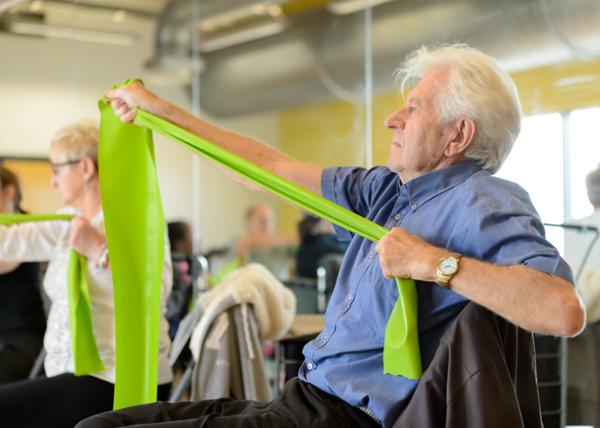
The pivot towards active wellbeing is an opportunity for radical change / photo: Sport England / Duncan Nicholls
Local government reorganisation will radically change delivery / photo: Sport England
https://www.leisureopportunities.co.uk/images/2025/761843_102749.jpg
Duncan Wood-Allum says the UK’s plans for local government reorganisation will open up huge opportunities for the sector
Latest News
Nuffield Health has told HCM that it takes its responsibilities towards its colleagues seriously and ...
Latest News
Technogym has announced the launch of the Run X World Treadmill Championship, the first world ...
Latest News
Shocked by the UK loneliness statistics, charitable trust Mytime Active has been doubling down on ...
Latest News
Portugal’s leading operator, SC Fitness, is celebrating a milestone by reaching 100 gyms.  The company ...
Latest News
Australia’s fast-growing fitness network, Viva Leisure, is adding a low-cost gym brand to its already ...
Latest News
Speedflex has launched a strength training programme for 10 to 16-year-olds, to make it safer, ...
Latest News
Tewinbury Farm Hotel in Hertfordshire, UK is expanding its premium leisure proposition with the launch ...
Latest News

Work is underway in Madrid on one of Europe’s most significant multi-functional complexes, ...

Latest News
PureGym is encouraging people to step away from their screens and go for a walk, ...
Latest News
Small improvements to sleep, diet quality, and physical activity, made in combination lead to a ...
Latest News
Therme Manchester’s 28-acre development, which will include interconnected glass pavilions that measure 65,000sq m, will ...
Opinion
promotion
Strength training has moved from the margins to the mainstream.
Opinion: Building smarter strength spaces for today’s operators
Featured supplier news
Featured supplier news: W3Fit EMEA celebrates its fifth anniversary
Celebrating its milestone 5th anniversary, W3Fit EMEA returns in 2026 with an unmissable gathering of the Health & Fitness industry’s most influential leaders.
Featured supplier news
Featured supplier news: Reaching the people most gyms miss: Bedford Gym & Swim Campaign delivers 410 new members
One of the biggest mistakes the fitness industry still makes is advertising almost exclusively to people who already look and live like gym members.
Company profiles
Company profile: CET CryoSpas
CET have developed ice baths specifically for the fitness and wellness sectors in addition to ...
Company profiles
Company profile: Output Sports
Output Sports provides performance technology for modern training facilities. Our integrated platform combines testing, monitoring ...
Supplier Showcases
Supplier Showcase - Future-proofing
Catalogue Gallery
Click on a catalogue to view it online
Featured press releases
GYMNATION press release: Massive ‘Good Luck’ message appears in Saudi Desert as Green Falcons head to World Cup
Passengers flying out of Riyadh this week have been treated to an extraordinary sight from the skies after GymNation unveiled a giant desert sand mural supporting the Saudi Arabia National Football Team ahead of the FIFA World Cup in the United States.
Featured press releases
BLK BOX press release: BLK BOX strengthens European growth with the appointment of Germany country manager Timo Garrels
BLK BOX is proud to welcome Timo Garrels as Germany country manager, marking another important step in the brand’s continued growth across Europe.
Directory
Lockers
Crown Sports Lockers: Lockers
Fitness tracking platform
SpiviTech: Fitness tracking platform
Industrial washing machines
Miele Company Limited: Industrial washing machines
Water experiences and hydrotherapy solutions
Aquaform s.r.l.: Water experiences and hydrotherapy solutions
Spa and beauty equipment
Oakworks Inc: Spa and beauty equipment
Hot tubs
MSpa International Ltd: Hot tubs
Property & Tenders
Stratford, East London.
Lee Valley Regional Park Authority
Property & Tenders
Y Felinheli, LL56 4QN
Newmark
Property & Tenders
Diary dates
13-13 Jun 2026
Worldwide, Various,
Diary dates
21-24 Sep 2026
The Langham Huntington Pasadena , Pasadena, United States
Diary dates
06-08 Oct 2026
Messe Stuttgart, Stuttgart, Germany
Diary dates
22-22 Oct 2026
QEII Conference Centre, London,
Diary dates
26-29 Oct 2027
Koelnmesse Exhibition Centre, Cologne, Germany
Diary dates
Search news, features & products:
Find a supplier:
EGYM
EGYM
Partner sites