


















Elevate Arena
Elevate Arena
Elevate Arena
Follow Health Club Management on Twitter Like Health Club Management on Facebook Join the discussion with Health Club Management on LinkedIn
FITNESS, HEALTH, WELLNESS

features

Opinion: Searching questions

Dr Paul Bedford talks to Jak Phillips about the double-edged sword of the strength training trend and his ambitions for the sector

Published in Health Club Management 2024 issue 2
With a rise in working from home, suburban clubs are in greater demand / photo: Les Mills / Finn Cochran
The industry is missing a trick in failing to engage with people who are new to exercise. We’re lacking when it comes to onboarding

How would you assess the current state of the market?
Generally, pretty good. There are issues within some businesses, but that's more to do with business models and practices than the industry as a whole. We've certainly seen people returning to clubs, but they're using them differently and in some cases using different clubs.

Generally speaking, health club operators now have a share of a customer, rather than owning their entire fitness experience. People are going to multiple facilities, sometimes doing their own thing at home, then supplementing that with one-off boutique visits. This opens up opportunities for aggregators.

With Tuesday to Thursday being the new office week, people are either investing more in suburban clubs (often with their families) or taking a pay-as-you-go approach to urban clubs and being willing to pay a premium for infrequency – as many of us are doing with travel – paying ad hoc fares instead of buying season tickets.

How does this impact membership tenure?
It varies widely by location. We worked with an operator recently and a third of their club locations had seen average membership tenure stay flat, a third had increased by a month or two, while a third had dropped by seven to 10 months. That’s a huge variance within one business and points to the importance of having a strong portfolio when it comes to locations.

On average, club membership lengths are trending shorter, so more clubs are embracing the importance of delivering great experiences to mitigate this, but that requires a long-term commitment to realise meaningful results.

How can clubs counter such challenges?
It’s important to have a distinct offering – if you try to stand for everything, you can end up standing for nothing. Take a CrossFit or Hyrox offering – you’re appealing to committed exercisers and it’s simply a case of whether they choose to go with you or your competitors.

The industry is missing a trick in failing to engage with people who are new to exercise. We've significantly improved the quality of almost everything we do over the last 20 years and have some beautiful facilities to showcase, but we’re lacking when it comes to how we do our onboarding. If we're going to grow the industry, we need to start segmenting and putting the right support in place so new joiners are being set up for success.

Why do operators struggle with onboarding?
There’s always been a challenge around measuring the value of onboarding, which is why so many are disinclined to invest in it.

When you speak to many gym staff they’ll say members know what they’re doing and don’t need support, but that clearly isn’t the case – we did work recently for an operator in London and 40 per cent of members told us they would have benefited from onboarding support.

These were the members who responded, so the true figure is likely to be higher when you factor in all those who’d already left the club and so couldn’t respond. The other 60 per cent said they were confident already and didn’t need onboarding.

When the operator broke down what it would take in terms of work hours to provide onboarding support to relevant members, it came to one and a half hours a day, which is clearly manageable. It doesn’t need to be daunting to do onboarding well, but it can make a massive difference to the bottom line.

As an overview of the culture of the sector, the rise of the low-cost, self-service clubs has also had an impact, leading to less emphasis on personal touchpoints.

What role can digital play in member engagement?
Operators have been buoyed by the strong return of members to clubs, but they dismiss digital at their peril. Some operators tell me they’ve never had a prospect ask them ‘What’s your digital offering?’ and take from that there’s no demand, but if someone wants to do digital workouts at home, they’ll have found themselves a solution before you ever hear from them.

It comes back to share of wallet – we know consumers are doing more digital workouts at home, so do you want that service to be provided by your club or by a competitor? It’s a huge undertaking to produce high-quality content, so it makes sense for clubs to consider outsourcing if they can get the commercials right and ensure it’s a consistent extension of their brand and in-club experience.

There’s also a retention element that requires further examination – we did work with a US operator and found that even though the usage of their digital offering wasn’t super high, the members who added digital services to their club membership stayed longer than those who didn’t.

What behavioural differences are you seeing between younger and older demographics?
It’s a bit like music: different age groups are always going to prefer certain styles at different stages of their life – and that’s certainly true of me and my 22-year-old son!

Strength is a massive training category right now, partly driven by the rise of influencer culture. Given you’re in a fixed position when you’re strength training, it’s one of the easier activities to film yourself doing in the gym (as opposed to being in the middle of a busy class) so that’s what content creators tend to capture. Gen Zers then see this content on social media and are then inspired to copy it.

This is called vicarious learning (learning through watching) and it’s something people have always done in gyms – trying out things they see other people doing around them. As a result, we now have a network effect occurring through social media and this is driving the massive trend towards strength training.

Another factor relating to this is that because young people receive this information (and inspiration) through their phone, they then become reliant on their mobile to guide them through workouts as well – to the extent that they tend not to engage with the experts on hand to support them in the health club and this creates a disconnect and reduces their engagement and loyalty.

The other thing we’re seeing is bottlenecks on the gym floor as everyone wants to use the same strength equipment.

How can clubs manage the problem of overcrowding?
Some have stuck with the appointment systems they introduced during the pandemic, so members can book a slot on the gym floor – sometimes even on a specific piece of equipment.

Others are signposting members to areas where there’s more capacity, such as group exercise studios and functional areas.

Operators can encourage this through the onboarding process, by making sure that new members are aware of the full range of facilities on offer and then further reinforcing this through ongoing member communications.

They can also use these capacity insights to inform their marketing strategy – if a health club operator knows that they would struggle to service more members who want to use the strength equipment, they’d be better off targeting prospects who want to use areas of the club where they still have capacity, for example.

If an operator is in a better position to meet the needs of these prospects, the members are likely to stay longer and yield a greater lifetime value, representing a better ROI for their marketing spend.

What other impact is the strength training trend having?
It’s great that more people are joining gyms to do strength training, but there are other factors we need to be mindful of. Gymtimidation can be heightened in environments where everyone is lifting weights – sometimes in ways that you really wouldn’t even imagine.

I was talking to some members in their late 40s recently who were clearly experienced lifters, but were hesitant to go and do squats because the club had recently changed from all-black bumper plates to multi-coloured ones.

They said no one took any notice when the plates were all black, but now each plate had a colour to indicate weight, people tended to observe and make judgements about them based on how much was being lifted.

It’s the sort of thing I hadn’t even thought about, but members pick up on these subtleties. So as we embrace the strength training trend, it’s crucial that we’re really conscious of the environments we're creating and making sure we keep Gymtimidation in check.

How do you see the role of group training in the current landscape?
Group exercise is always going to have a role to play. The benefits it brings in terms of retention and creating community are well-documented and you could argue they take on greater significance at a time when memberships are trending shorter.

Where strength training is bringing new people into the club, a lot of these members are enticed by the relative simplicity of the set-up and the movements.

Typically, strength training involves moves they can watch on their phone and then replicate by following pointers, whereas the group exercise studio is sectioned off from the club, they might need to book, it’s often fast-paced and there can be choreography involved, so it can feel like something that’s harder to get to grips with – and perhaps be a little intimidating.

The job for clubs is to set members up for success and give them proper support to get engaged with group exercise and reap the rewards.

I did some work with a Danish health club operator where we offered a number of class options to see which would be more effective in drawing new members into the club.

The first option was a live class in the club, led by an instructor. The second option was a live class on digital – again, led by an instructor – and then finally they were offered on-demand classes on an app for use at home.

We found that offering pre-recorded classes for use at home was a great way for members to learn the moves and build confidence, so they felt comfortable coming into the club and joining the group and this is definitely something I’d recommend operators consider adding to their onboarding process.

Another benefit of group exercise is that members don’t have to think too much – they can turn up and do what they’re told, in contrast to self-directed workouts, which require a lot of decisions to be made. This all adds to the cognitive load, which can put some people off – especially on days when they simply can’t be bothered.

And of course, the timetabling element is dynamite for retention and exercise adherence. If someone always goes to a class at 6.00pm on a Monday, it becomes ingrained as a habit and becomes something they look forward to, but it also becomes part of them and what they do, so then people don’t ask them to do other things at that time because they know that 6.00pm on a Monday is when X does their class.

Our diaries are so hectic today that if a timeslot isn’t protected, then it quickly gets filled and exercise can easily fall by the wayside if we fail to make time for it.

What does the industry need to keep moving forward?
Sometimes we just need to take a hard look at ourselves. I know we're really good at self-promoting – and we need to be. But we also need to be a bit more self-critical and ask searching questions around what we can do better.

I'm a public pessimist and I’ll always challenge the industry, purely because I want it to do better. We’re capable of so much more, and it’s not just a case of impact at any cost. We can do this while still being profitable and driving growth – it’s very much a win-win. The future’s bright, but it’s not going to come easy, so we need to raise our game and keep pushing forward.

Takeaways
photo: Dr Paul Bedford

• Generally speaking, health club operators now have a share of a customer, rather than owning their entire fitness experience

• Consumers are either investing more in suburban clubs (often with their families) or taking a pay-as-you-go approach

• On average, club membership lengths are trending shorter

• Members who added digital services to their club membership stayed longer than those who don’t

• People are in a fixed position while strength training, meaning it’s one of the easier activities to film and what content creators tend to capture

• If an operator knows they’re at capacity on strength equipment, they’re better off targeting prospects who want to use other areas of the club

• Gymtimidation can be heightened in environments where everyone is lifting weights

• Group exercise is always going to have a role to play. The benefits it brings in terms of retention and creating community are well-documented

• One benefit of group exercise is that members don’t have to think too much – they can turn up and do what they’re told

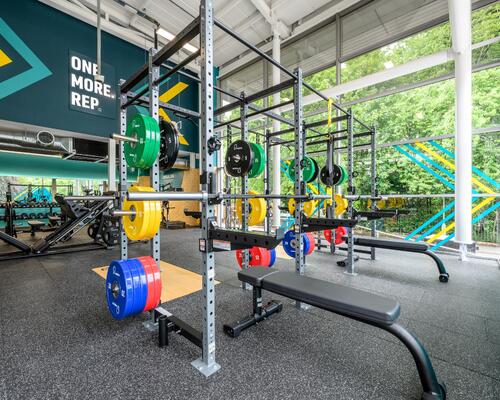
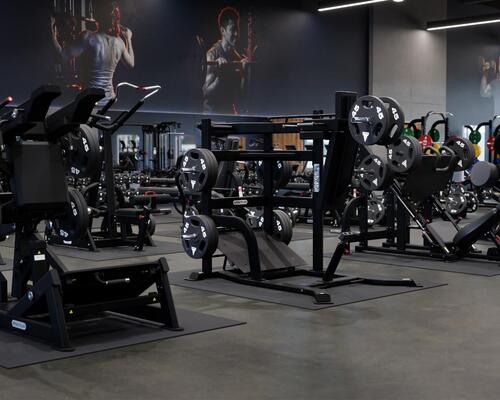
Strength is a huge training category right now / photo: Les Mills / Finn Cochran
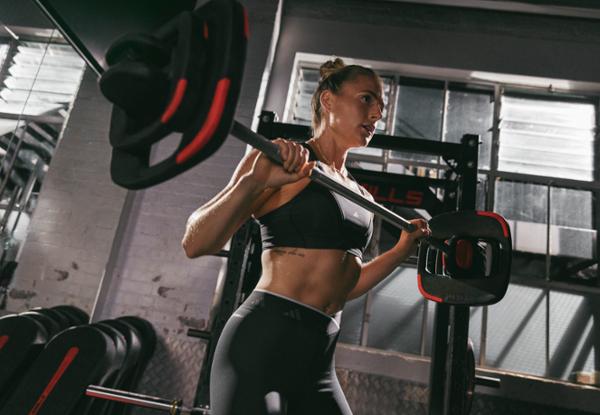
Clubs now only have a share of a customer’s fitness experience / photo: Les Mills / adidas
The rise in strength training has been further fuelled by influencer culture / photo: Les Mills / Finn Cochran
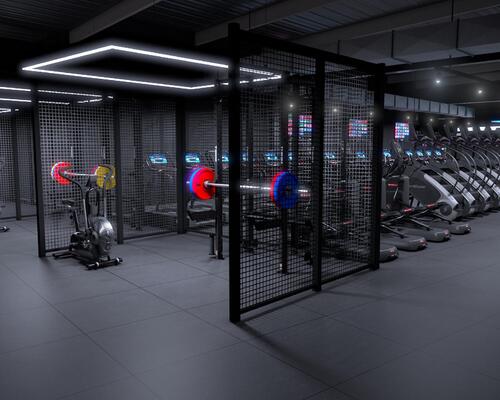
Exercise classes can extend capacity when strength areas are full / photo: Les Mills / Finn Cochran
https://www.leisureopportunities.co.uk/images/2024/654156_564001.jpg
Paul Bedford discusses the ‘double-edged sword’ of the growing trend for strength training, and his ambitions for the health and fitness sector
HCM magazine
If the health service is to survive, we must recognise that it is a disease service – and that wellbeing rests with us, says the activity advocate and healthy ageing champion. He talks to Kate Cracknell
HCM magazine
Small improvements to sleep, diet and physical activity have major benefits for the heart, according to new research from the University of Sydney
HCM magazine
As the entrepreneur who started Wexer, Fresh Fitness, Fitness DK and Repeat, as well as being a former elite athlete, Rasmus Ingerslev’s life looked perfect from the outside, but onthe inside it was a different story. He talks to Kath Hudson about healing old wounds
HCM magazine
HCM People

Stephen Price

Founder, SP&Co Group
Working in public health over the last few years has lit up parts of my brain again
HCM magazine
For every member with a tripod and a big following, there are others irritated at the way equipment is being hogged or wary they’ll be in the background on someone’s Insta feed. Do influencers offer valuable, free marketing or are they just a nuisance? Kath Hudson finds out how operators are responding
HCM promotional features
Sponsored
Third Space partnered with IndigoFitness to deliver a bespoke training space for its new club at The Whiteley
HCM promotional features
Sponsored
SnowDome Fitness has added 50 per cent more space with cutting-edge Technogym solutions
HCM promotional features
Sponsored
Starpool supports Olympic champion Marcell Jacobs, says Riccardo Turri
HCM promotional features
Sponsored
David Lloyd is stepping up its commitment to women’s health as it continues to explore what fit-for-purpose looks like for the female population
HCM promotional features
Sponsored
Find out how your gym can tap into the corporate wellness boom
HCM promotional features
Sponsored
Greg Bradley looks at the shift towards strength training in gyms and advises on how operators can create the ultimate training environment
HCM promotional features
Sponsored
EGYM has opened a new HQ in Paternoster Square, London and revealed a range of new launches
HCM promotional features
Promotion
BLK BOX has been reimagining elite performance spaces for more than a decade. Founder and former athlete, Greg Bradley, tells us what it takes
HCM promotional features
Promotion
Performance Health Systems, manufacturer of Power Plate, has a new CEO, with an ambitious vision for the company
HCM promotional features
Latest News
Nuffield Health has told HCM that it takes its responsibilities towards its colleagues seriously and ...
Latest News
Technogym has announced the launch of the Run X World Treadmill Championship, the first world ...
Latest News
Shocked by the UK loneliness statistics, charitable trust Mytime Active has been doubling down on ...
Latest News
Portugal’s leading operator, SC Fitness, is celebrating a milestone by reaching 100 gyms.  The company ...
Latest News
Australia’s fast-growing fitness network, Viva Leisure, is adding a low-cost gym brand to its already ...
Latest News
Speedflex has launched a strength training programme for 10 to 16-year-olds, to make it safer, ...
Latest News
Tewinbury Farm Hotel in Hertfordshire, UK is expanding its premium leisure proposition with the launch ...
Latest News

Work is underway in Madrid on one of Europe’s most significant multi-functional complexes, ...

Opinion
promotion
Strength training has moved from the margins to the mainstream.
Opinion: Building smarter strength spaces for today’s operators
Featured supplier news
Featured supplier news: Reaching the people most gyms miss: Bedford Gym & Swim Campaign delivers 410 new members
One of the biggest mistakes the fitness industry still makes is advertising almost exclusively to people who already look and live like gym members.
Featured supplier news
Featured supplier news: W3Fit EMEA celebrates its fifth anniversary
Celebrating its milestone 5th anniversary, W3Fit EMEA returns in 2026 with an unmissable gathering of the Health & Fitness industry’s most influential leaders.
Company profiles
Company profile: Innerva
Innerva are a UK manufacturer of ‘Power Assisted Exercise’ equipment for older adults, those with ...
Company profiles
Company profile: EGYM UK Ltd
EGYM partners with companies to improve employee health by providing access to fitness and health ...
Supplier Showcases
Supplier Showcase - Future-proofing
Catalogue Gallery
Click on a catalogue to view it online
Featured press releases
GYMNATION press release: Massive ‘Good Luck’ message appears in Saudi Desert as Green Falcons head to World Cup
Passengers flying out of Riyadh this week have been treated to an extraordinary sight from the skies after GymNation unveiled a giant desert sand mural supporting the Saudi Arabia National Football Team ahead of the FIFA World Cup in the United States.
Featured press releases
BLK BOX press release: BLK BOX strengthens European growth with the appointment of Germany country manager Timo Garrels
BLK BOX is proud to welcome Timo Garrels as Germany country manager, marking another important step in the brand’s continued growth across Europe.
Directory
Industrial washing machines
Miele Company Limited: Industrial washing machines
Lockers
Crown Sports Lockers: Lockers
Water experiences and hydrotherapy solutions
Aquaform s.r.l.: Water experiences and hydrotherapy solutions
Fitness tracking platform
SpiviTech: Fitness tracking platform
Spa and beauty equipment
Oakworks Inc: Spa and beauty equipment
Hot tubs
MSpa International Ltd: Hot tubs
Property & Tenders
Stratford, East London.
Lee Valley Regional Park Authority
Property & Tenders
Y Felinheli, LL56 4QN
Newmark
Property & Tenders
Diary dates
13-13 Jun 2026
Worldwide, Various,
Diary dates
21-24 Sep 2026
The Langham Huntington Pasadena , Pasadena, United States
Diary dates
06-08 Oct 2026
Messe Stuttgart, Stuttgart, Germany
Diary dates
22-22 Oct 2026
QEII Conference Centre, London,
Diary dates
26-29 Oct 2027
Koelnmesse Exhibition Centre, Cologne, Germany
Diary dates

features

Opinion: Searching questions

Dr Paul Bedford talks to Jak Phillips about the double-edged sword of the strength training trend and his ambitions for the sector

Published in Health Club Management 2024 issue 2
With a rise in working from home, suburban clubs are in greater demand / photo: Les Mills / Finn Cochran
The industry is missing a trick in failing to engage with people who are new to exercise. We’re lacking when it comes to onboarding

How would you assess the current state of the market?
Generally, pretty good. There are issues within some businesses, but that's more to do with business models and practices than the industry as a whole. We've certainly seen people returning to clubs, but they're using them differently and in some cases using different clubs.

Generally speaking, health club operators now have a share of a customer, rather than owning their entire fitness experience. People are going to multiple facilities, sometimes doing their own thing at home, then supplementing that with one-off boutique visits. This opens up opportunities for aggregators.

With Tuesday to Thursday being the new office week, people are either investing more in suburban clubs (often with their families) or taking a pay-as-you-go approach to urban clubs and being willing to pay a premium for infrequency – as many of us are doing with travel – paying ad hoc fares instead of buying season tickets.

How does this impact membership tenure?
It varies widely by location. We worked with an operator recently and a third of their club locations had seen average membership tenure stay flat, a third had increased by a month or two, while a third had dropped by seven to 10 months. That’s a huge variance within one business and points to the importance of having a strong portfolio when it comes to locations.

On average, club membership lengths are trending shorter, so more clubs are embracing the importance of delivering great experiences to mitigate this, but that requires a long-term commitment to realise meaningful results.

How can clubs counter such challenges?
It’s important to have a distinct offering – if you try to stand for everything, you can end up standing for nothing. Take a CrossFit or Hyrox offering – you’re appealing to committed exercisers and it’s simply a case of whether they choose to go with you or your competitors.

The industry is missing a trick in failing to engage with people who are new to exercise. We've significantly improved the quality of almost everything we do over the last 20 years and have some beautiful facilities to showcase, but we’re lacking when it comes to how we do our onboarding. If we're going to grow the industry, we need to start segmenting and putting the right support in place so new joiners are being set up for success.

Why do operators struggle with onboarding?
There’s always been a challenge around measuring the value of onboarding, which is why so many are disinclined to invest in it.

When you speak to many gym staff they’ll say members know what they’re doing and don’t need support, but that clearly isn’t the case – we did work recently for an operator in London and 40 per cent of members told us they would have benefited from onboarding support.

These were the members who responded, so the true figure is likely to be higher when you factor in all those who’d already left the club and so couldn’t respond. The other 60 per cent said they were confident already and didn’t need onboarding.

When the operator broke down what it would take in terms of work hours to provide onboarding support to relevant members, it came to one and a half hours a day, which is clearly manageable. It doesn’t need to be daunting to do onboarding well, but it can make a massive difference to the bottom line.

As an overview of the culture of the sector, the rise of the low-cost, self-service clubs has also had an impact, leading to less emphasis on personal touchpoints.

What role can digital play in member engagement?
Operators have been buoyed by the strong return of members to clubs, but they dismiss digital at their peril. Some operators tell me they’ve never had a prospect ask them ‘What’s your digital offering?’ and take from that there’s no demand, but if someone wants to do digital workouts at home, they’ll have found themselves a solution before you ever hear from them.

It comes back to share of wallet – we know consumers are doing more digital workouts at home, so do you want that service to be provided by your club or by a competitor? It’s a huge undertaking to produce high-quality content, so it makes sense for clubs to consider outsourcing if they can get the commercials right and ensure it’s a consistent extension of their brand and in-club experience.

There’s also a retention element that requires further examination – we did work with a US operator and found that even though the usage of their digital offering wasn’t super high, the members who added digital services to their club membership stayed longer than those who didn’t.

What behavioural differences are you seeing between younger and older demographics?
It’s a bit like music: different age groups are always going to prefer certain styles at different stages of their life – and that’s certainly true of me and my 22-year-old son!

Strength is a massive training category right now, partly driven by the rise of influencer culture. Given you’re in a fixed position when you’re strength training, it’s one of the easier activities to film yourself doing in the gym (as opposed to being in the middle of a busy class) so that’s what content creators tend to capture. Gen Zers then see this content on social media and are then inspired to copy it.

This is called vicarious learning (learning through watching) and it’s something people have always done in gyms – trying out things they see other people doing around them. As a result, we now have a network effect occurring through social media and this is driving the massive trend towards strength training.

Another factor relating to this is that because young people receive this information (and inspiration) through their phone, they then become reliant on their mobile to guide them through workouts as well – to the extent that they tend not to engage with the experts on hand to support them in the health club and this creates a disconnect and reduces their engagement and loyalty.

The other thing we’re seeing is bottlenecks on the gym floor as everyone wants to use the same strength equipment.

How can clubs manage the problem of overcrowding?
Some have stuck with the appointment systems they introduced during the pandemic, so members can book a slot on the gym floor – sometimes even on a specific piece of equipment.

Others are signposting members to areas where there’s more capacity, such as group exercise studios and functional areas.

Operators can encourage this through the onboarding process, by making sure that new members are aware of the full range of facilities on offer and then further reinforcing this through ongoing member communications.

They can also use these capacity insights to inform their marketing strategy – if a health club operator knows that they would struggle to service more members who want to use the strength equipment, they’d be better off targeting prospects who want to use areas of the club where they still have capacity, for example.

If an operator is in a better position to meet the needs of these prospects, the members are likely to stay longer and yield a greater lifetime value, representing a better ROI for their marketing spend.

What other impact is the strength training trend having?
It’s great that more people are joining gyms to do strength training, but there are other factors we need to be mindful of. Gymtimidation can be heightened in environments where everyone is lifting weights – sometimes in ways that you really wouldn’t even imagine.

I was talking to some members in their late 40s recently who were clearly experienced lifters, but were hesitant to go and do squats because the club had recently changed from all-black bumper plates to multi-coloured ones.

They said no one took any notice when the plates were all black, but now each plate had a colour to indicate weight, people tended to observe and make judgements about them based on how much was being lifted.

It’s the sort of thing I hadn’t even thought about, but members pick up on these subtleties. So as we embrace the strength training trend, it’s crucial that we’re really conscious of the environments we're creating and making sure we keep Gymtimidation in check.

How do you see the role of group training in the current landscape?
Group exercise is always going to have a role to play. The benefits it brings in terms of retention and creating community are well-documented and you could argue they take on greater significance at a time when memberships are trending shorter.

Where strength training is bringing new people into the club, a lot of these members are enticed by the relative simplicity of the set-up and the movements.

Typically, strength training involves moves they can watch on their phone and then replicate by following pointers, whereas the group exercise studio is sectioned off from the club, they might need to book, it’s often fast-paced and there can be choreography involved, so it can feel like something that’s harder to get to grips with – and perhaps be a little intimidating.

The job for clubs is to set members up for success and give them proper support to get engaged with group exercise and reap the rewards.

I did some work with a Danish health club operator where we offered a number of class options to see which would be more effective in drawing new members into the club.

The first option was a live class in the club, led by an instructor. The second option was a live class on digital – again, led by an instructor – and then finally they were offered on-demand classes on an app for use at home.

We found that offering pre-recorded classes for use at home was a great way for members to learn the moves and build confidence, so they felt comfortable coming into the club and joining the group and this is definitely something I’d recommend operators consider adding to their onboarding process.

Another benefit of group exercise is that members don’t have to think too much – they can turn up and do what they’re told, in contrast to self-directed workouts, which require a lot of decisions to be made. This all adds to the cognitive load, which can put some people off – especially on days when they simply can’t be bothered.

And of course, the timetabling element is dynamite for retention and exercise adherence. If someone always goes to a class at 6.00pm on a Monday, it becomes ingrained as a habit and becomes something they look forward to, but it also becomes part of them and what they do, so then people don’t ask them to do other things at that time because they know that 6.00pm on a Monday is when X does their class.

Our diaries are so hectic today that if a timeslot isn’t protected, then it quickly gets filled and exercise can easily fall by the wayside if we fail to make time for it.

What does the industry need to keep moving forward?
Sometimes we just need to take a hard look at ourselves. I know we're really good at self-promoting – and we need to be. But we also need to be a bit more self-critical and ask searching questions around what we can do better.

I'm a public pessimist and I’ll always challenge the industry, purely because I want it to do better. We’re capable of so much more, and it’s not just a case of impact at any cost. We can do this while still being profitable and driving growth – it’s very much a win-win. The future’s bright, but it’s not going to come easy, so we need to raise our game and keep pushing forward.

Takeaways
photo: Dr Paul Bedford

• Generally speaking, health club operators now have a share of a customer, rather than owning their entire fitness experience

• Consumers are either investing more in suburban clubs (often with their families) or taking a pay-as-you-go approach

• On average, club membership lengths are trending shorter

• Members who added digital services to their club membership stayed longer than those who don’t

• People are in a fixed position while strength training, meaning it’s one of the easier activities to film and what content creators tend to capture

• If an operator knows they’re at capacity on strength equipment, they’re better off targeting prospects who want to use other areas of the club

• Gymtimidation can be heightened in environments where everyone is lifting weights

• Group exercise is always going to have a role to play. The benefits it brings in terms of retention and creating community are well-documented

• One benefit of group exercise is that members don’t have to think too much – they can turn up and do what they’re told
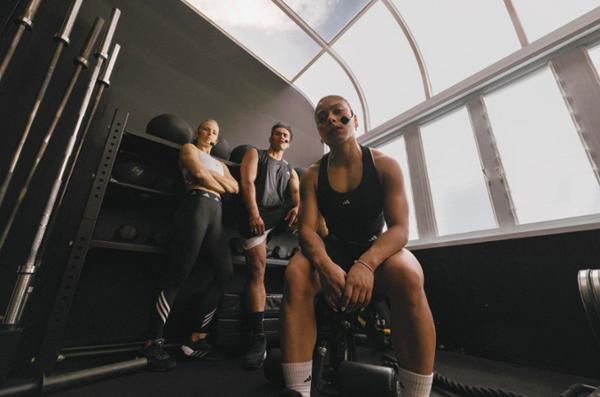
Strength is a huge training category right now / photo: Les Mills / Finn Cochran
Clubs now only have a share of a customer’s fitness experience / photo: Les Mills / adidas
The rise in strength training has been further fuelled by influencer culture / photo: Les Mills / Finn Cochran
Exercise classes can extend capacity when strength areas are full / photo: Les Mills / Finn Cochran
https://www.leisureopportunities.co.uk/images/2024/654156_564001.jpg
Paul Bedford discusses the ‘double-edged sword’ of the growing trend for strength training, and his ambitions for the health and fitness sector
Latest News
Nuffield Health has told HCM that it takes its responsibilities towards its colleagues seriously and ...

Latest News
Technogym has announced the launch of the Run X World Treadmill Championship, the first world ...

Latest News
Shocked by the UK loneliness statistics, charitable trust Mytime Active has been doubling down on ...
Latest News
Portugal’s leading operator, SC Fitness, is celebrating a milestone by reaching 100 gyms.  The company ...
Latest News
Australia’s fast-growing fitness network, Viva Leisure, is adding a low-cost gym brand to its already ...
Latest News
Speedflex has launched a strength training programme for 10 to 16-year-olds, to make it safer, ...
Latest News
Tewinbury Farm Hotel in Hertfordshire, UK is expanding its premium leisure proposition with the launch ...
Latest News

Work is underway in Madrid on one of Europe’s most significant multi-functional complexes, ...

Latest News
PureGym is encouraging people to step away from their screens and go for a walk, ...
Latest News
Small improvements to sleep, diet quality, and physical activity, made in combination lead to a ...
Latest News
Therme Manchester’s 28-acre development, which will include interconnected glass pavilions that measure 65,000sq m, will ...
Opinion
promotion
Strength training has moved from the margins to the mainstream.
Opinion: Building smarter strength spaces for today’s operators
Featured supplier news
Featured supplier news: Reaching the people most gyms miss: Bedford Gym & Swim Campaign delivers 410 new members
One of the biggest mistakes the fitness industry still makes is advertising almost exclusively to people who already look and live like gym members.
Featured supplier news
Featured supplier news: W3Fit EMEA celebrates its fifth anniversary
Celebrating its milestone 5th anniversary, W3Fit EMEA returns in 2026 with an unmissable gathering of the Health & Fitness industry’s most influential leaders.
Company profiles
Company profile: Innerva
Innerva are a UK manufacturer of ‘Power Assisted Exercise’ equipment for older adults, those with ...
Company profiles
Company profile: EGYM UK Ltd
EGYM partners with companies to improve employee health by providing access to fitness and health ...
Supplier Showcases
Supplier Showcase - Future-proofing
Catalogue Gallery
Click on a catalogue to view it online
Featured press releases
GYMNATION press release: Massive ‘Good Luck’ message appears in Saudi Desert as Green Falcons head to World Cup
Passengers flying out of Riyadh this week have been treated to an extraordinary sight from the skies after GymNation unveiled a giant desert sand mural supporting the Saudi Arabia National Football Team ahead of the FIFA World Cup in the United States.
Featured press releases
BLK BOX press release: BLK BOX strengthens European growth with the appointment of Germany country manager Timo Garrels
BLK BOX is proud to welcome Timo Garrels as Germany country manager, marking another important step in the brand’s continued growth across Europe.
Directory
Industrial washing machines
Miele Company Limited: Industrial washing machines
Lockers
Crown Sports Lockers: Lockers
Water experiences and hydrotherapy solutions
Aquaform s.r.l.: Water experiences and hydrotherapy solutions
Fitness tracking platform
SpiviTech: Fitness tracking platform
Spa and beauty equipment
Oakworks Inc: Spa and beauty equipment
Hot tubs
MSpa International Ltd: Hot tubs
Property & Tenders
Stratford, East London.
Lee Valley Regional Park Authority
Property & Tenders
Y Felinheli, LL56 4QN
Newmark
Property & Tenders
Diary dates
13-13 Jun 2026
Worldwide, Various,
Diary dates
21-24 Sep 2026
The Langham Huntington Pasadena , Pasadena, United States
Diary dates
06-08 Oct 2026
Messe Stuttgart, Stuttgart, Germany
Diary dates
22-22 Oct 2026
QEII Conference Centre, London,
Diary dates
26-29 Oct 2027
Koelnmesse Exhibition Centre, Cologne, Germany
Diary dates
Search news, features & products:
Find a supplier:
Elevate Arena
Elevate Arena
Partner sites