












Elevate Arena
Elevate Arena
Elevate Arena
Follow Health Club Management on Twitter Like Health Club Management on Facebook Join the discussion with Health Club Management on LinkedIn
FITNESS, HEALTH, WELLNESS

features

Opinion: Physical trainers as health workers

Florence Nightingale played an important role in the fitness industry and if she were still with us, she’d certainly be campaigning for fitness trainers to be fully involved in combating the effects of lockdown, says Muir Gray

Published in Health Club Management 2021 issue 11
The ties that existed between physical training and healthcare have been cut and healthcare and fitness have become separate industries. This has to change

Florence was horrified at the state of health of British soldiers in Crimea, where more died of the effects of their poor conditioning than from bullets. After the war she took action and 12 “instructors” – at that time primarily focused on how to shoot and fight – were sent to Oxford.

They were sent for two reasons, the first was that Regius Professor of Medicine, Sir Henry Acland, had made it clear he was very willing to help the army improve the health and wellbeing of the soldiers. The second, more important reason, was that one of the world’s first gymnasiums of the modern era was based in Oxford.

This gymnasium was run by a Scotsman called Robert McLaren, who himself had studied physical training in Paris and brought fencing and a range of gymnastic opportunities such as rings to the Oxford undergraduates. The building can still be seen today at the corner of Blue Boar Street and Alfred Street and is quite reminiscent of the German Gymnasium in London’s Kings Cross, with its solid brick construction.

McLaren went on to fund one of Oxford’s best known schools – Summerfields – as well as developing the fitness industry in Oxford in the 1860s.

The 12 instructors, renamed the 12 Apostles, went back to the army after their training and embarked on a mission to improve the health, wellbeing and conditioning of British soldiers.

The rise of the PTI
Physical training instructors – or PTIs as they were also called – found a place outside the army when their days in service were over and physical training became a key part of healthcare in the 19th century, in part because there were so few effective medical interventions available.

In the 20th and 21st centuries the number of effective medical interventions available has increased astonishingly – in the last 50 years alone we’ve seen transplantation, hip replacement and chemotherapy, to name but three.

However, important though these are, there’s an increasing recognition that everyone with a long-term condition needs to receive activity therapy as well as drug, operative or psychological therapy – a recognition epitomised in the 2015 report from the Academy of the Medical Royal Colleges called Exercise, The Miracle Cure.

But today, the ties that existed between physical training and healthcare have been cut and healthcare and fitness have become separate industries – at least in the UK – although the pattern is different in other countries, notably Germany, where there remains greater integration.

Today the NHS desperately needs 55,000 trainers to help people deal with the effects of long-term conditions – particularly those who don’t reach the specialist NHS rehabilitation services – probably about 12 million people in all. There just aren’t enough physiotherapists and health professionals in the NHS to reach out with support.

The Living Longer Better Programme is now working with 20 branches of Sport England via activity partnerships and the experience of people from the health service when meeting trainers or people with Sport Science degrees is often one of surprise, because their culture is so close to that of clinicians. A simple and wide definition of coaching is, “to close the gap between performance and potential” – exactly the same as the mission of rehabilitation.

What’s needed now is to mobilise 55,000 trainers and deploy their commitment, skills and experience to resolve individual long-term conditions, including Long-COVID and the increasing challenge of multi-morbidity, but how is this to be done?

Recruiting trainers
One of the lessons of the pandemic has been that when we use the term ‘resources’ we need to think of more than money. Furthermore, lack of money is not the principal constraint and the health service is now clear that a much more important constraint is the time available to the workforce, as there are not thousands or even hundreds of physiotherapists, occupational therapists, exercise physiologists and sports and exercise medicine doctors waiting to be employed.

A second constraint is space and although much attention has been paid to the lack of space in intensive care, Helen Salisbury, a highly respected GP who writes weekly in the British Medical Journal, pointed out that even without social distancing the amount of space in health centres is also very limited.

For physical trainers, however, this is not a major issue. They’re used to finding a village hall, church hall or some other space to work in and are increasingly confident about managing digital sessions in groups, as well as delivering face-to-face interactions with individuals who could benefit from closing the gap between potential and performance.

Money sometimes remains an issue, but there’s a potential solution to this in England in the form of the Additional Roles Reimbursement Scheme (ARRS), under which NHS England is providing funding for 26,000 new roles to create bespoke multi-disciplinary teams.

Reducing the pressure
Hospital services will be under intense pressure in the next few years, not only meeting new needs but also coping with a backlog of cancer treatment and elective surgery.

This, in turn, will increase pressure on primary care services, where health professionals are already coping with the implications of social distancing, the loss of staff who are self-isolating and the increasing tension of people seeking help who tend to take their frustration out on primary care staff, rather than on those who are responsible.

ARRS was introduced to help primary care teams recruit key staff such as physiotherapists, nurses and podiatrists, but although health and wellbeing coaches are on the list, there’s no mention of trainers, in spite of the fact that they could make a contribution by supporting people whose problems have been increased by the pandemic.

There are many trainers who have additional qualifications in supporting people with things such as Type 2 Diabetes, heart disease, respiratory disease and other common causes and consequences of both disease and inactivity.

ARRS funding will be administered by The Primary Care Networks, of which around 1,200 are already in place. They’re well organised because they relate to local communities and of course understand the social prescribing opportunities that are available in local gyms and fitness centres, which is all hopeful.

We must ensure they understand the terrific contributions trainers could make and we also need NHS England to understand that most trainers are not fully focused on ‘young people in lycra’, with many having a longstanding commitment to supporting people with their health improvement and the skills and competence required to make a difference.

We need to ask the Department of Health and Social Care to meet with the Department of Culture, Media and Sport – perhaps somewhere near the statue of Florence Nightingale on Pall Mall – and reach agreement that the time is absolutely right for the rebirth of the physical trainer as a health worker, just as Florence Nightingale planned, predicted and produced.
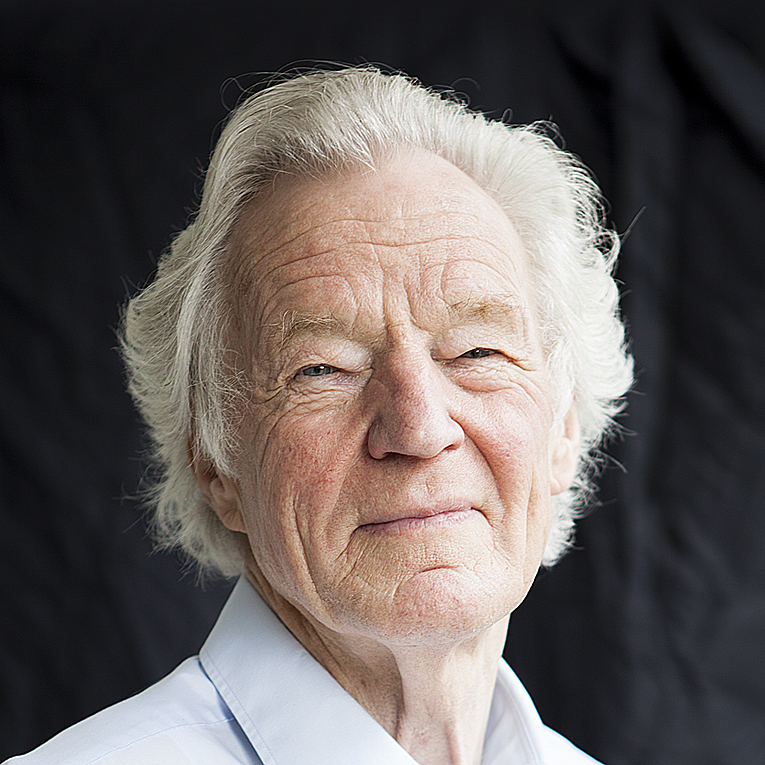
"We need to ask the Department of Health and Social Care to meet with the Department of Culture, Media and Sport – perhaps somewhere near the statue of Florence Nightingale on Pall Mall – and reach agreement that the time is absolutely right for the rebirth of the physical trainer as a health worker, just as Florence Nightingale planned, predicted and produced," – Muir Gray

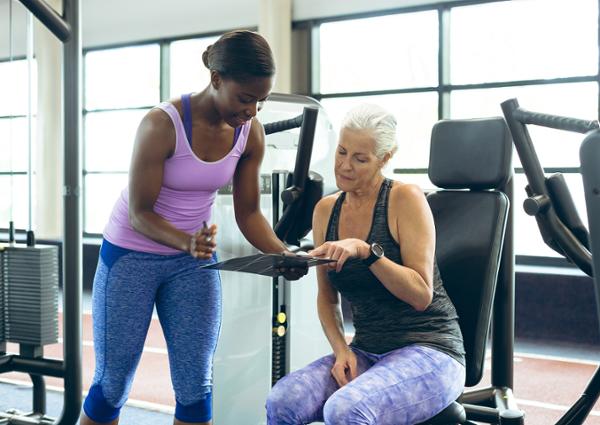
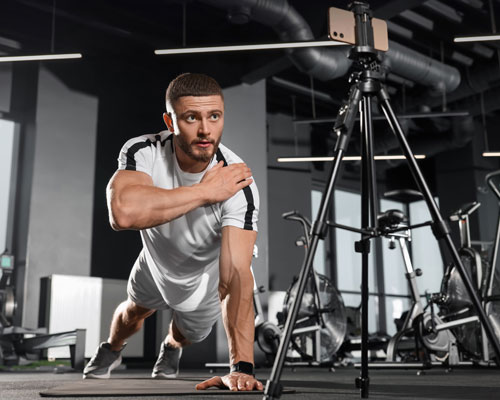
The NHS needs 55,000 PTs to help people with long-term conditions / photo: wavebreak media - shutterstock
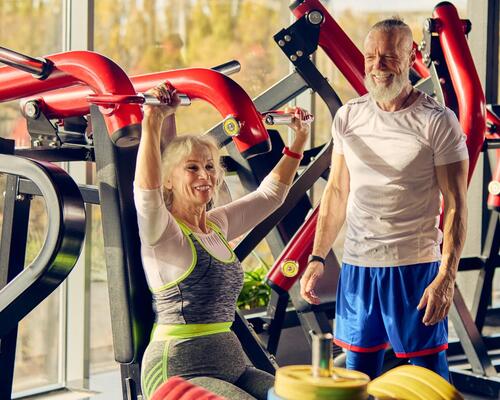
Nightingale commissioned the training of the first PTs to support / photo: Tony Baggett - shutterstock
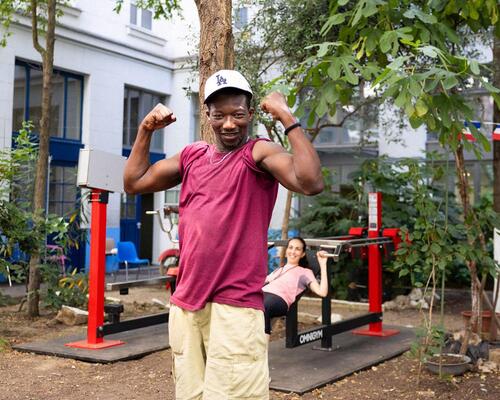
Most PTs are not merely focused on helping ‘young people in lycra’ / photo: wavebreak media - shutterstock
https://www.leisureopportunities.co.uk/images/2021/HCM2021_11p70.jpg
The bonds that existed long ago between exercise and healthcare must be reforged, says Muir Gray
HCM magazine
HCM People

Stephen Price

Founder, SP&Co Group
Working in public health over the last few years has lit up parts of my brain again
HCM magazine
As the entrepreneur who started Wexer, Fresh Fitness, Fitness DK and Repeat, as well as being a former elite athlete, Rasmus Ingerslev’s life looked perfect from the outside, but onthe inside it was a different story. He talks to Kath Hudson about healing old wounds
HCM magazine
Strength training is evolving, driven by changing consumer preferences. Julie Cramer talks to innovators about how their products are meeting this demand
HCM magazine
Collaborations with the medical profession and greater aspirations around wellbeing are creating a need for more experts in our sector. It’s time to reboot our thinking around the workforce
HCM magazine
I experienced a blissful feeling of joy I hadn’t felt since I was a kid
HCM promotional features
Sponsored
Starpool supports Olympic champion Marcell Jacobs, says Riccardo Turri
HCM promotional features
Sponsored
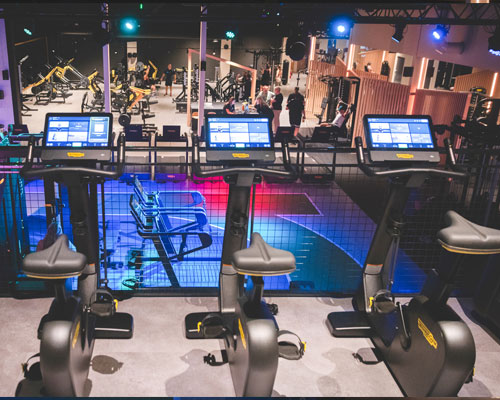
Third Space partnered with IndigoFitness to deliver a bespoke training space for its new club at The Whiteley
HCM promotional features
Sponsored
Find out how your gym can tap into the corporate wellness boom
HCM promotional features
Sponsored
Greg Bradley looks at the shift towards strength training in gyms and advises on how operators can create the ultimate training environment
HCM promotional features
Sponsored
David Lloyd is stepping up its commitment to women’s health as it continues to explore what fit-for-purpose looks like for the female population
HCM promotional features
Sponsored
SnowDome Fitness has added 50 per cent more space with cutting-edge Technogym solutions
HCM promotional features
Sponsored
EGYM has opened a new HQ in Paternoster Square, London and revealed a range of new launches
HCM promotional features
Sponsored
New launch, Salus House, elevates boutique wellness with high service levels and a partnership with Technogym
HCM promotional features
Promotion
BLK BOX has been reimagining elite performance spaces for more than a decade. Founder and former athlete, Greg Bradley, tells us what it takes
HCM promotional features
Latest News
Nuffield Health has told HCM that it takes its responsibilities towards its colleagues seriously and ...
Latest News
Technogym has announced the launch of the Run X World Treadmill Championship, the first world ...
Latest News
Shocked by the UK loneliness statistics, charitable trust Mytime Active has been doubling down on ...
Latest News
Portugal’s leading operator, SC Fitness, is celebrating a milestone by reaching 100 gyms.  The company ...
Latest News
Australia’s fast-growing fitness network, Viva Leisure, is adding a low-cost gym brand to its already ...
Latest News
Speedflex has launched a strength training programme for 10 to 16-year-olds, to make it safer, ...
Latest News
Tewinbury Farm Hotel in Hertfordshire, UK is expanding its premium leisure proposition with the launch ...
Latest News

Work is underway in Madrid on one of Europe’s most significant multi-functional complexes, ...

Opinion
promotion
Strength training has moved from the margins to the mainstream.
Opinion: Building smarter strength spaces for today’s operators
Featured supplier news
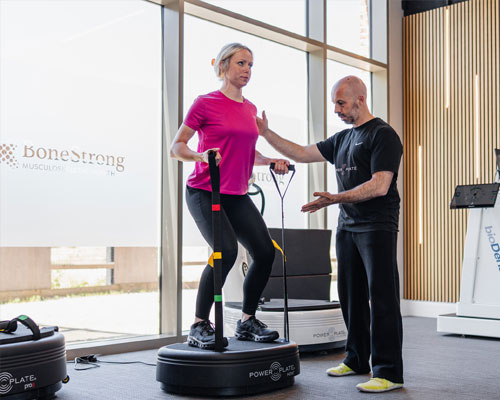
Featured supplier news: Supporting long-term health: why whole body vibration belongs in clinical settings
As healthcare continues to shift towards prevention, there’s a growing focus on helping people stay active, independent and feeling good for longer.
Featured supplier news
Featured supplier news: W3Fit EMEA celebrates its fifth anniversary
Celebrating its milestone 5th anniversary, W3Fit EMEA returns in 2026 with an unmissable gathering of the Health & Fitness industry’s most influential leaders.
Company profiles
Company profile: Eleiko Group AB
Eleiko continues to innovate and craft world-class strength equipment designed to help people perform better ...
Company profiles
Company profile: Pure Energy Music
Pure Energy Music is a specialist music service built specifically for the fitness industry. Our ...
Supplier Showcases
Supplier Showcase - Future-proofing
Catalogue Gallery
Click on a catalogue to view it online
Featured press releases
GYMNATION press release: Massive ‘Good Luck’ message appears in Saudi Desert as Green Falcons head to World Cup
Passengers flying out of Riyadh this week have been treated to an extraordinary sight from the skies after GymNation unveiled a giant desert sand mural supporting the Saudi Arabia National Football Team ahead of the FIFA World Cup in the United States.
Featured press releases
BLK BOX press release: BLK BOX strengthens European growth with the appointment of Germany country manager Timo Garrels
BLK BOX is proud to welcome Timo Garrels as Germany country manager, marking another important step in the brand’s continued growth across Europe.
Directory
Lockers
Crown Sports Lockers: Lockers
Water experiences and hydrotherapy solutions
Aquaform s.r.l.: Water experiences and hydrotherapy solutions
Hot tubs
MSpa International Ltd: Hot tubs
Spa and beauty equipment
Oakworks Inc: Spa and beauty equipment
Industrial washing machines
Miele Company Limited: Industrial washing machines
Fitness tracking platform
SpiviTech: Fitness tracking platform
Property & Tenders
Stratford, East London.
Lee Valley Regional Park Authority
Property & Tenders
Y Felinheli, LL56 4QN
Newmark
Property & Tenders
Diary dates
13-13 Jun 2026
Worldwide, Various,
Diary dates
21-24 Sep 2026
The Langham Huntington Pasadena , Pasadena, United States
Diary dates
06-08 Oct 2026
Messe Stuttgart, Stuttgart, Germany
Diary dates
22-22 Oct 2026
QEII Conference Centre, London,
Diary dates
26-29 Oct 2027
Koelnmesse Exhibition Centre, Cologne, Germany
Diary dates

features

Opinion: Physical trainers as health workers

Florence Nightingale played an important role in the fitness industry and if she were still with us, she’d certainly be campaigning for fitness trainers to be fully involved in combating the effects of lockdown, says Muir Gray

Published in Health Club Management 2021 issue 11
The ties that existed between physical training and healthcare have been cut and healthcare and fitness have become separate industries. This has to change

Florence was horrified at the state of health of British soldiers in Crimea, where more died of the effects of their poor conditioning than from bullets. After the war she took action and 12 “instructors” – at that time primarily focused on how to shoot and fight – were sent to Oxford.

They were sent for two reasons, the first was that Regius Professor of Medicine, Sir Henry Acland, had made it clear he was very willing to help the army improve the health and wellbeing of the soldiers. The second, more important reason, was that one of the world’s first gymnasiums of the modern era was based in Oxford.

This gymnasium was run by a Scotsman called Robert McLaren, who himself had studied physical training in Paris and brought fencing and a range of gymnastic opportunities such as rings to the Oxford undergraduates. The building can still be seen today at the corner of Blue Boar Street and Alfred Street and is quite reminiscent of the German Gymnasium in London’s Kings Cross, with its solid brick construction.

McLaren went on to fund one of Oxford’s best known schools – Summerfields – as well as developing the fitness industry in Oxford in the 1860s.

The 12 instructors, renamed the 12 Apostles, went back to the army after their training and embarked on a mission to improve the health, wellbeing and conditioning of British soldiers.

The rise of the PTI
Physical training instructors – or PTIs as they were also called – found a place outside the army when their days in service were over and physical training became a key part of healthcare in the 19th century, in part because there were so few effective medical interventions available.

In the 20th and 21st centuries the number of effective medical interventions available has increased astonishingly – in the last 50 years alone we’ve seen transplantation, hip replacement and chemotherapy, to name but three.

However, important though these are, there’s an increasing recognition that everyone with a long-term condition needs to receive activity therapy as well as drug, operative or psychological therapy – a recognition epitomised in the 2015 report from the Academy of the Medical Royal Colleges called Exercise, The Miracle Cure.

But today, the ties that existed between physical training and healthcare have been cut and healthcare and fitness have become separate industries – at least in the UK – although the pattern is different in other countries, notably Germany, where there remains greater integration.

Today the NHS desperately needs 55,000 trainers to help people deal with the effects of long-term conditions – particularly those who don’t reach the specialist NHS rehabilitation services – probably about 12 million people in all. There just aren’t enough physiotherapists and health professionals in the NHS to reach out with support.

The Living Longer Better Programme is now working with 20 branches of Sport England via activity partnerships and the experience of people from the health service when meeting trainers or people with Sport Science degrees is often one of surprise, because their culture is so close to that of clinicians. A simple and wide definition of coaching is, “to close the gap between performance and potential” – exactly the same as the mission of rehabilitation.

What’s needed now is to mobilise 55,000 trainers and deploy their commitment, skills and experience to resolve individual long-term conditions, including Long-COVID and the increasing challenge of multi-morbidity, but how is this to be done?

Recruiting trainers
One of the lessons of the pandemic has been that when we use the term ‘resources’ we need to think of more than money. Furthermore, lack of money is not the principal constraint and the health service is now clear that a much more important constraint is the time available to the workforce, as there are not thousands or even hundreds of physiotherapists, occupational therapists, exercise physiologists and sports and exercise medicine doctors waiting to be employed.

A second constraint is space and although much attention has been paid to the lack of space in intensive care, Helen Salisbury, a highly respected GP who writes weekly in the British Medical Journal, pointed out that even without social distancing the amount of space in health centres is also very limited.

For physical trainers, however, this is not a major issue. They’re used to finding a village hall, church hall or some other space to work in and are increasingly confident about managing digital sessions in groups, as well as delivering face-to-face interactions with individuals who could benefit from closing the gap between potential and performance.

Money sometimes remains an issue, but there’s a potential solution to this in England in the form of the Additional Roles Reimbursement Scheme (ARRS), under which NHS England is providing funding for 26,000 new roles to create bespoke multi-disciplinary teams.

Reducing the pressure
Hospital services will be under intense pressure in the next few years, not only meeting new needs but also coping with a backlog of cancer treatment and elective surgery.

This, in turn, will increase pressure on primary care services, where health professionals are already coping with the implications of social distancing, the loss of staff who are self-isolating and the increasing tension of people seeking help who tend to take their frustration out on primary care staff, rather than on those who are responsible.

ARRS was introduced to help primary care teams recruit key staff such as physiotherapists, nurses and podiatrists, but although health and wellbeing coaches are on the list, there’s no mention of trainers, in spite of the fact that they could make a contribution by supporting people whose problems have been increased by the pandemic.

There are many trainers who have additional qualifications in supporting people with things such as Type 2 Diabetes, heart disease, respiratory disease and other common causes and consequences of both disease and inactivity.

ARRS funding will be administered by The Primary Care Networks, of which around 1,200 are already in place. They’re well organised because they relate to local communities and of course understand the social prescribing opportunities that are available in local gyms and fitness centres, which is all hopeful.

We must ensure they understand the terrific contributions trainers could make and we also need NHS England to understand that most trainers are not fully focused on ‘young people in lycra’, with many having a longstanding commitment to supporting people with their health improvement and the skills and competence required to make a difference.

We need to ask the Department of Health and Social Care to meet with the Department of Culture, Media and Sport – perhaps somewhere near the statue of Florence Nightingale on Pall Mall – and reach agreement that the time is absolutely right for the rebirth of the physical trainer as a health worker, just as Florence Nightingale planned, predicted and produced.

"We need to ask the Department of Health and Social Care to meet with the Department of Culture, Media and Sport – perhaps somewhere near the statue of Florence Nightingale on Pall Mall – and reach agreement that the time is absolutely right for the rebirth of the physical trainer as a health worker, just as Florence Nightingale planned, predicted and produced," – Muir Gray

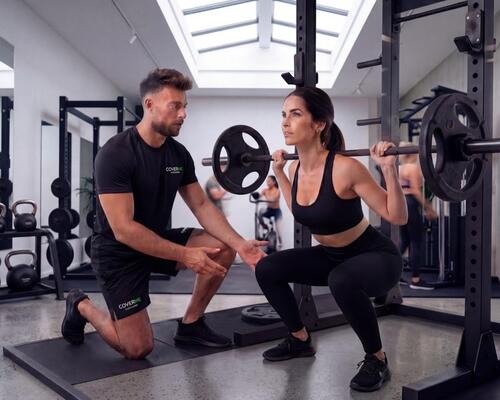
The NHS needs 55,000 PTs to help people with long-term conditions / photo: wavebreak media - shutterstock
Nightingale commissioned the training of the first PTs to support / photo: Tony Baggett - shutterstock
Most PTs are not merely focused on helping ‘young people in lycra’ / photo: wavebreak media - shutterstock
https://www.leisureopportunities.co.uk/images/2021/HCM2021_11p70.jpg
The bonds that existed long ago between exercise and healthcare must be reforged, says Muir Gray

Latest News
Nuffield Health has told HCM that it takes its responsibilities towards its colleagues seriously and ...
Latest News
Technogym has announced the launch of the Run X World Treadmill Championship, the first world ...
Latest News
Shocked by the UK loneliness statistics, charitable trust Mytime Active has been doubling down on ...
Latest News
Portugal’s leading operator, SC Fitness, is celebrating a milestone by reaching 100 gyms.  The company ...
Latest News
Australia’s fast-growing fitness network, Viva Leisure, is adding a low-cost gym brand to its already ...
Latest News
Speedflex has launched a strength training programme for 10 to 16-year-olds, to make it safer, ...
Latest News
Tewinbury Farm Hotel in Hertfordshire, UK is expanding its premium leisure proposition with the launch ...
Latest News

Work is underway in Madrid on one of Europe’s most significant multi-functional complexes, ...

Latest News
PureGym is encouraging people to step away from their screens and go for a walk, ...
Latest News
Small improvements to sleep, diet quality, and physical activity, made in combination lead to a ...
Latest News
Therme Manchester’s 28-acre development, which will include interconnected glass pavilions that measure 65,000sq m, will ...
Opinion
promotion
Strength training has moved from the margins to the mainstream.
Opinion: Building smarter strength spaces for today’s operators
Featured supplier news
Featured supplier news: Supporting long-term health: why whole body vibration belongs in clinical settings
As healthcare continues to shift towards prevention, there’s a growing focus on helping people stay active, independent and feeling good for longer.
Featured supplier news
Featured supplier news: W3Fit EMEA celebrates its fifth anniversary
Celebrating its milestone 5th anniversary, W3Fit EMEA returns in 2026 with an unmissable gathering of the Health & Fitness industry’s most influential leaders.
Company profiles
Company profile: Eleiko Group AB
Eleiko continues to innovate and craft world-class strength equipment designed to help people perform better ...
Company profiles
Company profile: Pure Energy Music
Pure Energy Music is a specialist music service built specifically for the fitness industry. Our ...
Supplier Showcases
Supplier Showcase - Future-proofing
Catalogue Gallery
Click on a catalogue to view it online
Featured press releases
GYMNATION press release: Massive ‘Good Luck’ message appears in Saudi Desert as Green Falcons head to World Cup
Passengers flying out of Riyadh this week have been treated to an extraordinary sight from the skies after GymNation unveiled a giant desert sand mural supporting the Saudi Arabia National Football Team ahead of the FIFA World Cup in the United States.
Featured press releases
BLK BOX press release: BLK BOX strengthens European growth with the appointment of Germany country manager Timo Garrels
BLK BOX is proud to welcome Timo Garrels as Germany country manager, marking another important step in the brand’s continued growth across Europe.
Directory
Lockers
Crown Sports Lockers: Lockers
Water experiences and hydrotherapy solutions
Aquaform s.r.l.: Water experiences and hydrotherapy solutions
Hot tubs
MSpa International Ltd: Hot tubs
Spa and beauty equipment
Oakworks Inc: Spa and beauty equipment
Industrial washing machines
Miele Company Limited: Industrial washing machines
Fitness tracking platform
SpiviTech: Fitness tracking platform
Property & Tenders
Stratford, East London.
Lee Valley Regional Park Authority
Property & Tenders
Y Felinheli, LL56 4QN
Newmark
Property & Tenders
Diary dates
13-13 Jun 2026
Worldwide, Various,
Diary dates
21-24 Sep 2026
The Langham Huntington Pasadena , Pasadena, United States
Diary dates
06-08 Oct 2026
Messe Stuttgart, Stuttgart, Germany
Diary dates
22-22 Oct 2026
QEII Conference Centre, London,
Diary dates
26-29 Oct 2027
Koelnmesse Exhibition Centre, Cologne, Germany
Diary dates
Search news, features & products:
Find a supplier:
Elevate Arena
Elevate Arena
Partner sites