















Follow Health Club Management on Twitter Like Health Club Management on Facebook Join the discussion with Health Club Management on LinkedIn
FITNESS, HEALTH, WELLNESS

features

Interview – Maneesh Juneja:

Tom Walker speaks to the digital health visionary about the likelihood of technology making GPs and fitness professionals redundant
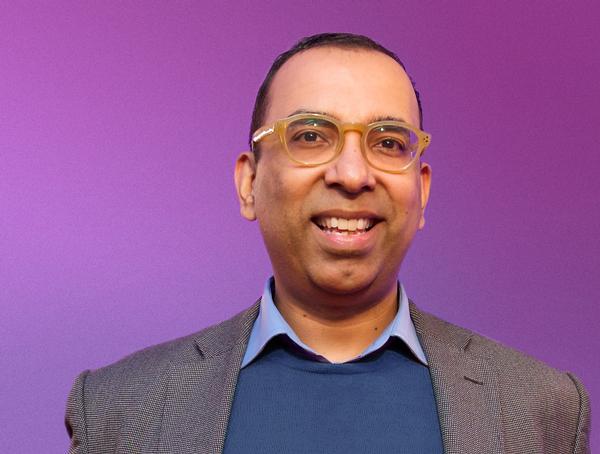
By Tom Walker, Leisure Media | Published in Health Club Management 2015 issue 2
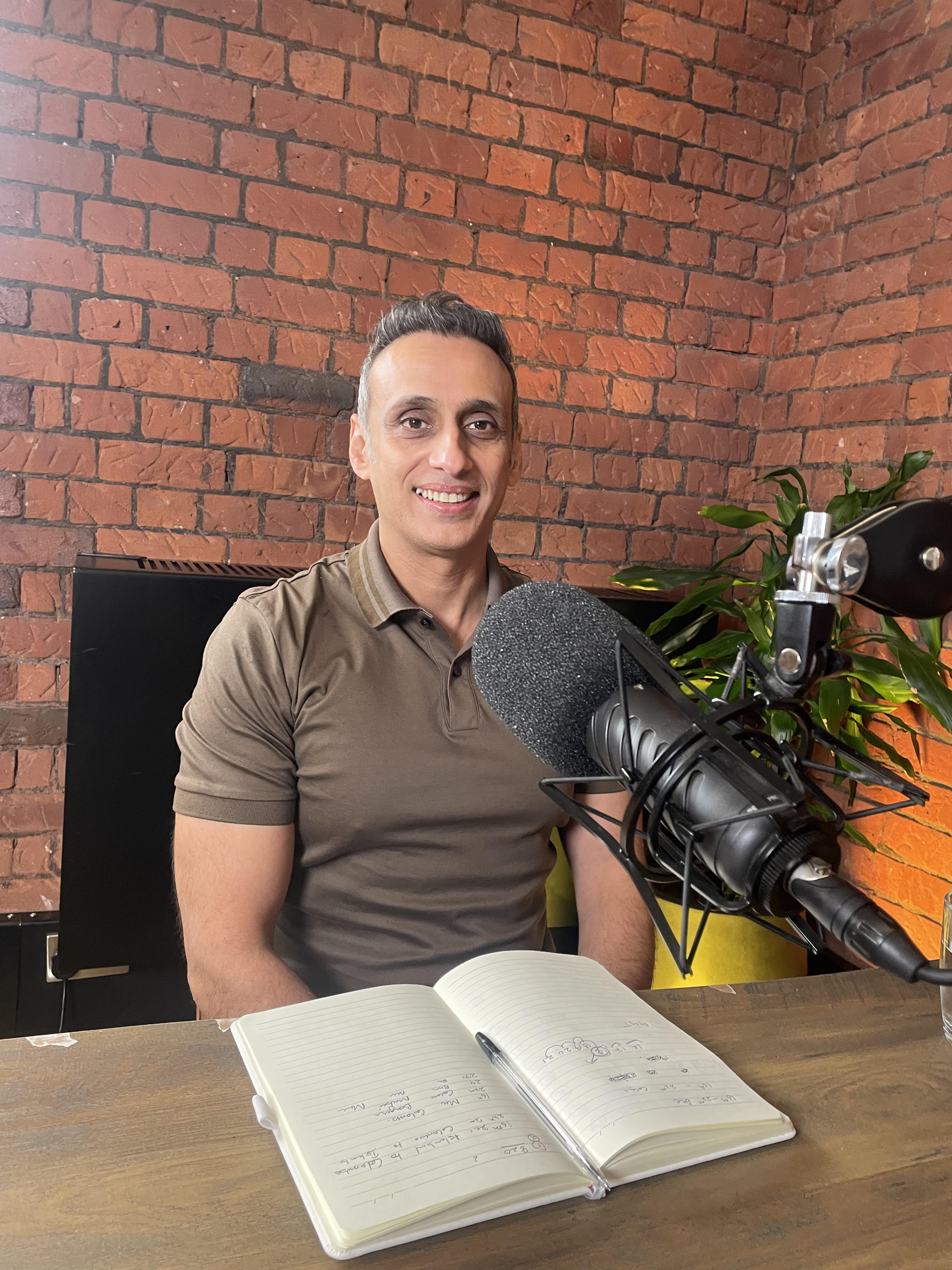
Maneesh Juneja
Maneesh Juneja
Technology, data, algorithms and sensors are increasingly prevalent, but there’s still a need for creating personal experiences”

It’s impossible to not feel inspired by – and perhaps a bit scared of – the picture that Maneesh Juneja paints of the future. He says: “Imagine a world where 7 billion people are constantly connected and online, carrying a plethora of sensors, wearables and tech so that everything they do is registered and monitored.

“Now imagine the effect that could have on healthcare. As well as details on their blood pressure and heart rate, we could see what each individual eats and when; how much they move and how often; how much sleep they get; and what their drinking habits are. One day, it could be possible to monitor what entire populations are doing – in real time.”

Into the future
Juneja is a digital health futurist and has spent most of the past two decades working within the realm of technology and big data. With a degree in business and computing, in 1997 he joined marketing agency DunnHumby, which was in the process of creating the vast Tesco Clubcard database. It was when he was tasked with managing Tesco’s database of 8 million shoppers, being able to analyse every item they were buying, that Juneja was first offered a glimpse of the true value of data capture.

After leaving the agency, he had a brief stint working the stock market – “I made a lot of money and I lost it all in the space of six months,” he says – but found the lure of exploring opportunities within big data too tempting. Joining another agency, WWAV, he worked with data from charities and learnt more about how analysing data can be used to increase revenue – for example, profiling the type of people who are most likely to commit to a £2 a month standing order donation.

Armed with an increasing knowledge of data and how to use it, Juneja joined pharmaceutical giant GlaxoSmithKline in 2003, where he spent nine years helping the company understand – through analysing data from doctors’ offices and hospitals – how drugs are used in the real world and how this knowledge could impact both drug development and drug safety.   

“It was fascinating,” he recalls. “We worked with data from patients in the US, the UK, France and Germany. The largest data set had all the health insurance claims of 100 million Americans. I got to see the impact you can make on the health of people around the world, because you managed to do something with patient data that helped get a drug to market just a bit quicker.”

New frontiers
While he could easily have stayed at GSK and carved out a successful path in the drugs industry, a fortuitous invite to an event in 2011 changed Juneja’s outlook on the future of healthcare – and his own career.

“By chance I went to an event at the University of Cambridge, called ‘Silicon Valley comes to the UK’,” he recalls. “I met a number of leaders from Silicon Valley and they shared their insight and vision around what they were building and the technology that was coming. When I went back to my office, I couldn’t reconcile what I’d heard about the future with what I was working on on a daily basis. So I resigned with no plan whatsoever. All I knew was I needed to create space in my life for something new to come in.”

That ‘something new’ was digital health. Juneja set himself up as a consultant and immersed himself in the subject, consuming everything he could on the topic. Three years on and the investment and risk have paid off. He’s now a speaker in high demand, with his TEDx talks and appearances at high profile conferences such as Health 2.0 & Body Computing establishing him as one of the foremost thought leaders on digital health. He now travels the world both learning and sharing.

Part of his appeal as a speaker is that he isn’t afraid to rock the boat. Last year, he caused a storm by suggesting that technology – more specifically the combination of big data, the internet of things, the quantified self and wearable tech – could make some doctors unemployed within the next decade. He identified GPs as being particularly vulnerable to the possible streamlining of healthcare brought on by developing tech.

To demonstrate the point, when I meet Juneja he whips out his phone, swipes open an app and holds the phone up by both ends as if to take a photo. But rather than framing a shot, the screen is suddenly filled by an ECG graph jumping up and down across it. “This is what my heart is doing,” he explains. “The sensors are on the back of the phone cover and they record my pulse and heart activity from the edge of my fingertips. It’s been approved by the regulators and clinically validated, so you could record this and send it to a cardiologist for an opinion – the app gives all the info he needs to make an assessment. It’s an example of bringing healthcare out of the hospital and into the home.”

Digital fitness
It’s solutions such as these that pose particularly interesting questions not just for healthcare practitioners but for physical activity operators too. If doctors are in danger of being made redundant, where does the technological revolution leave personal trainers and other health club staff?

“It leaves them in similar peril,” is Juneja’s blunt answer. “It’s all about whether fitness professionals will be able to adjust and compete on equal terms with, say, a smartphone app that’s linked to wearable tech sensors and which offers a set of pre-recorded videos or coaching sessions. Can personal trainers compete with the convenience, price and accessibility of a downloadable app – or even a robot?

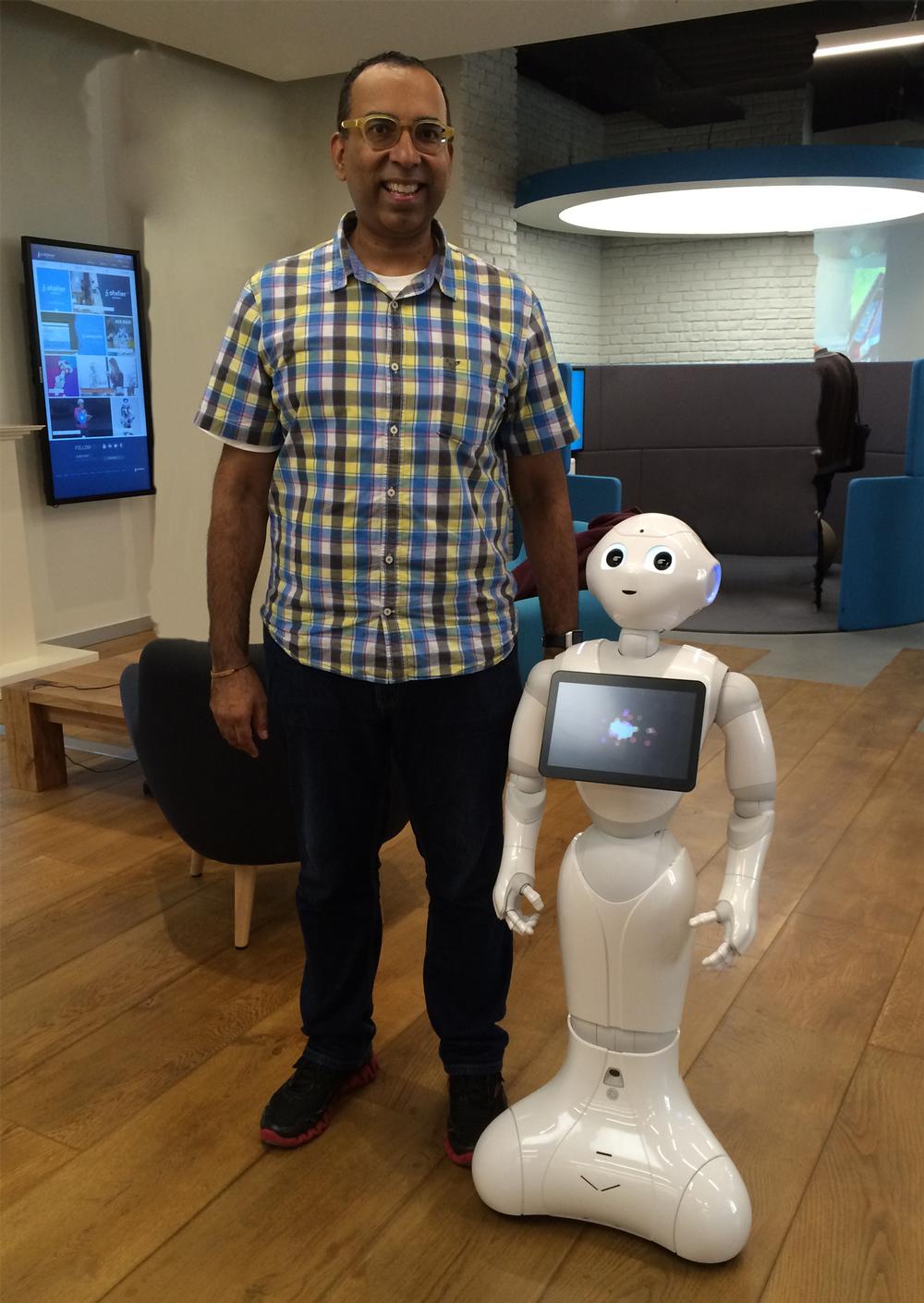
“It might sound outlandish at the moment, but interactive companion robots are expected to hit the market from late 2015. When it comes to fitness training or coaching, in years to come there are likely to be robots more than capable of teaching exercise movements. Some might even prefer a robot to a human being, because a robot will never judge.”

So what should people working in the fitness sector do to ensure they still have a role in 2025? Juneja says it’s important that the sector as a whole doesn’t just compete with the technology on offer, but begins to create and take part in it.

“I think it will be a case of the industry making sure it’s the one creating the new technologies and testing them, rather than just waiting for something to happen and trying to react to innovations,” Juneja says. “If you just wait for others to come up with the tech, you might find you’ve been done out of a job – that a bit of technology has replaced you.

“It’s about adapting to change but, more importantly, it’s about creating the change. What the fitness industry and people within it must say is: ‘If this is going to be the future, then I still want to play a part in it – and I’ll create something or test something to help it on its way’.”

Personal touch
Yet while technology is taking giant leaps, Juneja feels the only products and solutions that will ultimately be successful are ones that place the human at the core of it – and that doesn’t rule out interaction with other human beings, at least for now.

“We live in an era in which technology, data, algorithms and sensors are increasingly prevalent, but there’s still a need for creating personal experiences,” Juneja says. “Health clubs need to keep asking what value a human being can add to the process – whether it be the coach, the personal trainer or the reception staff. As the number of tasks apps and robots can perform increases, operators may discover different services that can be provided by humans.”

The message from Juneja for PTs and club staff is therefore not entirely grim. “For the foreseeable future at least, there remain many roles within fitness for actual human beings.”

Introducing Maneesh Juneja

In a career spanning nearly 20 years, Maneesh Juneja has worked with data to improve decision-making across a number of industries, including supporting the Whitehall study at University College London, managing the Tesco database at DunnHumby, and working with the world’s largest US health insurance claims and European EHR databases at GSK R&D. 

In 2012, he left the security of his career at GlaxoSmithKline to set up his own consultancy, MJ Analytics. In the same year, he also founded the Health 2.0 London Chapter, which has since become the UK’s largest grassroots health tech community.

In 2013, he gave a talk at TEDx O’Porto on his radical vision of 7 billion ‘citizen scientists’, and in
2014 delivered a talk in the UK and US entitled: ‘Healthcare in the future: Will advancing technology make doctors unemployed?

In addition to public speaking and consulting in the area of digital health, he continues to work hands-on with real-world patient data for international clients. 

Web maneeshjuneja.com

ABOUT THE AUTHOR

Tom Walker is managing editor of
Sports Management magazine
E: [email protected]
T: @sportsmagtom

Sign up here to get HCM's weekly ezine and every issue of HCM magazine free on digital.
Wearables will keep track of everything from blood pressure to drinking habits / PHOTO: WWW.SHUTTERSTOCK.COM/PHIL DATE
Juneja says companion robots will hit the market this year, and may ultimately even teach exercise movements
https://www.leisureopportunities.co.uk/images/330375_719531.jpg
Tom Walker talks to the digital health visionary about the likelihood of technology making GPs and fitness professionals redundant
Tom Walker Maneesh Juneja,Tom Walker, Maneesh Juneja, digital health, technology, big data, robots
HCM magazine
HCM People

Jamie Clements

The Breath Coach
I experienced a blissful feeling of joy I hadn’t felt since I was a kid
HCM magazine
For every member with a tripod and a big following, there are others irritated at the way equipment is being hogged or wary they’ll be in the background on someone’s Insta feed. Do influencers offer valuable, free marketing or are they just a nuisance? Kath Hudson finds out how operators are responding
HCM magazine
HCM People

Stephen Price

Founder, SP&Co Group
Working in public health over the last few years has lit up parts of my brain again
HCM magazine
As the entrepreneur who started Wexer, Fresh Fitness, Fitness DK and Repeat, as well as being a former elite athlete, Rasmus Ingerslev’s life looked perfect from the outside, but onthe inside it was a different story. He talks to Kath Hudson about healing old wounds
HCM magazine
Small improvements to sleep, diet and physical activity have major benefits for the heart, according to new research from the University of Sydney
HCM promotional features
Sponsored
Greg Bradley looks at the shift towards strength training in gyms and advises on how operators can create the ultimate training environment
HCM promotional features
Sponsored
Starpool supports Olympic champion Marcell Jacobs, says Riccardo Turri
HCM promotional features
Sponsored
David Lloyd is stepping up its commitment to women’s health as it continues to explore what fit-for-purpose looks like for the female population
HCM promotional features
Sponsored
Third Space partnered with IndigoFitness to deliver a bespoke training space for its new club at The Whiteley
HCM promotional features
Sponsored
Find out how your gym can tap into the corporate wellness boom
HCM promotional features
Sponsored
SnowDome Fitness has added 50 per cent more space with cutting-edge Technogym solutions
HCM promotional features
Sponsored
EGYM has opened a new HQ in Paternoster Square, London and revealed a range of new launches
HCM promotional features
Sponsored
Pulse Fitness has created a new health club delivering an elevated wellness experience
HCM promotional features
Sponsored
Active IQ is calling for greater accountability in online fitness advice with the launch of a new trustmark
HCM promotional features
Latest News
Preventive healthcare company Neko Health has added body composition analysis to its full-body health scan ...
Latest News
Chequan Lewis is the new CEO of Crunch Fitness, taking over from Jim Rowley, who ...
Latest News
Sea Lanes Canary Wharf has officially opened. The 50-metre, six-lane pool, which uses the natural ...
Latest News
London-based high-performance fitness club, ONE LDN, is raising funds for a multi-site expansion across London, ...
Latest News
A new brain clinic has opened in London, which uses non-invasive brain stimulation to treat ...
Latest News
Good Boost’s digital exercise programmes are helping adults with MSK at a lower cost than ...
Latest News
With Prime Minister, Keir Starmer, announcing his resignation this morning and Andy Burnham as a ...
Latest News
Koru Health Club launched recently within Luxembourg’s multi-experience destination, GRID X, which combines culture, retail ...
Opinion
promotion
Strength training has moved from the margins to the mainstream.
Opinion: Building smarter strength spaces for today’s operators
Featured supplier news
Featured supplier news: Cornerstone Connect helps Active Blackpool tackle health inequalities
Active Blackpool is deploying Cornerstone Connect, a new digital interface allowing disparate information from multiple systems to be aggregated into one dataset, to support its focus on reducing health inequalities and improving healthy life expectancy.
Featured supplier news
Featured supplier news: CoverMe extends matching service to personal training, rewriting how members and personal trainers connect
CoverMe, the global leader in fitness workforce management, today launches CoverMe PT, an on-demand personal training platform that connects the right personal trainer to the right client in under 10 seconds.
Company profiles
Company profile: Power Plate
Power Plate's range of products include whole body vibration platforms, targeted vibration products and the ...
Company profiles
Company profile: GLL
GLL
As the UK’s leading provider of both leisure centres and libraries we operate 379 locations ...
Supplier Showcases
Supplier Showcase - Future-proofing
Catalogue Gallery
Click on a catalogue to view it online
Featured press releases
BLK BOX press release: Inside the build: Salt 
To bring their concept to life, Salt partnered with BLK BOX to design and equip a facility that would deliver a premium training experience while supporting the needs of a diverse and growing community.
Featured press releases
Swimming Teachers' Association (STA) press release: The Ripple Effect delivers first success as learners qualify and secure employment
STA's The Ripple Effect initiative has reached an important milestone after learners completed the charity's first fully funded swimming teacher training programme, resulting in seven newly qualified swimming teachers.
Directory
Hot tubs
MSpa International Ltd: Hot tubs
Water experiences and hydrotherapy solutions
Aquaform s.r.l.: Water experiences and hydrotherapy solutions
Spa and beauty equipment
Living Earth Crafts: Spa and beauty equipment
Lockers
Crown Sports Lockers: Lockers
Industrial washing machines
Miele Company Limited: Industrial washing machines
Fitness tracking platform
SpiviTech: Fitness tracking platform
Property & Tenders
Stratford, East London.
Lee Valley Regional Park Authority
Property & Tenders
Y Felinheli, LL56 4QN
Newmark
Property & Tenders
Diary dates
21-24 Sep 2026
The Langham Huntington Pasadena , Pasadena, United States
Diary dates
06-08 Oct 2026
Messe Stuttgart, Stuttgart, Germany
Diary dates
22-22 Oct 2026
QEII Conference Centre, London,
Diary dates
26-29 Oct 2027
Koelnmesse Exhibition Centre, Cologne, Germany
Diary dates

features

Interview – Maneesh Juneja:

Tom Walker speaks to the digital health visionary about the likelihood of technology making GPs and fitness professionals redundant

By Tom Walker, Leisure Media | Published in Health Club Management 2015 issue 2
Maneesh Juneja
Maneesh Juneja
Technology, data, algorithms and sensors are increasingly prevalent, but there’s still a need for creating personal experiences”

It’s impossible to not feel inspired by – and perhaps a bit scared of – the picture that Maneesh Juneja paints of the future. He says: “Imagine a world where 7 billion people are constantly connected and online, carrying a plethora of sensors, wearables and tech so that everything they do is registered and monitored.

“Now imagine the effect that could have on healthcare. As well as details on their blood pressure and heart rate, we could see what each individual eats and when; how much they move and how often; how much sleep they get; and what their drinking habits are. One day, it could be possible to monitor what entire populations are doing – in real time.”

Into the future
Juneja is a digital health futurist and has spent most of the past two decades working within the realm of technology and big data. With a degree in business and computing, in 1997 he joined marketing agency DunnHumby, which was in the process of creating the vast Tesco Clubcard database. It was when he was tasked with managing Tesco’s database of 8 million shoppers, being able to analyse every item they were buying, that Juneja was first offered a glimpse of the true value of data capture.

After leaving the agency, he had a brief stint working the stock market – “I made a lot of money and I lost it all in the space of six months,” he says – but found the lure of exploring opportunities within big data too tempting. Joining another agency, WWAV, he worked with data from charities and learnt more about how analysing data can be used to increase revenue – for example, profiling the type of people who are most likely to commit to a £2 a month standing order donation.

Armed with an increasing knowledge of data and how to use it, Juneja joined pharmaceutical giant GlaxoSmithKline in 2003, where he spent nine years helping the company understand – through analysing data from doctors’ offices and hospitals – how drugs are used in the real world and how this knowledge could impact both drug development and drug safety.   

“It was fascinating,” he recalls. “We worked with data from patients in the US, the UK, France and Germany. The largest data set had all the health insurance claims of 100 million Americans. I got to see the impact you can make on the health of people around the world, because you managed to do something with patient data that helped get a drug to market just a bit quicker.”

New frontiers
While he could easily have stayed at GSK and carved out a successful path in the drugs industry, a fortuitous invite to an event in 2011 changed Juneja’s outlook on the future of healthcare – and his own career.

“By chance I went to an event at the University of Cambridge, called ‘Silicon Valley comes to the UK’,” he recalls. “I met a number of leaders from Silicon Valley and they shared their insight and vision around what they were building and the technology that was coming. When I went back to my office, I couldn’t reconcile what I’d heard about the future with what I was working on on a daily basis. So I resigned with no plan whatsoever. All I knew was I needed to create space in my life for something new to come in.”

That ‘something new’ was digital health. Juneja set himself up as a consultant and immersed himself in the subject, consuming everything he could on the topic. Three years on and the investment and risk have paid off. He’s now a speaker in high demand, with his TEDx talks and appearances at high profile conferences such as Health 2.0 & Body Computing establishing him as one of the foremost thought leaders on digital health. He now travels the world both learning and sharing.

Part of his appeal as a speaker is that he isn’t afraid to rock the boat. Last year, he caused a storm by suggesting that technology – more specifically the combination of big data, the internet of things, the quantified self and wearable tech – could make some doctors unemployed within the next decade. He identified GPs as being particularly vulnerable to the possible streamlining of healthcare brought on by developing tech.

To demonstrate the point, when I meet Juneja he whips out his phone, swipes open an app and holds the phone up by both ends as if to take a photo. But rather than framing a shot, the screen is suddenly filled by an ECG graph jumping up and down across it. “This is what my heart is doing,” he explains. “The sensors are on the back of the phone cover and they record my pulse and heart activity from the edge of my fingertips. It’s been approved by the regulators and clinically validated, so you could record this and send it to a cardiologist for an opinion – the app gives all the info he needs to make an assessment. It’s an example of bringing healthcare out of the hospital and into the home.”

Digital fitness
It’s solutions such as these that pose particularly interesting questions not just for healthcare practitioners but for physical activity operators too. If doctors are in danger of being made redundant, where does the technological revolution leave personal trainers and other health club staff?

“It leaves them in similar peril,” is Juneja’s blunt answer. “It’s all about whether fitness professionals will be able to adjust and compete on equal terms with, say, a smartphone app that’s linked to wearable tech sensors and which offers a set of pre-recorded videos or coaching sessions. Can personal trainers compete with the convenience, price and accessibility of a downloadable app – or even a robot?

“It might sound outlandish at the moment, but interactive companion robots are expected to hit the market from late 2015. When it comes to fitness training or coaching, in years to come there are likely to be robots more than capable of teaching exercise movements. Some might even prefer a robot to a human being, because a robot will never judge.”

So what should people working in the fitness sector do to ensure they still have a role in 2025? Juneja says it’s important that the sector as a whole doesn’t just compete with the technology on offer, but begins to create and take part in it.

“I think it will be a case of the industry making sure it’s the one creating the new technologies and testing them, rather than just waiting for something to happen and trying to react to innovations,” Juneja says. “If you just wait for others to come up with the tech, you might find you’ve been done out of a job – that a bit of technology has replaced you.

“It’s about adapting to change but, more importantly, it’s about creating the change. What the fitness industry and people within it must say is: ‘If this is going to be the future, then I still want to play a part in it – and I’ll create something or test something to help it on its way’.”

Personal touch
Yet while technology is taking giant leaps, Juneja feels the only products and solutions that will ultimately be successful are ones that place the human at the core of it – and that doesn’t rule out interaction with other human beings, at least for now.

“We live in an era in which technology, data, algorithms and sensors are increasingly prevalent, but there’s still a need for creating personal experiences,” Juneja says. “Health clubs need to keep asking what value a human being can add to the process – whether it be the coach, the personal trainer or the reception staff. As the number of tasks apps and robots can perform increases, operators may discover different services that can be provided by humans.”

The message from Juneja for PTs and club staff is therefore not entirely grim. “For the foreseeable future at least, there remain many roles within fitness for actual human beings.”

Introducing Maneesh Juneja

In a career spanning nearly 20 years, Maneesh Juneja has worked with data to improve decision-making across a number of industries, including supporting the Whitehall study at University College London, managing the Tesco database at DunnHumby, and working with the world’s largest US health insurance claims and European EHR databases at GSK R&D. 

In 2012, he left the security of his career at GlaxoSmithKline to set up his own consultancy, MJ Analytics. In the same year, he also founded the Health 2.0 London Chapter, which has since become the UK’s largest grassroots health tech community.

In 2013, he gave a talk at TEDx O’Porto on his radical vision of 7 billion ‘citizen scientists’, and in
2014 delivered a talk in the UK and US entitled: ‘Healthcare in the future: Will advancing technology make doctors unemployed?

In addition to public speaking and consulting in the area of digital health, he continues to work hands-on with real-world patient data for international clients. 

Web maneeshjuneja.com

ABOUT THE AUTHOR

Tom Walker is managing editor of
Sports Management magazine
E: [email protected]
T: @sportsmagtom
Sign up here to get HCM's weekly ezine and every issue of HCM magazine free on digital.
Wearables will keep track of everything from blood pressure to drinking habits / PHOTO: WWW.SHUTTERSTOCK.COM/PHIL DATE

Juneja says companion robots will hit the market this year, and may ultimately even teach exercise movements
https://www.leisureopportunities.co.uk/images/330375_719531.jpg
Tom Walker talks to the digital health visionary about the likelihood of technology making GPs and fitness professionals redundant
Tom Walker Maneesh Juneja,Tom Walker, Maneesh Juneja, digital health, technology, big data, robots
Latest News
Preventive healthcare company Neko Health has added body composition analysis to its full-body health scan ...
Latest News
Chequan Lewis is the new CEO of Crunch Fitness, taking over from Jim Rowley, who ...
Latest News
Sea Lanes Canary Wharf has officially opened. The 50-metre, six-lane pool, which uses the natural ...
Latest News
London-based high-performance fitness club, ONE LDN, is raising funds for a multi-site expansion across London, ...
Latest News
A new brain clinic has opened in London, which uses non-invasive brain stimulation to treat ...
Latest News
Good Boost’s digital exercise programmes are helping adults with MSK at a lower cost than ...
Latest News
With Prime Minister, Keir Starmer, announcing his resignation this morning and Andy Burnham as a ...
Latest News
Koru Health Club launched recently within Luxembourg’s multi-experience destination, GRID X, which combines culture, retail ...
Latest News
Celebrating its 10th anniversary, Elevate has had its busiest show to date, with almost 200 ...
Latest News
A new report from Your Personal Training (YPT) suggests UK gym operators could be missing ...
Latest News
Eighty-four per cent of consumers now say wellness is a top priority in their lives, ...
Opinion
promotion
Strength training has moved from the margins to the mainstream.
Opinion: Building smarter strength spaces for today’s operators
Featured supplier news
Featured supplier news: Cornerstone Connect helps Active Blackpool tackle health inequalities
Active Blackpool is deploying Cornerstone Connect, a new digital interface allowing disparate information from multiple systems to be aggregated into one dataset, to support its focus on reducing health inequalities and improving healthy life expectancy.
Featured supplier news
Featured supplier news: CoverMe extends matching service to personal training, rewriting how members and personal trainers connect
CoverMe, the global leader in fitness workforce management, today launches CoverMe PT, an on-demand personal training platform that connects the right personal trainer to the right client in under 10 seconds.
Company profiles
Company profile: Power Plate
Power Plate's range of products include whole body vibration platforms, targeted vibration products and the ...
Company profiles
Company profile: GLL
GLL
As the UK’s leading provider of both leisure centres and libraries we operate 379 locations ...
Supplier Showcases
Supplier Showcase - Future-proofing
Catalogue Gallery
Click on a catalogue to view it online
Featured press releases
BLK BOX press release: Inside the build: Salt 
To bring their concept to life, Salt partnered with BLK BOX to design and equip a facility that would deliver a premium training experience while supporting the needs of a diverse and growing community.
Featured press releases
Swimming Teachers' Association (STA) press release: The Ripple Effect delivers first success as learners qualify and secure employment
STA's The Ripple Effect initiative has reached an important milestone after learners completed the charity's first fully funded swimming teacher training programme, resulting in seven newly qualified swimming teachers.
Directory
Hot tubs
MSpa International Ltd: Hot tubs
Water experiences and hydrotherapy solutions
Aquaform s.r.l.: Water experiences and hydrotherapy solutions
Spa and beauty equipment
Living Earth Crafts: Spa and beauty equipment
Lockers
Crown Sports Lockers: Lockers
Industrial washing machines
Miele Company Limited: Industrial washing machines
Fitness tracking platform
SpiviTech: Fitness tracking platform
Property & Tenders
Stratford, East London.
Lee Valley Regional Park Authority
Property & Tenders
Y Felinheli, LL56 4QN
Newmark
Property & Tenders
Diary dates
21-24 Sep 2026
The Langham Huntington Pasadena , Pasadena, United States
Diary dates
06-08 Oct 2026
Messe Stuttgart, Stuttgart, Germany
Diary dates
22-22 Oct 2026
QEII Conference Centre, London,
Diary dates
26-29 Oct 2027
Koelnmesse Exhibition Centre, Cologne, Germany
Diary dates
Search news, features & products:
Find a supplier:
Partner sites