











Follow Health Club Management on Twitter Like Health Club Management on Facebook Join the discussion with Health Club Management on LinkedIn
FITNESS, HEALTH, WELLNESS

features

Interview – Grover Daly: Grover Daly

The vice president of Downsize Fitness in the US, and owner of its Houston club, speaks to Kate Cracknell about transforming the lives of an overweight population
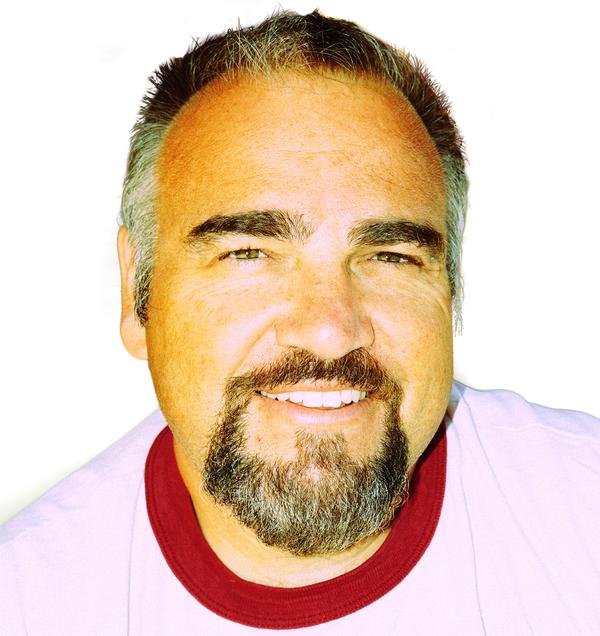
By Kate Cracknell | Published in Health Club Management 2015 issue 1
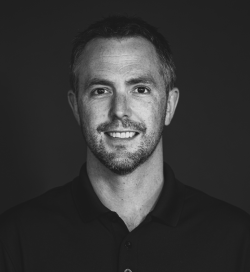
Grover Daly the vice president of Downsize Fitness
We have empathy because we’ve all been there, but that allows us to push members a little harder. We’ve earned the right to hold them accountable

When I first talk to prospective members, I ask them what their weight is limiting them from doing,” says Grover Daly, vice president of US-based Downsize Fitness and the owner of the chain’s Houston facility, which opened in August 2014. “You might lose 50lbs, 100lbs or 200lbs with us – and people will initially tell us weight loss is their goal – but it’s not their deeper motivation. The real reason people come to us is to be able to achieve something they couldn’t previously do because of their weight.

“Our core philosophy is therefore functional fitness – getting people healthy and able to live their lives. Although celebrating a 50lb weight loss is great, we encourage people to celebrate what they can now do with their lives because they’re 50lbs lighter, because that typically is huge.”

He continues: “That said, by no means do we negate the importance of somebody losing 50lbs. You can’t understate the importance of a number to them – they might not have weighed under 300lbs since school, and as they pass that milestone there’s a lightbulb moment when they start believing they can do it, that they’re worth it, and that it’s something they will therefore do. And they begin to challenge themselves to get below 275lbs, below 250lbs.

“At that point they become a cheerleader for health, for living well – and fortunately for us as an operator, for Downsize Fitness too.”

A safe haven
Downsize Fitness started life in November 2011, founded by Francis Wisniewski who remains chair of the company. Daly explains: “Francis weighed approximately 350–360lbs and had battled weight his entire life. He was working with a trainer and was getting frustrated by the lack of results, as well as feeling intimidated and judged and overwhelmed because of his size when he went to a traditional gym.
“He felt there was a need for a place, a gym facility, where larger people could go without feeling intimidated or judged – a safe haven in which to work out. So he created Downsize Fitness in Chicago, which is now our headquarters.”

The business has since grown to five sites – in Chicago, Naperville, Dallas and Houston in the US, and Ontario in Canada. Of these, two – in Ontario and Houston – are what Daly calls “hybrid” sites, part company-owned and part franchised. “They’re classified as company-owned, but we’re partners and in our day-to-day operations it’s just like a franchise, with the club being independently owned and operated. In Houston, I own the controlling interest – 90 per cent of the business – and Downsize Fitness retains 10 per cent.”

He adds: “Downsize Fitness is now looking to start offering franchises, and as part of that we’ll probably convert Houston and Ontario into full franchises.”

The ‘a-ha’ moment
So who exactly does Downsize Fitness appeal to – who is the target market?
“Our clubs are limited membership facilities for people who have a significant amount of weight to lose. ‘Significant’ will be different in different people’s eyes – it might be 30lbs or it might be 400lbs – and we won’t turn anyone away on this basis, but typically people have at least 50lbs to lose.

“In the US, 60 per cent of people are overweight and 30 per cent obese, so potentially we could appeal to a huge number of people. However, until people have had an ‘a-ha’ moment – where weight loss moves from being priority number 30 on their everyday list to a priority of one or two – we’ll never convince them to join.

“Everyone’s ‘a-ha’ moment will be different. Mine was that I hadn’t seen my mum in over a year and she walked by me because I’d gained so much weight she didn’t recognise me. For me that was huge, but also very motivating.”

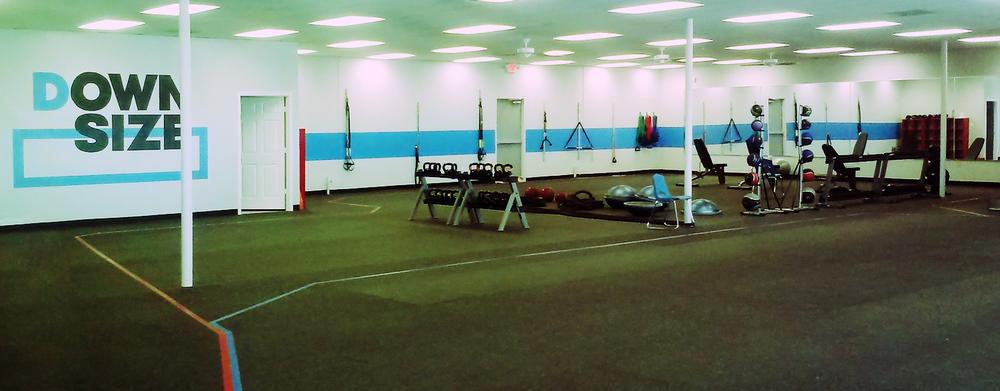
Daly continues: “Each Downsize club only has about 120–150 members, with a typical footprint of 3,000–3,500sq ft, and everything is done in semi-private sessions or classes. We have a maximum of 10 people in each class, and every time members will interact directly with the certified personal trainer. It’s effectively small group personal training, giving you personal attention but without the high price tag of PT.

“Pricing varies slightly from location to location, but it’s about US$89 a month for our Weight Loss 101 package, which gives you five visits a month; US$139 a month for the Weight Loss Journey, which gives you 10 visits a month; and US$199 a month for Weight Loss Transformation, which allows for unlimited visits. People have to be in it for the long term though, as our approach is about weight loss that lasts. We don’t talk about contracts – we sell 12-month and 18-month ‘commitments’.

“And if members are committed, this price is just unbelievable for them. They know a standard ‘train on your own’ gym won’t work for them, because they need accountability, and if they’ve had their ‘a-ha’ moment they will already have done their research and will know that personal training will cost them probably US$60–95 a session.”

Modification & progress
Daly continues: “We focus on three key elements: fitness, nutritional advice and weight loss coaching, under which falls accountability, structure, support and also camaraderie.

“In terms of fitness, everything we do is dynamic resistance, weight bearing. We don’t use machines, although we do use some equipment like kettlebells, resistance bands, TRX and Bosu balls. In a way it’s like the TV show The Biggest Loser: if you take the cardio equipment out of the equation and don’t yell as much, that’s kind of our game plan.

“There’s a huge variety in our timetable and each session is different, with the instructor deciding what they’re going to do that day. A cardio class might be Zumba, for example, or step aerobics. Our most popular class in the Houston club is total body conditioning, because members know they’ll get a full body workout – but again the class itself varies depending on what trainer they have, what they did the week before and so on. We also listen to what our members want – we’re looking to introduce self-defence and jiu jitsu to the schedule, for example.

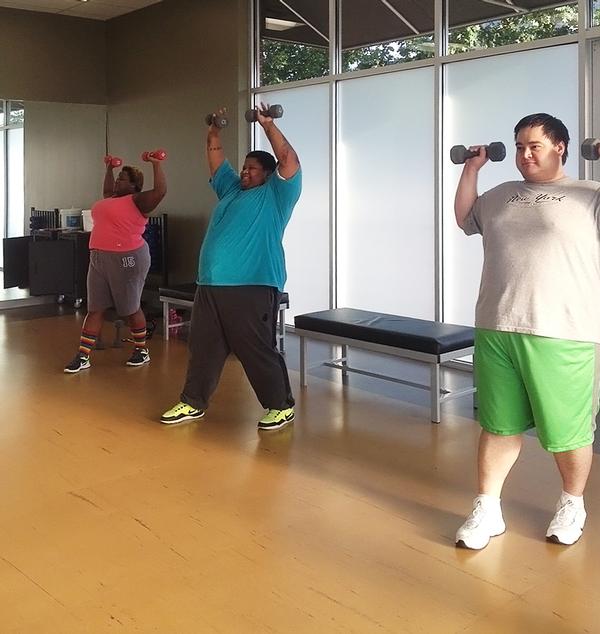
“One key point is that our trainers modify exercises for each individual in the session – that’s crucial. Other facilities don’t typically do that: people just follow the trainer and try to keep up. But our members can’t do that. In addition to weight-related issues, they might also have joint issues, back issues. Some can’t get down onto the floor. So you have to modify everything, but also keep moving members on to the next level as they progress.

“When it comes to tracking results, we use body composition analysis, focusing on fat pounds lost versus weight pounds lost, because just looking at weight on the scales can be misleading. If someone weighs 350lbs, it’s fair to guess that they don’t usually exercise, and they’re looking for an excuse not to come back to your gym. If they get on the scales and have only lost 4lbs, it’s demoralising and they’ll leave. But if you can show them that in fact they lost 15lbs of body fat and gained 11lbs of lean muscle tissue – and that’s why the scale only shows 4lbs – it’s different. In reality they’ve changed their body almost 30lbs, and that’s huge – enough for their clothes to fit differently and their health to improve.”

He continues: “People may ultimately ‘graduate’ from Downsize, leaving when they’ve reached their goal and feel ready to exercise elsewhere, but we never force them out. If they want to carry on exercising with us, and with the friends they’ve made at Downsize, that’s fine. They’re our success stories and they can inspire other members.

“And people do reach their goals. We know physiologically that, if you follow all of our recommendations, it’s impossible for you not to be successful – to the point that, although there’s no company-wide policy on this, at my club I offer a money back guarantee.”

People like us
He continues: “In terms of the design of the club, all the windows at the front are opaque. Our members feel comfortable that only the people inside the club can see them, and those people are either members such as themselves – because we’re growing a community here – or the trainers and general managers who have also gone through what they’re going through. So there’s almost a deep sigh of relief when they walk in, and members often hang around after their class and talk too. The club is probably one of the few places, besides their home, where they feel comfortable being who they are, not feeling judged.”
Indeed, many of the trainers at Downsize Fitness were previously members themselves, and 90–95 per cent have their own weight loss story. As Daly explains: “My biggest criteria when I’m looking for staff is, do they get it? Have they been there? Do they have their own personal weight transformation story? Mostly it’s their own personal weight loss, but it could also be that they grew up in a household where everybody was overweight, for example. They have to be able to understand where our members are coming from. Our trainers have to be certified through a national accredited association, but once that box is ticked it’s the least important thing – it’s about understanding the members’ mindset.

“Importantly though, that doesn’t mean we’re a pushover. It can be a double-edged sword for members, because they can’t look at the trainer and say ‘I can’t do this, you don’t know what it’s like for me to try and do this push-up’ – because we do know. So while we have empathy because we’ve all been there, it’s not a ‘get out of jail free’ card for members. In fact, it allows us to be a little tougher, to push members a little harder. In a sense we’ve earned the right to hold them accountable.”

That accountability extends to attendance too: “If you don’t turn up to a class you’ve booked into, we’ll call you. We’ll check first of all that you’re OK, but if you are then we’ll discuss the reasons for your non-attendance.

“For those who find it hard to get to all their sessions, we do offer Downsize at Home – live classes streamed into your home. That’s available both as a complement to club visits and as a standalone membership for those who don’t have a local Downsize club. We still call people if they don’t turn up to online classes – they’re still held to account in that respect. But I don’t even mention Downsize at Home if people live near one of our clubs, as nothing takes the place of walking into a facility and having those personal, one-on-one interactions.

“Once you get that group camaraderie going, that’s what keeps you coming back. Members have each others’ phone numbers and they text each other, decide what time they want to come to class, and they come as a group.”

Expansion plans
So could mainstream health clubs apply this same framework and cater for the obese market? “Maybe, and there are some smaller chains trying, but it will only work if operators’ mindset changes. It can’t just be about revenue and getting as many members to sign up as possible. You have to actually care about getting members healthy – and healthy enough whereby they might eventually leave.
“Because although we love our members to stay with us when they hit their goals, if they walk out of the door 150lbs lighter, infinitely healthier and with smiles on their faces, we’re happy. We did our job. We saved a life. And we now have a spot for another person.

“There’s always going to be a segment of the population that feels insecure about walking into a gym facility because of their size, and I don’t think the mainstream clubs will ever get around that, but if they can change their mindset it will be a great start. I also wish more mainstream facilities would focus on sensible eating, nutrition, the importance of food diaries – getting away from supplements and just teaching people to eat clean and whole.”

In the meantime, Downsize has its own plans to reach more of the people who would benefit from its services. “Our goal is to have 20–25 franchises by the end of 2015. We think that’s aggressive but not too aggressive. Those sites will be in the US and Canada, but we’d love to launch in the UK too, and in fact we have interest being shown around the world – Qatar, Australia, Europe…

“Long term, it would be great to have thousands of locations, because we could reach so many more people. We’d need the right, genuinely passionate franchisees on board, but if we can do that I’d say the sky’s the limit.”
Sign up here to get HCM's weekly ezine and every issue of HCM magazine free on digital.
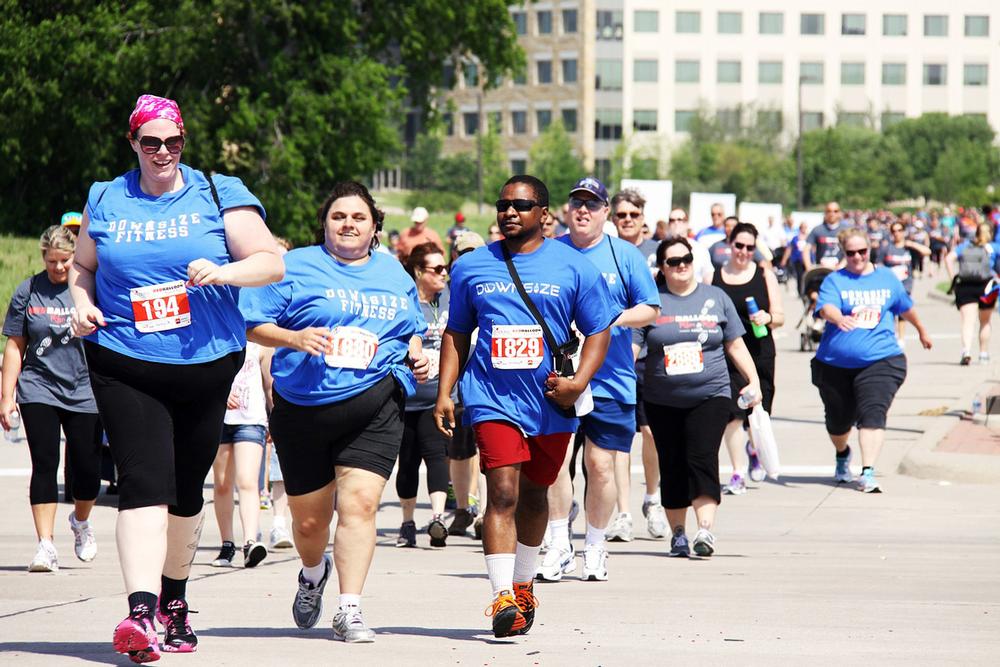
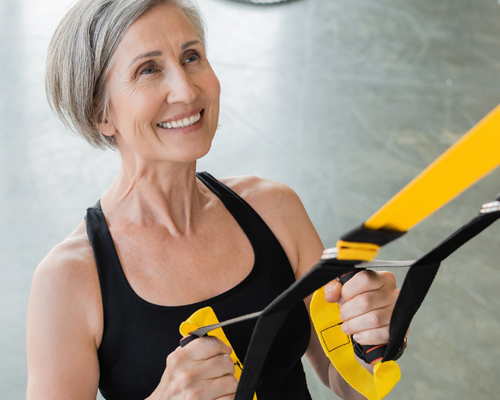
Downsize Fitness is designed for people who have significant amounts of weight to lose, typically at least 50lbs
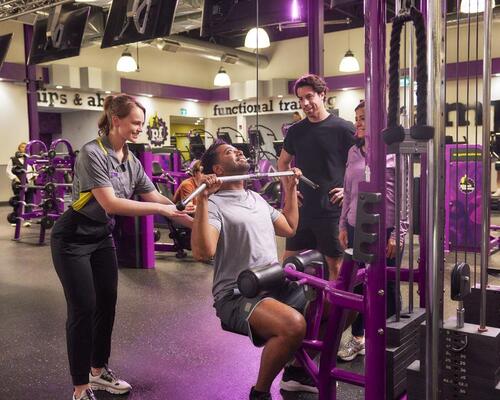
Trainers modify exercises for each individual in the class
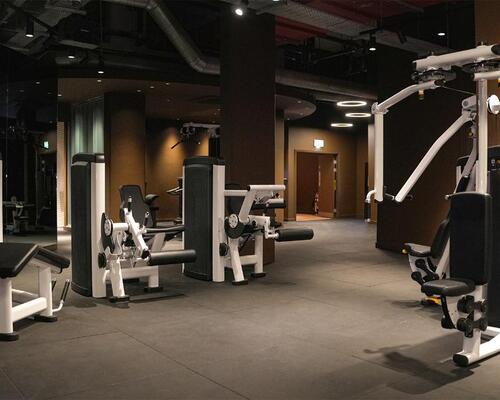
A typical club measures 3,000–3,500sq ft, catering for 120–150 members, and there’s no cardio equipment in sight
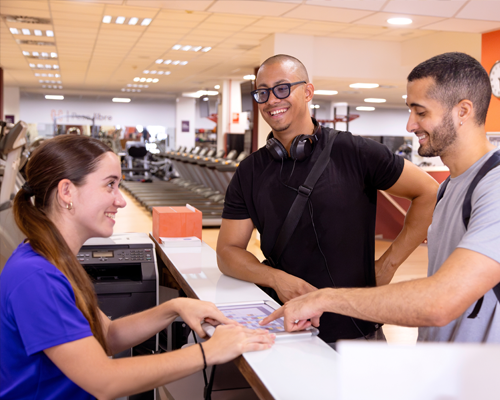
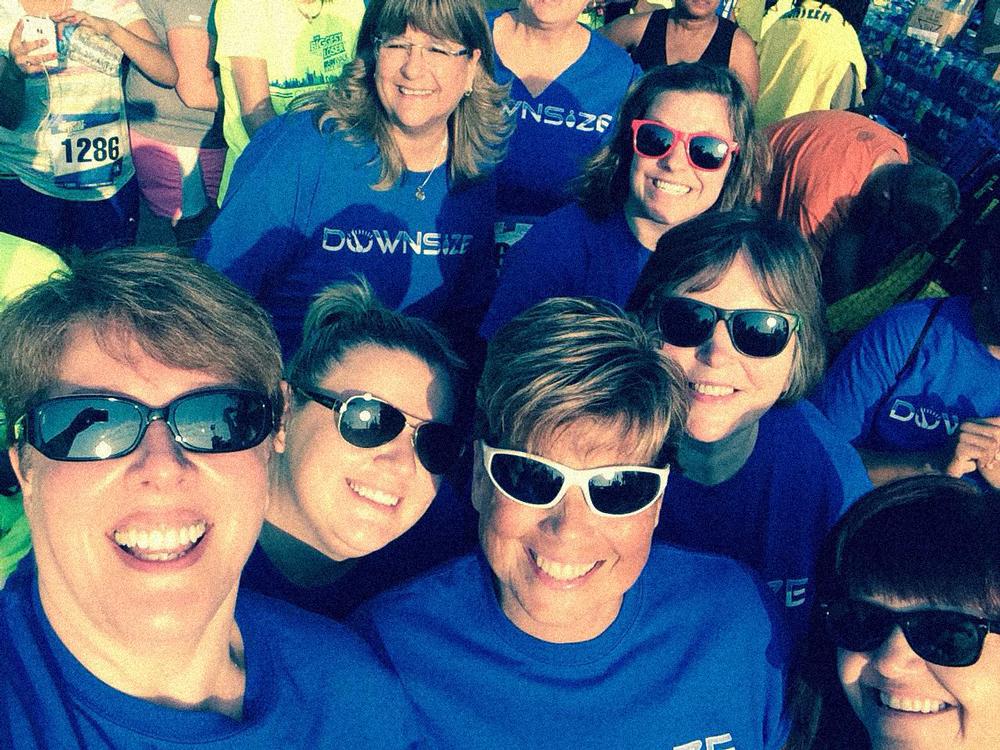
Downsize Fitness focuses on creating a community of like-minded people who support and train with each other
https://www.leisureopportunities.co.uk/images/292189_901343.jpg
The vice president of Downsize Fitness in the US talks to Kate Cracknell about transforming the lives of an overweight population
Grover Daly, The vice president of Downsize Fitness Kate Cracknell, editor, Healthclub Management,Downsize Fitness, Grover Daly, overweight, obesity, weight loss, franchise
HCM magazine
For every member with a tripod and a big following, there are others irritated at the way equipment is being hogged or wary they’ll be in the background on someone’s Insta feed. Do influencers offer valuable, free marketing or are they just a nuisance? Kath Hudson finds out how operators are responding
HCM magazine
Collaborations with the medical profession and greater aspirations around wellbeing are creating a need for more experts in our sector. It’s time to reboot our thinking around the workforce
HCM magazine
HCM People

Stephen Price

Founder, SP&Co Group
Working in public health over the last few years has lit up parts of my brain again
HCM magazine
As the entrepreneur who started Wexer, Fresh Fitness, Fitness DK and Repeat, as well as being a former elite athlete, Rasmus Ingerslev’s life looked perfect from the outside, but onthe inside it was a different story. He talks to Kath Hudson about healing old wounds
HCM magazine
Small improvements to sleep, diet and physical activity have major benefits for the heart, according to new research from the University of Sydney
HCM promotional features
Sponsored
Third Space partnered with IndigoFitness to deliver a bespoke training space for its new club at The Whiteley
HCM promotional features
Sponsored
SnowDome Fitness has added 50 per cent more space with cutting-edge Technogym solutions
HCM promotional features
Sponsored
David Lloyd is stepping up its commitment to women’s health as it continues to explore what fit-for-purpose looks like for the female population
HCM promotional features
Sponsored
Starpool supports Olympic champion Marcell Jacobs, says Riccardo Turri
HCM promotional features
Sponsored
Find out how your gym can tap into the corporate wellness boom
HCM promotional features
Sponsored
Greg Bradley looks at the shift towards strength training in gyms and advises on how operators can create the ultimate training environment
HCM promotional features
Sponsored
EGYM has opened a new HQ in Paternoster Square, London and revealed a range of new launches
HCM promotional features
Promotion
Performance Health Systems, manufacturer of Power Plate, has a new CEO, with an ambitious vision for the company
HCM promotional features
Sponsored
Active IQ is calling for greater accountability in online fitness advice with the launch of a new trustmark
HCM promotional features
Latest News
People taking GLP-1 weight loss medications such as Ozempic, Wegovy, Mounjaro and Zepbound may be ...
Latest News
Low-cost gym operator, PureGym, is trialling recovery zones at two of its UK sites, democratising ...
Latest News
In a milestone moment, mental health has become a core part of CIMSPA’s occupational professional ...
Latest News
US high-value, low-price chain, Eos Fitness, has announced plans to pilot reformer Pilates in three ...
Latest News
Preventive healthcare company Neko Health has added body composition analysis to its full-body health scan ...
Latest News
Chequan Lewis is the new CEO of Crunch Fitness, taking over from Jim Rowley, who ...
Latest News
Sea Lanes Canary Wharf has officially opened. The 50-metre, six-lane pool, which uses the natural ...
Latest News
London-based high-performance fitness club, ONE LDN, is raising funds for a multi-site expansion across London, ...
Opinion
promotion
Strength training has moved from the margins to the mainstream.
Opinion: Building smarter strength spaces for today’s operators
Featured supplier news
Featured supplier news: CoverMe extends matching service to personal training, rewriting how members and personal trainers connect
CoverMe, the global leader in fitness workforce management, today launches CoverMe PT, an on-demand personal training platform that connects the right personal trainer to the right client in under 10 seconds.
Featured supplier news
Featured supplier news: Reaching the people most gyms miss: Bedford Gym & Swim Campaign delivers 410 new members
One of the biggest mistakes the fitness industry still makes is advertising almost exclusively to people who already look and live like gym members.
Company profiles
Company profile: Fitbench
Fitbench creates modular training solutions designed to support efficient, high-quality workouts in a wide range ...
Company profiles
Company profile: Les Mills UK
Every week, millions of people get fit in 21,000 clubs, across 100 countries with the ...
Supplier Showcases
Supplier Showcase - From nightclub to health club
Supplier Showcases
Supplier Showcase - Future-proofing
Catalogue Gallery
Click on a catalogue to view it online
Featured press releases
Swim England press release: Swim England launches new Learn to Swim Growth Plan to support aquatic programme expansion
Swim England has strengthened its sector-leading Business Solutions offer with the launch of its Learn to Swim Growth Plan, designed to help aquatic providers unlock sustainable programme growth.
Featured press releases
CoverMe Ltd press release: CoverMe and Jobs In. Fitness partner to create end-to-end talent solution
CoverMe, the UK’s leading fitness workforce management and recruitment platform, has partnered with Jobs In. Fitness, the specialist executive search and advisory firm for the fitness and wellbeing sector, to give operators a single route to talent at every level – from frontline staffing to C-suite.
Directory
Hot tubs
MSpa International Ltd: Hot tubs
Spa and beauty equipment
Living Earth Crafts: Spa and beauty equipment
Lockers
Crown Sports Lockers: Lockers
Industrial washing machines
Miele Company Limited: Industrial washing machines
Water experiences and hydrotherapy solutions
Aquaform s.r.l.: Water experiences and hydrotherapy solutions
Fitness tracking platform
SpiviTech: Fitness tracking platform
Property & Tenders
Stratford, East London.
Lee Valley Regional Park Authority
Property & Tenders
Y Felinheli, LL56 4QN
Newmark
Property & Tenders
Diary dates
21-24 Sep 2026
The Langham Huntington Pasadena , Pasadena, United States
Diary dates
06-08 Oct 2026
Messe Stuttgart, Stuttgart, Germany
Diary dates
22-22 Oct 2026
QEII Conference Centre, London,
Diary dates
26-29 Oct 2027
Koelnmesse Exhibition Centre, Cologne, Germany
Diary dates

features

Interview – Grover Daly: Grover Daly

The vice president of Downsize Fitness in the US, and owner of its Houston club, speaks to Kate Cracknell about transforming the lives of an overweight population

By Kate Cracknell | Published in Health Club Management 2015 issue 1
Grover Daly the vice president of Downsize Fitness
We have empathy because we’ve all been there, but that allows us to push members a little harder. We’ve earned the right to hold them accountable

When I first talk to prospective members, I ask them what their weight is limiting them from doing,” says Grover Daly, vice president of US-based Downsize Fitness and the owner of the chain’s Houston facility, which opened in August 2014. “You might lose 50lbs, 100lbs or 200lbs with us – and people will initially tell us weight loss is their goal – but it’s not their deeper motivation. The real reason people come to us is to be able to achieve something they couldn’t previously do because of their weight.

“Our core philosophy is therefore functional fitness – getting people healthy and able to live their lives. Although celebrating a 50lb weight loss is great, we encourage people to celebrate what they can now do with their lives because they’re 50lbs lighter, because that typically is huge.”

He continues: “That said, by no means do we negate the importance of somebody losing 50lbs. You can’t understate the importance of a number to them – they might not have weighed under 300lbs since school, and as they pass that milestone there’s a lightbulb moment when they start believing they can do it, that they’re worth it, and that it’s something they will therefore do. And they begin to challenge themselves to get below 275lbs, below 250lbs.

“At that point they become a cheerleader for health, for living well – and fortunately for us as an operator, for Downsize Fitness too.”

A safe haven
Downsize Fitness started life in November 2011, founded by Francis Wisniewski who remains chair of the company. Daly explains: “Francis weighed approximately 350–360lbs and had battled weight his entire life. He was working with a trainer and was getting frustrated by the lack of results, as well as feeling intimidated and judged and overwhelmed because of his size when he went to a traditional gym.
“He felt there was a need for a place, a gym facility, where larger people could go without feeling intimidated or judged – a safe haven in which to work out. So he created Downsize Fitness in Chicago, which is now our headquarters.”

The business has since grown to five sites – in Chicago, Naperville, Dallas and Houston in the US, and Ontario in Canada. Of these, two – in Ontario and Houston – are what Daly calls “hybrid” sites, part company-owned and part franchised. “They’re classified as company-owned, but we’re partners and in our day-to-day operations it’s just like a franchise, with the club being independently owned and operated. In Houston, I own the controlling interest – 90 per cent of the business – and Downsize Fitness retains 10 per cent.”

He adds: “Downsize Fitness is now looking to start offering franchises, and as part of that we’ll probably convert Houston and Ontario into full franchises.”

The ‘a-ha’ moment
So who exactly does Downsize Fitness appeal to – who is the target market?
“Our clubs are limited membership facilities for people who have a significant amount of weight to lose. ‘Significant’ will be different in different people’s eyes – it might be 30lbs or it might be 400lbs – and we won’t turn anyone away on this basis, but typically people have at least 50lbs to lose.

“In the US, 60 per cent of people are overweight and 30 per cent obese, so potentially we could appeal to a huge number of people. However, until people have had an ‘a-ha’ moment – where weight loss moves from being priority number 30 on their everyday list to a priority of one or two – we’ll never convince them to join.

“Everyone’s ‘a-ha’ moment will be different. Mine was that I hadn’t seen my mum in over a year and she walked by me because I’d gained so much weight she didn’t recognise me. For me that was huge, but also very motivating.”

Daly continues: “Each Downsize club only has about 120–150 members, with a typical footprint of 3,000–3,500sq ft, and everything is done in semi-private sessions or classes. We have a maximum of 10 people in each class, and every time members will interact directly with the certified personal trainer. It’s effectively small group personal training, giving you personal attention but without the high price tag of PT.

“Pricing varies slightly from location to location, but it’s about US$89 a month for our Weight Loss 101 package, which gives you five visits a month; US$139 a month for the Weight Loss Journey, which gives you 10 visits a month; and US$199 a month for Weight Loss Transformation, which allows for unlimited visits. People have to be in it for the long term though, as our approach is about weight loss that lasts. We don’t talk about contracts – we sell 12-month and 18-month ‘commitments’.

“And if members are committed, this price is just unbelievable for them. They know a standard ‘train on your own’ gym won’t work for them, because they need accountability, and if they’ve had their ‘a-ha’ moment they will already have done their research and will know that personal training will cost them probably US$60–95 a session.”

Modification & progress
Daly continues: “We focus on three key elements: fitness, nutritional advice and weight loss coaching, under which falls accountability, structure, support and also camaraderie.

“In terms of fitness, everything we do is dynamic resistance, weight bearing. We don’t use machines, although we do use some equipment like kettlebells, resistance bands, TRX and Bosu balls. In a way it’s like the TV show The Biggest Loser: if you take the cardio equipment out of the equation and don’t yell as much, that’s kind of our game plan.

“There’s a huge variety in our timetable and each session is different, with the instructor deciding what they’re going to do that day. A cardio class might be Zumba, for example, or step aerobics. Our most popular class in the Houston club is total body conditioning, because members know they’ll get a full body workout – but again the class itself varies depending on what trainer they have, what they did the week before and so on. We also listen to what our members want – we’re looking to introduce self-defence and jiu jitsu to the schedule, for example.

“One key point is that our trainers modify exercises for each individual in the session – that’s crucial. Other facilities don’t typically do that: people just follow the trainer and try to keep up. But our members can’t do that. In addition to weight-related issues, they might also have joint issues, back issues. Some can’t get down onto the floor. So you have to modify everything, but also keep moving members on to the next level as they progress.

“When it comes to tracking results, we use body composition analysis, focusing on fat pounds lost versus weight pounds lost, because just looking at weight on the scales can be misleading. If someone weighs 350lbs, it’s fair to guess that they don’t usually exercise, and they’re looking for an excuse not to come back to your gym. If they get on the scales and have only lost 4lbs, it’s demoralising and they’ll leave. But if you can show them that in fact they lost 15lbs of body fat and gained 11lbs of lean muscle tissue – and that’s why the scale only shows 4lbs – it’s different. In reality they’ve changed their body almost 30lbs, and that’s huge – enough for their clothes to fit differently and their health to improve.”

He continues: “People may ultimately ‘graduate’ from Downsize, leaving when they’ve reached their goal and feel ready to exercise elsewhere, but we never force them out. If they want to carry on exercising with us, and with the friends they’ve made at Downsize, that’s fine. They’re our success stories and they can inspire other members.

“And people do reach their goals. We know physiologically that, if you follow all of our recommendations, it’s impossible for you not to be successful – to the point that, although there’s no company-wide policy on this, at my club I offer a money back guarantee.”

People like us
He continues: “In terms of the design of the club, all the windows at the front are opaque. Our members feel comfortable that only the people inside the club can see them, and those people are either members such as themselves – because we’re growing a community here – or the trainers and general managers who have also gone through what they’re going through. So there’s almost a deep sigh of relief when they walk in, and members often hang around after their class and talk too. The club is probably one of the few places, besides their home, where they feel comfortable being who they are, not feeling judged.”
Indeed, many of the trainers at Downsize Fitness were previously members themselves, and 90–95 per cent have their own weight loss story. As Daly explains: “My biggest criteria when I’m looking for staff is, do they get it? Have they been there? Do they have their own personal weight transformation story? Mostly it’s their own personal weight loss, but it could also be that they grew up in a household where everybody was overweight, for example. They have to be able to understand where our members are coming from. Our trainers have to be certified through a national accredited association, but once that box is ticked it’s the least important thing – it’s about understanding the members’ mindset.

“Importantly though, that doesn’t mean we’re a pushover. It can be a double-edged sword for members, because they can’t look at the trainer and say ‘I can’t do this, you don’t know what it’s like for me to try and do this push-up’ – because we do know. So while we have empathy because we’ve all been there, it’s not a ‘get out of jail free’ card for members. In fact, it allows us to be a little tougher, to push members a little harder. In a sense we’ve earned the right to hold them accountable.”

That accountability extends to attendance too: “If you don’t turn up to a class you’ve booked into, we’ll call you. We’ll check first of all that you’re OK, but if you are then we’ll discuss the reasons for your non-attendance.

“For those who find it hard to get to all their sessions, we do offer Downsize at Home – live classes streamed into your home. That’s available both as a complement to club visits and as a standalone membership for those who don’t have a local Downsize club. We still call people if they don’t turn up to online classes – they’re still held to account in that respect. But I don’t even mention Downsize at Home if people live near one of our clubs, as nothing takes the place of walking into a facility and having those personal, one-on-one interactions.

“Once you get that group camaraderie going, that’s what keeps you coming back. Members have each others’ phone numbers and they text each other, decide what time they want to come to class, and they come as a group.”

Expansion plans
So could mainstream health clubs apply this same framework and cater for the obese market? “Maybe, and there are some smaller chains trying, but it will only work if operators’ mindset changes. It can’t just be about revenue and getting as many members to sign up as possible. You have to actually care about getting members healthy – and healthy enough whereby they might eventually leave.
“Because although we love our members to stay with us when they hit their goals, if they walk out of the door 150lbs lighter, infinitely healthier and with smiles on their faces, we’re happy. We did our job. We saved a life. And we now have a spot for another person.

“There’s always going to be a segment of the population that feels insecure about walking into a gym facility because of their size, and I don’t think the mainstream clubs will ever get around that, but if they can change their mindset it will be a great start. I also wish more mainstream facilities would focus on sensible eating, nutrition, the importance of food diaries – getting away from supplements and just teaching people to eat clean and whole.”

In the meantime, Downsize has its own plans to reach more of the people who would benefit from its services. “Our goal is to have 20–25 franchises by the end of 2015. We think that’s aggressive but not too aggressive. Those sites will be in the US and Canada, but we’d love to launch in the UK too, and in fact we have interest being shown around the world – Qatar, Australia, Europe…

“Long term, it would be great to have thousands of locations, because we could reach so many more people. We’d need the right, genuinely passionate franchisees on board, but if we can do that I’d say the sky’s the limit.”
Sign up here to get HCM's weekly ezine and every issue of HCM magazine free on digital.
Downsize Fitness is designed for people who have significant amounts of weight to lose, typically at least 50lbs
Trainers modify exercises for each individual in the class
A typical club measures 3,000–3,500sq ft, catering for 120–150 members, and there’s no cardio equipment in sight
Downsize Fitness focuses on creating a community of like-minded people who support and train with each other
https://www.leisureopportunities.co.uk/images/292189_901343.jpg
The vice president of Downsize Fitness in the US talks to Kate Cracknell about transforming the lives of an overweight population
Grover Daly, The vice president of Downsize Fitness Kate Cracknell, editor, Healthclub Management,Downsize Fitness, Grover Daly, overweight, obesity, weight loss, franchise
Latest News
People taking GLP-1 weight loss medications such as Ozempic, Wegovy, Mounjaro and Zepbound may be ...
Latest News
Low-cost gym operator, PureGym, is trialling recovery zones at two of its UK sites, democratising ...
Latest News
In a milestone moment, mental health has become a core part of CIMSPA’s occupational professional ...
Latest News
US high-value, low-price chain, Eos Fitness, has announced plans to pilot reformer Pilates in three ...
Latest News
Preventive healthcare company Neko Health has added body composition analysis to its full-body health scan ...
Latest News
Chequan Lewis is the new CEO of Crunch Fitness, taking over from Jim Rowley, who ...
Latest News
Sea Lanes Canary Wharf has officially opened. The 50-metre, six-lane pool, which uses the natural ...
Latest News
London-based high-performance fitness club, ONE LDN, is raising funds for a multi-site expansion across London, ...
Latest News
A new brain clinic has opened in London, which uses non-invasive brain stimulation to treat ...
Latest News
Good Boost’s digital exercise programmes are helping adults with MSK at a lower cost than ...
Latest News
With Prime Minister, Keir Starmer, announcing his resignation this morning and Andy Burnham as a ...
Opinion
promotion
Strength training has moved from the margins to the mainstream.
Opinion: Building smarter strength spaces for today’s operators
Featured supplier news
Featured supplier news: CoverMe extends matching service to personal training, rewriting how members and personal trainers connect
CoverMe, the global leader in fitness workforce management, today launches CoverMe PT, an on-demand personal training platform that connects the right personal trainer to the right client in under 10 seconds.
Featured supplier news
Featured supplier news: Reaching the people most gyms miss: Bedford Gym & Swim Campaign delivers 410 new members
One of the biggest mistakes the fitness industry still makes is advertising almost exclusively to people who already look and live like gym members.
Company profiles
Company profile: Fitbench
Fitbench creates modular training solutions designed to support efficient, high-quality workouts in a wide range ...
Company profiles
Company profile: Les Mills UK
Every week, millions of people get fit in 21,000 clubs, across 100 countries with the ...
Supplier Showcases
Supplier Showcase - From nightclub to health club
Supplier Showcases
Supplier Showcase - Future-proofing
Catalogue Gallery
Click on a catalogue to view it online
Featured press releases
Swim England press release: Swim England launches new Learn to Swim Growth Plan to support aquatic programme expansion
Swim England has strengthened its sector-leading Business Solutions offer with the launch of its Learn to Swim Growth Plan, designed to help aquatic providers unlock sustainable programme growth.
Featured press releases
CoverMe Ltd press release: CoverMe and Jobs In. Fitness partner to create end-to-end talent solution
CoverMe, the UK’s leading fitness workforce management and recruitment platform, has partnered with Jobs In. Fitness, the specialist executive search and advisory firm for the fitness and wellbeing sector, to give operators a single route to talent at every level – from frontline staffing to C-suite.
Directory
Hot tubs
MSpa International Ltd: Hot tubs
Spa and beauty equipment
Living Earth Crafts: Spa and beauty equipment
Lockers
Crown Sports Lockers: Lockers
Industrial washing machines
Miele Company Limited: Industrial washing machines
Water experiences and hydrotherapy solutions
Aquaform s.r.l.: Water experiences and hydrotherapy solutions
Fitness tracking platform
SpiviTech: Fitness tracking platform
Property & Tenders
Stratford, East London.
Lee Valley Regional Park Authority
Property & Tenders
Y Felinheli, LL56 4QN
Newmark
Property & Tenders
Diary dates
21-24 Sep 2026
The Langham Huntington Pasadena , Pasadena, United States
Diary dates
06-08 Oct 2026
Messe Stuttgart, Stuttgart, Germany
Diary dates
22-22 Oct 2026
QEII Conference Centre, London,
Diary dates
26-29 Oct 2027
Koelnmesse Exhibition Centre, Cologne, Germany
Diary dates
Search news, features & products:
Find a supplier:
Partner sites