















Follow Health Club Management on Twitter Like Health Club Management on Facebook Join the discussion with Health Club Management on LinkedIn
FITNESS, HEALTH, WELLNESS

features

Insight: Team effort

Dr Davina Deniszczyc talks us through the findings of the first Nuffield Healthier Nation Index, which has benchmarked activity levels and attitudes to exercise among the UK population
Published in Health Club Management 2021 issue 8
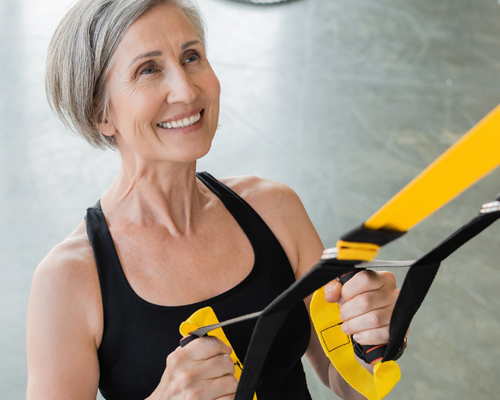
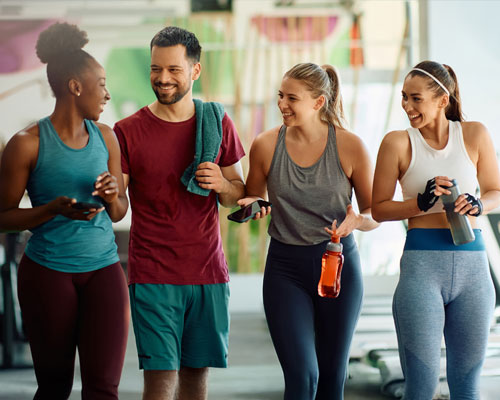
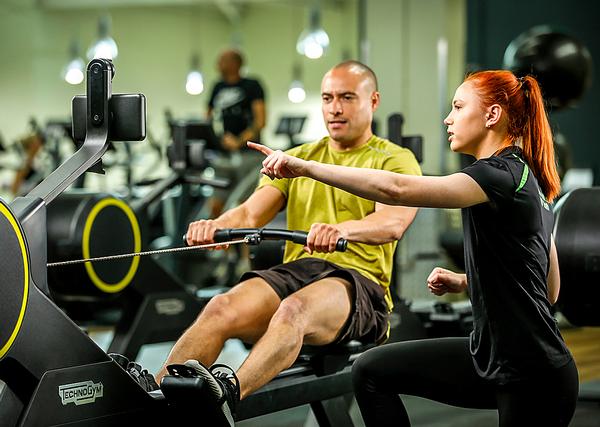
Nearly half those sampled are taking more responsibility for their health / photo: Nuffield Health
Despite well-publicised evidence pointing to the link between obesity and severity of illness from COVID-19 we found 8.8 million UK adults had done no exercise for 12 months

As trading gears back up after 18 months of lockdown in the UK, the true breadth of the impact of the pandemic on the mental and physical wellbeing of the nation is becoming clearer. But so is the determination of the majority to prioritise, and invest in their physical and mental health to overcome any bad habits picked up in lockdown.

By focusing on improving our own health and wellbeing and encouraging those around us to do the same, we’ll help prevent long-term health conditions and support the nation’s recovery from the pandemic and it’s important to acknowledge that we all have a role to play.

Healthcare charity, Nuffield Health, launched its inaugural Healthier Nation Index to take a comprehensive look at all aspects of the nation’s health following the start of the pandemic, with the aim of building a stronger understanding of how people are feeling, identify where the biggest challenges are and providing crucial information to the public, NHS and policymakers to guide future decision-making and improve outcomes for everyone – ensuring the UK builds a healthier nation.

What’s the goal?
But what is a healthy nation? We believe it’s one where everyone, at every age, is able to access the tools and information they need to manage their physical and mental health.

A connected approach needs to be taken to health, proactively helping people to stay physically and mentally healthy throughout their lives in order to prevent long-term health conditions, rather than just providing reactive care to preventable conditions. This holistic approach acknowledges the fact there is no ‘health’ without a healthy mind and body and means we can best deliver our sector’s crucial and wide-ranging.

Connecting the dots will be key as we recover from the pandemic – from reducing the likelihood of people developing mental health problems, to supporting the government’s obesity strategy and protecting the NHS from being overburdened by preventable long-term health conditions.

The last year has taken a toll on the nation’s fitness. Our Healthier Nation Index, which is based on a nationally representative sample of over 8,000 UK adults, found a third (33 per cent) of people believe their physical health was worse than a year ago. Older age groups reported a more significant decline and only 10 per cent of Baby Boomers (over 55s) agreed their physical health has improved, with the other 90 per cent saying it had need negatively impacted.

This data is not surprising – we’ve lived through a mental and physical health ‘superstorm’, and the good habits that were mainstays in our previous lives were stripped away from us as we were forced to stay at home.

Shocking results
Yet, despite well-publicised evidence pointing to the link between obesity and severity of illness from COVID-19 we found that 16 per cent of respondents – or 8.8 million adults – had done no exercise in the last 12 months, rising to a quarter of over-55s. This is absolutely astonishing, and we must think creatively about how we can overcome the barriers to exercising at every stage – or major lifestyle shift – in life.

The main barriers for undertaking more physical activity are cited as a lack of motivation or energy (59 per cent), a lack of time due to work (50 per cent), a dislike of exercise (39 per cent) and cost (36 per cent). But the Index also reveals the impact of months in lockdowns, with nearly two fifths (37 per cent) agreeing they fell out of the habit of exercising and have found it difficult to restart. This rises to 49 per cent in millennials (25-to 34-year-olds).

And in a sign of the devastating impact of COVID-19, 7 per cent of respondents- representing an estimated 3.65 million people – said they have struggled to exercise in the last 12 months due to long-term symptoms, or ‘Long COVID’.

We know that COVID-19 afflicts all ages, ethnicities and genders – but also that those aged 35-69 are most likely to be affected, as are those working in the health and care sector or those who already have a disability.

Free Long COVID programme
At the start of the pandemic, Nuffield Health quickly identified that there was an unmet need and developed a free COVID-19 Rehabilitation Programme, which blends physical and emotional support to help an ever-growing number of people who are experiencing the long-term effects of COVID-19.

The programme is now available at 40 Nuffield locations throughout the UK with the ambition to roll out further by the end of 2021. Through this programme we will not only help people dealing with the symptoms of Long COVID and their families and carers but also build knowledge about this new disease and how to treat people in the longer term.

Initial findings from the programme have shown that breathlessness improved in 45 per cent of participants, while anxiety improved for 50 per cent of people and 47 per cent of participants had an improvement in their functional capacity- or their ability to carry out day to day tasks.

Without doubt the health of your mind and body are intrinsically linked, but only 30 per cent of people believe exercise helps their mental health. As with physical health, the nation’s mental health has also been impacted, with women, in particular, feeling the impact of homeschooling, professional pressures and caring responsibilities.

Mental health results
On average, 41 per cent of people said their mental health is ‘worse than this time last year’, but this rose to nearly one in two women (49 per cent). More than a fifth of Britons (21 per cent) reported low life satisfaction, while over a third (36 per cent) reported high anxiety when asked how they felt on the previous day – 53 per cent of people say they have been less productive during work due to poor mental health, and 56 per cent have gone to work despite their mental health being poor that day. A further 33 per cent called in sick to work because of their mental health, but gave another reason to explain why they were off.

There is also significant concern about family members. Almost half (49 per cent) of 25 to 34-year-olds agreed they were more concerned about their parents’ mental health now because of COVID-19, while 47 per cent of parents expressed fears about their children’s mental health.

Evidence shows that exercise can help manage mental health and working out has so much potential to enhance our wellbeing. Even low-intensity aerobic exercise, such as walking, yoga or jogging for 30 to 35 minutes, 3-5 days a week over 10 to 12 weeks has been shown to deliver the most powerful stress relief.

Health implications
The data shows the clear physical and mental health implications of lockdown, which will have serious consequences for the health of the nation, but there is still a disconnect between people acknowledging their worsening physical and mental health – and agreeing to take action.

Researchers found 24 per cent of people surveyed do not plan to do anything in relation to exercise or their physical or mental health now that lockdown restrictions have ended, with those over 55 most likely to say this (36 per cent).

Although 46 per cent of people identified themselves as overweight, 25 per cent of those admitted they are not actively trying to change this.

Despite this, there are green shoots of hope starting to appear, particularly when it comes to understanding the link between physical and mental health, which is hugely promising.

Almost 3 in 10 of people said the main reason they have been motivated to exercise and look after their physical health in the last 12 months is because exercising helps with their mental health (28 per cent) and almost half of people (47 per cent) agreed they would take more responsibility for their health after lockdown.

After 16 months of restrictions, the health and wellbeing sector must take the opportunity to help people recover from the impact of the pandemic as quickly as possible by taking better care of their mental and physical health. At Nuffield Health our commitment to helping build a healthier nation is unwavering and we are determined that we can and will build back healthier, happy and stronger.

Snap briefing: Nuffield Healthier Nation Index

• 47% are taking more responsibility for their health because of the pandemic

• 90% of over 55s say their health has been negatively impacted by the pandemic

• 33% of all UK adults believe their physical health is worse than a year ago

• 16% - 8.8 million UK adults - had done no exercise in the last 12 months

• 25% of over-55s had done no exercise in the last 12 months

• 59% lack motivation or the energy to exercise

• 50% lack time to exercise due to work

• 39% dislike exercise

• 36% say they can’t afford it

• 37% of all respondents and 49% of millennials have found it difficult to restart exercising

• 7% - 3.65m people – struggle to exercise due to Long COVID

• 41% said their mental health is ‘worse than this time last year (49 per cent of women)

• 21% reported low life satisfaction

• 36% reported high anxiety when asked how they felt on the previous day

• 53% of people say they’ve been less productive during work due to poor mental health

• 56% have gone to work despite their mental health being poor

• 33% called in sick because of their mental health, but gave another reason

• 49% of 25 to 34-year-olds are more concerned about their parents’ mental health because of COVID-19

• 47% of parents expressed fears about their children’s mental health as a result of the pandemic

• 24% of the total sample surveyed by Nuffield don’t plan to exercise in the future

• 36% of over 55s surveyed don’t plan to exercise at all in the future

• 46% of people identify as overweight but 25 per cent are not actively trying to change this in any way

• 28% exercise because they say it helps them maintain their mental health

Dr Davina Deniszczyc is medical director of Nuffield Health
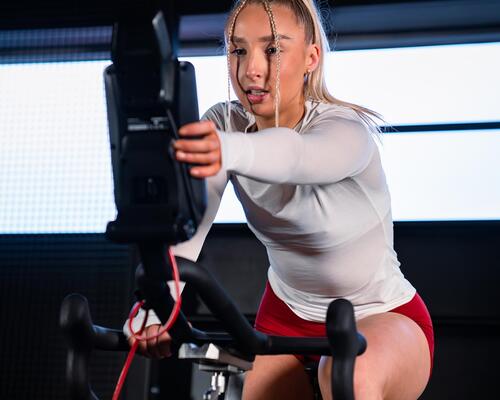
We must think creatively about how to engage every age group in exercise / photo: Nuffield Health
Improved mental health was cited as a major reason for exercising / photo: Nuffield Health
https://www.leisureopportunities.co.uk/images/2021/612076_402781.jpg
Health charity Nuffield has published its first ever Healthier Nation Index for the UK. Dr Davina Deniszczyc digs into the numbers for HCM
HCM magazine
As the 20th State of the Industry Report is released, LeisureDB has rebranded to Evolve, as Kath Hudson reports
HCM magazine
Lisa Starr tries the Ammortal Chamber to see whether layering 10 modalities into one experience really delivers more
HCM magazine
After decades of focusing on adult audiences, operators are starting to engage young people – unlocking growth opportunities while supporting the health and wellbeing of future generations
HCM magazine
Software suppliers explain how AI, automation and connected digital experiences can work for the good of operators and consumers
HCM magazine
World Athletics president, Sebastian Coe talks to Liz Terry about the launch of Run X in partnership with Technogym
HCM promotional features
Sponsored
Social fitness the missing link to member engagement, according to a new Myzone report
HCM promotional features
Sponsored
Starpool supports Olympic champion Marcell Jacobs, says Riccardo Turri
HCM promotional features
Sponsored
Find out how your gym can tap into the corporate wellness boom
HCM promotional features
Sponsored
SnowDome Fitness has added 50 per cent more space with cutting-edge Technogym solutions
HCM promotional features
Sponsored
David Lloyd is stepping up its commitment to women’s health as it continues to explore what fit-for-purpose looks like for the female population
HCM promotional features
Sponsored
Greg Bradley looks at the shift towards strength training in gyms and advises on how operators can create the ultimate training environment
HCM promotional features
Sponsored
Third Space partnered with IndigoFitness to deliver a bespoke training space for its new club at The Whiteley
HCM promotional features
Sponsored
EGYM has opened a new HQ in Paternoster Square, London and revealed a range of new launches
HCM promotional features
Latest News
Fitness First UK has raised the bar with its latest refurbishment, in Highbury, London, as ...
Latest News
TLee Spas and Wellness has revealed the design for a wellness destination concept for AI ...
Latest News

Urban Gym Group has entered the Irish market with the acquisition of Iconic ...

Latest News

Total Fitness has released new research revealing how the expectations and motivations of ...

Latest News
Wattbike has announced a new integration with EGYM, which enables the bikes to contribute to ...
Latest News
Les Mills has launched a reformer Pilates workout. The 45-minute workout blends traditional reformer movements ...
Latest News
The inaugural HCM Invest event has opened applications for pitching slots ahead of its launch ...
Latest News
Girls in the UK are missing out on 280 million hours of sport every year ...
Opinion
promotion
Strength training has moved from the margins to the mainstream.
Opinion: Building smarter strength spaces for today’s operators
Featured supplier news
Featured supplier news: Legends never die: four legends, four philosophies of life
Panatta brought together four of the most influential figures in bodybuilding history on the stage of RiminiWellness 2026: Phil Heath, Lee Haney, Ronnie Coleman and Hany Rambod.
Featured supplier news
Featured supplier news: Introducing a new era of Nautilus Leverage
Strength training has never been more important for member retention, facility differentiation and long-term commercial success.
Company profiles
Company profile: Energym
At Energym, we’re redefining the role of fitness in a sustainable future. Our award-winning British ...
Company profiles
Company profile: Pulse Fitness
With an award-winning portfolio of over 450 pieces of cutting-edge, premium fitness equipment, Pulse Fitness ...
Supplier Showcases
Supplier Showcase - From nightclub to health club
Supplier Showcases
Supplier Showcase - Future-proofing
Catalogue Gallery
Click on a catalogue to view it online
Featured press releases
GLL press release: 115 past and present GLL Sport Foundation athletes set to shine at the 2026 Commonwealth Games
As the Commonwealth Games return to Glasgow from 23 July to 2 August 2026, the GLL Sport Foundation (GSF) is proud to celebrate the remarkable achievement of 115 past and present supported athletes who have been selected to compete on one of the biggest stages in Commonwealth sport.
Featured press releases
PSLT press release: PSLT strengthens Smartfit UK expertise following specialist training at Smartfit USA headquarters
PSLT Fitness Solutions has reinforced its commitment to delivering industry-leading cognitive-motor training solutions across the UK after head of healthcare solutions, Tony Barry, completed an intensive specialist training programme with the Smartfit team in the United States
Directory
Spa and beauty equipment
Oakworks Inc: Spa and beauty equipment
Hot tubs
MSpa International Ltd: Hot tubs
Industrial washing machines
Miele Company Limited: Industrial washing machines
Water experiences and hydrotherapy solutions
Aquaform s.r.l.: Water experiences and hydrotherapy solutions
Lockers
Crown Sports Lockers: Lockers
Fitness tracking platform
SpiviTech: Fitness tracking platform
Property & Tenders
Stratford, East London.
Lee Valley Regional Park Authority
Property & Tenders
Y Felinheli, LL56 4QN
Newmark
Property & Tenders
Diary dates
21-24 Sep 2026
The Langham Huntington Pasadena , Pasadena, United States
Diary dates
28-29 Sep 2026
Grand Ballroom, METT Singapore, Singapore
Diary dates
06-08 Oct 2026
Messe Stuttgart, Stuttgart, Germany
Diary dates
22-22 Oct 2026
QEII Conference Centre, London,
Diary dates
29-31 Oct 2026
Impact Exhibition & Convention Center Bangkok,Thailand, Bangkok, Thailand
Diary dates
29-31 Oct 2026
IMPACT Exhibition Center, Bangkok, Thailand , Bangkok, Thailand
Diary dates
14-15 Nov 2026
The Kromhouthal , Amsterdam, Netherlands
Diary dates
26-29 Oct 2027
Koelnmesse Exhibition Centre, Cologne, Germany
Diary dates

features

Insight: Team effort

Dr Davina Deniszczyc talks us through the findings of the first Nuffield Healthier Nation Index, which has benchmarked activity levels and attitudes to exercise among the UK population

Published in Health Club Management 2021 issue 8
Nearly half those sampled are taking more responsibility for their health / photo: Nuffield Health
Despite well-publicised evidence pointing to the link between obesity and severity of illness from COVID-19 we found 8.8 million UK adults had done no exercise for 12 months

As trading gears back up after 18 months of lockdown in the UK, the true breadth of the impact of the pandemic on the mental and physical wellbeing of the nation is becoming clearer. But so is the determination of the majority to prioritise, and invest in their physical and mental health to overcome any bad habits picked up in lockdown.

By focusing on improving our own health and wellbeing and encouraging those around us to do the same, we’ll help prevent long-term health conditions and support the nation’s recovery from the pandemic and it’s important to acknowledge that we all have a role to play.

Healthcare charity, Nuffield Health, launched its inaugural Healthier Nation Index to take a comprehensive look at all aspects of the nation’s health following the start of the pandemic, with the aim of building a stronger understanding of how people are feeling, identify where the biggest challenges are and providing crucial information to the public, NHS and policymakers to guide future decision-making and improve outcomes for everyone – ensuring the UK builds a healthier nation.

What’s the goal?
But what is a healthy nation? We believe it’s one where everyone, at every age, is able to access the tools and information they need to manage their physical and mental health.

A connected approach needs to be taken to health, proactively helping people to stay physically and mentally healthy throughout their lives in order to prevent long-term health conditions, rather than just providing reactive care to preventable conditions. This holistic approach acknowledges the fact there is no ‘health’ without a healthy mind and body and means we can best deliver our sector’s crucial and wide-ranging.

Connecting the dots will be key as we recover from the pandemic – from reducing the likelihood of people developing mental health problems, to supporting the government’s obesity strategy and protecting the NHS from being overburdened by preventable long-term health conditions.

The last year has taken a toll on the nation’s fitness. Our Healthier Nation Index, which is based on a nationally representative sample of over 8,000 UK adults, found a third (33 per cent) of people believe their physical health was worse than a year ago. Older age groups reported a more significant decline and only 10 per cent of Baby Boomers (over 55s) agreed their physical health has improved, with the other 90 per cent saying it had need negatively impacted.

This data is not surprising – we’ve lived through a mental and physical health ‘superstorm’, and the good habits that were mainstays in our previous lives were stripped away from us as we were forced to stay at home.

Shocking results
Yet, despite well-publicised evidence pointing to the link between obesity and severity of illness from COVID-19 we found that 16 per cent of respondents – or 8.8 million adults – had done no exercise in the last 12 months, rising to a quarter of over-55s. This is absolutely astonishing, and we must think creatively about how we can overcome the barriers to exercising at every stage – or major lifestyle shift – in life.

The main barriers for undertaking more physical activity are cited as a lack of motivation or energy (59 per cent), a lack of time due to work (50 per cent), a dislike of exercise (39 per cent) and cost (36 per cent). But the Index also reveals the impact of months in lockdowns, with nearly two fifths (37 per cent) agreeing they fell out of the habit of exercising and have found it difficult to restart. This rises to 49 per cent in millennials (25-to 34-year-olds).

And in a sign of the devastating impact of COVID-19, 7 per cent of respondents- representing an estimated 3.65 million people – said they have struggled to exercise in the last 12 months due to long-term symptoms, or ‘Long COVID’.

We know that COVID-19 afflicts all ages, ethnicities and genders – but also that those aged 35-69 are most likely to be affected, as are those working in the health and care sector or those who already have a disability.

Free Long COVID programme
At the start of the pandemic, Nuffield Health quickly identified that there was an unmet need and developed a free COVID-19 Rehabilitation Programme, which blends physical and emotional support to help an ever-growing number of people who are experiencing the long-term effects of COVID-19.

The programme is now available at 40 Nuffield locations throughout the UK with the ambition to roll out further by the end of 2021. Through this programme we will not only help people dealing with the symptoms of Long COVID and their families and carers but also build knowledge about this new disease and how to treat people in the longer term.

Initial findings from the programme have shown that breathlessness improved in 45 per cent of participants, while anxiety improved for 50 per cent of people and 47 per cent of participants had an improvement in their functional capacity- or their ability to carry out day to day tasks.

Without doubt the health of your mind and body are intrinsically linked, but only 30 per cent of people believe exercise helps their mental health. As with physical health, the nation’s mental health has also been impacted, with women, in particular, feeling the impact of homeschooling, professional pressures and caring responsibilities.

Mental health results
On average, 41 per cent of people said their mental health is ‘worse than this time last year’, but this rose to nearly one in two women (49 per cent). More than a fifth of Britons (21 per cent) reported low life satisfaction, while over a third (36 per cent) reported high anxiety when asked how they felt on the previous day – 53 per cent of people say they have been less productive during work due to poor mental health, and 56 per cent have gone to work despite their mental health being poor that day. A further 33 per cent called in sick to work because of their mental health, but gave another reason to explain why they were off.

There is also significant concern about family members. Almost half (49 per cent) of 25 to 34-year-olds agreed they were more concerned about their parents’ mental health now because of COVID-19, while 47 per cent of parents expressed fears about their children’s mental health.

Evidence shows that exercise can help manage mental health and working out has so much potential to enhance our wellbeing. Even low-intensity aerobic exercise, such as walking, yoga or jogging for 30 to 35 minutes, 3-5 days a week over 10 to 12 weeks has been shown to deliver the most powerful stress relief.

Health implications
The data shows the clear physical and mental health implications of lockdown, which will have serious consequences for the health of the nation, but there is still a disconnect between people acknowledging their worsening physical and mental health – and agreeing to take action.

Researchers found 24 per cent of people surveyed do not plan to do anything in relation to exercise or their physical or mental health now that lockdown restrictions have ended, with those over 55 most likely to say this (36 per cent).

Although 46 per cent of people identified themselves as overweight, 25 per cent of those admitted they are not actively trying to change this.

Despite this, there are green shoots of hope starting to appear, particularly when it comes to understanding the link between physical and mental health, which is hugely promising.

Almost 3 in 10 of people said the main reason they have been motivated to exercise and look after their physical health in the last 12 months is because exercising helps with their mental health (28 per cent) and almost half of people (47 per cent) agreed they would take more responsibility for their health after lockdown.

After 16 months of restrictions, the health and wellbeing sector must take the opportunity to help people recover from the impact of the pandemic as quickly as possible by taking better care of their mental and physical health. At Nuffield Health our commitment to helping build a healthier nation is unwavering and we are determined that we can and will build back healthier, happy and stronger.

Snap briefing: Nuffield Healthier Nation Index

• 47% are taking more responsibility for their health because of the pandemic

• 90% of over 55s say their health has been negatively impacted by the pandemic

• 33% of all UK adults believe their physical health is worse than a year ago

• 16% - 8.8 million UK adults - had done no exercise in the last 12 months

• 25% of over-55s had done no exercise in the last 12 months

• 59% lack motivation or the energy to exercise

• 50% lack time to exercise due to work

• 39% dislike exercise

• 36% say they can’t afford it

• 37% of all respondents and 49% of millennials have found it difficult to restart exercising

• 7% - 3.65m people – struggle to exercise due to Long COVID

• 41% said their mental health is ‘worse than this time last year (49 per cent of women)

• 21% reported low life satisfaction

• 36% reported high anxiety when asked how they felt on the previous day

• 53% of people say they’ve been less productive during work due to poor mental health

• 56% have gone to work despite their mental health being poor

• 33% called in sick because of their mental health, but gave another reason

• 49% of 25 to 34-year-olds are more concerned about their parents’ mental health because of COVID-19

• 47% of parents expressed fears about their children’s mental health as a result of the pandemic

• 24% of the total sample surveyed by Nuffield don’t plan to exercise in the future

• 36% of over 55s surveyed don’t plan to exercise at all in the future

• 46% of people identify as overweight but 25 per cent are not actively trying to change this in any way

• 28% exercise because they say it helps them maintain their mental health
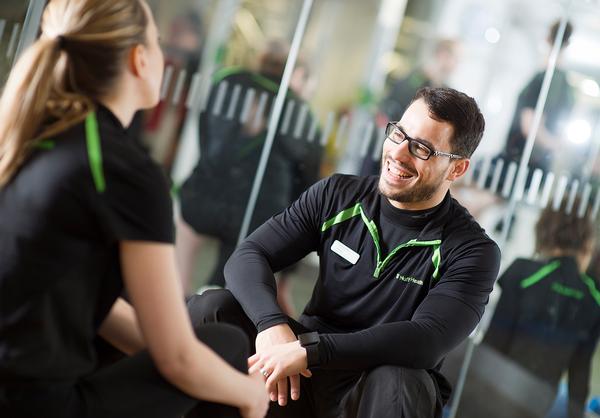
Dr Davina Deniszczyc is medical director of Nuffield Health
We must think creatively about how to engage every age group in exercise / photo: Nuffield Health
Improved mental health was cited as a major reason for exercising / photo: Nuffield Health
https://www.leisureopportunities.co.uk/images/2021/612076_402781.jpg
Health charity Nuffield has published its first ever Healthier Nation Index for the UK. Dr Davina Deniszczyc digs into the numbers for HCM
Latest News
Fitness First UK has raised the bar with its latest refurbishment, in Highbury, London, as ...
Latest News
TLee Spas and Wellness has revealed the design for a wellness destination concept for AI ...
Latest News

Urban Gym Group has entered the Irish market with the acquisition of Iconic ...

Latest News

Total Fitness has released new research revealing how the expectations and motivations of ...
Latest News
Wattbike has announced a new integration with EGYM, which enables the bikes to contribute to ...
Latest News
Les Mills has launched a reformer Pilates workout. The 45-minute workout blends traditional reformer movements ...
Latest News
The inaugural HCM Invest event has opened applications for pitching slots ahead of its launch ...
Latest News
Girls in the UK are missing out on 280 million hours of sport every year ...
Latest News
According to research which tracked more than 147,000 people for 30 years, 90-120 minutes of ...
Latest News
Everlast Gyms expands its footprint outside of the UK this month with the imminent launch ...
Latest News
The UK's four Chief Medical Officers have published a refreshed edition of  Physical activity guidelines: ...
Opinion
promotion
Strength training has moved from the margins to the mainstream.
Opinion: Building smarter strength spaces for today’s operators
Featured supplier news
Featured supplier news: Legends never die: four legends, four philosophies of life
Panatta brought together four of the most influential figures in bodybuilding history on the stage of RiminiWellness 2026: Phil Heath, Lee Haney, Ronnie Coleman and Hany Rambod.
Featured supplier news
Featured supplier news: Introducing a new era of Nautilus Leverage
Strength training has never been more important for member retention, facility differentiation and long-term commercial success.
Company profiles
Company profile: Energym
At Energym, we’re redefining the role of fitness in a sustainable future. Our award-winning British ...
Company profiles
Company profile: Pulse Fitness
With an award-winning portfolio of over 450 pieces of cutting-edge, premium fitness equipment, Pulse Fitness ...
Supplier Showcases
Supplier Showcase - From nightclub to health club
Supplier Showcases
Supplier Showcase - Future-proofing
Catalogue Gallery
Click on a catalogue to view it online
Featured press releases
GLL press release: 115 past and present GLL Sport Foundation athletes set to shine at the 2026 Commonwealth Games
As the Commonwealth Games return to Glasgow from 23 July to 2 August 2026, the GLL Sport Foundation (GSF) is proud to celebrate the remarkable achievement of 115 past and present supported athletes who have been selected to compete on one of the biggest stages in Commonwealth sport.
Featured press releases
PSLT press release: PSLT strengthens Smartfit UK expertise following specialist training at Smartfit USA headquarters
PSLT Fitness Solutions has reinforced its commitment to delivering industry-leading cognitive-motor training solutions across the UK after head of healthcare solutions, Tony Barry, completed an intensive specialist training programme with the Smartfit team in the United States
Directory
Spa and beauty equipment
Oakworks Inc: Spa and beauty equipment
Hot tubs
MSpa International Ltd: Hot tubs
Industrial washing machines
Miele Company Limited: Industrial washing machines
Water experiences and hydrotherapy solutions
Aquaform s.r.l.: Water experiences and hydrotherapy solutions
Lockers
Crown Sports Lockers: Lockers
Fitness tracking platform
SpiviTech: Fitness tracking platform
Property & Tenders
Stratford, East London.
Lee Valley Regional Park Authority
Property & Tenders
Y Felinheli, LL56 4QN
Newmark
Property & Tenders
Diary dates
21-24 Sep 2026
The Langham Huntington Pasadena , Pasadena, United States
Diary dates
28-29 Sep 2026
Grand Ballroom, METT Singapore, Singapore
Diary dates
06-08 Oct 2026
Messe Stuttgart, Stuttgart, Germany
Diary dates
22-22 Oct 2026
QEII Conference Centre, London,
Diary dates
29-31 Oct 2026
Impact Exhibition & Convention Center Bangkok,Thailand, Bangkok, Thailand
Diary dates
29-31 Oct 2026
IMPACT Exhibition Center, Bangkok, Thailand , Bangkok, Thailand
Diary dates
14-15 Nov 2026
The Kromhouthal , Amsterdam, Netherlands
Diary dates
26-29 Oct 2027
Koelnmesse Exhibition Centre, Cologne, Germany
Diary dates
Search news, features & products:
Find a supplier:
Partner sites