


























features
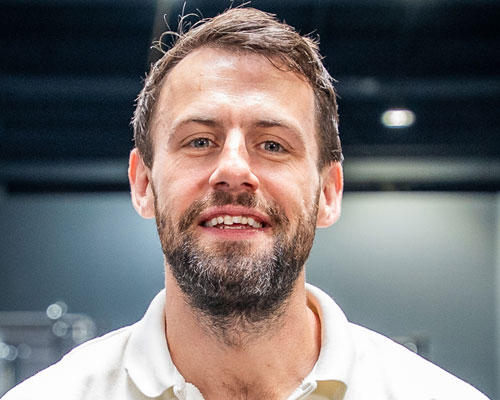
HCM People: Heather MckeeBehaviour change specialist



Tell us about your background
My work is focused on creating long term habits that stick. I did a sports science degree, an exercise psychology degree and a PhD and also taught statistics before starting my own business.
I've worked with wearable companies, apps and digital platforms to create programmes to encourage long-term behaviour change, focusing on motivation over outcomes.
My 100-plus clients range across 15 industries and include Decathlon and Lululemon. Now I’ve been brought on board by Myzone as the behaviour change specialist to inform its latest innovation, Motivation Technology, or Mo-Tech.
What more could the industry be doing to help with behaviour change?
The fitness industry tends to focus on getting people in, but actually the pressing issue we’re now facing is adherence. We know too many people quit their New Year's resolutions by February, so it's not enough to just get people in the door.
Members need support when they first join, during the first six- to 12-week period and crucially at 90 days, as that’s the most common time for people to cancel their membership.
For too long the fitness sector has focused on external rewards and outcome data such as calories burned, how much you can lift in the gym, or what you weigh on the scales, rather than intrinsic things such as what does exercise contribute to my life?
We've also overloaded users with data, dashboards and targets to the point of overwhelm. Too much information is more likely to lead to disengagement and a feeling of a lack of control. The more you add, the more you take away from the focal goal – it's called goal dilution and makes the individual less likely to be able to focus on what matters most.
What support do people need to sustain motivation?
There are three elements needed in order for us to stay motivated and those are autonomy, competence and relatedness. This is what Mo-Tech is addressing and operators could fuel the fire of motivation by focusing on those three things – giving people choice and ownership; helping them to feel competent and giving a sense of belonging.
When all this is in place things get sticky and you don’t have to rely on willpower – or because the doctor told you to exercise – you start doing it for you.
There's more than 40 years of research on self-determination theory that shows when people start to see themselves as an exerciser they experience an identity shift that drives motivation.
The emotional layer is also important for stickiness. People need to feel a sense of belonging to their gym, and they also need to be able to tap into self-compassion and self-forgiveness if they disengage for a while. What gets people started is often extrinsic motivation, but what keeps them going is that intrinsic motivation. Research shows that what you enjoy the most is what you stick with.
How is Mo-Tech addressing those points?
What really excites me about Mo-Tech is that it reframes motivation as a skill, and something which can be honed, rather than a personality trait. It creates meaning by focusing on meaningful metrics and meaningful movement for the individual which is going to keep them engaged. It's not about giving people more data, it's about giving people more meaning and that's what is important for long-term change.
The Myzone streak process is being changed in order to be more forgiving – we all fail all the time and failure has to be part of that journey. The way to earn Myzone Effort Points (MEPs) is also being made easier, so people get quick boosts of confidence early on.
Myzone is also going device-agnostic, so people won’t have to have the watch or the belt anymore, but will be able to sync with their existing apps, although the belts and watches will still be available.
Looking at the big picture, we've given people different types of gyms, fitness equipment, classes and data – the last piece of the puzzle is giving them the compass to help find what will convert extrinsic motivation into intrinsic motivation for them.
Why is self-compassion so important?
The power of emotion in behaviour change is often underestimated. Motivation isn't rational – how many people have you heard saying, ‘I'm going on a diet on Monday,’ while eating a pizza?
So we need to help people feel more successful and part of that is coaching around their reaction to failure. Operators need to double down on this and help people to see that failure is a normal part of the journey.
I published a research paper on this. We looked at people who had lost a clinically-significant amount of weight and maintained it for five to 10 years, versus those that had done it for a few years but then relapsed. The conclusion was that failure is success if you learn from it.
Those who were successful in maintaining their weight had a growth mindset around failure. If they ate well all week and then had a Mars bar on Thursday, they didn’t think "the wheels are coming off and we'll just go overboard this weekend and then we'll start again on Monday." They thought "this is life" and kept going.
The perfectionist all-or-nothing mindset can hold people back. If someone has disengaged from the gym, the most common reason stopping them from coming back is shame, so it’s important that operators know how to reach out to those members and encourage them to come back without making them feel guilty.
This needs to start with the onboarding process. Discuss failure from the outset, tell people that failure is a normal part of the journey and help them plan for what happens when they do fail. Failure will happen when life gets in the way, so what will be their first and smallest step to get back on the wagon?
We know from behavioural science that language is so important when reaching out to disengaged members. Frame the interaction as checking in on them – let them know what’s going on that might be manageable to them, offer them a free coffee when they come back, let them know you’d love to see them.
Where could Mo-Tech go in the future?
We’re working on an intervention to support the habit loop and I'd love to be able to measure the motivation itself. There are many measures we use in research to measure autonomy, competence and relatedness, so that we can create the right interventions, at the right time, personalised to that individual.
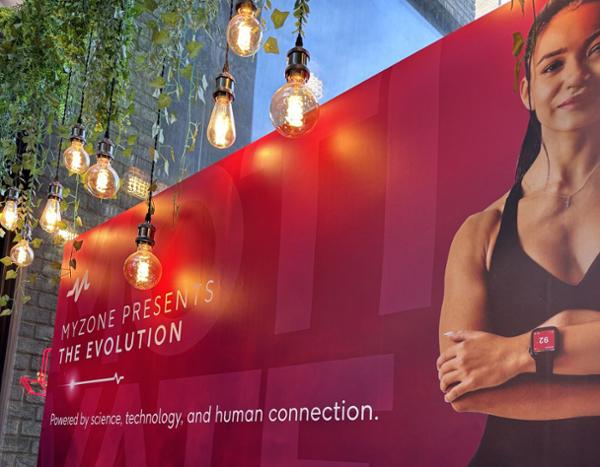
Myzone has launched a category called Motivation Technology (Mo-Tech), that transforms the science of motivation into action and is designed to help with member retention.
Created to work with existing smartwatches or Myzone wearables, a new product called Myzone Go makes motivation accessible to everyone and helps individuals to build lasting exercise habits.
Jay Worthy, CEO, Myzone, says: “Member drop-out remains the single greatest challenge for fitness operators and the biggest barrier to the growth of the sector. Mo-Tech tackles this head-on, turning the science of motivation into a seamless digital experience that rewards effort, builds habits and sustains engagement for life.
“At the heart of this repositioning sits Myzone Go, our new app-powered experience that opens up Myzone’s motivational power to everyone. It’s a clear shift from FitTech to Mo-Tech: from hardware-led to motivation-driven, from measuring performance to inspiring lasting participation.
“We already know that people who train with Myzone stay members and train for longer,” said Worthy. “Now, with Myzone Go and our enhanced, motivation-driven features, we can support operators to build even deeper loyalty and engagement.
Myzone will be launching a white paper to share the science behind Mo-Tech and guide operators in applying it. Myzone’s heart rate-based effort tracking platform is used by millions of people in more than 100 countries.