

















EGYM
EGYM
EGYM
Follow Health Club Management on Twitter Like Health Club Management on Facebook Join the discussion with Health Club Management on LinkedIn
FITNESS, HEALTH, WELLNESS

features

Global markets: A land of opportunity

New research provides valuable insights into the fitness industry in Zealand. Trent Brown offers an analysis of the two markets based on the key findings of the report

By Trent Brown, Ezypay, | Published in Health Club Management 2013 issue 11
Clubs offering budget memberships and 24-hour facilities were identified as potential growth areas

The Australian economy has been the envy of much of the world in recent years. However, while it’s true most sectors of the fitness industry have fared comparatively well in globally tough times, that’s not to say that business owners are resting on their laurels.

The fitness landscape in Australia and New Zealand has changed considerably in recent years, most notably with the growth of small footprint and 24-hour clubs challenging the big players. This, coupled with reduced discretionary consumer spending caused by economic uncertainty, has resulted in a highly competitive environment.

But in spite of the challenges, it’s encouraging for the industry that more than 50 per cent of Australian and New Zealand clubs saw a growth in membership in 2013: 33 per cent saw growth of 1–10 per cent, while 26 per cent saw more than 10 per cent growth.

These are some of the topline findings of this year’s Australia and New Zealand Fitness Industry Survey (ANZFIS), conducted by Ezypay and involving almost 20,000 responses: 1,1,50 clubs and 18,940 members and non-members.

We take a look at some of the key findings and trends highlighted by this year’s report.

Smaller facilities
Although big chain clubs can be found in major cities and towns in Australia and New Zealand, privately owned single clubs enjoy a considerable slice of the market. Franchise clubs are also prominent, and PT studios and CrossFit facilities (or ‘boxes’ or ‘box clubs’ as they are also known) are also making an impact. Indeed, more than half of the facilities that responded to this year’s survey had fewer than 500 members, reflecting the market share enjoyed by small to medium-sized fitness businesses.

Facilities and services
Free weights have overtaken fixed resistance machines in popularity over recent years: in 2011, 79 per cent of clubs offered fixed resistance machines, and 64 per cent offered free weights; in 2013, those numbers had changed to 73 per cent and 82 per cent respectively. This is an interesting turnaround, and ties in with the growth in popularity of functional and bodyweight training. In leaner financial times, it may also be an indication that some clubs have embraced training formats that use smaller, cheaper free weight equipment.

In terms of group exercise, 57 per cent of responding clubs had at least one studio – an increase from the 2011 ANZFIS, when the figure was 43 per cent. The higher prominence of CrossFit facilities also reflects the recent growth in popularity of group training formats.

Over one-third of clubs say they intend to invest in gym equipment in the coming financial year: 41 per cent plan to invest in cardio equipment and 35 per cent in weight training equipment.

Changing formats
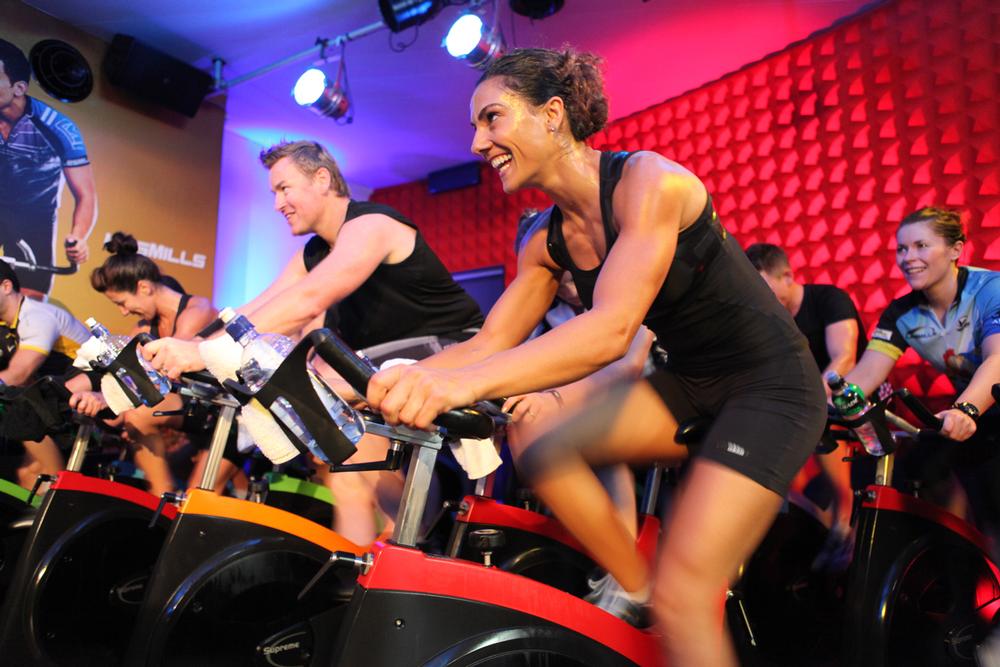
Among members who have, at one time or another, lapsed their membership, lack of time was cited as the most common reason for the decision. The industry seems to be responding, however, with the introduction of short, tough, results-focused exercise workouts – high-intensity interval training (HIIT) formats such as Tabata, CrossFit, Les Mill’s GRIT series – and even whole club concepts, such as Fitness First’s The Zone in Sydney.

Indeed, the most significant growth areas for the fitness industry – as identified by clubs responding to this year’s survey – include new workout concepts such as CrossFit, express workouts, small group training and small group fitness studios, and obstacle course events and classes. Clubs could potentially benefit from focusing on the provision of these training opportunities in their marketing and promotions.

Clubs offering budget memberships (under $10 a week in either Australian or New Zealand currency) and 24-hour facilities were also identified as potential future growth areas, as was personal training and catering for new niches – specifically adult and childhood obesity, and the growing seniors market.

Personal training
In the 2011 ANZFIS, 56 per cent of Australian clubs reported employing all of their personal trainers, while 25 per cent of clubs opted to contract their PTs. In 2013, however, this situation has been reversed, with more clubs contracting PTs than employing them.

In the 2011 survey, it was noted that the NZ experience of higher PT contracting levels correlated with fewer problems. The report observed: “It could suggest that contracted staff are of a higher quality than employed staff, perhaps taking greater ownership of their role, equating to higher education, conduct and overall professionalism.”

Most often, clubs source remuneration from PTs via a percentage of income (42 per cent), via rent (35 per cent) or a mixture of both (23 per cent). The ways in which clubs derive income from PTs has remained consistent in both Australia and New Zealand.

From a member perspective, more than half of members surveyed (55 per cent) have never tried personal training. Of the 45 per cent who currently do use a PT, many have only done so for three months or less (33 per cent). Encouragingly though, 22 per cent have used a PT for 12 months or longer.

Member acquisition and retention
The main reason members said they joined a club was location (33 per cent). Additional reasons for joining included value for money (13 per cent), or because they offered a different type of exercise (9 per cent). A mere 7 per cent joined their current club because it was cheaper, which confirms that price is no longer a sole deciding factor. It will be interesting to see how this changes in the coming year, however, as more budget operators enter the Australian and New Zealand marketplace.

When it comes to remaining a member, location was the biggest factor (54 per cent), followed by value for money (46 per cent) and having professional staff – defined as polite, approachable and on-hand (39 per cent). Indeed, when asked about interaction with staff, 60.2 per cent of members said they felt it was important on every visit to the club, with 29 per cent of members even reporting that engaging staff who made conversation, rather than just delivering an initial greeting, were an important reason why they remained a member. While clubs don’t have to be cheapest, value is key and is seen to lie in the member experience.

When asked about their overall satisfaction with their current club, 34 per cent of members say they are very satisfied and 26 per cent are somewhat satisfied; 14 per cent believe their club is OK; and 26 per cent feel somewhat unsatisfied (9 per cent) or very unsatisfied (17 per cent).

Social media
In the 2010 ANZFIS, social media didn’t feature in the top 10 most successful marketing and communication methods. In the 2011 report, it came in 10th. In 2013, however, the club’s own website was ranked first (37 per cent) with social media sites ranked second (15 per cent) – in particular Facebook.

With so many people using social media to communicate with friends and recommend or discuss their experiences – including fitness achievements, classes attended and club check-ins – these online platforms should be given a high priority by clubs looking to drive word of mouth referrals.

Certainly the majority of clubs say they plan to invest in their website and/or social media strategy in the next financial year.

However, while a high proportion of club members use Facebook (80 per cent of this year’s respondents), and are happy to see information and content in their club’s social media feed, most prefer not to be communicated with via this medium.

The future of fitness
Although operators reportedly do not perceive there to be high levels of competition, the Australian and New Zealand marketplace is increasingly busy. This has arguably been to the benefit of the fitness industry, however, forcing clubs to up their game and improve the service they deliver.

Combined with ongoing membership growth and reported plans for investment in the coming year, this all paints a picture of a buoyant industry with its eye on further growth in the years ahead.

Current issues faced by clubs

On average, and in order of importance, the most significant issues identified by clubs in Australia and New Zealand this year are:

* Government legislation
* Obtaining finance
* Staff retention
* Finding an effective software system
* Better understanding of how to use social media
* Motivating staff
* Managing staff
* Finding good staff
* Competition from other operators
* Marketing
* Member retention
* Membership sales

Trent Brown is CEO of Ezypay, a company based in Sydney, Australia, which supports businesses via an outsourced direct debit and credit card management system. He has led some of the fastest growing businesses in Australia and uses this success to share his knowledge and enthusiasm for sustainable business growth. 
Web www.ezypay.com
Sign up here to get HCM's weekly ezine and every issue of HCM magazine free on digital.
Results-focused workouts are growing in popularity / pictured: Les Mills RPM
Tabata training (below) and CrossFit are making an impact
Fitness First now has a range of formats including Black Label clubs and The Zone
https://www.leisureopportunities.co.uk/images/HCM2013_11global.gif
Trent Brown analyses a new report on the Australian and New Zealand health and fitness markets
Ezypay, Crossfit, Fitness First ,Australia, New Zealand, research, ANZFIS, Ezypay, CrossFit, Fitness First, HIIT, budget clubs, PT, social media, member acquisition, member retention
HCM magazine
Raphael Cuomo explores the powerful link between addiction, health and behaviour change
HCM magazine
For every member with a tripod and a big following, there are others irritated at the way equipment is being hogged or wary they’ll be in the background on someone’s Insta feed. Do influencers offer valuable, free marketing or are they just a nuisance? Kath Hudson finds out how operators are responding
HCM magazine
HCM People

Stephen Price

Founder, SP&Co Group
Working in public health over the last few years has lit up parts of my brain again
HCM magazine
As the entrepreneur who started Wexer, Fresh Fitness, Fitness DK and Repeat, as well as being a former elite athlete, Rasmus Ingerslev’s life looked perfect from the outside, but onthe inside it was a different story. He talks to Kath Hudson about healing old wounds
HCM magazine
Collaborations with the medical profession and greater aspirations around wellbeing are creating a need for more experts in our sector. It’s time to reboot our thinking around the workforce
HCM promotional features
Sponsored
SnowDome Fitness has added 50 per cent more space with cutting-edge Technogym solutions
HCM promotional features
Sponsored
Greg Bradley looks at the shift towards strength training in gyms and advises on how operators can create the ultimate training environment
HCM promotional features
Sponsored
Third Space partnered with IndigoFitness to deliver a bespoke training space for its new club at The Whiteley
HCM promotional features
Sponsored
Starpool supports Olympic champion Marcell Jacobs, says Riccardo Turri
HCM promotional features
Sponsored
Find out how your gym can tap into the corporate wellness boom
HCM promotional features
Sponsored
David Lloyd is stepping up its commitment to women’s health as it continues to explore what fit-for-purpose looks like for the female population
HCM promotional features
Sponsored
EGYM has opened a new HQ in Paternoster Square, London and revealed a range of new launches
HCM promotional features
Sponsored
New launch, Salus House, elevates boutique wellness with high service levels and a partnership with Technogym
HCM promotional features
Sponsored
Active IQ is calling for greater accountability in online fitness advice with the launch of a new trustmark
HCM promotional features
Latest News
Nuffield Health has told HCM that it takes its responsibilities towards its colleagues seriously and ...
Latest News
Technogym has announced the launch of the Run X World Treadmill Championship, the first world ...
Latest News
Shocked by the UK loneliness statistics, charitable trust Mytime Active has been doubling down on ...
Latest News
Portugal’s leading operator, SC Fitness, is celebrating a milestone by reaching 100 gyms.  The company ...
Latest News
Australia’s fast-growing fitness network, Viva Leisure, is adding a low-cost gym brand to its already ...
Latest News
Speedflex has launched a strength training programme for 10 to 16-year-olds, to make it safer, ...
Latest News
Tewinbury Farm Hotel in Hertfordshire, UK is expanding its premium leisure proposition with the launch ...
Latest News

Work is underway in Madrid on one of Europe’s most significant multi-functional complexes, ...

Opinion
promotion
Strength training has moved from the margins to the mainstream.
Opinion: Building smarter strength spaces for today’s operators
Featured supplier news
Featured supplier news: Reaching the people most gyms miss: Bedford Gym & Swim Campaign delivers 410 new members
One of the biggest mistakes the fitness industry still makes is advertising almost exclusively to people who already look and live like gym members.
Featured supplier news
Featured supplier news: Supporting long-term health: why whole body vibration belongs in clinical settings
As healthcare continues to shift towards prevention, there’s a growing focus on helping people stay active, independent and feeling good for longer.
Company profiles
Company profile: Gantner
Gantner optimizes and simplifies the organisation of fitness clubs. Using touchless RFID/NFC credentials (member cards, ...
Company profiles
Company profile: Everyone Active
Everyone Active's aim is to get communities active, engaged and entertained through our wide-ranging activities ...
Supplier Showcases
Supplier Showcase - Future-proofing
Catalogue Gallery
Click on a catalogue to view it online
Featured press releases
Technogym press release: Great success for Technogym’s “Let’s Move & Donate Food” campaign: one million meals donated
Thanks to the participation of 150,000 people across 141 countries, the social campaign surpassed one billion Moves collected, which were converted into a donation of one million school meals to support children in need.
Featured press releases
ukactive press release: Are they Fit for Office? UK Active and Technogym throw down the gauntlet to MPs
Hundreds of staff, MPs and Peers from across Westminster have signed up for the Fit for Office parliamentary physical activity challenge, which takes place throughout June and is hosted by ukactive and Technogym.
Directory
Industrial washing machines
Miele Company Limited: Industrial washing machines
Fitness tracking platform
SpiviTech: Fitness tracking platform
Water experiences and hydrotherapy solutions
Aquaform s.r.l.: Water experiences and hydrotherapy solutions
Lockers
Crown Sports Lockers: Lockers
Hot tubs
MSpa International Ltd: Hot tubs
Spa and beauty equipment
Living Earth Crafts: Spa and beauty equipment
Property & Tenders
Stratford, East London.
Lee Valley Regional Park Authority
Property & Tenders
Y Felinheli, LL56 4QN
Newmark
Property & Tenders
Diary dates
13-13 Jun 2026
Worldwide, Various,
Diary dates
21-24 Sep 2026
The Langham Huntington Pasadena , Pasadena, United States
Diary dates
06-08 Oct 2026
Messe Stuttgart, Stuttgart, Germany
Diary dates
22-22 Oct 2026
QEII Conference Centre, London,
Diary dates
26-29 Oct 2027
Koelnmesse Exhibition Centre, Cologne, Germany
Diary dates

features

Global markets: A land of opportunity

New research provides valuable insights into the fitness industry in Zealand. Trent Brown offers an analysis of the two markets based on the key findings of the report

By Trent Brown, Ezypay, | Published in Health Club Management 2013 issue 11
Clubs offering budget memberships and 24-hour facilities were identified as potential growth areas

The Australian economy has been the envy of much of the world in recent years. However, while it’s true most sectors of the fitness industry have fared comparatively well in globally tough times, that’s not to say that business owners are resting on their laurels.

The fitness landscape in Australia and New Zealand has changed considerably in recent years, most notably with the growth of small footprint and 24-hour clubs challenging the big players. This, coupled with reduced discretionary consumer spending caused by economic uncertainty, has resulted in a highly competitive environment.

But in spite of the challenges, it’s encouraging for the industry that more than 50 per cent of Australian and New Zealand clubs saw a growth in membership in 2013: 33 per cent saw growth of 1–10 per cent, while 26 per cent saw more than 10 per cent growth.

These are some of the topline findings of this year’s Australia and New Zealand Fitness Industry Survey (ANZFIS), conducted by Ezypay and involving almost 20,000 responses: 1,1,50 clubs and 18,940 members and non-members.

We take a look at some of the key findings and trends highlighted by this year’s report.

Smaller facilities
Although big chain clubs can be found in major cities and towns in Australia and New Zealand, privately owned single clubs enjoy a considerable slice of the market. Franchise clubs are also prominent, and PT studios and CrossFit facilities (or ‘boxes’ or ‘box clubs’ as they are also known) are also making an impact. Indeed, more than half of the facilities that responded to this year’s survey had fewer than 500 members, reflecting the market share enjoyed by small to medium-sized fitness businesses.

Facilities and services
Free weights have overtaken fixed resistance machines in popularity over recent years: in 2011, 79 per cent of clubs offered fixed resistance machines, and 64 per cent offered free weights; in 2013, those numbers had changed to 73 per cent and 82 per cent respectively. This is an interesting turnaround, and ties in with the growth in popularity of functional and bodyweight training. In leaner financial times, it may also be an indication that some clubs have embraced training formats that use smaller, cheaper free weight equipment.

In terms of group exercise, 57 per cent of responding clubs had at least one studio – an increase from the 2011 ANZFIS, when the figure was 43 per cent. The higher prominence of CrossFit facilities also reflects the recent growth in popularity of group training formats.

Over one-third of clubs say they intend to invest in gym equipment in the coming financial year: 41 per cent plan to invest in cardio equipment and 35 per cent in weight training equipment.

Changing formats
Among members who have, at one time or another, lapsed their membership, lack of time was cited as the most common reason for the decision. The industry seems to be responding, however, with the introduction of short, tough, results-focused exercise workouts – high-intensity interval training (HIIT) formats such as Tabata, CrossFit, Les Mill’s GRIT series – and even whole club concepts, such as Fitness First’s The Zone in Sydney.

Indeed, the most significant growth areas for the fitness industry – as identified by clubs responding to this year’s survey – include new workout concepts such as CrossFit, express workouts, small group training and small group fitness studios, and obstacle course events and classes. Clubs could potentially benefit from focusing on the provision of these training opportunities in their marketing and promotions.

Clubs offering budget memberships (under $10 a week in either Australian or New Zealand currency) and 24-hour facilities were also identified as potential future growth areas, as was personal training and catering for new niches – specifically adult and childhood obesity, and the growing seniors market.

Personal training
In the 2011 ANZFIS, 56 per cent of Australian clubs reported employing all of their personal trainers, while 25 per cent of clubs opted to contract their PTs. In 2013, however, this situation has been reversed, with more clubs contracting PTs than employing them.

In the 2011 survey, it was noted that the NZ experience of higher PT contracting levels correlated with fewer problems. The report observed: “It could suggest that contracted staff are of a higher quality than employed staff, perhaps taking greater ownership of their role, equating to higher education, conduct and overall professionalism.”

Most often, clubs source remuneration from PTs via a percentage of income (42 per cent), via rent (35 per cent) or a mixture of both (23 per cent). The ways in which clubs derive income from PTs has remained consistent in both Australia and New Zealand.

From a member perspective, more than half of members surveyed (55 per cent) have never tried personal training. Of the 45 per cent who currently do use a PT, many have only done so for three months or less (33 per cent). Encouragingly though, 22 per cent have used a PT for 12 months or longer.

Member acquisition and retention
The main reason members said they joined a club was location (33 per cent). Additional reasons for joining included value for money (13 per cent), or because they offered a different type of exercise (9 per cent). A mere 7 per cent joined their current club because it was cheaper, which confirms that price is no longer a sole deciding factor. It will be interesting to see how this changes in the coming year, however, as more budget operators enter the Australian and New Zealand marketplace.

When it comes to remaining a member, location was the biggest factor (54 per cent), followed by value for money (46 per cent) and having professional staff – defined as polite, approachable and on-hand (39 per cent). Indeed, when asked about interaction with staff, 60.2 per cent of members said they felt it was important on every visit to the club, with 29 per cent of members even reporting that engaging staff who made conversation, rather than just delivering an initial greeting, were an important reason why they remained a member. While clubs don’t have to be cheapest, value is key and is seen to lie in the member experience.

When asked about their overall satisfaction with their current club, 34 per cent of members say they are very satisfied and 26 per cent are somewhat satisfied; 14 per cent believe their club is OK; and 26 per cent feel somewhat unsatisfied (9 per cent) or very unsatisfied (17 per cent).

Social media
In the 2010 ANZFIS, social media didn’t feature in the top 10 most successful marketing and communication methods. In the 2011 report, it came in 10th. In 2013, however, the club’s own website was ranked first (37 per cent) with social media sites ranked second (15 per cent) – in particular Facebook.

With so many people using social media to communicate with friends and recommend or discuss their experiences – including fitness achievements, classes attended and club check-ins – these online platforms should be given a high priority by clubs looking to drive word of mouth referrals.

Certainly the majority of clubs say they plan to invest in their website and/or social media strategy in the next financial year.

However, while a high proportion of club members use Facebook (80 per cent of this year’s respondents), and are happy to see information and content in their club’s social media feed, most prefer not to be communicated with via this medium.

The future of fitness
Although operators reportedly do not perceive there to be high levels of competition, the Australian and New Zealand marketplace is increasingly busy. This has arguably been to the benefit of the fitness industry, however, forcing clubs to up their game and improve the service they deliver.

Combined with ongoing membership growth and reported plans for investment in the coming year, this all paints a picture of a buoyant industry with its eye on further growth in the years ahead.

Current issues faced by clubs

On average, and in order of importance, the most significant issues identified by clubs in Australia and New Zealand this year are:

* Government legislation
* Obtaining finance
* Staff retention
* Finding an effective software system
* Better understanding of how to use social media
* Motivating staff
* Managing staff
* Finding good staff
* Competition from other operators
* Marketing
* Member retention
* Membership sales

Trent Brown is CEO of Ezypay, a company based in Sydney, Australia, which supports businesses via an outsourced direct debit and credit card management system. He has led some of the fastest growing businesses in Australia and uses this success to share his knowledge and enthusiasm for sustainable business growth. 
Web www.ezypay.com

Sign up here to get HCM's weekly ezine and every issue of HCM magazine free on digital.
Results-focused workouts are growing in popularity / pictured: Les Mills RPM
Tabata training (below) and CrossFit are making an impact
Fitness First now has a range of formats including Black Label clubs and The Zone
https://www.leisureopportunities.co.uk/images/HCM2013_11global.gif
Trent Brown analyses a new report on the Australian and New Zealand health and fitness markets
Ezypay, Crossfit, Fitness First ,Australia, New Zealand, research, ANZFIS, Ezypay, CrossFit, Fitness First, HIIT, budget clubs, PT, social media, member acquisition, member retention
Latest News
Nuffield Health has told HCM that it takes its responsibilities towards its colleagues seriously and ...
Latest News
Technogym has announced the launch of the Run X World Treadmill Championship, the first world ...
Latest News
Shocked by the UK loneliness statistics, charitable trust Mytime Active has been doubling down on ...
Latest News
Portugal’s leading operator, SC Fitness, is celebrating a milestone by reaching 100 gyms.  The company ...
Latest News
Australia’s fast-growing fitness network, Viva Leisure, is adding a low-cost gym brand to its already ...
Latest News
Speedflex has launched a strength training programme for 10 to 16-year-olds, to make it safer, ...
Latest News
Tewinbury Farm Hotel in Hertfordshire, UK is expanding its premium leisure proposition with the launch ...
Latest News

Work is underway in Madrid on one of Europe’s most significant multi-functional complexes, ...

Latest News
PureGym is encouraging people to step away from their screens and go for a walk, ...

Latest News
Small improvements to sleep, diet quality, and physical activity, made in combination lead to a ...
Latest News
Therme Manchester’s 28-acre development, which will include interconnected glass pavilions that measure 65,000sq m, will ...
Opinion
promotion
Strength training has moved from the margins to the mainstream.

Opinion: Building smarter strength spaces for today’s operators
Featured supplier news
Featured supplier news: Reaching the people most gyms miss: Bedford Gym & Swim Campaign delivers 410 new members
One of the biggest mistakes the fitness industry still makes is advertising almost exclusively to people who already look and live like gym members.
Featured supplier news
Featured supplier news: Supporting long-term health: why whole body vibration belongs in clinical settings
As healthcare continues to shift towards prevention, there’s a growing focus on helping people stay active, independent and feeling good for longer.
Company profiles
Company profile: Gantner
Gantner optimizes and simplifies the organisation of fitness clubs. Using touchless RFID/NFC credentials (member cards, ...
Company profiles
Company profile: Everyone Active
Everyone Active's aim is to get communities active, engaged and entertained through our wide-ranging activities ...
Supplier Showcases
Supplier Showcase - Future-proofing
Catalogue Gallery
Click on a catalogue to view it online
Featured press releases
Technogym press release: Great success for Technogym’s “Let’s Move & Donate Food” campaign: one million meals donated
Thanks to the participation of 150,000 people across 141 countries, the social campaign surpassed one billion Moves collected, which were converted into a donation of one million school meals to support children in need.
Featured press releases
ukactive press release: Are they Fit for Office? UK Active and Technogym throw down the gauntlet to MPs
Hundreds of staff, MPs and Peers from across Westminster have signed up for the Fit for Office parliamentary physical activity challenge, which takes place throughout June and is hosted by ukactive and Technogym.
Directory
Industrial washing machines
Miele Company Limited: Industrial washing machines
Fitness tracking platform
SpiviTech: Fitness tracking platform
Water experiences and hydrotherapy solutions
Aquaform s.r.l.: Water experiences and hydrotherapy solutions
Lockers
Crown Sports Lockers: Lockers
Hot tubs
MSpa International Ltd: Hot tubs
Spa and beauty equipment
Living Earth Crafts: Spa and beauty equipment
Property & Tenders
Stratford, East London.
Lee Valley Regional Park Authority
Property & Tenders
Y Felinheli, LL56 4QN
Newmark
Property & Tenders
Diary dates
13-13 Jun 2026
Worldwide, Various,
Diary dates
21-24 Sep 2026
The Langham Huntington Pasadena , Pasadena, United States
Diary dates
06-08 Oct 2026
Messe Stuttgart, Stuttgart, Germany
Diary dates
22-22 Oct 2026
QEII Conference Centre, London,
Diary dates
26-29 Oct 2027
Koelnmesse Exhibition Centre, Cologne, Germany
Diary dates
Search news, features & products:
Find a supplier:
EGYM
EGYM
Partner sites