














The Leisure Media Company Ltd
Follow Health Club Management on Twitter Like Health Club Management on Facebook Join the discussion with Health Club Management on LinkedIn
FITNESS, HEALTH, WELLNESS

features

Trends Report: Fitness Foresight 2016

The Health Club Management team looks at emerging trends and influences, and identifies opportunities for industry growth and diversification

Published in Health Club Management 2016 issue 2

THE NEW WEARABLES

INVISIBLES

As wearable technology innovators and activity app developers such as Under Armour, Jawbone, Fitbit and Strava battle for market share, the next phase of activity and wellness monitoring is already being prototyped behind closed doors.

We will move from a time of wearables to a new evolution in body computing: the age of invisibles, when sensors are integrated into the body to give a continuous data stream and establish a complete picture of what’s going on with our health, rather than simply measuring and reporting on one aspect of it.

Invisibles will enable us to more accurately understand and diagnose disease and, in turn, to establish better methods of prevention and adherence to wellbeing programmes through lifestyle change. They’ll also return us to a more natural state, by removing the need to carry around intrusive devices.

The next generation of trackers won’t be wearable; they’ll be inside the body

NIGHT OWLS

AROUND THE CLOCK FITNESS

Many low-cost clubs already open 24/7 – but with operators increasingly pressured to justify the overheads of their facilities, we’re likely to see more health clubs looking at ways of opening their doors throughout the night.

Whether that’s by retrofitting access and security technology for overnight operation, or employing one or two members of staff for a night shift, expect to see even the larger mid-market clubs considering this option – especially with virtual classes now going mainstream and allowing for a diverse exercise offering to be made available to customers around the clock.
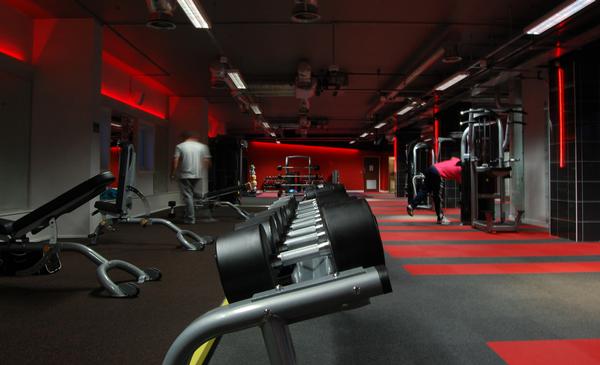
More and more gym operators will start to look at opening 24/7

PERSONAL TOUCH

DNA TESTING

The public now expects personalisation: this is a generation of consumers who aren’t satisfied if they’re not recognised, tracked, personally catered for.

For gyms, that doesn’t only mean personalised marketing (see beacon technology, p40). It also means personalised workouts, which will be taken to the next level by DNA testing – programmes tailored to the genetic make-up of people’s bodies.

This technology is already becoming mainstream – the 23andMe service is available from UK high street chemist Superdrug – so we aren’t far from a time when all workouts will be bespoke to individuals’ strengths, weaknesses, nutritional and recovery needs.

Personalised workouts based on DNA will boost results for members / PhotoS: shutterstock.com

THE SHARING ECONOMY

CREATING EXPERIENCES

For the Millennial generation, what matters isn’t owning stuff – it’s experiencing things.

“Shareable experiences are the new social currency,” says consumer behaviouralist Ken Hughes, CEO of Ireland’s Glacier Consulting. “It’s all about creating things for your customers to do that they can then talk about on social media.”

Fitness lends itself well to this mindset: events like Color Run and Tough Mudder are good examples. But there’s space for quirkiness too. Outside of the fitness sector, Jafflechutes – a business based in Melbourne, Australia – might prove not to be an enduring business model, but it’s caught the attention for now: order your Jaffle (toasted sandwich), turn up at a mystery location and stand on the X, and your Jaffle will float down out of the sky on its own little parachute.

Forward-thinking fitness businesses will start creating shareable experiences for the all-important Millennial market – and keep coming up with new experiences to keep the social media stream fresh.
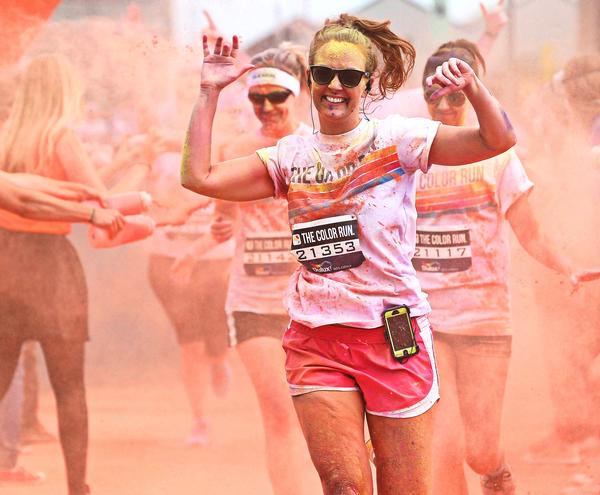
Experiences such as the Color Run, which can be talked about on social media, are what engages Millennials

SOFTWARE IS KING

CONTINUOUS UPGRADES

We believe 2016 could be the year when fitness equipment R&D begins to focus as much on software as on the physical equipment itself.

Much as the bulk of the iPhone’s functionality comes from its apps, so gym equipment will largely be driven by the software that supports it. Regular, remote updates will ensure equipment keeps pace with the latest digital advances – and all in a very cost-effective manner for the operator.

Phillipp Roesch-Schlanderer, founder and CEO of eGym, says: “With the constant advancement of technology, we see that hardware is largely becoming the conduit for ever-updated software.”

One of the biggest benefits, he adds, is that data-driven gym kit will provide unprecedented insights into members’ behaviour patterns.

In gyms, hardware will become the conduit for ever-updated software

PERSONALISATION

BEACON TECHNOLOGY

As beacon technology moves towards the mainstream, clubs can prepare for a new era of personalised communication with customers and prospects.

Beacons precisely know, within inches, where a consumer is – and this information combines with prior search histories and other user information to provide targeted recommendations, information and offers.

We’re likely to see some push-back from customers who feel their personal space is being invaded. However, Millennials in particular are open to being tracked geographically, provided immediate, personalised services are the result; Mintel research shows that 33 per cent of UK 16- to 34-year-olds would be willing to give brands they like access to their ‘real-time’ location to receive more relevant offers.

If operators can educate people about the benefits of beacon technology, and demonstrate the special benefits they would get from their use, the opportunity to improve customer relationships through higher levels of personalisation is significant.

Beacons know within inches where users are, so you can precisely target your marketing

ON A HIGH

THE GROWTH OF TRAMPOLINING

Fitness should be fun. That’s a statement most would agree with in principle, but thus far little has been done to really deliver on it. Now that’s changing with the arrival of the trampolining mega-parks.

Trampolining certainly delivers fitness: NASA research shows that 10 minutes of bouncing is a better cardiovascular workout than 33 minutes of running. It’s also undeniably fun, whether you go for the full-size trampolines, a rebounding class or a dodgeball game. And as freerunning founder Sébastien Foucan explains, it’s not just about kids but adults too: “People want freedom. They want escapism. They want an activity that’s fun and social and that isn’t going to feel like a chore after work.”

Expect to see a huge boom in this sector in 2016.
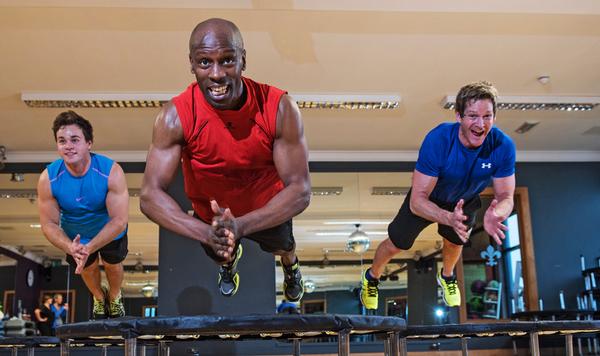
Trampolining gives a great CV workout – but just as importantly, it’s great fun

OPEN RELATIONSHIPS

AN END TO CONTRACTS?

Research by UK trade association ukactive recently found that gyms and health clubs solely offering fixed-term contracts saw an average membership length of 11.2 months, while gyms offering more flexible options alongside fixed contracts saw a 17.2-month average. Far from being an impediment to member retention, it seems flexibility is fast becoming a driver of loyalty.

The younger generations in particular no longer want to belong to just one gym. As The Futures Company points out: “To win with those aged under 30, gym owners must embrace – even encourage – a certain degree of promiscuity of membership.”

It’s important to understand that in the new consumer mindset, customers aren’t being disloyal if they don’t only use your gym; operators need to play to their strengths to ensure they stay in the exercise mix, but at the same time accept that ‘mixing and matching’ is the norm.

The boutique studios have recognised this with their commitment-free ‘pay per class’ set-up, and now other health club operators must follow suit.

LEARNING FROM NATURE

BIOMIMICRY

Increasingly architects and designers are turning to nature for inspiration – not just for the way buildings look, but also the way they function. Biomimicry – the act of applying biological principles to design – hasn’t made its way into mainstream health clubs… yet. But we see it as the next step for a sector that’s already embracing sustainable and wellness-focused properties, and that’s already taking steps in the right direction.

CLADmag – a sister magazine to Health Club Management – outlined a number of striking examples of biomimicry in the leisure industry, including thermo-metal cladding that ‘breathes’ like skin to heat or cool a building, and super-efficient solar panels modelled on butterfly wings.

In France, the nonLin/Lin Pavilion – consisting of perforated aluminium sheets that can be replicated infinitely – emulates the morphology of coral. Meanwhile, Rome’s Jubilee Church uses self-cleaning cement that’s inspired by photosynthesis.

In New York, David Benjamin’s Hy-Fi art installation is built from fungus, hemp and corn stalk bricks, which grew naturally into shape. To read more about this topic, see CLADmag: http://lei.sr?a=W1T2p

The nonLin/Lin Pavilion in France has been designed to emulate the morphology of coral

THE ‘ALWAYS ON’ CONSUMER

AT-HOME FITNESS

As technology continues to create more and more opportunities to work out away from the gym, expect to see a shift in health club operators’ mindset – away from ‘our business is our club’ and towards ‘our business is getting people active’.

The ‘always on’ consumer wants to work out when and where they choose; clubs must recognise this or lose out to apps and online gyms. And with recent Nielsen/Les Mills International research showing that 82 per cent of regular gym exercisers also work out at home, it’s clear that operators can expand their offering without cannibalising their own business.

Virtual at-home classes are one great way of reaching into the homes of members and non-members alike. The technology is already out there – Les Mills On Demand and Wexer Streaming, for example – and now individual operators are getting in on the act.

In Asia, the Pure Group has developed mypureyoga.com – free virtual classes for members and non-members – while in Finland, EasyFit has created virtual at-home classes for seniors: chair-based sessions for those not inclined or not able to attend a gym. In the UK, celebrity PT Matt Roberts has launched Body.Network, which has been dubbed ‘The Netflix of Fitness’.

At present, libraries of pre-recorded classes are the norm. But live streaming could be the next step, letting members remotely join their favourite class when they can’t make it in person.
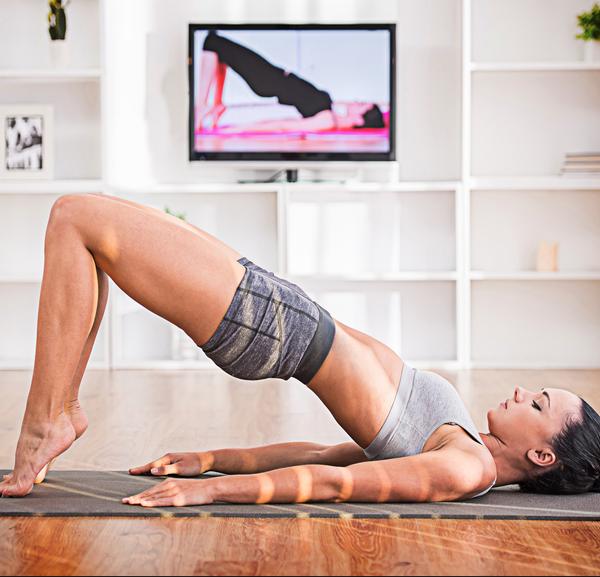
82 per cent of regular gym exercisers work out at home too / Photo: shutterstock.com

FRIEND OR FOE?

THE MIDDLEMAN BACKLASH

Businesses like ClassPass – which sell memberships that allow people to cherry pick classes across any participating studios – hit the headlines in 2015.

For consumers, these businesses tick all the boxes: their delivery against the consumer promise of convenience, flexibility and value is unquestionable.

However, operators are starting to query how good these aggregator services are for their businesses. Pitched as a lead generation tool, many studios are finding that the middlemen’s customers never upgrade to full membership – too tempting are the discounted rates and choice.

Expect to see a backlash from operators in 2016, with at the very least the terms of engagement being renegotiated – fewer classes offered to middlemen customers, at lower levels of discount, and a club’s premium services made available only to their regular members.
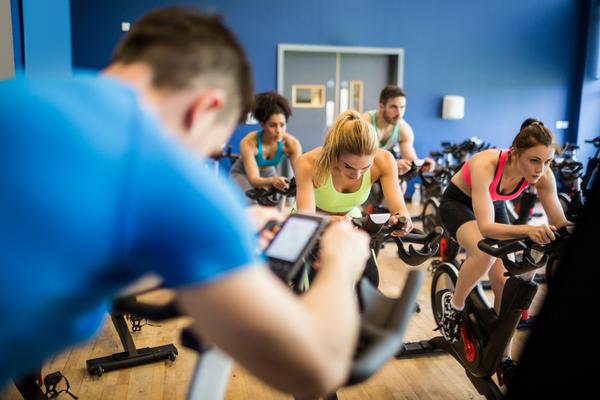
Will studios begin to limit the number of classes being made available to ClassPass users? / Photo: shutterstock.com

RESPECTING YOUR ELDERS

AGE-FRIENDLY DESIGN

Accounting for around 450 million people, baby boomers are one of the most influential generations in the world.

In recognition of this, the Silver Group in Asia offers an AF Audit tool that helps companies understand the needs of older consumers. CEO Kim Walker says: “A lot of hotel wellness facilities aren’t age-friendly because they just haven’t given thought to it.”

It’s about subtle changes as well as obvious ones, he adds. If a non-slip floor looks wet, for example, people still change the way they walk and are just as likely to fall. “Also, when you enter a gym, you’re bombarded with instructions that most people would struggle to remember, let alone older adults with cognitive issues. How can you make everything simpler to understand?

UK-based LiveWire will open a facility in Q3 2016 that’s not only age-friendly but also dementia-friendly. Alongside appropriate design elements, staff and members of the community will be trained to understand the condition. It’s developing a number of programmes too: walking classes and tai chi for early onset dementia groups, for example. Expect more of this as the world’s population continues to age.
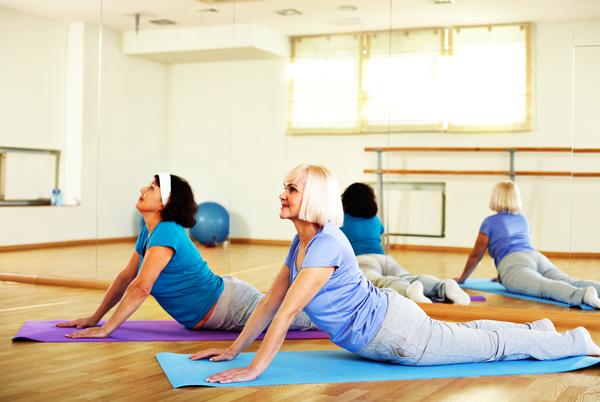
Is your facility age-friendly – maybe even dementia-friendly – in its design and programming? / Photo: shutterstock.com

ON A MISSION

BUSINESS WITH A PURPOSE

The right product, price – and even good service – is no longer enough to win customers’ loyalty. Expectations have raced onwards and upwards, with consumers looking for brands they feel proud to be associated with. Indeed, in GFK’s 2015 global survey of 28,000 consumers, 63 per cent said they only buy products and services that appeal to their beliefs, values or ideals.

Operators that are able to tap into this – setting out a mission and social purpose that members can identify with – will create a strong sense of community in their clubs, and with it drive improved loyalty and retention.

We hope 2016 will see more fitness businesses follow the example of those curated by the Gymtopia project, an online library of companies whose altruistic efforts have embedded them at – and in – the hearts of their communities (see www.gymtopia.org).

Clubs like My Sportlady aren’t just a gym, but a community hub too

SOCIAL SCENE

FITNESS NIGHTS OUT

Working out is fast becoming the new, healthy way of going out, with clubs no longer just places to exercise – it’s becoming cool to be fit and well, and to be associated with the right fitness brands.

This trend was kicked off by classes like Zumba: ideally suited to venues like nightclubs, these saw groups of friends joining together for fun as much as fitness.

Now the boutique studios have taken it to a new level, with juice bars to hang out in and retail zones selling branded apparel; exercisers can quite literally wear their allegiance to their workout tribe on their sleeve.

“It’s a badge of honour,” says Barry’s Bootcamp chief executive Joey Gonzalez. “People who do Barry’s are so proud of it that they want to wear a branded top, whether in class or at Starbucks, to say to others ‘this is who I am, this is how I work out, I’m a part of this community’.”

But this is a challenge too, as it puts gyms head to head with other leisure options, from cinemas to pubs. The fitness sector has to learn to compete at a whole new level.
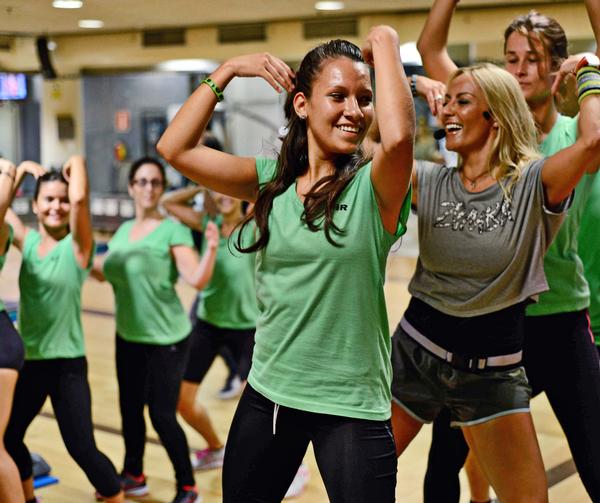
Working out is becoming the new, healthy way of going out with friends

EVERY DROP MATTERS

WATER SCARCITY

Global drought will make water an increasingly precious, and indeed politically charged, commodity in 2016; while not all countries will be directly affected by water shortages, consumer awareness of this issue will demand innovation and new thinking in all markets.

We’ve already seen websites publicly naming and shaming Hollywood stars with overly green lawns. Meanwhile praise has gone to those doing their bit for the environment – actress Charlize Theron, for example, who has emptied her swimming pool and re-designed her garden with desert plants.

Health clubs may not need to empty their pools with immediate effect – but there are some quick wins for operators. Sell high quality metal drink bottles to refill at the water fountain, ensure showers are on timers, capture rainwater, offer eco-friendly shampoo and shower gel, and install water-saving devices in toilet cisterns. Then ensure your members are aware of these actions.

As consumers respond favourably to brands that help them be good global citizens, innovations in water sourcing, recycling and conservation will be key.

Consumers will demand innovations in water conservation / Photo: shutterstock.com

WILD AT HEART

ANIMAL MOVEMENT

Crawling on all fours, swinging from bars, leaping between obstacles: we’re witnessing a growing trend towards bodyweight movement classes inspired by the animal kingdom.

Early arrivals include Australian workout ZUU – on offer at Virgin Active clubs – and Animal Flow classes at US gym chain Equinox. Other concepts include MovNat – which has a number of affiliated gyms, predominantly in the US but also in the UK, Canada, Australia, New Zealand and various European markets – and Primal Move, with numerous trained instructors around the world.

All of the classes deliver a full-body functional workout. Crucially, they’re also great fun, helping participants to rediscover the joy of movement.

There’s a lot more innovation to come from this category.

Animal Flow classes – based on bodyweight exercises – are available at US gym chain Equinox

IRON LEVELS

HAEMOGLOBIN TESTING

We’re led to believe that iron-rich food is good for you. However, research shows that too much iron in the system can be toxic and oxidising, and can lead to the development of a range of diseases.

Post-menopausal women are especially vulnerable to high iron levels: as menstruation ends, iron counts can climb to levels that are detrimental to health.

With an ageing population, this presents opportunities for health clubs to offer haemoglobin testing and advice on this important health issue. The solution is quite simple too: give blood.
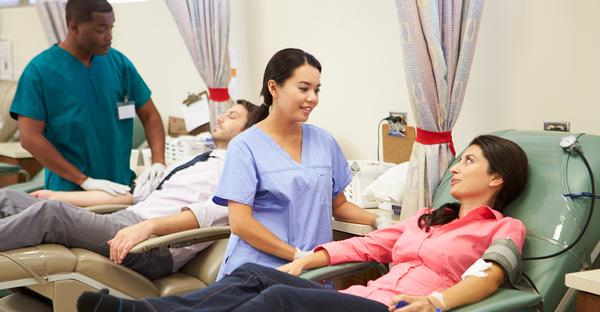
Too much iron can be 
toxic, but the solution 
is simple: give blood / Photo: shutterstock.com
Too much iron can be toxic, but the solution is simple: give blood / Photo: shutterstock.com

THE BIG GET BIGGER

SECTOR CONSOLIDATION

Mergers & acquisitions will continue to be the name of the game in 2016 as players across all sectors of the market jostle for position. 2014 and 2015 already saw rising numbers of deals across Europe – the acquisition of mid-market LA fitness by UK low-cost operator Pure Gym being of particular note in the latter part of 2015, and with a sale of Fitness First likely in the first half of 2016.

But it isn’t just about the private sector operators. The biggest changes are likely to come in the UK trust sector, as more small local trusts are swallowed up into the mega-trusts like GLL and Places for People Leisure. We can expect more consolidation among the suppliers too: we’ve seen Precor acquire Queenax, Pulse take on Trixter, and Life Fitness develop a family of brands. Even where we’re not seeing full acquisition, larger players are taking on distribution of smaller brands: Matrix Fitness and eGym, for example. Expect the climate to get even tougher for smaller, niche suppliers.

ABOUT THE AUTHORS

Kate Cracknell and Liz Terry

Kate Cracknell is editor of Health Club Management magazine and the Health Club Management Handbook. She previously worked as global account director for advertising agency J Walter Thompson, based in the London office.

Liz Terry has been writing about and analysing the global leisure industries since 1983. She’s CEO of Leisure Media, which includes Health Club Management in its portfolio of leisure-focused magazines.

E: [email protected]
T: @HealthClubKate

E: [email protected]
T: @elizterry
Sign up here to get HCM's weekly ezine and every issue of HCM magazine free on digital.
1Life: Uniting the community
https://www.leisureopportunities.co.uk/images/HCM2016_2foresight.jpg
Wearables, social media sharing, DNA, virtual fitness and more: HCM's fitness trends for 2016
Kate Cracknell, Editor, Health Club Management Liz Terry, MD, Leisure Media,Trends, foresight, Fitness Foresight, wearable, invisibles, 24/7, DNA, beacons, Color Run, software, trampolining, contracts, biomimicry, virtual, streaming, middleman, ClassPass, old, grey market, Gymtopia, water, community, animal, functional, consolidation, haemoglobin, Kate Cracknell, Liz Terry
HCM magazine
If the health service is to survive, we must recognise that it is a disease service – and that wellbeing rests with us, says the activity advocate and healthy ageing champion. He talks to Kate Cracknell
HCM magazine
As the entrepreneur who started Wexer, Fresh Fitness, Fitness DK and Repeat, as well as being a former elite athlete, Rasmus Ingerslev’s life looked perfect from the outside, but onthe inside it was a different story. He talks to Kath Hudson about healing old wounds
HCM magazine
Collaborations with the medical profession and greater aspirations around wellbeing are creating a need for more experts in our sector. It’s time to reboot our thinking around the workforce
HCM magazine
I experienced a blissful feeling of joy I hadn’t felt since I was a kid
HCM magazine
HCM People

Stephen Price

Founder, SP&Co Group
Working in public health over the last few years has lit up parts of my brain again
HCM promotional features
Sponsored
David Lloyd is stepping up its commitment to women’s health as it continues to explore what fit-for-purpose looks like for the female population
HCM promotional features
Sponsored
SnowDome Fitness has added 50 per cent more space with cutting-edge Technogym solutions
HCM promotional features
Sponsored
Starpool supports Olympic champion Marcell Jacobs, says Riccardo Turri
HCM promotional features
Sponsored
Find out how your gym can tap into the corporate wellness boom
HCM promotional features
Sponsored
Greg Bradley looks at the shift towards strength training in gyms and advises on how operators can create the ultimate training environment
HCM promotional features
Sponsored
Third Space partnered with IndigoFitness to deliver a bespoke training space for its new club at The Whiteley
HCM promotional features
Sponsored
EGYM has opened a new HQ in Paternoster Square, London and revealed a range of new launches
HCM promotional features
Sponsored
Pulse Fitness has created a new health club delivering an elevated wellness experience
HCM promotional features
Sponsored
The industry is embracing consumer-facing tech. Now it’s time to streamline back-of-house systems with Orbit4, says Daniel Jones
HCM promotional features
Latest News
Australia’s fast-growing fitness network, Viva Leisure, is adding a low-cost gym brand to its already ...
Latest News
Speedflex has launched a strength training programme for 10 to 16-year-olds, to make it safer, ...
Latest News
Tewinbury Farm Hotel in Hertfordshire, UK is expanding its premium leisure proposition with the launch ...
Latest News

Work is underway in Madrid on one of Europe’s most significant multi-functional complexes, ...

Latest News
PureGym is encouraging people to step away from their screens and go for a walk, ...
Latest News
Small improvements to sleep, diet quality, and physical activity, made in combination lead to a ...
Latest News
Therme Manchester’s 28-acre development, which will include interconnected glass pavilions that measure 65,000sq m, will ...
Latest News
The Yard Gym (TYG) is to become Nike Training’s official global training partner in a ...
Opinion
promotion
Strength training has moved from the margins to the mainstream.
Opinion: Building smarter strength spaces for today’s operators
Featured supplier news
Featured supplier news: Supporting long-term health: why whole body vibration belongs in clinical settings
As healthcare continues to shift towards prevention, there’s a growing focus on helping people stay active, independent and feeling good for longer.
Featured supplier news
Featured supplier news: W3Fit EMEA celebrates its fifth anniversary
Celebrating its milestone 5th anniversary, W3Fit EMEA returns in 2026 with an unmissable gathering of the Health & Fitness industry’s most influential leaders.
Company profiles
Company profile: Ziva Strength
Ziva is an elite-performance fitness brand that designs, manufactures, delivers, and services premium resistance training, ...
Company profiles
Company profile: Brass Monkey
Brass Monkey designs and builds the world’s finest commercial-grade ice baths, working with leading gyms ...
Supplier Showcases
Supplier Showcase - From nightclub to health club
Supplier Showcases
Supplier Showcase - Future-proofing
Catalogue Gallery
Click on a catalogue to view it online
Featured press releases
ukactive press release: Are they Fit for Office? UK Active and Technogym throw down the gauntlet to MPs
Hundreds of staff, MPs and Peers from across Westminster have signed up for the Fit for Office parliamentary physical activity challenge, which takes place throughout June and is hosted by ukactive and Technogym.
Featured press releases
Innerva press release: Lex Leisure’s power-assisted exercise suite smashes targets in record time
Crook Log Leisure Centre has more than doubled the membership target for its new power- assisted exercise suite in less than six months.
Directory
Industrial washing machines
Miele Company Limited: Industrial washing machines
Lockers
Crown Sports Lockers: Lockers
Spa and beauty equipment
Oakworks Inc: Spa and beauty equipment
Water experiences and hydrotherapy solutions
Aquaform s.r.l.: Water experiences and hydrotherapy solutions
Hot tubs
MSpa International Ltd: Hot tubs
Fitness tracking platform
SpiviTech: Fitness tracking platform
Property & Tenders
Stratford, East London.
Lee Valley Regional Park Authority
Property & Tenders
Y Felinheli, LL56 4QN
Newmark
Property & Tenders
Diary dates
13-13 Jun 2026
Worldwide, Various,
Diary dates
21-24 Sep 2026
The Langham Huntington Pasadena , Pasadena, United States
Diary dates
06-08 Oct 2026
Messe Stuttgart, Stuttgart, Germany
Diary dates
22-22 Oct 2026
QEII Conference Centre, London,
Diary dates
26-29 Oct 2027
Koelnmesse Exhibition Centre, Cologne, Germany
Diary dates

features

Trends Report: Fitness Foresight 2016

The Health Club Management team looks at emerging trends and influences, and identifies opportunities for industry growth and diversification

Published in Health Club Management 2016 issue 2

THE NEW WEARABLES

INVISIBLES

As wearable technology innovators and activity app developers such as Under Armour, Jawbone, Fitbit and Strava battle for market share, the next phase of activity and wellness monitoring is already being prototyped behind closed doors.

We will move from a time of wearables to a new evolution in body computing: the age of invisibles, when sensors are integrated into the body to give a continuous data stream and establish a complete picture of what’s going on with our health, rather than simply measuring and reporting on one aspect of it.

Invisibles will enable us to more accurately understand and diagnose disease and, in turn, to establish better methods of prevention and adherence to wellbeing programmes through lifestyle change. They’ll also return us to a more natural state, by removing the need to carry around intrusive devices.

The next generation of trackers won’t be wearable; they’ll be inside the body

NIGHT OWLS

AROUND THE CLOCK FITNESS

Many low-cost clubs already open 24/7 – but with operators increasingly pressured to justify the overheads of their facilities, we’re likely to see more health clubs looking at ways of opening their doors throughout the night.

Whether that’s by retrofitting access and security technology for overnight operation, or employing one or two members of staff for a night shift, expect to see even the larger mid-market clubs considering this option – especially with virtual classes now going mainstream and allowing for a diverse exercise offering to be made available to customers around the clock.

More and more gym operators will start to look at opening 24/7

PERSONAL TOUCH

DNA TESTING

The public now expects personalisation: this is a generation of consumers who aren’t satisfied if they’re not recognised, tracked, personally catered for.

For gyms, that doesn’t only mean personalised marketing (see beacon technology, p40). It also means personalised workouts, which will be taken to the next level by DNA testing – programmes tailored to the genetic make-up of people’s bodies.

This technology is already becoming mainstream – the 23andMe service is available from UK high street chemist Superdrug – so we aren’t far from a time when all workouts will be bespoke to individuals’ strengths, weaknesses, nutritional and recovery needs.

Personalised workouts based on DNA will boost results for members / PhotoS: shutterstock.com

THE SHARING ECONOMY

CREATING EXPERIENCES

For the Millennial generation, what matters isn’t owning stuff – it’s experiencing things.

“Shareable experiences are the new social currency,” says consumer behaviouralist Ken Hughes, CEO of Ireland’s Glacier Consulting. “It’s all about creating things for your customers to do that they can then talk about on social media.”

Fitness lends itself well to this mindset: events like Color Run and Tough Mudder are good examples. But there’s space for quirkiness too. Outside of the fitness sector, Jafflechutes – a business based in Melbourne, Australia – might prove not to be an enduring business model, but it’s caught the attention for now: order your Jaffle (toasted sandwich), turn up at a mystery location and stand on the X, and your Jaffle will float down out of the sky on its own little parachute.

Forward-thinking fitness businesses will start creating shareable experiences for the all-important Millennial market – and keep coming up with new experiences to keep the social media stream fresh.

Experiences such as the Color Run, which can be talked about on social media, are what engages Millennials

SOFTWARE IS KING

CONTINUOUS UPGRADES

We believe 2016 could be the year when fitness equipment R&D begins to focus as much on software as on the physical equipment itself.

Much as the bulk of the iPhone’s functionality comes from its apps, so gym equipment will largely be driven by the software that supports it. Regular, remote updates will ensure equipment keeps pace with the latest digital advances – and all in a very cost-effective manner for the operator.

Phillipp Roesch-Schlanderer, founder and CEO of eGym, says: “With the constant advancement of technology, we see that hardware is largely becoming the conduit for ever-updated software.”

One of the biggest benefits, he adds, is that data-driven gym kit will provide unprecedented insights into members’ behaviour patterns.

In gyms, hardware will become the conduit for ever-updated software

PERSONALISATION

BEACON TECHNOLOGY

As beacon technology moves towards the mainstream, clubs can prepare for a new era of personalised communication with customers and prospects.

Beacons precisely know, within inches, where a consumer is – and this information combines with prior search histories and other user information to provide targeted recommendations, information and offers.

We’re likely to see some push-back from customers who feel their personal space is being invaded. However, Millennials in particular are open to being tracked geographically, provided immediate, personalised services are the result; Mintel research shows that 33 per cent of UK 16- to 34-year-olds would be willing to give brands they like access to their ‘real-time’ location to receive more relevant offers.

If operators can educate people about the benefits of beacon technology, and demonstrate the special benefits they would get from their use, the opportunity to improve customer relationships through higher levels of personalisation is significant.

Beacons know within inches where users are, so you can precisely target your marketing

ON A HIGH

THE GROWTH OF TRAMPOLINING

Fitness should be fun. That’s a statement most would agree with in principle, but thus far little has been done to really deliver on it. Now that’s changing with the arrival of the trampolining mega-parks.

Trampolining certainly delivers fitness: NASA research shows that 10 minutes of bouncing is a better cardiovascular workout than 33 minutes of running. It’s also undeniably fun, whether you go for the full-size trampolines, a rebounding class or a dodgeball game. And as freerunning founder Sébastien Foucan explains, it’s not just about kids but adults too: “People want freedom. They want escapism. They want an activity that’s fun and social and that isn’t going to feel like a chore after work.”

Expect to see a huge boom in this sector in 2016.

Trampolining gives a great CV workout – but just as importantly, it’s great fun

OPEN RELATIONSHIPS

AN END TO CONTRACTS?

Research by UK trade association ukactive recently found that gyms and health clubs solely offering fixed-term contracts saw an average membership length of 11.2 months, while gyms offering more flexible options alongside fixed contracts saw a 17.2-month average. Far from being an impediment to member retention, it seems flexibility is fast becoming a driver of loyalty.

The younger generations in particular no longer want to belong to just one gym. As The Futures Company points out: “To win with those aged under 30, gym owners must embrace – even encourage – a certain degree of promiscuity of membership.”

It’s important to understand that in the new consumer mindset, customers aren’t being disloyal if they don’t only use your gym; operators need to play to their strengths to ensure they stay in the exercise mix, but at the same time accept that ‘mixing and matching’ is the norm.

The boutique studios have recognised this with their commitment-free ‘pay per class’ set-up, and now other health club operators must follow suit.

LEARNING FROM NATURE

BIOMIMICRY

Increasingly architects and designers are turning to nature for inspiration – not just for the way buildings look, but also the way they function. Biomimicry – the act of applying biological principles to design – hasn’t made its way into mainstream health clubs… yet. But we see it as the next step for a sector that’s already embracing sustainable and wellness-focused properties, and that’s already taking steps in the right direction.

CLADmag – a sister magazine to Health Club Management – outlined a number of striking examples of biomimicry in the leisure industry, including thermo-metal cladding that ‘breathes’ like skin to heat or cool a building, and super-efficient solar panels modelled on butterfly wings.

In France, the nonLin/Lin Pavilion – consisting of perforated aluminium sheets that can be replicated infinitely – emulates the morphology of coral. Meanwhile, Rome’s Jubilee Church uses self-cleaning cement that’s inspired by photosynthesis.

In New York, David Benjamin’s Hy-Fi art installation is built from fungus, hemp and corn stalk bricks, which grew naturally into shape. To read more about this topic, see CLADmag: http://lei.sr?a=W1T2p

The nonLin/Lin Pavilion in France has been designed to emulate the morphology of coral

THE ‘ALWAYS ON’ CONSUMER

AT-HOME FITNESS

As technology continues to create more and more opportunities to work out away from the gym, expect to see a shift in health club operators’ mindset – away from ‘our business is our club’ and towards ‘our business is getting people active’.

The ‘always on’ consumer wants to work out when and where they choose; clubs must recognise this or lose out to apps and online gyms. And with recent Nielsen/Les Mills International research showing that 82 per cent of regular gym exercisers also work out at home, it’s clear that operators can expand their offering without cannibalising their own business.

Virtual at-home classes are one great way of reaching into the homes of members and non-members alike. The technology is already out there – Les Mills On Demand and Wexer Streaming, for example – and now individual operators are getting in on the act.

In Asia, the Pure Group has developed mypureyoga.com – free virtual classes for members and non-members – while in Finland, EasyFit has created virtual at-home classes for seniors: chair-based sessions for those not inclined or not able to attend a gym. In the UK, celebrity PT Matt Roberts has launched Body.Network, which has been dubbed ‘The Netflix of Fitness’.

At present, libraries of pre-recorded classes are the norm. But live streaming could be the next step, letting members remotely join their favourite class when they can’t make it in person.

82 per cent of regular gym exercisers work out at home too / Photo: shutterstock.com

FRIEND OR FOE?

THE MIDDLEMAN BACKLASH

Businesses like ClassPass – which sell memberships that allow people to cherry pick classes across any participating studios – hit the headlines in 2015.

For consumers, these businesses tick all the boxes: their delivery against the consumer promise of convenience, flexibility and value is unquestionable.

However, operators are starting to query how good these aggregator services are for their businesses. Pitched as a lead generation tool, many studios are finding that the middlemen’s customers never upgrade to full membership – too tempting are the discounted rates and choice.

Expect to see a backlash from operators in 2016, with at the very least the terms of engagement being renegotiated – fewer classes offered to middlemen customers, at lower levels of discount, and a club’s premium services made available only to their regular members.

Will studios begin to limit the number of classes being made available to ClassPass users? / Photo: shutterstock.com

RESPECTING YOUR ELDERS

AGE-FRIENDLY DESIGN

Accounting for around 450 million people, baby boomers are one of the most influential generations in the world.

In recognition of this, the Silver Group in Asia offers an AF Audit tool that helps companies understand the needs of older consumers. CEO Kim Walker says: “A lot of hotel wellness facilities aren’t age-friendly because they just haven’t given thought to it.”

It’s about subtle changes as well as obvious ones, he adds. If a non-slip floor looks wet, for example, people still change the way they walk and are just as likely to fall. “Also, when you enter a gym, you’re bombarded with instructions that most people would struggle to remember, let alone older adults with cognitive issues. How can you make everything simpler to understand?

UK-based LiveWire will open a facility in Q3 2016 that’s not only age-friendly but also dementia-friendly. Alongside appropriate design elements, staff and members of the community will be trained to understand the condition. It’s developing a number of programmes too: walking classes and tai chi for early onset dementia groups, for example. Expect more of this as the world’s population continues to age.

Is your facility age-friendly – maybe even dementia-friendly – in its design and programming? / Photo: shutterstock.com

ON A MISSION

BUSINESS WITH A PURPOSE

The right product, price – and even good service – is no longer enough to win customers’ loyalty. Expectations have raced onwards and upwards, with consumers looking for brands they feel proud to be associated with. Indeed, in GFK’s 2015 global survey of 28,000 consumers, 63 per cent said they only buy products and services that appeal to their beliefs, values or ideals.

Operators that are able to tap into this – setting out a mission and social purpose that members can identify with – will create a strong sense of community in their clubs, and with it drive improved loyalty and retention.

We hope 2016 will see more fitness businesses follow the example of those curated by the Gymtopia project, an online library of companies whose altruistic efforts have embedded them at – and in – the hearts of their communities (see www.gymtopia.org).

Clubs like My Sportlady aren’t just a gym, but a community hub too

SOCIAL SCENE

FITNESS NIGHTS OUT

Working out is fast becoming the new, healthy way of going out, with clubs no longer just places to exercise – it’s becoming cool to be fit and well, and to be associated with the right fitness brands.

This trend was kicked off by classes like Zumba: ideally suited to venues like nightclubs, these saw groups of friends joining together for fun as much as fitness.

Now the boutique studios have taken it to a new level, with juice bars to hang out in and retail zones selling branded apparel; exercisers can quite literally wear their allegiance to their workout tribe on their sleeve.

“It’s a badge of honour,” says Barry’s Bootcamp chief executive Joey Gonzalez. “People who do Barry’s are so proud of it that they want to wear a branded top, whether in class or at Starbucks, to say to others ‘this is who I am, this is how I work out, I’m a part of this community’.”

But this is a challenge too, as it puts gyms head to head with other leisure options, from cinemas to pubs. The fitness sector has to learn to compete at a whole new level.

Working out is becoming the new, healthy way of going out with friends

EVERY DROP MATTERS

WATER SCARCITY

Global drought will make water an increasingly precious, and indeed politically charged, commodity in 2016; while not all countries will be directly affected by water shortages, consumer awareness of this issue will demand innovation and new thinking in all markets.

We’ve already seen websites publicly naming and shaming Hollywood stars with overly green lawns. Meanwhile praise has gone to those doing their bit for the environment – actress Charlize Theron, for example, who has emptied her swimming pool and re-designed her garden with desert plants.

Health clubs may not need to empty their pools with immediate effect – but there are some quick wins for operators. Sell high quality metal drink bottles to refill at the water fountain, ensure showers are on timers, capture rainwater, offer eco-friendly shampoo and shower gel, and install water-saving devices in toilet cisterns. Then ensure your members are aware of these actions.

As consumers respond favourably to brands that help them be good global citizens, innovations in water sourcing, recycling and conservation will be key.

Consumers will demand innovations in water conservation / Photo: shutterstock.com

WILD AT HEART

ANIMAL MOVEMENT

Crawling on all fours, swinging from bars, leaping between obstacles: we’re witnessing a growing trend towards bodyweight movement classes inspired by the animal kingdom.

Early arrivals include Australian workout ZUU – on offer at Virgin Active clubs – and Animal Flow classes at US gym chain Equinox. Other concepts include MovNat – which has a number of affiliated gyms, predominantly in the US but also in the UK, Canada, Australia, New Zealand and various European markets – and Primal Move, with numerous trained instructors around the world.

All of the classes deliver a full-body functional workout. Crucially, they’re also great fun, helping participants to rediscover the joy of movement.

There’s a lot more innovation to come from this category.

Animal Flow classes – based on bodyweight exercises – are available at US gym chain Equinox

IRON LEVELS

HAEMOGLOBIN TESTING

We’re led to believe that iron-rich food is good for you. However, research shows that too much iron in the system can be toxic and oxidising, and can lead to the development of a range of diseases.

Post-menopausal women are especially vulnerable to high iron levels: as menstruation ends, iron counts can climb to levels that are detrimental to health.

With an ageing population, this presents opportunities for health clubs to offer haemoglobin testing and advice on this important health issue. The solution is quite simple too: give blood.

Too much iron can be 
toxic, but the solution 
is simple: give blood / Photo: shutterstock.com
Too much iron can be toxic, but the solution is simple: give blood / Photo: shutterstock.com

THE BIG GET BIGGER

SECTOR CONSOLIDATION

Mergers & acquisitions will continue to be the name of the game in 2016 as players across all sectors of the market jostle for position. 2014 and 2015 already saw rising numbers of deals across Europe – the acquisition of mid-market LA fitness by UK low-cost operator Pure Gym being of particular note in the latter part of 2015, and with a sale of Fitness First likely in the first half of 2016.

But it isn’t just about the private sector operators. The biggest changes are likely to come in the UK trust sector, as more small local trusts are swallowed up into the mega-trusts like GLL and Places for People Leisure. We can expect more consolidation among the suppliers too: we’ve seen Precor acquire Queenax, Pulse take on Trixter, and Life Fitness develop a family of brands. Even where we’re not seeing full acquisition, larger players are taking on distribution of smaller brands: Matrix Fitness and eGym, for example. Expect the climate to get even tougher for smaller, niche suppliers.

ABOUT THE AUTHORS

Kate Cracknell and Liz Terry

Kate Cracknell is editor of Health Club Management magazine and the Health Club Management Handbook. She previously worked as global account director for advertising agency J Walter Thompson, based in the London office.

Liz Terry has been writing about and analysing the global leisure industries since 1983. She’s CEO of Leisure Media, which includes Health Club Management in its portfolio of leisure-focused magazines.

E: [email protected]
T: @HealthClubKate

E: [email protected]
T: @elizterry
Sign up here to get HCM's weekly ezine and every issue of HCM magazine free on digital.
1Life: Uniting the community
https://www.leisureopportunities.co.uk/images/HCM2016_2foresight.jpg
Wearables, social media sharing, DNA, virtual fitness and more: HCM's fitness trends for 2016
Kate Cracknell, Editor, Health Club Management Liz Terry, MD, Leisure Media,Trends, foresight, Fitness Foresight, wearable, invisibles, 24/7, DNA, beacons, Color Run, software, trampolining, contracts, biomimicry, virtual, streaming, middleman, ClassPass, old, grey market, Gymtopia, water, community, animal, functional, consolidation, haemoglobin, Kate Cracknell, Liz Terry

Latest News
Australia’s fast-growing fitness network, Viva Leisure, is adding a low-cost gym brand to its already ...
Latest News
Speedflex has launched a strength training programme for 10 to 16-year-olds, to make it safer, ...
Latest News
Tewinbury Farm Hotel in Hertfordshire, UK is expanding its premium leisure proposition with the launch ...

Latest News

Work is underway in Madrid on one of Europe’s most significant multi-functional complexes, ...

Latest News
PureGym is encouraging people to step away from their screens and go for a walk, ...
Latest News
Small improvements to sleep, diet quality, and physical activity, made in combination lead to a ...
Latest News
Therme Manchester’s 28-acre development, which will include interconnected glass pavilions that measure 65,000sq m, will ...
Latest News
The Yard Gym (TYG) is to become Nike Training’s official global training partner in a ...
Latest News
Everlast Gyms' York site has reopened following a refurbishment to bring it up to the ...
Latest News
Luxury hospitality and wellness pioneer Jeremy McCarthy has launched Leisure Alchemy, a digital platform that ...
Latest News
A contrast therapy and breathwork facility called Reset has opened in Islington, London, in the ...
Opinion
promotion
Strength training has moved from the margins to the mainstream.
Opinion: Building smarter strength spaces for today’s operators
Featured supplier news
Featured supplier news: Supporting long-term health: why whole body vibration belongs in clinical settings
As healthcare continues to shift towards prevention, there’s a growing focus on helping people stay active, independent and feeling good for longer.
Featured supplier news
Featured supplier news: W3Fit EMEA celebrates its fifth anniversary
Celebrating its milestone 5th anniversary, W3Fit EMEA returns in 2026 with an unmissable gathering of the Health & Fitness industry’s most influential leaders.
Company profiles
Company profile: Ziva Strength
Ziva is an elite-performance fitness brand that designs, manufactures, delivers, and services premium resistance training, ...
Company profiles
Company profile: Brass Monkey
Brass Monkey designs and builds the world’s finest commercial-grade ice baths, working with leading gyms ...
Supplier Showcases
Supplier Showcase - From nightclub to health club
Supplier Showcases
Supplier Showcase - Future-proofing
Catalogue Gallery
Click on a catalogue to view it online
Featured press releases
ukactive press release: Are they Fit for Office? UK Active and Technogym throw down the gauntlet to MPs
Hundreds of staff, MPs and Peers from across Westminster have signed up for the Fit for Office parliamentary physical activity challenge, which takes place throughout June and is hosted by ukactive and Technogym.
Featured press releases
Innerva press release: Lex Leisure’s power-assisted exercise suite smashes targets in record time
Crook Log Leisure Centre has more than doubled the membership target for its new power- assisted exercise suite in less than six months.
Directory
Industrial washing machines
Miele Company Limited: Industrial washing machines
Lockers
Crown Sports Lockers: Lockers
Spa and beauty equipment
Oakworks Inc: Spa and beauty equipment
Water experiences and hydrotherapy solutions
Aquaform s.r.l.: Water experiences and hydrotherapy solutions
Hot tubs
MSpa International Ltd: Hot tubs
Fitness tracking platform
SpiviTech: Fitness tracking platform
Property & Tenders
Stratford, East London.
Lee Valley Regional Park Authority
Property & Tenders
Y Felinheli, LL56 4QN
Newmark
Property & Tenders
Diary dates
13-13 Jun 2026
Worldwide, Various,
Diary dates
21-24 Sep 2026
The Langham Huntington Pasadena , Pasadena, United States
Diary dates
06-08 Oct 2026
Messe Stuttgart, Stuttgart, Germany
Diary dates
22-22 Oct 2026
QEII Conference Centre, London,
Diary dates
26-29 Oct 2027
Koelnmesse Exhibition Centre, Cologne, Germany
Diary dates
Search news, features & products:
Find a supplier:
The Leisure Media Company Ltd
Partner sites