

















Follow Health Club Management on Twitter Like Health Club Management on Facebook Join the discussion with Health Club Management on LinkedIn
FITNESS, HEALTH, WELLNESS

features

Everyone’s talking about...: One-to-one training

Both in the UK and internationally, the focus seems to be moving towards small group training at the expense of one-to-one personal training. Is the one-to-one model broken or still alive and kicking?

By Kath Hudson | Published in Health Club Management 2015 issue 1
Although still in demand, PTs must adapt to survive; having a specialism is vital / photo: www.shutterstock.com/Catalin Petolea

For those who can afford it, the benefits of one-to-one personal training cannot be underestimated: as well as designing a tailor-made programme, PTs can help ensure their clients adhere to it.

However, there are vast swathes of the population who would love to have a trainer but simply can’t afford one; others who sorely need the services of a PT, but who fall so far outside the demographic that they wouldn’t even think of it.

Meanwhile, set against the high price tag and demographically limited appeal of one-to-one personal training, we’ve seen a surge of interest in small group training (SGT) recently – a format that still allows for personalised attention and motivation, but at a lower cost. Matt Roberts, owner of Matt Roberts Personal Training clubs in London, comments: “At IHRSA last year, the big clubs were talking about having to regenerate their businesses. They’ve moved towards small group, bodyweight training exercise rather than lots of machines and racks which depreciate each year. This is in response to demand: gym-goers want more attention.”

Writing in The Huffington Post last year, Jamie Walker, CEO of SweatGym, said personal trainers are going to have to change their approach if they’re to survive: “The days are numbered for PTs who subsist simply by showing you how to work out in a gym.” She argues that trainers need to put the ‘personal’ back into personal training, evolving and adapting to accommodate the changing needs of clients; having a niche or a specialism is now vital, she says – a point with which Roberts agrees.

So how should operators respond? Is one-to-one training broken, and if so should they invest exclusively in small group training? Should they emulate freemium providers such as The Daily Hit, Fitness Blender and BeFit, embracing technology and offering PT online, dropping the price point and allowing PTs to work with more clients? Should they look at ways to offer PT and SGT at more affordable prices? We ask the experts for their thoughts....

Do you think one-to-one personal training has a future? Email us: [email protected]

Matt Roberts
,

Owner ,

Matt Roberts Personal Training

Matt Roberts
Matt Roberts

“There’s still an enormous appetite for one-on-one training, but really only in affluent areas in central London. From a cost point of view, it’s prohibitive for PT to take off in suburban or rural areas; SGT has broadened the market and catered for those who want to work out with specialists but can’t afford one-on-one.

Although the one-to-one model is not broken, trends and technology are changing it. The days of PTs going from house to house are limited as this is such a time-inefficient model, even in London. Although one-on-one PT will remain our core focus, we’re diversifying with the launch of a SGT club this year. It will be in London, but not a prime central location. It will be a different space and a different brand is being created.

There’s currently a staggering demand for home workouts, and we’re also responding to this with the launch of an app via mycloudtag, which is like having an interactive trainer. This will allow us to reach a broader audience with an inexpensive price point. Also, we’re launching an online TV channel in the next couple of months. This will offer live workouts with me and our other trainers. Users will be able to interact with the presenters and watch celebrity guests take part in the workout, as well as text and email questions.”

Arron Williams,

Special projects,

Life Fitness

Arron Williams
Arron Williams

“I don’t think the one-to-one model is broken, but it is largely the domain of the affluent few in the conventional health club setting. Meanwhile the explosion of boutique gyms and studios has brought about an evolution of the personal training model, whereby it’s geared much more towards small group and group training rather than one-to-one.

PT is typically the second largest source of revenue for most health clubs, and the recent IHRSA consumer report indicated that clubs have a great opportunity to more fully leverage PT services, as only 14 per cent of members are taking a PT session annually and only 2.5 per cent are regular users (50 or more sessions a year). Compare this to boutiques, where PT uptake is typically 35–60 per cent and driven mainly by SGT.

Going forward, I believe health clubs need to explore different ways to drive average revenue per member and review how they can enhance both their existing group training and SGT offering, perhaps with branded programmes around products or structured programmes. Alternatively, they could look to take a leaf out of the freemium providers’ handbook by embracing technology and offering different forms of PT services and support for members online, 24/7.”

David Minton,

Director ,

The Leisure Database Company

David Minton
David Minton

“Idon’t think the one-to-one business model is broken, but it needs tweaking. Everything changes all the time and it’s important to evolve to ensure you keep offering the best service.

Everyone could benefit from a PT to provide motivation and stop boredom creeping in, but the current one-to-one model is flawed, as it’s too expensive for most people.

I’d like to see the emergence of a new business model where PT is financed differently to make it affordable. I’d like to see it being offered as part of the membership, even if this means the membership price has to increase slightly. Nuffield has already tried this with its wellbeing membership. What the clubs lose in secondary income could be made up for by members getting better results, which leads to better retention and more credibility with the healthcare sector. For the big chains, just one month’s extra membership across its membership base would be worth millions.

Operators could also offer PT more cheaply if apps and the internet were embraced to allow PTs to work with numerous clients at once. However, it’s crucial that if PT is offered more widely, standards aren’t compromised and the education and knowledge base of personal trainers is kept high.”

Lucy Birch,

Head of training,

The Training Rooms

Lucy Birch
Lucy Birch

“Our experience is showing there’s still a huge market for one-to-one PT. We’re seeing consistent growth in this area. At the moment we train 3,000 personal trainers a year, but we’re looking to grow that to 10,000 a year by 2016, and this is driven by the fact that demand for individual PT sessions is strong.

Awareness about the impact of obesity, alongside ‘fitspiration’ posts on social media, is having a huge impact on the health and fitness industry, and our big name gym partners – both budget and premium brands – are taking on more personal trainers to meet this increased demand.

Although group training has grown in popularity recently too, there will always be a large proportion of people who want that intensive connection with an expert and are prepared to pay for it. Not everyone feels comfortable, or able to achieve their specific goals, in a group environment.

There’s always the argument that not everyone can afford one-to-one sessions. While I don’t think the cost of PT should be dropped or included in gym membership packages – as this devalues the service and the experience of the professional – I would like to see an expansion of GP referral schemes, where patients are referred for a course of one-to-one training.”


Sign up here to get HCM's weekly ezine and every issue of HCM magazine free on digital.
Huffington’s top tips include introducing five minutes of meditation into daily routines, building up to 15–20 minutes or more / PHOTO: WWW.SHUTTERSTOCK.COM/DRAGON IMAGES
Huffington has written 14 books, with her latest looking at redefining success – the topic on which she’ll speak at IHRSA
The Huffington Post launched in 2005; Huffington remains president and editor-in-chief
https://www.leisureopportunities.co.uk/images/666508_859717.jpg
The focus seems to be moving from personal training to small group training. Is the one-to-one model still a viable offering?
Kath Hudson, Journalist, Health Club Management Matt Roberts, David Minton, Arron Williams, Lucy Birch,Personal training, small group training, Matt Roberts, David Minton, Arron Williams, Lucy Birch
HCM magazine
Raphael Cuomo explores the powerful link between addiction, health and behaviour change
HCM magazine
I experienced a blissful feeling of joy I hadn’t felt since I was a kid
HCM magazine
If the health service is to survive, we must recognise that it is a disease service – and that wellbeing rests with us, says the activity advocate and healthy ageing champion. He talks to Kate Cracknell
HCM magazine
HCM People

Stephen Price

Founder, SP&Co Group
Working in public health over the last few years has lit up parts of my brain again
HCM magazine
Small improvements to sleep, diet and physical activity have major benefits for the heart, according to new research from the University of Sydney
HCM promotional features
Sponsored
Third Space partnered with IndigoFitness to deliver a bespoke training space for its new club at The Whiteley
HCM promotional features
Sponsored
SnowDome Fitness has added 50 per cent more space with cutting-edge Technogym solutions
HCM promotional features
Sponsored
David Lloyd is stepping up its commitment to women’s health as it continues to explore what fit-for-purpose looks like for the female population
HCM promotional features
Sponsored
Find out how your gym can tap into the corporate wellness boom
HCM promotional features
Sponsored
Greg Bradley looks at the shift towards strength training in gyms and advises on how operators can create the ultimate training environment
HCM promotional features
Sponsored
Starpool supports Olympic champion Marcell Jacobs, says Riccardo Turri
HCM promotional features
Sponsored
EGYM has opened a new HQ in Paternoster Square, London and revealed a range of new launches
HCM promotional features
Sponsored
Active IQ is calling for greater accountability in online fitness advice with the launch of a new trustmark
HCM promotional features
Sponsored
The industry is embracing consumer-facing tech. Now it’s time to streamline back-of-house systems with Orbit4, says Daniel Jones
HCM promotional features
Latest News
People taking GLP-1 weight loss medications such as Ozempic, Wegovy, Mounjaro and Zepbound may be ...
Latest News
Low-cost gym operator, PureGym, is trialling recovery zones at two of its UK sites, democratising ...
Latest News
In a milestone moment, mental health has become a core part of CIMSPA’s occupational professional ...
Latest News
US high-value, low-price chain, Eos Fitness, has announced plans to pilot reformer Pilates in three ...
Latest News
Preventive healthcare company Neko Health has added body composition analysis to its full-body health scan ...
Latest News
Chequan Lewis is the new CEO of Crunch Fitness, taking over from Jim Rowley, who ...
Latest News
Sea Lanes Canary Wharf has officially opened. The 50-metre, six-lane pool, which uses the natural ...
Latest News
London-based high-performance fitness club, ONE LDN, is raising funds for a multi-site expansion across London, ...
Opinion
promotion
Strength training has moved from the margins to the mainstream.
Opinion: Building smarter strength spaces for today’s operators
Featured supplier news
Featured supplier news: Reaching the people most gyms miss: Bedford Gym & Swim Campaign delivers 410 new members
One of the biggest mistakes the fitness industry still makes is advertising almost exclusively to people who already look and live like gym members.
Featured supplier news
Featured supplier news: Supporting long-term health: why whole body vibration belongs in clinical settings
As healthcare continues to shift towards prevention, there’s a growing focus on helping people stay active, independent and feeling good for longer.
Company profiles
Company profile: FS Commercial Division
Now the UK’s leading specialist fitness equipment supplier, Fitness Superstore started from humble beginnings in ...
Company profiles
Company profile: TechnoAlpin Indoor
TechnoAlpin Indoor offers expert consultation for indoor snow concepts, assisting customers with the integration of ...
Supplier Showcases
Supplier Showcase - Future-proofing
Catalogue Gallery
Click on a catalogue to view it online
Featured press releases
Swim England press release: Swim England launches new Learn to Swim Growth Plan to support aquatic programme expansion
Swim England has strengthened its sector-leading Business Solutions offer with the launch of its Learn to Swim Growth Plan, designed to help aquatic providers unlock sustainable programme growth.
Featured press releases
CoverMe Ltd press release: CoverMe and Jobs In. Fitness partner to create end-to-end talent solution
CoverMe, the UK’s leading fitness workforce management and recruitment platform, has partnered with Jobs In. Fitness, the specialist executive search and advisory firm for the fitness and wellbeing sector, to give operators a single route to talent at every level – from frontline staffing to C-suite.
Directory
Hot tubs
MSpa International Ltd: Hot tubs
Fitness tracking platform
SpiviTech: Fitness tracking platform
Water experiences and hydrotherapy solutions
Aquaform s.r.l.: Water experiences and hydrotherapy solutions
Lockers
Crown Sports Lockers: Lockers
Industrial washing machines
Miele Company Limited: Industrial washing machines
Spa and beauty equipment
Living Earth Crafts: Spa and beauty equipment
Property & Tenders
Stratford, East London.
Lee Valley Regional Park Authority
Property & Tenders
Y Felinheli, LL56 4QN
Newmark
Property & Tenders
Diary dates
21-24 Sep 2026
The Langham Huntington Pasadena , Pasadena, United States
Diary dates
06-08 Oct 2026
Messe Stuttgart, Stuttgart, Germany
Diary dates
22-22 Oct 2026
QEII Conference Centre, London,
Diary dates
26-29 Oct 2027
Koelnmesse Exhibition Centre, Cologne, Germany
Diary dates

features

Everyone’s talking about...: One-to-one training

Both in the UK and internationally, the focus seems to be moving towards small group training at the expense of one-to-one personal training. Is the one-to-one model broken or still alive and kicking?

By Kath Hudson | Published in Health Club Management 2015 issue 1
Although still in demand, PTs must adapt to survive; having a specialism is vital / photo: www.shutterstock.com/Catalin Petolea

For those who can afford it, the benefits of one-to-one personal training cannot be underestimated: as well as designing a tailor-made programme, PTs can help ensure their clients adhere to it.

However, there are vast swathes of the population who would love to have a trainer but simply can’t afford one; others who sorely need the services of a PT, but who fall so far outside the demographic that they wouldn’t even think of it.

Meanwhile, set against the high price tag and demographically limited appeal of one-to-one personal training, we’ve seen a surge of interest in small group training (SGT) recently – a format that still allows for personalised attention and motivation, but at a lower cost. Matt Roberts, owner of Matt Roberts Personal Training clubs in London, comments: “At IHRSA last year, the big clubs were talking about having to regenerate their businesses. They’ve moved towards small group, bodyweight training exercise rather than lots of machines and racks which depreciate each year. This is in response to demand: gym-goers want more attention.”

Writing in The Huffington Post last year, Jamie Walker, CEO of SweatGym, said personal trainers are going to have to change their approach if they’re to survive: “The days are numbered for PTs who subsist simply by showing you how to work out in a gym.” She argues that trainers need to put the ‘personal’ back into personal training, evolving and adapting to accommodate the changing needs of clients; having a niche or a specialism is now vital, she says – a point with which Roberts agrees.

So how should operators respond? Is one-to-one training broken, and if so should they invest exclusively in small group training? Should they emulate freemium providers such as The Daily Hit, Fitness Blender and BeFit, embracing technology and offering PT online, dropping the price point and allowing PTs to work with more clients? Should they look at ways to offer PT and SGT at more affordable prices? We ask the experts for their thoughts....

Do you think one-to-one personal training has a future? Email us: [email protected]

Matt Roberts
,

Owner ,

Matt Roberts Personal Training

Matt Roberts
Matt Roberts

“There’s still an enormous appetite for one-on-one training, but really only in affluent areas in central London. From a cost point of view, it’s prohibitive for PT to take off in suburban or rural areas; SGT has broadened the market and catered for those who want to work out with specialists but can’t afford one-on-one.

Although the one-to-one model is not broken, trends and technology are changing it. The days of PTs going from house to house are limited as this is such a time-inefficient model, even in London. Although one-on-one PT will remain our core focus, we’re diversifying with the launch of a SGT club this year. It will be in London, but not a prime central location. It will be a different space and a different brand is being created.

There’s currently a staggering demand for home workouts, and we’re also responding to this with the launch of an app via mycloudtag, which is like having an interactive trainer. This will allow us to reach a broader audience with an inexpensive price point. Also, we’re launching an online TV channel in the next couple of months. This will offer live workouts with me and our other trainers. Users will be able to interact with the presenters and watch celebrity guests take part in the workout, as well as text and email questions.”

Arron Williams,

Special projects,

Life Fitness

Arron Williams
Arron Williams

“I don’t think the one-to-one model is broken, but it is largely the domain of the affluent few in the conventional health club setting. Meanwhile the explosion of boutique gyms and studios has brought about an evolution of the personal training model, whereby it’s geared much more towards small group and group training rather than one-to-one.

PT is typically the second largest source of revenue for most health clubs, and the recent IHRSA consumer report indicated that clubs have a great opportunity to more fully leverage PT services, as only 14 per cent of members are taking a PT session annually and only 2.5 per cent are regular users (50 or more sessions a year). Compare this to boutiques, where PT uptake is typically 35–60 per cent and driven mainly by SGT.

Going forward, I believe health clubs need to explore different ways to drive average revenue per member and review how they can enhance both their existing group training and SGT offering, perhaps with branded programmes around products or structured programmes. Alternatively, they could look to take a leaf out of the freemium providers’ handbook by embracing technology and offering different forms of PT services and support for members online, 24/7.”

David Minton,

Director ,

The Leisure Database Company

David Minton
David Minton

“Idon’t think the one-to-one business model is broken, but it needs tweaking. Everything changes all the time and it’s important to evolve to ensure you keep offering the best service.

Everyone could benefit from a PT to provide motivation and stop boredom creeping in, but the current one-to-one model is flawed, as it’s too expensive for most people.

I’d like to see the emergence of a new business model where PT is financed differently to make it affordable. I’d like to see it being offered as part of the membership, even if this means the membership price has to increase slightly. Nuffield has already tried this with its wellbeing membership. What the clubs lose in secondary income could be made up for by members getting better results, which leads to better retention and more credibility with the healthcare sector. For the big chains, just one month’s extra membership across its membership base would be worth millions.

Operators could also offer PT more cheaply if apps and the internet were embraced to allow PTs to work with numerous clients at once. However, it’s crucial that if PT is offered more widely, standards aren’t compromised and the education and knowledge base of personal trainers is kept high.”

Lucy Birch,

Head of training,

The Training Rooms

Lucy Birch
Lucy Birch

“Our experience is showing there’s still a huge market for one-to-one PT. We’re seeing consistent growth in this area. At the moment we train 3,000 personal trainers a year, but we’re looking to grow that to 10,000 a year by 2016, and this is driven by the fact that demand for individual PT sessions is strong.

Awareness about the impact of obesity, alongside ‘fitspiration’ posts on social media, is having a huge impact on the health and fitness industry, and our big name gym partners – both budget and premium brands – are taking on more personal trainers to meet this increased demand.

Although group training has grown in popularity recently too, there will always be a large proportion of people who want that intensive connection with an expert and are prepared to pay for it. Not everyone feels comfortable, or able to achieve their specific goals, in a group environment.

There’s always the argument that not everyone can afford one-to-one sessions. While I don’t think the cost of PT should be dropped or included in gym membership packages – as this devalues the service and the experience of the professional – I would like to see an expansion of GP referral schemes, where patients are referred for a course of one-to-one training.”
Sign up here to get HCM's weekly ezine and every issue of HCM magazine free on digital.
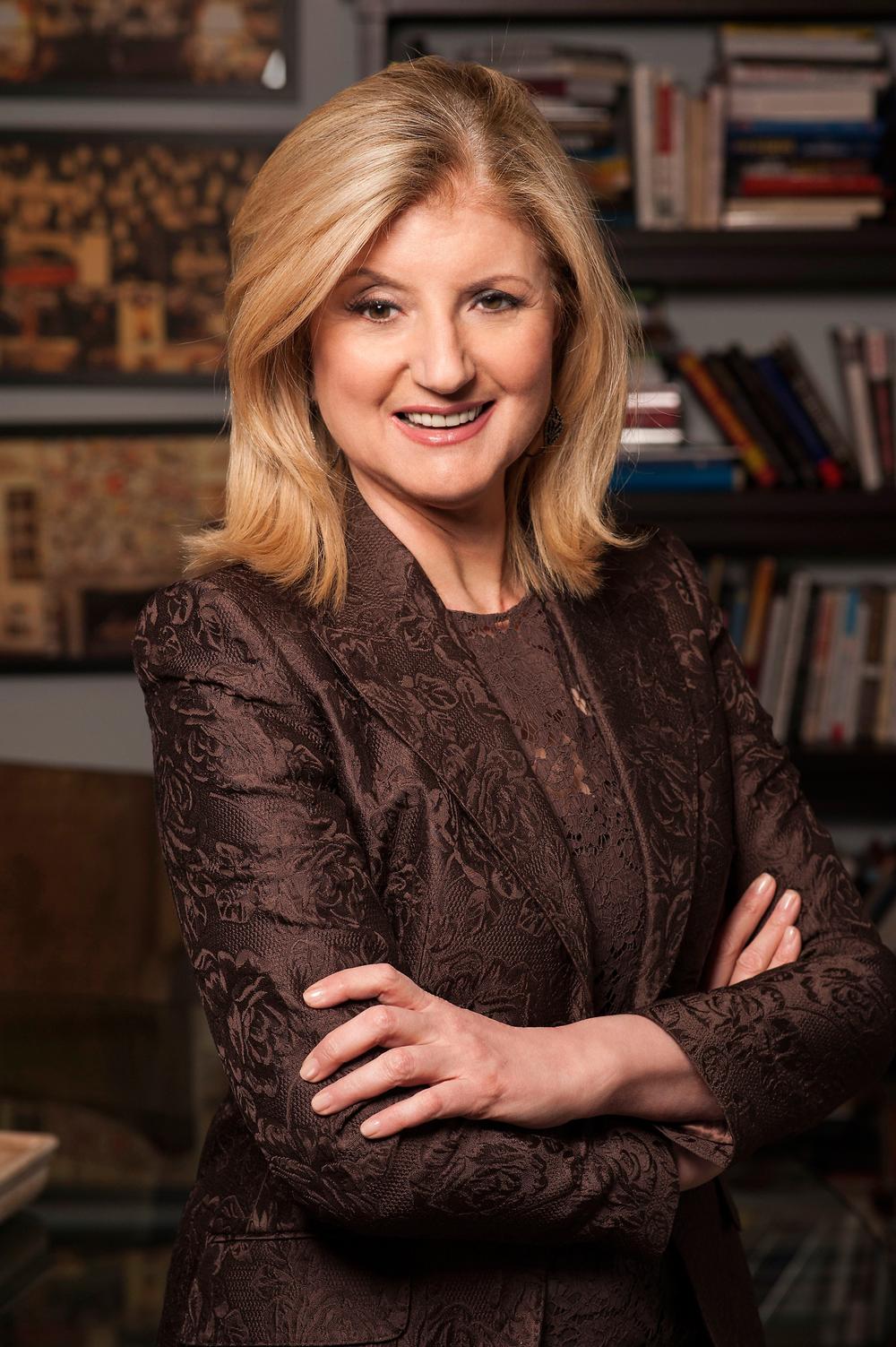
Huffington’s top tips include introducing five minutes of meditation into daily routines, building up to 15–20 minutes or more / PHOTO: WWW.SHUTTERSTOCK.COM/DRAGON IMAGES
Huffington has written 14 books, with her latest looking at redefining success – the topic on which she’ll speak at IHRSA
The Huffington Post launched in 2005; Huffington remains president and editor-in-chief
https://www.leisureopportunities.co.uk/images/666508_859717.jpg
The focus seems to be moving from personal training to small group training. Is the one-to-one model still a viable offering?
Kath Hudson, Journalist, Health Club Management Matt Roberts, David Minton, Arron Williams, Lucy Birch,Personal training, small group training, Matt Roberts, David Minton, Arron Williams, Lucy Birch
Latest News
People taking GLP-1 weight loss medications such as Ozempic, Wegovy, Mounjaro and Zepbound may be ...
Latest News
Low-cost gym operator, PureGym, is trialling recovery zones at two of its UK sites, democratising ...
Latest News
In a milestone moment, mental health has become a core part of CIMSPA’s occupational professional ...
Latest News
US high-value, low-price chain, Eos Fitness, has announced plans to pilot reformer Pilates in three ...
Latest News
Preventive healthcare company Neko Health has added body composition analysis to its full-body health scan ...
Latest News
Chequan Lewis is the new CEO of Crunch Fitness, taking over from Jim Rowley, who ...
Latest News
Sea Lanes Canary Wharf has officially opened. The 50-metre, six-lane pool, which uses the natural ...
Latest News
London-based high-performance fitness club, ONE LDN, is raising funds for a multi-site expansion across London, ...
Latest News
A new brain clinic has opened in London, which uses non-invasive brain stimulation to treat ...
Latest News
Good Boost’s digital exercise programmes are helping adults with MSK at a lower cost than ...
Latest News
With Prime Minister, Keir Starmer, announcing his resignation this morning and Andy Burnham as a ...
Opinion
promotion
Strength training has moved from the margins to the mainstream.
Opinion: Building smarter strength spaces for today’s operators
Featured supplier news
Featured supplier news: Reaching the people most gyms miss: Bedford Gym & Swim Campaign delivers 410 new members
One of the biggest mistakes the fitness industry still makes is advertising almost exclusively to people who already look and live like gym members.
Featured supplier news
Featured supplier news: Supporting long-term health: why whole body vibration belongs in clinical settings
As healthcare continues to shift towards prevention, there’s a growing focus on helping people stay active, independent and feeling good for longer.
Company profiles
Company profile: FS Commercial Division
Now the UK’s leading specialist fitness equipment supplier, Fitness Superstore started from humble beginnings in ...
Company profiles
Company profile: TechnoAlpin Indoor
TechnoAlpin Indoor offers expert consultation for indoor snow concepts, assisting customers with the integration of ...

Supplier Showcases
Supplier Showcase - Future-proofing
Catalogue Gallery
Click on a catalogue to view it online
Featured press releases
Swim England press release: Swim England launches new Learn to Swim Growth Plan to support aquatic programme expansion
Swim England has strengthened its sector-leading Business Solutions offer with the launch of its Learn to Swim Growth Plan, designed to help aquatic providers unlock sustainable programme growth.
Featured press releases
CoverMe Ltd press release: CoverMe and Jobs In. Fitness partner to create end-to-end talent solution
CoverMe, the UK’s leading fitness workforce management and recruitment platform, has partnered with Jobs In. Fitness, the specialist executive search and advisory firm for the fitness and wellbeing sector, to give operators a single route to talent at every level – from frontline staffing to C-suite.
Directory
Hot tubs
MSpa International Ltd: Hot tubs
Fitness tracking platform
SpiviTech: Fitness tracking platform
Water experiences and hydrotherapy solutions
Aquaform s.r.l.: Water experiences and hydrotherapy solutions
Lockers
Crown Sports Lockers: Lockers
Industrial washing machines
Miele Company Limited: Industrial washing machines
Spa and beauty equipment
Living Earth Crafts: Spa and beauty equipment
Property & Tenders
Stratford, East London.
Lee Valley Regional Park Authority
Property & Tenders
Y Felinheli, LL56 4QN
Newmark
Property & Tenders
Diary dates
21-24 Sep 2026
The Langham Huntington Pasadena , Pasadena, United States
Diary dates
06-08 Oct 2026
Messe Stuttgart, Stuttgart, Germany
Diary dates
22-22 Oct 2026
QEII Conference Centre, London,
Diary dates
26-29 Oct 2027
Koelnmesse Exhibition Centre, Cologne, Germany
Diary dates
Search news, features & products:
Find a supplier:
Partner sites