















Follow Health Club Management on Twitter Like Health Club Management on Facebook Join the discussion with Health Club Management on LinkedIn
FITNESS, HEALTH, WELLNESS

features

Customer insight: The path to purchase

Tim Baker takes a look at the journey to becoming – and staying – a member
Published in Health Club Management 2015 issue 10
Customer Insight
Customer Insight
86% of buyers will pay more for a better customer experience – but only 1% feel companies consistently meet their expectations

hen was the last time you, or someone you know well, joined a gym or health club? Can you remember what triggered the event: what made you (or your friend) decide to look around and start your search? What was the process you went through, and why did you make the decision you did?

Chances are, unless this was yesterday, you won’t be able to remember all the points along your path to purchase. Your recall will probably be of a structured, rational and step-wise process that led you to a balanced and well-researched decision. But the reality will have been a fragmented, unstructured process that was influenced in large part by the relatively emotional outpourings of friends and reviewers and how these – and your own observations – made you feel.

If it was a few years ago and you started with some kind of online search, whatever you remember is likely to also be completely out of date.

Even the way you started your search will have been different. A quick look at some publicly available Google analytics shows how particular search terms have become more or less popular over the years: for example, the numbers searching for ‘health clubs’ has declined markedly, while searches for ‘the gym’ have increased almost in inverse proportion (see Figure 1 – incidentally, those big spikes are in January of each year and the smaller ones in September).

Our changing vocabulary reflects the changing attitudes towards, and customers’ expectations of, gym and health club memberships.

This in turn affects the paths we take to arrive at the point of purchase – and this should, in turn, affect the online tags we deploy to get our gym’s search engine optimised.

Systems 1 & 2
The details along the path to purchase change with the times, as different influencers become more or less prominent – price is obviously a key influencer at the moment, and gyms have had to work to give good reason to choose them. Even with this pressure, though, there are very successful gyms in the mid and upper end of the market. They are successful because of the way they make their members feel.
While the path itself may change, by and large the same elements will trigger the search for a gym (or new gym). These will include dissatisfaction with the current provider, a desire to get fit or get a beach body, the post Christmas hang-over, somebody else suggesting it, a change in lifestyle, a life-changing event, and a change in circumstance.

Once the path has been embarked upon, we have good opportunity to influence decisions along the way. It’s important, though, that we’re prepared at each point where the potential member might be influenced, and that our preparedness focuses us on how members feel about us.

Here’s why it’s important to focus on feelings: we can create rational ‘path to purchase’ models that encompass key points like trigger – aware – evaluate – engage – select – experience, but we can’t expect buyers to act in this rational, structured way as they make choices.

Daniel Kahneman, in his landmark book Thinking, Fast and Slow describes how we operate in two systems – 1 and 2. We spend most of our lives in system 1, where our brains use less processing power by following heuristics (simple ‘rules’ – or assumptions – by which we live our lives) to make our decisions: that orange sign in Sainsbury’s means it’s a bargain, Volvo cars are the safest, Aldi is cheaper, and so on.

System 2 engages when our heuristics are challenged: if all cars are very safe, then we have to explore the other elements of each car before we can make a decision (fuel consumption, tax band, price, servicing costs, interior space, value, features etc). This takes time and energy and, for the most part of our daily lives, we actually don’t need to use system 2. Even if we are in system 2, if another suitable heuristic happens along, then system 1 starts to engage once more: OK, all cars are safe… BMWs are stylish. Or Hyundais are great value.

The engaging power of the heuristic is dependent on the type of person, so the price heuristic acts more strongly on online buyers, while the service heuristic acts more strongly on those who value personal service. If it weren’t for heuristics (and system 1), then marketing would have a much harder time of it.

How do you feel?
Why is this important for gyms? Just like any other service, we need to keep members in system 1 for as much of the time as possible. Maya Angelou put it more succinctly: “I’ve learned that people will forget what you said, people will forget what you did, but people will never forget how you made them feel.”

And people tell others how you made them feel. That’s what drives reviews and word of mouth commentary. McKinsey tells us that 70 per cent of buying decisions are based on how the customer feels, but Forbes magazine showed how woefully inadequate most companies are in this area, when it recently reported a CEI survey which said 86 per cent of buyers will pay more for a better customer experience – but only 1 per cent feel companies consistently meet their expectations. This is system 1 stuff.

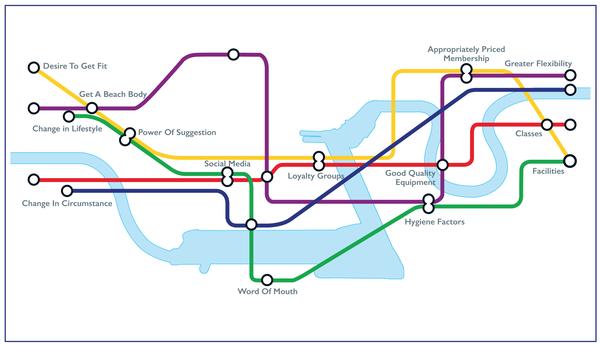
Figure 2 shows a typical path to purchase model. Of course, it’s not so much a straight path as a meandering, circular walkway. The model is really for our benefit, to give some sort of structure to our thinking: in reality, the buyer leaps from one point to another in a somewhat random fashion.

Why I buy
These are the triggers. We can promote our gyms at the right times (January and September from the looks of the search data in Figure 1), talking about both the reasons for joining a gym and why it should be our gym in particular. We can also trigger this situation by failing to keep our members feeling happy with us (so activating system 2 for some reason).

It’s at this stage that the potential member is becoming aware of the need to think about gyms, and evaluating what it is they might want. They are contemplating the issue and may not go further. They become more proactive as they move to the next phase.

How I buy
Here the member is getting active and exploring the options. Now we should promote ourselves on the differentiating factors we have: we don’t need to persuade them they need a gym, we must persuade them they need our gym.

Social media (TripAdvisor, review sites, Facebook, twitter, etc) is clearly a significant source of information these days. But many people seeking reviews don’t bother looking at the good ones. As they say, what’s the point in reading loads of people saying nice things? They seek out the more negative reviews to see what the issues are, whether they are consistent problems and what you as a business have done about them.

These are conversations, just like in the pub – except you have the opportunity to join in, engage and explain things and put them right. Your response – how you deal with an issue – is what matters. That’s what leaves the lasting feeling. And that’s what a lot of people reading the reviews are looking for: how will you make them feel? These days, it’s increasingly likely that members will join without ever visiting the gym in person: the website and social media are your shop windows and you need to ensure that, as well as covering the hygiene factors (good quality equipment, appropriately priced membership, classes, changing rooms, showers etc), you convey the right feeling about the place in what you say and how you respond.

The perceived need for greater flexibility is a good example of an opportunity for gyms to positively affect the way members feel. Many gyms have not responded well to this change. Chains could easily generate greater loyalty by offering group membership as standard: why should a member be restricted to only one location in a chain, and why should it cost more to use other locations? You don’t need separate loyalty cards for each Costa Coffee you call into.

Independent gyms should, equally, be forming into loyalty groups so the member knows they will find a similar atmosphere to their regular gym. The rise of the likes of payasUgym, ClassPass and MoveGB clearly demonstrates the attraction of flexible options (see p90).

Why I’ll rebuy
The first purchase is only the start of the journey. This point is critical. We now have the opportunity to deliver experiences that can make the member feel not just affection but real love for us, so they will share their experiences with others and become an advocate. Word of mouth recommendation from friends is so much more powerful than advertising in generating sales, although advertising is needed to maintain salience.

A well-known airline client I had some years ago discovered that the way it dealt with issues for passengers had a stronger, longer lasting effect on loyalty than any amount of smooth, professional handling. I’d never advocate creating issues just so you can show your problem-handling skills, but problems that will inevitably arise should be seen as opportunities to show you care, and how you’re prepared to act. That’s in large part how my client became the world’s favourite airline.

Why not set yourself the goal of being the town’s/area’s/country’s favourite gym? It’s in these areas that lasting, valuable differentiation can be achieved. But to work, it has to be lived. One final quote for encouragement, this time from Emmet and Mark Murphy in Leading on the Edge of Chaos: “A 2 per cent increase in customer retention has the same effect as decreasing cost by 10 per cent.”

FIGURE 1

GOOGLE SEARCH TERMS
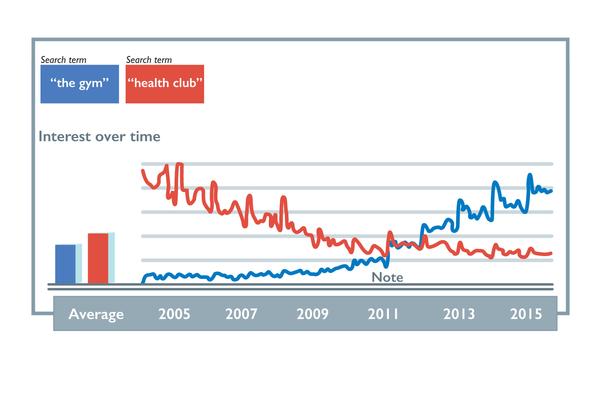
Figure 1
Figure 1

FIGURE 2

PATH TO PURCHASE

Figure 2
Figure 2

About the author

Tim Baker
Tim Baker

Tim Baker is chair of Touchstone Partners, a leading research consultancy in the leisure, consumer and shopper sectors.  Touchstone’s core expertise is in market exploration (to identify opportunities), pricing, brand equity and proposition development. 

[email protected]

+44 1865 261442

+44 7710 633211

www.touchstonepartners.co.uk

Sign up here to get HCM's weekly ezine and every issue of HCM magazine free on digital.
Many people choose which gym to join based exclusively on what they read online and via social media / PHOTO: shutterstock.com
Boutique gyms are thriving because they make clients feel good
According to McKinsey, 70 per cent of all buying decisions are based on how customers feel / PHOTO: shutterstock.com
https://www.leisureopportunities.co.uk/images/804845_400001.jpg
Do you understand the path to becoming – and staying – a gym member?
Tim Baker is chair of Touchstone Partners,Tim Baker, customer journey, member acquisition, retention, purchase
HCM magazine
As the entrepreneur who started Wexer, Fresh Fitness, Fitness DK and Repeat, as well as being a former elite athlete, Rasmus Ingerslev’s life looked perfect from the outside, but onthe inside it was a different story. He talks to Kath Hudson about healing old wounds
HCM magazine
For every member with a tripod and a big following, there are others irritated at the way equipment is being hogged or wary they’ll be in the background on someone’s Insta feed. Do influencers offer valuable, free marketing or are they just a nuisance? Kath Hudson finds out how operators are responding
HCM magazine
I experienced a blissful feeling of joy I hadn’t felt since I was a kid
HCM magazine
Collaborations with the medical profession and greater aspirations around wellbeing are creating a need for more experts in our sector. It’s time to reboot our thinking around the workforce
HCM magazine
Raphael Cuomo explores the powerful link between addiction, health and behaviour change
HCM promotional features
Sponsored
Greg Bradley looks at the shift towards strength training in gyms and advises on how operators can create the ultimate training environment
HCM promotional features
Sponsored
David Lloyd is stepping up its commitment to women’s health as it continues to explore what fit-for-purpose looks like for the female population
HCM promotional features
Sponsored
Find out how your gym can tap into the corporate wellness boom
HCM promotional features
Sponsored
Starpool supports Olympic champion Marcell Jacobs, says Riccardo Turri
HCM promotional features
Sponsored
SnowDome Fitness has added 50 per cent more space with cutting-edge Technogym solutions
HCM promotional features
Sponsored
Third Space partnered with IndigoFitness to deliver a bespoke training space for its new club at The Whiteley
HCM promotional features
Sponsored
EGYM has opened a new HQ in Paternoster Square, London and revealed a range of new launches
HCM promotional features
Sponsored
Pulse Fitness has created a new health club delivering an elevated wellness experience
HCM promotional features
Sponsored
The industry is embracing consumer-facing tech. Now it’s time to streamline back-of-house systems with Orbit4, says Daniel Jones
HCM promotional features
Latest News
Les Mills, whose name became synonymous with one of the world's leading fitness brands, has ...
Latest News
People taking GLP-1 weight loss medications such as Ozempic, Wegovy, Mounjaro and Zepbound may be ...
Latest News
Low-cost gym operator, PureGym, is trialling recovery zones at two of its UK sites, democratising ...
Latest News
In a milestone moment, mental health has become a core part of CIMSPA’s occupational professional ...
Latest News
US high-value, low-price chain, Eos Fitness, has announced plans to pilot reformer Pilates in three ...
Latest News
Preventive healthcare company Neko Health has added body composition analysis to its full-body health scan ...
Latest News
Chequan Lewis is the new CEO of Crunch Fitness, taking over from Jim Rowley, who ...
Latest News
Sea Lanes Canary Wharf has officially opened. The 50-metre, six-lane pool, which uses the natural ...
Opinion
promotion
Strength training has moved from the margins to the mainstream.
Opinion: Building smarter strength spaces for today’s operators
Featured supplier news
Featured supplier news: Reaching the people most gyms miss: Bedford Gym & Swim Campaign delivers 410 new members
One of the biggest mistakes the fitness industry still makes is advertising almost exclusively to people who already look and live like gym members.
Featured supplier news
Featured supplier news: CoverMe extends matching service to personal training, rewriting how members and personal trainers connect
CoverMe, the global leader in fitness workforce management, today launches CoverMe PT, an on-demand personal training platform that connects the right personal trainer to the right client in under 10 seconds.
Company profiles
Company profile: Fitbench
Fitbench creates modular training solutions designed to support efficient, high-quality workouts in a wide range ...
Company profiles
Company profile: GymNation
Ranging from 25,000 to 60,000 square feet, GymNation is open 24/7, 365 days a year ...
Supplier Showcases
Supplier Showcase - Future-proofing
Catalogue Gallery
Click on a catalogue to view it online
Featured press releases
Swimming Teachers' Association (STA) press release: STA Safeguarding programme for aquatic professionals awarded CIMSPA endorsement and CPD points
STA is pleased to announce that its Safeguarding Children and Adults at Risk CPD has been endorsed by the Chartered Institute for the Management of Sport and Physical Activity (CIMSPA) against both the Safeguarding and Protecting Children and Safeguarding Adults technical specialism professional standards.
Featured press releases
Swim England press release: Swim England launches new Learn to Swim Growth Plan to support aquatic programme expansion
Swim England has strengthened its sector-leading Business Solutions offer with the launch of its Learn to Swim Growth Plan, designed to help aquatic providers unlock sustainable programme growth.
Directory
Industrial washing machines
Miele Company Limited: Industrial washing machines
Lockers
Crown Sports Lockers: Lockers
Water experiences and hydrotherapy solutions
Aquaform s.r.l.: Water experiences and hydrotherapy solutions
Fitness tracking platform
SpiviTech: Fitness tracking platform
Hot tubs
MSpa International Ltd: Hot tubs
Spa and beauty equipment
Living Earth Crafts: Spa and beauty equipment
Property & Tenders
Stratford, East London.
Lee Valley Regional Park Authority
Property & Tenders
Y Felinheli, LL56 4QN
Newmark
Property & Tenders
Diary dates
21-24 Sep 2026
The Langham Huntington Pasadena , Pasadena, United States
Diary dates
06-08 Oct 2026
Messe Stuttgart, Stuttgart, Germany
Diary dates
22-22 Oct 2026
QEII Conference Centre, London,
Diary dates
26-29 Oct 2027
Koelnmesse Exhibition Centre, Cologne, Germany
Diary dates

features

Customer insight: The path to purchase

Tim Baker takes a look at the journey to becoming – and staying – a member

Published in Health Club Management 2015 issue 10
Customer Insight
Customer Insight
86% of buyers will pay more for a better customer experience – but only 1% feel companies consistently meet their expectations

hen was the last time you, or someone you know well, joined a gym or health club? Can you remember what triggered the event: what made you (or your friend) decide to look around and start your search? What was the process you went through, and why did you make the decision you did?

Chances are, unless this was yesterday, you won’t be able to remember all the points along your path to purchase. Your recall will probably be of a structured, rational and step-wise process that led you to a balanced and well-researched decision. But the reality will have been a fragmented, unstructured process that was influenced in large part by the relatively emotional outpourings of friends and reviewers and how these – and your own observations – made you feel.

If it was a few years ago and you started with some kind of online search, whatever you remember is likely to also be completely out of date.

Even the way you started your search will have been different. A quick look at some publicly available Google analytics shows how particular search terms have become more or less popular over the years: for example, the numbers searching for ‘health clubs’ has declined markedly, while searches for ‘the gym’ have increased almost in inverse proportion (see Figure 1 – incidentally, those big spikes are in January of each year and the smaller ones in September).

Our changing vocabulary reflects the changing attitudes towards, and customers’ expectations of, gym and health club memberships.

This in turn affects the paths we take to arrive at the point of purchase – and this should, in turn, affect the online tags we deploy to get our gym’s search engine optimised.

Systems 1 & 2
The details along the path to purchase change with the times, as different influencers become more or less prominent – price is obviously a key influencer at the moment, and gyms have had to work to give good reason to choose them. Even with this pressure, though, there are very successful gyms in the mid and upper end of the market. They are successful because of the way they make their members feel.
While the path itself may change, by and large the same elements will trigger the search for a gym (or new gym). These will include dissatisfaction with the current provider, a desire to get fit or get a beach body, the post Christmas hang-over, somebody else suggesting it, a change in lifestyle, a life-changing event, and a change in circumstance.

Once the path has been embarked upon, we have good opportunity to influence decisions along the way. It’s important, though, that we’re prepared at each point where the potential member might be influenced, and that our preparedness focuses us on how members feel about us.

Here’s why it’s important to focus on feelings: we can create rational ‘path to purchase’ models that encompass key points like trigger – aware – evaluate – engage – select – experience, but we can’t expect buyers to act in this rational, structured way as they make choices.

Daniel Kahneman, in his landmark book Thinking, Fast and Slow describes how we operate in two systems – 1 and 2. We spend most of our lives in system 1, where our brains use less processing power by following heuristics (simple ‘rules’ – or assumptions – by which we live our lives) to make our decisions: that orange sign in Sainsbury’s means it’s a bargain, Volvo cars are the safest, Aldi is cheaper, and so on.

System 2 engages when our heuristics are challenged: if all cars are very safe, then we have to explore the other elements of each car before we can make a decision (fuel consumption, tax band, price, servicing costs, interior space, value, features etc). This takes time and energy and, for the most part of our daily lives, we actually don’t need to use system 2. Even if we are in system 2, if another suitable heuristic happens along, then system 1 starts to engage once more: OK, all cars are safe… BMWs are stylish. Or Hyundais are great value.

The engaging power of the heuristic is dependent on the type of person, so the price heuristic acts more strongly on online buyers, while the service heuristic acts more strongly on those who value personal service. If it weren’t for heuristics (and system 1), then marketing would have a much harder time of it.

How do you feel?
Why is this important for gyms? Just like any other service, we need to keep members in system 1 for as much of the time as possible. Maya Angelou put it more succinctly: “I’ve learned that people will forget what you said, people will forget what you did, but people will never forget how you made them feel.”

And people tell others how you made them feel. That’s what drives reviews and word of mouth commentary. McKinsey tells us that 70 per cent of buying decisions are based on how the customer feels, but Forbes magazine showed how woefully inadequate most companies are in this area, when it recently reported a CEI survey which said 86 per cent of buyers will pay more for a better customer experience – but only 1 per cent feel companies consistently meet their expectations. This is system 1 stuff.

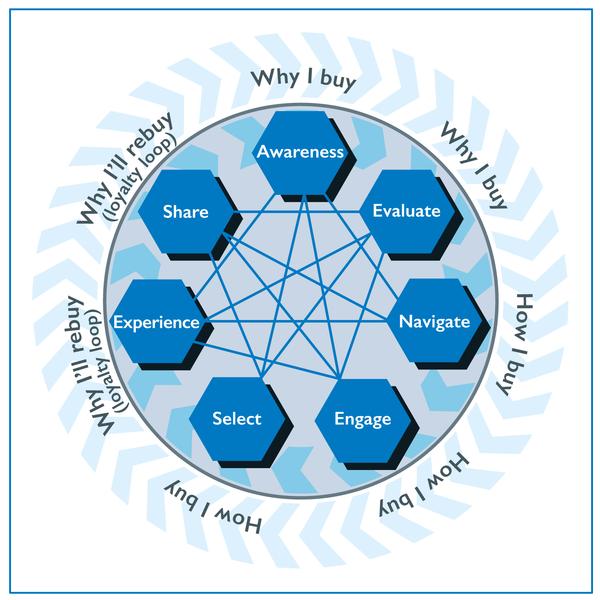
Figure 2 shows a typical path to purchase model. Of course, it’s not so much a straight path as a meandering, circular walkway. The model is really for our benefit, to give some sort of structure to our thinking: in reality, the buyer leaps from one point to another in a somewhat random fashion.

Why I buy
These are the triggers. We can promote our gyms at the right times (January and September from the looks of the search data in Figure 1), talking about both the reasons for joining a gym and why it should be our gym in particular. We can also trigger this situation by failing to keep our members feeling happy with us (so activating system 2 for some reason).

It’s at this stage that the potential member is becoming aware of the need to think about gyms, and evaluating what it is they might want. They are contemplating the issue and may not go further. They become more proactive as they move to the next phase.

How I buy
Here the member is getting active and exploring the options. Now we should promote ourselves on the differentiating factors we have: we don’t need to persuade them they need a gym, we must persuade them they need our gym.

Social media (TripAdvisor, review sites, Facebook, twitter, etc) is clearly a significant source of information these days. But many people seeking reviews don’t bother looking at the good ones. As they say, what’s the point in reading loads of people saying nice things? They seek out the more negative reviews to see what the issues are, whether they are consistent problems and what you as a business have done about them.

These are conversations, just like in the pub – except you have the opportunity to join in, engage and explain things and put them right. Your response – how you deal with an issue – is what matters. That’s what leaves the lasting feeling. And that’s what a lot of people reading the reviews are looking for: how will you make them feel? These days, it’s increasingly likely that members will join without ever visiting the gym in person: the website and social media are your shop windows and you need to ensure that, as well as covering the hygiene factors (good quality equipment, appropriately priced membership, classes, changing rooms, showers etc), you convey the right feeling about the place in what you say and how you respond.

The perceived need for greater flexibility is a good example of an opportunity for gyms to positively affect the way members feel. Many gyms have not responded well to this change. Chains could easily generate greater loyalty by offering group membership as standard: why should a member be restricted to only one location in a chain, and why should it cost more to use other locations? You don’t need separate loyalty cards for each Costa Coffee you call into.

Independent gyms should, equally, be forming into loyalty groups so the member knows they will find a similar atmosphere to their regular gym. The rise of the likes of payasUgym, ClassPass and MoveGB clearly demonstrates the attraction of flexible options (see p90).

Why I’ll rebuy
The first purchase is only the start of the journey. This point is critical. We now have the opportunity to deliver experiences that can make the member feel not just affection but real love for us, so they will share their experiences with others and become an advocate. Word of mouth recommendation from friends is so much more powerful than advertising in generating sales, although advertising is needed to maintain salience.

A well-known airline client I had some years ago discovered that the way it dealt with issues for passengers had a stronger, longer lasting effect on loyalty than any amount of smooth, professional handling. I’d never advocate creating issues just so you can show your problem-handling skills, but problems that will inevitably arise should be seen as opportunities to show you care, and how you’re prepared to act. That’s in large part how my client became the world’s favourite airline.

Why not set yourself the goal of being the town’s/area’s/country’s favourite gym? It’s in these areas that lasting, valuable differentiation can be achieved. But to work, it has to be lived. One final quote for encouragement, this time from Emmet and Mark Murphy in Leading on the Edge of Chaos: “A 2 per cent increase in customer retention has the same effect as decreasing cost by 10 per cent.”

FIGURE 1

GOOGLE SEARCH TERMS

Figure 1
Figure 1

FIGURE 2

PATH TO PURCHASE

Figure 2
Figure 2

About the author

Tim Baker
Tim Baker

Tim Baker is chair of Touchstone Partners, a leading research consultancy in the leisure, consumer and shopper sectors.  Touchstone’s core expertise is in market exploration (to identify opportunities), pricing, brand equity and proposition development. 

[email protected]

+44 1865 261442

+44 7710 633211

www.touchstonepartners.co.uk

Sign up here to get HCM's weekly ezine and every issue of HCM magazine free on digital.
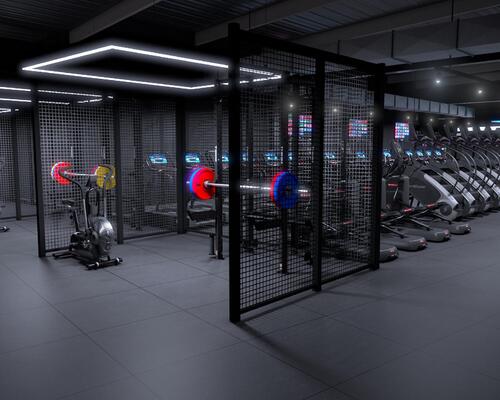
Many people choose which gym to join based exclusively on what they read online and via social media / PHOTO: shutterstock.com
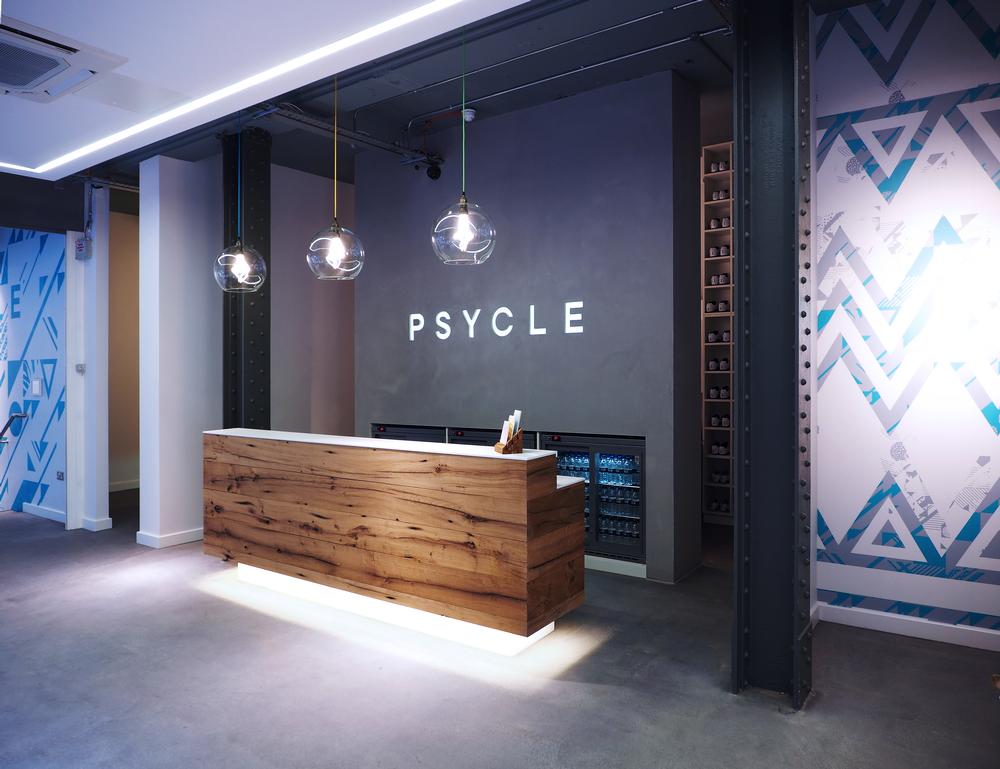
Boutique gyms are thriving because they make clients feel good
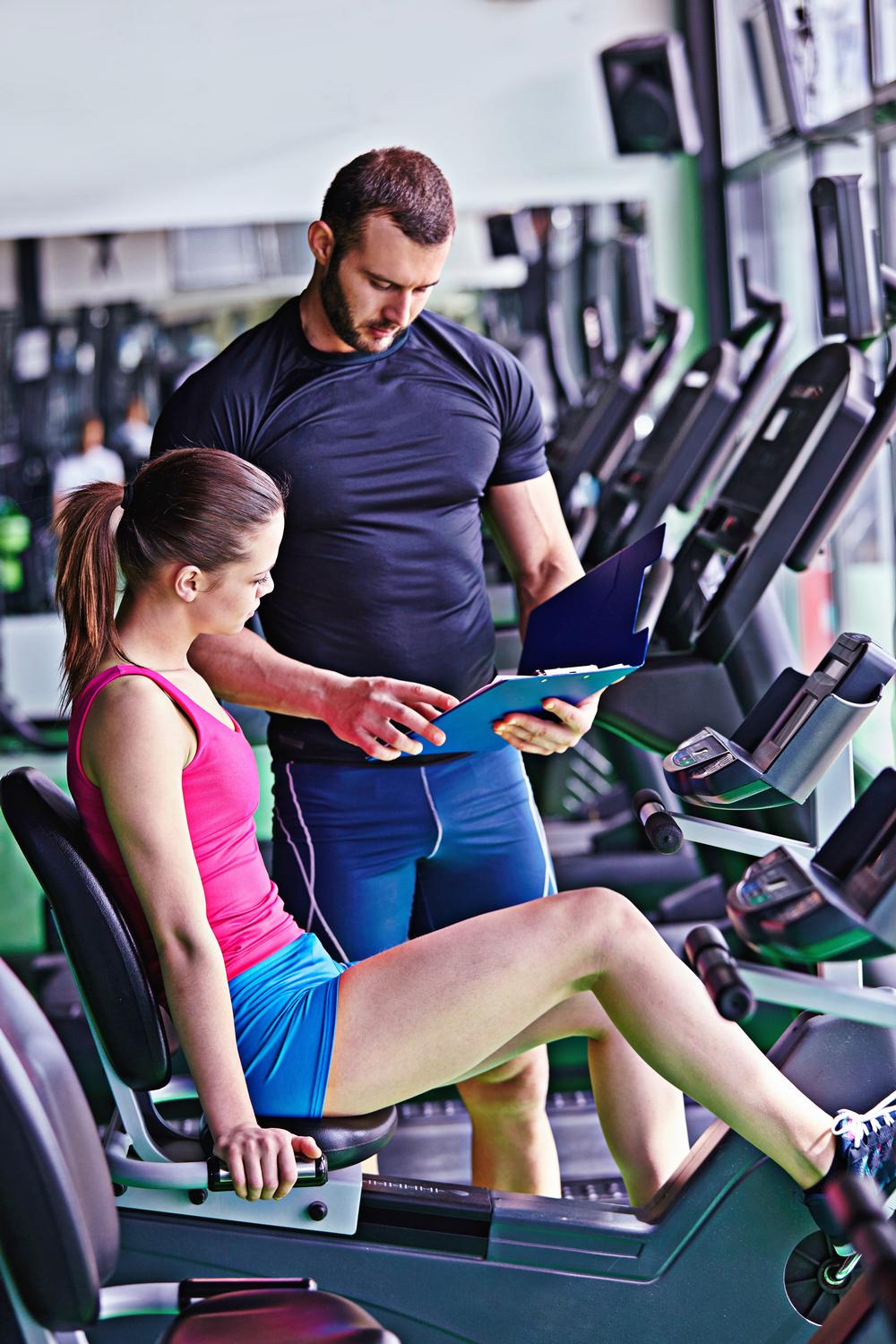
According to McKinsey, 70 per cent of all buying decisions are based on how customers feel / PHOTO: shutterstock.com
https://www.leisureopportunities.co.uk/images/804845_400001.jpg
Do you understand the path to becoming – and staying – a gym member?
Tim Baker is chair of Touchstone Partners,Tim Baker, customer journey, member acquisition, retention, purchase
Latest News
Les Mills, whose name became synonymous with one of the world's leading fitness brands, has ...
Latest News
People taking GLP-1 weight loss medications such as Ozempic, Wegovy, Mounjaro and Zepbound may be ...

Latest News
Low-cost gym operator, PureGym, is trialling recovery zones at two of its UK sites, democratising ...
Latest News
In a milestone moment, mental health has become a core part of CIMSPA’s occupational professional ...
Latest News
US high-value, low-price chain, Eos Fitness, has announced plans to pilot reformer Pilates in three ...
Latest News
Preventive healthcare company Neko Health has added body composition analysis to its full-body health scan ...
Latest News
Chequan Lewis is the new CEO of Crunch Fitness, taking over from Jim Rowley, who ...
Latest News
Sea Lanes Canary Wharf has officially opened. The 50-metre, six-lane pool, which uses the natural ...
Latest News
London-based high-performance fitness club, ONE LDN, is raising funds for a multi-site expansion across London, ...
Latest News
A new brain clinic has opened in London, which uses non-invasive brain stimulation to treat ...
Latest News
Good Boost’s digital exercise programmes are helping adults with MSK at a lower cost than ...
Opinion
promotion
Strength training has moved from the margins to the mainstream.
Opinion: Building smarter strength spaces for today’s operators
Featured supplier news
Featured supplier news: Reaching the people most gyms miss: Bedford Gym & Swim Campaign delivers 410 new members
One of the biggest mistakes the fitness industry still makes is advertising almost exclusively to people who already look and live like gym members.
Featured supplier news
Featured supplier news: CoverMe extends matching service to personal training, rewriting how members and personal trainers connect
CoverMe, the global leader in fitness workforce management, today launches CoverMe PT, an on-demand personal training platform that connects the right personal trainer to the right client in under 10 seconds.
Company profiles
Company profile: Fitbench
Fitbench creates modular training solutions designed to support efficient, high-quality workouts in a wide range ...
Company profiles
Company profile: GymNation
Ranging from 25,000 to 60,000 square feet, GymNation is open 24/7, 365 days a year ...
Supplier Showcases
Supplier Showcase - Future-proofing
Catalogue Gallery
Click on a catalogue to view it online
Featured press releases
Swimming Teachers' Association (STA) press release: STA Safeguarding programme for aquatic professionals awarded CIMSPA endorsement and CPD points
STA is pleased to announce that its Safeguarding Children and Adults at Risk CPD has been endorsed by the Chartered Institute for the Management of Sport and Physical Activity (CIMSPA) against both the Safeguarding and Protecting Children and Safeguarding Adults technical specialism professional standards.
Featured press releases
Swim England press release: Swim England launches new Learn to Swim Growth Plan to support aquatic programme expansion
Swim England has strengthened its sector-leading Business Solutions offer with the launch of its Learn to Swim Growth Plan, designed to help aquatic providers unlock sustainable programme growth.
Directory
Industrial washing machines
Miele Company Limited: Industrial washing machines
Lockers
Crown Sports Lockers: Lockers
Water experiences and hydrotherapy solutions
Aquaform s.r.l.: Water experiences and hydrotherapy solutions
Fitness tracking platform
SpiviTech: Fitness tracking platform
Hot tubs
MSpa International Ltd: Hot tubs
Spa and beauty equipment
Living Earth Crafts: Spa and beauty equipment
Property & Tenders
Stratford, East London.
Lee Valley Regional Park Authority
Property & Tenders
Y Felinheli, LL56 4QN
Newmark
Property & Tenders
Diary dates
21-24 Sep 2026
The Langham Huntington Pasadena , Pasadena, United States
Diary dates
06-08 Oct 2026
Messe Stuttgart, Stuttgart, Germany
Diary dates
22-22 Oct 2026
QEII Conference Centre, London,
Diary dates
26-29 Oct 2027
Koelnmesse Exhibition Centre, Cologne, Germany
Diary dates
Search news, features & products:
Find a supplier:
Partner sites