


















GET HCM
magazine
Sign up for the FREE digital edition of HCM magazine and also get the HCM ezine and breaking news email alerts.
Not right now, thanksclose this window I've already subscribed!
The Leisure Media Company Ltd
Follow Health Club Management on Twitter Like Health Club Management on Facebook Join the discussion with Health Club Management on LinkedIn
FITNESS, HEALTH, WELLNESS

features

Corporate wellness: Workforce wellbeing

Could your employees’ wellness contribute to the financial health of your business? CBRE’s Hannah Hahn reports

Published in Health Club Management 2016 issue 7
Workplace mindfulness programmes have been shown to boost productivity / PHOTO: SHUTTERSTOCK.COM

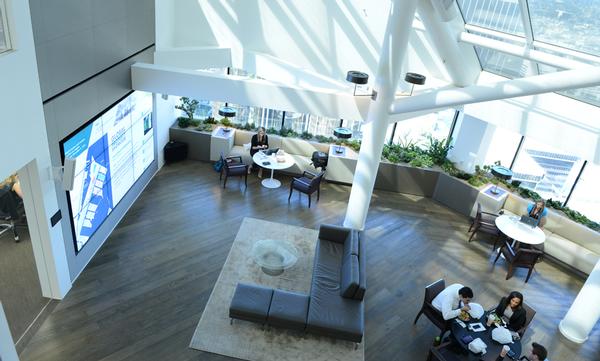
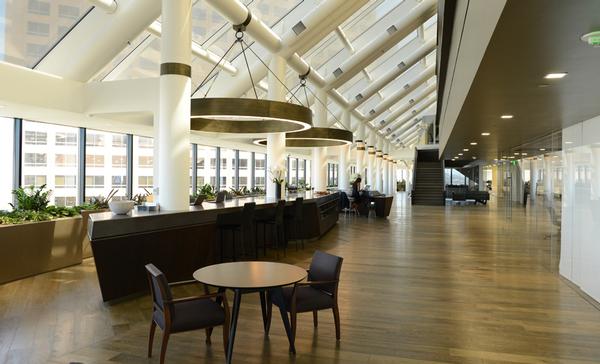
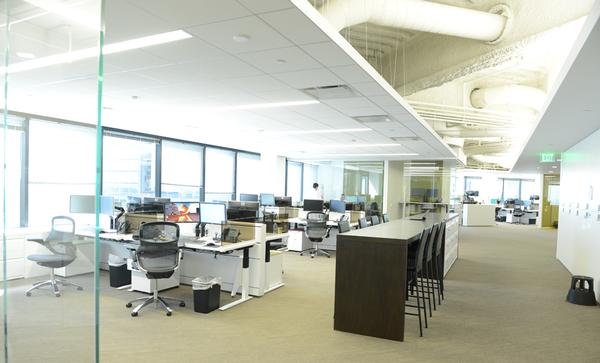
In downtown Los Angeles, the office of the future has already arrived in the shape of the world’s first ever WELL certified office. The office is CBRE’s global HQ, and it embraces every dimension of wellness and health in a work environment.

It’s aligned with the principles of the WELL Building Standard created by wellness real estate pioneer DELOS: air, water, nourishment, light, fitness, comfort and mind. And not only does it wholeheartedly embrace these elements relating to wellness, but an impressive 83 per cent of its employees say it makes a real difference to their productivity.

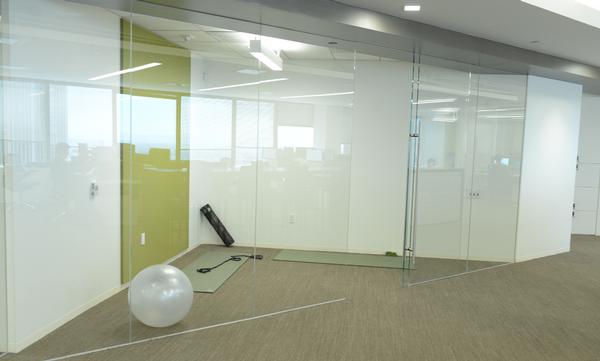
The CBRE headquarters does more than offer circadian lighting and biophilic ambient air to a passive staff. With its own dedicated wellness concierge, the company is also able to provide tailored health and wellness guidance for each employee to a level and a degree that suits them.

There are exercise and stretching zones for employees on each floor, as well as cardiovascular equipment. Multi-taskers can even use treadmill desks.

Ken Raisbeck, EMEA head of occupier advisory – advisory & transactions – at CBRE explains why the company has embraced wellness so wholeheartedly: “Our most important asset is our people, and by ensuring wellbeing is a holistic feature of our offices, we’re sending a message to our colleagues that we value their health. Our Wellness Certification is a demonstration of our commitment – but more importantly for us is the positive impact this has for our employees.”

Around the globe, other companies and corporations are also actively involving themselves in staff health and wellness, led from the front by the world’s big companies – the likes of Allianz, Barclays Bank, Omnicom, Nestlé, Novartis and The Bill and Melinda Gates Foundation. Indeed, in 2014, over half (56 per cent) of multinational employers had their own global health strategy, according to a survey carried out on behalf of Xerox.

Meanwhile, CBRE’s latest European Occupier Survey (EOS) also points to a workplace wellness trend. The 2015/16 survey polled real estate decision-makers at 120 globally renowned companies to understand their objectives, and associated challenges, across a broad range of issues. In this survey, around three-quarters (74 per cent) of companies reported having a wellness programme.

A tangible benefit
These companies have realised that workplace wellness is intrinsically linked to their financial bottom line. PricewaterhouseCoopers’ Building the Case for Wellness report, produced for the UK government in 2008 and revised in 2013, noted a number of Benefit-Cost Ratios (BCR) that might accrue to a company through its wellness programme.

One commercial company recorded a BCR of 34 – that is, a benefit to the company of £34 for every £1 spent on the wellness programme. The average, however, is a saving of £7 in previously lost productivity for every £1 spent on wellness programmes.

In addition, the EOS reports that two-thirds (67 per cent) of companies believe deploying a workplace wellness strategy enables better collaboration with customers and colleagues. In line with this thinking, at least one well-known American multinational technology company has reconfigured its global headquarters to enable collaboration and monitor and adjust elements such as room temperature and CO2 levels. The rationale: to think and act like a start-up, to increase creative thinking in the workplace and to promote employee satisfaction and wellness.

Other notable examples of companies already responding to the need for workplace wellness include: M&S – bearing down on absence - Retailer Marks & Spencer saw a 7 per cent reduction in sickness absence in the UK and Republic of Ireland in the opening month of its wellness programme, which won the Bupa Workwell Award in 2013.

Since the programme’s inception, more than 652,000 individuals – M&S employees plus other workers from across the company’s supply chain – have been trained in their own health and wellbeing, including healthy eating, exercise and mental health awareness.

The company’s focus was on ensuring that its wellbeing resource was invested in more than just the 3 per cent of employees absent from work; its goal was to capture both this group and the 97 per cent of employees attending work, with the goal of ‘keeping the healthy, healthy’.

The opening series of initiatives – including a weight-loss challenge and a 24-hour staff cycle endurance challenge – were promptly scheduled as annual events due to popular demand. These initiatives have now been expanded into a full calendar of events, including the Get Active programme and additional health services such as free early detection breast screening for female employees aged between 40 and 49 years (regular NHS screening currently supports women aged 50+ years).

On its wellbeing website, improved diet, hydration, sleep and exercise habits have emerged as staff’s most popular health pledges, accounting for 6,000 of its current 10,500 individual employee health pledges.

General Mills – boosting employees’ focus
General Mills, one of the world’s largest food companies – its stable of brands includes breakfast cereal Cheerios, Green Giant corn and Häagen Dazs ice cream – encourages mindfulness to help its employees manage their stress levels and focus on business priorities.

The company first experimented with mindfulness in 2006, running a trial course at its Minneapolis headquarters for 123 of its own business leaders. The results were described by the Financial Times as “striking”, with four out of five participants (83 per cent) saying they now take some time out each day to optimise their personal productivity.

Slowing down might intuitively seem to be anti-achievement, but the opposite is true. It allows focus and recharges the batteries, managing presenteeism, improving productivity and nurturing creativity. Global leaders agree, and today Apple, McKinsey, Google, Deutsche Bank and others offer mindfulness programmes.

Volkswagen and Daimler – helping employees switch off their engine. Our digital age has made it hard to switch off from work. In France, the government is currently in the process of passing new employment legislation that gives employees the “right to disconnect”.

But France is not alone in at least trying to address this growing issue. Similar legislation is also being developed in Germany, where car manufacturer Volkswagen recognises that, if it’s to expect excellence from its workforce, in return it has to offer them a great deal. Employees must share in the success.

For Volkswagen this includes providing the best possible working conditions, promoting employee health, and providing people with career prospects and development opportunities.

The company takes a holistic approach to health management which far exceeds standard health and safety in the workplace, educating employees in how they can stay healthy at work while at the same time motivating them to pursue a health-conscious lifestyle outside of work.

To combat today’s ‘always on’ culture, Volkswagen has had an email amnesty in operation since 2012, limiting access to work devices after core business hours for most of its staff.

And competitor Daimler has instituted an email auto-delete option for employees on holiday, to avoid the stress of being confronted by a full inbox and losing any benefit of that week on the beach.

Wellness: Here to stay For employees
All the signs point to a change in attitude on the part of business as far as the workplace is concerned. There’s a growing understanding of the connection between health and wellness and businesses’ bottom lines, as well as a change in employee expectations.

Demographic and technology trends suggest this is no flash in the pan. So the question becomes: how should companies respond, and how can the fitness sector benefit from this growing interest in workplace wellness?

Smart organisations will follow the lead of the likes of Volkswagen and M&S, introducing wellness programmes that will boost productivity and drive down cost.

But with so many new approaches to improve wellness in the workplace, the traditional approach of an on-site gym, or discounted gym membership, will no longer be enough. To realise the benefits of workplace wellness, organisations will have to be more holistic. Education and engagement will be critical.

This represents a huge opportunity for the health and fitness sector. By engaging in conversation with large, local employers, fitness providers are ideally placed to adapt to and act on these trends as they continue to develop, creating premium wellness services that are fit for the future and good for both businesses.

The six drivers of workplace wellness

1. Employees are living and working longer
Wellness plays an important role among an older workforce – and in many parts of the world, the workforce is ageing. Since 2005, the average life expectancy globally for both women and men improved by nearly two years. In turn, more of us are choosing to work past the historic retirement age.

2. Declining health and rising insurance costs
But while we’re living longer, we aren’t necessarily living healthier lives. Worldwide obesity has nearly doubled since 1980, and non-communicable diseases such as heart disease, cancer and diabetes now account for more than 60 per cent of all deaths worldwide. As a result, health insurance costs and ‘presenteeism’ are on the rise.

3. Wellness – a priority for talent
The global war for talent has been well documented – and in a 2014 study from CBRE and CoreNet Global, 80 per cent of employees agreed that the wellness offering of an organisation will be crucial to attracting key and talented people to, or keeping them in, an organisation within the next 10 years.

4. A heightened awareness of the effects of stress
Stress – a major cause of burn-out and depression – is experienced by most people during a normal working week, and it can be costly for business. According to a 2014 CoreNet survey, in the UK some 10.4 million working days are lost each year as a result of stress; affected employees miss an average of 24 working days per annum – over 10 per cent of their working year according to the Health and Safety Executive.

5. The ‘always on’ culture
The digital revolution has brought with it the pressure to communicate and respond around the clock. It’s estimated that people reach for their phone over 150 times a day and many of us rarely disconnect for fear of missing out. This presents many employees with a challenge when it comes to ‘de-stressing’ and re-charging for the next day.

6. The rise of technology to promote health management
A key point to note for fitness professionals is that, in the healthcare sector alone, the market for wearable technology is forecast to reach US$70bn by 2025. It’s no surprise that brands like Apple, Nike and Garmin are looking to take their wearable and biometric gadgets and apps – which already help us get fitter, faster and stronger – and extend the reach of these devices beyond the health club and into the workplace.

While this technology can capture real-time data on our pulse, heart rate and movement, and measure changes in our stress and energy levels – all potentially positive outcomes – the biggest obstacle for Apple and the others is how employers encourage staff on the shop floor to voluntarily use a gadget associated with personal and lifestyle activities as a work performance aid – and which might result in potentially negative consequences.

The smart money says we will increasingly see tracking technologies introduced and blended into the workplace, as early adopting employers use this technology to create supportive and desirable ‘destination’ working environments for employees, increasing productivity and reducing presenteeism and absenteeism. These forward-looking employers will also reap their own rewards as their investment in workplace wellness generates a positive return.
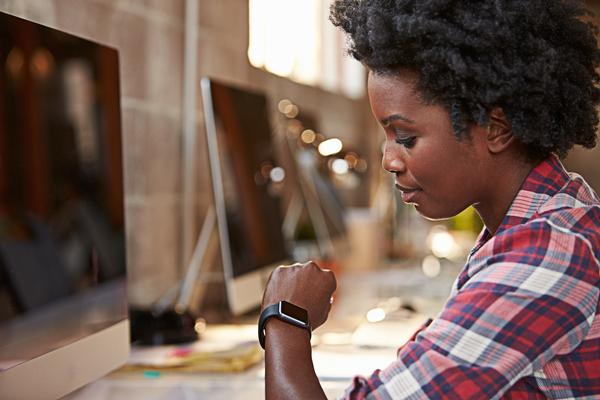
Used in the workplace, tracking technologies could boost productivity by improving employee health / PHOTO: SHUTTERSTOCK.COM

About the author

Hannah Hahn
Hannah Hahn

Hannah Hahn is the global workplace innovation manager in the German office of CBRE’s Workplace Solutions division. She is part of CBRE’s research and development team responsible for identifying emerging trends in society, key vertical markets and technology that support workplace innovation.

Commercial property and real estate services adviser CBRE Group is a Fortune 500 and S&P 500 company headquartered in Los Angeles, US. It’s the world’s largest commercial real estate services and investment firm in terms of 2015 revenue.

Its Global Workplace Solutions (GWS) division provides a complete set of services to corporate occupiers of commercial real estate across EMEA. This includes facilities management services for clients such as Nuffield Health.

For a copy of the CBRE Global Wellness in the Workplace report, visit: www.cbre.com/research-and-reports
Sign up here to get HCM's weekly ezine and every issue of HCM magazine free on digital.
World first: CBRE’s global headquarters is aligned with all the principles of the WELL Building Standard
https://www.leisureopportunities.co.uk/images/442573_950807.jpg
Could your employees’ wellbeing contribute to the health of your business?
Hannah Hahn, Global workplace innovation manager, CBRE,Corporate wellness, employee, CBRE, Volkswagen, Daimler, Marks & Spencer, M&S, General Mills, Hannah Hahn, WELL Building, Delos
HCM magazine
For every member with a tripod and a big following, there are others irritated at the way equipment is being hogged or wary they’ll be in the background on someone’s Insta feed. Do influencers offer valuable, free marketing or are they just a nuisance? Kath Hudson finds out how operators are responding
HCM magazine
I experienced a blissful feeling of joy I hadn’t felt since I was a kid
HCM magazine
HCM People

Stephen Price

Founder, SP&Co Group
Working in public health over the last few years has lit up parts of my brain again
HCM magazine
If the health service is to survive, we must recognise that it is a disease service – and that wellbeing rests with us, says the activity advocate and healthy ageing champion. He talks to Kate Cracknell
HCM magazine
Collaborations with the medical profession and greater aspirations around wellbeing are creating a need for more experts in our sector. It’s time to reboot our thinking around the workforce
HCM promotional features
Sponsored
David Lloyd is stepping up its commitment to women’s health as it continues to explore what fit-for-purpose looks like for the female population
HCM promotional features
Sponsored
Find out how your gym can tap into the corporate wellness boom
HCM promotional features
Sponsored
Third Space partnered with IndigoFitness to deliver a bespoke training space for its new club at The Whiteley
HCM promotional features
Sponsored
SnowDome Fitness has added 50 per cent more space with cutting-edge Technogym solutions
HCM promotional features
Sponsored
Starpool supports Olympic champion Marcell Jacobs, says Riccardo Turri
HCM promotional features
Sponsored
Greg Bradley looks at the shift towards strength training in gyms and advises on how operators can create the ultimate training environment
HCM promotional features
Sponsored
EGYM has opened a new HQ in Paternoster Square, London and revealed a range of new launches
HCM promotional features
Sponsored
Active IQ is calling for greater accountability in online fitness advice with the launch of a new trustmark
HCM promotional features
Sponsored
New launch, Salus House, elevates boutique wellness with high service levels and a partnership with Technogym
HCM promotional features
Latest News
Nuffield Health has told HCM that it takes its responsibilities towards its colleagues seriously and ...
Latest News
Technogym has announced the launch of the Run X World Treadmill Championship, the first world ...
Latest News
Shocked by the UK loneliness statistics, charitable trust Mytime Active has been doubling down on ...
Latest News
Portugal’s leading operator, SC Fitness, is celebrating a milestone by reaching 100 gyms.  The company ...
Latest News
Australia’s fast-growing fitness network, Viva Leisure, is adding a low-cost gym brand to its already ...
Latest News
Speedflex has launched a strength training programme for 10 to 16-year-olds, to make it safer, ...
Latest News
Tewinbury Farm Hotel in Hertfordshire, UK is expanding its premium leisure proposition with the launch ...
Latest News

Work is underway in Madrid on one of Europe’s most significant multi-functional complexes, ...

Opinion
promotion
Strength training has moved from the margins to the mainstream.
Opinion: Building smarter strength spaces for today’s operators
Featured supplier news
Featured supplier news: Elevate 2026 to mark 10-year anniversary with biggest ever waterfront drinks reception
Elevate is set to celebrate its 10th anniversary in style this June, with organisers confirming the event’s largest-ever drinks reception as registrations continue to run more than 10% ahead of last year.
Featured supplier news
Featured supplier news: Reaching the people most gyms miss: Bedford Gym & Swim Campaign delivers 410 new members
One of the biggest mistakes the fitness industry still makes is advertising almost exclusively to people who already look and live like gym members.
Company profiles
Company profile: Everyone Active
Everyone Active's aim is to get communities active, engaged and entertained through our wide-ranging activities ...
Company profiles
Company profile: Fold
Fold is the company behind the UK's leading at home foldable reformer pilates bed, bringing ...
Supplier Showcases
Supplier Showcase - Future-proofing
Catalogue Gallery
Click on a catalogue to view it online
Featured press releases
GYMNATION press release: Massive ‘Good Luck’ message appears in Saudi Desert as Green Falcons head to World Cup
Passengers flying out of Riyadh this week have been treated to an extraordinary sight from the skies after GymNation unveiled a giant desert sand mural supporting the Saudi Arabia National Football Team ahead of the FIFA World Cup in the United States.
Featured press releases
BLK BOX press release: BLK BOX strengthens European growth with the appointment of Germany country manager Timo Garrels
BLK BOX is proud to welcome Timo Garrels as Germany country manager, marking another important step in the brand’s continued growth across Europe.
Directory
Hot tubs
MSpa International Ltd: Hot tubs
Spa and beauty equipment
Oakworks Inc: Spa and beauty equipment
Industrial washing machines
Miele Company Limited: Industrial washing machines
Water experiences and hydrotherapy solutions
Aquaform s.r.l.: Water experiences and hydrotherapy solutions
Lockers
Crown Sports Lockers: Lockers
Fitness tracking platform
SpiviTech: Fitness tracking platform
Property & Tenders
Stratford, East London.
Lee Valley Regional Park Authority
Property & Tenders
Y Felinheli, LL56 4QN
Newmark
Property & Tenders
Diary dates
13-13 Jun 2026
Worldwide, Various,
Diary dates
21-24 Sep 2026
The Langham Huntington Pasadena , Pasadena, United States
Diary dates
06-08 Oct 2026
Messe Stuttgart, Stuttgart, Germany
Diary dates
22-22 Oct 2026
QEII Conference Centre, London,
Diary dates
26-29 Oct 2027
Koelnmesse Exhibition Centre, Cologne, Germany
Diary dates

features

Corporate wellness: Workforce wellbeing

Could your employees’ wellness contribute to the financial health of your business? CBRE’s Hannah Hahn reports

Published in Health Club Management 2016 issue 7
Workplace mindfulness programmes have been shown to boost productivity / PHOTO: SHUTTERSTOCK.COM

In downtown Los Angeles, the office of the future has already arrived in the shape of the world’s first ever WELL certified office. The office is CBRE’s global HQ, and it embraces every dimension of wellness and health in a work environment.

It’s aligned with the principles of the WELL Building Standard created by wellness real estate pioneer DELOS: air, water, nourishment, light, fitness, comfort and mind. And not only does it wholeheartedly embrace these elements relating to wellness, but an impressive 83 per cent of its employees say it makes a real difference to their productivity.

The CBRE headquarters does more than offer circadian lighting and biophilic ambient air to a passive staff. With its own dedicated wellness concierge, the company is also able to provide tailored health and wellness guidance for each employee to a level and a degree that suits them.

There are exercise and stretching zones for employees on each floor, as well as cardiovascular equipment. Multi-taskers can even use treadmill desks.

Ken Raisbeck, EMEA head of occupier advisory – advisory & transactions – at CBRE explains why the company has embraced wellness so wholeheartedly: “Our most important asset is our people, and by ensuring wellbeing is a holistic feature of our offices, we’re sending a message to our colleagues that we value their health. Our Wellness Certification is a demonstration of our commitment – but more importantly for us is the positive impact this has for our employees.”

Around the globe, other companies and corporations are also actively involving themselves in staff health and wellness, led from the front by the world’s big companies – the likes of Allianz, Barclays Bank, Omnicom, Nestlé, Novartis and The Bill and Melinda Gates Foundation. Indeed, in 2014, over half (56 per cent) of multinational employers had their own global health strategy, according to a survey carried out on behalf of Xerox.

Meanwhile, CBRE’s latest European Occupier Survey (EOS) also points to a workplace wellness trend. The 2015/16 survey polled real estate decision-makers at 120 globally renowned companies to understand their objectives, and associated challenges, across a broad range of issues. In this survey, around three-quarters (74 per cent) of companies reported having a wellness programme.

A tangible benefit
These companies have realised that workplace wellness is intrinsically linked to their financial bottom line. PricewaterhouseCoopers’ Building the Case for Wellness report, produced for the UK government in 2008 and revised in 2013, noted a number of Benefit-Cost Ratios (BCR) that might accrue to a company through its wellness programme.

One commercial company recorded a BCR of 34 – that is, a benefit to the company of £34 for every £1 spent on the wellness programme. The average, however, is a saving of £7 in previously lost productivity for every £1 spent on wellness programmes.

In addition, the EOS reports that two-thirds (67 per cent) of companies believe deploying a workplace wellness strategy enables better collaboration with customers and colleagues. In line with this thinking, at least one well-known American multinational technology company has reconfigured its global headquarters to enable collaboration and monitor and adjust elements such as room temperature and CO2 levels. The rationale: to think and act like a start-up, to increase creative thinking in the workplace and to promote employee satisfaction and wellness.

Other notable examples of companies already responding to the need for workplace wellness include: M&S – bearing down on absence - Retailer Marks & Spencer saw a 7 per cent reduction in sickness absence in the UK and Republic of Ireland in the opening month of its wellness programme, which won the Bupa Workwell Award in 2013.

Since the programme’s inception, more than 652,000 individuals – M&S employees plus other workers from across the company’s supply chain – have been trained in their own health and wellbeing, including healthy eating, exercise and mental health awareness.

The company’s focus was on ensuring that its wellbeing resource was invested in more than just the 3 per cent of employees absent from work; its goal was to capture both this group and the 97 per cent of employees attending work, with the goal of ‘keeping the healthy, healthy’.

The opening series of initiatives – including a weight-loss challenge and a 24-hour staff cycle endurance challenge – were promptly scheduled as annual events due to popular demand. These initiatives have now been expanded into a full calendar of events, including the Get Active programme and additional health services such as free early detection breast screening for female employees aged between 40 and 49 years (regular NHS screening currently supports women aged 50+ years).

On its wellbeing website, improved diet, hydration, sleep and exercise habits have emerged as staff’s most popular health pledges, accounting for 6,000 of its current 10,500 individual employee health pledges.

General Mills – boosting employees’ focus
General Mills, one of the world’s largest food companies – its stable of brands includes breakfast cereal Cheerios, Green Giant corn and Häagen Dazs ice cream – encourages mindfulness to help its employees manage their stress levels and focus on business priorities.

The company first experimented with mindfulness in 2006, running a trial course at its Minneapolis headquarters for 123 of its own business leaders. The results were described by the Financial Times as “striking”, with four out of five participants (83 per cent) saying they now take some time out each day to optimise their personal productivity.

Slowing down might intuitively seem to be anti-achievement, but the opposite is true. It allows focus and recharges the batteries, managing presenteeism, improving productivity and nurturing creativity. Global leaders agree, and today Apple, McKinsey, Google, Deutsche Bank and others offer mindfulness programmes.

Volkswagen and Daimler – helping employees switch off their engine. Our digital age has made it hard to switch off from work. In France, the government is currently in the process of passing new employment legislation that gives employees the “right to disconnect”.

But France is not alone in at least trying to address this growing issue. Similar legislation is also being developed in Germany, where car manufacturer Volkswagen recognises that, if it’s to expect excellence from its workforce, in return it has to offer them a great deal. Employees must share in the success.

For Volkswagen this includes providing the best possible working conditions, promoting employee health, and providing people with career prospects and development opportunities.

The company takes a holistic approach to health management which far exceeds standard health and safety in the workplace, educating employees in how they can stay healthy at work while at the same time motivating them to pursue a health-conscious lifestyle outside of work.

To combat today’s ‘always on’ culture, Volkswagen has had an email amnesty in operation since 2012, limiting access to work devices after core business hours for most of its staff.

And competitor Daimler has instituted an email auto-delete option for employees on holiday, to avoid the stress of being confronted by a full inbox and losing any benefit of that week on the beach.

Wellness: Here to stay For employees
All the signs point to a change in attitude on the part of business as far as the workplace is concerned. There’s a growing understanding of the connection between health and wellness and businesses’ bottom lines, as well as a change in employee expectations.

Demographic and technology trends suggest this is no flash in the pan. So the question becomes: how should companies respond, and how can the fitness sector benefit from this growing interest in workplace wellness?

Smart organisations will follow the lead of the likes of Volkswagen and M&S, introducing wellness programmes that will boost productivity and drive down cost.

But with so many new approaches to improve wellness in the workplace, the traditional approach of an on-site gym, or discounted gym membership, will no longer be enough. To realise the benefits of workplace wellness, organisations will have to be more holistic. Education and engagement will be critical.

This represents a huge opportunity for the health and fitness sector. By engaging in conversation with large, local employers, fitness providers are ideally placed to adapt to and act on these trends as they continue to develop, creating premium wellness services that are fit for the future and good for both businesses.

The six drivers of workplace wellness

1. Employees are living and working longer
Wellness plays an important role among an older workforce – and in many parts of the world, the workforce is ageing. Since 2005, the average life expectancy globally for both women and men improved by nearly two years. In turn, more of us are choosing to work past the historic retirement age.

2. Declining health and rising insurance costs
But while we’re living longer, we aren’t necessarily living healthier lives. Worldwide obesity has nearly doubled since 1980, and non-communicable diseases such as heart disease, cancer and diabetes now account for more than 60 per cent of all deaths worldwide. As a result, health insurance costs and ‘presenteeism’ are on the rise.

3. Wellness – a priority for talent
The global war for talent has been well documented – and in a 2014 study from CBRE and CoreNet Global, 80 per cent of employees agreed that the wellness offering of an organisation will be crucial to attracting key and talented people to, or keeping them in, an organisation within the next 10 years.

4. A heightened awareness of the effects of stress
Stress – a major cause of burn-out and depression – is experienced by most people during a normal working week, and it can be costly for business. According to a 2014 CoreNet survey, in the UK some 10.4 million working days are lost each year as a result of stress; affected employees miss an average of 24 working days per annum – over 10 per cent of their working year according to the Health and Safety Executive.

5. The ‘always on’ culture
The digital revolution has brought with it the pressure to communicate and respond around the clock. It’s estimated that people reach for their phone over 150 times a day and many of us rarely disconnect for fear of missing out. This presents many employees with a challenge when it comes to ‘de-stressing’ and re-charging for the next day.

6. The rise of technology to promote health management
A key point to note for fitness professionals is that, in the healthcare sector alone, the market for wearable technology is forecast to reach US$70bn by 2025. It’s no surprise that brands like Apple, Nike and Garmin are looking to take their wearable and biometric gadgets and apps – which already help us get fitter, faster and stronger – and extend the reach of these devices beyond the health club and into the workplace.

While this technology can capture real-time data on our pulse, heart rate and movement, and measure changes in our stress and energy levels – all potentially positive outcomes – the biggest obstacle for Apple and the others is how employers encourage staff on the shop floor to voluntarily use a gadget associated with personal and lifestyle activities as a work performance aid – and which might result in potentially negative consequences.

The smart money says we will increasingly see tracking technologies introduced and blended into the workplace, as early adopting employers use this technology to create supportive and desirable ‘destination’ working environments for employees, increasing productivity and reducing presenteeism and absenteeism. These forward-looking employers will also reap their own rewards as their investment in workplace wellness generates a positive return.

Used in the workplace, tracking technologies could boost productivity by improving employee health / PHOTO: SHUTTERSTOCK.COM

About the author

Hannah Hahn
Hannah Hahn

Hannah Hahn is the global workplace innovation manager in the German office of CBRE’s Workplace Solutions division. She is part of CBRE’s research and development team responsible for identifying emerging trends in society, key vertical markets and technology that support workplace innovation.

Commercial property and real estate services adviser CBRE Group is a Fortune 500 and S&P 500 company headquartered in Los Angeles, US. It’s the world’s largest commercial real estate services and investment firm in terms of 2015 revenue.

Its Global Workplace Solutions (GWS) division provides a complete set of services to corporate occupiers of commercial real estate across EMEA. This includes facilities management services for clients such as Nuffield Health.

For a copy of the CBRE Global Wellness in the Workplace report, visit: www.cbre.com/research-and-reports
Sign up here to get HCM's weekly ezine and every issue of HCM magazine free on digital.
World first: CBRE’s global headquarters is aligned with all the principles of the WELL Building Standard
https://www.leisureopportunities.co.uk/images/442573_950807.jpg
Could your employees’ wellbeing contribute to the health of your business?
Hannah Hahn, Global workplace innovation manager, CBRE,Corporate wellness, employee, CBRE, Volkswagen, Daimler, Marks & Spencer, M&S, General Mills, Hannah Hahn, WELL Building, Delos
Latest News
Nuffield Health has told HCM that it takes its responsibilities towards its colleagues seriously and ...
Latest News
Technogym has announced the launch of the Run X World Treadmill Championship, the first world ...
Latest News
Shocked by the UK loneliness statistics, charitable trust Mytime Active has been doubling down on ...
Latest News
Portugal’s leading operator, SC Fitness, is celebrating a milestone by reaching 100 gyms.  The company ...
Latest News
Australia’s fast-growing fitness network, Viva Leisure, is adding a low-cost gym brand to its already ...
Latest News
Speedflex has launched a strength training programme for 10 to 16-year-olds, to make it safer, ...
Latest News
Tewinbury Farm Hotel in Hertfordshire, UK is expanding its premium leisure proposition with the launch ...
Latest News

Work is underway in Madrid on one of Europe’s most significant multi-functional complexes, ...

Latest News
PureGym is encouraging people to step away from their screens and go for a walk, ...
Latest News
Small improvements to sleep, diet quality, and physical activity, made in combination lead to a ...
Latest News
Therme Manchester’s 28-acre development, which will include interconnected glass pavilions that measure 65,000sq m, will ...
Opinion
promotion
Strength training has moved from the margins to the mainstream.
Opinion: Building smarter strength spaces for today’s operators
Featured supplier news
Featured supplier news: Elevate 2026 to mark 10-year anniversary with biggest ever waterfront drinks reception
Elevate is set to celebrate its 10th anniversary in style this June, with organisers confirming the event’s largest-ever drinks reception as registrations continue to run more than 10% ahead of last year.
Featured supplier news
Featured supplier news: Reaching the people most gyms miss: Bedford Gym & Swim Campaign delivers 410 new members
One of the biggest mistakes the fitness industry still makes is advertising almost exclusively to people who already look and live like gym members.
Company profiles
Company profile: Everyone Active
Everyone Active's aim is to get communities active, engaged and entertained through our wide-ranging activities ...
Company profiles
Company profile: Fold
Fold is the company behind the UK's leading at home foldable reformer pilates bed, bringing ...
Supplier Showcases
Supplier Showcase - Future-proofing
Catalogue Gallery
Click on a catalogue to view it online
Featured press releases
GYMNATION press release: Massive ‘Good Luck’ message appears in Saudi Desert as Green Falcons head to World Cup
Passengers flying out of Riyadh this week have been treated to an extraordinary sight from the skies after GymNation unveiled a giant desert sand mural supporting the Saudi Arabia National Football Team ahead of the FIFA World Cup in the United States.
Featured press releases
BLK BOX press release: BLK BOX strengthens European growth with the appointment of Germany country manager Timo Garrels
BLK BOX is proud to welcome Timo Garrels as Germany country manager, marking another important step in the brand’s continued growth across Europe.
Directory
Hot tubs
MSpa International Ltd: Hot tubs
Spa and beauty equipment
Oakworks Inc: Spa and beauty equipment
Industrial washing machines
Miele Company Limited: Industrial washing machines
Water experiences and hydrotherapy solutions
Aquaform s.r.l.: Water experiences and hydrotherapy solutions
Lockers
Crown Sports Lockers: Lockers


Fitness tracking platform
SpiviTech: Fitness tracking platform
Property & Tenders
Stratford, East London.
Lee Valley Regional Park Authority
Property & Tenders
Y Felinheli, LL56 4QN
Newmark
Property & Tenders
Diary dates
13-13 Jun 2026
Worldwide, Various,
Diary dates
21-24 Sep 2026
The Langham Huntington Pasadena , Pasadena, United States
Diary dates
06-08 Oct 2026
Messe Stuttgart, Stuttgart, Germany
Diary dates
22-22 Oct 2026
QEII Conference Centre, London,
Diary dates
26-29 Oct 2027
Koelnmesse Exhibition Centre, Cologne, Germany
Diary dates
Search news, features & products:
Find a supplier:
The Leisure Media Company Ltd
Partner sites