














Elevate Arena
Elevate Arena
Elevate Arena
Follow Health Club Management on Twitter Like Health Club Management on Facebook Join the discussion with Health Club Management on LinkedIn
FITNESS, HEALTH, WELLNESS

features

Consumer research: Infectious inactivity

People across the UK believe the public as a whole is inactive – and many believe that’s justification for following suit. Ipsos MORI’s Bobby Duffy reports on new research
By Bobby Duffy, Ipsos MORI’s Social Research Institute | Published in Health Club Management 2015 issue 3
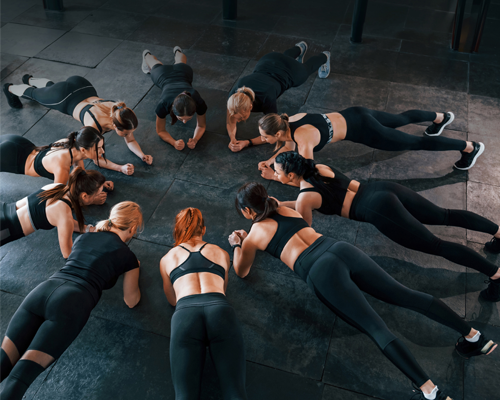
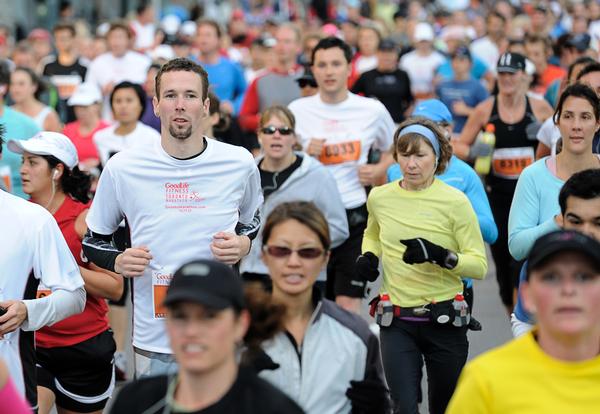
If we think everyone else is exercising, we’re more likely to do it ourselves / all photos: www.shutterstock.com
When asked what the biggest threat to their own health is, lack of exercise comes top

England is facing an epidemic of inactivity, according to Public Health England (PHE). We know from official figures that physical inactivity has been widespread in the UK population for years, and that inactivity in the UK is one of the highest in the world – higher even than that popularly-held beacon of sloth, the US.

And the impact of physical inactivity? A PHE report released in November notes that the effects of physical inactivity are so damaging that it’s a contributory factor in one in six deaths in the United Kingdom.

And yet physical inactivity is not the first thing that comes to mind when we ask people about public health threats. It’s not even the second, third or fourth thing. When we surveyed adults about public health issues they were concerned about – without giving them a list of issues to choose from – cancer was mentioned most frequently. Physical inactivity did not come out in the top 10, despite one in five expressing concern about obesity.

But it depends how we ask the question: while physical inactivity is not a top-of-mind response, when you give people a list of threats to select from, 37 per cent of adults consider lack of exercise to be a big threat to the health of the population (see Figure 1).

And most importantly, when asked what the biggest threat to their own health is, lack of exercise comes top, above every other item asked about (although stress comes close). This is a key point, and may give some insight into why inactivity may not get the attention it deserves as a health threat: people think it’s a problem they face alone, and they don’t generalise from that to the population as a whole as much as they do with other issues.

The same is true for stress – and again this fits with a view that mental health is under-emphasised in health policy, because people are less aware of how many people it affects.

Following the herd
This is reflected in our misunderstanding of what the ‘norm’ on exercise is: we have a very shaky understanding of how much activity other people do, which can in turn affect the amount of activity individuals undertake themselves.

One way of measuring this is people’s engagement with national activity guidelines. The Chief Medical Officer recommends that adults should do 150 minutes of moderate intensity activity each week in bouts of 10 minutes or more. Perhaps unsurprisingly, when presented with several alternatives, most people got the guidelines wrong. More surprisingly, nearly as many people overestimated the guidelines as underestimated them.

But when we compare awareness of the guidelines with levels of moderate intensity activity, it seems that overestimating the guidelines is a good thing. Over half of those who meet or exceed the activity guidelines believe the guidelines to be higher than they are. Conversely, 55 per cent of those who fall short of the guidelines believe the guidelines are lower than they are. So overestimation may be a good thing.

We can’t unpick cause and effect in a survey like this, but we know from broader lessons from behavioural science that our understanding of the social norm has a huge effect on how we act: if we think everyone else is doing it, we’re more likely to do it ourselves.

And there are important knowledge gaps on these norms – in a dangerous direction. Nearly three-quarters of us underestimate the percentage of people in England who meet the guidelines. This demonstrates that people think the norm in society is inactivity and, given a choice between official guidelines and perceived normal behaviour in society, people seem to opt for the norm.

A personal threat
Aside from setting guidelines, is there anything else that can be done to lift the norm to a healthier level? Our research has shown that Britons tend to be fairly averse to government interfering in people’s lifestyles: 35 per cent think government shouldn’t interfere, while 30 per cent think it should.

More favoured sources of influence come in the form of health professionals, who are our most trusted sources of health advice. Without being presented with pre-set options, people also mention websites and friends or relatives more readily than they mention gyms and personal trainers.

This is probably not a huge surprise, given our contact tends to be more with health professionals – but it points to two key messages: that health professionals need to be on board and equipped to give advice on activity, and that we need to keep finding ways to broaden the group of professionals who people will go to for healthy living advice.

These advocates have a role to play in ensuring people have the capability and opportunity to live an active lifestyle. PHE has said that, as a nation, we need to “embed physical activity into the fabric of daily life” and part of this will involve challenging social norms (see p38). Sport and leisure professionals have a key role to play here, raising awareness of the inactivity epidemic but mostly connecting the dots for individuals – inactivity is a very personal threat.

Figure 1 Lack of exercise is seen as one of
the top threats to people’s own health
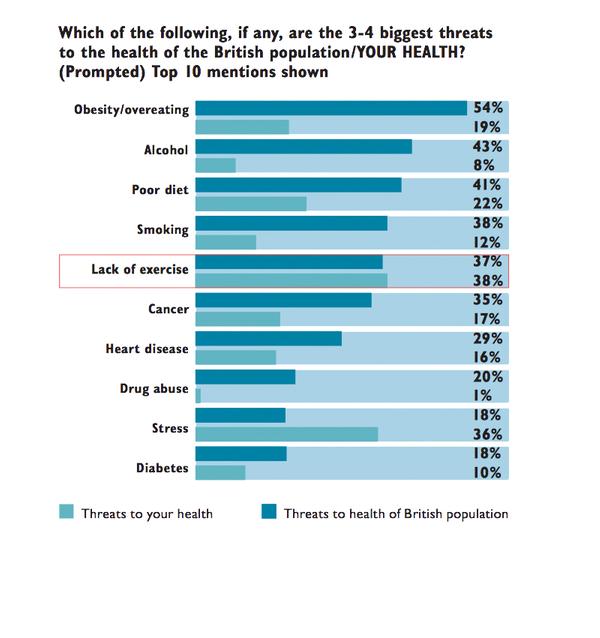
Figure 1
Figure 1

Figure 2 Only one in 10 people know the activity guidelines, with almost as many overestimating as underestimating the guidelines
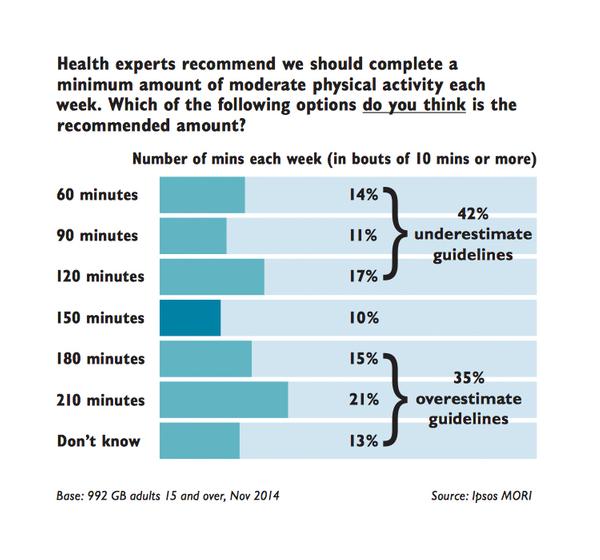
Figure 2
Figure 2

Figure 3 Health professionals come top on advice to stay healthy
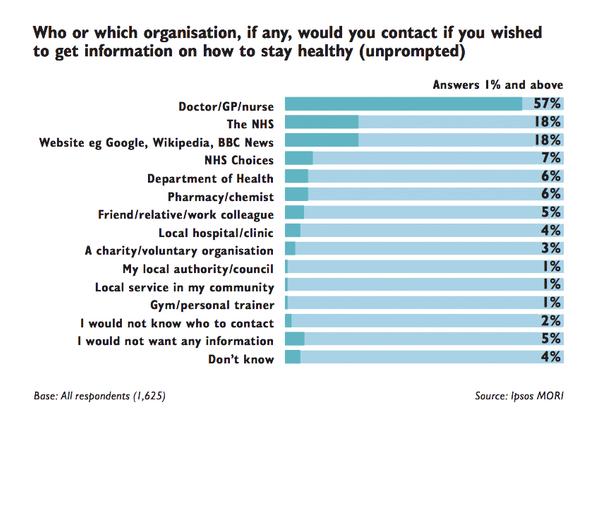
Figure 3
Figure 3

ABOUT THE AUTHOR

Bobby Duffy is MD of Ipsos MORI’s Social Research Institute and the global director of the Ipsos Social Research Institute in more than 25 countries.
Ipsos MORI’s Social Research Institute – a leading UK-based market research company – supports politicians and decision-makers through well-researched analyses of a range of societally relevant topics, including in the healthcare field.

Twitter: @BobbyIpsosMORI
Web: www.ipsos-mori.com

Sign up here to get HCM's weekly ezine and every issue of HCM magazine free on digital.
People believe inactivity is a problem they face alone / all photos: www.shutterstock.com
Currently only 1 per cent of people would ask a PT for information on staying healthy / all photos: www.shutterstock.com
https://www.leisureopportunities.co.uk/images/750696_523569.jpg
New Ipsos MORI research highlights a worrying trend for people to follow the sedentary norm
Ipsos MORI’s Bobby Duffy,Ipsos MORI, consumer research, sedentary, inactivity, physical activity, Bobby Duffy
HCM magazine
If the health service is to survive, we must recognise that it is a disease service – and that wellbeing rests with us, says the activity advocate and healthy ageing champion. He talks to Kate Cracknell
HCM magazine
Small improvements to sleep, diet and physical activity have major benefits for the heart, according to new research from the University of Sydney
HCM magazine
I experienced a blissful feeling of joy I hadn’t felt since I was a kid
HCM magazine
Strength training is evolving, driven by changing consumer preferences. Julie Cramer talks to innovators about how their products are meeting this demand
HCM magazine
HCM People

Stephen Price

Founder, SP&Co Group
Working in public health over the last few years has lit up parts of my brain again
HCM promotional features
Sponsored
SnowDome Fitness has added 50 per cent more space with cutting-edge Technogym solutions
HCM promotional features
Sponsored
Find out how your gym can tap into the corporate wellness boom
HCM promotional features
Sponsored
Greg Bradley looks at the shift towards strength training in gyms and advises on how operators can create the ultimate training environment
HCM promotional features
Sponsored
David Lloyd is stepping up its commitment to women’s health as it continues to explore what fit-for-purpose looks like for the female population
HCM promotional features
Sponsored
Third Space partnered with IndigoFitness to deliver a bespoke training space for its new club at The Whiteley
HCM promotional features
Sponsored
Starpool supports Olympic champion Marcell Jacobs, says Riccardo Turri
HCM promotional features
Sponsored
EGYM has opened a new HQ in Paternoster Square, London and revealed a range of new launches
HCM promotional features
Sponsored
The industry is embracing consumer-facing tech. Now it’s time to streamline back-of-house systems with Orbit4, says Daniel Jones
HCM promotional features
Sponsored
New launch, Salus House, elevates boutique wellness with high service levels and a partnership with Technogym
HCM promotional features
Latest News
Nuffield Health has told HCM that it takes its responsibilities towards its colleagues seriously and ...
Latest News
Technogym has announced the launch of the Run X World Treadmill Championship, the first world ...
Latest News
Shocked by the UK loneliness statistics, charitable trust Mytime Active has been doubling down on ...
Latest News
Portugal’s leading operator, SC Fitness, is celebrating a milestone by reaching 100 gyms.  The company ...
Latest News
Australia’s fast-growing fitness network, Viva Leisure, is adding a low-cost gym brand to its already ...
Latest News
Speedflex has launched a strength training programme for 10 to 16-year-olds, to make it safer, ...
Latest News
Tewinbury Farm Hotel in Hertfordshire, UK is expanding its premium leisure proposition with the launch ...
Latest News

Work is underway in Madrid on one of Europe’s most significant multi-functional complexes, ...

Opinion
promotion
Strength training has moved from the margins to the mainstream.
Opinion: Building smarter strength spaces for today’s operators
Featured supplier news
Featured supplier news: Reaching the people most gyms miss: Bedford Gym & Swim Campaign delivers 410 new members
One of the biggest mistakes the fitness industry still makes is advertising almost exclusively to people who already look and live like gym members.
Featured supplier news
Featured supplier news: W3Fit EMEA celebrates its fifth anniversary
Celebrating its milestone 5th anniversary, W3Fit EMEA returns in 2026 with an unmissable gathering of the Health & Fitness industry’s most influential leaders.
Company profiles
Company profile: Everyone Active
Everyone Active's aim is to get communities active, engaged and entertained through our wide-ranging activities ...
Company profiles
Company profile: Vor Technologies Ltd
Vor is the world’s most powerful workout generation tool, transforming how fitness businesses deliver personalised ...
Supplier Showcases
Supplier Showcase - Future-proofing
Catalogue Gallery
Click on a catalogue to view it online
Featured press releases
BLK BOX press release: BLK BOX strengthens European growth with the appointment of Germany country manager Timo Garrels
BLK BOX is proud to welcome Timo Garrels as Germany country manager, marking another important step in the brand’s continued growth across Europe.
Featured press releases
Technogym press release: Great success for Technogym’s “Let’s Move & Donate Food” campaign: one million meals donated
Thanks to the participation of 150,000 people across 141 countries, the social campaign surpassed one billion Moves collected, which were converted into a donation of one million school meals to support children in need.
Directory
Lockers
Crown Sports Lockers: Lockers
Spa and beauty equipment
Oakworks Inc: Spa and beauty equipment
Fitness tracking platform
SpiviTech: Fitness tracking platform
Hot tubs
MSpa International Ltd: Hot tubs
Industrial washing machines
Miele Company Limited: Industrial washing machines
Water experiences and hydrotherapy solutions
Aquaform s.r.l.: Water experiences and hydrotherapy solutions
Property & Tenders
Stratford, East London.
Lee Valley Regional Park Authority
Property & Tenders
Y Felinheli, LL56 4QN
Newmark
Property & Tenders
Diary dates
13-13 Jun 2026
Worldwide, Various,
Diary dates
21-24 Sep 2026
The Langham Huntington Pasadena , Pasadena, United States
Diary dates
06-08 Oct 2026
Messe Stuttgart, Stuttgart, Germany
Diary dates
22-22 Oct 2026
QEII Conference Centre, London,
Diary dates
26-29 Oct 2027
Koelnmesse Exhibition Centre, Cologne, Germany
Diary dates

features

Consumer research: Infectious inactivity

People across the UK believe the public as a whole is inactive – and many believe that’s justification for following suit. Ipsos MORI’s Bobby Duffy reports on new research

By Bobby Duffy, Ipsos MORI’s Social Research Institute | Published in Health Club Management 2015 issue 3
If we think everyone else is exercising, we’re more likely to do it ourselves / all photos: www.shutterstock.com
When asked what the biggest threat to their own health is, lack of exercise comes top

England is facing an epidemic of inactivity, according to Public Health England (PHE). We know from official figures that physical inactivity has been widespread in the UK population for years, and that inactivity in the UK is one of the highest in the world – higher even than that popularly-held beacon of sloth, the US.

And the impact of physical inactivity? A PHE report released in November notes that the effects of physical inactivity are so damaging that it’s a contributory factor in one in six deaths in the United Kingdom.

And yet physical inactivity is not the first thing that comes to mind when we ask people about public health threats. It’s not even the second, third or fourth thing. When we surveyed adults about public health issues they were concerned about – without giving them a list of issues to choose from – cancer was mentioned most frequently. Physical inactivity did not come out in the top 10, despite one in five expressing concern about obesity.

But it depends how we ask the question: while physical inactivity is not a top-of-mind response, when you give people a list of threats to select from, 37 per cent of adults consider lack of exercise to be a big threat to the health of the population (see Figure 1).

And most importantly, when asked what the biggest threat to their own health is, lack of exercise comes top, above every other item asked about (although stress comes close). This is a key point, and may give some insight into why inactivity may not get the attention it deserves as a health threat: people think it’s a problem they face alone, and they don’t generalise from that to the population as a whole as much as they do with other issues.

The same is true for stress – and again this fits with a view that mental health is under-emphasised in health policy, because people are less aware of how many people it affects.

Following the herd
This is reflected in our misunderstanding of what the ‘norm’ on exercise is: we have a very shaky understanding of how much activity other people do, which can in turn affect the amount of activity individuals undertake themselves.

One way of measuring this is people’s engagement with national activity guidelines. The Chief Medical Officer recommends that adults should do 150 minutes of moderate intensity activity each week in bouts of 10 minutes or more. Perhaps unsurprisingly, when presented with several alternatives, most people got the guidelines wrong. More surprisingly, nearly as many people overestimated the guidelines as underestimated them.

But when we compare awareness of the guidelines with levels of moderate intensity activity, it seems that overestimating the guidelines is a good thing. Over half of those who meet or exceed the activity guidelines believe the guidelines to be higher than they are. Conversely, 55 per cent of those who fall short of the guidelines believe the guidelines are lower than they are. So overestimation may be a good thing.

We can’t unpick cause and effect in a survey like this, but we know from broader lessons from behavioural science that our understanding of the social norm has a huge effect on how we act: if we think everyone else is doing it, we’re more likely to do it ourselves.

And there are important knowledge gaps on these norms – in a dangerous direction. Nearly three-quarters of us underestimate the percentage of people in England who meet the guidelines. This demonstrates that people think the norm in society is inactivity and, given a choice between official guidelines and perceived normal behaviour in society, people seem to opt for the norm.

A personal threat
Aside from setting guidelines, is there anything else that can be done to lift the norm to a healthier level? Our research has shown that Britons tend to be fairly averse to government interfering in people’s lifestyles: 35 per cent think government shouldn’t interfere, while 30 per cent think it should.

More favoured sources of influence come in the form of health professionals, who are our most trusted sources of health advice. Without being presented with pre-set options, people also mention websites and friends or relatives more readily than they mention gyms and personal trainers.

This is probably not a huge surprise, given our contact tends to be more with health professionals – but it points to two key messages: that health professionals need to be on board and equipped to give advice on activity, and that we need to keep finding ways to broaden the group of professionals who people will go to for healthy living advice.

These advocates have a role to play in ensuring people have the capability and opportunity to live an active lifestyle. PHE has said that, as a nation, we need to “embed physical activity into the fabric of daily life” and part of this will involve challenging social norms (see p38). Sport and leisure professionals have a key role to play here, raising awareness of the inactivity epidemic but mostly connecting the dots for individuals – inactivity is a very personal threat.

Figure 1 Lack of exercise is seen as one of
the top threats to people’s own health

Figure 1
Figure 1

Figure 2 Only one in 10 people know the activity guidelines, with almost as many overestimating as underestimating the guidelines

Figure 2
Figure 2

Figure 3 Health professionals come top on advice to stay healthy

Figure 3
Figure 3

ABOUT THE AUTHOR

Bobby Duffy is MD of Ipsos MORI’s Social Research Institute and the global director of the Ipsos Social Research Institute in more than 25 countries.
Ipsos MORI’s Social Research Institute – a leading UK-based market research company – supports politicians and decision-makers through well-researched analyses of a range of societally relevant topics, including in the healthcare field.

Twitter: @BobbyIpsosMORI
Web: www.ipsos-mori.com
Sign up here to get HCM's weekly ezine and every issue of HCM magazine free on digital.
People believe inactivity is a problem they face alone / all photos: www.shutterstock.com


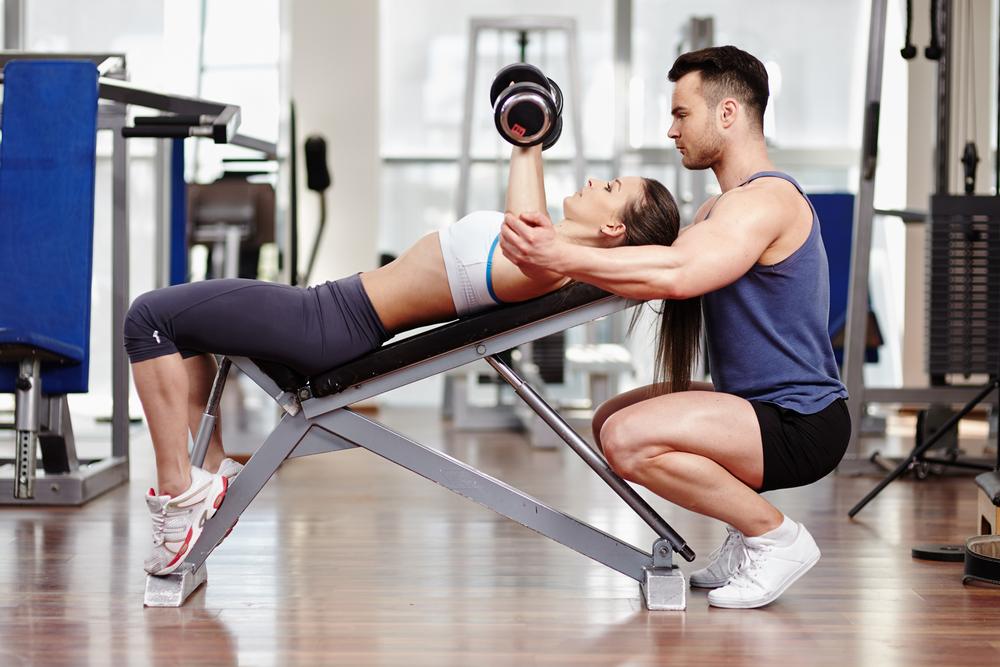
Currently only 1 per cent of people would ask a PT for information on staying healthy / all photos: www.shutterstock.com

https://www.leisureopportunities.co.uk/images/750696_523569.jpg
New Ipsos MORI research highlights a worrying trend for people to follow the sedentary norm
Ipsos MORI’s Bobby Duffy,Ipsos MORI, consumer research, sedentary, inactivity, physical activity, Bobby Duffy
Latest News
Nuffield Health has told HCM that it takes its responsibilities towards its colleagues seriously and ...
Latest News
Technogym has announced the launch of the Run X World Treadmill Championship, the first world ...
Latest News
Shocked by the UK loneliness statistics, charitable trust Mytime Active has been doubling down on ...
Latest News
Portugal’s leading operator, SC Fitness, is celebrating a milestone by reaching 100 gyms.  The company ...
Latest News
Australia’s fast-growing fitness network, Viva Leisure, is adding a low-cost gym brand to its already ...
Latest News
Speedflex has launched a strength training programme for 10 to 16-year-olds, to make it safer, ...
Latest News
Tewinbury Farm Hotel in Hertfordshire, UK is expanding its premium leisure proposition with the launch ...
Latest News

Work is underway in Madrid on one of Europe’s most significant multi-functional complexes, ...

Latest News
PureGym is encouraging people to step away from their screens and go for a walk, ...
Latest News
Small improvements to sleep, diet quality, and physical activity, made in combination lead to a ...
Latest News
Therme Manchester’s 28-acre development, which will include interconnected glass pavilions that measure 65,000sq m, will ...
Opinion
promotion
Strength training has moved from the margins to the mainstream.
Opinion: Building smarter strength spaces for today’s operators
Featured supplier news
Featured supplier news: Reaching the people most gyms miss: Bedford Gym & Swim Campaign delivers 410 new members
One of the biggest mistakes the fitness industry still makes is advertising almost exclusively to people who already look and live like gym members.
Featured supplier news
Featured supplier news: W3Fit EMEA celebrates its fifth anniversary
Celebrating its milestone 5th anniversary, W3Fit EMEA returns in 2026 with an unmissable gathering of the Health & Fitness industry’s most influential leaders.
Company profiles
Company profile: Everyone Active
Everyone Active's aim is to get communities active, engaged and entertained through our wide-ranging activities ...
Company profiles
Company profile: Vor Technologies Ltd
Vor is the world’s most powerful workout generation tool, transforming how fitness businesses deliver personalised ...
Supplier Showcases
Supplier Showcase - Future-proofing
Catalogue Gallery
Click on a catalogue to view it online
Featured press releases
BLK BOX press release: BLK BOX strengthens European growth with the appointment of Germany country manager Timo Garrels
BLK BOX is proud to welcome Timo Garrels as Germany country manager, marking another important step in the brand’s continued growth across Europe.
Featured press releases
Technogym press release: Great success for Technogym’s “Let’s Move & Donate Food” campaign: one million meals donated
Thanks to the participation of 150,000 people across 141 countries, the social campaign surpassed one billion Moves collected, which were converted into a donation of one million school meals to support children in need.
Directory
Lockers
Crown Sports Lockers: Lockers
Spa and beauty equipment
Oakworks Inc: Spa and beauty equipment
Fitness tracking platform
SpiviTech: Fitness tracking platform
Hot tubs
MSpa International Ltd: Hot tubs
Industrial washing machines
Miele Company Limited: Industrial washing machines
Water experiences and hydrotherapy solutions
Aquaform s.r.l.: Water experiences and hydrotherapy solutions
Property & Tenders
Stratford, East London.
Lee Valley Regional Park Authority
Property & Tenders
Y Felinheli, LL56 4QN
Newmark
Property & Tenders
Diary dates
13-13 Jun 2026
Worldwide, Various,
Diary dates
21-24 Sep 2026
The Langham Huntington Pasadena , Pasadena, United States
Diary dates
06-08 Oct 2026
Messe Stuttgart, Stuttgart, Germany
Diary dates
22-22 Oct 2026
QEII Conference Centre, London,
Diary dates
26-29 Oct 2027
Koelnmesse Exhibition Centre, Cologne, Germany
Diary dates
Search news, features & products:
Find a supplier:
Elevate Arena
Elevate Arena
Partner sites