

















GET HCM
magazine
Sign up for the FREE digital edition of HCM magazine and also get the HCM ezine and breaking news email alerts.
Not right now, thanksclose this window I've already subscribed!
Follow Health Club Management on Twitter Like Health Club Management on Facebook Join the discussion with Health Club Management on LinkedIn
FITNESS, HEALTH, WELLNESS

features

Behaviour change: Change from within

In the first part of our new series on behaviour change, Debbie Lawrence looks at helping people build motivation, and whether we actually need to see the individual – rather than the coach – as the expert

By Debbie Lawrence | Published in Health Club Management 2013 issue 5
If motivation gets you started, does habit keep you going? People develop habits because they have a high capacity to learn. Some reports suggest it takes just 21–28 days for new habits to become automatic; others suggest it can take anything up to around 254 days

At some point in life, most people change something, whether that’s career, relationships or lifestyle habits, for example. The determining factors for successfully carrying out that change are likely to include:
* Their motivation and readiness – how much they want it
* Their perception of the difficulty – if they think they can handle the change
* Their resources and energy – emotional, mental, physical
* The available help and the extent to which this assistance is person-centred

Health clubs and personal trainers are often consulted by people who want help and support in making lifestyle changes to improve their health and fitness. But how helpful is the support generally provided by clubs, and does it respect the barriers people face?

Barriers
When the desire to change arises, an individual will weigh up the benefits and sacrifices. Their inner processing may include: ‘Why should I?’, ‘How much do I want this?’, ‘What’s in this for me?’ Feelings of fear or excitement may also arise, and the extent to which these feelings are perceived as manageable will be a key motivational factor.

These intrinsic decision-making processes and feelings continue throughout the process of change. People will be continually reminding themselves of the extent to which they can, can’t, want or don’t want change. On the one hand they see benefits: ‘That would be wonderful’. On the other hand are fears: ‘Can I handle this?’ The power given to these feelings may determine their choice: to stay in their comfort zone or move forward.

Expert as expert
Health and fitness professionals have expertise in their field, and knowledge provides the know-how to get things achieved. This is of course helpful. However, if well-meaning advice is delivered as warnings – ‘find time to exercise or find time for illness’ – or in an expert-directed or controlled way – ‘do this, don’t do that’ – this may evoke resistance from your members. It may also trigger feelings of blame, shame and helplessness, which reinforce any negative beliefs the person holds about their worth: ‘I’m not good enough’, ‘no-one can help me’. The more ‘not OK’ the person feels, the greater will be their need to resist help and defend their self-concept and behaviours, lowering their motivation.

Experts who move conversation with the client too quickly towards the ‘how can I?’ rather than exploring the ‘why should I?’ are not actually being helpful. ‘How’ conversations place the focus on change; ‘why’ conversations place the focus on motivation. The expert’s enthusiasm (external motivation) may fire the person up in the short term, but this will often burn out quickly. What’s needed is conversation that will ignite and maintain the client’s own fire – their intrinsic motivation.

Person as expert
The person is always their own best expert. At some level, conscious or unconscious, they know why they choose certain behaviours. They live with their inner voice(s) that tell them why they can, can’t, should, shouldn’t act in a certain way. This inner dialogue concept is acknowledged in many psychological theoretical orientations, motivational interviewing, Gestalt, Transactional Analysis and so on.

If the aim is for positive change and self-care, these voices need to be heard, accepted and understood. Empathic listening from the helper supports this. When the person can openly discuss what stops them, and their reasons for wanting change, without feeling judged, they become more empowered. They start to learn to become more self-accepting and begin to understand themselves: their barriers, defences, emotions and motivators. With this acceptance and understanding, they can be their own ‘best friend’ and make their best decisions.

The helper’s role is to facilitate this motivational dialogue by coaxing and encouraging the person to speak. The helper listens with empathy, positive regard, acceptance and a curiosity to understand the person. They hold the space when internal discord, resistance and dissonance arise, without needing to ‘fix it’ or rescue the situation. Working in this way builds autonomy in the person being coached – it allows them the freedom to make their own decisions in their own time.

This type of helping relationship requires an attitude of trust and belief in the person being coached – something many ‘experts’ struggle with, especially when some behaviours they are witnessing are destructive to health. However, Carl Rogers, the father of person-centred working, believed a person only needed to experience these conditions once in a lifetime to build the resources they need.

The individual may fall, relapse and make mistakes, but when they are supported without criticism, judgement, berating or a need to fix things, they learn for themselves – all of which builds self-acceptance and strengthens the inner resources needed to maintain long-term motivation.

Skillful helping
Learning to help skillfully is a lifelong journey. It requires a desire to want to know and help, a desire to read between the lines of what clients say, an awareness and attention to their language, body language and an awareness of one’s own responses, gut feelings, sensations and so on.

The skills, knowledge and attitude needed to help in this way require study, experience and reflective practice. Some first steps include:

Learn to listen: Listen more than you speak.
* Helpful speaking involves using reflective statements to reflect back the client’s own words and summarise key aspects of their conversation.
* Unhelpful speaking includes giving opinions, passing judgements or sarcastic comments that humiliate, ridicule or shame. These interfere strongly with learning and growth.

Release control and build independence:
Do we really know what’s right for someone else? Facilitate participative working, give the person some control, encourage their independence and provide opportunities for them to self-assess, evaluate and build self-reliance. Open questions can help this process – eg ‘Why do you believe you’re thinking about that now?’ and ‘How important is that for you?’ Then listen and let them choose.

Every choice they make is an opportunity for them to learn something about themselves, building their autonomy and personal power.

Every choice someone else makes strengthens their reliance and dependence on others, reducing personal power. If the helper gets it wrong, they set the person up for failure and themselves up for blame.

A helpful attitude:
Strengthen your attitude for compassion and trust in people. Hold hope for the person, so they can hold this for themselves when they are ready.

Remember it is the person being coached, not you, who has experienced their own life and struggles. Get to know their world as they experience it and let go of the need to judge based on your own views. Help them see the positive things they do and the resources they have/are building, rather than focusing on what they are not doing. This will help the person see themselves less critically.

Self-awareness:
Be open to exploring and learning more about your own prejudices. We all make judgements. The more mindful and self-aware we become, the greater will be the potential for empathy for others – and ultimately, one’s own self. Many counsellors have supervision to help them explore their blocks that may form barriers to effective working.

Develop your knowledge: Keep learning.
There are numerous courses and books that explain psychological theories and behaviour change models. Be eclectic and learn about many approaches.

One step at a time
Learning to work in a person-centred way is about developing a helpful attitude. Accepting and respecting the person, their life journey, experiences, struggles, successes and failures without judgement has the potential to help them see themselves with less judgement.

When the person accepts all aspects of themselves they can listen, learn, self-challenge and choose. They can seek out choices that reflect their movement towards greater self-care; not all at once, but small steps.

Maslow, in Curzon (2004:115)

“Every human being has two sets of forces inside. One force clings to safety and defensiveness out of fear, tending to regress backward, hanging onto the past, afraid to grow, to take chances, to jeopardise what he already has, afraid of independence, freedom, separateness. The second force impels him forward toward wholeness and uniqueness of self, toward full functioning of all his capacities, toward confidence in the face of the external world at the same time that he can accept his deepest, real, unconscious Self.”

Autobiography in Five Chapters, by Portia Nelson

I walk down the street. There is a deep hole in the sidewalk. I fall in. I am lost… I am helpless. It isn’t my fault. It takes forever to find a way out.
I walk down the same street. There is a deep hole in the sidewalk. I pretend I don’t see it. I fall in again. I can’t believe I’m in the same place. But it isn’t my fault. It still takes a long time to get out.
I walk down the same street. There is a deep hole in the sidewalk. I see it there. I still fall in… it’s a habit. My eyes are open. I know where I am. It is my fault. I get out immediately.
I walk down the same street. There is a deep hole in the sidewalk. I walk around it.
I walk down another street

Debbie Lawrence, MA, PG Dip,

Integrative Counsellor,

Debbie Lawrence
Debbie Lawrence

Debbie Lawrence, MA,PG Dip Integrative Counselling, has worked in the fitness industry for the last 30 years, as a practitioner, teacher trainer, consultant and writer for various training providers and awarding organisations. She is a qualified integrative counsellor and the author of 13 books published by Bloomsbury Publishing, including The Complete Guide to Exercise Referral, The Complete Guide to Activity and Mental Health, and The Complete Guide to Behaviour Change. She delivers the Level 4 qualification Activity for Persons with Mental Health Conditions and is now working with Active IQ as qualification development manager.
Web: www.debbiellawrence.com
LinkedIn: www.linkedin.com/profile/view?id=99259822&trk=hb_tab_pro_top
Facebook: www.facebook.com/#!/pages/Moving-Minds-Project-with-Debbie-L-Lawrence/127822057300423
Facebook: www.facebook.com/#!/pages/Debbie-Lawrence-Writer/162353727181046

Sign up here to get HCM's weekly ezine and every issue of HCM magazine free on digital.
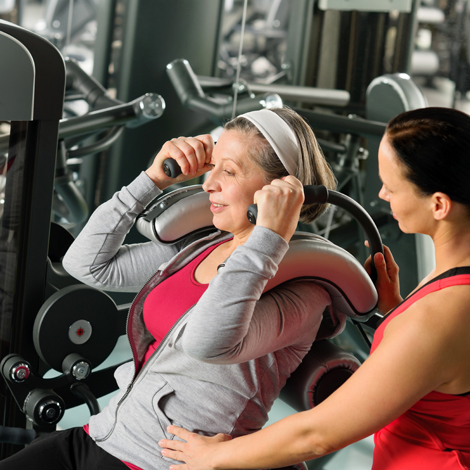
The individual is always their own best expert, knowing why they choose certain behaviours
The role of the coach is to facilitate motivational dialogue by listening to the client with empathy and acceptance
Building self-acceptance helps maintain long-term motivation
https://www.leisureopportunities.co.uk/images/HCM2013_5change.gif
The first in a new behaviour change series looks at the individual as expert
Debbie Lawrence,Behaviour change
HCM magazine
HCM People

Shaun Grove

Owner, Stride Fitness
My goal was to invest in where fitness is going, not where it’s already been
HCM magazine
The new CEO of UK Active talks to HCM about the gym-curious and why he believes the sector can double in size by the end of the next decade
HCM magazine
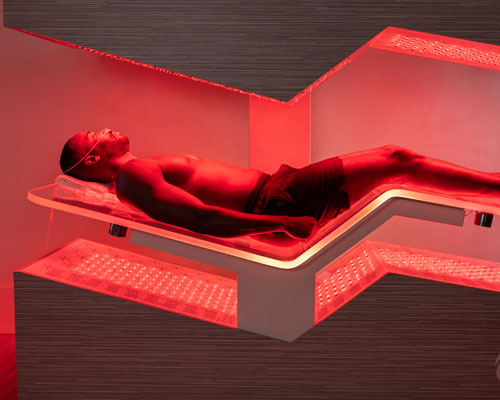
Lisa Starr tries the Ammortal Chamber to see whether layering 10 modalities into one experience really delivers more
HCM magazine
New legislation is exposing weakness and potential liabilities in the management of customer data in health clubs, says Andy Chesterman
HCM magazine
Would you stop selling memberships to prevent your club getting overcrowded? How do you strike the balance between maximising profits and prioritising the member experience? Kath Hudson talks to the experts
HCM promotional features
Sponsored
Social fitness the missing link to member engagement, according to a new Myzone report
HCM promotional features
Sponsored
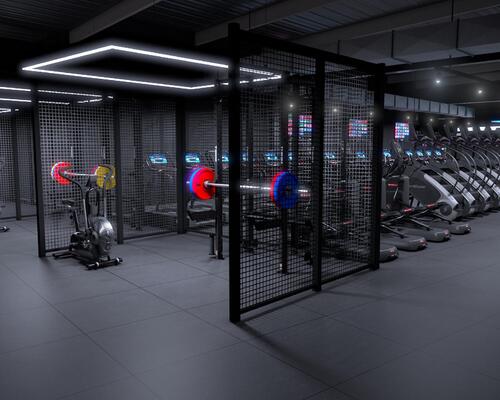
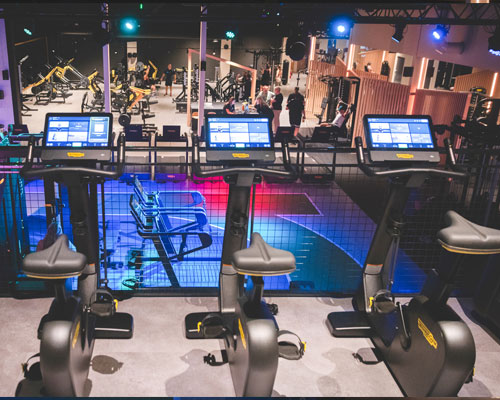
Third Space partnered with IndigoFitness to deliver a bespoke training space for its new club at The Whiteley
HCM promotional features
Sponsored
SnowDome Fitness has added 50 per cent more space with cutting-edge Technogym solutions
HCM promotional features
Sponsored
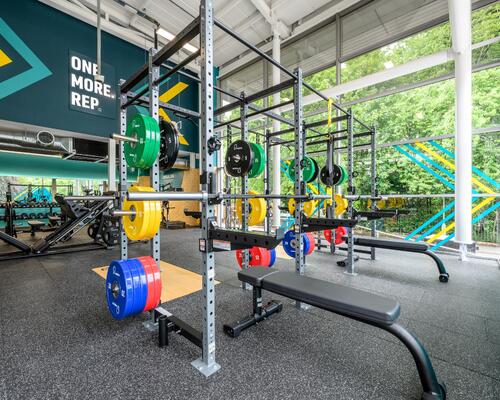
Greg Bradley looks at the shift towards strength training in gyms and advises on how operators can create the ultimate training environment
HCM promotional features
Sponsored
Find out how your gym can tap into the corporate wellness boom
HCM promotional features
Sponsored
Starpool supports Olympic champion Marcell Jacobs, says Riccardo Turri
HCM promotional features
Sponsored
David Lloyd is stepping up its commitment to women’s health as it continues to explore what fit-for-purpose looks like for the female population
HCM promotional features
Sponsored
EGYM has opened a new HQ in Paternoster Square, London and revealed a range of new launches
HCM promotional features
Latest News
The inaugural HCM Invest event has opened applications for pitching slots ahead of its launch ...
Latest News
Girls in the UK are missing out on 280 million hours of sport every year ...
Latest News
According to research which tracked more than 147,000 people for 30 years, 90-120 minutes of ...
Latest News
Everlast Gyms expands its footprint outside of the UK this month with the imminent launch ...
Latest News
The UK's four Chief Medical Officers have published a refreshed edition of  Physical activity guidelines: ...
Latest News
Places Leisure has exchanged contracts to build and operate a flagship £60m water and wellness ...
Latest News
The Republic of Ireland will become the latest market in PureGym’s expanding international portfolio, with ...
Latest News
Sophie Lawler, CEO of Total Fitness, has launched a leadership coaching business aimed at helping ...
Opinion
promotion
Strength training has moved from the margins to the mainstream.
Opinion: Building smarter strength spaces for today’s operators
Featured supplier news
Featured supplier news: Cornerstone Connect helps Active Blackpool tackle health inequalities
Active Blackpool is deploying Cornerstone Connect, a new digital interface allowing disparate information from multiple systems to be aggregated into one dataset, to support its focus on reducing health inequalities and improving healthy life expectancy.
Featured supplier news
Featured supplier news: Legends never die: four legends, four philosophies of life
Panatta brought together four of the most influential figures in bodybuilding history on the stage of RiminiWellness 2026: Phil Heath, Lee Haney, Ronnie Coleman and Hany Rambod.
Company profiles
Company profile: Study Active
Study Active is a UK leading provider of health & fitness qualifications including Gym Instructing ...
Company profiles
Company profile: Zynk - wellness design experts
Zynk are a team of specialist interior architects and designers with more than 25 year’s ...
Supplier Showcases
Supplier Showcase - From nightclub to health club
Supplier Showcases
Supplier Showcase - Future-proofing
Catalogue Gallery
Click on a catalogue to view it online
Featured press releases
Fitbench press release: Fitbench unlocks the power of every square metre with Fitrack
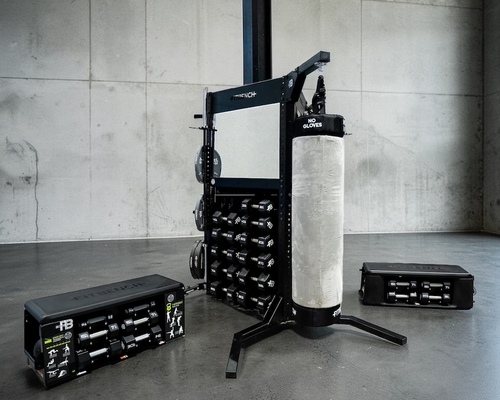
Fitbench, the commercial fitness equipment company known for simplifying training spaces and removing barriers to exercise, today announces the launch of Fitrack, a multi-person, multifunctional training system that transforms underutilised gym space into a complete small group training destination.
Featured press releases
Precor Fitness Ltd press release: BH Live partners with Precor, transforming the Mountbatten Leisure Centre Gym
Alongside Precor, BH Live, the registered charity and social enterprise operating sport and leisure facilities across southern England, has completed a major refurbishment of the gym at Mountbatten Leisure Centre in Portsmouth as a part of a £750,000 inve
Directory
Spa and beauty equipment
Oakworks Inc: Spa and beauty equipment
Hot tubs
MSpa International Ltd: Hot tubs
Industrial washing machines
Miele Company Limited: Industrial washing machines
Fitness tracking platform
SpiviTech: Fitness tracking platform
Lockers
Crown Sports Lockers: Lockers
Water experiences and hydrotherapy solutions
Aquaform s.r.l.: Water experiences and hydrotherapy solutions
Property & Tenders
Stratford, East London.
Lee Valley Regional Park Authority
Property & Tenders
Y Felinheli, LL56 4QN
Newmark
Property & Tenders
Diary dates
21-24 Sep 2026
The Langham Huntington Pasadena , Pasadena, United States
Diary dates
06-08 Oct 2026
Messe Stuttgart, Stuttgart, Germany
Diary dates
22-22 Oct 2026
QEII Conference Centre, London,
Diary dates
26-29 Oct 2027
Koelnmesse Exhibition Centre, Cologne, Germany
Diary dates

features

Behaviour change: Change from within

In the first part of our new series on behaviour change, Debbie Lawrence looks at helping people build motivation, and whether we actually need to see the individual – rather than the coach – as the expert

By Debbie Lawrence | Published in Health Club Management 2013 issue 5
If motivation gets you started, does habit keep you going? People develop habits because they have a high capacity to learn. Some reports suggest it takes just 21–28 days for new habits to become automatic; others suggest it can take anything up to around 254 days

At some point in life, most people change something, whether that’s career, relationships or lifestyle habits, for example. The determining factors for successfully carrying out that change are likely to include:
* Their motivation and readiness – how much they want it
* Their perception of the difficulty – if they think they can handle the change
* Their resources and energy – emotional, mental, physical
* The available help and the extent to which this assistance is person-centred

Health clubs and personal trainers are often consulted by people who want help and support in making lifestyle changes to improve their health and fitness. But how helpful is the support generally provided by clubs, and does it respect the barriers people face?

Barriers
When the desire to change arises, an individual will weigh up the benefits and sacrifices. Their inner processing may include: ‘Why should I?’, ‘How much do I want this?’, ‘What’s in this for me?’ Feelings of fear or excitement may also arise, and the extent to which these feelings are perceived as manageable will be a key motivational factor.

These intrinsic decision-making processes and feelings continue throughout the process of change. People will be continually reminding themselves of the extent to which they can, can’t, want or don’t want change. On the one hand they see benefits: ‘That would be wonderful’. On the other hand are fears: ‘Can I handle this?’ The power given to these feelings may determine their choice: to stay in their comfort zone or move forward.

Expert as expert
Health and fitness professionals have expertise in their field, and knowledge provides the know-how to get things achieved. This is of course helpful. However, if well-meaning advice is delivered as warnings – ‘find time to exercise or find time for illness’ – or in an expert-directed or controlled way – ‘do this, don’t do that’ – this may evoke resistance from your members. It may also trigger feelings of blame, shame and helplessness, which reinforce any negative beliefs the person holds about their worth: ‘I’m not good enough’, ‘no-one can help me’. The more ‘not OK’ the person feels, the greater will be their need to resist help and defend their self-concept and behaviours, lowering their motivation.

Experts who move conversation with the client too quickly towards the ‘how can I?’ rather than exploring the ‘why should I?’ are not actually being helpful. ‘How’ conversations place the focus on change; ‘why’ conversations place the focus on motivation. The expert’s enthusiasm (external motivation) may fire the person up in the short term, but this will often burn out quickly. What’s needed is conversation that will ignite and maintain the client’s own fire – their intrinsic motivation.

Person as expert
The person is always their own best expert. At some level, conscious or unconscious, they know why they choose certain behaviours. They live with their inner voice(s) that tell them why they can, can’t, should, shouldn’t act in a certain way. This inner dialogue concept is acknowledged in many psychological theoretical orientations, motivational interviewing, Gestalt, Transactional Analysis and so on.

If the aim is for positive change and self-care, these voices need to be heard, accepted and understood. Empathic listening from the helper supports this. When the person can openly discuss what stops them, and their reasons for wanting change, without feeling judged, they become more empowered. They start to learn to become more self-accepting and begin to understand themselves: their barriers, defences, emotions and motivators. With this acceptance and understanding, they can be their own ‘best friend’ and make their best decisions.

The helper’s role is to facilitate this motivational dialogue by coaxing and encouraging the person to speak. The helper listens with empathy, positive regard, acceptance and a curiosity to understand the person. They hold the space when internal discord, resistance and dissonance arise, without needing to ‘fix it’ or rescue the situation. Working in this way builds autonomy in the person being coached – it allows them the freedom to make their own decisions in their own time.

This type of helping relationship requires an attitude of trust and belief in the person being coached – something many ‘experts’ struggle with, especially when some behaviours they are witnessing are destructive to health. However, Carl Rogers, the father of person-centred working, believed a person only needed to experience these conditions once in a lifetime to build the resources they need.

The individual may fall, relapse and make mistakes, but when they are supported without criticism, judgement, berating or a need to fix things, they learn for themselves – all of which builds self-acceptance and strengthens the inner resources needed to maintain long-term motivation.

Skillful helping
Learning to help skillfully is a lifelong journey. It requires a desire to want to know and help, a desire to read between the lines of what clients say, an awareness and attention to their language, body language and an awareness of one’s own responses, gut feelings, sensations and so on.

The skills, knowledge and attitude needed to help in this way require study, experience and reflective practice. Some first steps include:

Learn to listen: Listen more than you speak.
* Helpful speaking involves using reflective statements to reflect back the client’s own words and summarise key aspects of their conversation.
* Unhelpful speaking includes giving opinions, passing judgements or sarcastic comments that humiliate, ridicule or shame. These interfere strongly with learning and growth.

Release control and build independence:
Do we really know what’s right for someone else? Facilitate participative working, give the person some control, encourage their independence and provide opportunities for them to self-assess, evaluate and build self-reliance. Open questions can help this process – eg ‘Why do you believe you’re thinking about that now?’ and ‘How important is that for you?’ Then listen and let them choose.

Every choice they make is an opportunity for them to learn something about themselves, building their autonomy and personal power.

Every choice someone else makes strengthens their reliance and dependence on others, reducing personal power. If the helper gets it wrong, they set the person up for failure and themselves up for blame.

A helpful attitude:
Strengthen your attitude for compassion and trust in people. Hold hope for the person, so they can hold this for themselves when they are ready.

Remember it is the person being coached, not you, who has experienced their own life and struggles. Get to know their world as they experience it and let go of the need to judge based on your own views. Help them see the positive things they do and the resources they have/are building, rather than focusing on what they are not doing. This will help the person see themselves less critically.

Self-awareness:
Be open to exploring and learning more about your own prejudices. We all make judgements. The more mindful and self-aware we become, the greater will be the potential for empathy for others – and ultimately, one’s own self. Many counsellors have supervision to help them explore their blocks that may form barriers to effective working.

Develop your knowledge: Keep learning.
There are numerous courses and books that explain psychological theories and behaviour change models. Be eclectic and learn about many approaches.

One step at a time
Learning to work in a person-centred way is about developing a helpful attitude. Accepting and respecting the person, their life journey, experiences, struggles, successes and failures without judgement has the potential to help them see themselves with less judgement.

When the person accepts all aspects of themselves they can listen, learn, self-challenge and choose. They can seek out choices that reflect their movement towards greater self-care; not all at once, but small steps.

Maslow, in Curzon (2004:115)

“Every human being has two sets of forces inside. One force clings to safety and defensiveness out of fear, tending to regress backward, hanging onto the past, afraid to grow, to take chances, to jeopardise what he already has, afraid of independence, freedom, separateness. The second force impels him forward toward wholeness and uniqueness of self, toward full functioning of all his capacities, toward confidence in the face of the external world at the same time that he can accept his deepest, real, unconscious Self.”

Autobiography in Five Chapters, by Portia Nelson

I walk down the street. There is a deep hole in the sidewalk. I fall in. I am lost… I am helpless. It isn’t my fault. It takes forever to find a way out.
I walk down the same street. There is a deep hole in the sidewalk. I pretend I don’t see it. I fall in again. I can’t believe I’m in the same place. But it isn’t my fault. It still takes a long time to get out.
I walk down the same street. There is a deep hole in the sidewalk. I see it there. I still fall in… it’s a habit. My eyes are open. I know where I am. It is my fault. I get out immediately.
I walk down the same street. There is a deep hole in the sidewalk. I walk around it.
I walk down another street

Debbie Lawrence, MA, PG Dip,

Integrative Counsellor,

Debbie Lawrence
Debbie Lawrence

Debbie Lawrence, MA,PG Dip Integrative Counselling, has worked in the fitness industry for the last 30 years, as a practitioner, teacher trainer, consultant and writer for various training providers and awarding organisations. She is a qualified integrative counsellor and the author of 13 books published by Bloomsbury Publishing, including The Complete Guide to Exercise Referral, The Complete Guide to Activity and Mental Health, and The Complete Guide to Behaviour Change. She delivers the Level 4 qualification Activity for Persons with Mental Health Conditions and is now working with Active IQ as qualification development manager.
Web: www.debbiellawrence.com
LinkedIn: www.linkedin.com/profile/view?id=99259822&trk=hb_tab_pro_top
Facebook: www.facebook.com/#!/pages/Moving-Minds-Project-with-Debbie-L-Lawrence/127822057300423
Facebook: www.facebook.com/#!/pages/Debbie-Lawrence-Writer/162353727181046

Sign up here to get HCM's weekly ezine and every issue of HCM magazine free on digital.
The individual is always their own best expert, knowing why they choose certain behaviours
The role of the coach is to facilitate motivational dialogue by listening to the client with empathy and acceptance
Building self-acceptance helps maintain long-term motivation
https://www.leisureopportunities.co.uk/images/HCM2013_5change.gif
The first in a new behaviour change series looks at the individual as expert
Debbie Lawrence,Behaviour change
Latest News
The inaugural HCM Invest event has opened applications for pitching slots ahead of its launch ...
Latest News
Girls in the UK are missing out on 280 million hours of sport every year ...
Latest News
According to research which tracked more than 147,000 people for 30 years, 90-120 minutes of ...
Latest News
Everlast Gyms expands its footprint outside of the UK this month with the imminent launch ...
Latest News
The UK's four Chief Medical Officers have published a refreshed edition of  Physical activity guidelines: ...
Latest News
Places Leisure has exchanged contracts to build and operate a flagship £60m water and wellness ...
Latest News
The Republic of Ireland will become the latest market in PureGym’s expanding international portfolio, with ...
Latest News
Sophie Lawler, CEO of Total Fitness, has launched a leadership coaching business aimed at helping ...
Latest News
Anytime Fitness reaches a milestone this week with the launch of its 6000th site. The ...
Latest News
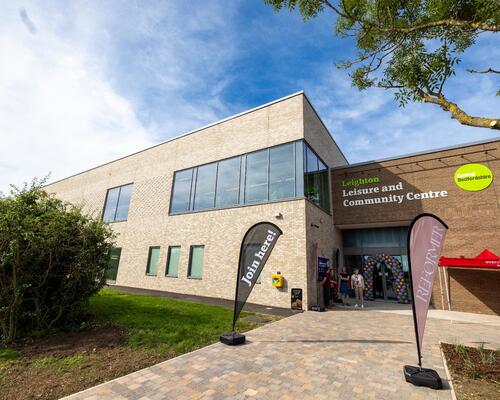
The £33.9 million Leighton Leisure and Community Centre has opened in Leighton Buzzard, UK, creating ...
Latest News
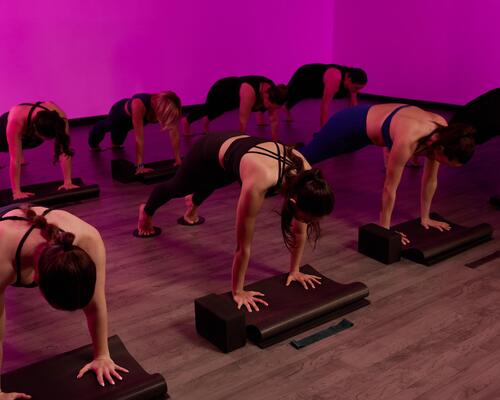
YogaSix, the yoga brand owned by Xponential Fitness, has launched a heated, Pilates-inspired class called ...
Opinion
promotion
Strength training has moved from the margins to the mainstream.
Opinion: Building smarter strength spaces for today’s operators
Featured supplier news
Featured supplier news: Cornerstone Connect helps Active Blackpool tackle health inequalities
Active Blackpool is deploying Cornerstone Connect, a new digital interface allowing disparate information from multiple systems to be aggregated into one dataset, to support its focus on reducing health inequalities and improving healthy life expectancy.
Featured supplier news
Featured supplier news: Legends never die: four legends, four philosophies of life
Panatta brought together four of the most influential figures in bodybuilding history on the stage of RiminiWellness 2026: Phil Heath, Lee Haney, Ronnie Coleman and Hany Rambod.
Company profiles
Company profile: Study Active
Study Active is a UK leading provider of health & fitness qualifications including Gym Instructing ...
Company profiles
Company profile: Zynk - wellness design experts
Zynk are a team of specialist interior architects and designers with more than 25 year’s ...
Supplier Showcases
Supplier Showcase - From nightclub to health club
Supplier Showcases
Supplier Showcase - Future-proofing
Catalogue Gallery
Click on a catalogue to view it online
Featured press releases
Fitbench press release: Fitbench unlocks the power of every square metre with Fitrack
Fitbench, the commercial fitness equipment company known for simplifying training spaces and removing barriers to exercise, today announces the launch of Fitrack, a multi-person, multifunctional training system that transforms underutilised gym space into a complete small group training destination.
Featured press releases
Precor Fitness Ltd press release: BH Live partners with Precor, transforming the Mountbatten Leisure Centre Gym
Alongside Precor, BH Live, the registered charity and social enterprise operating sport and leisure facilities across southern England, has completed a major refurbishment of the gym at Mountbatten Leisure Centre in Portsmouth as a part of a £750,000 inve
Directory
Spa and beauty equipment
Oakworks Inc: Spa and beauty equipment
Hot tubs
MSpa International Ltd: Hot tubs
Industrial washing machines
Miele Company Limited: Industrial washing machines
Fitness tracking platform
SpiviTech: Fitness tracking platform
Lockers
Crown Sports Lockers: Lockers
Water experiences and hydrotherapy solutions
Aquaform s.r.l.: Water experiences and hydrotherapy solutions
Property & Tenders
Stratford, East London.
Lee Valley Regional Park Authority
Property & Tenders
Y Felinheli, LL56 4QN

Newmark
Property & Tenders
Diary dates
21-24 Sep 2026
The Langham Huntington Pasadena , Pasadena, United States
Diary dates
06-08 Oct 2026
Messe Stuttgart, Stuttgart, Germany
Diary dates
22-22 Oct 2026
QEII Conference Centre, London,
Diary dates
26-29 Oct 2027
Koelnmesse Exhibition Centre, Cologne, Germany
Diary dates
Search news, features & products:
Find a supplier:
Partner sites