








EGYM
EGYM
EGYM
Follow Health Club Management on Twitter Like Health Club Management on Facebook Join the discussion with Health Club Management on LinkedIn
FITNESS, HEALTH, WELLNESS

features

Barefoot running: Back to nature

Barefoot running is meant to be the natural way, so could it keep our bodies in better alignment and thereby prevent injury? Or does it create a whole other set of issues? Kath Hudson reports

By Kath Hudson | Published in Health Club Management 2013 issue 7

The jury is out on barefoot running. Those who have converted report a feeling of freedom, euphoria and improved performance. But while barefoot running has its supporters, there are many others who take issue with it. Meanwhile lots of experts are sitting on the fence, mainly because there isn’t enough data available at the moment to form a definitive view.

Although some people actually run barefoot, most barefoot runners use minimal shoes, which are flat and provide only a small amount of cushioning and protection. Barefoot currently only accounts for a reported 10–15 per cent of the running shoe market, but it’s getting trendy.

Avoiding injury
Advocates say that barefoot running encourages the correct technique in runners, minimising actions such as heel striking, which causes a shock to run up through the body and which can lead to injury. When running barefoot, people shorten their stride length and avoid hitting the ground with the heel first, as it hurts. However, many trainers are built up around the heel, which can exacerbate the heel strike action.

“An estimated 79 per cent of people give up running because of an injury, which is due to 75 per cent of shod runners heel striking,” says Lee Saxby of barefoot running specialist VIVOBAREFOOT. “Heel striking generates a significant shockwave up through the body via the skeletal system and will eventually lead to injury. Barefoot running is more focused on the technique than the equipment.”

Physiotherapist and running technique coach Louise Nicholettos agrees: “For regular runners, getting an injury at some point is inevitable. Lots of people become interested in barefoot running because they have running injuries.”

So does this mean that switching to barefoot running will reduce the number of injuries? Barefoot running coach Rollo Mahon, from the Barefoot Performance Academy, believes so. He has managed to avoid knee surgery by realigning himself using barefoot running. “The knowledge of barefoot has given me the tools to prevent and deal with injury,” he says. “I used to chase injuries around the body – I’d have an injury somewhere, fix it, but then the problem would move somewhere else – but by understanding the biomechanics of barefoot running, I can avoid them. I teach people to run more efficiently.”

He continues: “The blueprint of our architectural design is barefoot. The further we get away from that, the more likelihood there is of injury. If we have good movement skills from the beginning, we can avoid injury.”

However, there are some major caveats to this argument. Unless runners are taught to run barefoot, they are likely to end up with a different set of injuries, partly because it’s a different technique and partly because we are so used to wearing shoes. According to osteopath Nick Potter, in the West we are anthropologically ill-equipped for barefoot running. He treats a lot of running injuries; the ones he most commonly sees for barefoot are issues with the achilles tendon, caused by taking the load in the mid-foot.

Improving technique
Converting to barefoot running requires a gradual build-up, as well as coaching in the proper technique. “It takes time for the muscles and neurological system to adapt to barefoot running,” says Nicholettos. “The new movement needs strength and the nervous system needs to become efficient at controlling the movement. There are certain adaptations that need to be made: in barefoot running the foot is flat, it lands closer to the centre of mass and the posture remains upright. The calf muscles are also used differently.”

According to Saxby, in order to convert, you should live barefoot 80 per cent of the time.

He recommends learning to walk again: heel, ball, toe, then engaging the big toe, muscles, tendons, nerves and bones that haven’t been used correctly for years. “There are three barefoot milestones that must be learned and perfected before progressing to the next stage: walking and squats, jumping, then running,” he says. “Gain your strength slowly and refine the motor skills, perfecting walking as well as jumping and squatting. Film yourself running and build up very slowly.”

However, others argue that no-one should convert to barefoot, but that people should just have technique coaching to improve their running style in trainers. “I don’t believe in barefoot running, full stop,” says Richard Coates, running coach at Full Potential. “The reason certain individuals can do it is because they’ve done it from a young age. Maybe if you’re 10 stone and biomechanically perfect you can get away with it, but if you’re 14 stone with weak knees, it’s not a good idea.

“I’d rather teach people to improve their running technique and make them more effective while wearing trainers. If I took my clients the barefoot route, we’d be setting them up for injuries, as they wouldn’t have the cushioning of trainers. You’re putting more strain on joints and risking stress fractures.”

Research findings
Experts therefore don’t yet agree on whether barefoot is the way forward, not helped by the fact that the data available is conflicting and typically involves small samples.

According to The University of Kansas Hospital in the US, cushioned heels promote a heel strike, which distributes more energy to knees and hips than flat-soled shoes and so is more likely to cause injury. But researchers at Brigham Young University in the US found that making the transition too quickly can increase injury risk to the bones of the foot, with a higher chance of stress fractures.

Sports scientists at National Taiwan Normal University claim the way you run is more important than whether or not you wear running shoes. Their study, based on just 12 people, found that runners can gain more shock absorption by changing their striking pattern to a forefoot strike, whether in shoes or barefoot. However, the study also found that runners who are used to wearing shoes may be more susceptible to injury when they run barefoot and continue to heel strike.

What should operators do?
So is there a way for gyms to tap into this trend and offer a service to members, keeping them running without injury and improving their performance? Deborah McConnell, global master trainer for Life Fitness Academy, recommends that any clubs wanting to run this type of programme use a trainer who is qualified in biomechanics of running and able to provide gait analysis: “It would also be best to have a waiver form that states any potential risks, to educate the member and to protect the trainer and the facility.”

For facilities interested in taking this further, advice is available. VIVOBAREFOOT offers a certification through Premier Training, while Mahon is preparing to run workshops – designed with instructors and PTs in mind – on movement skills in gyms.

Whether or not you are an advocate of barefoot, technique training is a sensible option to offer members: it can potentially improve the performance of seasoned runners, and might just turn would-be runners on to the sport. As Saxby says: “Most people are never taught how to run correctly. However, running is a skill that must be learned in order to run efficiently and injury-free.

“Efficient, injury-free movement is built on a foundation of correct posture and rhythm and adequate sensory feedback of environment. Whether you’re running barefoot or minimalist, remember: posture, rhythm, relax.”

But few are sufficiently confident to give barefoot a resounding endorsement. Nicholettos and Potter both treat running injuries and are cautious advocates: “I’m somewhere between a fanatic and a sceptic,” says Nichollettos. “For technique coaching purposes, barefoot can be a useful tool, but I coach a lot of runners in traditional footwear too. Technique and good training habits are the most important thing for me, not what people do or don’t wear on their feet.”

Potter believes barefoot has an important influence on how we should run, but concedes converting is a challenge and adequate data isn’t currently available. “My advice is choose a mid-range, minimally corrective shoe with some shock attenuation. If you want to take it seriously, get a running coach."

GOING BAREFOOT – FIRST PERSON REPORT

Kath Hudson reports on her experience of barefoot running:


“You have a pronounced heel strike, which creates a lot of movement for the body to control. Your foot has a long roll on the ground, which wastes energy. And it lands way in front of your centre of mass, which means there are lots of braking forces going on. You don’t extend from the hip but only use your quads, and none of the big muscles at the back. You don’t use the trail leg to get any speed and have no forward momentum. You have a slow, heavy cadence.”

This was how Louise Nicholettos summed up my running. In short, I’m slow and heavy-footed. But at least I had no comfort zone to retreat to!

First, Louise got me to take off my clumpy trainers. Immediately I felt lighter and strangely liberated. This shortened my stride, which helped address a lot of my faults. She made me jump up and down on the spot in rhythm with the ideal cadence – roughly twice as fast as I was previously “running”. Back on the treadmill, I had to focus on staying relaxed, running in time with the beat, staying vertical and letting my heels “kiss the ground” to give my calves a momentary break, and rise them higher with a slight kick action.

Before we started, she told me that barefoot running feels fun and euphoric. I didn’t believe her, but my experience did in fact give me a glimpse of this. After half an hour, she said I picked up the techniques quickly and she could make a runner out of me. This is very heartening: running is a skill that can be learned.
Sign up here to get HCM's weekly ezine and every issue of HCM magazine free on digital.
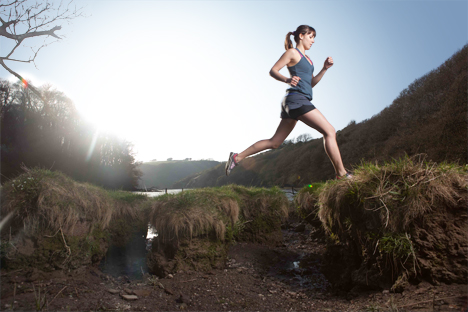
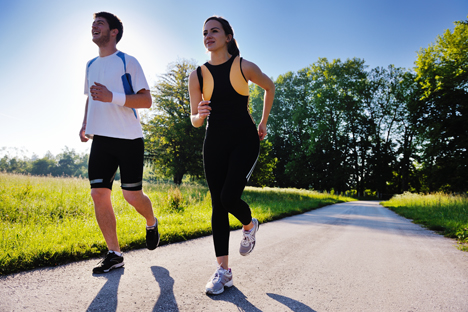
Most barefoot runners use minimal shoes, which are flat and provide only a small amount of cushioning
Practitioners say barefoot can feel fun and euphoric / photo: shutterstock.com/dotshock
https://www.leisureopportunities.co.uk/images/HCM2013_7running.gif
Barefoot running is supposed to be the natural way, so can it work from a prehab point of view or does it present a new set of problems?
VIVOBAREFOOT, barefoot running,VIVOBAREFOOT
HCM magazine
If the health service is to survive, we must recognise that it is a disease service – and that wellbeing rests with us, says the activity advocate and healthy ageing champion. He talks to Kate Cracknell
HCM magazine
Collaborations with the medical profession and greater aspirations around wellbeing are creating a need for more experts in our sector. It’s time to reboot our thinking around the workforce
HCM magazine
HCM People

Stephen Price

Founder, SP&Co Group
Working in public health over the last few years has lit up parts of my brain again
HCM magazine
As the entrepreneur who started Wexer, Fresh Fitness, Fitness DK and Repeat, as well as being a former elite athlete, Rasmus Ingerslev’s life looked perfect from the outside, but onthe inside it was a different story. He talks to Kath Hudson about healing old wounds
HCM magazine
Raphael Cuomo explores the powerful link between addiction, health and behaviour change
HCM promotional features
Sponsored
Starpool supports Olympic champion Marcell Jacobs, says Riccardo Turri
HCM promotional features
Sponsored
SnowDome Fitness has added 50 per cent more space with cutting-edge Technogym solutions
HCM promotional features
Sponsored
David Lloyd is stepping up its commitment to women’s health as it continues to explore what fit-for-purpose looks like for the female population
HCM promotional features
Sponsored
Greg Bradley looks at the shift towards strength training in gyms and advises on how operators can create the ultimate training environment
HCM promotional features
Sponsored
Third Space partnered with IndigoFitness to deliver a bespoke training space for its new club at The Whiteley
HCM promotional features
Sponsored
Find out how your gym can tap into the corporate wellness boom
HCM promotional features
Sponsored
EGYM has opened a new HQ in Paternoster Square, London and revealed a range of new launches
HCM promotional features
Promotion
BLK BOX has been reimagining elite performance spaces for more than a decade. Founder and former athlete, Greg Bradley, tells us what it takes
HCM promotional features
Sponsored
The industry is embracing consumer-facing tech. Now it’s time to streamline back-of-house systems with Orbit4, says Daniel Jones
HCM promotional features
Latest News
Australia’s fast-growing fitness network, Viva Leisure, is adding a low-cost gym brand to its already ...
Latest News
Speedflex has launched a strength training programme for 10 to 16-year-olds, to make it safer, ...
Latest News
Tewinbury Farm Hotel in Hertfordshire, UK is expanding its premium leisure proposition with the launch ...
Latest News

Work is underway in Madrid on one of Europe’s most significant multi-functional complexes, ...

Latest News
PureGym is encouraging people to step away from their screens and go for a walk, ...
Latest News
Small improvements to sleep, diet quality, and physical activity, made in combination lead to a ...
Latest News
Therme Manchester’s 28-acre development, which will include interconnected glass pavilions that measure 65,000sq m, will ...
Latest News
The Yard Gym (TYG) is to become Nike Training’s official global training partner in a ...
Opinion
promotion
Strength training has moved from the margins to the mainstream.
Opinion: Building smarter strength spaces for today’s operators
Featured supplier news
Featured supplier news: Elevate 2026 to mark 10-year anniversary with biggest ever waterfront drinks reception
Elevate is set to celebrate its 10th anniversary in style this June, with organisers confirming the event’s largest-ever drinks reception as registrations continue to run more than 10% ahead of last year.
Featured supplier news
Featured supplier news: Supporting long-term health: why whole body vibration belongs in clinical settings
As healthcare continues to shift towards prevention, there’s a growing focus on helping people stay active, independent and feeling good for longer.
Company profiles
Company profile: Perfect Gym Solutions S.A.
Perfect Gym, part of the Sport Alliance group, is a global software provider specialising in ...
Company profiles
Company profile: Everyone Active
Everyone Active's aim is to get communities active, engaged and entertained through our wide-ranging activities ...
Supplier Showcases
Supplier Showcase - Future-proofing
Catalogue Gallery
Click on a catalogue to view it online
Featured press releases
ukactive press release: Are they Fit for Office? UK Active and Technogym throw down the gauntlet to MPs
Hundreds of staff, MPs and Peers from across Westminster have signed up for the Fit for Office parliamentary physical activity challenge, which takes place throughout June and is hosted by ukactive and Technogym.
Featured press releases
Innerva press release: Lex Leisure’s power-assisted exercise suite smashes targets in record time
Crook Log Leisure Centre has more than doubled the membership target for its new power- assisted exercise suite in less than six months.
Directory
Hot tubs
MSpa International Ltd: Hot tubs
Spa and beauty equipment
Living Earth Crafts: Spa and beauty equipment
Lockers
Crown Sports Lockers: Lockers
Fitness tracking platform
SpiviTech: Fitness tracking platform
Industrial washing machines
Miele Company Limited: Industrial washing machines
Water experiences and hydrotherapy solutions
Aquaform s.r.l.: Water experiences and hydrotherapy solutions
Property & Tenders
Stratford, East London.
Lee Valley Regional Park Authority
Property & Tenders
Y Felinheli, LL56 4QN
Newmark
Property & Tenders
Diary dates
13-13 Jun 2026
Worldwide, Various,
Diary dates
21-24 Sep 2026
The Langham Huntington Pasadena , Pasadena, United States
Diary dates
06-08 Oct 2026
Messe Stuttgart, Stuttgart, Germany
Diary dates
22-22 Oct 2026
QEII Conference Centre, London,
Diary dates
26-29 Oct 2027
Koelnmesse Exhibition Centre, Cologne, Germany
Diary dates

features

Barefoot running: Back to nature

Barefoot running is meant to be the natural way, so could it keep our bodies in better alignment and thereby prevent injury? Or does it create a whole other set of issues? Kath Hudson reports

By Kath Hudson | Published in Health Club Management 2013 issue 7

The jury is out on barefoot running. Those who have converted report a feeling of freedom, euphoria and improved performance. But while barefoot running has its supporters, there are many others who take issue with it. Meanwhile lots of experts are sitting on the fence, mainly because there isn’t enough data available at the moment to form a definitive view.

Although some people actually run barefoot, most barefoot runners use minimal shoes, which are flat and provide only a small amount of cushioning and protection. Barefoot currently only accounts for a reported 10–15 per cent of the running shoe market, but it’s getting trendy.

Avoiding injury
Advocates say that barefoot running encourages the correct technique in runners, minimising actions such as heel striking, which causes a shock to run up through the body and which can lead to injury. When running barefoot, people shorten their stride length and avoid hitting the ground with the heel first, as it hurts. However, many trainers are built up around the heel, which can exacerbate the heel strike action.

“An estimated 79 per cent of people give up running because of an injury, which is due to 75 per cent of shod runners heel striking,” says Lee Saxby of barefoot running specialist VIVOBAREFOOT. “Heel striking generates a significant shockwave up through the body via the skeletal system and will eventually lead to injury. Barefoot running is more focused on the technique than the equipment.”

Physiotherapist and running technique coach Louise Nicholettos agrees: “For regular runners, getting an injury at some point is inevitable. Lots of people become interested in barefoot running because they have running injuries.”

So does this mean that switching to barefoot running will reduce the number of injuries? Barefoot running coach Rollo Mahon, from the Barefoot Performance Academy, believes so. He has managed to avoid knee surgery by realigning himself using barefoot running. “The knowledge of barefoot has given me the tools to prevent and deal with injury,” he says. “I used to chase injuries around the body – I’d have an injury somewhere, fix it, but then the problem would move somewhere else – but by understanding the biomechanics of barefoot running, I can avoid them. I teach people to run more efficiently.”

He continues: “The blueprint of our architectural design is barefoot. The further we get away from that, the more likelihood there is of injury. If we have good movement skills from the beginning, we can avoid injury.”

However, there are some major caveats to this argument. Unless runners are taught to run barefoot, they are likely to end up with a different set of injuries, partly because it’s a different technique and partly because we are so used to wearing shoes. According to osteopath Nick Potter, in the West we are anthropologically ill-equipped for barefoot running. He treats a lot of running injuries; the ones he most commonly sees for barefoot are issues with the achilles tendon, caused by taking the load in the mid-foot.

Improving technique
Converting to barefoot running requires a gradual build-up, as well as coaching in the proper technique. “It takes time for the muscles and neurological system to adapt to barefoot running,” says Nicholettos. “The new movement needs strength and the nervous system needs to become efficient at controlling the movement. There are certain adaptations that need to be made: in barefoot running the foot is flat, it lands closer to the centre of mass and the posture remains upright. The calf muscles are also used differently.”

According to Saxby, in order to convert, you should live barefoot 80 per cent of the time.

He recommends learning to walk again: heel, ball, toe, then engaging the big toe, muscles, tendons, nerves and bones that haven’t been used correctly for years. “There are three barefoot milestones that must be learned and perfected before progressing to the next stage: walking and squats, jumping, then running,” he says. “Gain your strength slowly and refine the motor skills, perfecting walking as well as jumping and squatting. Film yourself running and build up very slowly.”

However, others argue that no-one should convert to barefoot, but that people should just have technique coaching to improve their running style in trainers. “I don’t believe in barefoot running, full stop,” says Richard Coates, running coach at Full Potential. “The reason certain individuals can do it is because they’ve done it from a young age. Maybe if you’re 10 stone and biomechanically perfect you can get away with it, but if you’re 14 stone with weak knees, it’s not a good idea.

“I’d rather teach people to improve their running technique and make them more effective while wearing trainers. If I took my clients the barefoot route, we’d be setting them up for injuries, as they wouldn’t have the cushioning of trainers. You’re putting more strain on joints and risking stress fractures.”

Research findings
Experts therefore don’t yet agree on whether barefoot is the way forward, not helped by the fact that the data available is conflicting and typically involves small samples.

According to The University of Kansas Hospital in the US, cushioned heels promote a heel strike, which distributes more energy to knees and hips than flat-soled shoes and so is more likely to cause injury. But researchers at Brigham Young University in the US found that making the transition too quickly can increase injury risk to the bones of the foot, with a higher chance of stress fractures.

Sports scientists at National Taiwan Normal University claim the way you run is more important than whether or not you wear running shoes. Their study, based on just 12 people, found that runners can gain more shock absorption by changing their striking pattern to a forefoot strike, whether in shoes or barefoot. However, the study also found that runners who are used to wearing shoes may be more susceptible to injury when they run barefoot and continue to heel strike.

What should operators do?
So is there a way for gyms to tap into this trend and offer a service to members, keeping them running without injury and improving their performance? Deborah McConnell, global master trainer for Life Fitness Academy, recommends that any clubs wanting to run this type of programme use a trainer who is qualified in biomechanics of running and able to provide gait analysis: “It would also be best to have a waiver form that states any potential risks, to educate the member and to protect the trainer and the facility.”

For facilities interested in taking this further, advice is available. VIVOBAREFOOT offers a certification through Premier Training, while Mahon is preparing to run workshops – designed with instructors and PTs in mind – on movement skills in gyms.

Whether or not you are an advocate of barefoot, technique training is a sensible option to offer members: it can potentially improve the performance of seasoned runners, and might just turn would-be runners on to the sport. As Saxby says: “Most people are never taught how to run correctly. However, running is a skill that must be learned in order to run efficiently and injury-free.

“Efficient, injury-free movement is built on a foundation of correct posture and rhythm and adequate sensory feedback of environment. Whether you’re running barefoot or minimalist, remember: posture, rhythm, relax.”

But few are sufficiently confident to give barefoot a resounding endorsement. Nicholettos and Potter both treat running injuries and are cautious advocates: “I’m somewhere between a fanatic and a sceptic,” says Nichollettos. “For technique coaching purposes, barefoot can be a useful tool, but I coach a lot of runners in traditional footwear too. Technique and good training habits are the most important thing for me, not what people do or don’t wear on their feet.”

Potter believes barefoot has an important influence on how we should run, but concedes converting is a challenge and adequate data isn’t currently available. “My advice is choose a mid-range, minimally corrective shoe with some shock attenuation. If you want to take it seriously, get a running coach."

GOING BAREFOOT – FIRST PERSON REPORT

Kath Hudson reports on her experience of barefoot running:


“You have a pronounced heel strike, which creates a lot of movement for the body to control. Your foot has a long roll on the ground, which wastes energy. And it lands way in front of your centre of mass, which means there are lots of braking forces going on. You don’t extend from the hip but only use your quads, and none of the big muscles at the back. You don’t use the trail leg to get any speed and have no forward momentum. You have a slow, heavy cadence.”

This was how Louise Nicholettos summed up my running. In short, I’m slow and heavy-footed. But at least I had no comfort zone to retreat to!

First, Louise got me to take off my clumpy trainers. Immediately I felt lighter and strangely liberated. This shortened my stride, which helped address a lot of my faults. She made me jump up and down on the spot in rhythm with the ideal cadence – roughly twice as fast as I was previously “running”. Back on the treadmill, I had to focus on staying relaxed, running in time with the beat, staying vertical and letting my heels “kiss the ground” to give my calves a momentary break, and rise them higher with a slight kick action.

Before we started, she told me that barefoot running feels fun and euphoric. I didn’t believe her, but my experience did in fact give me a glimpse of this. After half an hour, she said I picked up the techniques quickly and she could make a runner out of me. This is very heartening: running is a skill that can be learned.
Sign up here to get HCM's weekly ezine and every issue of HCM magazine free on digital.
Most barefoot runners use minimal shoes, which are flat and provide only a small amount of cushioning
Practitioners say barefoot can feel fun and euphoric / photo: shutterstock.com/dotshock
https://www.leisureopportunities.co.uk/images/HCM2013_7running.gif
Barefoot running is supposed to be the natural way, so can it work from a prehab point of view or does it present a new set of problems?
VIVOBAREFOOT, barefoot running,VIVOBAREFOOT
Latest News
Australia’s fast-growing fitness network, Viva Leisure, is adding a low-cost gym brand to its already ...
Latest News
Speedflex has launched a strength training programme for 10 to 16-year-olds, to make it safer, ...
Latest News
Tewinbury Farm Hotel in Hertfordshire, UK is expanding its premium leisure proposition with the launch ...
Latest News

Work is underway in Madrid on one of Europe’s most significant multi-functional complexes, ...

Latest News
PureGym is encouraging people to step away from their screens and go for a walk, ...
Latest News
Small improvements to sleep, diet quality, and physical activity, made in combination lead to a ...
Latest News
Therme Manchester’s 28-acre development, which will include interconnected glass pavilions that measure 65,000sq m, will ...
Latest News
The Yard Gym (TYG) is to become Nike Training’s official global training partner in a ...
Latest News
Everlast Gyms' York site has reopened following a refurbishment to bring it up to the ...
Latest News
Luxury hospitality and wellness pioneer Jeremy McCarthy has launched Leisure Alchemy, a digital platform that ...
Latest News
A contrast therapy and breathwork facility called Reset has opened in Islington, London, in the ...
Opinion
promotion
Strength training has moved from the margins to the mainstream.
Opinion: Building smarter strength spaces for today’s operators
Featured supplier news
Featured supplier news: Elevate 2026 to mark 10-year anniversary with biggest ever waterfront drinks reception
Elevate is set to celebrate its 10th anniversary in style this June, with organisers confirming the event’s largest-ever drinks reception as registrations continue to run more than 10% ahead of last year.
Featured supplier news
Featured supplier news: Supporting long-term health: why whole body vibration belongs in clinical settings
As healthcare continues to shift towards prevention, there’s a growing focus on helping people stay active, independent and feeling good for longer.
Company profiles
Company profile: Perfect Gym Solutions S.A.
Perfect Gym, part of the Sport Alliance group, is a global software provider specialising in ...
Company profiles
Company profile: Everyone Active
Everyone Active's aim is to get communities active, engaged and entertained through our wide-ranging activities ...
Supplier Showcases
Supplier Showcase - Future-proofing
Catalogue Gallery
Click on a catalogue to view it online
Featured press releases
ukactive press release: Are they Fit for Office? UK Active and Technogym throw down the gauntlet to MPs
Hundreds of staff, MPs and Peers from across Westminster have signed up for the Fit for Office parliamentary physical activity challenge, which takes place throughout June and is hosted by ukactive and Technogym.
Featured press releases
Innerva press release: Lex Leisure’s power-assisted exercise suite smashes targets in record time
Crook Log Leisure Centre has more than doubled the membership target for its new power- assisted exercise suite in less than six months.
Directory
Hot tubs
MSpa International Ltd: Hot tubs
Spa and beauty equipment
Living Earth Crafts: Spa and beauty equipment
Lockers
Crown Sports Lockers: Lockers
Fitness tracking platform
SpiviTech: Fitness tracking platform
Industrial washing machines
Miele Company Limited: Industrial washing machines
Water experiences and hydrotherapy solutions
Aquaform s.r.l.: Water experiences and hydrotherapy solutions
Property & Tenders
Stratford, East London.
Lee Valley Regional Park Authority
Property & Tenders
Y Felinheli, LL56 4QN
Newmark
Property & Tenders
Diary dates
13-13 Jun 2026
Worldwide, Various,
Diary dates
21-24 Sep 2026
The Langham Huntington Pasadena , Pasadena, United States
Diary dates
06-08 Oct 2026
Messe Stuttgart, Stuttgart, Germany
Diary dates
22-22 Oct 2026
QEII Conference Centre, London,
Diary dates
26-29 Oct 2027
Koelnmesse Exhibition Centre, Cologne, Germany
Diary dates
Search news, features & products:
Find a supplier:
EGYM
EGYM
Partner sites