

















GET HCM
magazine
Sign up for the FREE digital edition of HCM magazine and also get the HCM ezine and breaking news email alerts.
Not right now, thanksclose this window I've already subscribed!
Follow Health Club Management on Twitter Like Health Club Management on Facebook Join the discussion with Health Club Management on LinkedIn
FITNESS, HEALTH, WELLNESS

features

Activity tracking: Tracking vs retention

Dr Melvyn Hillsdon investigates the impact using activity trackers has on member retention
By Dr Melvyn Hillsdon , University of Exeter | Published in Health Club Management 2016 issue 9
Activity trackers
Activity trackers
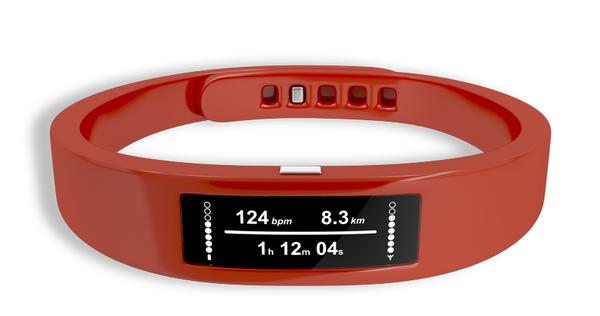
Our research shows activity tracking has no impact on retention in some groups, but increases cancellation by up to 23 per cent in others

Devices, apps or systems for self-monitoring – tracking physical activity – are becoming very common: among gym members, just over a quarter (27 per cent) say they track their physical activity, with the most common method being a phone-based app.

For the rest of this article, I will use the terms ‘trackers’ and ‘non-trackers’ to differentiate between members who use an app or other technology to track their activity versus those who don’t.

Tracking is more common in members under the age of 25 and gradually reduces with age: members aged 45 years and older are 80 per cent less likely to be trackers than members aged under 25 years.

Males are 20 per cent more likely to be trackers than females, and tracking is most common when members are in the first six to 12 months of their health club membership. Long-standing members and members who are just starting out are least likely to be trackers.

What makes a tracker?
So what are the characteristics of trackers? Overall the differences between trackers and non-trackers are fairly small, but there are a few differences in terms of preferred activities and motivations for exercise.

Trackers are more likely than non-trackers to say their main reason for visiting their club is to take part in:

• A gym workout (82 per cent of trackers vs 72 per cent of non-trackers)

• Group cycling class (16 per cent of trackers vs 11 per cent of non-trackers)

• Personal training session (8 per cent of trackers vs 5 per cent of non-trackers)

However, they’re less likely to visit their club primarily for swimming (24 per cent versus 30 per cent).

The proportion of members who say they usually visit their club for an exercise class (other than cycling), or for non-exercise reasons, doesn’t differ significantly between trackers and non-trackers. The frequency of club visits is also similar across both groups.

The odds of being a tracker rather than a non-tracker are higher if members’ motives for exercise are:

• Wanting to be physically fit (15 per cent higher odds of being a tracker)

• To improve their body shape (17 per cent higher)

• To enjoy the gym (13 per cent higher)

• To look better due to bigger muscles (7 per cent higher)

• To be attractive (6 per cent higher)

Meanwhile, the odds of being a tracker are lower if members’ motives for exercise are:

• To maintain health and wellbeing (16 per cent lower odds of being a tracker)

• To have more energy (9 per cent lower odds of being a tracker)

• To lose weight (7 per cent lower odds)

Other types of motivations don’t differ between groups.

However, even though they’re less likely to exercise specifically to lose weight, more trackers than non-trackers report losing weight (63 per cent vs 51 per cent). Similarly, more trackers will report feeling fitter (91 per cent vs 88 per cent), improving the way they look (78 per cent vs 69 per cent), having more energy (84 per cent vs 79 per cent) and feeling happier (88 per cent vs 84 per cent) and healthier (90 per cent vs 87 per cent).

One key thing to note, however, is that it isn’t currently possible to determine whether members who make good progress choose to track their activity, or whether tracking leads to more progress. This requires additional research.

Impact on retention?
Trackers are 22 per cent more likely to cancel each month compared to non-trackers – equivalent to four extra cancellations a month for every 1,000 members that start the month.
However, taking account of other factors – such as differences in age, gender, length of membership and visit frequency – reduces the increased risk among trackers from 22 per cent to 10 per cent. That is, our research shows that activity tracking per se leads to a 10 per cent increased risk of leaving.

But this varies across different demographic groups. Among younger, male members there was no association between tracking and risk of cancelling, whereas among older male members the risk of cancelling each month was 23 per cent higher in trackers, even when other factors were taken into account.

Among females, there was no relationship between app use and increased risk of cancellation.

So why these differences between genders and ages? It’s possible that middle-aged males who track their exercise have more unrealistic expectations about the changes in their physique and the way they look compared to other members, and when these expectations are not met they may cancel their membership (see briefing, p54). Whatever the reason, with many clubs viewing tracking and the use of wearables as a key retention solution – and indeed as an alternative to staff coaching and feedback – this first study to examine this question suggests a rethink is needed.

More research is now required to build on the results of this study. We need to better understand what it is users of tracking technology are hoping their wearables are doing for them, and how fitness staff can interact with members and their wearables to help people better achieve their goals.

Beware middle-aged men

Trackers are commonly younger males who typically attend their clubs for gym workouts and group cycling classes, who are reasonably experienced gym users, and who are motivated primarily by aesthetic reasons.

The good news is that retention among this group – by far the largest group of members who use activity trackers – is not affected by their use of these trackers. Similarly, according to our research, use of trackers among female members does not have an impact – either negative or positive – on retention.

However, there are user groups where gyms should be more attentive to tracking habits – in particular among middle-aged men, and indeed any males aged over 25. While the additional risk of cancelling remains fairly small among this group, there is nevertheless an increased risk if they track their activity.

It’s possible that, among this group, members who are attracted to self-monitoring their behaviour via apps and wearables are already struggling to maintain an exercise habit that would lead to them achieving their goals. Could it be that the data from the wearables is reinforcing the fact that achieving a regular exercise habit is hard to do, and that – although they’ve made some progress – what’s required to actually achieve their expected outcomes is more than they’d hoped they would have to do? Consequently, they feel disillusioned and contemplate giving up on their membership.

About the author

Dr Melvyn Hillsdon
Dr Melvyn Hillsdon

Dr Melvyn Hillsdon is associate professor of exercise and health at the University of Exeter, where he researches physical activity and population health. Since his landmark retention report in 2001 (Winning the Retention Battle), he has published numerous reports into the determinants of membership retention.

Sign up here to get HCM's weekly ezine and every issue of HCM magazine free on digital.
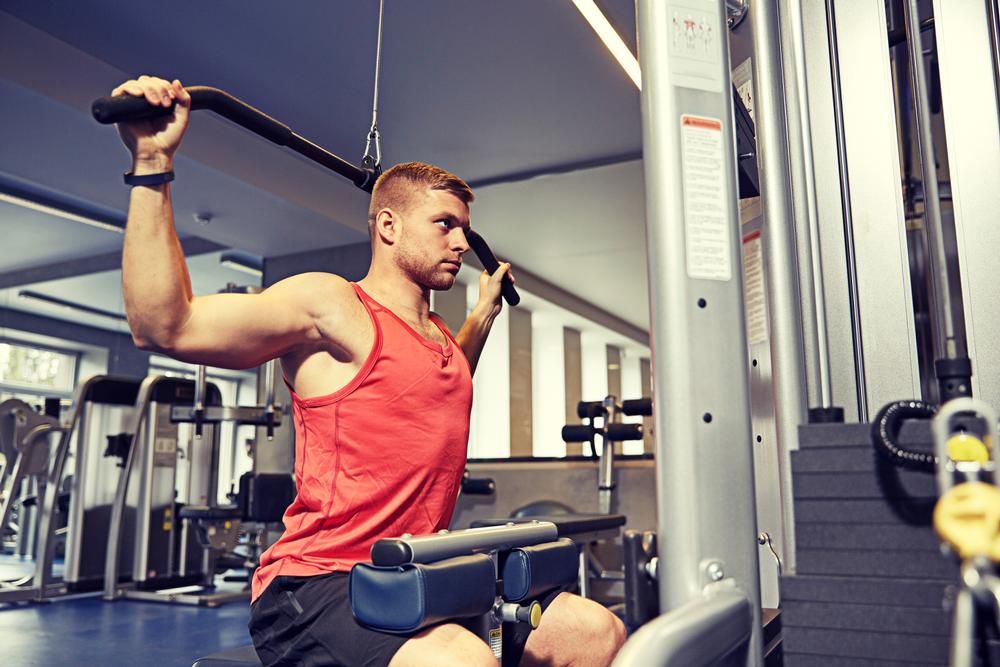
Activity tracking has no impact on retention in some groups, but increases cancellation
by up to 23 per cent in others / shutterstock
Activity tracking has no impact on retention in some groups, but increases cancellation by up to 23 per cent in others / shutterstock
Activity tracking is less common among members aged over 45
https://www.leisureopportunities.co.uk/images/414337_493976.jpg
Does using an activity tracker make you more likely to quit your gym membership?
Dr Melvyn Hillsdon,Melvyn Hillsdon, activity tracking, trackers, retention
HCM magazine
As the entrepreneur who started Wexer, Fresh Fitness, Fitness DK and Repeat, as well as being a former elite athlete, Rasmus Ingerslev’s life looked perfect from the outside, but onthe inside it was a different story. He talks to Kath Hudson about healing old wounds
HCM magazine
I experienced a blissful feeling of joy I hadn’t felt since I was a kid
HCM magazine
For every member with a tripod and a big following, there are others irritated at the way equipment is being hogged or wary they’ll be in the background on someone’s Insta feed. Do influencers offer valuable, free marketing or are they just a nuisance? Kath Hudson finds out how operators are responding
HCM magazine
Raphael Cuomo explores the powerful link between addiction, health and behaviour change
HCM magazine
If the health service is to survive, we must recognise that it is a disease service – and that wellbeing rests with us, says the activity advocate and healthy ageing champion. He talks to Kate Cracknell
HCM promotional features
Sponsored
David Lloyd is stepping up its commitment to women’s health as it continues to explore what fit-for-purpose looks like for the female population
HCM promotional features
Sponsored
SnowDome Fitness has added 50 per cent more space with cutting-edge Technogym solutions
HCM promotional features
Sponsored
Find out how your gym can tap into the corporate wellness boom
HCM promotional features
Sponsored
Greg Bradley looks at the shift towards strength training in gyms and advises on how operators can create the ultimate training environment
HCM promotional features
Sponsored
Third Space partnered with IndigoFitness to deliver a bespoke training space for its new club at The Whiteley
HCM promotional features
Sponsored
Starpool supports Olympic champion Marcell Jacobs, says Riccardo Turri
HCM promotional features
Sponsored
EGYM has opened a new HQ in Paternoster Square, London and revealed a range of new launches
HCM promotional features
Sponsored
New launch, Salus House, elevates boutique wellness with high service levels and a partnership with Technogym
HCM promotional features
Sponsored
The industry is embracing consumer-facing tech. Now it’s time to streamline back-of-house systems with Orbit4, says Daniel Jones
HCM promotional features
Latest News
Sea Lanes Canary Wharf has officially opened. The 50-metre, six-lane pool, which uses the natural ...
Latest News
London-based high-performance fitness club, ONE LDN, is raising funds for a multi-site expansion across London, ...
Latest News
A new brain clinic has opened in London, which uses non-invasive brain stimulation to treat ...
Latest News
Good Boost’s digital exercise programmes are helping adults with MSK at a lower cost than ...
Latest News
With Prime Minister, Keir Starmer, announcing his resignation this morning and Andy Burnham as a ...
Latest News
Koru Health Club launched recently within Luxembourg’s multi-experience destination, GRID X, which combines culture, retail ...
Latest News
Celebrating its 10th anniversary, Elevate has had its busiest show to date, with almost 200 ...
Latest News
A new report from Your Personal Training (YPT) suggests UK gym operators could be missing ...
Opinion
promotion
Strength training has moved from the margins to the mainstream.
Opinion: Building smarter strength spaces for today’s operators
Featured supplier news
Featured supplier news: Reaching the people most gyms miss: Bedford Gym & Swim Campaign delivers 410 new members
One of the biggest mistakes the fitness industry still makes is advertising almost exclusively to people who already look and live like gym members.
Featured supplier news
Featured supplier news: Cornerstone Connect helps Active Blackpool tackle health inequalities
Active Blackpool is deploying Cornerstone Connect, a new digital interface allowing disparate information from multiple systems to be aggregated into one dataset, to support its focus on reducing health inequalities and improving healthy life expectancy.
Company profiles
Company profile: Safe Space Lockers
We provide a full turn-key solution for clients from design and consultation, through to bespoke ...
Company profiles
Company profile: Future Fit
Since 1993, Future Fit have been consistently raising the bar when it comes to training ...
Supplier Showcases
Supplier Showcase - Future-proofing
Catalogue Gallery
Click on a catalogue to view it online
Featured press releases
Swimming Teachers' Association (STA) press release: The Ripple Effect delivers first success as learners qualify and secure employment
STA's The Ripple Effect initiative has reached an important milestone after learners completed the charity's first fully funded swimming teacher training programme, resulting in seven newly qualified swimming teachers.
Featured press releases
Pulse Fitness press release: Pulse Fitness’ Trakk ecosystem supports Walsall Leisure in driving community engagement and delivering measurable ROI
Pulse Fitness’ digital solution, Trakk, is helping Walsall Council transform community health engagement into measurable outcomes by combining body composition tracking with targeted physical activity interventions.
Directory
Water experiences and hydrotherapy solutions
Aquaform s.r.l.: Water experiences and hydrotherapy solutions
Hot tubs
MSpa International Ltd: Hot tubs
Spa and beauty equipment
Oakworks Inc: Spa and beauty equipment
Lockers
Crown Sports Lockers: Lockers
Fitness tracking platform
SpiviTech: Fitness tracking platform
Industrial washing machines
Miele Company Limited: Industrial washing machines
Property & Tenders
Stratford, East London.
Lee Valley Regional Park Authority
Property & Tenders
Y Felinheli, LL56 4QN
Newmark
Property & Tenders
Diary dates
22-23 Jun 2026
WX Wakefield , Wakefield, United Kingdom
Diary dates
21-24 Sep 2026
The Langham Huntington Pasadena , Pasadena, United States
Diary dates
06-08 Oct 2026
Messe Stuttgart, Stuttgart, Germany
Diary dates
22-22 Oct 2026
QEII Conference Centre, London,
Diary dates
26-29 Oct 2027
Koelnmesse Exhibition Centre, Cologne, Germany
Diary dates

features

Activity tracking: Tracking vs retention

Dr Melvyn Hillsdon investigates the impact using activity trackers has on member retention

By Dr Melvyn Hillsdon , University of Exeter | Published in Health Club Management 2016 issue 9
Activity trackers
Activity trackers
Our research shows activity tracking has no impact on retention in some groups, but increases cancellation by up to 23 per cent in others

Devices, apps or systems for self-monitoring – tracking physical activity – are becoming very common: among gym members, just over a quarter (27 per cent) say they track their physical activity, with the most common method being a phone-based app.

For the rest of this article, I will use the terms ‘trackers’ and ‘non-trackers’ to differentiate between members who use an app or other technology to track their activity versus those who don’t.

Tracking is more common in members under the age of 25 and gradually reduces with age: members aged 45 years and older are 80 per cent less likely to be trackers than members aged under 25 years.

Males are 20 per cent more likely to be trackers than females, and tracking is most common when members are in the first six to 12 months of their health club membership. Long-standing members and members who are just starting out are least likely to be trackers.

What makes a tracker?
So what are the characteristics of trackers? Overall the differences between trackers and non-trackers are fairly small, but there are a few differences in terms of preferred activities and motivations for exercise.

Trackers are more likely than non-trackers to say their main reason for visiting their club is to take part in:

• A gym workout (82 per cent of trackers vs 72 per cent of non-trackers)

• Group cycling class (16 per cent of trackers vs 11 per cent of non-trackers)

• Personal training session (8 per cent of trackers vs 5 per cent of non-trackers)

However, they’re less likely to visit their club primarily for swimming (24 per cent versus 30 per cent).

The proportion of members who say they usually visit their club for an exercise class (other than cycling), or for non-exercise reasons, doesn’t differ significantly between trackers and non-trackers. The frequency of club visits is also similar across both groups.

The odds of being a tracker rather than a non-tracker are higher if members’ motives for exercise are:

• Wanting to be physically fit (15 per cent higher odds of being a tracker)

• To improve their body shape (17 per cent higher)

• To enjoy the gym (13 per cent higher)

• To look better due to bigger muscles (7 per cent higher)

• To be attractive (6 per cent higher)

Meanwhile, the odds of being a tracker are lower if members’ motives for exercise are:

• To maintain health and wellbeing (16 per cent lower odds of being a tracker)

• To have more energy (9 per cent lower odds of being a tracker)

• To lose weight (7 per cent lower odds)

Other types of motivations don’t differ between groups.

However, even though they’re less likely to exercise specifically to lose weight, more trackers than non-trackers report losing weight (63 per cent vs 51 per cent). Similarly, more trackers will report feeling fitter (91 per cent vs 88 per cent), improving the way they look (78 per cent vs 69 per cent), having more energy (84 per cent vs 79 per cent) and feeling happier (88 per cent vs 84 per cent) and healthier (90 per cent vs 87 per cent).

One key thing to note, however, is that it isn’t currently possible to determine whether members who make good progress choose to track their activity, or whether tracking leads to more progress. This requires additional research.

Impact on retention?
Trackers are 22 per cent more likely to cancel each month compared to non-trackers – equivalent to four extra cancellations a month for every 1,000 members that start the month.
However, taking account of other factors – such as differences in age, gender, length of membership and visit frequency – reduces the increased risk among trackers from 22 per cent to 10 per cent. That is, our research shows that activity tracking per se leads to a 10 per cent increased risk of leaving.

But this varies across different demographic groups. Among younger, male members there was no association between tracking and risk of cancelling, whereas among older male members the risk of cancelling each month was 23 per cent higher in trackers, even when other factors were taken into account.

Among females, there was no relationship between app use and increased risk of cancellation.

So why these differences between genders and ages? It’s possible that middle-aged males who track their exercise have more unrealistic expectations about the changes in their physique and the way they look compared to other members, and when these expectations are not met they may cancel their membership (see briefing, p54). Whatever the reason, with many clubs viewing tracking and the use of wearables as a key retention solution – and indeed as an alternative to staff coaching and feedback – this first study to examine this question suggests a rethink is needed.

More research is now required to build on the results of this study. We need to better understand what it is users of tracking technology are hoping their wearables are doing for them, and how fitness staff can interact with members and their wearables to help people better achieve their goals.

Beware middle-aged men

Trackers are commonly younger males who typically attend their clubs for gym workouts and group cycling classes, who are reasonably experienced gym users, and who are motivated primarily by aesthetic reasons.

The good news is that retention among this group – by far the largest group of members who use activity trackers – is not affected by their use of these trackers. Similarly, according to our research, use of trackers among female members does not have an impact – either negative or positive – on retention.

However, there are user groups where gyms should be more attentive to tracking habits – in particular among middle-aged men, and indeed any males aged over 25. While the additional risk of cancelling remains fairly small among this group, there is nevertheless an increased risk if they track their activity.

It’s possible that, among this group, members who are attracted to self-monitoring their behaviour via apps and wearables are already struggling to maintain an exercise habit that would lead to them achieving their goals. Could it be that the data from the wearables is reinforcing the fact that achieving a regular exercise habit is hard to do, and that – although they’ve made some progress – what’s required to actually achieve their expected outcomes is more than they’d hoped they would have to do? Consequently, they feel disillusioned and contemplate giving up on their membership.

About the author

Dr Melvyn Hillsdon
Dr Melvyn Hillsdon

Dr Melvyn Hillsdon is associate professor of exercise and health at the University of Exeter, where he researches physical activity and population health. Since his landmark retention report in 2001 (Winning the Retention Battle), he has published numerous reports into the determinants of membership retention.

Sign up here to get HCM's weekly ezine and every issue of HCM magazine free on digital.
Activity tracking has no impact on retention in some groups, but increases cancellation
by up to 23 per cent in others / shutterstock
Activity tracking has no impact on retention in some groups, but increases cancellation by up to 23 per cent in others / shutterstock
Activity tracking is less common among members aged over 45
https://www.leisureopportunities.co.uk/images/414337_493976.jpg
Does using an activity tracker make you more likely to quit your gym membership?
Dr Melvyn Hillsdon,Melvyn Hillsdon, activity tracking, trackers, retention
Latest News
Sea Lanes Canary Wharf has officially opened. The 50-metre, six-lane pool, which uses the natural ...
Latest News
London-based high-performance fitness club, ONE LDN, is raising funds for a multi-site expansion across London, ...
Latest News
A new brain clinic has opened in London, which uses non-invasive brain stimulation to treat ...
Latest News
Good Boost’s digital exercise programmes are helping adults with MSK at a lower cost than ...
Latest News
With Prime Minister, Keir Starmer, announcing his resignation this morning and Andy Burnham as a ...
Latest News
Koru Health Club launched recently within Luxembourg’s multi-experience destination, GRID X, which combines culture, retail ...
Latest News
Celebrating its 10th anniversary, Elevate has had its busiest show to date, with almost 200 ...
Latest News
A new report from Your Personal Training (YPT) suggests UK gym operators could be missing ...
Latest News
Eighty-four per cent of consumers now say wellness is a top priority in their lives, ...
Latest News
Elevate Arena is underway at London's Excel and the hot topic of AI was the ...
Latest News
PureGym Group has announced that group chief financial officer, Alex Wood, is taking over the ...
Opinion
promotion
Strength training has moved from the margins to the mainstream.
Opinion: Building smarter strength spaces for today’s operators
Featured supplier news
Featured supplier news: Reaching the people most gyms miss: Bedford Gym & Swim Campaign delivers 410 new members
One of the biggest mistakes the fitness industry still makes is advertising almost exclusively to people who already look and live like gym members.
Featured supplier news
Featured supplier news: Cornerstone Connect helps Active Blackpool tackle health inequalities
Active Blackpool is deploying Cornerstone Connect, a new digital interface allowing disparate information from multiple systems to be aggregated into one dataset, to support its focus on reducing health inequalities and improving healthy life expectancy.
Company profiles
Company profile: Safe Space Lockers
We provide a full turn-key solution for clients from design and consultation, through to bespoke ...
Company profiles
Company profile: Future Fit
Since 1993, Future Fit have been consistently raising the bar when it comes to training ...
Supplier Showcases
Supplier Showcase - Future-proofing
Catalogue Gallery
Click on a catalogue to view it online
Featured press releases
Swimming Teachers' Association (STA) press release: The Ripple Effect delivers first success as learners qualify and secure employment
STA's The Ripple Effect initiative has reached an important milestone after learners completed the charity's first fully funded swimming teacher training programme, resulting in seven newly qualified swimming teachers.
Featured press releases
Pulse Fitness press release: Pulse Fitness’ Trakk ecosystem supports Walsall Leisure in driving community engagement and delivering measurable ROI
Pulse Fitness’ digital solution, Trakk, is helping Walsall Council transform community health engagement into measurable outcomes by combining body composition tracking with targeted physical activity interventions.
Directory
Water experiences and hydrotherapy solutions
Aquaform s.r.l.: Water experiences and hydrotherapy solutions
Hot tubs
MSpa International Ltd: Hot tubs
Spa and beauty equipment
Oakworks Inc: Spa and beauty equipment
Lockers
Crown Sports Lockers: Lockers
Fitness tracking platform
SpiviTech: Fitness tracking platform
Industrial washing machines
Miele Company Limited: Industrial washing machines
Property & Tenders
Stratford, East London.

Lee Valley Regional Park Authority
Property & Tenders
Y Felinheli, LL56 4QN
Newmark
Property & Tenders
Diary dates
22-23 Jun 2026
WX Wakefield , Wakefield, United Kingdom
Diary dates
21-24 Sep 2026
The Langham Huntington Pasadena , Pasadena, United States
Diary dates
06-08 Oct 2026
Messe Stuttgart, Stuttgart, Germany
Diary dates
22-22 Oct 2026
QEII Conference Centre, London,
Diary dates
26-29 Oct 2027
Koelnmesse Exhibition Centre, Cologne, Germany
Diary dates
Search news, features & products:
Find a supplier:
Partner sites