












CLAD, in an exclusive interview that explores his latest projects, his changing focus and the role of his team in BIG's success." /> CLAD, in an exclusive interview that explores his latest projects, his changing focus and the role of his team in BIG's success." />
Les Mills
Les Mills
Les Mills
Follow Health Club Management on Twitter Like Health Club Management on Facebook Join the discussion with Health Club Management on LinkedIn
FITNESS, HEALTH, WELLNESS

Latest news

BJARKE INGELS on life, Lego and the role of the collective in getting BIG to the top

I’m interested in those moments where there’s some kind of transformation happening in society. If you’re aware, you have an amazing opportunity to give form to the future when those changes occur
– Bjarke Ingels

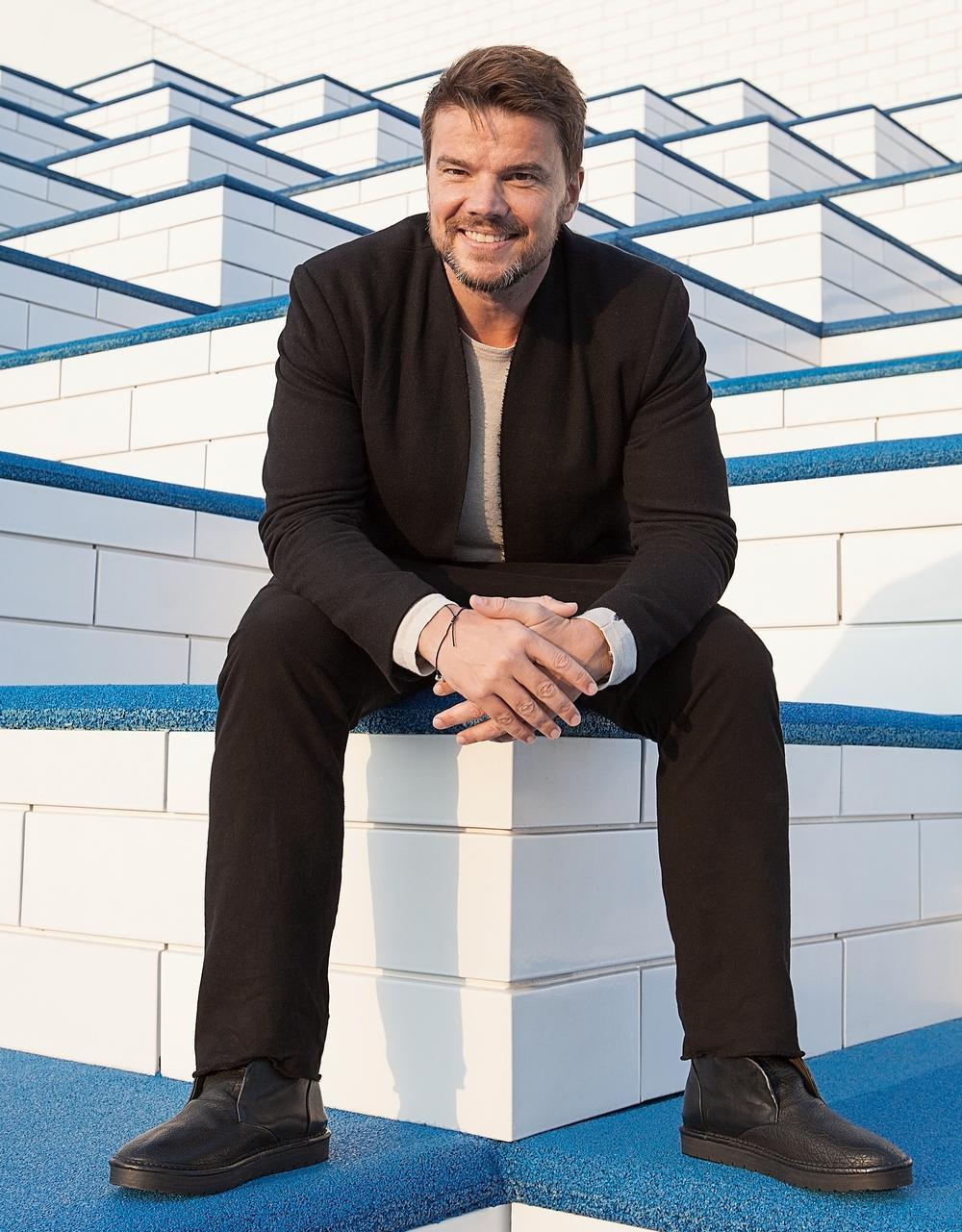
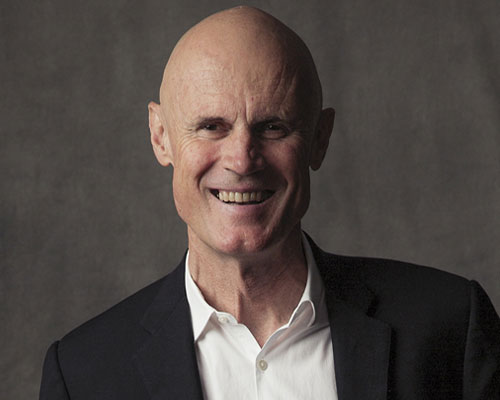
"Increasingly, we don't just want to make a good looking version of something that's already been done, we want to take the initiative in giving form to our future," Bjarke Ingels tells CLAD, in an exclusive interview that explores his latest projects, his changing focus and the role of his team in BIG's success.

The full feature, which can be read below, is part of a BIG Special written specially for the latest issue of our quarterly magazine CLADmag.

Available to read now online and on digital turning pages, the comprehensive profile also covers the practice’s 11 other partners, including CEO Sheela Maini Søgaard.

BIG founder Bjarke Ingels talks to Magali Robathan

We’re in a car with Bjarke Ingels. It’s almost midnight, and the Danish countryside can’t be seen in the pitch black outside. Heavy rain lashes against the windscreen.

We pull into a muddy field. It’s completely deserted, apart from one other car. A figure approaches our vehicle.

Ingels gets out and embraces the other man, who turns out to be Finn Nørkjær, one of 12 partners at BIG. Nørkjær phoned earlier that evening, excited about showing Ingels the newly completed Tirpitz Museum before its official opening the next day.

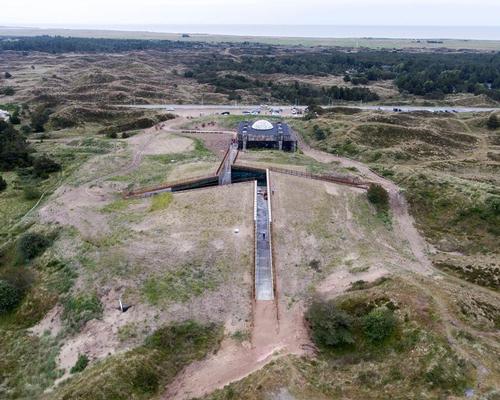
We get out of the car and run towards a large building in the pouring rain. Nørkjær takes a remote control from his pocket, and all of a sudden the museum lights up and everyone gasps. Ingels and Nørkjær run ahead, shouting excitedly, taking pictures with their phones. Someone has sent Ingels a drone photo of the museum from above. “Look at this!” he shouts, passing it around. The atmosphere is electric.

Tirpitz

Earlier that day, Ingels flew into Billund in a helicopter to check on the Lego House and have dinner with Kjeld Kirk Kristiansen, the third generation owner of the Lego Group. Tomorrow, he will help launch tthe BIG-designed Tirpitz Museum with the Crown Prince of Denmark.

It’s a packed, exciting life for one of the world’s most famous architects, but I get the feeling that this moment sums up what makes it worthwhile for him – running around with his friend and colleague, seeing one of their creations come to life.

This moment also illustrates a fact that the media often ignores. It’s not just about Ingels. Every project is the result of a team of people, or ‘BIGsters’, as he calls them. Nørkjær and Ingels were in charge of the Tirpitz Museum, with another partner, Brian Yang, leading the project, and like all of BIG’s work, it’s the result of a design process that sees all members of the team, even interns, expected to contribute.

“Of course I founded the company and I’m the creative leader, but I’ve never kept it a secret that I work with great, gifted people,” says Ingels, once we’re back in the car. “Of the partners at BIG, about half were interns in the early days of the company, so we’ve been together for a ridiculously long time. We’ve developed a culture through friendship and collaboration that’s very strong.”

While Ingels rejects the media’s portrayal of him as the lone genius, he’s also not afraid to emphasise his own role in BIG’s success.

“The truth is that collaboration is about collective effort and it’s also about individual contribution – so both are actually true,” he says. “There wouldn’t be any BIG without me and there wouldn’t be any BIG without all the BIGsters.

“I don’t see that there’s a dichotomy. Has Steven Spielberg made you think that he’s the only one contributing to his films? Not really. But, of course, he’s the director and he consistently manages to put together a team that can deliver something that other directors don’t.”

Whatever the approach, it’s certainly working. BIG, and Bjarke Ingels, need no introduction. Over the past 12 years, the practice has grown from a tiny operation in Ingels’ apartment to a global firm of 450 people with offices in Copenhagen, New York and London. They’ve made their name with a series of projects based on bold, playful and often unexpected ideas, whether that’s putting a ski slope on top of a factory (Amager Resource Center, Denmark), blending an American skyscraper with a Danish courtyard building (VIA 57 West, New York) or designing a 10 storey building that allows people to cycle right up to their apartment (the 8 House, Copenhagen).

The firm has now branched into product design, launched its own in-house engineering division, and has a dizzying amount of headline-grabbing projects on the go, including 2 World Trade Center, the Washington Redskins’ new stadium, Google’s HQ, and the Dryline, a storm barrier for Lower Manhattan that doubles as an amenity for the community.

While BIG has made a name turning “the ordinary into the extraordinary,” as Ingels puts it, the firm is now also working on a handful of projects that could never be described as ordinary. BIG has teamed up with LA firm Virgin Hyperloop One to build what they hope will be the world’s first Hyperloop high-speed transport system, and Ingels is also working with the government of Dubai to realise the UAE’s recently-announced ambition to build a city on Mars by 2117.

Hyperloop

“Increasingly we don’t just want to make a good-looking version of something that’s already been done before; we want to take responsibility and initiative in giving form to our future,” says Ingels.

As BIG has grown, Ingels has become something of a celebrity – last year he was named by Time magazine as one of the ‘100 most influential people in the world’. A recently released film, BIG Time, shows the man as well as the architect, with viewers seeing him falling in love, worrying about his health and struggling with the responsibility of his position.

LEGO HOUSE

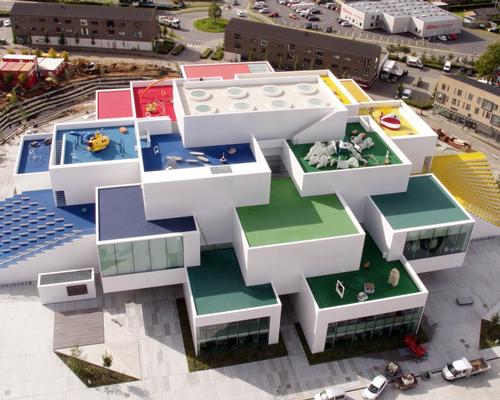
BIG’s latest project, the Lego House, launched in Billund, Denmark, at the end of September, and it’s something of a dream come true for Lego-mad Ingels.

“If BIG had been founded for one single building, it would have been this one,” he says. “It’s such a joyful exploration of all of the different potential expressions of Lego.”

The new visitor attraction was designed to look like a massive stack of Lego bricks, with a giant 2x4 Lego brick sitting on the very top. It features four colour coded play zones with a variety of different experiences, three restaurants, a conference centre, a Lego Museum and a Masterpiece Gallery showcasing fans’ personal Lego creations.

Lego House

The site of the Lego House was previously home to Billund’s Town Hall, so it was important to include publicly accessible areas within the building. Visitors have to pay to enter the galleries (or ‘experience zones’), but parts of the building – including the 20,000sq ft indoor lobby, the brightly coloured roof terraces, and one of the restaurants – are free to access. Ingels explains that he hopes the lobby will be used as a town square by the citizens of Billund. “I think it has a generosity that could make it a truly public square, even though it’s inside the building,” he says.

For Ingels, this was pretty much his dream project. His love of Lego goes back to his childhood. “Like any Dane, I grew up with Lego,” he says. “What’s unique about Lego as a toy is that it’s actually not a toy, it’s a vehicle for systematic creativity that enables the child to create its own world and then to inhabit that world through play.

“As architects, we have the ability to build the world we’d like to live in, and then live in it. The sense of empowerment that architecture can give you when it’s working well is the same kind of empowerment that Lego gives a child.”

Lego House

When Ingels got the call inviting BIG to compete in the Lego House competition, he was absolutely determined they were going to win.

“We went nuts and explored all the different sort of expressions of Lego that are out there,” he says. “For the presentation, we basically took all of the evidence of the creative process, stuffed it into the back of a van and transformed their conference room into our studio. The walls were filled with pin ups from the creative process, we had models everywhere. We’d also made a Lego architecture version of the Lego House including a Lego miniature figure that was meant to be me. It was pretty clear how much we wanted it.”

One of the first things BIG did after winning the competition was to invite a group of 20 Lego ‘super-users’ to a workshop where they presented their ideas and asked for feedback. From this came two ideas that made it into the final design: the Masterpiece Gallery on top of the building, which acts as a museum for fans’ Lego creations, and the Lego history vault at the bottom of the building.

“Working with these people was another form of collaboration,” says Ingels. “I mean, we feel like we know quite a bit about designing with Lego, but these guys, they’re frigging amazing.”

BIG partner Brian Yang was project leader for the competition and led the project in the early days. It was then passed down to Finn Nørkjær to make it happen. “Finn has been fighting the battles of actually getting it built the way it is now, and God knows, it’s been a pretty bumpy ride,” says Ingels. “Very much thanks to Finn, though, it looks as if it’s turned into a successful delivery in the end.”

He stops, grins widely, and adds: “It’s pretty goddamn epic actually.”

THE MAKING OF BIG

Ingels started his career working for Rem Koolhaas at OMA in Rotterdam. In 2001, he and fellow OMA employee Julien De Smedt decided to leave and go it alone. They launched PLOT together in Copenhagen and began looking for work.

At the time, Ingels and De Smedt had plenty of ideas, talent and enthusiasm, but very little experience. When they won their first competition, for the Water Culture House in North Jutland, Denmark, Ingels realised they were a little out of their depth.

“I’d spent the day painting our office only to come home at 10pm and find this big folder from our future client full of hundreds of pages of documents and project items to respond to the following day,” he says. “I’d been one of the lead designers of the Seattle Central Public Library while I was at OMA but I hadn’t had any sort of management responsibilities and I had no idea about any of this.”

Just then, Ingels’ phone rang. On the other end was Finn Nørkjær, an experienced architect and an employee of the firm that had come second in the Water Culture House competition, who was so intrigued by PLOT’s winning entry that he wanted to find out more. Ingels invited him around immediately, and they spent several hours going through the documents ahead of the client meeting the following morning. A week later, Nørkjær joined the firm, and is now one of the 12 partners.

Examples of this kind of fortunate timing come up again and again in my chat with Ingels. BIG won its first major commission when then intern (now partner) David Zahle bumped into Danish developer Per Hopfner in his friend’s backyard, and many opportunities have come about as a result of being in the right place at the right time.

“There’s definitely been a lot of serendipity and providence involved,” says Ingels. “It’s very obvious to me that if you send out clear signals, at some point they’ll find their way back to you.”

In 2005, Ingels and De Smedt decided to wind down PLOT, and BIG was launched later that year. The rise of BIG has been well documented, from the 8 House complex and Danish Maritime Museum in Denmark to the publication of Ingels’ Yes is More comic-book-style manifesto in 2009. Being commissioned to design the VIA 57 West apartment block in Manhattan (opened in 2016) represented a huge leap forward for the practice, and led to the opening of BIG’s US office in 2010. Meanwhile, the practice was working on a series of increasingly high profile projects across the world, and Ingels was fast becoming a well known name within the profession.

It hasn’t all been plain sailing though. By 2007, BIG were winning good projects, but the financial side of the business was struggling. “By the fall of 2007, we were going down,” says Ingels. “I took control of our finances for a year, let go of 35 people, cut down everything I could, including lunches and our cleaning services, borrowed some money and managed to turn the company around.”

Ingels realised he needed to hire someone with a strong business mind, and took on ex McKinsey consultant Sheela Maini Søgaard, who is now a partner and CEO of the firm.

“Sheela has a really healthy confrontational attitude,” says Ingels. “She started phoning our late payers, getting them to cough up. Where architects are typically overly optimistic, Sheela has a healthy scepticism. And where most of us would happily do a project for free, she has a ‘fuck you, pay me’ attitude. We needed that.”

THE CULTURE

All of the BIG partners I speak to for this article agree that the culture of the organisation is a huge part of its success, and the reason why they are such a close knit team.

Ingels describes the practice as a “true meritocracy,” with decisions about who to put forward based on talent rather than the amount of experience a person has. The firm has a very flat hierarchy, with open plan offices making it easy for employees to communicate, and all staff, including interns, encouraged to contribute to design conversations.

BIG Team

Extra curricular activities are also an important part of the life of the practice – there are legendary parties, study trips, a ‘BIG band’ and a series of physical challenges, including cycling over the Andes and scaling the world’s seven tallest peaks. Is this something Ingels set out to create?

“It’s not really an agenda, it’s more a question of how you’d like to lead your life,” he says. “Architects tend to work long hours, but even if you’re working a normal day, it’s still close to half of your waking hours, so you’d better have a good time doing it.

“It’s not just about the parties though. If you put a lot of like-minded, energetic, passionate, brilliant, creative people in a room with some fascinating problems to solve and a big deadline at the end, it’s practically like a party. So even without intoxicating substances, it’s a blast.”

So, what’s next? I catch up with Ingels a couple of months after our meeting in Denmark, and his sights are set firmly on the future.

“I’m interested in those moments where there’s some kind of transformation happening in society,” he says. “Those changes come with new problems, but also new possibilities. If you’re aware, you have an amazing opportunity to give form to the future when those changes occur.”

I ask Ingels which future projects he’s particularly excited about. He highlights two.

The first is a collaboration with Douglas Durst, the real estate investor and developer behind VIA 57 West. Details of this project aren’t yet public, Ingels says, but it will be “three times bigger than VIA, and it’s the only thing I can imagine that could make VIA look timid.” It will include several different components, and a “handful of public programmes,” he adds.

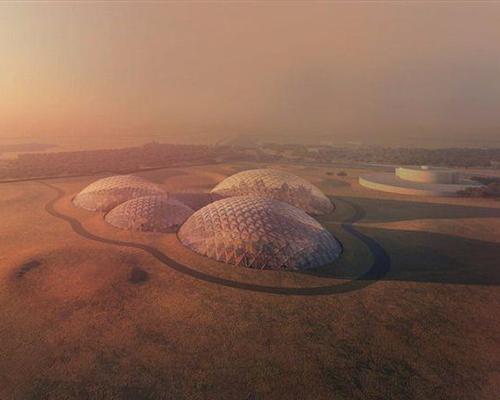
The second project sounds like the stuff of science fiction, and certainly ties in with Ingels’ desire to give form to the future. BIG is collaborating with the government of Dubai to create a huge space simulation development called Mars Science City, which will be used to explore the practical challenges of helping the United Arab Emirates achieve its dream of building the first settlement on Mars by 2117.

The AED 500 million-scheme, extending over 1.9m sq ft, will simulate conditions on the surface of the red planet, with heat and radiation insulation and walls which are 3D printed from desert sand.

Mars Science City

Mars Science City will have a museum displaying “humanity’s greatest space achievements”, with educational areas to engage young people and inspire in them a passion for space, exploration and discovery.

It will also include food, energy and water labs, agricultural testing and research into food security.

“There will be a presence of Mars on Earth to begin with, and then eventually there will be a presence of Earth on Mars,” says Ingels. “It’s incredibly exciting.”

November sees Ingels moving from New York to Copenhagen with his fiancée, architect Ruth Otero, in order to take advantage of what he sees as the start of a building boom in Europe.

“The last few years have been dominated by America, but there’s no doubt that Europe is back at full throttle,” he says. “I’m keen to spend a few years focusing on opportunities in Europe.

“We’ve got plenty to be excited about.”

Bjarke Ingels

A BIG journey

Key dates

2001

Bjarke Ingels launches PLOT with Julien De Smedt

2005

Ingels launches the Bjarke Ingels Group in Copenhagen

2009

BIG becomes a partnership with eight partners: Bjarke Ingels, Sheela Maini Søgaard, Kai-Uwe Bergmann, Andreas Klok Pedersen, David Zahle, Jakob Lange, Finn Nørkjær and Thomas Christoffersen

2010

BIG opens its New York office

2014

Research and development lab BIG ideas is born

2015

BIG appoints four new partners: Beat Schenk, Daniel Sundlin, Jakob Sand and Brian Yang

2016

BIG’s London office opens in Kings Cross

2017

BIG launches its own in house engineering, landscape, interior and space planning department

Related news

Dubai government to build Mars Science City as part of mission to Mars

28 Sep 2017
The government of Dubai has announced plans for the development of a vast 'space simulation ...

BIG's Lego House unveiled to the world

27 Sep 2017
Lego fans from around the world will soon be descending on the small Danish town ...

BIG expand Danish WWII bunker and create museum camouflaged among the dunes

14 Jul 2017
Bjarke Ingels Group’s (BIG) transformation of a former German WWII bunker into a cultural complex ...
"Increasingly, we don't just want to make a good looking version of something that's already been done, we want to take the initiative in giving form to our future," Bjarke Ingels tells CLAD, in an exclusive interview that explores his latest projects, his changing focus and the role of his team in BIG's success.
CLD,ARC,DES,PHR
THUMB23188_167167.jpg
Latest News
Global group exercise specialist, Les Mills, is inviting operators to sign up to its Workout ...
Latest News
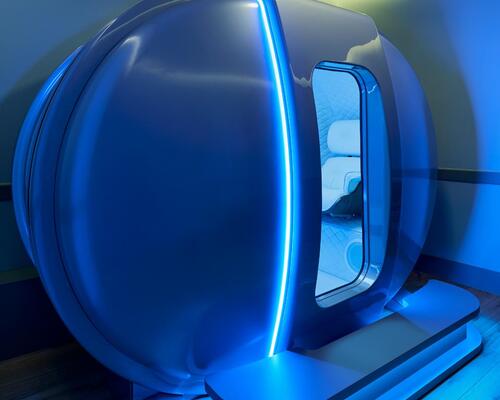
Global luxury hospitality brand, Six Senses, has partnered with longevity healthcare provider, HUM2N, to launch ...
Latest News
Premium London health club, KX Chelsea, is gearing up to unveil its most significant redevelopment ...
Latest News
Researchers in the US have identified an antibody which could greatly reduce the loss of ...
Latest News
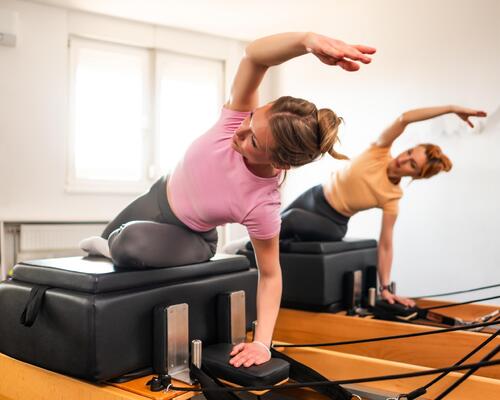
Peloton has made the strategic acquisition of Pilates start-up, Skōp, to support the expansion of ...
Latest News
Crunch Fitness has announced the launch of Crunch Reform Pilates – its own reformer concept ...
Latest News
The 20th State of the Industry Report from LeisureDB has revealed a resilient, expanding and ...
Latest News
Purpose Brands has announced its entry into the Italian market, having sold the franchise rights ...
HCM promotional features
Sponsored
Third Space partnered with IndigoFitness to deliver a bespoke training space for its new club at The Whiteley
HCM promotional features
Sponsored
Starpool supports Olympic champion Marcell Jacobs, says Riccardo Turri
HCM promotional features
Sponsored
Greg Bradley looks at the shift towards strength training in gyms and advises on how operators can create the ultimate training environment
HCM promotional features
Sponsored
SnowDome Fitness has added 50 per cent more space with cutting-edge Technogym solutions
HCM promotional features
Sponsored
David Lloyd is stepping up its commitment to women’s health as it continues to explore what fit-for-purpose looks like for the female population
HCM promotional features
Sponsored
Find out how your gym can tap into the corporate wellness boom
HCM promotional features
Sponsored
EGYM has opened a new HQ in Paternoster Square, London and revealed a range of new launches
HCM promotional features
Promotion
Performance Health Systems, manufacturer of Power Plate, has a new CEO, with an ambitious vision for the company
HCM promotional features
Sponsored
New launch, Salus House, elevates boutique wellness with high service levels and a partnership with Technogym
HCM promotional features
HCM magazine
If the health service is to survive, we must recognise that it is a disease service – and that wellbeing rests with us, says the activity advocate and healthy ageing champion. He talks to Kate Cracknell
HCM magazine
Strength training is evolving, driven by changing consumer preferences. Julie Cramer talks to innovators about how their products are meeting this demand
HCM magazine
I experienced a blissful feeling of joy I hadn’t felt since I was a kid
HCM magazine
Raphael Cuomo explores the powerful link between addiction, health and behaviour change
HCM magazine
For every member with a tripod and a big following, there are others irritated at the way equipment is being hogged or wary they’ll be in the background on someone’s Insta feed. Do influencers offer valuable, free marketing or are they just a nuisance? Kath Hudson finds out how operators are responding
Opinion
promotion
Strength training has moved from the margins to the mainstream.
Opinion: Building smarter strength spaces for today’s operators
Featured supplier news
Featured supplier news: Reaching the people most gyms miss: Bedford Gym & Swim Campaign delivers 410 new members
One of the biggest mistakes the fitness industry still makes is advertising almost exclusively to people who already look and live like gym members.
Featured supplier news
Featured supplier news: Supporting long-term health: why whole body vibration belongs in clinical settings
As healthcare continues to shift towards prevention, there’s a growing focus on helping people stay active, independent and feeling good for longer.
Company profiles
Company profile: We Work Well Inc
We Work Well is a global premier hosted buyer event company, connecting high-level executives from ...
Company profiles
Company profile: Life Fitness/Hammer Strength
Life Fitness, Hammer Strength, and ICG are global leaders in premium fitness solutions, trusted by ...
Supplier Showcases
Supplier Showcase - From nightclub to health club
Supplier Showcases
Supplier Showcase - Future-proofing
Catalogue Gallery
Click on a catalogue to view it online
Featured press releases
ukactive press release: UK Active launches next phase of Digital Futures to support digital maturity across the physical activity sector
UK Active has announced the next phase of its Digital Futures programme, supporting organisations across the physical activity sector to develop their digital capability.
Featured press releases
The Fitness Group press release: The Fitness Group partners with Serco Leisure to deliver education and career pathways across UK leisure facilities
The Fitness Group, the UK's leading fitness education training provider, has announced a strategic partnership with Serco Leisure, one of the UK's leading national operators of leisure centres, destination venues and elite sporting facilities.
Directory
Lockers
Crown Sports Lockers: Lockers
Hot tubs
MSpa International Ltd: Hot tubs
Fitness tracking platform
SpiviTech: Fitness tracking platform
Water experiences and hydrotherapy solutions
Aquaform s.r.l.: Water experiences and hydrotherapy solutions
Industrial washing machines
Miele Company Limited: Industrial washing machines
Spa and beauty equipment
Living Earth Crafts: Spa and beauty equipment
Property & Tenders
Stratford, East London.
Lee Valley Regional Park Authority
Property & Tenders
Y Felinheli, LL56 4QN
Newmark
Property & Tenders
Diary dates
21-24 Sep 2026
The Langham Huntington Pasadena , Pasadena, United States
Diary dates
06-08 Oct 2026
Messe Stuttgart, Stuttgart, Germany
Diary dates
22-22 Oct 2026
QEII Conference Centre, London,
Diary dates
26-29 Oct 2027
Koelnmesse Exhibition Centre, Cologne, Germany
Diary dates

Latest news

BJARKE INGELS on life, Lego and the role of the collective in getting BIG to the top

I’m interested in those moments where there’s some kind of transformation happening in society. If you’re aware, you have an amazing opportunity to give form to the future when those changes occur
– Bjarke Ingels

"Increasingly, we don't just want to make a good looking version of something that's already been done, we want to take the initiative in giving form to our future," Bjarke Ingels tells CLAD, in an exclusive interview that explores his latest projects, his changing focus and the role of his team in BIG's success.

The full feature, which can be read below, is part of a BIG Special written specially for the latest issue of our quarterly magazine CLADmag.

Available to read now online and on digital turning pages, the comprehensive profile also covers the practice’s 11 other partners, including CEO Sheela Maini Søgaard.

BIG founder Bjarke Ingels talks to Magali Robathan

We’re in a car with Bjarke Ingels. It’s almost midnight, and the Danish countryside can’t be seen in the pitch black outside. Heavy rain lashes against the windscreen.

We pull into a muddy field. It’s completely deserted, apart from one other car. A figure approaches our vehicle.

Ingels gets out and embraces the other man, who turns out to be Finn Nørkjær, one of 12 partners at BIG. Nørkjær phoned earlier that evening, excited about showing Ingels the newly completed Tirpitz Museum before its official opening the next day.

We get out of the car and run towards a large building in the pouring rain. Nørkjær takes a remote control from his pocket, and all of a sudden the museum lights up and everyone gasps. Ingels and Nørkjær run ahead, shouting excitedly, taking pictures with their phones. Someone has sent Ingels a drone photo of the museum from above. “Look at this!” he shouts, passing it around. The atmosphere is electric.
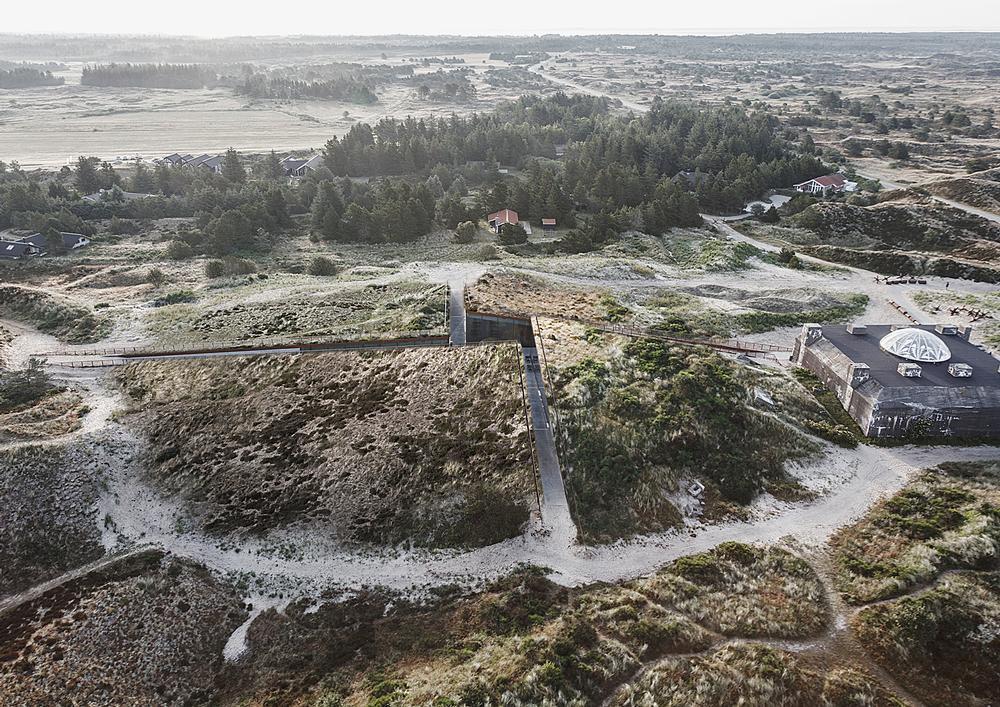
Tirpitz

Earlier that day, Ingels flew into Billund in a helicopter to check on the Lego House and have dinner with Kjeld Kirk Kristiansen, the third generation owner of the Lego Group. Tomorrow, he will help launch tthe BIG-designed Tirpitz Museum with the Crown Prince of Denmark.

It’s a packed, exciting life for one of the world’s most famous architects, but I get the feeling that this moment sums up what makes it worthwhile for him – running around with his friend and colleague, seeing one of their creations come to life.

This moment also illustrates a fact that the media often ignores. It’s not just about Ingels. Every project is the result of a team of people, or ‘BIGsters’, as he calls them. Nørkjær and Ingels were in charge of the Tirpitz Museum, with another partner, Brian Yang, leading the project, and like all of BIG’s work, it’s the result of a design process that sees all members of the team, even interns, expected to contribute.

“Of course I founded the company and I’m the creative leader, but I’ve never kept it a secret that I work with great, gifted people,” says Ingels, once we’re back in the car. “Of the partners at BIG, about half were interns in the early days of the company, so we’ve been together for a ridiculously long time. We’ve developed a culture through friendship and collaboration that’s very strong.”

While Ingels rejects the media’s portrayal of him as the lone genius, he’s also not afraid to emphasise his own role in BIG’s success.

“The truth is that collaboration is about collective effort and it’s also about individual contribution – so both are actually true,” he says. “There wouldn’t be any BIG without me and there wouldn’t be any BIG without all the BIGsters.

“I don’t see that there’s a dichotomy. Has Steven Spielberg made you think that he’s the only one contributing to his films? Not really. But, of course, he’s the director and he consistently manages to put together a team that can deliver something that other directors don’t.”

Whatever the approach, it’s certainly working. BIG, and Bjarke Ingels, need no introduction. Over the past 12 years, the practice has grown from a tiny operation in Ingels’ apartment to a global firm of 450 people with offices in Copenhagen, New York and London. They’ve made their name with a series of projects based on bold, playful and often unexpected ideas, whether that’s putting a ski slope on top of a factory (Amager Resource Center, Denmark), blending an American skyscraper with a Danish courtyard building (VIA 57 West, New York) or designing a 10 storey building that allows people to cycle right up to their apartment (the 8 House, Copenhagen).

The firm has now branched into product design, launched its own in-house engineering division, and has a dizzying amount of headline-grabbing projects on the go, including 2 World Trade Center, the Washington Redskins’ new stadium, Google’s HQ, and the Dryline, a storm barrier for Lower Manhattan that doubles as an amenity for the community.

While BIG has made a name turning “the ordinary into the extraordinary,” as Ingels puts it, the firm is now also working on a handful of projects that could never be described as ordinary. BIG has teamed up with LA firm Virgin Hyperloop One to build what they hope will be the world’s first Hyperloop high-speed transport system, and Ingels is also working with the government of Dubai to realise the UAE’s recently-announced ambition to build a city on Mars by 2117.
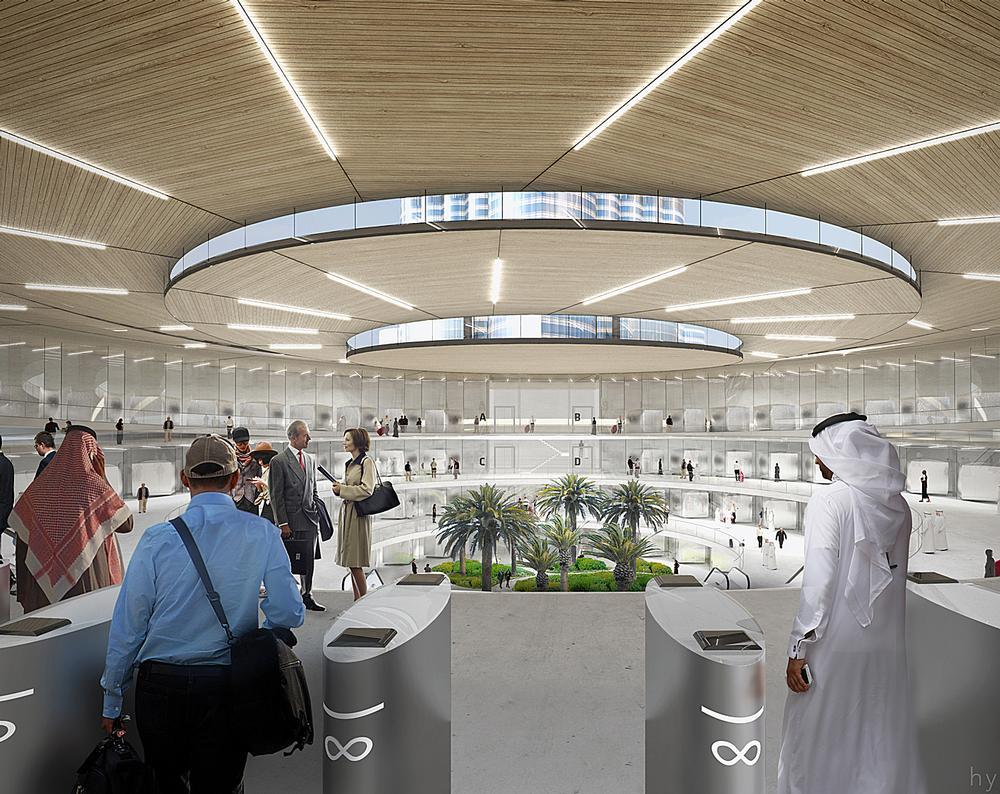
Hyperloop

“Increasingly we don’t just want to make a good-looking version of something that’s already been done before; we want to take responsibility and initiative in giving form to our future,” says Ingels.

As BIG has grown, Ingels has become something of a celebrity – last year he was named by Time magazine as one of the ‘100 most influential people in the world’. A recently released film, BIG Time, shows the man as well as the architect, with viewers seeing him falling in love, worrying about his health and struggling with the responsibility of his position.

LEGO HOUSE

BIG’s latest project, the Lego House, launched in Billund, Denmark, at the end of September, and it’s something of a dream come true for Lego-mad Ingels.

“If BIG had been founded for one single building, it would have been this one,” he says. “It’s such a joyful exploration of all of the different potential expressions of Lego.”

The new visitor attraction was designed to look like a massive stack of Lego bricks, with a giant 2x4 Lego brick sitting on the very top. It features four colour coded play zones with a variety of different experiences, three restaurants, a conference centre, a Lego Museum and a Masterpiece Gallery showcasing fans’ personal Lego creations.
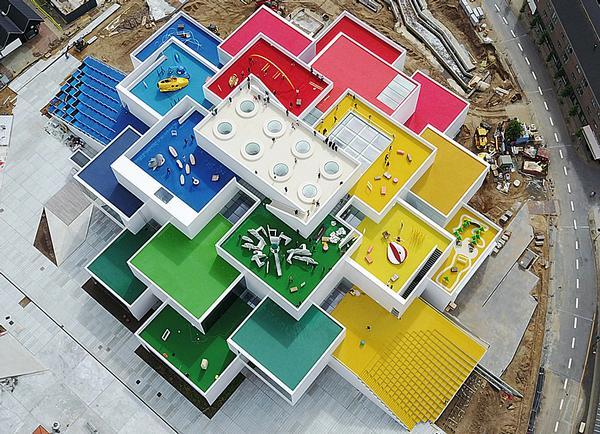
Lego House

The site of the Lego House was previously home to Billund’s Town Hall, so it was important to include publicly accessible areas within the building. Visitors have to pay to enter the galleries (or ‘experience zones’), but parts of the building – including the 20,000sq ft indoor lobby, the brightly coloured roof terraces, and one of the restaurants – are free to access. Ingels explains that he hopes the lobby will be used as a town square by the citizens of Billund. “I think it has a generosity that could make it a truly public square, even though it’s inside the building,” he says.

For Ingels, this was pretty much his dream project. His love of Lego goes back to his childhood. “Like any Dane, I grew up with Lego,” he says. “What’s unique about Lego as a toy is that it’s actually not a toy, it’s a vehicle for systematic creativity that enables the child to create its own world and then to inhabit that world through play.

“As architects, we have the ability to build the world we’d like to live in, and then live in it. The sense of empowerment that architecture can give you when it’s working well is the same kind of empowerment that Lego gives a child.”
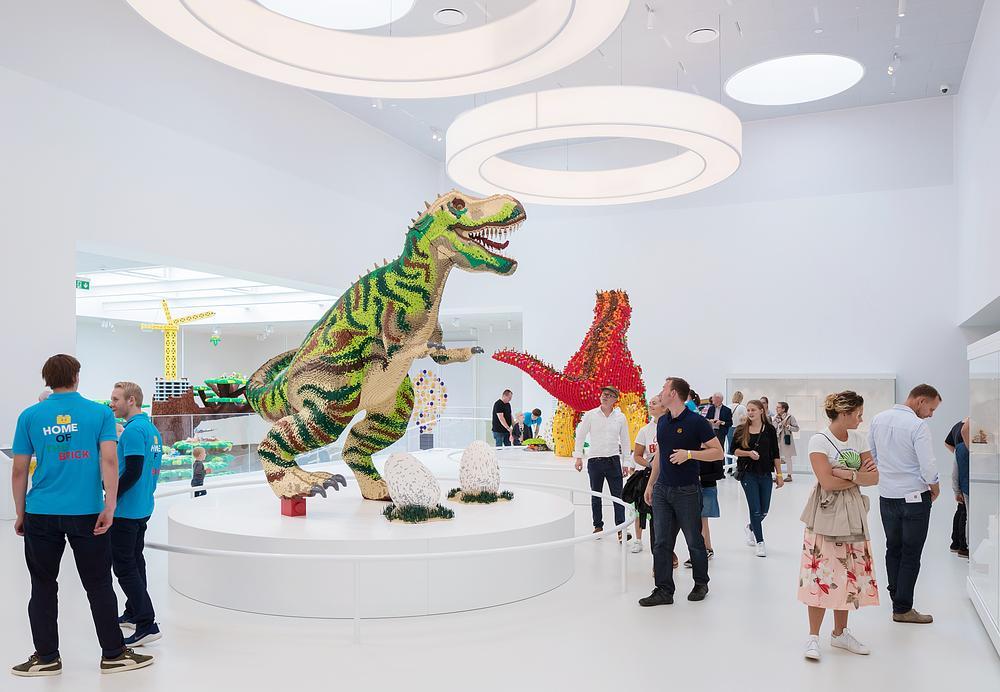
Lego House

When Ingels got the call inviting BIG to compete in the Lego House competition, he was absolutely determined they were going to win.

“We went nuts and explored all the different sort of expressions of Lego that are out there,” he says. “For the presentation, we basically took all of the evidence of the creative process, stuffed it into the back of a van and transformed their conference room into our studio. The walls were filled with pin ups from the creative process, we had models everywhere. We’d also made a Lego architecture version of the Lego House including a Lego miniature figure that was meant to be me. It was pretty clear how much we wanted it.”

One of the first things BIG did after winning the competition was to invite a group of 20 Lego ‘super-users’ to a workshop where they presented their ideas and asked for feedback. From this came two ideas that made it into the final design: the Masterpiece Gallery on top of the building, which acts as a museum for fans’ Lego creations, and the Lego history vault at the bottom of the building.

“Working with these people was another form of collaboration,” says Ingels. “I mean, we feel like we know quite a bit about designing with Lego, but these guys, they’re frigging amazing.”

BIG partner Brian Yang was project leader for the competition and led the project in the early days. It was then passed down to Finn Nørkjær to make it happen. “Finn has been fighting the battles of actually getting it built the way it is now, and God knows, it’s been a pretty bumpy ride,” says Ingels. “Very much thanks to Finn, though, it looks as if it’s turned into a successful delivery in the end.”

He stops, grins widely, and adds: “It’s pretty goddamn epic actually.”

THE MAKING OF BIG

Ingels started his career working for Rem Koolhaas at OMA in Rotterdam. In 2001, he and fellow OMA employee Julien De Smedt decided to leave and go it alone. They launched PLOT together in Copenhagen and began looking for work.

At the time, Ingels and De Smedt had plenty of ideas, talent and enthusiasm, but very little experience. When they won their first competition, for the Water Culture House in North Jutland, Denmark, Ingels realised they were a little out of their depth.

“I’d spent the day painting our office only to come home at 10pm and find this big folder from our future client full of hundreds of pages of documents and project items to respond to the following day,” he says. “I’d been one of the lead designers of the Seattle Central Public Library while I was at OMA but I hadn’t had any sort of management responsibilities and I had no idea about any of this.”

Just then, Ingels’ phone rang. On the other end was Finn Nørkjær, an experienced architect and an employee of the firm that had come second in the Water Culture House competition, who was so intrigued by PLOT’s winning entry that he wanted to find out more. Ingels invited him around immediately, and they spent several hours going through the documents ahead of the client meeting the following morning. A week later, Nørkjær joined the firm, and is now one of the 12 partners.

Examples of this kind of fortunate timing come up again and again in my chat with Ingels. BIG won its first major commission when then intern (now partner) David Zahle bumped into Danish developer Per Hopfner in his friend’s backyard, and many opportunities have come about as a result of being in the right place at the right time.

“There’s definitely been a lot of serendipity and providence involved,” says Ingels. “It’s very obvious to me that if you send out clear signals, at some point they’ll find their way back to you.”

In 2005, Ingels and De Smedt decided to wind down PLOT, and BIG was launched later that year. The rise of BIG has been well documented, from the 8 House complex and Danish Maritime Museum in Denmark to the publication of Ingels’ Yes is More comic-book-style manifesto in 2009. Being commissioned to design the VIA 57 West apartment block in Manhattan (opened in 2016) represented a huge leap forward for the practice, and led to the opening of BIG’s US office in 2010. Meanwhile, the practice was working on a series of increasingly high profile projects across the world, and Ingels was fast becoming a well known name within the profession.

It hasn’t all been plain sailing though. By 2007, BIG were winning good projects, but the financial side of the business was struggling. “By the fall of 2007, we were going down,” says Ingels. “I took control of our finances for a year, let go of 35 people, cut down everything I could, including lunches and our cleaning services, borrowed some money and managed to turn the company around.”

Ingels realised he needed to hire someone with a strong business mind, and took on ex McKinsey consultant Sheela Maini Søgaard, who is now a partner and CEO of the firm.

“Sheela has a really healthy confrontational attitude,” says Ingels. “She started phoning our late payers, getting them to cough up. Where architects are typically overly optimistic, Sheela has a healthy scepticism. And where most of us would happily do a project for free, she has a ‘fuck you, pay me’ attitude. We needed that.”

THE CULTURE

All of the BIG partners I speak to for this article agree that the culture of the organisation is a huge part of its success, and the reason why they are such a close knit team.

Ingels describes the practice as a “true meritocracy,” with decisions about who to put forward based on talent rather than the amount of experience a person has. The firm has a very flat hierarchy, with open plan offices making it easy for employees to communicate, and all staff, including interns, encouraged to contribute to design conversations.
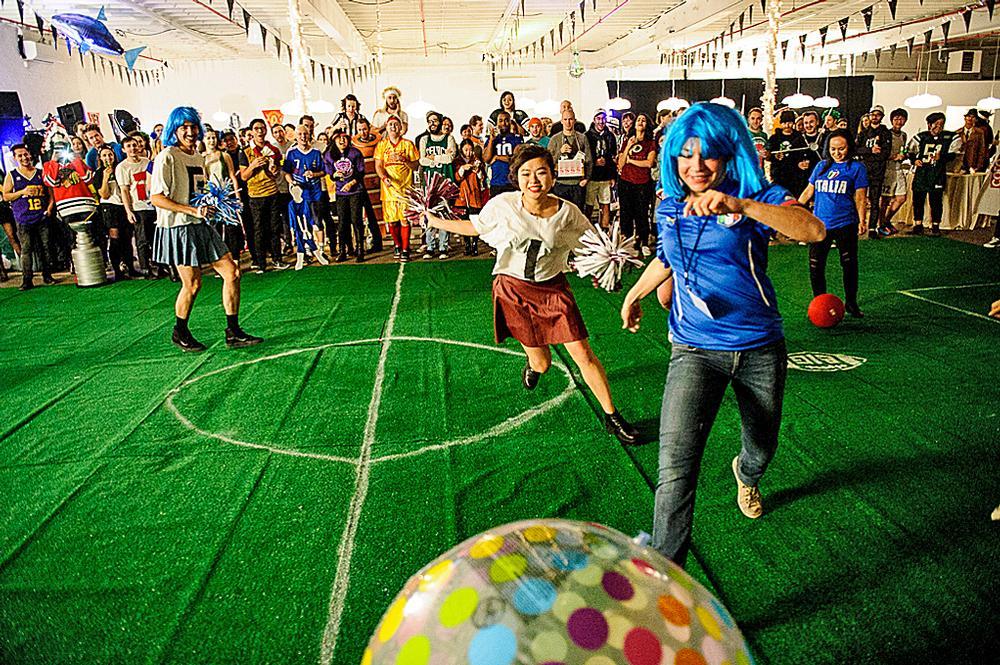
BIG Team

Extra curricular activities are also an important part of the life of the practice – there are legendary parties, study trips, a ‘BIG band’ and a series of physical challenges, including cycling over the Andes and scaling the world’s seven tallest peaks. Is this something Ingels set out to create?

“It’s not really an agenda, it’s more a question of how you’d like to lead your life,” he says. “Architects tend to work long hours, but even if you’re working a normal day, it’s still close to half of your waking hours, so you’d better have a good time doing it.

“It’s not just about the parties though. If you put a lot of like-minded, energetic, passionate, brilliant, creative people in a room with some fascinating problems to solve and a big deadline at the end, it’s practically like a party. So even without intoxicating substances, it’s a blast.”

So, what’s next? I catch up with Ingels a couple of months after our meeting in Denmark, and his sights are set firmly on the future.

“I’m interested in those moments where there’s some kind of transformation happening in society,” he says. “Those changes come with new problems, but also new possibilities. If you’re aware, you have an amazing opportunity to give form to the future when those changes occur.”

I ask Ingels which future projects he’s particularly excited about. He highlights two.

The first is a collaboration with Douglas Durst, the real estate investor and developer behind VIA 57 West. Details of this project aren’t yet public, Ingels says, but it will be “three times bigger than VIA, and it’s the only thing I can imagine that could make VIA look timid.” It will include several different components, and a “handful of public programmes,” he adds.

The second project sounds like the stuff of science fiction, and certainly ties in with Ingels’ desire to give form to the future. BIG is collaborating with the government of Dubai to create a huge space simulation development called Mars Science City, which will be used to explore the practical challenges of helping the United Arab Emirates achieve its dream of building the first settlement on Mars by 2117.

The AED 500 million-scheme, extending over 1.9m sq ft, will simulate conditions on the surface of the red planet, with heat and radiation insulation and walls which are 3D printed from desert sand.

Mars Science City

Mars Science City will have a museum displaying “humanity’s greatest space achievements”, with educational areas to engage young people and inspire in them a passion for space, exploration and discovery.

It will also include food, energy and water labs, agricultural testing and research into food security.

“There will be a presence of Mars on Earth to begin with, and then eventually there will be a presence of Earth on Mars,” says Ingels. “It’s incredibly exciting.”

November sees Ingels moving from New York to Copenhagen with his fiancée, architect Ruth Otero, in order to take advantage of what he sees as the start of a building boom in Europe.

“The last few years have been dominated by America, but there’s no doubt that Europe is back at full throttle,” he says. “I’m keen to spend a few years focusing on opportunities in Europe.

“We’ve got plenty to be excited about.”
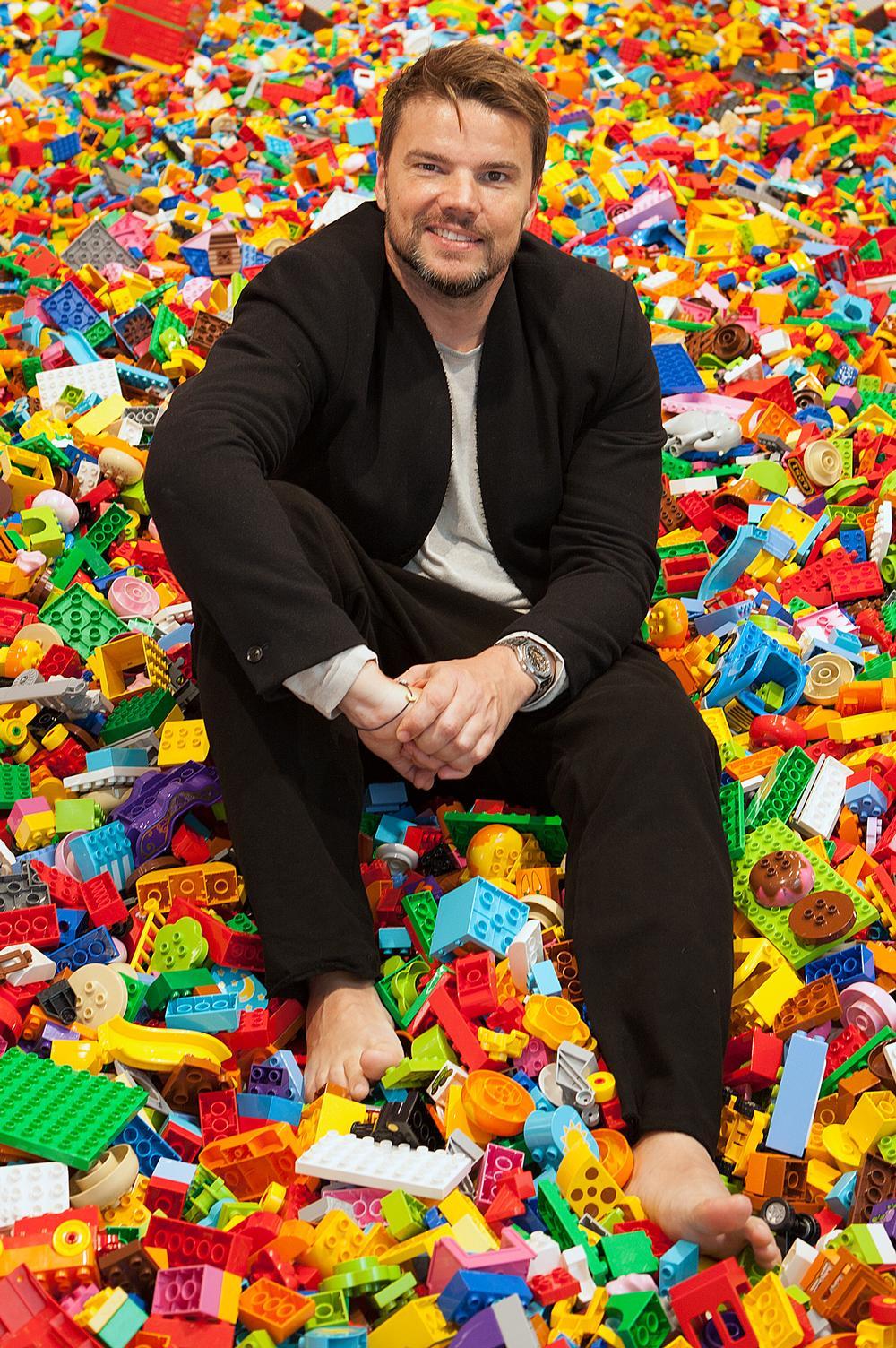
Bjarke Ingels

A BIG journey

Key dates

2001

Bjarke Ingels launches PLOT with Julien De Smedt

2005

Ingels launches the Bjarke Ingels Group in Copenhagen

2009

BIG becomes a partnership with eight partners: Bjarke Ingels, Sheela Maini Søgaard, Kai-Uwe Bergmann, Andreas Klok Pedersen, David Zahle, Jakob Lange, Finn Nørkjær and Thomas Christoffersen

2010

BIG opens its New York office

2014

Research and development lab BIG ideas is born

2015

BIG appoints four new partners: Beat Schenk, Daniel Sundlin, Jakob Sand and Brian Yang

2016

BIG’s London office opens in Kings Cross

2017

BIG launches its own in house engineering, landscape, interior and space planning department
Related news

Dubai government to build Mars Science City as part of mission to Mars

28 Sep 2017
The government of Dubai has announced plans for the development of a vast 'space simulation ...

BIG's Lego House unveiled to the world

27 Sep 2017
Lego fans from around the world will soon be descending on the small Danish town ...

BIG expand Danish WWII bunker and create museum camouflaged among the dunes

14 Jul 2017
Bjarke Ingels Group’s (BIG) transformation of a former German WWII bunker into a cultural complex ...
"Increasingly, we don't just want to make a good looking version of something that's already been done, we want to take the initiative in giving form to our future," Bjarke Ingels tells CLAD, in an exclusive interview that explores his latest projects, his changing focus and the role of his team in BIG's success.
CLD,ARC,DES,PHR
THUMB23188_167167.jpg

Latest news

Global group exercise specialist, Les Mills, is inviting operators to sign up to its Workout
Global luxury hospitality brand, Six Senses, has partnered with longevity healthcare provider, HUM2N, to launch
Premium London health club, KX Chelsea, is gearing up to unveil its most significant redevelopment
Researchers in the US have identified an antibody which could greatly reduce the loss of
Peloton has made the strategic acquisition of Pilates start-up, Skōp, to support the expansion of
Crunch Fitness has announced the launch of Crunch Reform Pilates – its own reformer concept
Global Wellness Summit
As healthcare continues to shift towards prevention, there’s a growing focus on helping people stay
The 20th State of the Industry Report from LeisureDB has revealed a resilient, expanding and
Purpose Brands has announced its entry into the Italian market, having sold the franchise rights
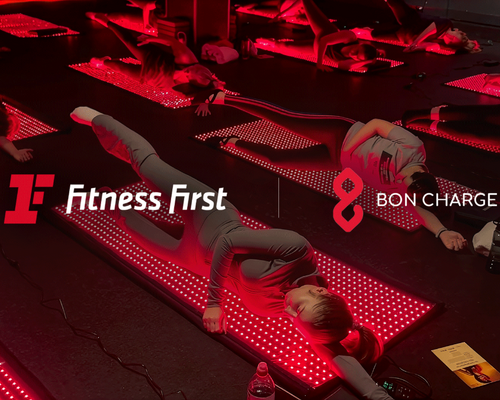
Fitness First UK is integrating red light therapy into its yoga and Pilates classes through
Nuffield Health has told HCM that it takes its responsibilities towards its colleagues seriously and
Technogym has announced the launch of the Run X World Treadmill Championship, the first world
Shocked by the UK loneliness statistics, charitable trust Mytime Active has been doubling down on
Xplor Fitness & Leisure
Elevate is set to celebrate its 10th anniversary in style this June, with organisers confirming
Portugal’s leading operator, SC Fitness, is celebrating a milestone by reaching 100 gyms.  The company
Australia’s fast-growing fitness network, Viva Leisure, is adding a low-cost gym brand to its already
Speedflex has launched a strength training programme for 10 to 16-year-olds, to make it safer,
Tewinbury Farm Hotel in Hertfordshire, UK is expanding its premium leisure proposition with the launch

Work is underway in Madrid on one of Europe’s most significant multi-functional complexes,

PureGym is encouraging people to step away from their screens and go for a walk,
Alliance Leisure
Alliance Leisure
One of the biggest mistakes operators in the fitness industry still make is advertising almost
Small improvements to sleep, diet quality, and physical activity, made in combination lead to a
Therme Manchester’s 28-acre development, which will include interconnected glass pavilions that measure 65,000sq m, will
Elevate Arena
Elevate Arena
1 - 20 of 12,300
HCM promotional features
Sponsored
Third Space partnered with IndigoFitness to deliver a bespoke training space for its new club at The Whiteley
HCM promotional features
Sponsored
Starpool supports Olympic champion Marcell Jacobs, says Riccardo Turri
HCM promotional features
Sponsored
Greg Bradley looks at the shift towards strength training in gyms and advises on how operators can create the ultimate training environment
HCM promotional features
Sponsored
SnowDome Fitness has added 50 per cent more space with cutting-edge Technogym solutions
HCM promotional features
Sponsored
David Lloyd is stepping up its commitment to women’s health as it continues to explore what fit-for-purpose looks like for the female population
HCM promotional features
Sponsored
Find out how your gym can tap into the corporate wellness boom
HCM promotional features
Sponsored
EGYM has opened a new HQ in Paternoster Square, London and revealed a range of new launches
HCM promotional features
Promotion
Performance Health Systems, manufacturer of Power Plate, has a new CEO, with an ambitious vision for the company
HCM promotional features
Sponsored
New launch, Salus House, elevates boutique wellness with high service levels and a partnership with Technogym
HCM promotional features
HCM magazine
If the health service is to survive, we must recognise that it is a disease service – and that wellbeing rests with us, says the activity advocate and healthy ageing champion. He talks to Kate Cracknell
HCM magazine
Strength training is evolving, driven by changing consumer preferences. Julie Cramer talks to innovators about how their products are meeting this demand
HCM magazine
I experienced a blissful feeling of joy I hadn’t felt since I was a kid
HCM magazine
Raphael Cuomo explores the powerful link between addiction, health and behaviour change
HCM magazine
For every member with a tripod and a big following, there are others irritated at the way equipment is being hogged or wary they’ll be in the background on someone’s Insta feed. Do influencers offer valuable, free marketing or are they just a nuisance? Kath Hudson finds out how operators are responding
HCM magazine
Collaborations with the medical profession and greater aspirations around wellbeing are creating a need for more experts in our sector. It’s time to reboot our thinking around the workforce
HCM magazine
HCM People

Stephen Price

Founder, SP&Co Group

Working in public health over the last few years has lit up parts of my brain again
HCM magazine
Small improvements to sleep, diet and physical activity have major benefits for the heart, according to new research from the University of Sydney
HCM magazine
As the entrepreneur who started Wexer, Fresh Fitness, Fitness DK and Repeat, as well as being a former elite athlete, Rasmus Ingerslev’s life looked perfect from the outside, but onthe inside it was a different story. He talks to Kath Hudson about healing old wounds
HCM magazine
The Les Mills partnership with Hyrox is something I'm personally really excited about
HCM magazine
Welcome to Elevate 2026
HCM magazine
Opinion
promotion
Strength training has moved from the margins to the mainstream.
Opinion: Building smarter strength spaces for today’s operators
Featured supplier news
Featured supplier news: Reaching the people most gyms miss: Bedford Gym & Swim Campaign delivers 410 new members
One of the biggest mistakes the fitness industry still makes is advertising almost exclusively to people who already look and live like gym members.
Featured supplier news
Featured supplier news: Supporting long-term health: why whole body vibration belongs in clinical settings
As healthcare continues to shift towards prevention, there’s a growing focus on helping people stay active, independent and feeling good for longer.
Company profiles
Company profile: We Work Well Inc
We Work Well is a global premier hosted buyer event company, connecting high-level executives from ...
Company profiles
Company profile: Life Fitness/Hammer Strength
Life Fitness, Hammer Strength, and ICG are global leaders in premium fitness solutions, trusted by ...
Supplier Showcases
Supplier Showcase - From nightclub to health club
Supplier Showcases
Supplier Showcase - Future-proofing
Catalogue Gallery
Click on a catalogue to view it online
Featured press releases
ukactive press release: UK Active launches next phase of Digital Futures to support digital maturity across the physical activity sector
UK Active has announced the next phase of its Digital Futures programme, supporting organisations across the physical activity sector to develop their digital capability.
Featured press releases
The Fitness Group press release: The Fitness Group partners with Serco Leisure to deliver education and career pathways across UK leisure facilities
The Fitness Group, the UK's leading fitness education training provider, has announced a strategic partnership with Serco Leisure, one of the UK's leading national operators of leisure centres, destination venues and elite sporting facilities.
Directory
Lockers
Crown Sports Lockers: Lockers
Hot tubs
MSpa International Ltd: Hot tubs
Fitness tracking platform
SpiviTech: Fitness tracking platform
Water experiences and hydrotherapy solutions
Aquaform s.r.l.: Water experiences and hydrotherapy solutions
Industrial washing machines
Miele Company Limited: Industrial washing machines
Spa and beauty equipment
Living Earth Crafts: Spa and beauty equipment
Property & Tenders
Stratford, East London.
Lee Valley Regional Park Authority
Property & Tenders
Y Felinheli, LL56 4QN
Newmark
Property & Tenders
Diary dates
21-24 Sep 2026
The Langham Huntington Pasadena , Pasadena, United States
Diary dates
06-08 Oct 2026
Messe Stuttgart, Stuttgart, Germany
Diary dates
22-22 Oct 2026
QEII Conference Centre, London,
Diary dates
26-29 Oct 2027
Koelnmesse Exhibition Centre, Cologne, Germany
Diary dates
Search news, features & products:
Find a supplier:
Les Mills
Les Mills