





















GET HCM
magazine
Sign up for the FREE digital edition of HCM magazine and also get the HCM ezine and breaking news email alerts.
Not right now, thanksclose this window I've already subscribed!
Follow Health Club Management on Twitter Like Health Club Management on Facebook Join the discussion with Health Club Management on LinkedIn
FITNESS, HEALTH, WELLNESS

features

Retention series: What drives you?

Lose weight, tone up, get fit – is this really what your members want from their club? Dr Melvyn Hillsdon takes a look at how different motivations and forms of progress impact on retention

By Dr Melvyn Hillsdon , University of Exeter | Published in Health Club Management 2014 issue 7

Members join their clubs with a variety of aspirations and goals regarding how they would like to see themselves in the future. However, until now no report has looked at whether clubs actually help members achieve their goals, or whether other unexpected changes occur for members through use of their club.

In the third of a series of reports from the TRP 10,000 (see p49), we will examine what members say motivates them to exercise, what progress they report in their most recent three months of membership, and how these two factors relate to membership retention.

Data and analysis
Members were asked to select, from a list of 17 options, what motivated them to exercise. These were then categorised into four main types of motivation: being motivated by fitness, by appearance, by enjoyment and by social factors (friendship). They were also asked to report how much progress they had made in the last three months, based on a list of 10 possible outcomes that broadly reflected the categories of motivation.

What motivates you?
Table 1 (see images) shows the proportion of members who reported being highly motivated by fitness, appearance, enjoyment or social factors according
to gender, age group, length of membership and visit frequency.

The proportion of members reporting high levels of motivation was similar across all categories, but marked differences were seen by gender, age, length of membership and visit frequency.

A higher proportion of females than males report being motivated by fitness and appearance, but less so enjoyment.

In general, the oldest health club members reported lower levels of motivation than younger members, especially when it came to appearance as a motivator. Three-quarters of the youngest members reported being highly motivated by appearance, compared to just one-fifth of the oldest members.

Length of membership was not strongly related to level of motivation, although long-standing members were less likely to report being highly motivated by appearance compared to newer members.

In general, frequent club users are more highly motivated than low frequency club users. Members who are highly motivated by enjoyment tend to use their club more frequently.

Progress reports
So what do members say they have made progress on in the last three months?

Figure 1 (see images) shows that members report at least some recent progress on a wide range of factors. The areas that most members report progress on are enjoying exercise, and feeling fitter and healthier. Factors where the lowest proportion of members report progress are losing weight and making new friends.

On average, members report progress on eight of the 10 factors in Figure 1, with no real differences by gender, age group or length of membership. However, members who use their club at least three times a week report significantly more progress than members who visit less than once a week.

But is the level of progress related to retention, and what are the most important factors? For each factor that members report they have made progress on, the risk of cancelling during the seven months after answering the question reduces by 10 per cent. This is true for members at all periods of membership. This suggests it’s always important for members to feel they’re making progress, however long they’ve been a member.

Table 2 (see images) shows each of the measures of progress ranked by how much they reduce the risk of cancelling. Members who made a friend in the last three months were least likely to cancel during the seven months after being surveyed – they were 40 per cent less likely to cancel their membership than members who did not make a friend. In fact, if all members had made a friend in the last three months, 14 per cent (214) of the 1,526 cancellations during the study’s follow-up period would have been avoided.

Attending the club at the level planned came second to making a friend – this reduced the risk of cancelling by 11 per cent. Improved appearance, having more energy and feeling happier were perhaps surprisingly not related to the risk of cancelling.

Motivation & progress
Do members need to make progress on the things they’re motivated by to reduce the rate of cancelled memberships?

The orange columns in Figure 2 (see images) represent the rate of cancellation for members reporting high and low levels of motivation, and who also report progress on the same factor. For example, there are 19 cancellations per 1,000 members per month among those who aren’t really motivated by fitness, but who nevertheless see progress in this area.

The blue columns represent the rate of cancellation for members who report levels of motivation but do not report any progress on things they’re motivated by – eg, there are 35 cancellations per 1,000 members per month among those who report being highly motivated by fitness, but who do not see results.

The first thing that can be seen is that all of the orange columns are lower than their corresponding blue columns, indicating that reporting progress always reduces the rate of cancelling compared to making no progress.

Secondly, members who report being highly motivated for each type of motivation – but who fail to report progress on those motivations – have the highest rates of cancellation. This group of members might be referred to as disappointed optimists. They might have had overly optimistic expectations about how much change they would see, and are then disappointed when they fail to achieve these anticipated changes.

This is particularly true for members motivated by enjoyment, who then find they’re not enjoying their exercise. These members are more than twice as likely to cancel compared to those who are motivated by enjoyment and who report they have enjoyed their exercise.

The lowest levels of cancellation are seen among members who report having made friends in the last three months, irrespective of whether this was one of their stated motives for exercising in the first place.

The other group logging low levels of cancellation are members who were not motivated by appearance, but who nevertheless felt they improved the way they looked over the last three months.

This is in fact a general trend: members stating low levels of motivation in any particular area, but who then reported progress in that area, had lower levels of cancellation. We might refer to this group as surprised pessimists. They start out with low expectations, but surprise themselves with the progress they make.

One other observation stands out. Members who were highly motivated by appearance and who report looking better nevertheless have a higher rate of cancellation than those who weren’t motivated by appearance and didn’t believe they improved their appearance – almost as if the motivated group remained dissatisfied with their appearance even though they felt it had improved.

Summary
A large proportion of members report some progress on a wide range of factors, although high levels of motivation vary by gender, age group, length of membership and the frequency of visits. Social motives such as making new friends are the most likely to improve membership retention.

It’s imperative for members to perceive that they are making progress at all times – if not, the risk of cancelling increases. Failure to achieve the things that members are highly motivated by is most likely to lead to cancellation. The lowest rate of retention (i.e. highest rate of cancellation) is seen among members who are highly motivated to enjoy exercise but then find they are not enjoying it. However, the pursuit of improved appearance – even if achieved – is not related to improved retention.

Based on the findings, we advise:
- Putting together a marketing strategy that conveys fun and friendliness
- Understanding members’ motivations and setting realistic plans to achieve them
- Regularly reviewing members’ progress and revising plans if needed
- Ensuring programmes are enjoyable
- Prioritising fun and friendship over fitness and thinness.

Table 1: People reporting high motivation levels
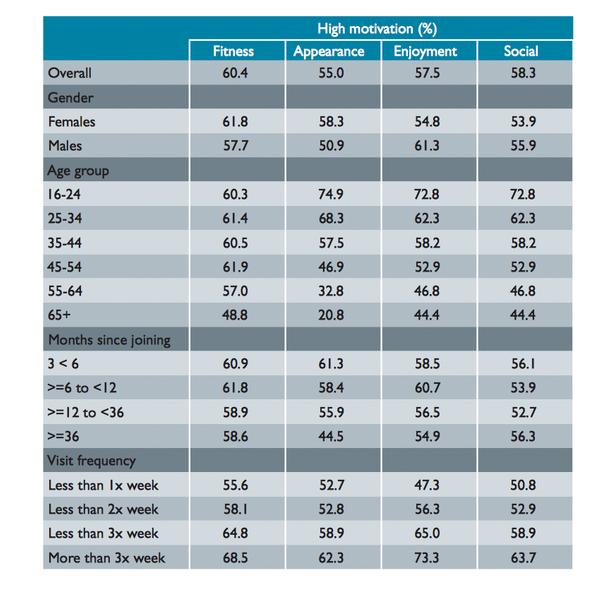
Table 1
Table 1

Figure 1: Proportion of members reporting
progress in the previous three months
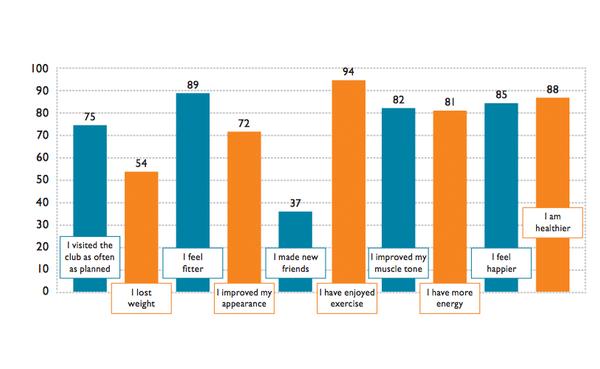
Figure 1
Figure 1

Figure 2: Cancellation rate (number
of cancellations per 1,000 members
per month) by level of motivation and reported progress
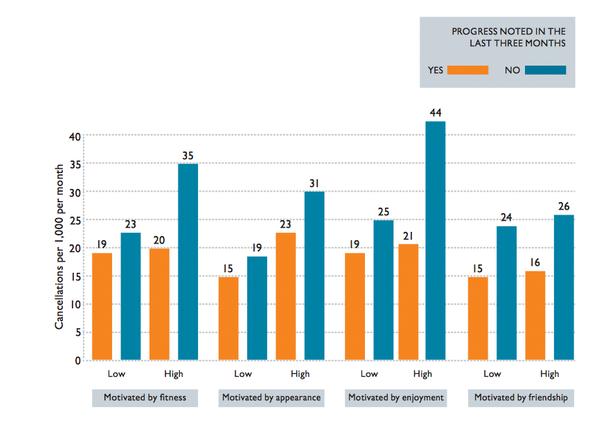
Figure 2
Figure 2

Table 2: Measures of progress ranked by risk of cancelling (1= lowest risk)
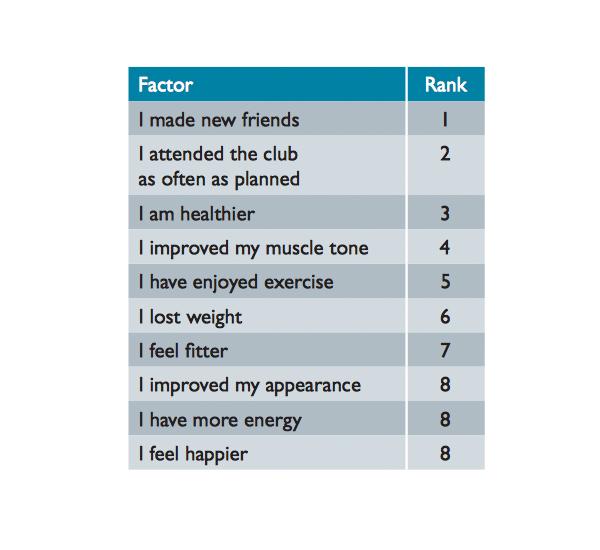
Table 2
Table 2

About TRP 10,000™

Conducted in partnership with The Retention People, TRP 10,000™ is the biggest and most comprehensive survey of member behaviour ever carried out in the fitness industry: 10,000 health and fitness members completed a baseline survey of their exercise habits and membership behaviour between July and September 2013. During regular intervals over the coming years, they will be followed up to measure changes to their habits and membership behaviour.

The results in this article are for members who completed the survey from July-September 2013 and who were followed up until the end of January 2014. In the follow-up period, 1,526 of participating members cancelled membership.

For more details of methodology, see part one of the series – HCM April 14, p38.

Melvyn Hillsdon is associate professor of exercise and health at the University of Exeter, where he researches physical activity and population health. Since his landmark retention report in 2001 (Winning the Retention Battle), his research into retention and attrition has led to the development of appropriate measures of retention, attrition and longevity that provide data for operators that can directly inform business decisions. In partnership with TRP, he has published numerous reports into the determinants of membership retention.


Sign up here to get HCM's weekly ezine and every issue of HCM magazine free on digital.
Those motivated by enjoyment tend to use the club more frequently / Photo: www.shutterstockphoto.com
More females are motivated by appearance than males / Photo: www.shutterstockphoto.com
Attending the club at the level planned reduces cancellation risk by 11 per cent / Photo: www.shutterstockphoto.com
https://www.leisureopportunities.co.uk/images/HCM2014_7drive.jpg
Lose weight, tone up, get fit? Is this what your members really want from a club, and how does it affect retention? Melvyn Hillsdon reports
Melvyn Hillsdon, Associate Professor of Exercise and Health at the University of Exeter,Melvyn Hillsdon, motivation, goal, retention, TRP 10,000, The Retention People
HCM magazine
HCM People

Jamie Clements

The Breath Coach
I experienced a blissful feeling of joy I hadn’t felt since I was a kid
HCM magazine
As the entrepreneur who started Wexer, Fresh Fitness, Fitness DK and Repeat, as well as being a former elite athlete, Rasmus Ingerslev’s life looked perfect from the outside, but onthe inside it was a different story. He talks to Kath Hudson about healing old wounds
HCM magazine
Raphael Cuomo explores the powerful link between addiction, health and behaviour change
HCM magazine
Small improvements to sleep, diet and physical activity have major benefits for the heart, according to new research from the University of Sydney
HCM magazine
For every member with a tripod and a big following, there are others irritated at the way equipment is being hogged or wary they’ll be in the background on someone’s Insta feed. Do influencers offer valuable, free marketing or are they just a nuisance? Kath Hudson finds out how operators are responding
HCM promotional features
Sponsored
Starpool supports Olympic champion Marcell Jacobs, says Riccardo Turri
HCM promotional features
Sponsored
Third Space partnered with IndigoFitness to deliver a bespoke training space for its new club at The Whiteley
HCM promotional features
Sponsored
Find out how your gym can tap into the corporate wellness boom
HCM promotional features
Sponsored
David Lloyd is stepping up its commitment to women’s health as it continues to explore what fit-for-purpose looks like for the female population
HCM promotional features
Sponsored
SnowDome Fitness has added 50 per cent more space with cutting-edge Technogym solutions
HCM promotional features
Sponsored
Greg Bradley looks at the shift towards strength training in gyms and advises on how operators can create the ultimate training environment
HCM promotional features
Sponsored
EGYM has opened a new HQ in Paternoster Square, London and revealed a range of new launches
HCM promotional features
Sponsored
Active IQ is calling for greater accountability in online fitness advice with the launch of a new trustmark
HCM promotional features
Sponsored
New launch, Salus House, elevates boutique wellness with high service levels and a partnership with Technogym
HCM promotional features
Latest News
Celebrating its 10th anniversary, Elevate has had its busiest show to date, with almost 200 ...
Latest News
A new report from Your Personal Training (YPT) suggests UK gym operators could be missing ...
Latest News
Eighty-four per cent of consumers now say wellness is a top priority in their lives, ...
Latest News
Elevate Arena is underway at London's Excel and the hot topic of AI was the ...
Latest News
PureGym Group has announced that group chief financial officer, Alex Wood, is taking over the ...
Latest News
Independent operator, Fitness Worx Gyms, is introducing private blood testing as a service to members. ...
Latest News
International industry lobbying associations are calling for physical activity and strength training to be deeply ...
Latest News
Global group exercise specialist, Les Mills, is inviting operators to sign up to its Workout ...
Opinion
promotion
Strength training has moved from the margins to the mainstream.
Opinion: Building smarter strength spaces for today’s operators
Featured supplier news
Featured supplier news: Cornerstone Connect helps Active Blackpool tackle health inequalities
Active Blackpool is deploying Cornerstone Connect, a new digital interface allowing disparate information from multiple systems to be aggregated into one dataset, to support its focus on reducing health inequalities and improving healthy life expectancy.
Featured supplier news
Featured supplier news: CoverMe extends matching service to personal training, rewriting how members and personal trainers connect
CoverMe, the global leader in fitness workforce management, today launches CoverMe PT, an on-demand personal training platform that connects the right personal trainer to the right client in under 10 seconds.
Company profiles
Company profile: Spirit Commercial Fitness
Spirit Fitness is a premier brand within the Dyaco International Inc. portfolio, a global leader ...
Company profiles
Company profile: ukactive
ukactive is the UK’s leading trade body for the physical activity sector, bringing together more ...
Supplier Showcases
Supplier Showcase - Future-proofing
Catalogue Gallery
Click on a catalogue to view it online
Featured press releases
Create PT press release: Create sets a new standard with its new personal training diploma
Create's new Personal Training Diploma is built on the depth, real-client practice and coaching judgement that turn a qualification into genuine readiness - taught as one continuous course so that every skill is reinforced and applied, not cleared once and forgotten.
Featured press releases
Leisure Energy press release: Studley Leisure Centre solar panel installation project begins
Stratford-on-Avon District Council is delighted to announce a new solar panel installation project at Studley Leisure Centre, marking an important step towards improving the sustainability of this valued community facility.
Directory
Fitness tracking platform
SpiviTech: Fitness tracking platform
Spa and beauty equipment
Oakworks Inc: Spa and beauty equipment
Lockers
Crown Sports Lockers: Lockers
Hot tubs
MSpa International Ltd: Hot tubs
Water experiences and hydrotherapy solutions
Aquaform s.r.l.: Water experiences and hydrotherapy solutions
Industrial washing machines
Miele Company Limited: Industrial washing machines
Property & Tenders
Stratford, East London.
Lee Valley Regional Park Authority
Property & Tenders
Y Felinheli, LL56 4QN
Newmark
Property & Tenders
Diary dates
22-23 Jun 2026
WX Wakefield , Wakefield, United Kingdom
Diary dates
21-24 Sep 2026
The Langham Huntington Pasadena , Pasadena, United States
Diary dates
06-08 Oct 2026
Messe Stuttgart, Stuttgart, Germany
Diary dates
22-22 Oct 2026
QEII Conference Centre, London,
Diary dates
26-29 Oct 2027
Koelnmesse Exhibition Centre, Cologne, Germany
Diary dates

features

Retention series: What drives you?

Lose weight, tone up, get fit – is this really what your members want from their club? Dr Melvyn Hillsdon takes a look at how different motivations and forms of progress impact on retention

By Dr Melvyn Hillsdon , University of Exeter | Published in Health Club Management 2014 issue 7

Members join their clubs with a variety of aspirations and goals regarding how they would like to see themselves in the future. However, until now no report has looked at whether clubs actually help members achieve their goals, or whether other unexpected changes occur for members through use of their club.

In the third of a series of reports from the TRP 10,000 (see p49), we will examine what members say motivates them to exercise, what progress they report in their most recent three months of membership, and how these two factors relate to membership retention.

Data and analysis
Members were asked to select, from a list of 17 options, what motivated them to exercise. These were then categorised into four main types of motivation: being motivated by fitness, by appearance, by enjoyment and by social factors (friendship). They were also asked to report how much progress they had made in the last three months, based on a list of 10 possible outcomes that broadly reflected the categories of motivation.

What motivates you?
Table 1 (see images) shows the proportion of members who reported being highly motivated by fitness, appearance, enjoyment or social factors according
to gender, age group, length of membership and visit frequency.

The proportion of members reporting high levels of motivation was similar across all categories, but marked differences were seen by gender, age, length of membership and visit frequency.

A higher proportion of females than males report being motivated by fitness and appearance, but less so enjoyment.

In general, the oldest health club members reported lower levels of motivation than younger members, especially when it came to appearance as a motivator. Three-quarters of the youngest members reported being highly motivated by appearance, compared to just one-fifth of the oldest members.

Length of membership was not strongly related to level of motivation, although long-standing members were less likely to report being highly motivated by appearance compared to newer members.

In general, frequent club users are more highly motivated than low frequency club users. Members who are highly motivated by enjoyment tend to use their club more frequently.

Progress reports
So what do members say they have made progress on in the last three months?

Figure 1 (see images) shows that members report at least some recent progress on a wide range of factors. The areas that most members report progress on are enjoying exercise, and feeling fitter and healthier. Factors where the lowest proportion of members report progress are losing weight and making new friends.

On average, members report progress on eight of the 10 factors in Figure 1, with no real differences by gender, age group or length of membership. However, members who use their club at least three times a week report significantly more progress than members who visit less than once a week.

But is the level of progress related to retention, and what are the most important factors? For each factor that members report they have made progress on, the risk of cancelling during the seven months after answering the question reduces by 10 per cent. This is true for members at all periods of membership. This suggests it’s always important for members to feel they’re making progress, however long they’ve been a member.

Table 2 (see images) shows each of the measures of progress ranked by how much they reduce the risk of cancelling. Members who made a friend in the last three months were least likely to cancel during the seven months after being surveyed – they were 40 per cent less likely to cancel their membership than members who did not make a friend. In fact, if all members had made a friend in the last three months, 14 per cent (214) of the 1,526 cancellations during the study’s follow-up period would have been avoided.

Attending the club at the level planned came second to making a friend – this reduced the risk of cancelling by 11 per cent. Improved appearance, having more energy and feeling happier were perhaps surprisingly not related to the risk of cancelling.

Motivation & progress
Do members need to make progress on the things they’re motivated by to reduce the rate of cancelled memberships?

The orange columns in Figure 2 (see images) represent the rate of cancellation for members reporting high and low levels of motivation, and who also report progress on the same factor. For example, there are 19 cancellations per 1,000 members per month among those who aren’t really motivated by fitness, but who nevertheless see progress in this area.

The blue columns represent the rate of cancellation for members who report levels of motivation but do not report any progress on things they’re motivated by – eg, there are 35 cancellations per 1,000 members per month among those who report being highly motivated by fitness, but who do not see results.

The first thing that can be seen is that all of the orange columns are lower than their corresponding blue columns, indicating that reporting progress always reduces the rate of cancelling compared to making no progress.

Secondly, members who report being highly motivated for each type of motivation – but who fail to report progress on those motivations – have the highest rates of cancellation. This group of members might be referred to as disappointed optimists. They might have had overly optimistic expectations about how much change they would see, and are then disappointed when they fail to achieve these anticipated changes.

This is particularly true for members motivated by enjoyment, who then find they’re not enjoying their exercise. These members are more than twice as likely to cancel compared to those who are motivated by enjoyment and who report they have enjoyed their exercise.

The lowest levels of cancellation are seen among members who report having made friends in the last three months, irrespective of whether this was one of their stated motives for exercising in the first place.

The other group logging low levels of cancellation are members who were not motivated by appearance, but who nevertheless felt they improved the way they looked over the last three months.

This is in fact a general trend: members stating low levels of motivation in any particular area, but who then reported progress in that area, had lower levels of cancellation. We might refer to this group as surprised pessimists. They start out with low expectations, but surprise themselves with the progress they make.

One other observation stands out. Members who were highly motivated by appearance and who report looking better nevertheless have a higher rate of cancellation than those who weren’t motivated by appearance and didn’t believe they improved their appearance – almost as if the motivated group remained dissatisfied with their appearance even though they felt it had improved.

Summary
A large proportion of members report some progress on a wide range of factors, although high levels of motivation vary by gender, age group, length of membership and the frequency of visits. Social motives such as making new friends are the most likely to improve membership retention.

It’s imperative for members to perceive that they are making progress at all times – if not, the risk of cancelling increases. Failure to achieve the things that members are highly motivated by is most likely to lead to cancellation. The lowest rate of retention (i.e. highest rate of cancellation) is seen among members who are highly motivated to enjoy exercise but then find they are not enjoying it. However, the pursuit of improved appearance – even if achieved – is not related to improved retention.

Based on the findings, we advise:
- Putting together a marketing strategy that conveys fun and friendliness
- Understanding members’ motivations and setting realistic plans to achieve them
- Regularly reviewing members’ progress and revising plans if needed
- Ensuring programmes are enjoyable
- Prioritising fun and friendship over fitness and thinness.

Table 1: People reporting high motivation levels

Table 1
Table 1

Figure 1: Proportion of members reporting
progress in the previous three months

Figure 1
Figure 1

Figure 2: Cancellation rate (number
of cancellations per 1,000 members
per month) by level of motivation and reported progress

Figure 2
Figure 2

Table 2: Measures of progress ranked by risk of cancelling (1= lowest risk)

Table 2
Table 2

About TRP 10,000™

Conducted in partnership with The Retention People, TRP 10,000™ is the biggest and most comprehensive survey of member behaviour ever carried out in the fitness industry: 10,000 health and fitness members completed a baseline survey of their exercise habits and membership behaviour between July and September 2013. During regular intervals over the coming years, they will be followed up to measure changes to their habits and membership behaviour.

The results in this article are for members who completed the survey from July-September 2013 and who were followed up until the end of January 2014. In the follow-up period, 1,526 of participating members cancelled membership.

For more details of methodology, see part one of the series – HCM April 14, p38.

Melvyn Hillsdon is associate professor of exercise and health at the University of Exeter, where he researches physical activity and population health. Since his landmark retention report in 2001 (Winning the Retention Battle), his research into retention and attrition has led to the development of appropriate measures of retention, attrition and longevity that provide data for operators that can directly inform business decisions. In partnership with TRP, he has published numerous reports into the determinants of membership retention.

Sign up here to get HCM's weekly ezine and every issue of HCM magazine free on digital.
Those motivated by enjoyment tend to use the club more frequently / Photo: www.shutterstockphoto.com
More females are motivated by appearance than males / Photo: www.shutterstockphoto.com
Attending the club at the level planned reduces cancellation risk by 11 per cent / Photo: www.shutterstockphoto.com
https://www.leisureopportunities.co.uk/images/HCM2014_7drive.jpg
Lose weight, tone up, get fit? Is this what your members really want from a club, and how does it affect retention? Melvyn Hillsdon reports
Melvyn Hillsdon, Associate Professor of Exercise and Health at the University of Exeter,Melvyn Hillsdon, motivation, goal, retention, TRP 10,000, The Retention People
Latest News
Celebrating its 10th anniversary, Elevate has had its busiest show to date, with almost 200 ...
Latest News
A new report from Your Personal Training (YPT) suggests UK gym operators could be missing ...
Latest News
Eighty-four per cent of consumers now say wellness is a top priority in their lives, ...
Latest News
Elevate Arena is underway at London's Excel and the hot topic of AI was the ...
Latest News
PureGym Group has announced that group chief financial officer, Alex Wood, is taking over the ...
Latest News
Independent operator, Fitness Worx Gyms, is introducing private blood testing as a service to members. ...
Latest News
International industry lobbying associations are calling for physical activity and strength training to be deeply ...
Latest News
Global group exercise specialist, Les Mills, is inviting operators to sign up to its Workout ...
Latest News
Global luxury hospitality brand, Six Senses, has partnered with longevity healthcare provider, HUM2N, to launch ...
Latest News
Premium London health club, KX Chelsea, is gearing up to unveil its most significant redevelopment ...
Latest News
Researchers in the US have identified an antibody which could greatly reduce the loss of ...
Opinion
promotion
Strength training has moved from the margins to the mainstream.
Opinion: Building smarter strength spaces for today’s operators
Featured supplier news
Featured supplier news: Cornerstone Connect helps Active Blackpool tackle health inequalities
Active Blackpool is deploying Cornerstone Connect, a new digital interface allowing disparate information from multiple systems to be aggregated into one dataset, to support its focus on reducing health inequalities and improving healthy life expectancy.
Featured supplier news
Featured supplier news: CoverMe extends matching service to personal training, rewriting how members and personal trainers connect
CoverMe, the global leader in fitness workforce management, today launches CoverMe PT, an on-demand personal training platform that connects the right personal trainer to the right client in under 10 seconds.
Company profiles
Company profile: Spirit Commercial Fitness
Spirit Fitness is a premier brand within the Dyaco International Inc. portfolio, a global leader ...
Company profiles
Company profile: ukactive
ukactive is the UK’s leading trade body for the physical activity sector, bringing together more ...
Supplier Showcases
Supplier Showcase - Future-proofing
Catalogue Gallery
Click on a catalogue to view it online
Featured press releases
Create PT press release: Create sets a new standard with its new personal training diploma
Create's new Personal Training Diploma is built on the depth, real-client practice and coaching judgement that turn a qualification into genuine readiness - taught as one continuous course so that every skill is reinforced and applied, not cleared once and forgotten.
Featured press releases
Leisure Energy press release: Studley Leisure Centre solar panel installation project begins
Stratford-on-Avon District Council is delighted to announce a new solar panel installation project at Studley Leisure Centre, marking an important step towards improving the sustainability of this valued community facility.
Directory
Fitness tracking platform
SpiviTech: Fitness tracking platform
Spa and beauty equipment
Oakworks Inc: Spa and beauty equipment
Lockers
Crown Sports Lockers: Lockers
Hot tubs
MSpa International Ltd: Hot tubs
Water experiences and hydrotherapy solutions
Aquaform s.r.l.: Water experiences and hydrotherapy solutions
Industrial washing machines
Miele Company Limited: Industrial washing machines
Property & Tenders
Stratford, East London.

Lee Valley Regional Park Authority
Property & Tenders
Y Felinheli, LL56 4QN
Newmark
Property & Tenders
Diary dates
22-23 Jun 2026
WX Wakefield , Wakefield, United Kingdom
Diary dates
21-24 Sep 2026
The Langham Huntington Pasadena , Pasadena, United States
Diary dates
06-08 Oct 2026
Messe Stuttgart, Stuttgart, Germany
Diary dates
22-22 Oct 2026
QEII Conference Centre, London,
Diary dates
26-29 Oct 2027
Koelnmesse Exhibition Centre, Cologne, Germany
Diary dates
Search news, features & products:
Find a supplier:
Partner sites