



















GET HCM
magazine
Sign up for the FREE digital edition of HCM magazine and also get the HCM ezine and breaking news email alerts.
Not right now, thanksclose this window I've already subscribed!
Elevate Arena
Elevate Arena
Elevate Arena
Follow Health Club Management on Twitter Like Health Club Management on Facebook Join the discussion with Health Club Management on LinkedIn
FITNESS, HEALTH, WELLNESS

features

Wellness cities: Active design

Jacqueline Bennett looks at whether, by adopting a new approach to design and city planning, we can make our cities – and their populations – well again
Published in Health Club Management 2014 issue 8
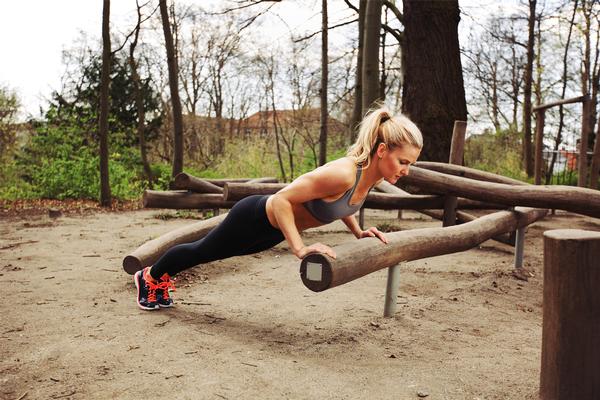
Fitness trails and green gyms that can be accessed on foot or by bike could be healthy assets for any town / Photo: shutterstock.com/Ammentorp Photography
Areas of the UK’s cities with the poorest health outcomes are those that have the least green space

Even Mick Cornett, the enterprising mayor of Oklahoma in the US, couldn’t have envisaged the huge impact his ‘We’re going to lose a million pounds’ campaign would have on the city when he launched the initiative in 2008 (www.thiscityisgoingonadiet.com).

After 18 months – with support from local restaurants providing healthier options, and sports facilities offering special discounts – the city’s residents had collectively lost half a million pounds in weight. But it was only after citizens agreed a seven-year, one cent increase in sales tax to fund new bike lanes, sidewalks, hiking trails, ice rinks, green spaces and wellness centres that the city finally reached its target in 2011.

Oklahoma reputedly now has the highest employment rate among adults of any city in the US, and firms are keen to invest and relocate there because the workforce is so much fitter than in other cities. Not only has the city become healthier, but it has become wealthier too.

Evidence and policy
Much is now being written about active design – designing, constructing and managing our environment in such a way as to encourage people to be active (see HCM March 14, p5). It’s an exciting idea and one that has had a long genesis in town planning in the UK.

The National Planning Policy Framework (NPPF) demonstrates how the planning system can play an important role in promoting healthy communities, leading to reductions in health inequalities, better access to healthy food, reduced obesity, more physical activity, better mental health and wellbeing, and improved air quality.

Meanwhile recent major reforms to planning and to health and social care – notably the National Planning Policy Framework 2012, the Health and Social Care Act 2012 (which created local Health and Wellbeing Boards) and the Localism Act 2011, which ushered in neighbourhood planning – now present many opportunities for joined-up thinking to improve people’s health.

These opportunities have been highlighted by, among others, the Town and Country Planning Association through its recent project Reuniting Health with Planning: Healthier Homes, Healthier Communities. This report offers an overview of how local authorities can improve health and reduce health inequalities by bringing together related disciplines such as housing, transport planning and regeneration. It includes a section designed to help local authorities and their partners identify links between public health objectives and how places can be shaped to respond to them.

Alongside growing statutory endorsement of the benefits of better town and city planning for improving health, fitness and quality of life, a raft of other documents and initiatives have emerged. In 2003, CABE Space – a specialist unit of CABE – was set up to champion the importance of urban public space, particularly parks and green spaces, in improving quality of life.

Meanwhile, in what has turned out to be a prescient document, Sport England published Active Design: Promoting opportunities for sport and physical activity through good design in the mid-2000s, integrating agendas around design, health and transport and setting out many examples encapsulating the three design objectives of improving accessibility, enhancing amenity and increasing awareness.

And in its City Health Check – published in 2012 and analysing health problems correlated to the amount of green and public space available in London and England’s eight ‘core cities’ – the Royal Institute of British Architects (RIBA) found that the areas of the UK’s cities with the poorest health outcomes are those that have the least green space. Moreover it’s the quality of streets and parks, as much as the quantity, that encourages people to walk more.

Then there’s the Design Council in the UK, which is currently championing its own Active by Design campaign – including a conference in London next month – to address the serious health issues facing us, brought on by a lack of physical exercise and poor diet. It aims to be a catalyst for change, finding new links and connecting aspects of the planning system, health service and the built environment sector, both public and private, where few currently exist.

So as the above testifies, there’s now a plethora of advice, guidance and campaigns around improving our environment to benefit our health and wellness.

Theory into practice
So how is all this manifesting itself in practice? Initiatives so far range from the quirky – such as designing stairs to look like piano keys – to more grandiose schemes such as the High Line in New York, US, where the old elevated railway track in lower Manhattan has been resurfaced and turned into a green walkway.

Meanwhile the Movement for Liveable London campaign is aiming for a more pleasant and healthy city by changing the way people move around it. This sits in line with Sport England’s Active Design report, which talks about linking popular “everyday activity destinations” – so that’s shops, schools, doctors’ surgeries and main workplaces – via cyclepaths and good, pedestrian-friendly walkways.

Another nice example is Living Streets’ Fitter for Walking programme, funded through the Big Lottery’s Wellbeing Programme, which has provided support and information to residents and promoted small-scale enhancements to streets in selected city areas across the UK. Increases in walking were recorded within almost all the targeted areas.

Connecting the existing network
Now, when we build anything new, we need to be aware of the enormous possibilities out there, and how even small changes to design can have a huge knock-on effect in terms of getting people active. But equally, we must not lose sight of the facilities we already have and how we can integrate them into the brave new world of active design, ensuring they are both viable and sustainable.

For example, the facilities laid out in our traditional recreation grounds during the mid-20th century – typically a couple of football pitches, a cricket square, some tennis courts and a bowling green – represented a ‘keep fit’ package then aspired to, which suited people’s way of life. It would be taken for granted that you would cycle or walk there, although rarely along special cycleways or footpaths. However, their pattern and level of use is changing: for example, there’s a trend away from grass surfaces for adult 11-a-side football towards small-sided soccer on artificial grass pitches. There’s also a drop-off in demand for outdoor public tennis courts and bowling greens, leaving some of them sadly under-used.

Parallel to this, there has been an explosion in the number of running and cycling groups, clubs and events now taking place throughout the UK, catering for all levels of ability and demand.

Recreation grounds have adapted to some extent: adding children’s play areas, changing tennis courts to multi-use games surfaces, installing floodlights to extend hours of use and constructing ‘trim trails’.

But although there’s still a range of funding sources for developing and improving sports facilities, particularly for the voluntary sector, local authorities have seen their budgets for provision, enhancement and maintenance severely reduced, and also have fewer personnel to promote, supervise and manage them. Meanwhile, well over half of all sports facilities are located on school, college and university sites; we still need to encourage and support their use by the wider community, not only to make the best use of resources but also to show young people that to be physically active is important for their whole life.

We need to link all these existing facilities in to the Active Design movement, and try to bridge the divides that exist between fitness and sport, between indoor and outdoor facilities and between public, educational and commercial sites. It’s wonderful to have new cycleways and footpaths, but wherever possible let’s try and link them to other existing ‘activity destinations’ – sports centres, outdoor and indoor pools, floodlit astroturf pitches, grass pitches, tennis courts, allotments, beaches, rivers and school sports facilities.

We can use open space in parks more effectively too, by providing sheltered seating and meeting points, water fountains and outdoor showers, measured walking tracks, wildflower meadows and healthy food outlets. Many such projects are being funded through the Fields in Trust (formerly the NPFA) and its Queen Elizabeth II Fields initiative, which set out to permanently protect outdoor recreational spaces.

On a positive note, some sports centres are already using health sector funding to provide bicycles and are setting up local cycling networks; others are increasingly used as bases for running and cycling events. But as further food for thought, how about converting disused tennis courts to small allotment areas? Co-locating facilities in this way can bring many benefits in terms of increased use, more revenue, improved sustainability and better supervision.

Maximising use
In its City Health Check document, RIBA recommended the production of Healthy Infrastructure Action Plans in local authorities that comprise less than 50 per cent green space and/or have a housing density of over 5 per cent, with the idea that these might be partly funded through the Community Infrastructure Levy.

A spin-off from this could be the creation of fitness trails that set out measured routes by foot or bicycle linking ‘activity destinations’, with opportunities to stop off along the way. It would be great to encourage people using these to become volunteers and responsibly monitor use of facilities, so that as well as benefiting their own health, they are helping others.

Indeed, some local authorities are already training up volunteers to check for litter and damage to play areas and paddling pools, so they can notify the local authority if there’s an urgent problem to attend to, thus making more efficient use of maintenance staff’s time.

As well as taking responsibility for our own health, we need to take responsibility for our active environment, as in this current era of reduced public sector expenditure we risk losing any sports and fitness facilities we don’t use. There are already many wonderful opportunities out there – let’s encourage their use as effectively as we can.

If you’d like to know more…

Some of the documents referenced in this feature can be found online:

* Reuniting Health with Planning: Healthier Homes, Healthier Communities – www.health-club.co.uk/TCPA

* Active Design: Promoting opportunities for sport and physical activity through good design – www.health-club.co.uk/sportengland_activedesign

* City Health Check – www.health-club.co.uk/cityhealthcheck

Jacqueline Bennett
Jacqueline Bennett

Jacqueline Bennett is a town planner based in the West Country, UK. She and her husband Kevin run a consultancy – belap – which specialises in planning for sport, recreation and health, preparing strategies and studies for local authorities and other public, voluntary and private sector clients throughout the south of England. She is particularly interested in changing patterns of use and provision related to outdoor sports and recreation facilities.

Web www.belap.co.uk Tel +44 (0)7870 698639
Sign up here to get HCM's weekly ezine and every issue of HCM magazine free on digital.
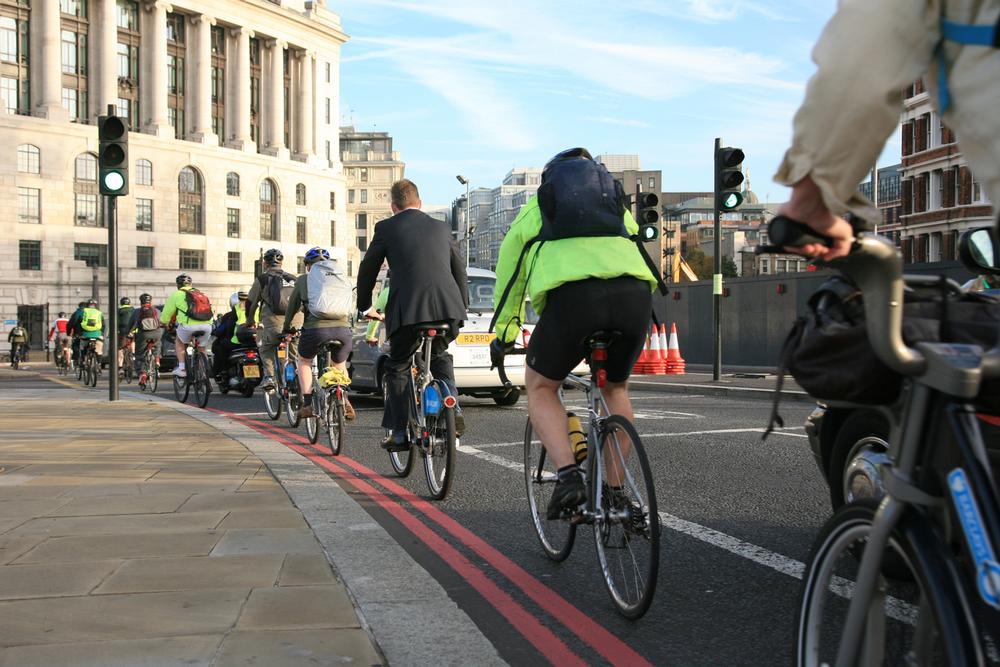
City planners are now looking at active design as one way to improve health / Photo: shutterstock.com
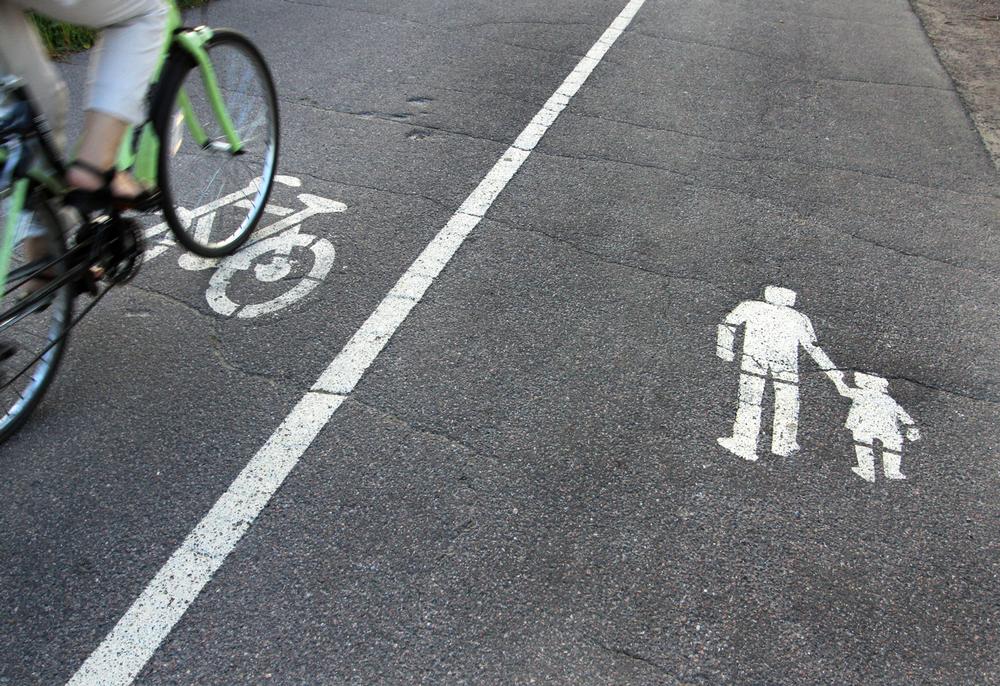
Activity facilities in towns and cities should be linked via cyclepaths and walkways / Photo: shutterstock.com/Bikeworldtravel
https://www.leisureopportunities.co.uk/images/177417_955702.jpg
Could adopting a different approach to city design and planning help make the UK population healthier? Jacqueline Bennett reports
Jacqueline Bennett is a town planner based in the West Country, UK,City planning, town planning, active design, cycle lanes, walking
HCM magazine
For every member with a tripod and a big following, there are others irritated at the way equipment is being hogged or wary they’ll be in the background on someone’s Insta feed. Do influencers offer valuable, free marketing or are they just a nuisance? Kath Hudson finds out how operators are responding
HCM magazine
HCM People

Stephen Price

Founder, SP&Co Group
Working in public health over the last few years has lit up parts of my brain again
HCM magazine
If the health service is to survive, we must recognise that it is a disease service – and that wellbeing rests with us, says the activity advocate and healthy ageing champion. He talks to Kate Cracknell
HCM magazine
Small improvements to sleep, diet and physical activity have major benefits for the heart, according to new research from the University of Sydney
HCM magazine
I experienced a blissful feeling of joy I hadn’t felt since I was a kid
HCM promotional features
Sponsored
Starpool supports Olympic champion Marcell Jacobs, says Riccardo Turri
HCM promotional features
Sponsored
Find out how your gym can tap into the corporate wellness boom
HCM promotional features
Sponsored
SnowDome Fitness has added 50 per cent more space with cutting-edge Technogym solutions
HCM promotional features
Sponsored
David Lloyd is stepping up its commitment to women’s health as it continues to explore what fit-for-purpose looks like for the female population
HCM promotional features
Sponsored
Third Space partnered with IndigoFitness to deliver a bespoke training space for its new club at The Whiteley
HCM promotional features
Sponsored
Greg Bradley looks at the shift towards strength training in gyms and advises on how operators can create the ultimate training environment
HCM promotional features
Sponsored
EGYM has opened a new HQ in Paternoster Square, London and revealed a range of new launches
HCM promotional features
Promotion
Performance Health Systems, manufacturer of Power Plate, has a new CEO, with an ambitious vision for the company
HCM promotional features
Sponsored
New launch, Salus House, elevates boutique wellness with high service levels and a partnership with Technogym
HCM promotional features
Latest News
PureGym Group has announced that group chief financial officer, Alex Wood, is taking over the ...
Latest News
Independent operator, Fitness Worx Gyms, is introducing private blood testing as a service to members. ...
Latest News
International industry lobbying associations are calling for physical activity and strength training to be deeply ...
Latest News
Global group exercise specialist, Les Mills, is inviting operators to sign up to its Workout ...
Latest News
Global luxury hospitality brand, Six Senses, has partnered with longevity healthcare provider, HUM2N, to launch ...
Latest News
Premium London health club, KX Chelsea, is gearing up to unveil its most significant redevelopment ...
Latest News
Researchers in the US have identified an antibody which could greatly reduce the loss of ...
Latest News
Peloton has made the strategic acquisition of Pilates start-up, Skōp, to support the expansion of ...
Opinion
promotion
Strength training has moved from the margins to the mainstream.
Opinion: Building smarter strength spaces for today’s operators
Featured supplier news
Featured supplier news: CoverMe extends matching service to personal training, rewriting how members and personal trainers connect
CoverMe, the global leader in fitness workforce management, today launches CoverMe PT, an on-demand personal training platform that connects the right personal trainer to the right client in under 10 seconds.
Featured supplier news
Featured supplier news: Cornerstone Connect helps Active Blackpool tackle health inequalities
Active Blackpool is deploying Cornerstone Connect, a new digital interface allowing disparate information from multiple systems to be aggregated into one dataset, to support its focus on reducing health inequalities and improving healthy life expectancy.
Company profiles
Company profile: Absolute Performance
Absolute Performance is one of the UK’s leading gym design and installation companies. We install ...
Company profiles
Company profile: ukactive
ukactive is the UK’s leading trade body for the physical activity sector, bringing together more ...
Supplier Showcases
Supplier Showcase - Future-proofing
Catalogue Gallery
Click on a catalogue to view it online
Featured press releases
Shua Fitness press release: Shua Fitness marks strategic UK market entry through Elevate 2026 Partnership
Shua Fitness has announced its support of the landmark 10th anniversary edition of Elevate, sponsoring the event’s biggest-ever waterfront drinks reception and reinforcing its long- term commitment to the UK market.
Featured press releases
Alliance Leisure Services (Design, Build and Fund) press release: Alliance Leisure completes £15m transformation at Doncaster Dome
Alliance Leisure are excited to announce the completion of works to the Lagoons at Doncaster Dome, on behalf of Doncaster Culture and Leisure Trust, funded by City of Doncaster Council.
Directory
Water experiences and hydrotherapy solutions
Aquaform s.r.l.: Water experiences and hydrotherapy solutions
Lockers
Crown Sports Lockers: Lockers
Industrial washing machines
Miele Company Limited: Industrial washing machines
Hot tubs
MSpa International Ltd: Hot tubs
Spa and beauty equipment
Oakworks Inc: Spa and beauty equipment
Fitness tracking platform
SpiviTech: Fitness tracking platform
Property & Tenders
Stratford, East London.
Lee Valley Regional Park Authority
Property & Tenders
Y Felinheli, LL56 4QN
Newmark
Property & Tenders
Diary dates
22-23 Jun 2026
WX Wakefield , Wakefield, United Kingdom
Diary dates
21-24 Sep 2026
The Langham Huntington Pasadena , Pasadena, United States
Diary dates
06-08 Oct 2026
Messe Stuttgart, Stuttgart, Germany
Diary dates
22-22 Oct 2026
QEII Conference Centre, London,
Diary dates
26-29 Oct 2027
Koelnmesse Exhibition Centre, Cologne, Germany
Diary dates

features

Wellness cities: Active design

Jacqueline Bennett looks at whether, by adopting a new approach to design and city planning, we can make our cities – and their populations – well again

Published in Health Club Management 2014 issue 8
Fitness trails and green gyms that can be accessed on foot or by bike could be healthy assets for any town / Photo: shutterstock.com/Ammentorp Photography
Areas of the UK’s cities with the poorest health outcomes are those that have the least green space

Even Mick Cornett, the enterprising mayor of Oklahoma in the US, couldn’t have envisaged the huge impact his ‘We’re going to lose a million pounds’ campaign would have on the city when he launched the initiative in 2008 (www.thiscityisgoingonadiet.com).

After 18 months – with support from local restaurants providing healthier options, and sports facilities offering special discounts – the city’s residents had collectively lost half a million pounds in weight. But it was only after citizens agreed a seven-year, one cent increase in sales tax to fund new bike lanes, sidewalks, hiking trails, ice rinks, green spaces and wellness centres that the city finally reached its target in 2011.

Oklahoma reputedly now has the highest employment rate among adults of any city in the US, and firms are keen to invest and relocate there because the workforce is so much fitter than in other cities. Not only has the city become healthier, but it has become wealthier too.

Evidence and policy
Much is now being written about active design – designing, constructing and managing our environment in such a way as to encourage people to be active (see HCM March 14, p5). It’s an exciting idea and one that has had a long genesis in town planning in the UK.

The National Planning Policy Framework (NPPF) demonstrates how the planning system can play an important role in promoting healthy communities, leading to reductions in health inequalities, better access to healthy food, reduced obesity, more physical activity, better mental health and wellbeing, and improved air quality.

Meanwhile recent major reforms to planning and to health and social care – notably the National Planning Policy Framework 2012, the Health and Social Care Act 2012 (which created local Health and Wellbeing Boards) and the Localism Act 2011, which ushered in neighbourhood planning – now present many opportunities for joined-up thinking to improve people’s health.

These opportunities have been highlighted by, among others, the Town and Country Planning Association through its recent project Reuniting Health with Planning: Healthier Homes, Healthier Communities. This report offers an overview of how local authorities can improve health and reduce health inequalities by bringing together related disciplines such as housing, transport planning and regeneration. It includes a section designed to help local authorities and their partners identify links between public health objectives and how places can be shaped to respond to them.

Alongside growing statutory endorsement of the benefits of better town and city planning for improving health, fitness and quality of life, a raft of other documents and initiatives have emerged. In 2003, CABE Space – a specialist unit of CABE – was set up to champion the importance of urban public space, particularly parks and green spaces, in improving quality of life.

Meanwhile, in what has turned out to be a prescient document, Sport England published Active Design: Promoting opportunities for sport and physical activity through good design in the mid-2000s, integrating agendas around design, health and transport and setting out many examples encapsulating the three design objectives of improving accessibility, enhancing amenity and increasing awareness.

And in its City Health Check – published in 2012 and analysing health problems correlated to the amount of green and public space available in London and England’s eight ‘core cities’ – the Royal Institute of British Architects (RIBA) found that the areas of the UK’s cities with the poorest health outcomes are those that have the least green space. Moreover it’s the quality of streets and parks, as much as the quantity, that encourages people to walk more.

Then there’s the Design Council in the UK, which is currently championing its own Active by Design campaign – including a conference in London next month – to address the serious health issues facing us, brought on by a lack of physical exercise and poor diet. It aims to be a catalyst for change, finding new links and connecting aspects of the planning system, health service and the built environment sector, both public and private, where few currently exist.

So as the above testifies, there’s now a plethora of advice, guidance and campaigns around improving our environment to benefit our health and wellness.

Theory into practice
So how is all this manifesting itself in practice? Initiatives so far range from the quirky – such as designing stairs to look like piano keys – to more grandiose schemes such as the High Line in New York, US, where the old elevated railway track in lower Manhattan has been resurfaced and turned into a green walkway.

Meanwhile the Movement for Liveable London campaign is aiming for a more pleasant and healthy city by changing the way people move around it. This sits in line with Sport England’s Active Design report, which talks about linking popular “everyday activity destinations” – so that’s shops, schools, doctors’ surgeries and main workplaces – via cyclepaths and good, pedestrian-friendly walkways.

Another nice example is Living Streets’ Fitter for Walking programme, funded through the Big Lottery’s Wellbeing Programme, which has provided support and information to residents and promoted small-scale enhancements to streets in selected city areas across the UK. Increases in walking were recorded within almost all the targeted areas.

Connecting the existing network
Now, when we build anything new, we need to be aware of the enormous possibilities out there, and how even small changes to design can have a huge knock-on effect in terms of getting people active. But equally, we must not lose sight of the facilities we already have and how we can integrate them into the brave new world of active design, ensuring they are both viable and sustainable.

For example, the facilities laid out in our traditional recreation grounds during the mid-20th century – typically a couple of football pitches, a cricket square, some tennis courts and a bowling green – represented a ‘keep fit’ package then aspired to, which suited people’s way of life. It would be taken for granted that you would cycle or walk there, although rarely along special cycleways or footpaths. However, their pattern and level of use is changing: for example, there’s a trend away from grass surfaces for adult 11-a-side football towards small-sided soccer on artificial grass pitches. There’s also a drop-off in demand for outdoor public tennis courts and bowling greens, leaving some of them sadly under-used.

Parallel to this, there has been an explosion in the number of running and cycling groups, clubs and events now taking place throughout the UK, catering for all levels of ability and demand.

Recreation grounds have adapted to some extent: adding children’s play areas, changing tennis courts to multi-use games surfaces, installing floodlights to extend hours of use and constructing ‘trim trails’.

But although there’s still a range of funding sources for developing and improving sports facilities, particularly for the voluntary sector, local authorities have seen their budgets for provision, enhancement and maintenance severely reduced, and also have fewer personnel to promote, supervise and manage them. Meanwhile, well over half of all sports facilities are located on school, college and university sites; we still need to encourage and support their use by the wider community, not only to make the best use of resources but also to show young people that to be physically active is important for their whole life.

We need to link all these existing facilities in to the Active Design movement, and try to bridge the divides that exist between fitness and sport, between indoor and outdoor facilities and between public, educational and commercial sites. It’s wonderful to have new cycleways and footpaths, but wherever possible let’s try and link them to other existing ‘activity destinations’ – sports centres, outdoor and indoor pools, floodlit astroturf pitches, grass pitches, tennis courts, allotments, beaches, rivers and school sports facilities.

We can use open space in parks more effectively too, by providing sheltered seating and meeting points, water fountains and outdoor showers, measured walking tracks, wildflower meadows and healthy food outlets. Many such projects are being funded through the Fields in Trust (formerly the NPFA) and its Queen Elizabeth II Fields initiative, which set out to permanently protect outdoor recreational spaces.

On a positive note, some sports centres are already using health sector funding to provide bicycles and are setting up local cycling networks; others are increasingly used as bases for running and cycling events. But as further food for thought, how about converting disused tennis courts to small allotment areas? Co-locating facilities in this way can bring many benefits in terms of increased use, more revenue, improved sustainability and better supervision.

Maximising use
In its City Health Check document, RIBA recommended the production of Healthy Infrastructure Action Plans in local authorities that comprise less than 50 per cent green space and/or have a housing density of over 5 per cent, with the idea that these might be partly funded through the Community Infrastructure Levy.

A spin-off from this could be the creation of fitness trails that set out measured routes by foot or bicycle linking ‘activity destinations’, with opportunities to stop off along the way. It would be great to encourage people using these to become volunteers and responsibly monitor use of facilities, so that as well as benefiting their own health, they are helping others.

Indeed, some local authorities are already training up volunteers to check for litter and damage to play areas and paddling pools, so they can notify the local authority if there’s an urgent problem to attend to, thus making more efficient use of maintenance staff’s time.

As well as taking responsibility for our own health, we need to take responsibility for our active environment, as in this current era of reduced public sector expenditure we risk losing any sports and fitness facilities we don’t use. There are already many wonderful opportunities out there – let’s encourage their use as effectively as we can.

If you’d like to know more…

Some of the documents referenced in this feature can be found online:

* Reuniting Health with Planning: Healthier Homes, Healthier Communities – www.health-club.co.uk/TCPA

* Active Design: Promoting opportunities for sport and physical activity through good design – www.health-club.co.uk/sportengland_activedesign

* City Health Check – www.health-club.co.uk/cityhealthcheck

Jacqueline Bennett
Jacqueline Bennett

Jacqueline Bennett is a town planner based in the West Country, UK. She and her husband Kevin run a consultancy – belap – which specialises in planning for sport, recreation and health, preparing strategies and studies for local authorities and other public, voluntary and private sector clients throughout the south of England. She is particularly interested in changing patterns of use and provision related to outdoor sports and recreation facilities.

Web www.belap.co.uk Tel +44 (0)7870 698639
Sign up here to get HCM's weekly ezine and every issue of HCM magazine free on digital.
City planners are now looking at active design as one way to improve health / Photo: shutterstock.com
Activity facilities in towns and cities should be linked via cyclepaths and walkways / Photo: shutterstock.com/Bikeworldtravel
https://www.leisureopportunities.co.uk/images/177417_955702.jpg
Could adopting a different approach to city design and planning help make the UK population healthier? Jacqueline Bennett reports
Jacqueline Bennett is a town planner based in the West Country, UK,City planning, town planning, active design, cycle lanes, walking
Latest News
PureGym Group has announced that group chief financial officer, Alex Wood, is taking over the ...
Latest News
Independent operator, Fitness Worx Gyms, is introducing private blood testing as a service to members. ...
Latest News
International industry lobbying associations are calling for physical activity and strength training to be deeply ...
Latest News
Global group exercise specialist, Les Mills, is inviting operators to sign up to its Workout ...
Latest News
Global luxury hospitality brand, Six Senses, has partnered with longevity healthcare provider, HUM2N, to launch ...
Latest News
Premium London health club, KX Chelsea, is gearing up to unveil its most significant redevelopment ...
Latest News
Researchers in the US have identified an antibody which could greatly reduce the loss of ...
Latest News
Peloton has made the strategic acquisition of Pilates start-up, Skōp, to support the expansion of ...
Latest News
Crunch Fitness has announced the launch of Crunch Reform Pilates – its own reformer concept ...
Latest News
The 20th State of the Industry Report from LeisureDB has revealed a resilient, expanding and ...
Latest News
Purpose Brands has announced its entry into the Italian market, having sold the franchise rights ...
Opinion
promotion
Strength training has moved from the margins to the mainstream.
Opinion: Building smarter strength spaces for today’s operators
Featured supplier news
Featured supplier news: CoverMe extends matching service to personal training, rewriting how members and personal trainers connect
CoverMe, the global leader in fitness workforce management, today launches CoverMe PT, an on-demand personal training platform that connects the right personal trainer to the right client in under 10 seconds.
Featured supplier news
Featured supplier news: Cornerstone Connect helps Active Blackpool tackle health inequalities
Active Blackpool is deploying Cornerstone Connect, a new digital interface allowing disparate information from multiple systems to be aggregated into one dataset, to support its focus on reducing health inequalities and improving healthy life expectancy.
Company profiles
Company profile: Absolute Performance
Absolute Performance is one of the UK’s leading gym design and installation companies. We install ...
Company profiles
Company profile: ukactive
ukactive is the UK’s leading trade body for the physical activity sector, bringing together more ...
Supplier Showcases
Supplier Showcase - Future-proofing
Catalogue Gallery
Click on a catalogue to view it online
Featured press releases
Shua Fitness press release: Shua Fitness marks strategic UK market entry through Elevate 2026 Partnership
Shua Fitness has announced its support of the landmark 10th anniversary edition of Elevate, sponsoring the event’s biggest-ever waterfront drinks reception and reinforcing its long- term commitment to the UK market.
Featured press releases
Alliance Leisure Services (Design, Build and Fund) press release: Alliance Leisure completes £15m transformation at Doncaster Dome
Alliance Leisure are excited to announce the completion of works to the Lagoons at Doncaster Dome, on behalf of Doncaster Culture and Leisure Trust, funded by City of Doncaster Council.
Directory
Water experiences and hydrotherapy solutions
Aquaform s.r.l.: Water experiences and hydrotherapy solutions
Lockers
Crown Sports Lockers: Lockers
Industrial washing machines
Miele Company Limited: Industrial washing machines
Hot tubs
MSpa International Ltd: Hot tubs
Spa and beauty equipment
Oakworks Inc: Spa and beauty equipment
Fitness tracking platform
SpiviTech: Fitness tracking platform
Property & Tenders
Stratford, East London.
Lee Valley Regional Park Authority
Property & Tenders
Y Felinheli, LL56 4QN
Newmark
Property & Tenders
Diary dates
22-23 Jun 2026
WX Wakefield , Wakefield, United Kingdom
Diary dates
21-24 Sep 2026
The Langham Huntington Pasadena , Pasadena, United States
Diary dates
06-08 Oct 2026
Messe Stuttgart, Stuttgart, Germany
Diary dates
22-22 Oct 2026
QEII Conference Centre, London,
Diary dates
26-29 Oct 2027

Koelnmesse Exhibition Centre, Cologne, Germany
Diary dates
Search news, features & products:
Find a supplier:
Elevate Arena
Elevate Arena
Partner sites