





















Follow Health Club Management on Twitter Like Health Club Management on Facebook Join the discussion with Health Club Management on LinkedIn
FITNESS, HEALTH, WELLNESS

features

Talking point: Everyone’s talking about ... the place-based model

It’s become the go-to model in the drive to improve access to physical activity for all, so is the place-based model working or does it need to evolve? Kath Hudson reports

Published in Health Club Management 2025 issue 6
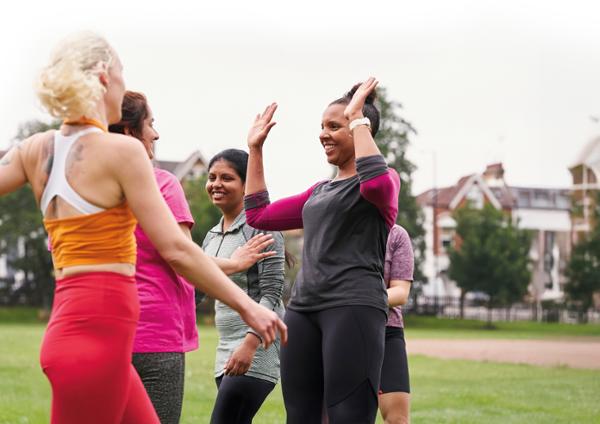
The goal is to ensure everyone has equal access to getting active / photo: SPORT ENGLAND

Sport England started piloting place-based schemes and interventions in 2018, to find more sustainable ways to break down the barriers that stop people moving more and doing this in ways that are appropriate for each community.

Rather than imposing one-size-fits-all solutions, the place-based approach builds trusted local partnerships and fosters community representation to create tailored interventions from the ground-up.

Sport England’s Place Partnerships is now investing resources and efforts in the communities experiencing the highest levels of inequality. More than £250m is being ploughed into 90 Place Partnerships across England – each area receiving support is in the top 10 per cent of the country for inactivity, social need, deprivation and health inequality.

With location resulting in a difference in lifespan of up to nine years, and only 55.5 per cent of people in the most deprived areas being active – compared to 68.9 per cent of those living in the least deprived areas – a powerful intervention is needed.

However, the place-based approach requires time, patient policy-making, dedicated resources and skilled workforces to build relationships and understand complex local contexts.

Can the best results always be achieved by looking exclusively for solutions in each community? Would a greater cross-pollination of ideas across areas be more effective and would such an approach speed up results, or would it undermine them? We ask the experts…

Lisa Dodd-Mayne
Executive director for place, Sport England
Thomas Gadd Photography

We believe that when it comes to the needs and aspirations of a community, nobody will know this better than the brilliant, dedicated people who have made their lives there. By listening, collaborating and harnessing the enthusiasm and expertise at the heart of each community, we can build better places across England and support more people to be active.

Our work involves making changes across a whole system, including Active Partnerships, local government, the health service, the community and voluntary sector, transport and housing sectors. Together, we work to understand the lived experience of that community and co-design activities with the communities themselves. Partners are encouraged to find solutions that help people to move more – including changes to local policies across multiple sectors, as well as combining resources to create new opportunities.

This place-based approach is evolving all the time. We still don’t have all the answers and that’s OK. Every day we’re learning more about the ways in which we can work together to have the maximum impact in local communities. Sheffield Hallam University, as our national evaluation and learning partner, is helping us to really understand the impact of this work. We then share all those insights, best practice examples and learning at a national level alongside our local place partners.

This is a long-term shift in how we work – led by local voices, shaped by lived experience and focused on changing systems to ensure everyone has equal access to getting active. By investing deeply, listening carefully and working together, we’re transforming the conditions that enable opportunities to be active – a national movement, powered locally.

The place-based approach is evolving all the time
Ben Andrews
Founder, Beyond Empower
photo: Beyond Empower

Communities must be in the driving seat if we’re to achieve any meaningful change. For too long people have been done to, rather than with, which has failed to deliver the outcomes needed.

However, over time, the true meaning of the place-based approach seems to have become distorted. Many interpret the approach as everything must come from within that one community from insights to finding and implementing solutions. From my experience, what often happens is that one issue – usually the most vocal concern in the room – gets prioritised, even if it’s not the greatest challenge the community faces.

No single community can be expected to have all the answers. The idea that every solution must come solely from local sources can be limiting, especially when there’s a lack of resources, capacity, or expertise there to address challenges. We need to recognise that national data, alongside local insights, can offer a valuable perspective on what works elsewhere and which solutions have already been tested and refined.

Rather than seeing this as a deviation from place-based principles, I believe this is part of an evolving understanding of how change happens. It’s about creating a framework where communities have the opportunity to partner with external experts, organisations and even other communities who have dealt with similar challenges.

This collaboration should be seen as an asset, not a threat to local ownership. Communities should be empowered to drive change, but they shouldn’t feel that they have to shoulder every challenge alone, especially when solutions already exist elsewhere and could be adapted to fit local needs.

When we focus on what will actually serve the community’s best interests, we open up a world of possibilities.

I believe that no single community can be expected to have all the answers
Communities can benefit from what’s working elsewhere / photo: SPORT ENGLAND
Martyn Allison
Catalyst for change

Place-based working is still in its infancy and the more we encourage debate and discussion on how we tackle the deep-seated inequalities in activity the better.

For more than 40 years, our traditional approaches to encouraging some people to become more active have failed. Inequality now is much the same as it was when I first helped establish sports development in the early 1980s. We now understand that the reasons for exclusion are complex, are often different in different places and one size does not fit all.

Communities usually know how things could be made better, if only they were asked. But even consultation doesn’t always work because we do it in a way that still excludes, or we end up listening to only the loud voices. When nothing changes as a result we further bake in the exclusion, along with a huge lack of trust.

Co-production – attempting to develop services with communities, rather than for them – is the best way of avoiding this scenario. This approach is prevalent in many of the Sport England Local Delivery Pilots and Street Games also uses this approach by engaging with locally trusted organisations who work with excluded communities.

If some communities lack the capacity to engage with co-production, I think the solution is to build the capacity to engage better. Many community development organisations, such as the Active Wellbeing Society in Birmingham, have been successful in empowering communities to become more active citizens. This provides a real opportunity to finally turn the dial and work differently as a sector if we’re prepared to learn, share and collaborate better.

Communities usually know how things could be made better, if only they were asked
Communities can be empowered to be more active citizens / photo: SPORT ENGLAND
Jack Shakespeare
Director of strategic projects, 4Global
photo: 4Global

Effective use of data is key to unlocking the potential of the place-based approach. Data is not only a by-product of place-based working, but a vital lever to ensure that inclusive participation efforts are intentional, responsive and scalable. When harnessed strategically, data empowers both communities and systems to learn, adapt and sustain meaningful change.

High-quality data allows stakeholders to identify where inequalities in participation exist, who is being excluded and why barriers persist. Disaggregated data – considering factors such as ethnicity, disability, gender, socioeconomic status and geography – enables targeted interventions that reflect the lived realities of communities. This allows delivery partners to make evidence-informed decisions about where to focus resources, how to design culturally-relevant programmes, and adapt delivery to maximise inclusion.

Data also plays a critical role in building accountability and trust: when communities see that insights gathered from their experiences are being used to shape services and measure progress, it strengthens local ownership and transparency.

Aggregated insights from multiple place-based initiatives can highlight common patterns, systemic barriers and successful approaches that are transferable across regions. This shared intelligence helps national bodies, funders and policymakers to better align strategies, make informed investment decisions and advocate for structural change that supports long-term, equitable participation growth.

Investing in shared data infrastructure – including interoperable systems, common indicators and evaluation frameworks – helps cross-sector partners collaborate more effectively. As health, education and social care systems increasingly recognise the role of physical activity in delivering societal outcomes, the ability to demonstrate cross-cutting impact through integrated data becomes even more valuable.

High-quality data allows stakeholders to identify where inequalities in participation exist, who is being excluded and why certain barriers persist
Sport England’s Social Value Calculator shows shared data in action / photo: SPORT ENGLAND
Rich Holmes
MD, Go Together
photo: Go TOgether

The place-based approach turns professionals into facilitators rather than deliverers of top-down solutions. The process is much more than consultation – it’s about co-producing decisions and letting communities take charge of shaping their own future. This shift can disrupt traditional procurement models and requires leaders to embrace uncertainty and relinquish control, welcoming the messiness of community-led change.

Ultimately, place-based approaches are as much about investing in relationships that create the foundation for future collaboration rather than simply addressing immediate challenges.

Facilitators must strike a delicate balance between guiding change and ensuring communities don’t become stuck without progress. Sometimes, communities need to be connected to ideas beyond their own context, via inspiration rather than imposing external solutions.

These relational approaches take time, with action often delayed. While they are more sustainable, they don’t align neatly with election cycles or financial years, and the work tends to be underpaid, making it difficult to retain skilled people. This can lead to the approach being dismissed as ineffective.

To improve place-based approaches, we must prioritise ongoing investment in learning; not through top-down evaluations, but by genuinely co-producing knowledge that enables stakeholders to learn together. This approach requires relational leadership and radical trust. We must invest in building relationships before they are needed, so when challenges arise, there is already a foundation of trust and collaboration.

To improve place-based approaches, we must prioritise ongoing investment in learning
Co-producing enables stakeholders to learn together / photo: Shutterstock / MAYA LAB
https://www.leisureopportunities.co.uk/images/2025/974151_57550.jpg
Public sector leisure and physical activity services in the UK are increasingly being customised to local needs via place-based initiatives, we talk to those driving change
HCM magazine
Collaborations with the medical profession and greater aspirations around wellbeing are creating a need for more experts in our sector. It’s time to reboot our thinking around the workforce
HCM magazine
If the health service is to survive, we must recognise that it is a disease service – and that wellbeing rests with us, says the activity advocate and healthy ageing champion. He talks to Kate Cracknell
HCM magazine
For every member with a tripod and a big following, there are others irritated at the way equipment is being hogged or wary they’ll be in the background on someone’s Insta feed. Do influencers offer valuable, free marketing or are they just a nuisance? Kath Hudson finds out how operators are responding
HCM magazine
Raphael Cuomo explores the powerful link between addiction, health and behaviour change
HCM magazine
HCM People

Stephen Price

Founder, SP&Co Group
Working in public health over the last few years has lit up parts of my brain again
HCM promotional features
Sponsored
Starpool supports Olympic champion Marcell Jacobs, says Riccardo Turri
HCM promotional features
Sponsored
Find out how your gym can tap into the corporate wellness boom
HCM promotional features
Sponsored
David Lloyd is stepping up its commitment to women’s health as it continues to explore what fit-for-purpose looks like for the female population
HCM promotional features
Sponsored
Third Space partnered with IndigoFitness to deliver a bespoke training space for its new club at The Whiteley
HCM promotional features
Sponsored
Greg Bradley looks at the shift towards strength training in gyms and advises on how operators can create the ultimate training environment
HCM promotional features
Sponsored
SnowDome Fitness has added 50 per cent more space with cutting-edge Technogym solutions
HCM promotional features
Sponsored
EGYM has opened a new HQ in Paternoster Square, London and revealed a range of new launches
HCM promotional features
Sponsored
Pulse Fitness has created a new health club delivering an elevated wellness experience
HCM promotional features
Sponsored
The industry is embracing consumer-facing tech. Now it’s time to streamline back-of-house systems with Orbit4, says Daniel Jones
HCM promotional features
Latest News
Celebrating its 10th anniversary, Elevate has had its busiest show to date, with almost 200 ...
Latest News
A new report from Your Personal Training (YPT) suggests UK gym operators could be missing ...
Latest News
Eighty-four per cent of consumers now say wellness is a top priority in their lives, ...
Latest News
Elevate Arena is underway at London's Excel and the hot topic of AI was the ...
Latest News
PureGym Group has announced that group chief financial officer, Alex Wood, is taking over the ...
Latest News
Independent operator, Fitness Worx Gyms, is introducing private blood testing as a service to members. ...
Latest News
International industry lobbying associations are calling for physical activity and strength training to be deeply ...
Latest News
Global group exercise specialist, Les Mills, is inviting operators to sign up to its Workout ...
Opinion
promotion
Strength training has moved from the margins to the mainstream.
Opinion: Building smarter strength spaces for today’s operators
Featured supplier news
Featured supplier news: Reaching the people most gyms miss: Bedford Gym & Swim Campaign delivers 410 new members
One of the biggest mistakes the fitness industry still makes is advertising almost exclusively to people who already look and live like gym members.
Featured supplier news
Featured supplier news: Supporting long-term health: why whole body vibration belongs in clinical settings
As healthcare continues to shift towards prevention, there’s a growing focus on helping people stay active, independent and feeling good for longer.
Company profiles
Company profile: GLL
GLL
As the UK’s leading provider of both leisure centres and libraries we operate 379 locations ...
Company profiles
Company profile: Ziva Strength
Ziva is an elite-performance fitness brand that designs, manufactures, delivers, and services premium resistance training, ...
Supplier Showcases
Supplier Showcase - From nightclub to health club
Supplier Showcases
Supplier Showcase - Future-proofing
Catalogue Gallery
Click on a catalogue to view it online
Featured press releases
Create PT press release: Create sets a new standard with its new personal training diploma
Create's new Personal Training Diploma is built on the depth, real-client practice and coaching judgement that turn a qualification into genuine readiness - taught as one continuous course so that every skill is reinforced and applied, not cleared once and forgotten.
Featured press releases
Leisure Energy press release: Studley Leisure Centre solar panel installation project begins
Stratford-on-Avon District Council is delighted to announce a new solar panel installation project at Studley Leisure Centre, marking an important step towards improving the sustainability of this valued community facility.
Directory
Water experiences and hydrotherapy solutions
Aquaform s.r.l.: Water experiences and hydrotherapy solutions
Spa and beauty equipment
Oakworks Inc: Spa and beauty equipment
Lockers
Crown Sports Lockers: Lockers
Fitness tracking platform
SpiviTech: Fitness tracking platform
Hot tubs
MSpa International Ltd: Hot tubs
Industrial washing machines
Miele Company Limited: Industrial washing machines
Property & Tenders
Stratford, East London.
Lee Valley Regional Park Authority
Property & Tenders
Y Felinheli, LL56 4QN
Newmark
Property & Tenders
Diary dates
22-23 Jun 2026
WX Wakefield , Wakefield, United Kingdom
Diary dates
21-24 Sep 2026
The Langham Huntington Pasadena , Pasadena, United States
Diary dates
06-08 Oct 2026
Messe Stuttgart, Stuttgart, Germany
Diary dates
22-22 Oct 2026
QEII Conference Centre, London,
Diary dates
26-29 Oct 2027
Koelnmesse Exhibition Centre, Cologne, Germany
Diary dates

features

Talking point: Everyone’s talking about ... the place-based model

It’s become the go-to model in the drive to improve access to physical activity for all, so is the place-based model working or does it need to evolve? Kath Hudson reports

Published in Health Club Management 2025 issue 6
The goal is to ensure everyone has equal access to getting active / photo: SPORT ENGLAND

Sport England started piloting place-based schemes and interventions in 2018, to find more sustainable ways to break down the barriers that stop people moving more and doing this in ways that are appropriate for each community.

Rather than imposing one-size-fits-all solutions, the place-based approach builds trusted local partnerships and fosters community representation to create tailored interventions from the ground-up.

Sport England’s Place Partnerships is now investing resources and efforts in the communities experiencing the highest levels of inequality. More than £250m is being ploughed into 90 Place Partnerships across England – each area receiving support is in the top 10 per cent of the country for inactivity, social need, deprivation and health inequality.

With location resulting in a difference in lifespan of up to nine years, and only 55.5 per cent of people in the most deprived areas being active – compared to 68.9 per cent of those living in the least deprived areas – a powerful intervention is needed.

However, the place-based approach requires time, patient policy-making, dedicated resources and skilled workforces to build relationships and understand complex local contexts.

Can the best results always be achieved by looking exclusively for solutions in each community? Would a greater cross-pollination of ideas across areas be more effective and would such an approach speed up results, or would it undermine them? We ask the experts…
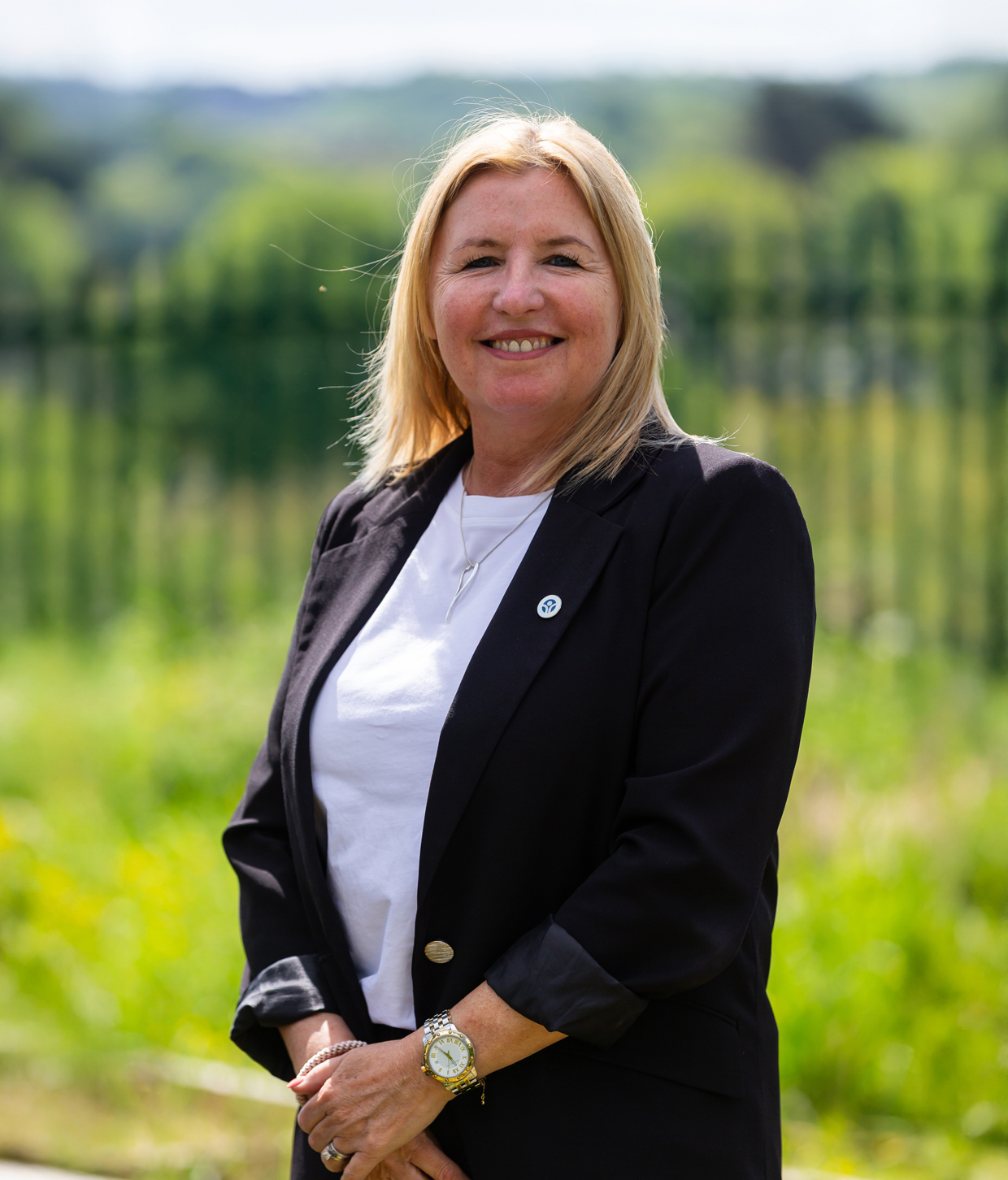
Lisa Dodd-Mayne
Executive director for place, Sport England
Thomas Gadd Photography

We believe that when it comes to the needs and aspirations of a community, nobody will know this better than the brilliant, dedicated people who have made their lives there. By listening, collaborating and harnessing the enthusiasm and expertise at the heart of each community, we can build better places across England and support more people to be active.

Our work involves making changes across a whole system, including Active Partnerships, local government, the health service, the community and voluntary sector, transport and housing sectors. Together, we work to understand the lived experience of that community and co-design activities with the communities themselves. Partners are encouraged to find solutions that help people to move more – including changes to local policies across multiple sectors, as well as combining resources to create new opportunities.

This place-based approach is evolving all the time. We still don’t have all the answers and that’s OK. Every day we’re learning more about the ways in which we can work together to have the maximum impact in local communities. Sheffield Hallam University, as our national evaluation and learning partner, is helping us to really understand the impact of this work. We then share all those insights, best practice examples and learning at a national level alongside our local place partners.

This is a long-term shift in how we work – led by local voices, shaped by lived experience and focused on changing systems to ensure everyone has equal access to getting active. By investing deeply, listening carefully and working together, we’re transforming the conditions that enable opportunities to be active – a national movement, powered locally.

The place-based approach is evolving all the time
Ben Andrews
Founder, Beyond Empower
photo: Beyond Empower

Communities must be in the driving seat if we’re to achieve any meaningful change. For too long people have been done to, rather than with, which has failed to deliver the outcomes needed.

However, over time, the true meaning of the place-based approach seems to have become distorted. Many interpret the approach as everything must come from within that one community from insights to finding and implementing solutions. From my experience, what often happens is that one issue – usually the most vocal concern in the room – gets prioritised, even if it’s not the greatest challenge the community faces.

No single community can be expected to have all the answers. The idea that every solution must come solely from local sources can be limiting, especially when there’s a lack of resources, capacity, or expertise there to address challenges. We need to recognise that national data, alongside local insights, can offer a valuable perspective on what works elsewhere and which solutions have already been tested and refined.

Rather than seeing this as a deviation from place-based principles, I believe this is part of an evolving understanding of how change happens. It’s about creating a framework where communities have the opportunity to partner with external experts, organisations and even other communities who have dealt with similar challenges.

This collaboration should be seen as an asset, not a threat to local ownership. Communities should be empowered to drive change, but they shouldn’t feel that they have to shoulder every challenge alone, especially when solutions already exist elsewhere and could be adapted to fit local needs.

When we focus on what will actually serve the community’s best interests, we open up a world of possibilities.


I believe that no single community can be expected to have all the answers
Communities can benefit from what’s working elsewhere / photo: SPORT ENGLAND
Martyn Allison
Catalyst for change

Place-based working is still in its infancy and the more we encourage debate and discussion on how we tackle the deep-seated inequalities in activity the better.

For more than 40 years, our traditional approaches to encouraging some people to become more active have failed. Inequality now is much the same as it was when I first helped establish sports development in the early 1980s. We now understand that the reasons for exclusion are complex, are often different in different places and one size does not fit all.

Communities usually know how things could be made better, if only they were asked. But even consultation doesn’t always work because we do it in a way that still excludes, or we end up listening to only the loud voices. When nothing changes as a result we further bake in the exclusion, along with a huge lack of trust.

Co-production – attempting to develop services with communities, rather than for them – is the best way of avoiding this scenario. This approach is prevalent in many of the Sport England Local Delivery Pilots and Street Games also uses this approach by engaging with locally trusted organisations who work with excluded communities.

If some communities lack the capacity to engage with co-production, I think the solution is to build the capacity to engage better. Many community development organisations, such as the Active Wellbeing Society in Birmingham, have been successful in empowering communities to become more active citizens. This provides a real opportunity to finally turn the dial and work differently as a sector if we’re prepared to learn, share and collaborate better.


Communities usually know how things could be made better, if only they were asked
Communities can be empowered to be more active citizens / photo: SPORT ENGLAND
Jack Shakespeare
Director of strategic projects, 4Global
photo: 4Global

Effective use of data is key to unlocking the potential of the place-based approach. Data is not only a by-product of place-based working, but a vital lever to ensure that inclusive participation efforts are intentional, responsive and scalable. When harnessed strategically, data empowers both communities and systems to learn, adapt and sustain meaningful change.

High-quality data allows stakeholders to identify where inequalities in participation exist, who is being excluded and why barriers persist. Disaggregated data – considering factors such as ethnicity, disability, gender, socioeconomic status and geography – enables targeted interventions that reflect the lived realities of communities. This allows delivery partners to make evidence-informed decisions about where to focus resources, how to design culturally-relevant programmes, and adapt delivery to maximise inclusion.

Data also plays a critical role in building accountability and trust: when communities see that insights gathered from their experiences are being used to shape services and measure progress, it strengthens local ownership and transparency.

Aggregated insights from multiple place-based initiatives can highlight common patterns, systemic barriers and successful approaches that are transferable across regions. This shared intelligence helps national bodies, funders and policymakers to better align strategies, make informed investment decisions and advocate for structural change that supports long-term, equitable participation growth.

Investing in shared data infrastructure – including interoperable systems, common indicators and evaluation frameworks – helps cross-sector partners collaborate more effectively. As health, education and social care systems increasingly recognise the role of physical activity in delivering societal outcomes, the ability to demonstrate cross-cutting impact through integrated data becomes even more valuable.


High-quality data allows stakeholders to identify where inequalities in participation exist, who is being excluded and why certain barriers persist
Sport England’s Social Value Calculator shows shared data in action / photo: SPORT ENGLAND
Rich Holmes
MD, Go Together
photo: Go TOgether

The place-based approach turns professionals into facilitators rather than deliverers of top-down solutions. The process is much more than consultation – it’s about co-producing decisions and letting communities take charge of shaping their own future. This shift can disrupt traditional procurement models and requires leaders to embrace uncertainty and relinquish control, welcoming the messiness of community-led change.

Ultimately, place-based approaches are as much about investing in relationships that create the foundation for future collaboration rather than simply addressing immediate challenges.

Facilitators must strike a delicate balance between guiding change and ensuring communities don’t become stuck without progress. Sometimes, communities need to be connected to ideas beyond their own context, via inspiration rather than imposing external solutions.

These relational approaches take time, with action often delayed. While they are more sustainable, they don’t align neatly with election cycles or financial years, and the work tends to be underpaid, making it difficult to retain skilled people. This can lead to the approach being dismissed as ineffective.

To improve place-based approaches, we must prioritise ongoing investment in learning; not through top-down evaluations, but by genuinely co-producing knowledge that enables stakeholders to learn together. This approach requires relational leadership and radical trust. We must invest in building relationships before they are needed, so when challenges arise, there is already a foundation of trust and collaboration.
To improve place-based approaches, we must prioritise ongoing investment in learning
Co-producing enables stakeholders to learn together / photo: Shutterstock / MAYA LAB
https://www.leisureopportunities.co.uk/images/2025/974151_57550.jpg
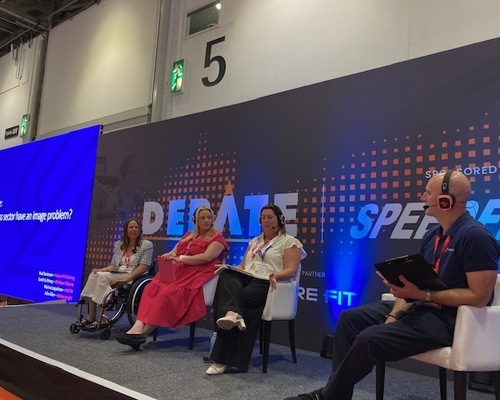
Public sector leisure and physical activity services in the UK are increasingly being customised to local needs via place-based initiatives, we talk to those driving change
Latest News
Celebrating its 10th anniversary, Elevate has had its busiest show to date, with almost 200 ...
Latest News
A new report from Your Personal Training (YPT) suggests UK gym operators could be missing ...
Latest News
Eighty-four per cent of consumers now say wellness is a top priority in their lives, ...
Latest News
Elevate Arena is underway at London's Excel and the hot topic of AI was the ...
Latest News
PureGym Group has announced that group chief financial officer, Alex Wood, is taking over the ...
Latest News
Independent operator, Fitness Worx Gyms, is introducing private blood testing as a service to members. ...
Latest News
International industry lobbying associations are calling for physical activity and strength training to be deeply ...
Latest News
Global group exercise specialist, Les Mills, is inviting operators to sign up to its Workout ...
Latest News
Global luxury hospitality brand, Six Senses, has partnered with longevity healthcare provider, HUM2N, to launch ...
Latest News
Premium London health club, KX Chelsea, is gearing up to unveil its most significant redevelopment ...
Latest News
Researchers in the US have identified an antibody which could greatly reduce the loss of ...
Opinion
promotion
Strength training has moved from the margins to the mainstream.
Opinion: Building smarter strength spaces for today’s operators
Featured supplier news
Featured supplier news: Reaching the people most gyms miss: Bedford Gym & Swim Campaign delivers 410 new members
One of the biggest mistakes the fitness industry still makes is advertising almost exclusively to people who already look and live like gym members.
Featured supplier news
Featured supplier news: Supporting long-term health: why whole body vibration belongs in clinical settings
As healthcare continues to shift towards prevention, there’s a growing focus on helping people stay active, independent and feeling good for longer.
Company profiles
Company profile: GLL
GLL
As the UK’s leading provider of both leisure centres and libraries we operate 379 locations ...
Company profiles
Company profile: Ziva Strength
Ziva is an elite-performance fitness brand that designs, manufactures, delivers, and services premium resistance training, ...
Supplier Showcases
Supplier Showcase - From nightclub to health club
Supplier Showcases
Supplier Showcase - Future-proofing
Catalogue Gallery
Click on a catalogue to view it online
Featured press releases
Create PT press release: Create sets a new standard with its new personal training diploma
Create's new Personal Training Diploma is built on the depth, real-client practice and coaching judgement that turn a qualification into genuine readiness - taught as one continuous course so that every skill is reinforced and applied, not cleared once and forgotten.
Featured press releases
Leisure Energy press release: Studley Leisure Centre solar panel installation project begins
Stratford-on-Avon District Council is delighted to announce a new solar panel installation project at Studley Leisure Centre, marking an important step towards improving the sustainability of this valued community facility.
Directory
Water experiences and hydrotherapy solutions
Aquaform s.r.l.: Water experiences and hydrotherapy solutions
Spa and beauty equipment
Oakworks Inc: Spa and beauty equipment
Lockers
Crown Sports Lockers: Lockers
Fitness tracking platform
SpiviTech: Fitness tracking platform
Hot tubs
MSpa International Ltd: Hot tubs
Industrial washing machines
Miele Company Limited: Industrial washing machines
Property & Tenders
Stratford, East London.

Lee Valley Regional Park Authority
Property & Tenders
Y Felinheli, LL56 4QN
Newmark
Property & Tenders
Diary dates
22-23 Jun 2026
WX Wakefield , Wakefield, United Kingdom
Diary dates
21-24 Sep 2026
The Langham Huntington Pasadena , Pasadena, United States
Diary dates
06-08 Oct 2026
Messe Stuttgart, Stuttgart, Germany
Diary dates
22-22 Oct 2026
QEII Conference Centre, London,
Diary dates
26-29 Oct 2027
Koelnmesse Exhibition Centre, Cologne, Germany
Diary dates
Search news, features & products:
Find a supplier:
Partner sites