










Follow Health Club Management on Twitter Like Health Club Management on Facebook Join the discussion with Health Club Management on LinkedIn
FITNESS, HEALTH, WELLNESS

features

Talkback: A testing time

Fitness levels among British children are lower than ever and getting worse – a ticking time bomb for the NHS. Is fitness testing in primary schools the answer?
Published in Health Club Management 2015 issue 9
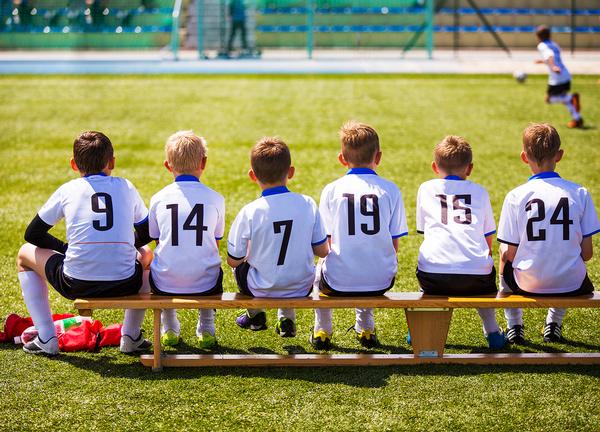
Team sports involve a lot of sitting around – your child may not be fit / Shutterstock.com

A flurry of research over recent months has raised alarm bells about the lack of activity among primary aged children.

Researchers from Essex University in the UK discovered that fitness levels are declining at a rate of 0.95 per cent annually, despite the fact that schoolchildren have a lower BMI than their predecessors, suggesting inactive lifestyles are having a greater impact on fitness than obesity.

Meanwhile ukactive’s recent Generation Inactive report showed that only half of seven-year-olds are meeting recommended physical activity guidelines of 60 minutes a day. To make matters worse, only 43 per cent of schools surveyed recorded the length of time children spent being physically active in PE lessons.

Based on its findings, ukactive has made a number of recommendations, including calling for primary schools to test pupils’ fitness in the same way that they test English and mathematics, to make sure that all children are meeting basic fitness guidelines.

This is a move that’s wholeheartedly welcomed by Doug Werner, who credits his daughter Abbie’s health to school fitness testing. Werner wrote the book Abbie Gets Fit about her journey to fitness through walking: he says that, although Abbie was definitely not overweight, her shy nature meant she stood on the sidelines during games, resulting in low activity and fitness levels.

The FitnessGram test is now the official test for the President’s Council and is being rolled out at schools across the US. Should the same be happening in the UK? And if schoolchildren are to be fitness tested, who should be doing it – is there a role for the fitness industry? We ask the experts….

Steve Mann,

Research director,

ukactive, UK

Steve Mann
Steve Mann

Our team is currently conducting research that includes working with focus groups – comprising both parents and children – to find out the best way of delivering fitness tests in a fun, safe, non-invasive and inclusive way.

Whenever this issue has been raised in the past, the opinion of children has never been sought. We’ve made sure we’ve asked children what they think and the feedback has been overwhelmingly positive. Also, none of the 500 parents we’ve spoken to has had an issue with their child’s fitness being tested – all provided informed consent.  

It would be considered unacceptable not to monitor how well children are performing in literacy or numeracy when they leave primary school, and yet there’s no accountability regarding physical literacy or fitness. 

The National Child Measurement Programme already tests the BMI of children on an annual basis. However, as a slim child doesn’t necessarily mean a fit and healthy child, it’s important to extend this programme to also measure physical fitness.

At the moment we’re working with children in year four: it’s very important not to start too young because the children’s motor skills might not have developed to the level that allows for reliable measurement.

This issue does need a top-down approach and collaboration between a range of stakeholders, but in the meantime it’s very important for the health and fitness industry to continue to offer activities in which both children and all the family can participate.

"A slim child doesn’t necessarily mean a fit and healthy child – it’s important to measure fitness" - Steve Mann
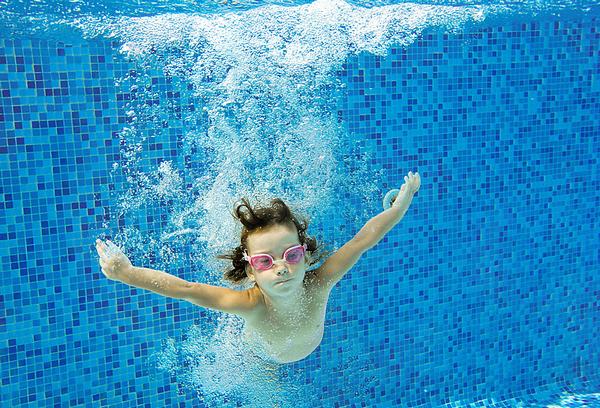
Wait to test until kids’ motor skills have developed / SHUTTERSTOCK

Doug Werner,

Senior manager,

Core Health and Fitness, US and author of Abbie Gets Fit

Having spent years studying this issue, I’m amazed by the percentage of kids who are unfit, but who are not necessarily overweight.

Most interesting is the phenomenon created by organised sports programmes. The teams in these programmes usually meet for an hour or so, three or four days a week, but with coaching breaks, prepping, player substitutions and suchlike, children are actually moving for a lot less time than we might assume, especially if the sport is a slow moving game like baseball, cricket or golf. Parents of children in organised sport should not at all assume their child is fit.

I’m a firm believer in the need for fitness testing for kids and it’s a natural fit for the health club industry to do the testing. We have the manpower, experience, qualifications, facilities and passion to do this.

However, the fitness industry tends to be short-sighted, interested mainly in short-term cashflow. Operators need to look at this as a sincere and genuine objective to help kids get fit, engaging with the members of tomorrow – and their parents – rather than just looking to make a short-term profit. 

There has to be a longer-term vision beyond an admission business model and beyond the four walls of the conventional health and fitness club.

Although there’s nothing to stop individual health clubs designing a programme and reaching out to local schools, for this to be broad and impactful it should have government backing and be endorsed from the top. We have to really work to convince the government that we’re both capable and genuine in our desire to deliver fitness testing for children. 

There’s a PR opportunity here and a chance to engage parents by reaching out to kids. For example, how about teaching children to count steps each day by providing a local school with branded pedometers? That’s a good first step to long-term programme design.

"How about teaching children to count steps each day by providing a local school with branded pedometers?" - Doug Werner

How about teaching children to count steps each day by providing a local school with branded pedometers?
How about teaching children to count steps each day by providing a local school with branded pedometers?" / Shutterstock.com

Dr Charles Corbin,

Co-author of FitnessGram and professor,

Emeritus of the School of Nutrition and Health Promotion, Arizona State University, United States

Dr Charles Corbin
Dr Charles Corbin

Caution must be exercised with fitness testing, because it has the potential to do more harm than good. It’s very easy to set the bar too high and make children feel they’ve failed, therefore turning them off physical activity. Also, with young children, genetics and their physiological maturity makes a huge difference to test outcomes. Fitness tests of primary aged children could be skewed by these factors, so we have to be very careful about drawing conclusions.

With FitnessGram, we made sure there was a scientific foundation for everything we did when devising a battery of six tests of health-related physical fitness. These tests can be used in four different ways. In self-testing, you learn to assess your own fitness. Individualised testing is done by an expert to help you to identify how you can improve – much like a personal trainer might do. Personal best testing is done to see if you’re suitable for a team or for an occupation such as firefighting or military service. Finally there’s institutional testing, where a large number of kids are tested for determining curricular needs or for research purposes.

There is a place for institutional testing in schools, but it should be used sparingly. It can be intimidating and can be expensive, because it requires many experts and lots of time. The focus should be on teaching children how to self-test, and encouraging the use of self-tests as a basis for programme planning throughout life. Self-testing is the cheapest and easiest to implement, but also the most sustainable.

We must be very careful when making judgements about children, but giving them the knowledge and understanding to monitor their own behaviour can be very empowering.
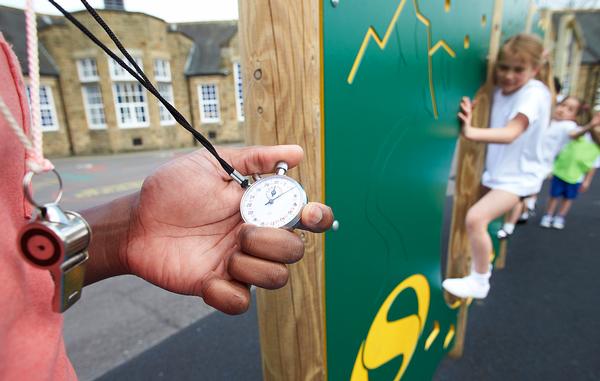
Fitness testing: more harm than good? / Shutterstock.com

Gavin Sandercock,

Director of the Centre for Sports and Exercise Science,

University of Essex, UK

Gavin Sandercock
Gavin Sandercock

Fitness testing is an excellent tool for health. The results can be used to highlight current health conditions, identify potential health risks and design effective activity programmes.

It can also be used to measure physical development of young children, ensuring they develop movement skills – such as jumping, throwing, catching and balancing – which contribute to physical, cognitive and social development.

Fitness testing could easily be implemented as a standardised tool in primary schools. The most important thing is to make sure children are comfortable with the concept, so it must be embedded in PE from day one.

Assessments should be age-appropriate and based directly on clear standards of what children should be able to do by each age. Activities must be accompanied by praise for good performance, as well as feedback on how to improve.

Most importantly, testing should be performed only by an experienced professional. As many teachers can be inexperienced in this field, and have a heavy workload, health clubs could play an instrumental role ­– offering trained staff and providing a local hub that schools could visit for pupil assessments.

"Movement skills such as jumping, throwing, catching and balancing all contribute to physical, cognitive & social development" - Gavin Sandercock
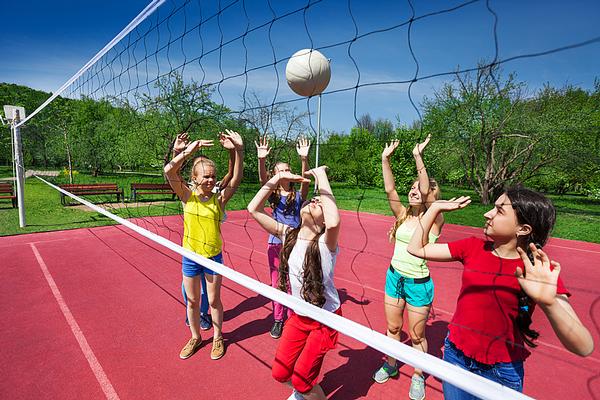
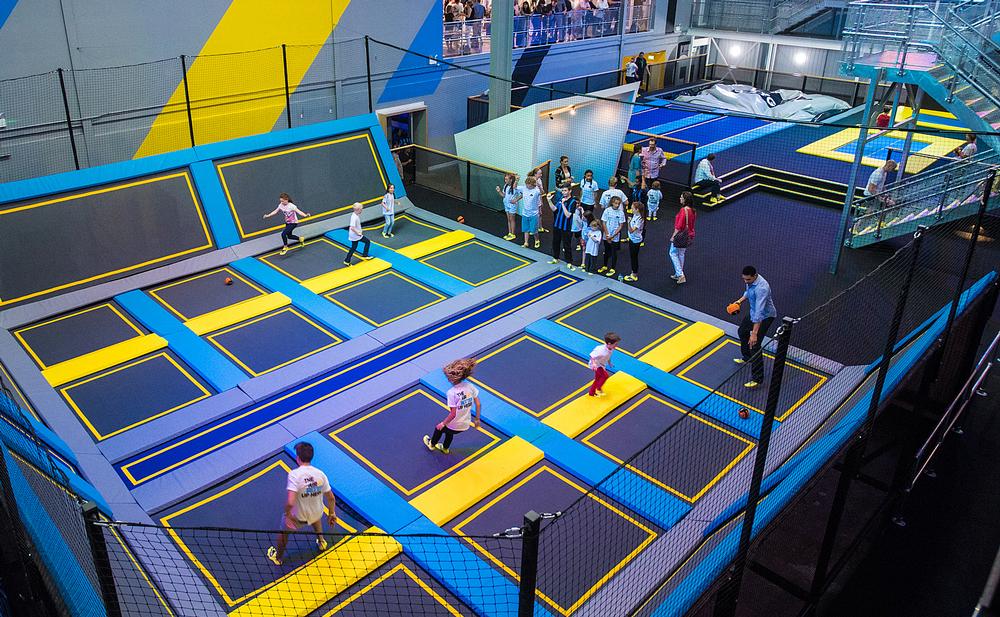
Movement skills such as jumping, throwing, catching and balancing all contribute to physical, cognitive & social development
Sign up here to get HCM's weekly ezine and every issue of HCM magazine free on digital.
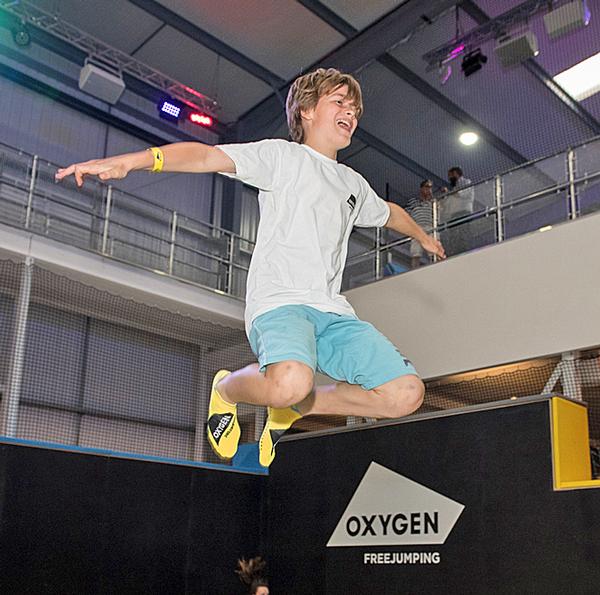
Oxygen Freejumping in Acton is already drawing the crowds
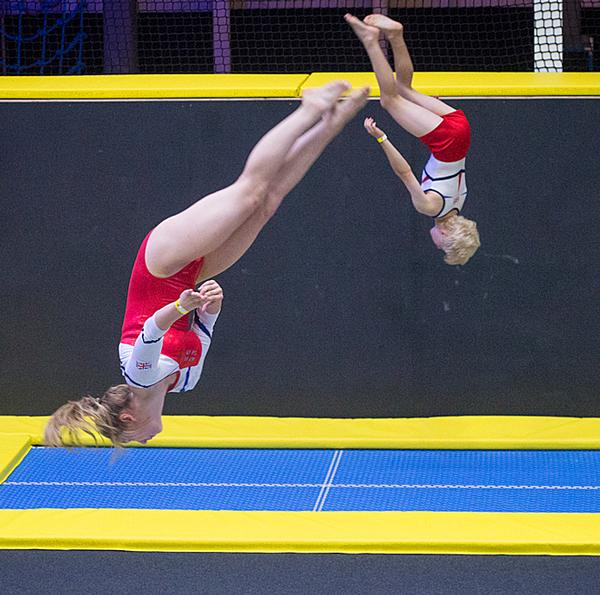
Foucan is seen as a freerunning founder
https://www.leisureopportunities.co.uk/images/905310_782557.jpg
Do we need to test kids' fitness, in the same way we test maths and English?
STEVE MANN, Research director, ukactive, UK DOUG WERNER, Senior manager, Core Health and Fitness, US and author of Abbie Gets Fit DR CHARLES CORBIN, Co-author of FitnessGram and professor emeritus of the School of Nutrition and Health Promotion, Arizona State University, United States GAVIN SANDERCOCK, Director of the Centre for Sports and Exercise Science, University of Essex, UK,Kids, inactivity, fitness testing, generation inactive, Doug Werner, Steve Mann, Charles Corbin, Gavin Sandercock, FitnessGram
HCM magazine
As the 20th State of the Industry Report is released, LeisureDB has rebranded to Evolve, as Kath Hudson reports
HCM magazine
After decades of focusing on adult audiences, operators are starting to engage young people – unlocking growth opportunities while supporting the health and wellbeing of future generations
HCM magazine
Software suppliers explain how AI, automation and connected digital experiences can work for the good of operators and consumers
HCM magazine
Lisa Starr tries the Ammortal Chamber to see whether layering 10 modalities into one experience really delivers more
HCM magazine
Fuel the debate about issues and opportunities across the industry. We’d love to hear from you. Write to [email protected]
HCM promotional features
Sponsored
Social fitness the missing link to member engagement, according to a new Myzone report
HCM promotional features
Sponsored
Greg Bradley looks at the shift towards strength training in gyms and advises on how operators can create the ultimate training environment
HCM promotional features
Sponsored
Starpool supports Olympic champion Marcell Jacobs, says Riccardo Turri
HCM promotional features
Sponsored
Third Space partnered with IndigoFitness to deliver a bespoke training space for its new club at The Whiteley
HCM promotional features
Sponsored
SnowDome Fitness has added 50 per cent more space with cutting-edge Technogym solutions
HCM promotional features
Sponsored
David Lloyd is stepping up its commitment to women’s health as it continues to explore what fit-for-purpose looks like for the female population
HCM promotional features
Sponsored
Find out how your gym can tap into the corporate wellness boom
HCM promotional features
Sponsored
EGYM has opened a new HQ in Paternoster Square, London and revealed a range of new launches
HCM promotional features
Latest News
According to research which tracked more than 147,000 people for 30 years, 90-120 minutes of ...
Latest News
Everlast Gyms expands its footprint outside of the UK this month with the imminent launch ...
Latest News
The UK's four Chief Medical Officers have published a refreshed edition of  Physical activity guidelines: ...
Latest News
Places Leisure has exchanged contracts to build and operate a flagship £60m water and wellness ...
Latest News
The Republic of Ireland will become the latest market in PureGym’s expanding international portfolio, with ...
Latest News
Sophie Lawler, CEO of Total Fitness, has launched a leadership coaching business aimed at helping ...
Latest News
Anytime Fitness reaches a milestone this week with the launch of its 6000th site. The ...
Latest News
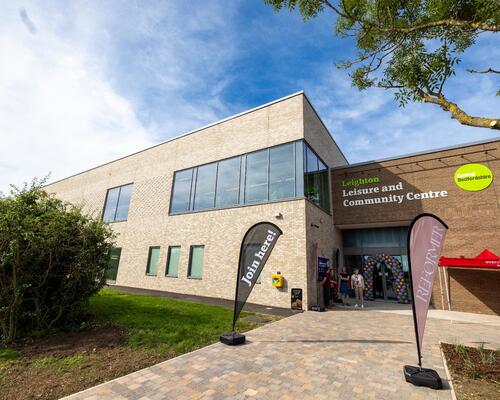
The £33.9 million Leighton Leisure and Community Centre has opened in Leighton Buzzard, UK, creating ...
Opinion
promotion
Strength training has moved from the margins to the mainstream.
Opinion: Building smarter strength spaces for today’s operators
Featured supplier news
Featured supplier news: Legends never die: four legends, four philosophies of life
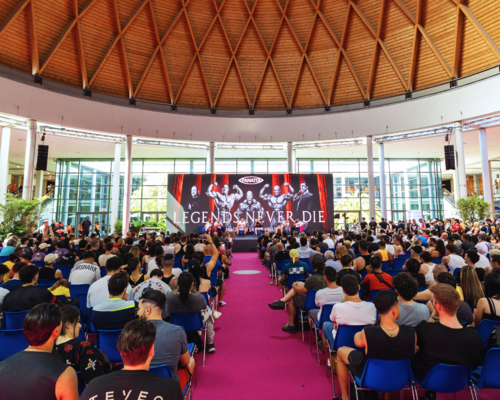
Panatta brought together four of the most influential figures in bodybuilding history on the stage of RiminiWellness 2026: Phil Heath, Lee Haney, Ronnie Coleman and Hany Rambod.
Featured supplier news
Featured supplier news: Cornerstone Connect helps Active Blackpool tackle health inequalities
Active Blackpool is deploying Cornerstone Connect, a new digital interface allowing disparate information from multiple systems to be aggregated into one dataset, to support its focus on reducing health inequalities and improving healthy life expectancy.
Company profiles
Company profile: Pulse Fitness
With an award-winning portfolio of over 450 pieces of cutting-edge, premium fitness equipment, Pulse Fitness ...
Company profiles
Company profile: Elevate
The UK's largest annual trade event dedicated to physical activity, health, and performance...
Supplier Showcases
Supplier Showcase - From nightclub to health club
Supplier Showcases
Supplier Showcase - Future-proofing
Catalogue Gallery
Click on a catalogue to view it online
Featured press releases
Innerva press release: Wrightcare embeds wellness and active living into next-generation care homes
A care home provider is developing a new generation of care homes where health, wellbeing and active living are embedded into everyday life.
Featured press releases
Alliance Leisure Services (Design, Build and Fund) press release: Studio transformation completed at Burscough Wellbeing and Leisure Hub
Alliance Leisure are proud to have supported West Lancashire Borough Council to deliver a £300,000 studio transformation project at Burscough Wellbeing and Leisure Hub, creating a dedicated group exercise space designed to meet growing demand for fitness
Directory
Hot tubs
MSpa International Ltd: Hot tubs
Industrial washing machines
Miele Company Limited: Industrial washing machines
Lockers
Crown Sports Lockers: Lockers
Spa and beauty equipment
Oakworks Inc: Spa and beauty equipment
Water experiences and hydrotherapy solutions
Aquaform s.r.l.: Water experiences and hydrotherapy solutions
Fitness tracking platform
SpiviTech: Fitness tracking platform
Property & Tenders
Stratford, East London.
Lee Valley Regional Park Authority
Property & Tenders
Y Felinheli, LL56 4QN
Newmark
Property & Tenders
Diary dates
21-24 Sep 2026
The Langham Huntington Pasadena , Pasadena, United States
Diary dates
06-08 Oct 2026
Messe Stuttgart, Stuttgart, Germany
Diary dates
22-22 Oct 2026
QEII Conference Centre, London,
Diary dates
26-29 Oct 2027
Koelnmesse Exhibition Centre, Cologne, Germany
Diary dates

features

Talkback: A testing time

Fitness levels among British children are lower than ever and getting worse – a ticking time bomb for the NHS. Is fitness testing in primary schools the answer?

Published in Health Club Management 2015 issue 9
Team sports involve a lot of sitting around – your child may not be fit / Shutterstock.com

A flurry of research over recent months has raised alarm bells about the lack of activity among primary aged children.

Researchers from Essex University in the UK discovered that fitness levels are declining at a rate of 0.95 per cent annually, despite the fact that schoolchildren have a lower BMI than their predecessors, suggesting inactive lifestyles are having a greater impact on fitness than obesity.

Meanwhile ukactive’s recent Generation Inactive report showed that only half of seven-year-olds are meeting recommended physical activity guidelines of 60 minutes a day. To make matters worse, only 43 per cent of schools surveyed recorded the length of time children spent being physically active in PE lessons.

Based on its findings, ukactive has made a number of recommendations, including calling for primary schools to test pupils’ fitness in the same way that they test English and mathematics, to make sure that all children are meeting basic fitness guidelines.

This is a move that’s wholeheartedly welcomed by Doug Werner, who credits his daughter Abbie’s health to school fitness testing. Werner wrote the book Abbie Gets Fit about her journey to fitness through walking: he says that, although Abbie was definitely not overweight, her shy nature meant she stood on the sidelines during games, resulting in low activity and fitness levels.

The FitnessGram test is now the official test for the President’s Council and is being rolled out at schools across the US. Should the same be happening in the UK? And if schoolchildren are to be fitness tested, who should be doing it – is there a role for the fitness industry? We ask the experts….

Steve Mann,

Research director,

ukactive, UK

Steve Mann
Steve Mann

Our team is currently conducting research that includes working with focus groups – comprising both parents and children – to find out the best way of delivering fitness tests in a fun, safe, non-invasive and inclusive way.

Whenever this issue has been raised in the past, the opinion of children has never been sought. We’ve made sure we’ve asked children what they think and the feedback has been overwhelmingly positive. Also, none of the 500 parents we’ve spoken to has had an issue with their child’s fitness being tested – all provided informed consent.  

It would be considered unacceptable not to monitor how well children are performing in literacy or numeracy when they leave primary school, and yet there’s no accountability regarding physical literacy or fitness. 

The National Child Measurement Programme already tests the BMI of children on an annual basis. However, as a slim child doesn’t necessarily mean a fit and healthy child, it’s important to extend this programme to also measure physical fitness.

At the moment we’re working with children in year four: it’s very important not to start too young because the children’s motor skills might not have developed to the level that allows for reliable measurement.

This issue does need a top-down approach and collaboration between a range of stakeholders, but in the meantime it’s very important for the health and fitness industry to continue to offer activities in which both children and all the family can participate.

"A slim child doesn’t necessarily mean a fit and healthy child – it’s important to measure fitness" - Steve Mann

Wait to test until kids’ motor skills have developed / SHUTTERSTOCK

Doug Werner,

Senior manager,

Core Health and Fitness, US and author of Abbie Gets Fit

Having spent years studying this issue, I’m amazed by the percentage of kids who are unfit, but who are not necessarily overweight.

Most interesting is the phenomenon created by organised sports programmes. The teams in these programmes usually meet for an hour or so, three or four days a week, but with coaching breaks, prepping, player substitutions and suchlike, children are actually moving for a lot less time than we might assume, especially if the sport is a slow moving game like baseball, cricket or golf. Parents of children in organised sport should not at all assume their child is fit.

I’m a firm believer in the need for fitness testing for kids and it’s a natural fit for the health club industry to do the testing. We have the manpower, experience, qualifications, facilities and passion to do this.

However, the fitness industry tends to be short-sighted, interested mainly in short-term cashflow. Operators need to look at this as a sincere and genuine objective to help kids get fit, engaging with the members of tomorrow – and their parents – rather than just looking to make a short-term profit. 

There has to be a longer-term vision beyond an admission business model and beyond the four walls of the conventional health and fitness club.

Although there’s nothing to stop individual health clubs designing a programme and reaching out to local schools, for this to be broad and impactful it should have government backing and be endorsed from the top. We have to really work to convince the government that we’re both capable and genuine in our desire to deliver fitness testing for children. 

There’s a PR opportunity here and a chance to engage parents by reaching out to kids. For example, how about teaching children to count steps each day by providing a local school with branded pedometers? That’s a good first step to long-term programme design.

"How about teaching children to count steps each day by providing a local school with branded pedometers?" - Doug Werner

How about teaching children to count steps each day by providing a local school with branded pedometers?
How about teaching children to count steps each day by providing a local school with branded pedometers?" / Shutterstock.com

Dr Charles Corbin,

Co-author of FitnessGram and professor,

Emeritus of the School of Nutrition and Health Promotion, Arizona State University, United States

Dr Charles Corbin
Dr Charles Corbin

Caution must be exercised with fitness testing, because it has the potential to do more harm than good. It’s very easy to set the bar too high and make children feel they’ve failed, therefore turning them off physical activity. Also, with young children, genetics and their physiological maturity makes a huge difference to test outcomes. Fitness tests of primary aged children could be skewed by these factors, so we have to be very careful about drawing conclusions.

With FitnessGram, we made sure there was a scientific foundation for everything we did when devising a battery of six tests of health-related physical fitness. These tests can be used in four different ways. In self-testing, you learn to assess your own fitness. Individualised testing is done by an expert to help you to identify how you can improve – much like a personal trainer might do. Personal best testing is done to see if you’re suitable for a team or for an occupation such as firefighting or military service. Finally there’s institutional testing, where a large number of kids are tested for determining curricular needs or for research purposes.

There is a place for institutional testing in schools, but it should be used sparingly. It can be intimidating and can be expensive, because it requires many experts and lots of time. The focus should be on teaching children how to self-test, and encouraging the use of self-tests as a basis for programme planning throughout life. Self-testing is the cheapest and easiest to implement, but also the most sustainable.

We must be very careful when making judgements about children, but giving them the knowledge and understanding to monitor their own behaviour can be very empowering.

Fitness testing: more harm than good? / Shutterstock.com

Gavin Sandercock,

Director of the Centre for Sports and Exercise Science,

University of Essex, UK

Gavin Sandercock
Gavin Sandercock

Fitness testing is an excellent tool for health. The results can be used to highlight current health conditions, identify potential health risks and design effective activity programmes.

It can also be used to measure physical development of young children, ensuring they develop movement skills – such as jumping, throwing, catching and balancing – which contribute to physical, cognitive and social development.

Fitness testing could easily be implemented as a standardised tool in primary schools. The most important thing is to make sure children are comfortable with the concept, so it must be embedded in PE from day one.

Assessments should be age-appropriate and based directly on clear standards of what children should be able to do by each age. Activities must be accompanied by praise for good performance, as well as feedback on how to improve.

Most importantly, testing should be performed only by an experienced professional. As many teachers can be inexperienced in this field, and have a heavy workload, health clubs could play an instrumental role ­– offering trained staff and providing a local hub that schools could visit for pupil assessments.

"Movement skills such as jumping, throwing, catching and balancing all contribute to physical, cognitive & social development" - Gavin Sandercock
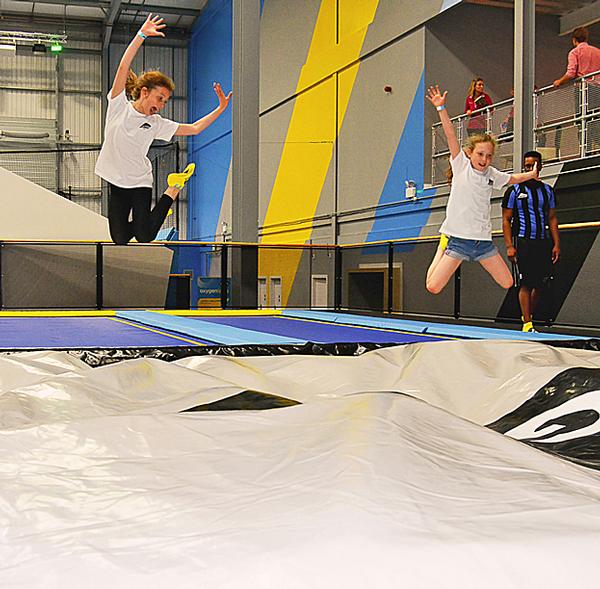
Movement skills such as jumping, throwing, catching and balancing all contribute to physical, cognitive & social development
Sign up here to get HCM's weekly ezine and every issue of HCM magazine free on digital.
Oxygen Freejumping in Acton is already drawing the crowds
Foucan is seen as a freerunning founder
https://www.leisureopportunities.co.uk/images/905310_782557.jpg
Do we need to test kids' fitness, in the same way we test maths and English?
STEVE MANN, Research director, ukactive, UK DOUG WERNER, Senior manager, Core Health and Fitness, US and author of Abbie Gets Fit DR CHARLES CORBIN, Co-author of FitnessGram and professor emeritus of the School of Nutrition and Health Promotion, Arizona State University, United States GAVIN SANDERCOCK, Director of the Centre for Sports and Exercise Science, University of Essex, UK,Kids, inactivity, fitness testing, generation inactive, Doug Werner, Steve Mann, Charles Corbin, Gavin Sandercock, FitnessGram
Latest News
According to research which tracked more than 147,000 people for 30 years, 90-120 minutes of ...
Latest News
Everlast Gyms expands its footprint outside of the UK this month with the imminent launch ...
Latest News
The UK's four Chief Medical Officers have published a refreshed edition of  Physical activity guidelines: ...
Latest News
Places Leisure has exchanged contracts to build and operate a flagship £60m water and wellness ...
Latest News
The Republic of Ireland will become the latest market in PureGym’s expanding international portfolio, with ...
Latest News
Sophie Lawler, CEO of Total Fitness, has launched a leadership coaching business aimed at helping ...
Latest News
Anytime Fitness reaches a milestone this week with the launch of its 6000th site. The ...
Latest News
The £33.9 million Leighton Leisure and Community Centre has opened in Leighton Buzzard, UK, creating ...
Latest News
YogaSix, the yoga brand owned by Xponential Fitness, has launched a heated, Pilates-inspired class called ...
Latest News
Walnuts Leisure Centre in Orpington, in the London Borough of Bromley, has reopened following a ...
Latest News
The Gym Group, has announced that it's sustained positive trading momentum has continued through the ...
Opinion
promotion
Strength training has moved from the margins to the mainstream.
Opinion: Building smarter strength spaces for today’s operators
Featured supplier news
Featured supplier news: Legends never die: four legends, four philosophies of life
Panatta brought together four of the most influential figures in bodybuilding history on the stage of RiminiWellness 2026: Phil Heath, Lee Haney, Ronnie Coleman and Hany Rambod.
Featured supplier news
Featured supplier news: Cornerstone Connect helps Active Blackpool tackle health inequalities
Active Blackpool is deploying Cornerstone Connect, a new digital interface allowing disparate information from multiple systems to be aggregated into one dataset, to support its focus on reducing health inequalities and improving healthy life expectancy.
Company profiles
Company profile: Pulse Fitness
With an award-winning portfolio of over 450 pieces of cutting-edge, premium fitness equipment, Pulse Fitness ...
Company profiles
Company profile: Elevate
The UK's largest annual trade event dedicated to physical activity, health, and performance...
Supplier Showcases
Supplier Showcase - From nightclub to health club
Supplier Showcases
Supplier Showcase - Future-proofing
Catalogue Gallery
Click on a catalogue to view it online

Featured press releases
Innerva press release: Wrightcare embeds wellness and active living into next-generation care homes
A care home provider is developing a new generation of care homes where health, wellbeing and active living are embedded into everyday life.
Featured press releases
Alliance Leisure Services (Design, Build and Fund) press release: Studio transformation completed at Burscough Wellbeing and Leisure Hub
Alliance Leisure are proud to have supported West Lancashire Borough Council to deliver a £300,000 studio transformation project at Burscough Wellbeing and Leisure Hub, creating a dedicated group exercise space designed to meet growing demand for fitness
Directory
Hot tubs
MSpa International Ltd: Hot tubs
Industrial washing machines
Miele Company Limited: Industrial washing machines
Lockers
Crown Sports Lockers: Lockers
Spa and beauty equipment
Oakworks Inc: Spa and beauty equipment
Water experiences and hydrotherapy solutions
Aquaform s.r.l.: Water experiences and hydrotherapy solutions
Fitness tracking platform
SpiviTech: Fitness tracking platform
Property & Tenders
Stratford, East London.
Lee Valley Regional Park Authority

Property & Tenders
Y Felinheli, LL56 4QN
Newmark
Property & Tenders
Diary dates
21-24 Sep 2026
The Langham Huntington Pasadena , Pasadena, United States
Diary dates
06-08 Oct 2026
Messe Stuttgart, Stuttgart, Germany
Diary dates
22-22 Oct 2026
QEII Conference Centre, London,
Diary dates
26-29 Oct 2027
Koelnmesse Exhibition Centre, Cologne, Germany
Diary dates
Search news, features & products:
Find a supplier:
Partner sites