



















Follow Health Club Management on Twitter Like Health Club Management on Facebook Join the discussion with Health Club Management on LinkedIn
FITNESS, HEALTH, WELLNESS

features

People profiles: Dr Charles Eugster

“I have a dream – and I believe the fitness industry has the ability to make my dream come true”

Published in Health Club Management 2014 issue 7

Do you believe ‘exercise is medicine’?
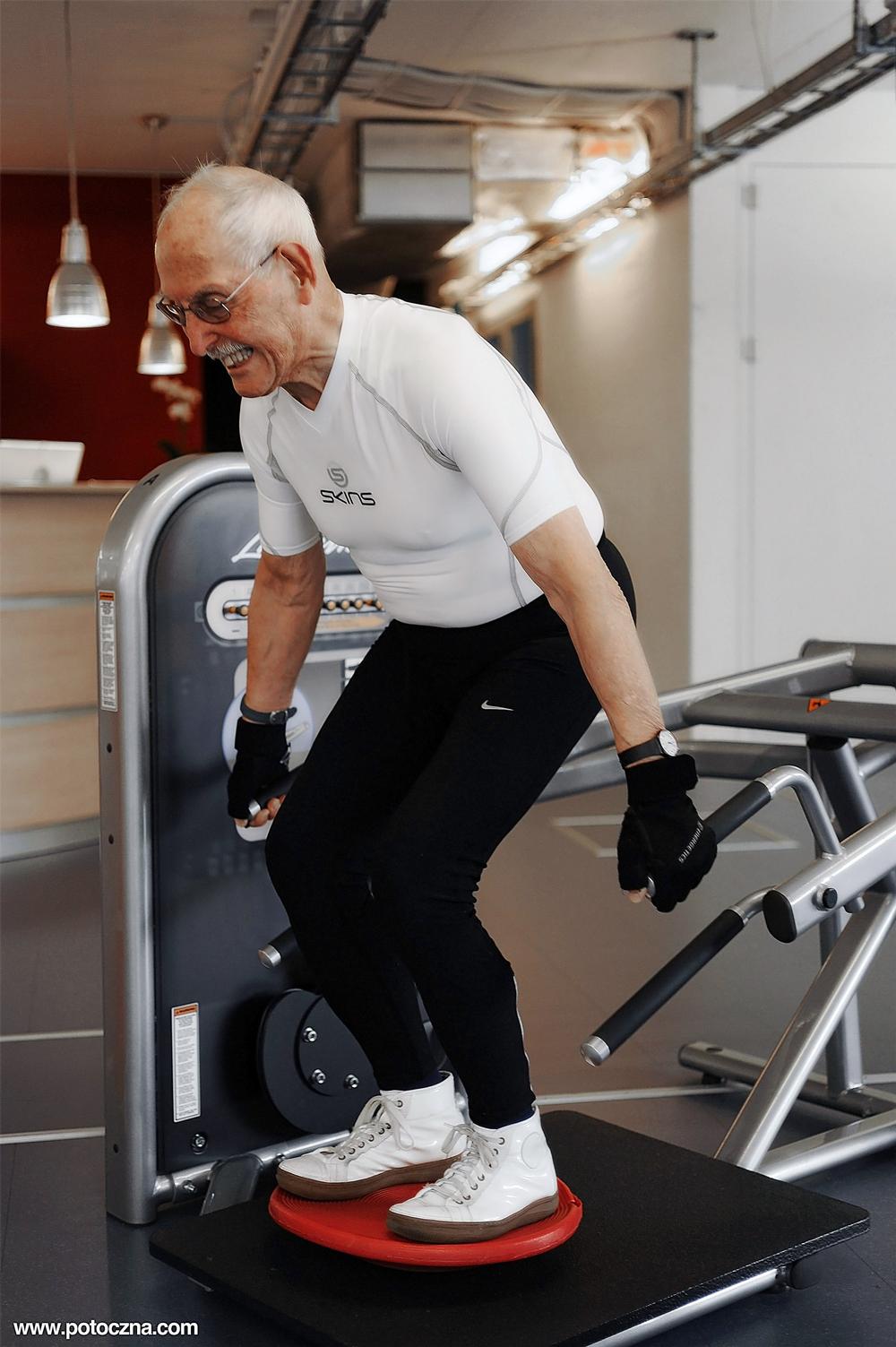
I’m a living example that functional training can prevent chronic disease and increase infection resistance in old age – I’m 94 years old, a competitive rower and bodybuilder, and have had no infections for the last four years.

However, the concept of exercise as medicine is being questioned because there’s no major benefit in exercise alone. Exercise cannot be prescribed generally for the treatment of disease, as everyone responds differently. In every exercise study there have been high, low or even adverse responders. This is mainly determined by genetics, but there are other factors involved such as nutrition and age.

So more exercise is not better for everyone. Some people need more, others less exercise. The major benefits of exercise can only be realised with nutrition tailored to type of exercise and to the genetics of the individual.

In addition, although exercise has been touted as the new wonder drug, medicaments require pre-clinical testing (three to six years), three-phase clinical trials (six to seven years), approval (six months to two years) and post-market surveillance. Even in physiotherapy, randomised trials are required. At the moment, exercise as medicine doesn’t seem to have been adequately researched or tested long-term.

That’s not helped by the fact that long-term exercise adherence for those with chronic disease remains low; exercise can’t be described as a wonder drug if patients struggle to take it.

What are your views on GP referral?
GPs prescribing exercise to patients is the future, but the fitness industry isn’t ready. Coaches must have the right training, and the exercise treatment must be covered by health insurance.

In the German-speaking world, the relationship with the medical profession is on the right track: Medical Active offers co-operation between the medical profession and the fitness industry, whereby physicians prescribe exercise to be carried out in selected fitness clubs.

However, in the UK the relationship remains poor, as do links to academia.

What do health clubs need to do better?
Although the average age of a health club member is 40.6 years (SFGV Report 2013), most clubs sell ‘beach bodies’ for gentlemen and ‘Brazilian butts’ for the ladies, which often isn’t the key focus for 40-year-olds.

In addition, the training offered is based on sport science, which is designed to improve athletic performance in a younger age group. The result is a huge loss of members.

Perhaps the biggest missed opportunity lies with the older age group. In five years’ time, 50 per cent of the US population will be aged over 50 – the age group with the highest retention rates and the most wealth. Yet most private health clubs do little or nothing to attract older people as members. That’s not helped by the fact that coaches are on average five years younger than their clients (SFGV Report 2013). In my opinion, client retention would be better if instructors were five years older.

Neither does continuous education for coaches seem to be universally compulsory, while clients are inadequately assessed before and after training. Clients are simply not given what they need or want. The result is a 55 per cent annual loss of clients: more than half of clients are dissatisfied within one year! This is the biggest challenge facing the fitness industry.

As clients only stay for a short time, the industry can’t conduct meaningful research to prove it consistently provides health and fitness as advertised. One of the biggest challenges for the sector is to demonstrate that it has a positive effect on national health, which at present it can’t really do.

In summary, the fitness industry is not fit: parts of it are off the pace and it’s under threat from new technology.

What’s your vision?
I have a dream in which the fitness sector has a good reputation with sports clubs, the medical profession and academia. Head coaches will have academic degrees, with instructors highly trained and receiving compulsory regular retraining. Older age groups will have older coaches.

Clubs will actively pre-assess, diagnose and continuously re-assess the physical condition and progress of their clients, with the results relayed to their physician to form part of the client’s medical history. Genetic testing will also become the norm, giving valuable information on nutritional and physical type.

The results of these tests will form the basis of the nutrition and training plan. As no effective training plan can be made without knowledge of the client’s activity outside the gym, tracking devices will also be used as standard.

Fitness centres will specialise in three age groups. For the 18–30 age group, they will specialise in sport training. The basis of training for the 30–50 age group will be functional training, to assess, rectify physical deficiencies and re-assess, so clients’ daily function is improved.

The 50–90 age group will also be given functional training, but with an acknowledgement of other important factors: the gym should be close to home, the training supervised and with same age group. Building muscle lost due to sarcopenia, with hypertrophy exercises and supplements, will be extremely important and will have a huge impact in reducing dependency in old age.

As clients begin to understand that training is a long-term commitment, and as re-testing continually evidences their improvement, retention will become the norm and clients will sign up for long-term contracts such as three years.

The stream of long-term clients will also be greatly increased and augmented by prescription from physicians, and payment will be guaranteed by health insurance.

For the first time, the fitness industry will have long-term clients and will be able to conduct extensive research to prove its status as one of the most important factors in public health, especially in combating age-related disease.

The huge reduction in client attrition will cause a dramatic increase in profitability, but in addition there will be considerable additional income from tests, food, supplements, rent or sale of tracking devices, heart rate monitors and so on.

This is my dream – and I believe the fitness industry has the ability to make my dream come true.

Sign up here to get HCM's weekly ezine and every issue of HCM magazine free on digital.
Eugster has spoken on wellness at TED and acts as a fitness ambassador / Photo: potoczna.com
Eugster says clubs need to specialise in three age groups, with functional training the focus for older members / Photo: potoczna.com
https://www.leisureopportunities.co.uk/images/HCM2014_7eugster.jpg
On his dream for the fitness industry
Dr Charles Eugster,Dr Charles Eugster, functional training, pre-clinical testing,
HCM magazine
As the 20th State of the Industry Report is released, LeisureDB has rebranded to Evolve, as Kath Hudson reports
HCM magazine
Would you stop selling memberships to prevent your club getting overcrowded? How do you strike the balance between maximising profits and prioritising the member experience? Kath Hudson talks to the experts
HCM magazine
World Athletics president, Sebastian Coe talks to Liz Terry about the launch of Run X in partnership with Technogym
HCM magazine
Software suppliers explain how AI, automation and connected digital experiences can work for the good of operators and consumers
HCM magazine
The new CEO of UK Active talks to HCM about the gym-curious and why he believes the sector can double in size by the end of the next decade
HCM promotional features
Sponsored
Social fitness the missing link to member engagement, according to a new Myzone report
HCM promotional features
Sponsored
Greg Bradley looks at the shift towards strength training in gyms and advises on how operators can create the ultimate training environment
HCM promotional features
Sponsored
Find out how your gym can tap into the corporate wellness boom
HCM promotional features
Sponsored
Third Space partnered with IndigoFitness to deliver a bespoke training space for its new club at The Whiteley
HCM promotional features
Sponsored
David Lloyd is stepping up its commitment to women’s health as it continues to explore what fit-for-purpose looks like for the female population
HCM promotional features
Sponsored
SnowDome Fitness has added 50 per cent more space with cutting-edge Technogym solutions
HCM promotional features
Sponsored
Starpool supports Olympic champion Marcell Jacobs, says Riccardo Turri
HCM promotional features
Sponsored
EGYM has opened a new HQ in Paternoster Square, London and revealed a range of new launches
HCM promotional features
Latest News
The inaugural HCM Invest event has opened applications for pitching slots ahead of its launch ...
Latest News
Girls in the UK are missing out on 280 million hours of sport every year ...
Latest News
According to research which tracked more than 147,000 people for 30 years, 90-120 minutes of ...
Latest News
Everlast Gyms expands its footprint outside of the UK this month with the imminent launch ...
Latest News
The UK's four Chief Medical Officers have published a refreshed edition of  Physical activity guidelines: ...
Latest News
Places Leisure has exchanged contracts to build and operate a flagship £60m water and wellness ...
Latest News
The Republic of Ireland will become the latest market in PureGym’s expanding international portfolio, with ...
Latest News
Sophie Lawler, CEO of Total Fitness, has launched a leadership coaching business aimed at helping ...
Opinion
promotion
Strength training has moved from the margins to the mainstream.
Opinion: Building smarter strength spaces for today’s operators
Featured supplier news
Featured supplier news: Introducing a new era of Nautilus Leverage
Strength training has never been more important for member retention, facility differentiation and long-term commercial success.
Featured supplier news
Featured supplier news: Legends never die: four legends, four philosophies of life
Panatta brought together four of the most influential figures in bodybuilding history on the stage of RiminiWellness 2026: Phil Heath, Lee Haney, Ronnie Coleman and Hany Rambod.
Company profiles
Company profile: Create
Create is one of the UK’s leading fitness training providers dedicated to raising standards through ...
Company profiles
Company profile: Leisure Energy Ltd
Leisure Energy is an award-winning renewable technology company, energy consultancy, and principal contractor. We specialise ...
Supplier Showcases
Supplier Showcase - Future-proofing
Catalogue Gallery
Click on a catalogue to view it online
Featured press releases
Fitbench press release: Fitbench unlocks the power of every square metre with Fitrack
Fitbench, the commercial fitness equipment company known for simplifying training spaces and removing barriers to exercise, today announces the launch of Fitrack, a multi-person, multifunctional training system that transforms underutilised gym space into a complete small group training destination.
Featured press releases
Precor Fitness Ltd press release: BH Live partners with Precor, transforming the Mountbatten Leisure Centre Gym
Alongside Precor, BH Live, the registered charity and social enterprise operating sport and leisure facilities across southern England, has completed a major refurbishment of the gym at Mountbatten Leisure Centre in Portsmouth as a part of a £750,000 inve
Directory
Water experiences and hydrotherapy solutions
Aquaform s.r.l.: Water experiences and hydrotherapy solutions
Fitness tracking platform
SpiviTech: Fitness tracking platform
Hot tubs
MSpa International Ltd: Hot tubs
Industrial washing machines
Miele Company Limited: Industrial washing machines
Lockers
Crown Sports Lockers: Lockers
Spa and beauty equipment
Oakworks Inc: Spa and beauty equipment
Property & Tenders
Stratford, East London.
Lee Valley Regional Park Authority
Property & Tenders
Y Felinheli, LL56 4QN
Newmark
Property & Tenders
Diary dates
21-24 Sep 2026
The Langham Huntington Pasadena , Pasadena, United States
Diary dates
06-08 Oct 2026
Messe Stuttgart, Stuttgart, Germany
Diary dates
22-22 Oct 2026
QEII Conference Centre, London,
Diary dates
26-29 Oct 2027
Koelnmesse Exhibition Centre, Cologne, Germany
Diary dates

features

People profiles: Dr Charles Eugster

“I have a dream – and I believe the fitness industry has the ability to make my dream come true”

Published in Health Club Management 2014 issue 7

Do you believe ‘exercise is medicine’?
I’m a living example that functional training can prevent chronic disease and increase infection resistance in old age – I’m 94 years old, a competitive rower and bodybuilder, and have had no infections for the last four years.

However, the concept of exercise as medicine is being questioned because there’s no major benefit in exercise alone. Exercise cannot be prescribed generally for the treatment of disease, as everyone responds differently. In every exercise study there have been high, low or even adverse responders. This is mainly determined by genetics, but there are other factors involved such as nutrition and age.

So more exercise is not better for everyone. Some people need more, others less exercise. The major benefits of exercise can only be realised with nutrition tailored to type of exercise and to the genetics of the individual.

In addition, although exercise has been touted as the new wonder drug, medicaments require pre-clinical testing (three to six years), three-phase clinical trials (six to seven years), approval (six months to two years) and post-market surveillance. Even in physiotherapy, randomised trials are required. At the moment, exercise as medicine doesn’t seem to have been adequately researched or tested long-term.

That’s not helped by the fact that long-term exercise adherence for those with chronic disease remains low; exercise can’t be described as a wonder drug if patients struggle to take it.

What are your views on GP referral?
GPs prescribing exercise to patients is the future, but the fitness industry isn’t ready. Coaches must have the right training, and the exercise treatment must be covered by health insurance.

In the German-speaking world, the relationship with the medical profession is on the right track: Medical Active offers co-operation between the medical profession and the fitness industry, whereby physicians prescribe exercise to be carried out in selected fitness clubs.

However, in the UK the relationship remains poor, as do links to academia.

What do health clubs need to do better?
Although the average age of a health club member is 40.6 years (SFGV Report 2013), most clubs sell ‘beach bodies’ for gentlemen and ‘Brazilian butts’ for the ladies, which often isn’t the key focus for 40-year-olds.

In addition, the training offered is based on sport science, which is designed to improve athletic performance in a younger age group. The result is a huge loss of members.

Perhaps the biggest missed opportunity lies with the older age group. In five years’ time, 50 per cent of the US population will be aged over 50 – the age group with the highest retention rates and the most wealth. Yet most private health clubs do little or nothing to attract older people as members. That’s not helped by the fact that coaches are on average five years younger than their clients (SFGV Report 2013). In my opinion, client retention would be better if instructors were five years older.

Neither does continuous education for coaches seem to be universally compulsory, while clients are inadequately assessed before and after training. Clients are simply not given what they need or want. The result is a 55 per cent annual loss of clients: more than half of clients are dissatisfied within one year! This is the biggest challenge facing the fitness industry.

As clients only stay for a short time, the industry can’t conduct meaningful research to prove it consistently provides health and fitness as advertised. One of the biggest challenges for the sector is to demonstrate that it has a positive effect on national health, which at present it can’t really do.

In summary, the fitness industry is not fit: parts of it are off the pace and it’s under threat from new technology.

What’s your vision?
I have a dream in which the fitness sector has a good reputation with sports clubs, the medical profession and academia. Head coaches will have academic degrees, with instructors highly trained and receiving compulsory regular retraining. Older age groups will have older coaches.

Clubs will actively pre-assess, diagnose and continuously re-assess the physical condition and progress of their clients, with the results relayed to their physician to form part of the client’s medical history. Genetic testing will also become the norm, giving valuable information on nutritional and physical type.

The results of these tests will form the basis of the nutrition and training plan. As no effective training plan can be made without knowledge of the client’s activity outside the gym, tracking devices will also be used as standard.

Fitness centres will specialise in three age groups. For the 18–30 age group, they will specialise in sport training. The basis of training for the 30–50 age group will be functional training, to assess, rectify physical deficiencies and re-assess, so clients’ daily function is improved.

The 50–90 age group will also be given functional training, but with an acknowledgement of other important factors: the gym should be close to home, the training supervised and with same age group. Building muscle lost due to sarcopenia, with hypertrophy exercises and supplements, will be extremely important and will have a huge impact in reducing dependency in old age.

As clients begin to understand that training is a long-term commitment, and as re-testing continually evidences their improvement, retention will become the norm and clients will sign up for long-term contracts such as three years.

The stream of long-term clients will also be greatly increased and augmented by prescription from physicians, and payment will be guaranteed by health insurance.

For the first time, the fitness industry will have long-term clients and will be able to conduct extensive research to prove its status as one of the most important factors in public health, especially in combating age-related disease.

The huge reduction in client attrition will cause a dramatic increase in profitability, but in addition there will be considerable additional income from tests, food, supplements, rent or sale of tracking devices, heart rate monitors and so on.

This is my dream – and I believe the fitness industry has the ability to make my dream come true.

Sign up here to get HCM's weekly ezine and every issue of HCM magazine free on digital.
Eugster has spoken on wellness at TED and acts as a fitness ambassador / Photo: potoczna.com
Eugster says clubs need to specialise in three age groups, with functional training the focus for older members / Photo: potoczna.com
https://www.leisureopportunities.co.uk/images/HCM2014_7eugster.jpg
On his dream for the fitness industry
Dr Charles Eugster,Dr Charles Eugster, functional training, pre-clinical testing,
Latest News
The inaugural HCM Invest event has opened applications for pitching slots ahead of its launch ...
Latest News
Girls in the UK are missing out on 280 million hours of sport every year ...
Latest News
According to research which tracked more than 147,000 people for 30 years, 90-120 minutes of ...
Latest News
Everlast Gyms expands its footprint outside of the UK this month with the imminent launch ...
Latest News
The UK's four Chief Medical Officers have published a refreshed edition of  Physical activity guidelines: ...
Latest News
Places Leisure has exchanged contracts to build and operate a flagship £60m water and wellness ...
Latest News
The Republic of Ireland will become the latest market in PureGym’s expanding international portfolio, with ...
Latest News
Sophie Lawler, CEO of Total Fitness, has launched a leadership coaching business aimed at helping ...
Latest News
Anytime Fitness reaches a milestone this week with the launch of its 6000th site. The ...

Latest News
The £33.9 million Leighton Leisure and Community Centre has opened in Leighton Buzzard, UK, creating ...
Latest News
YogaSix, the yoga brand owned by Xponential Fitness, has launched a heated, Pilates-inspired class called ...
Opinion
promotion
Strength training has moved from the margins to the mainstream.
Opinion: Building smarter strength spaces for today’s operators
Featured supplier news
Featured supplier news: Introducing a new era of Nautilus Leverage
Strength training has never been more important for member retention, facility differentiation and long-term commercial success.
Featured supplier news
Featured supplier news: Legends never die: four legends, four philosophies of life
Panatta brought together four of the most influential figures in bodybuilding history on the stage of RiminiWellness 2026: Phil Heath, Lee Haney, Ronnie Coleman and Hany Rambod.
Company profiles
Company profile: Create
Create is one of the UK’s leading fitness training providers dedicated to raising standards through ...
Company profiles
Company profile: Leisure Energy Ltd
Leisure Energy is an award-winning renewable technology company, energy consultancy, and principal contractor. We specialise ...
Supplier Showcases
Supplier Showcase - Future-proofing
Catalogue Gallery
Click on a catalogue to view it online
Featured press releases
Fitbench press release: Fitbench unlocks the power of every square metre with Fitrack
Fitbench, the commercial fitness equipment company known for simplifying training spaces and removing barriers to exercise, today announces the launch of Fitrack, a multi-person, multifunctional training system that transforms underutilised gym space into a complete small group training destination.
Featured press releases
Precor Fitness Ltd press release: BH Live partners with Precor, transforming the Mountbatten Leisure Centre Gym
Alongside Precor, BH Live, the registered charity and social enterprise operating sport and leisure facilities across southern England, has completed a major refurbishment of the gym at Mountbatten Leisure Centre in Portsmouth as a part of a £750,000 inve
Directory
Water experiences and hydrotherapy solutions
Aquaform s.r.l.: Water experiences and hydrotherapy solutions
Fitness tracking platform
SpiviTech: Fitness tracking platform
Hot tubs
MSpa International Ltd: Hot tubs
Industrial washing machines
Miele Company Limited: Industrial washing machines
Lockers
Crown Sports Lockers: Lockers
Spa and beauty equipment
Oakworks Inc: Spa and beauty equipment
Property & Tenders
Stratford, East London.
Lee Valley Regional Park Authority
Property & Tenders
Y Felinheli, LL56 4QN
Newmark
Property & Tenders
Diary dates
21-24 Sep 2026
The Langham Huntington Pasadena , Pasadena, United States
Diary dates
06-08 Oct 2026
Messe Stuttgart, Stuttgart, Germany
Diary dates
22-22 Oct 2026
QEII Conference Centre, London,
Diary dates
26-29 Oct 2027
Koelnmesse Exhibition Centre, Cologne, Germany
Diary dates
Search news, features & products:
Find a supplier:
Partner sites