

























GET HCM
magazine
Sign up for the FREE digital edition of HCM magazine and also get the HCM ezine and breaking news email alerts.
Not right now, thanksclose this window I've already subscribed!
Follow Health Club Management on Twitter Like Health Club Management on Facebook Join the discussion with Health Club Management on LinkedIn
FITNESS, HEALTH, WELLNESS

features

Everyone's talking about: Love

Our experts believe love is the best foundation on which to build a business. Kath Hudson finds out why

Published in Health Club Management 2024 issue 1
In essence, love means trusting both your staff and your customers / photo: Six Senses

The concept of love as a business strategy hasn’t yet gained much traction, but it makes a great deal of sense. I think we’d all agree the world would be a better place with a bit more love.

In essence it means trusting your staff and your customers, so they give you and each other their loyalty. Leading your team with praise before criticism will make them feel empowered and better able to take feedback. Listening to them and their ideas as much as you impart your own will make them feel valued and heard. Fostering this type of culture will lead to easier recruitment and better retention, translating to a better customer experience and a healthier operation.

Research professor at the University of Houston, Brené Brown, is a trailblazer in this regard. Her TED Talk, The Power of Vulnerability is the fifth most watched ever and shows the toxicity of shame and that there is strength in vulnerability.

Author and illustrator, Charlie Mackesy, presents this well in his book The Boy, The Mole, The Fox and The Horse. He recently shared on Instagram that a teacher asked him to make another book because his first one had given some of her boys permission to be kind and honest about how they feel.

Within the health and fitness industry, Tara Dillon, went about creating an empowering culture when she took over as CEO of CIMSPA, an organisation that was off-balance at the time.

“I wanted to build a culture on the foundations of equality, respect and teamwork,” she says. “I implemented the policy of treating people like grown-ups: for example offering unlimited leave – they have to check with their colleagues rather than me.

“With expenses, we ask employees to treat the company money as they do their own and have always taken an open-minded approach to flexible working.

“Fully immersing the team in the direction of the organisation, so they buy into the purpose and love what they do is so important,” says Dillon. “The work culture has also helped recruitment and retention.”

So is love the answer? And how do you make a start? We ask the experts...

Anna Bjurstam
Wellness pioneer, Six Senses
photoS: Six Senses

I firmly believe integrating love and wellness into business strategy is not just beneficial but essential. It’s about creating a work culture that values mental health and emotional wellbeing, which then leads to a more resilient and successful organisation.

Cultivating a kind and compassionate culture has been integral to our work at Six Senses. We have an employee wellbeing programme called Mission Wellness, which has led to a more engaged and emotionally healthy workforce.

In a compassionate work environment, we see fewer conflicts and greater collaboration. People are more open to sharing ideas and feedback, which is crucial for innovation and growth.

From a talent attraction standpoint, a reputation for having a caring and healthy work environment is a significant draw. I have stayed with the company for 11 years and worked with many of my team members since the beginning. We have fun, support each other and share a great deal of love and respect for one another.

To integrate love into a health club’s strategy, I would recommend creating a personal and welcoming experience. Start with acknowledging each person’s unique journey, understanding their goals, and providing personalised support. Ensure the club is welcoming to everyone, and celebrate every member’s achievements, no matter how small. Also work to foster a sense of community where members feel connected and supported by both staff and fellow members.

Start with acknowledging each person’s unique journey

I would also place great importance on the wellbeing of the team and train staff in customer service and empathy. A lot of Six Senses’ training is focused around emotional hospitality and doing good to yourself and others.

Happy and empathetic employees naturally extend care to members, creating a positive and nurturing environment. Our guests always appreciate the genuine care when a member of staff goes the extra mile, which is way more important than the other touchpoints.

Extend love beyond the four walls of the club by participating in community outreach and wellness education. We channel 0.5 per cent of revenue to sustainability measures in the local community.

Bringing love into the business creates a supportive community members and staff can be proud of.


Happy employees naturally extend greater care to your members / photo: Six Senses
Steve Farber
Founder, Extreme Leadership Institute
photo: Extreme Leadership Institute

Around 20 years ago – after 15 years of working in change management - I took stock of what I’d learned over the years, from the many leaders I’d met and the determining factor in success and influence was love. My first book about love as a business and leadership principle, The Racial Leap, was published in 2004.

I don’t mean love as fluff, or love as the sentiment. I mean love as a practice and a discipline. The case for love and business is simple: your competitive advantage comes from your customers loving what you do. Anything short of that and they’ll be easily wooed away by another company.

If you want to create that experience for your customers, you have to create a culture and environment people love working in. If you don’t love the business, the people you’re working with, the clients you’re serving, the mission you have, the product or service you’re providing then the only option is to fake it and people have a pretty good bullshit meter when you fake it.

When people get concerned this is fluffy it’s because there’s this idea that somehow love lowers standards and expectations, when in fact it’s the opposite. Everybody wants love, so this whole idea that love has no place in business makes no sense. It’s about creating raving fans. If someone loves doing business with you and loves the way you take care of them that’s not soft or fluffy, it’s difficult. It demands a level of commitment that a lot of people aren’t willing to give.

People have a pretty good bullshit meter when you fake it

One of my favourite examples of the companies I’ve worked with is an unsexy shipping and logistics company based out of Florida. The company was doing badly: almost bankrupt, people hated working there, they’d had three CEOs in four years. Then a CEO took over who was a “love guy”.

He made a few changes to improve the work culture, including bringing in a food truck every Thursday so the staff could eat together, adding a popcorn machine and table tennis table to the communal space, getting the managers out of the office and holding weekly sessions where any question or idea was welcome.

Customer policies were reassessed to make sure decisions were made through the lens of customer service. In not a very long amount of time, the debt was reduced to virtually nothing and it was voted the number one place to work in the city of Jacksonville.

To implement love as a business strategy, start by asking the question: “why do I love this health club?” Love has implications for everything we do in business, from the way we hire people and the kind of people we hire, to the physical environment and how you relate to customers. Every action should be put through the filter of “does this meet the love standard?”


Every action should be put through the filter of “does this meet the love standard?
To implement love as a business strategy, start by asking ‘why do I love this health club?’ / Photo: Shutterstock/PeopleImages.com - Yuri A
Mia Kyricos
President and chief love officer, Kyricos & Associates
Kyricos has studied love as an effective business strategy / photo: Kyricos & Associates

Over the years, I’ve taken multiple leadership assessments that have identified love as one of my core leadership traits, but I didn’t always understand its power or even feel comfortable leveraging it in professional environments.

During the pandemic, I studied the potential of love as a business strategy and was blown away by what I discovered and this gave me the courage to become a love advocate. Not only does it feel good, it’s good for business too.

Simply put, love is a good business strategy because it impacts business performance. Research has shown that high-performance companies tend to have three times the number of leaders who embody loving credentials, including proactively inspiring, or empowering others by managing to people’s strengths and modelling empathy, gratitude and respect in the workplace.

The body of research which proves the power of love is growing. Three years ago, I looked at companies such as Subaru, Southwest Airlines and Prudential Insurance, among others, to see how love – or in this case, positivity management – has helped them outperform the competition.

I also read the pioneering work of leadership experts such as Steve Farber (see below), and positivity experts such as Barbara Frederickson, each essentially naming love as a “superpower” whether from a business or science perspective. They all led me to the same belief that love should have a seat at the business table because its potential is huge if we have the courage to leverage it.

However, this is a radical concept and while business leaders may talk about love in a casual sense – such as loving the industry, their career paths or teams – most of them don’t know how to institutionalise love as a business practice.

In my opinion, there are four practical ways to begin.

Firstly, believe in the power of love and be fearless in championing its place at work and in life. If you’ve worked in the business of wellness over the last 10-20 years, you have likely spent a good deal of time attempting to make a business case for wellness, even before the data existed to prove its worth to owners, investors and consumers, because you knew in your gut that the business of wellness could impact profit and health outcomes even before the research was available. Well, the same is true for love.

Only leaders who authentically believe in the power of love should be leading it as a business practice

Secondly, adopt a positive and flexible mindset. This means shifting awareness to what’s going right, rather than wrong and managing to people’s strengths rather than their weaknesses. Start meetings, or even training sessions, by acknowledging successes rather than challenges, welcoming change rather than resisting it, publicly practicing gratitude, and above all else, establishing trust in your organisation. Without trust, it’s impossible for love to even grow, let alone produce business impact.

Thirdly, find ways to easily and objectively measure love in business. Metrics can vary from net promoter score to customer acquisition and retention, higher margins, and evangelist marketing. Find out what your employees love about their jobs. Even more courageous, ask what they don’t love in order to identify ways to turn negative emotions and experiences into positive ones.

Finally, be honest. Only leaders who authentically believe in the power of love should be leading it as a business practice. There’s nothing wrong with passing the torch to a believer so that you can follow their lead.

Passing the torch to the ‘love believers’ in your organisation can eventually help you become one too / photo: Shutterstock/PeopleImages.com - Yuri A
https://www.leisureopportunities.co.uk/images/2024/744093_65196.jpg
How can we authentically harness the power of love to support our teams, bond with our customers and amplify success? Kath Hudson asks the experts
HCM magazine
Strength training is evolving, driven by changing consumer preferences. Julie Cramer talks to innovators about how their products are meeting this demand
HCM magazine
As the entrepreneur who started Wexer, Fresh Fitness, Fitness DK and Repeat, as well as being a former elite athlete, Rasmus Ingerslev’s life looked perfect from the outside, but onthe inside it was a different story. He talks to Kath Hudson about healing old wounds
HCM magazine
I experienced a blissful feeling of joy I hadn’t felt since I was a kid
HCM magazine
For every member with a tripod and a big following, there are others irritated at the way equipment is being hogged or wary they’ll be in the background on someone’s Insta feed. Do influencers offer valuable, free marketing or are they just a nuisance? Kath Hudson finds out how operators are responding
HCM magazine
Small improvements to sleep, diet and physical activity have major benefits for the heart, according to new research from the University of Sydney
HCM promotional features
Sponsored
Greg Bradley looks at the shift towards strength training in gyms and advises on how operators can create the ultimate training environment
HCM promotional features
Sponsored
SnowDome Fitness has added 50 per cent more space with cutting-edge Technogym solutions
HCM promotional features
Sponsored
Third Space partnered with IndigoFitness to deliver a bespoke training space for its new club at The Whiteley
HCM promotional features
Sponsored
Find out how your gym can tap into the corporate wellness boom
HCM promotional features
Sponsored
Starpool supports Olympic champion Marcell Jacobs, says Riccardo Turri
HCM promotional features
Sponsored
David Lloyd is stepping up its commitment to women’s health as it continues to explore what fit-for-purpose looks like for the female population
HCM promotional features
Sponsored
EGYM has opened a new HQ in Paternoster Square, London and revealed a range of new launches
HCM promotional features
Promotion
Performance Health Systems, manufacturer of Power Plate, has a new CEO, with an ambitious vision for the company
HCM promotional features
Sponsored
New launch, Salus House, elevates boutique wellness with high service levels and a partnership with Technogym
HCM promotional features
Latest News
Europe’s largest low-cost operator, Basic-Fit, has agreed to acquire 41 Wellyou clubs in Germany for ...
Latest News
Longevity is the most important motivator for today’s exercisers and social connection is key, according ...
Latest News
Until has opened its fourth club at Canary Wharf, in the iconic YY London building. ...
Latest News
Ben Allen has been appointed managing director at Common Bond. Having set the company up ...
Latest News
Les Mills, whose name became synonymous with one of the world's leading fitness brands, has ...
Latest News
People taking GLP-1 weight loss medications such as Ozempic, Wegovy, Mounjaro and Zepbound may be ...
Latest News
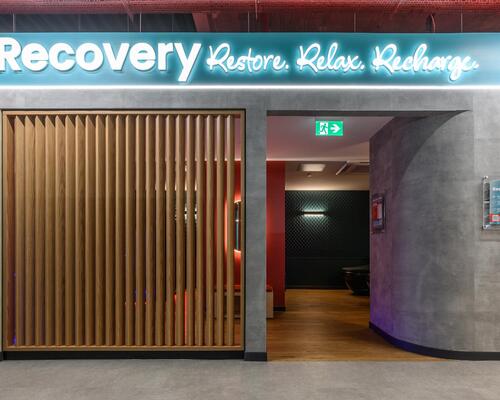
Low-cost gym operator, PureGym, is trialling recovery zones at two of its UK sites, democratising ...
Latest News
In a milestone moment, mental health has become a core part of CIMSPA’s occupational professional ...
Opinion
promotion
Strength training has moved from the margins to the mainstream.
Opinion: Building smarter strength spaces for today’s operators
Featured supplier news
Featured supplier news: CoverMe extends matching service to personal training, rewriting how members and personal trainers connect
CoverMe, the global leader in fitness workforce management, today launches CoverMe PT, an on-demand personal training platform that connects the right personal trainer to the right client in under 10 seconds.
Featured supplier news
Featured supplier news: Cornerstone Connect helps Active Blackpool tackle health inequalities
Active Blackpool is deploying Cornerstone Connect, a new digital interface allowing disparate information from multiple systems to be aggregated into one dataset, to support its focus on reducing health inequalities and improving healthy life expectancy.
Company profiles
Company profile: Matrix Fitness
Matrix provides equipment to facilities in all market sectors including private health clubs, residential housing, ...
Company profiles
Company profile: Eleiko Group AB
Eleiko continues to innovate and craft world-class strength equipment designed to help people perform better ...
Supplier Showcases
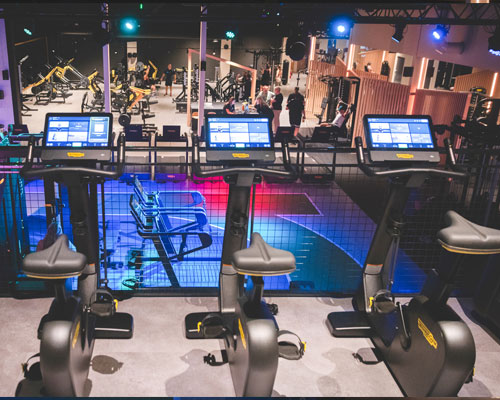
Supplier Showcase - From nightclub to health club
Supplier Showcases
Supplier Showcase - Future-proofing
Catalogue Gallery
Click on a catalogue to view it online
Featured press releases
Pure Energy Music press release: Pure Energy Music announced as Official Music Partner for Deka Manchester 2026
Pure Energy Music, the complete music and technology solution for the fitness industry, has been announced as Official Music Partner for Deka Manchester 2026, bringing music curated for fitness to one of the UK's largest fitness racing weekends.
Featured press releases
Leisure Energy press release: Leisure Energy has joined the Everything Estates frameworks
Leisure Energy is now an approved supplier on the Everything Estates Renewables & Construction Framework.
Directory
Spa and beauty equipment
Living Earth Crafts: Spa and beauty equipment
Water experiences and hydrotherapy solutions
Aquaform s.r.l.: Water experiences and hydrotherapy solutions
Industrial washing machines
Miele Company Limited: Industrial washing machines
Fitness tracking platform
SpiviTech: Fitness tracking platform
Lockers
Crown Sports Lockers: Lockers
Hot tubs
MSpa International Ltd: Hot tubs
Property & Tenders
Stratford, East London.
Lee Valley Regional Park Authority
Property & Tenders
Y Felinheli, LL56 4QN
Newmark
Property & Tenders
Diary dates
21-24 Sep 2026
The Langham Huntington Pasadena , Pasadena, United States
Diary dates
06-08 Oct 2026
Messe Stuttgart, Stuttgart, Germany
Diary dates
22-22 Oct 2026
QEII Conference Centre, London,
Diary dates
26-29 Oct 2027
Koelnmesse Exhibition Centre, Cologne, Germany
Diary dates

features

Everyone's talking about: Love

Our experts believe love is the best foundation on which to build a business. Kath Hudson finds out why

Published in Health Club Management 2024 issue 1
In essence, love means trusting both your staff and your customers / photo: Six Senses

The concept of love as a business strategy hasn’t yet gained much traction, but it makes a great deal of sense. I think we’d all agree the world would be a better place with a bit more love.

In essence it means trusting your staff and your customers, so they give you and each other their loyalty. Leading your team with praise before criticism will make them feel empowered and better able to take feedback. Listening to them and their ideas as much as you impart your own will make them feel valued and heard. Fostering this type of culture will lead to easier recruitment and better retention, translating to a better customer experience and a healthier operation.

Research professor at the University of Houston, Brené Brown, is a trailblazer in this regard. Her TED Talk, The Power of Vulnerability is the fifth most watched ever and shows the toxicity of shame and that there is strength in vulnerability.

Author and illustrator, Charlie Mackesy, presents this well in his book The Boy, The Mole, The Fox and The Horse. He recently shared on Instagram that a teacher asked him to make another book because his first one had given some of her boys permission to be kind and honest about how they feel.

Within the health and fitness industry, Tara Dillon, went about creating an empowering culture when she took over as CEO of CIMSPA, an organisation that was off-balance at the time.

“I wanted to build a culture on the foundations of equality, respect and teamwork,” she says. “I implemented the policy of treating people like grown-ups: for example offering unlimited leave – they have to check with their colleagues rather than me.

“With expenses, we ask employees to treat the company money as they do their own and have always taken an open-minded approach to flexible working.

“Fully immersing the team in the direction of the organisation, so they buy into the purpose and love what they do is so important,” says Dillon. “The work culture has also helped recruitment and retention.”

So is love the answer? And how do you make a start? We ask the experts...

Anna Bjurstam
Wellness pioneer, Six Senses
photoS: Six Senses

I firmly believe integrating love and wellness into business strategy is not just beneficial but essential. It’s about creating a work culture that values mental health and emotional wellbeing, which then leads to a more resilient and successful organisation.

Cultivating a kind and compassionate culture has been integral to our work at Six Senses. We have an employee wellbeing programme called Mission Wellness, which has led to a more engaged and emotionally healthy workforce.

In a compassionate work environment, we see fewer conflicts and greater collaboration. People are more open to sharing ideas and feedback, which is crucial for innovation and growth.

From a talent attraction standpoint, a reputation for having a caring and healthy work environment is a significant draw. I have stayed with the company for 11 years and worked with many of my team members since the beginning. We have fun, support each other and share a great deal of love and respect for one another.

To integrate love into a health club’s strategy, I would recommend creating a personal and welcoming experience. Start with acknowledging each person’s unique journey, understanding their goals, and providing personalised support. Ensure the club is welcoming to everyone, and celebrate every member’s achievements, no matter how small. Also work to foster a sense of community where members feel connected and supported by both staff and fellow members.

Start with acknowledging each person’s unique journey

I would also place great importance on the wellbeing of the team and train staff in customer service and empathy. A lot of Six Senses’ training is focused around emotional hospitality and doing good to yourself and others.

Happy and empathetic employees naturally extend care to members, creating a positive and nurturing environment. Our guests always appreciate the genuine care when a member of staff goes the extra mile, which is way more important than the other touchpoints.

Extend love beyond the four walls of the club by participating in community outreach and wellness education. We channel 0.5 per cent of revenue to sustainability measures in the local community.

Bringing love into the business creates a supportive community members and staff can be proud of.

Happy employees naturally extend greater care to your members / photo: Six Senses
Steve Farber
Founder, Extreme Leadership Institute
photo: Extreme Leadership Institute

Around 20 years ago – after 15 years of working in change management - I took stock of what I’d learned over the years, from the many leaders I’d met and the determining factor in success and influence was love. My first book about love as a business and leadership principle, The Racial Leap, was published in 2004.

I don’t mean love as fluff, or love as the sentiment. I mean love as a practice and a discipline. The case for love and business is simple: your competitive advantage comes from your customers loving what you do. Anything short of that and they’ll be easily wooed away by another company.

If you want to create that experience for your customers, you have to create a culture and environment people love working in. If you don’t love the business, the people you’re working with, the clients you’re serving, the mission you have, the product or service you’re providing then the only option is to fake it and people have a pretty good bullshit meter when you fake it.

When people get concerned this is fluffy it’s because there’s this idea that somehow love lowers standards and expectations, when in fact it’s the opposite. Everybody wants love, so this whole idea that love has no place in business makes no sense. It’s about creating raving fans. If someone loves doing business with you and loves the way you take care of them that’s not soft or fluffy, it’s difficult. It demands a level of commitment that a lot of people aren’t willing to give.

People have a pretty good bullshit meter when you fake it

One of my favourite examples of the companies I’ve worked with is an unsexy shipping and logistics company based out of Florida. The company was doing badly: almost bankrupt, people hated working there, they’d had three CEOs in four years. Then a CEO took over who was a “love guy”.

He made a few changes to improve the work culture, including bringing in a food truck every Thursday so the staff could eat together, adding a popcorn machine and table tennis table to the communal space, getting the managers out of the office and holding weekly sessions where any question or idea was welcome.

Customer policies were reassessed to make sure decisions were made through the lens of customer service. In not a very long amount of time, the debt was reduced to virtually nothing and it was voted the number one place to work in the city of Jacksonville.

To implement love as a business strategy, start by asking the question: “why do I love this health club?” Love has implications for everything we do in business, from the way we hire people and the kind of people we hire, to the physical environment and how you relate to customers. Every action should be put through the filter of “does this meet the love standard?”

Every action should be put through the filter of “does this meet the love standard?
To implement love as a business strategy, start by asking ‘why do I love this health club?’ / Photo: Shutterstock/PeopleImages.com - Yuri A
Mia Kyricos
President and chief love officer, Kyricos & Associates
Kyricos has studied love as an effective business strategy / photo: Kyricos & Associates

Over the years, I’ve taken multiple leadership assessments that have identified love as one of my core leadership traits, but I didn’t always understand its power or even feel comfortable leveraging it in professional environments.

During the pandemic, I studied the potential of love as a business strategy and was blown away by what I discovered and this gave me the courage to become a love advocate. Not only does it feel good, it’s good for business too.

Simply put, love is a good business strategy because it impacts business performance. Research has shown that high-performance companies tend to have three times the number of leaders who embody loving credentials, including proactively inspiring, or empowering others by managing to people’s strengths and modelling empathy, gratitude and respect in the workplace.

The body of research which proves the power of love is growing. Three years ago, I looked at companies such as Subaru, Southwest Airlines and Prudential Insurance, among others, to see how love – or in this case, positivity management – has helped them outperform the competition.

I also read the pioneering work of leadership experts such as Steve Farber (see below), and positivity experts such as Barbara Frederickson, each essentially naming love as a “superpower” whether from a business or science perspective. They all led me to the same belief that love should have a seat at the business table because its potential is huge if we have the courage to leverage it.

However, this is a radical concept and while business leaders may talk about love in a casual sense – such as loving the industry, their career paths or teams – most of them don’t know how to institutionalise love as a business practice.

In my opinion, there are four practical ways to begin.

Firstly, believe in the power of love and be fearless in championing its place at work and in life. If you’ve worked in the business of wellness over the last 10-20 years, you have likely spent a good deal of time attempting to make a business case for wellness, even before the data existed to prove its worth to owners, investors and consumers, because you knew in your gut that the business of wellness could impact profit and health outcomes even before the research was available. Well, the same is true for love.

Only leaders who authentically believe in the power of love should be leading it as a business practice

Secondly, adopt a positive and flexible mindset. This means shifting awareness to what’s going right, rather than wrong and managing to people’s strengths rather than their weaknesses. Start meetings, or even training sessions, by acknowledging successes rather than challenges, welcoming change rather than resisting it, publicly practicing gratitude, and above all else, establishing trust in your organisation. Without trust, it’s impossible for love to even grow, let alone produce business impact.

Thirdly, find ways to easily and objectively measure love in business. Metrics can vary from net promoter score to customer acquisition and retention, higher margins, and evangelist marketing. Find out what your employees love about their jobs. Even more courageous, ask what they don’t love in order to identify ways to turn negative emotions and experiences into positive ones.

Finally, be honest. Only leaders who authentically believe in the power of love should be leading it as a business practice. There’s nothing wrong with passing the torch to a believer so that you can follow their lead.

Passing the torch to the ‘love believers’ in your organisation can eventually help you become one too / photo: Shutterstock/PeopleImages.com - Yuri A
https://www.leisureopportunities.co.uk/images/2024/744093_65196.jpg
How can we authentically harness the power of love to support our teams, bond with our customers and amplify success? Kath Hudson asks the experts
Latest News
Europe’s largest low-cost operator, Basic-Fit, has agreed to acquire 41 Wellyou clubs in Germany for ...
Latest News
Longevity is the most important motivator for today’s exercisers and social connection is key, according ...
Latest News
Until has opened its fourth club at Canary Wharf, in the iconic YY London building. ...
Latest News
Ben Allen has been appointed managing director at Common Bond. Having set the company up ...

Latest News
Les Mills, whose name became synonymous with one of the world's leading fitness brands, has ...
Latest News
People taking GLP-1 weight loss medications such as Ozempic, Wegovy, Mounjaro and Zepbound may be ...
Latest News
Low-cost gym operator, PureGym, is trialling recovery zones at two of its UK sites, democratising ...
Latest News
In a milestone moment, mental health has become a core part of CIMSPA’s occupational professional ...
Latest News
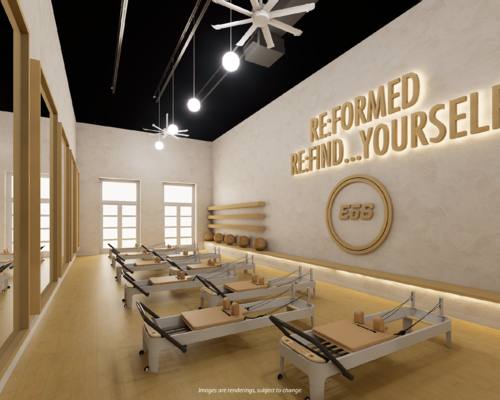
US high-value, low-price chain, Eos Fitness, has announced plans to pilot reformer Pilates in three ...
Latest News
Preventive healthcare company Neko Health has added body composition analysis to its full-body health scan ...
Latest News
Chequan Lewis is the new CEO of Crunch Fitness, taking over from Jim Rowley, who ...
Opinion
promotion
Strength training has moved from the margins to the mainstream.
Opinion: Building smarter strength spaces for today’s operators
Featured supplier news
Featured supplier news: CoverMe extends matching service to personal training, rewriting how members and personal trainers connect
CoverMe, the global leader in fitness workforce management, today launches CoverMe PT, an on-demand personal training platform that connects the right personal trainer to the right client in under 10 seconds.
Featured supplier news
Featured supplier news: Cornerstone Connect helps Active Blackpool tackle health inequalities
Active Blackpool is deploying Cornerstone Connect, a new digital interface allowing disparate information from multiple systems to be aggregated into one dataset, to support its focus on reducing health inequalities and improving healthy life expectancy.
Company profiles
Company profile: Matrix Fitness
Matrix provides equipment to facilities in all market sectors including private health clubs, residential housing, ...
Company profiles
Company profile: Eleiko Group AB
Eleiko continues to innovate and craft world-class strength equipment designed to help people perform better ...
Supplier Showcases
Supplier Showcase - From nightclub to health club
Supplier Showcases
Supplier Showcase - Future-proofing
Catalogue Gallery
Click on a catalogue to view it online
Featured press releases
Pure Energy Music press release: Pure Energy Music announced as Official Music Partner for Deka Manchester 2026
Pure Energy Music, the complete music and technology solution for the fitness industry, has been announced as Official Music Partner for Deka Manchester 2026, bringing music curated for fitness to one of the UK's largest fitness racing weekends.
Featured press releases
Leisure Energy press release: Leisure Energy has joined the Everything Estates frameworks
Leisure Energy is now an approved supplier on the Everything Estates Renewables & Construction Framework.
Directory
Spa and beauty equipment
Living Earth Crafts: Spa and beauty equipment
Water experiences and hydrotherapy solutions
Aquaform s.r.l.: Water experiences and hydrotherapy solutions
Industrial washing machines
Miele Company Limited: Industrial washing machines
Fitness tracking platform
SpiviTech: Fitness tracking platform
Lockers
Crown Sports Lockers: Lockers
Hot tubs
MSpa International Ltd: Hot tubs
Property & Tenders
Stratford, East London.
Lee Valley Regional Park Authority
Property & Tenders
Y Felinheli, LL56 4QN
Newmark
Property & Tenders
Diary dates
21-24 Sep 2026
The Langham Huntington Pasadena , Pasadena, United States
Diary dates
06-08 Oct 2026
Messe Stuttgart, Stuttgart, Germany
Diary dates
22-22 Oct 2026
QEII Conference Centre, London,
Diary dates
26-29 Oct 2027
Koelnmesse Exhibition Centre, Cologne, Germany
Diary dates
Search news, features & products:
Find a supplier:
Partner sites