

















Elevate Arena
Elevate Arena
Elevate Arena
Follow Health Club Management on Twitter Like Health Club Management on Facebook Join the discussion with Health Club Management on LinkedIn
FITNESS, HEALTH, WELLNESS

features

Interview: Sophie Lawler

The CEO of Total Fitness has been in-post for just over three years – a true tale of two halves, with dramatic growth in the first half of her tenure, followed by a second half dominated by the pandemic and a CVA. She talks to Kate Cracknell
Published in Health Club Management 2021 issue 10
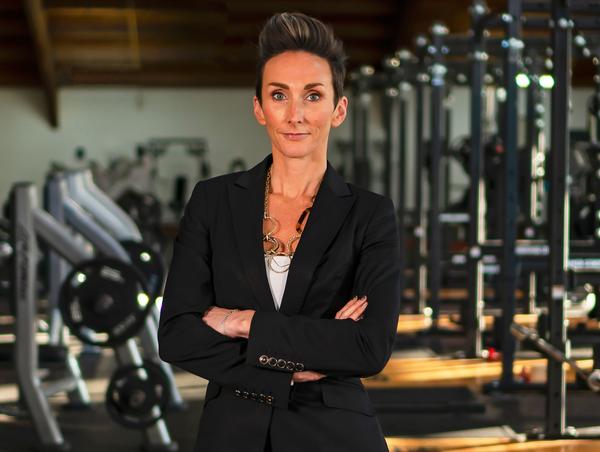
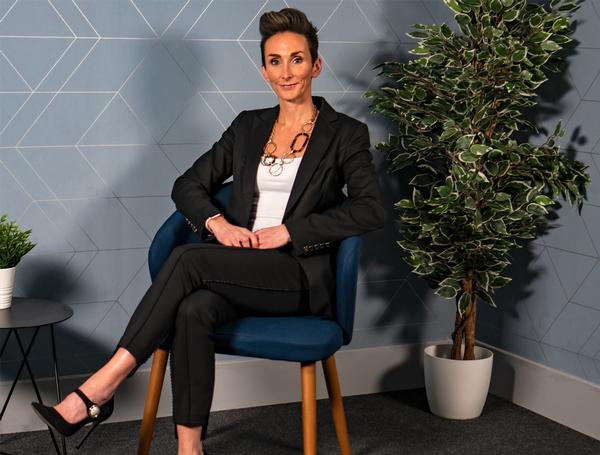
Lawler believes the highest ROI comes from investment in people / photo:s Sophie Lawler, total fitness
I feel really punchy about the future of the fitness industry, and really proud to serve it

What had been achieved at Total Fitness before COVID?
When I talk about Total Fitness, I can only really talk about my tenure, and that means a period of three years and four months. And it’s been a rollercoaster, with half of that time seeing the business return to growth followed by a second half spent in crisis.

But it’s important to remember what we’d achieved, because in the 18 months prior to COVID-19, we’d had the most astonishing period of turnaround. We’d reached 97,000 members – a growth of nearly 15 per cent, which is sensational for a mature business such as ours – and we’d grown average yield too. It was really high-quality, revenue-driving growth. We’d doubled our EBITDA in the year to March 2019 and were on-track to double it again in the year to March 2020.

We were outperforming in every single one of our local marketplaces, and the astonishing thing was that we’d fuelled it by people power alone, not by capital investment. We’d focused heavily on culture and were living evidence that the highest ROI activity is always going to come from investment in your people.

By the time lockdown hit, our employee Net Promoter Score was up from -13 to +54 – a 67 per cent uplift. We also had a full complement of staff rather than loads of vacancies, and the majority of people had been in-post for at least a year. And when you do that, of course – when you have stability and high engagement in your workforce – member NPS goes up too, in our case from 17 when I joined to around 65 by the time we were forced into lockdown.

So, we’d landed all of that, and we’d just acquired our incumbent PT provider so we could own our customer experience and create better career pathways for fitness professionals. We’d built our fitness philosophy and brand promise and had conceptualised a suite of 10–15 product signatures that brought our purpose and intent to life. We were prepared and ready to go for investment: literally the week before we closed, I was ready to pitch for investment. A week later we were in COVID closure discussions.

How did the company approach lockdown?
I’ve heard some people say there’s no strategy in survival, but I disagree. There is absolutely strategy in survival. Wherever there are decisions to be made, there has to be strategic alignment, because otherwise the cohesion of the business disappears, things stop making sense for your people and you can’t come back from that. Every decision you make when you’re surviving has to make sense to people, and has to be strategically aligned with what you did prior and what you intend to do in the future.

With that in mind, when many other operators focused on going digital to engage members, my main concern was retaining the engagement of our team members – the people who had been our fuel before when it was the only fuel we had.

This is where we ploughed our efforts, and I believe it was the right decision, because our team was always going to be vital to bringing our members back.

Of course we kept our members informed quickly, clearly and frequently. We also created a bit of digital content from our production studio – our in-house content and live streaming workshop which is used for fitness, conferencing and people engagement productions.

But it takes an awful lot of effort and capacity to compete digitally, and I wasn’t going to waste time competing with a universe of exceptionally well qualified, slick content providers. I simply trusted that our destination facilities – which is what our huge clubs are, with their swimming pools and wide range of facilities that can’t be replicated at home – would draw members back when the time came.

In the meantime, our production studio was primarily used to communicate with our team, with regular live streams from the couch where I’d chat to them about what was going on. There was also leadership training, coaching, mental health workshops and so on.

As a result, and in spite of everything – lockdown, reduced pay packets, lack of work – we actually drove our employee Net Promoter Score up by a further 4 per cent by June 2020.

What was your personal response to the crisis?
It’s actually tougher for me to reflect on it now than it was when we first had the rug pulled from under us.

It’s in my nature to accept things very quickly and move on, which some people see as quite a cold characteristic, but it’s not. I just have an ability to accept new realities fast. Moving forward and making decisions – that’s a real driver for me, so it doesn’t take me long to get my eyes back up and get going again.

That’s not to say it was easy. I think everybody will relate to this, particularly those who live on their own: the lockdowns were lonely times, especially once I switched off my laptop after a busy day and was left with my own thoughts, concerns and anxieties. But still, at the time my immediate team and I just got up and got moving: we almost didn’t have time to be shocked by the loss of everything.

I felt it very keenly for the team members in our clubs and our members, though, because they’d committed so wholeheartedly to our turnaround and growth – and it had taken a lot of effort. But really it’s only now – when we’re back in the game, foot to the floor, regaining and repeating what we achieved before, and arguably in even tougher circumstances than previously – that I mourn the loss.

Total Fitness went through a CVA. Why?
We lost around 20 per cent of our members during lockdown, which is fairly typical when you look across the industry. I don’t think we fared particularly badly during the crisis compared to other operators.

However, we’re a smaller operation – just 15 clubs – and even the large-scale operators are facing restructuring challenges. So the fact it took three lockdowns and a full year of completely disrupted trading to get us to the point where we needed to do something different gives me some comfort.

The other thing to say on the CVA is this: it was a really strategic, responsible, sensible decision. We needed to restore the financial strength of the business on re-opening in a way that put it in the best possible position to recover well, quickly and sustainably, despite having fewer members.

While arrangements like ours can be viewed as ‘rescues’ – and there is an element of that, of course – a CVA is also a strategic decision that’s designed to protect an otherwise great business that’s otherwise good and sustainable and that has earned its place. And for me, Total Fitness absolutely fitted that bill. We owed it to ourselves, our partners, our members and our stakeholders.

So, I’m not shy about it. It was the right thing to do and we’re in a much better position as a result.

How are you trading now?
We’ve made a confident return. I’ve been overwhelmed by the pace of it: the most recent re-opening was more than three times better than after lockdown one.

We have a way to go before we’re back to pre-COVID levels, but we’ve signed up 38,000 members since we re-opened and we’re well on the way. We’ve had five consecutive months of record membership growth, and we’re talking records in terms of signs-ups in Total Fitness history.

We’re aiming to recover our membership base to pre-COVID levels before March 2022 at the latest – like for like, as we closed one club as part of the CVA.

Our revenue growth will be at least in line with this, if not even better, as we’ve diversified: owning and growing our personal training product, our new signature products, our conferencing centre and retaining and growing the number of commercial tenants we have in the business.

What’s the secret of this recovery?
The CVA restructuring gives us air cover to keep reinvesting, because our cost base has been re-geared with the support of people such as our landlords, suppliers and partners. We can continue to push the flywheel forward, including refurbishing some of our clubs.

We also rebuilt our IT infrastructure during lockdown, to make it much easier to on-board the volume of members we knew we’d be getting.

And our members appear genuinely grateful to be back. They seem to appreciate a connected, physical, face-to-face product more than ever. Yes, plenty of them found new ways to exercise during lockdown, and a proportion of them have kept doing that – just as I have, just as everybody would – but it hasn’t stopped them coming back to Total Fitness as well, which is awesome.

However, the thing that has stood us in the best stead when it comes to recovery is that the team has been on this kind of journey with me before, and we’d done it in the recent past when we were rebuilding the business before COVID.

When we were allowed to re-open, they just walked back out there knowing they could do it again. It filled me with sheer pride seeing the teams open the doors again with an attitude of: ‘Yeah, we climbed a mountain before, but we’ll just do it again. We know the route now.’

I feel exceptionally humbled by their commitment, and for that matter, the commitment of our members. I’d already asked so much of my people, and they wholeheartedly committed to it and delivered something really difficult. Now I’m asking them to go the distance again and I’m so proud of their response.

Who are your new members?
Our new members are different from what we’ve seen before: 39 per cent were previously non-gym members, and 44 per cent are switchers. A significant number of these (48 per cent) have traded up from lower cost services, such as budget gyms.

Among those new to fitness, far more of them have come from lower income groups than has been the case at Total Fitness historically. And they’re younger too: 37 per cent are aged under 34, where normally this age group accounts for 15–20 per cent of our joiners.

I’ve always been a massive advocate of the middle market – of a reasonably priced, full-service offering – and that seems to be coming through now.

New audiences are seemingly prepared to pay a middle market premium because they desire variety and, importantly, space. In fact, we’ve been doing some research among new joiners and the key driver for joining – and I’m talking across the board – is variety and quality, where historically it’s always been convenience and price. This is a monumental shift from what I’ve seen in the industry for the last 20 years and, if it proves to be permanent, is a real wake-up call.

Tell us more about your research
Never before has the industry signed up as many new members at any one time, so we took the opportunity to survey and talk to as many of them as possible.

We surveyed around 1,000 new joiners in May, just to understand a little more about their decision-making, their experience of the pandemic, how their exercise habits have changed. We got lots of really interesting insights, including some assumptions that were disproved.

For example, we assumed COVID-19 would have influenced the decision-making of the vast majority of our new members, particularly those new to exercise. But in fact, only about 40 per cent of new joiners had been influenced by COVID-19; for the other 60 per cent, it was pent-up demand and the usual ‘want to get fit’ type of reasons for joining.

And even for the 40 per cent, when I say they were influenced by COVID-19, these were often very loosely connected reasons: things like ‘I just want to see other people post-lockdown’ or ‘I felt lonely during the lockdowns and I want to exercise around others’. It was only a really small proportion who quoted reasons such as ‘I had COVID-19 and realised I wanted to protect myself’.

The other thing we’d assumed was that older age groups would be most influenced by the pandemic, but they weren’t. It was actually the younger age groups who were most influenced by COVID-19 to come and join.

What are your growth plans?
Growth and new product are the way forward for Total Fitness.

We have a really strong fitness philosophy and purpose, and brand promise, and our thought process at the moment is how we bring that to life in a new, conceptual model. We’ll be nailing that down over the next 12 months and it will be the basis of our future clubs, which I can see us starting to open in a couple of years.

These won’t be a replica of huge Total Fitness clubs – they will be smaller facilities and very different from what we have now – but they will clearly be Total Fitness clubs thanks to the purpose, intent and fitness philosophy that will be integral to any new models we bring through. This is our conceptual challenge right now: how we make a very different club be authentically Total Fitness.

In terms of where those clubs might be, I’m a huge believer in northern markets, and a huge believer in the middle market, and there’s a lot of white space here. But we’ll also be looking to the south, because we’re under-represented there and I believe we have a responsibility to serve that middle market segment.

Can you give any insight into what your new clubs might look like?
It’s my view that the health club industry as a whole isn’t great at product and brand strategy. It tends to lead with portfolio and product, which I get, because years and years of survey data have told us that convenience, property, portfolio and price are the main drivers for consumers.

But what that means as an industry is that we tend to start with ‘where is my new club location?’ and then ‘what facilities do I put in the club?’ We don’t start with the intent, the purpose, the philosophy of that particular fitness product and how to bring it to life.

Neither are we sufficiently accessible or comfortable for people – and I count Total Fitness in this too, by the way. We also have a long way to go. But it’s something I think we can solve.

For example, I always talk to my team about when I go for a swim – my problem isn’t the size of the pool, the water clarity or the temperature. Those are basic expectations. My problem is that I feel like a fool when I walk onto the poolside in just my swimming costume, and I don’t know how to get into a lane because they look busy, and I’m standing there feeling really vulnerable with basically no clothes on. That’s my problem.

There are challenges like this – failure points in the member journey –throughout any club, and of course those failure points are often very personal and specific to the individual. So there are just so many ways you can get it wrong as an operator.

What we’re trying to do is ask: what are the things members actually really need in their experience, but perhaps don’t even know they need? Once we’ve identified those, we’ll be looking to create a journey that addresses those points of vulnerability and difficulty, removing the failure points that over time will stop people coming.

This is where we’re going to start with our new club concept. Not with size, or how many studios, or what brand of treadmill, or what will the lighting be like. We’re going to start with the thought points that a member might not even notice, but that will demonstrate to them that we care about their journey because we’ve already thought about every detail for them.

Tell us about your new products
The cool thing about all our engagement with new members is that we asked lots of them to be part of focus groups, so we’ve been able to do product development and testing with them – proper ethnographic trials of products – which has been brilliant. It’s really challenged some of our assumptions, which is a critical part of product development.

We’ll be launching our signature small group workout product by the end of this year, which we’re calling Squad Sessions, or ‘Squads’ for short. We’re working with our member focus groups to refine this product as we speak, and we’re really proud of the work that’s been done on the launch – it’s perfect for those who crave social or connected workouts, with four people per session working out with one of our trainers.

Initially we’ll be offering a mix of cardio and resistance to give a full body workout and we expect people to either book with their mates or join an open squad. The product will be developed over the next year or so and ultimately we may even experiment with variable pricing. It will be priced to ensure member value, though, with introductory prices up to £10 per session.

Our ultimate goal, fitness aside: to make the product fit members’ needs beyond purely looking at the equipment and the programming.

How do you see the future of fitness?
I’ll always be confident in the bricks and mortar model. It will always be part of the mix. But ever since I started selling memberships in the year 2000, I’ve been clear in my view that health clubs are only a part of the mix. So, I don’t feel concerned at all by people choosing to be active elsewhere, because I think the growth in the addressable market for the fitness sector is going to be huge. You can see that in the way Millennials and Gen Zs choose to spend their disposable income.

For me, the addressable market for fitness is 100 per cent, because everybody needs our product in some way. So, there’s room for everyone – we don’t all have to fight over the same customers, and equally it’s OK if your customers don’t only train with you.

I also believe the health club industry has a responsibility not to dehumanise fitness. Yes, we talk about the new normal of fitness, with digital playing a part, and I completely get it. I consume digital fitness myself. But we have a real responsibility not to dehumanise the experience. I will forever strongly advocate connected, physical experiences, however they manifest.

And finishing on a personal note, why on earth would you want to be in any other sector right now? You’re making people better every day, and there are more and more people who need us – and who acknowledge they need us. What more could you need to get you out of bed every morning? I feel really punchy about the future of the fitness industry, and really proud to serve it.
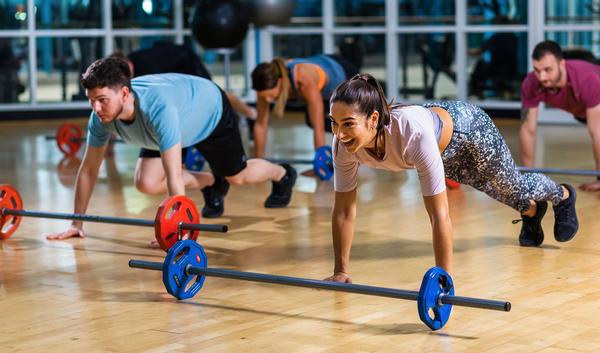
Total Fitness has added 38,000 new members post-lockdown / photo: Total Fitness, grit class
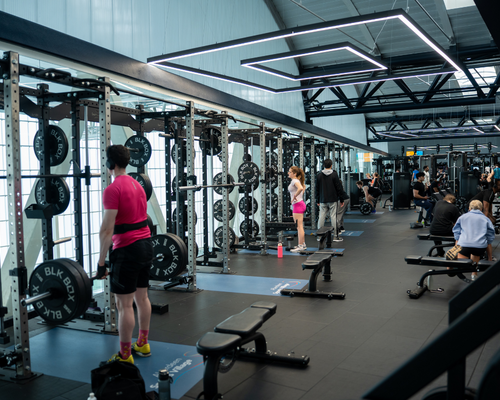
New members are citing variety and quality over convenience and price as motivations to join / photo: Total Fitness, Wilmslow
Under-34s have grown from 15-20% of membership to 37% / photo: Total Fitness
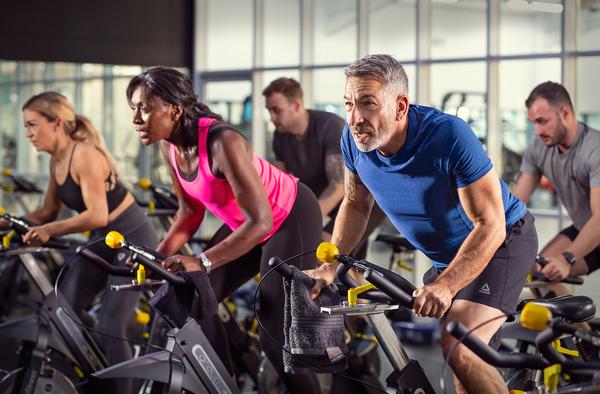
Connection with other people has been a strong driver since lockdowns ended / photo: Total Fitness, spin class
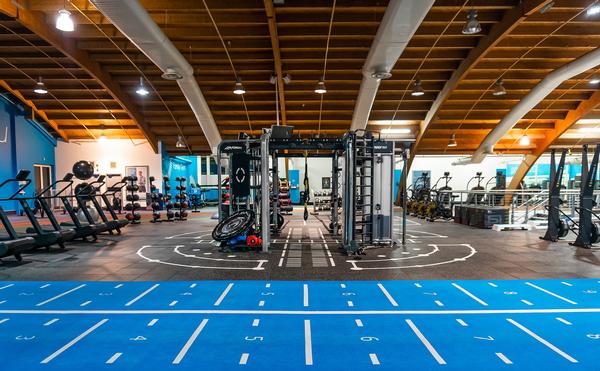
Lawler says the new Total Fitness concept will be built around the customer journey rather than being real estate-led / photo: Total Fitness
While digital fitness has a role, physical clubs will always be in demand, says Lawler / photo: Total Fitness
https://www.leisureopportunities.co.uk/images/2021/579112_152731.jpg
The CEO of Total Fitness talks about a tenure filled with dramatic growth, pandemic impact and a CVA
HCM magazine
Raphael Cuomo explores the powerful link between addiction, health and behaviour change
HCM magazine
Strength training is evolving, driven by changing consumer preferences. Julie Cramer talks to innovators about how their products are meeting this demand
HCM magazine
If the health service is to survive, we must recognise that it is a disease service – and that wellbeing rests with us, says the activity advocate and healthy ageing champion. He talks to Kate Cracknell
HCM magazine
Collaborations with the medical profession and greater aspirations around wellbeing are creating a need for more experts in our sector. It’s time to reboot our thinking around the workforce
HCM magazine
HCM People

Stephen Price

Founder, SP&Co Group
Working in public health over the last few years has lit up parts of my brain again
HCM promotional features
Sponsored
David Lloyd is stepping up its commitment to women’s health as it continues to explore what fit-for-purpose looks like for the female population
HCM promotional features
Sponsored
SnowDome Fitness has added 50 per cent more space with cutting-edge Technogym solutions
HCM promotional features
Sponsored
Find out how your gym can tap into the corporate wellness boom
HCM promotional features
Sponsored
Greg Bradley looks at the shift towards strength training in gyms and advises on how operators can create the ultimate training environment
HCM promotional features
Sponsored
Third Space partnered with IndigoFitness to deliver a bespoke training space for its new club at The Whiteley
HCM promotional features
Sponsored
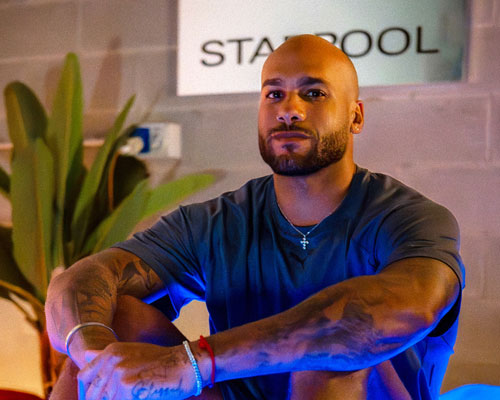
Starpool supports Olympic champion Marcell Jacobs, says Riccardo Turri
HCM promotional features
Sponsored
EGYM has opened a new HQ in Paternoster Square, London and revealed a range of new launches
HCM promotional features
Sponsored
New launch, Salus House, elevates boutique wellness with high service levels and a partnership with Technogym
HCM promotional features
Sponsored
The industry is embracing consumer-facing tech. Now it’s time to streamline back-of-house systems with Orbit4, says Daniel Jones
HCM promotional features
Latest News
Australia’s fast-growing fitness network, Viva Leisure, is adding a low-cost gym brand to its already ...
Latest News
Speedflex has launched a strength training programme for 10 to 16-year-olds, to make it safer, ...
Latest News
Tewinbury Farm Hotel in Hertfordshire, UK is expanding its premium leisure proposition with the launch ...
Latest News

Work is underway in Madrid on one of Europe’s most significant multi-functional complexes, ...

Latest News
PureGym is encouraging people to step away from their screens and go for a walk, ...
Latest News
Small improvements to sleep, diet quality, and physical activity, made in combination lead to a ...
Latest News
Therme Manchester’s 28-acre development, which will include interconnected glass pavilions that measure 65,000sq m, will ...
Latest News
The Yard Gym (TYG) is to become Nike Training’s official global training partner in a ...
Opinion
promotion
Strength training has moved from the margins to the mainstream.
Opinion: Building smarter strength spaces for today’s operators
Featured supplier news
Featured supplier news: Reaching the people most gyms miss: Bedford Gym & Swim Campaign delivers 410 new members
One of the biggest mistakes the fitness industry still makes is advertising almost exclusively to people who already look and live like gym members.
Featured supplier news
Featured supplier news: W3Fit EMEA celebrates its fifth anniversary
Celebrating its milestone 5th anniversary, W3Fit EMEA returns in 2026 with an unmissable gathering of the Health & Fitness industry’s most influential leaders.
Company profiles
Company profile: JK Group UK and Ireland Plc
JK Group's products are designed and manufactured at our global headquarters in Germany, with a ...
Company profiles
Company profile: D2F Fitness
D2F Fitness specialises in providing fitness equipment tailored to your gym’s needs, but goes further ...
Supplier Showcases
Supplier Showcase - From nightclub to health club
Supplier Showcases
Supplier Showcase - Future-proofing
Catalogue Gallery
Click on a catalogue to view it online
Featured press releases
ukactive press release: Are they Fit for Office? UK Active and Technogym throw down the gauntlet to MPs
Hundreds of staff, MPs and Peers from across Westminster have signed up for the Fit for Office parliamentary physical activity challenge, which takes place throughout June and is hosted by ukactive and Technogym.
Featured press releases
Innerva press release: Lex Leisure’s power-assisted exercise suite smashes targets in record time
Crook Log Leisure Centre has more than doubled the membership target for its new power- assisted exercise suite in less than six months.
Directory
Spa and beauty equipment
Living Earth Crafts: Spa and beauty equipment
Fitness tracking platform
SpiviTech: Fitness tracking platform
Lockers
Crown Sports Lockers: Lockers
Industrial washing machines
Miele Company Limited: Industrial washing machines
Water experiences and hydrotherapy solutions
Aquaform s.r.l.: Water experiences and hydrotherapy solutions
Hot tubs
MSpa International Ltd: Hot tubs
Property & Tenders
Stratford, East London.
Lee Valley Regional Park Authority
Property & Tenders
Y Felinheli, LL56 4QN
Newmark
Property & Tenders
Diary dates
13-13 Jun 2026
Worldwide, Various,
Diary dates
21-24 Sep 2026
The Langham Huntington Pasadena , Pasadena, United States
Diary dates
06-08 Oct 2026
Messe Stuttgart, Stuttgart, Germany
Diary dates
22-22 Oct 2026
QEII Conference Centre, London,
Diary dates
26-29 Oct 2027
Koelnmesse Exhibition Centre, Cologne, Germany
Diary dates

features

Interview: Sophie Lawler

The CEO of Total Fitness has been in-post for just over three years – a true tale of two halves, with dramatic growth in the first half of her tenure, followed by a second half dominated by the pandemic and a CVA. She talks to Kate Cracknell

Published in Health Club Management 2021 issue 10
Lawler believes the highest ROI comes from investment in people / photo:s Sophie Lawler, total fitness
I feel really punchy about the future of the fitness industry, and really proud to serve it

What had been achieved at Total Fitness before COVID?
When I talk about Total Fitness, I can only really talk about my tenure, and that means a period of three years and four months. And it’s been a rollercoaster, with half of that time seeing the business return to growth followed by a second half spent in crisis.

But it’s important to remember what we’d achieved, because in the 18 months prior to COVID-19, we’d had the most astonishing period of turnaround. We’d reached 97,000 members – a growth of nearly 15 per cent, which is sensational for a mature business such as ours – and we’d grown average yield too. It was really high-quality, revenue-driving growth. We’d doubled our EBITDA in the year to March 2019 and were on-track to double it again in the year to March 2020.

We were outperforming in every single one of our local marketplaces, and the astonishing thing was that we’d fuelled it by people power alone, not by capital investment. We’d focused heavily on culture and were living evidence that the highest ROI activity is always going to come from investment in your people.

By the time lockdown hit, our employee Net Promoter Score was up from -13 to +54 – a 67 per cent uplift. We also had a full complement of staff rather than loads of vacancies, and the majority of people had been in-post for at least a year. And when you do that, of course – when you have stability and high engagement in your workforce – member NPS goes up too, in our case from 17 when I joined to around 65 by the time we were forced into lockdown.

So, we’d landed all of that, and we’d just acquired our incumbent PT provider so we could own our customer experience and create better career pathways for fitness professionals. We’d built our fitness philosophy and brand promise and had conceptualised a suite of 10–15 product signatures that brought our purpose and intent to life. We were prepared and ready to go for investment: literally the week before we closed, I was ready to pitch for investment. A week later we were in COVID closure discussions.

How did the company approach lockdown?
I’ve heard some people say there’s no strategy in survival, but I disagree. There is absolutely strategy in survival. Wherever there are decisions to be made, there has to be strategic alignment, because otherwise the cohesion of the business disappears, things stop making sense for your people and you can’t come back from that. Every decision you make when you’re surviving has to make sense to people, and has to be strategically aligned with what you did prior and what you intend to do in the future.

With that in mind, when many other operators focused on going digital to engage members, my main concern was retaining the engagement of our team members – the people who had been our fuel before when it was the only fuel we had.

This is where we ploughed our efforts, and I believe it was the right decision, because our team was always going to be vital to bringing our members back.

Of course we kept our members informed quickly, clearly and frequently. We also created a bit of digital content from our production studio – our in-house content and live streaming workshop which is used for fitness, conferencing and people engagement productions.

But it takes an awful lot of effort and capacity to compete digitally, and I wasn’t going to waste time competing with a universe of exceptionally well qualified, slick content providers. I simply trusted that our destination facilities – which is what our huge clubs are, with their swimming pools and wide range of facilities that can’t be replicated at home – would draw members back when the time came.

In the meantime, our production studio was primarily used to communicate with our team, with regular live streams from the couch where I’d chat to them about what was going on. There was also leadership training, coaching, mental health workshops and so on.

As a result, and in spite of everything – lockdown, reduced pay packets, lack of work – we actually drove our employee Net Promoter Score up by a further 4 per cent by June 2020.

What was your personal response to the crisis?
It’s actually tougher for me to reflect on it now than it was when we first had the rug pulled from under us.

It’s in my nature to accept things very quickly and move on, which some people see as quite a cold characteristic, but it’s not. I just have an ability to accept new realities fast. Moving forward and making decisions – that’s a real driver for me, so it doesn’t take me long to get my eyes back up and get going again.

That’s not to say it was easy. I think everybody will relate to this, particularly those who live on their own: the lockdowns were lonely times, especially once I switched off my laptop after a busy day and was left with my own thoughts, concerns and anxieties. But still, at the time my immediate team and I just got up and got moving: we almost didn’t have time to be shocked by the loss of everything.

I felt it very keenly for the team members in our clubs and our members, though, because they’d committed so wholeheartedly to our turnaround and growth – and it had taken a lot of effort. But really it’s only now – when we’re back in the game, foot to the floor, regaining and repeating what we achieved before, and arguably in even tougher circumstances than previously – that I mourn the loss.

Total Fitness went through a CVA. Why?
We lost around 20 per cent of our members during lockdown, which is fairly typical when you look across the industry. I don’t think we fared particularly badly during the crisis compared to other operators.

However, we’re a smaller operation – just 15 clubs – and even the large-scale operators are facing restructuring challenges. So the fact it took three lockdowns and a full year of completely disrupted trading to get us to the point where we needed to do something different gives me some comfort.

The other thing to say on the CVA is this: it was a really strategic, responsible, sensible decision. We needed to restore the financial strength of the business on re-opening in a way that put it in the best possible position to recover well, quickly and sustainably, despite having fewer members.

While arrangements like ours can be viewed as ‘rescues’ – and there is an element of that, of course – a CVA is also a strategic decision that’s designed to protect an otherwise great business that’s otherwise good and sustainable and that has earned its place. And for me, Total Fitness absolutely fitted that bill. We owed it to ourselves, our partners, our members and our stakeholders.

So, I’m not shy about it. It was the right thing to do and we’re in a much better position as a result.

How are you trading now?
We’ve made a confident return. I’ve been overwhelmed by the pace of it: the most recent re-opening was more than three times better than after lockdown one.

We have a way to go before we’re back to pre-COVID levels, but we’ve signed up 38,000 members since we re-opened and we’re well on the way. We’ve had five consecutive months of record membership growth, and we’re talking records in terms of signs-ups in Total Fitness history.

We’re aiming to recover our membership base to pre-COVID levels before March 2022 at the latest – like for like, as we closed one club as part of the CVA.

Our revenue growth will be at least in line with this, if not even better, as we’ve diversified: owning and growing our personal training product, our new signature products, our conferencing centre and retaining and growing the number of commercial tenants we have in the business.

What’s the secret of this recovery?
The CVA restructuring gives us air cover to keep reinvesting, because our cost base has been re-geared with the support of people such as our landlords, suppliers and partners. We can continue to push the flywheel forward, including refurbishing some of our clubs.

We also rebuilt our IT infrastructure during lockdown, to make it much easier to on-board the volume of members we knew we’d be getting.

And our members appear genuinely grateful to be back. They seem to appreciate a connected, physical, face-to-face product more than ever. Yes, plenty of them found new ways to exercise during lockdown, and a proportion of them have kept doing that – just as I have, just as everybody would – but it hasn’t stopped them coming back to Total Fitness as well, which is awesome.

However, the thing that has stood us in the best stead when it comes to recovery is that the team has been on this kind of journey with me before, and we’d done it in the recent past when we were rebuilding the business before COVID.

When we were allowed to re-open, they just walked back out there knowing they could do it again. It filled me with sheer pride seeing the teams open the doors again with an attitude of: ‘Yeah, we climbed a mountain before, but we’ll just do it again. We know the route now.’

I feel exceptionally humbled by their commitment, and for that matter, the commitment of our members. I’d already asked so much of my people, and they wholeheartedly committed to it and delivered something really difficult. Now I’m asking them to go the distance again and I’m so proud of their response.

Who are your new members?
Our new members are different from what we’ve seen before: 39 per cent were previously non-gym members, and 44 per cent are switchers. A significant number of these (48 per cent) have traded up from lower cost services, such as budget gyms.

Among those new to fitness, far more of them have come from lower income groups than has been the case at Total Fitness historically. And they’re younger too: 37 per cent are aged under 34, where normally this age group accounts for 15–20 per cent of our joiners.

I’ve always been a massive advocate of the middle market – of a reasonably priced, full-service offering – and that seems to be coming through now.

New audiences are seemingly prepared to pay a middle market premium because they desire variety and, importantly, space. In fact, we’ve been doing some research among new joiners and the key driver for joining – and I’m talking across the board – is variety and quality, where historically it’s always been convenience and price. This is a monumental shift from what I’ve seen in the industry for the last 20 years and, if it proves to be permanent, is a real wake-up call.

Tell us more about your research
Never before has the industry signed up as many new members at any one time, so we took the opportunity to survey and talk to as many of them as possible.

We surveyed around 1,000 new joiners in May, just to understand a little more about their decision-making, their experience of the pandemic, how their exercise habits have changed. We got lots of really interesting insights, including some assumptions that were disproved.

For example, we assumed COVID-19 would have influenced the decision-making of the vast majority of our new members, particularly those new to exercise. But in fact, only about 40 per cent of new joiners had been influenced by COVID-19; for the other 60 per cent, it was pent-up demand and the usual ‘want to get fit’ type of reasons for joining.

And even for the 40 per cent, when I say they were influenced by COVID-19, these were often very loosely connected reasons: things like ‘I just want to see other people post-lockdown’ or ‘I felt lonely during the lockdowns and I want to exercise around others’. It was only a really small proportion who quoted reasons such as ‘I had COVID-19 and realised I wanted to protect myself’.

The other thing we’d assumed was that older age groups would be most influenced by the pandemic, but they weren’t. It was actually the younger age groups who were most influenced by COVID-19 to come and join.

What are your growth plans?
Growth and new product are the way forward for Total Fitness.

We have a really strong fitness philosophy and purpose, and brand promise, and our thought process at the moment is how we bring that to life in a new, conceptual model. We’ll be nailing that down over the next 12 months and it will be the basis of our future clubs, which I can see us starting to open in a couple of years.

These won’t be a replica of huge Total Fitness clubs – they will be smaller facilities and very different from what we have now – but they will clearly be Total Fitness clubs thanks to the purpose, intent and fitness philosophy that will be integral to any new models we bring through. This is our conceptual challenge right now: how we make a very different club be authentically Total Fitness.

In terms of where those clubs might be, I’m a huge believer in northern markets, and a huge believer in the middle market, and there’s a lot of white space here. But we’ll also be looking to the south, because we’re under-represented there and I believe we have a responsibility to serve that middle market segment.

Can you give any insight into what your new clubs might look like?
It’s my view that the health club industry as a whole isn’t great at product and brand strategy. It tends to lead with portfolio and product, which I get, because years and years of survey data have told us that convenience, property, portfolio and price are the main drivers for consumers.

But what that means as an industry is that we tend to start with ‘where is my new club location?’ and then ‘what facilities do I put in the club?’ We don’t start with the intent, the purpose, the philosophy of that particular fitness product and how to bring it to life.

Neither are we sufficiently accessible or comfortable for people – and I count Total Fitness in this too, by the way. We also have a long way to go. But it’s something I think we can solve.

For example, I always talk to my team about when I go for a swim – my problem isn’t the size of the pool, the water clarity or the temperature. Those are basic expectations. My problem is that I feel like a fool when I walk onto the poolside in just my swimming costume, and I don’t know how to get into a lane because they look busy, and I’m standing there feeling really vulnerable with basically no clothes on. That’s my problem.

There are challenges like this – failure points in the member journey –throughout any club, and of course those failure points are often very personal and specific to the individual. So there are just so many ways you can get it wrong as an operator.

What we’re trying to do is ask: what are the things members actually really need in their experience, but perhaps don’t even know they need? Once we’ve identified those, we’ll be looking to create a journey that addresses those points of vulnerability and difficulty, removing the failure points that over time will stop people coming.

This is where we’re going to start with our new club concept. Not with size, or how many studios, or what brand of treadmill, or what will the lighting be like. We’re going to start with the thought points that a member might not even notice, but that will demonstrate to them that we care about their journey because we’ve already thought about every detail for them.

Tell us about your new products
The cool thing about all our engagement with new members is that we asked lots of them to be part of focus groups, so we’ve been able to do product development and testing with them – proper ethnographic trials of products – which has been brilliant. It’s really challenged some of our assumptions, which is a critical part of product development.

We’ll be launching our signature small group workout product by the end of this year, which we’re calling Squad Sessions, or ‘Squads’ for short. We’re working with our member focus groups to refine this product as we speak, and we’re really proud of the work that’s been done on the launch – it’s perfect for those who crave social or connected workouts, with four people per session working out with one of our trainers.

Initially we’ll be offering a mix of cardio and resistance to give a full body workout and we expect people to either book with their mates or join an open squad. The product will be developed over the next year or so and ultimately we may even experiment with variable pricing. It will be priced to ensure member value, though, with introductory prices up to £10 per session.

Our ultimate goal, fitness aside: to make the product fit members’ needs beyond purely looking at the equipment and the programming.

How do you see the future of fitness?
I’ll always be confident in the bricks and mortar model. It will always be part of the mix. But ever since I started selling memberships in the year 2000, I’ve been clear in my view that health clubs are only a part of the mix. So, I don’t feel concerned at all by people choosing to be active elsewhere, because I think the growth in the addressable market for the fitness sector is going to be huge. You can see that in the way Millennials and Gen Zs choose to spend their disposable income.

For me, the addressable market for fitness is 100 per cent, because everybody needs our product in some way. So, there’s room for everyone – we don’t all have to fight over the same customers, and equally it’s OK if your customers don’t only train with you.

I also believe the health club industry has a responsibility not to dehumanise fitness. Yes, we talk about the new normal of fitness, with digital playing a part, and I completely get it. I consume digital fitness myself. But we have a real responsibility not to dehumanise the experience. I will forever strongly advocate connected, physical experiences, however they manifest.

And finishing on a personal note, why on earth would you want to be in any other sector right now? You’re making people better every day, and there are more and more people who need us – and who acknowledge they need us. What more could you need to get you out of bed every morning? I feel really punchy about the future of the fitness industry, and really proud to serve it.
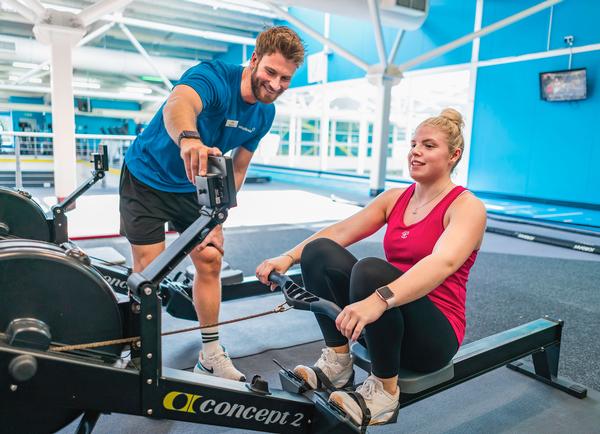
Total Fitness has added 38,000 new members post-lockdown / photo: Total Fitness, grit class
New members are citing variety and quality over convenience and price as motivations to join / photo: Total Fitness, Wilmslow
Under-34s have grown from 15-20% of membership to 37% / photo: Total Fitness
Connection with other people has been a strong driver since lockdowns ended / photo: Total Fitness, spin class
Lawler says the new Total Fitness concept will be built around the customer journey rather than being real estate-led / photo: Total Fitness
While digital fitness has a role, physical clubs will always be in demand, says Lawler / photo: Total Fitness
https://www.leisureopportunities.co.uk/images/2021/579112_152731.jpg
The CEO of Total Fitness talks about a tenure filled with dramatic growth, pandemic impact and a CVA
Latest News
Australia’s fast-growing fitness network, Viva Leisure, is adding a low-cost gym brand to its already ...

Latest News
Speedflex has launched a strength training programme for 10 to 16-year-olds, to make it safer, ...
Latest News
Tewinbury Farm Hotel in Hertfordshire, UK is expanding its premium leisure proposition with the launch ...
Latest News

Work is underway in Madrid on one of Europe’s most significant multi-functional complexes, ...

Latest News
PureGym is encouraging people to step away from their screens and go for a walk, ...
Latest News
Small improvements to sleep, diet quality, and physical activity, made in combination lead to a ...
Latest News
Therme Manchester’s 28-acre development, which will include interconnected glass pavilions that measure 65,000sq m, will ...
Latest News
The Yard Gym (TYG) is to become Nike Training’s official global training partner in a ...
Latest News
Everlast Gyms' York site has reopened following a refurbishment to bring it up to the ...
Latest News
Luxury hospitality and wellness pioneer Jeremy McCarthy has launched Leisure Alchemy, a digital platform that ...
Latest News
A contrast therapy and breathwork facility called Reset has opened in Islington, London, in the ...
Opinion
promotion
Strength training has moved from the margins to the mainstream.
Opinion: Building smarter strength spaces for today’s operators
Featured supplier news
Featured supplier news: Reaching the people most gyms miss: Bedford Gym & Swim Campaign delivers 410 new members
One of the biggest mistakes the fitness industry still makes is advertising almost exclusively to people who already look and live like gym members.
Featured supplier news
Featured supplier news: W3Fit EMEA celebrates its fifth anniversary
Celebrating its milestone 5th anniversary, W3Fit EMEA returns in 2026 with an unmissable gathering of the Health & Fitness industry’s most influential leaders.
Company profiles
Company profile: JK Group UK and Ireland Plc
JK Group's products are designed and manufactured at our global headquarters in Germany, with a ...
Company profiles
Company profile: D2F Fitness
D2F Fitness specialises in providing fitness equipment tailored to your gym’s needs, but goes further ...
Supplier Showcases
Supplier Showcase - From nightclub to health club
Supplier Showcases
Supplier Showcase - Future-proofing
Catalogue Gallery
Click on a catalogue to view it online
Featured press releases
ukactive press release: Are they Fit for Office? UK Active and Technogym throw down the gauntlet to MPs
Hundreds of staff, MPs and Peers from across Westminster have signed up for the Fit for Office parliamentary physical activity challenge, which takes place throughout June and is hosted by ukactive and Technogym.
Featured press releases
Innerva press release: Lex Leisure’s power-assisted exercise suite smashes targets in record time
Crook Log Leisure Centre has more than doubled the membership target for its new power- assisted exercise suite in less than six months.
Directory
Spa and beauty equipment
Living Earth Crafts: Spa and beauty equipment
Fitness tracking platform
SpiviTech: Fitness tracking platform
Lockers
Crown Sports Lockers: Lockers
Industrial washing machines
Miele Company Limited: Industrial washing machines
Water experiences and hydrotherapy solutions
Aquaform s.r.l.: Water experiences and hydrotherapy solutions
Hot tubs
MSpa International Ltd: Hot tubs
Property & Tenders
Stratford, East London.
Lee Valley Regional Park Authority
Property & Tenders
Y Felinheli, LL56 4QN
Newmark
Property & Tenders
Diary dates
13-13 Jun 2026
Worldwide, Various,
Diary dates
21-24 Sep 2026
The Langham Huntington Pasadena , Pasadena, United States
Diary dates
06-08 Oct 2026
Messe Stuttgart, Stuttgart, Germany
Diary dates
22-22 Oct 2026
QEII Conference Centre, London,
Diary dates
26-29 Oct 2027
Koelnmesse Exhibition Centre, Cologne, Germany
Diary dates
Search news, features & products:
Find a supplier:
Elevate Arena
Elevate Arena
Partner sites