




















We Work Well Events
We Work Well Events
We Work Well Events
Follow Health Club Management on Twitter Like Health Club Management on Facebook Join the discussion with Health Club Management on LinkedIn
FITNESS, HEALTH, WELLNESS

features

Everyone’s talking about: Insourcing

With local authority facility management companies and councils under financial pressure due to the pandemic and issues emerging around health inequalities, will we see a trend towards councils insourcing the management of facilities? Kath Hudson rounds up views

Published in Health Club Management 2021 issue 7
The pandemic is putting a strain on the public sector and forcing strategic decisions about facility provision / photo: shutterstock/Halfpoint

For more than 30 years, outsourcing has worked well for local authorities and their leisure operating partners, but COVID-19 has provided a shake-up and made some councils question their priorities, while some operators are turning to councils for additional funds, creating a shake-up in parts of the contracting world.

With now being an unfavourable time to tender, with only a few contractors interested in launching into new partnerships, a desire to build back fairer to level out the inequalities exposed by the pandemic and with some council/contractor relationships under strain, a number of councils are considering bringing services back in-house or setting up Local Authority Trading Companies to take over the short- to medium-term management of facilities. We ask our experts for their comments.

Duncan Wood-Allum
SLC – The Sport, Leisure and Culture Consultancy
Services must be shaped around what councils prioritise and can afford, says Wood-Allum

Due to over-ambitious bidding in the past – often driven by financially-oriented procurement processes – some leisure operators were not achieving proposed income levels even before the pandemic, which has exacerbated the current problem.

In some cases, this has resulted in councils having to find c£2m-c£5m to temporarily support services since March 2020, sometimes for contracts that generated a surplus pre-pandemic.

As a result, some councils are reviewing arrangements with operating partners on the assumption there may be a better alternative. Often there is not.

Some are having to make quick decisions, which may not have been fully explored, as to the longer-term risks and benefits, however, changing management arrangements can’t negate the impact of COVID-19.

Councils need to consider what’s in the best interests of their community and ensure decisions are based on need and evidence and are strategically aligned. It’s essential not to overreact, but adopt a holding position to take stock, until the market has seen some recovery.

It’s also important to spend time considering the pros and cons of management options that have such long-term financial and social consequences.

Our advice to councils is often to stick with their current arrangements for the next 18 months, even if it’s been difficult for them and their operating partners to negotiate financial support since March 2020.

However, sometimes relationships have been damaged and one or both partners want to end the arrangement. In this case, transferring services into a LATC as a ‘holding position’ can be a pragmatic alternative to going out to tender in the current climate, which could result in a sub-optimal contract with considerable risk and cost being transferred to the council.

Bringing services in-house will be costly but does give control to the council, although we query the long-term benefits of this.

While insourcing can make future returns on investment hard to stack up, if the political will is there to invest in an in-house model, there’s nothing stopping that council doing a great job – but it will need significant resources to make a success of it at a time when budgets are under pressure.

The current crisis cannot be resolved solely by swapping from one model to another. There is no safe harbour

The current crisis cannot be resolved solely by swapping from one model to another – there is no safe harbour. The focus is to ensure the service offer is shaped around what councils prioritise and can afford. Addressing inequalities has never been more important – the risk is that finances will override this.

Now’s the time for councils to review objectives and the mix of interventions to achieve these. The delivery model is the last thing they should be focusing on right now.
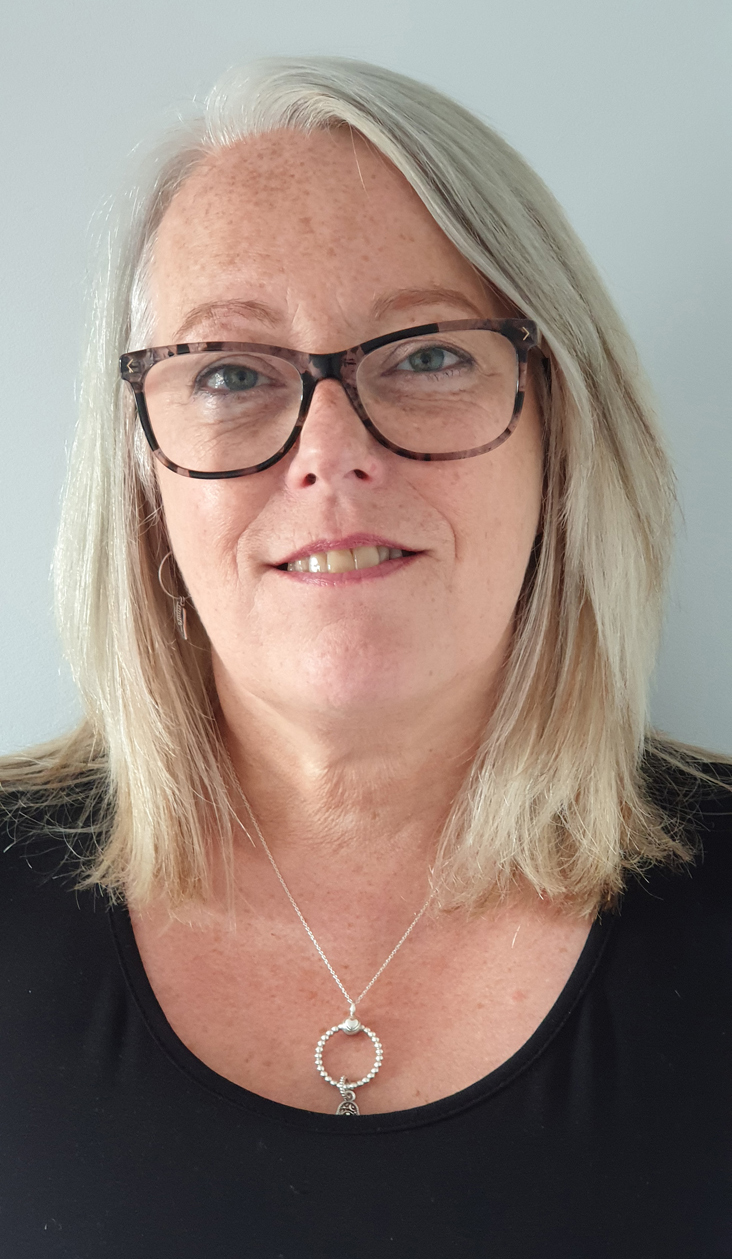
Karen Whitfield
South Kesteven District Council
“Our motivations go beyond financial gain,” says Whitfield

In 2019, a robust management options appraisal was carried out and we decided the best course of action was to extend the agreement with our management contractor – which was due to end in December 2020 – by 15 months.

This would have allowed us enough time to go back out to tender for a new leisure contract. Ideally, we wanted a contract that would be income-generating and would transfer operational and financial risk to the successful bidder.

Unfortunately, after the Coronavirus outbreak, companies showed little or no interest in taking on new contracts, so we had to revisit our options appraisal.

Given the new circumstances we identified an opportunity to set up a Local Authority Trading Company. Our relationship with our previous contractor had been longstanding – more than 20 years – but it was no longer sustainable.

We were having to provide significant levels of financial support with no major say in how things were done; the contract was no longer offering the level of service we wanted to provide; many staff members were demotivated and we wanted to be more hands-on when it came to mobilising our communities to be more active.

Having made the decision in August 2020, we had only four months to set up the company, but we achieved that goal and now everyone is excited by the change.

With so many leisure centres under threat of closure, local authorities are the operators most passionate about keeping them open

Although the financial and operational risk now lies with the council, it’s great to be back in the driving seat. The contract is for three years, but there is the option to continue. According to our forecasts, we will be able to make a surplus in our second year of normal trading.

We have a clear vision about what we’d like to achieve and are planning significant improvements, including continuous professional development for staff, as well as looking at gaps in the provision and seeing how we can work collaboratively with other partners to persuade more people to improve their health and wellbeing.

We’ll be looking to make the most of the digital opportunities, as well as supporting informal exercise such as walking and cycling. We also plan to work with Lincolnshire County Council to improve infrastructure for these activities.

Now’s not a great time to tender for new contracts and judging by informal inquiries I’m getting from colleagues in the sector, I expect more local authorities to follow our lead.

During these tough times, with so many leisure centres under threat of closure, local authorities are the operators most passionate about keeping them open. Our motivations go far beyond financial gain.

Tara Dillon
CIMSPA
Collaboration between operators and councils is the way forward, says Dillon

The pandemic has prompted a lot of soul searching and we’re definitely hearing more councils thinking about bringing leisure services back under their control. However, I think it’s a way off becoming a trend.

In a lot of cases where it does happen, I think it will prove difficult and expensive for councils and not something they’ll want to do long term, particularly given the competing priorities local authorities are facing.

My opinion is councils shouldn’t rush to take their leisure services back in-house. Local authorities and management contractors should work in unison to provide the best service possible for their location.

Councils should look at how they can leverage the best value out of their partnerships in order to make it work for their local priorities, such as inclusive communities, health inequalities and health priorities and when it comes to renewal, ensure those expectations and demands are written into the contract. For example, if the area is ethnically diverse, make sure there’s a joint purpose to focus initiatives to increase activity levels within these populations.

The industry does very well at providing facilities for a relatively small percentage of the population who have chosen to be active. For commercial operators, it’s fine to be chiefly targeting this population, but the public sector is paid for by the public purse and needs to do more to level up the health inequalities which have been made worse by the pandemic. This is where the opportunities lie for local authorities.

The public sector is paid for by the public purse and needs to do more to level up the health inequalities which have been made worse by the pandemic

Solutions need to be found to work out how what the public sector can do to reach the communities that don’t usually come into leisure centres – this will involve more meaningful contracts and services being taken out to the community and will require investment, not just financially but also by collaborative working.

Happily, we are starting to see this as a trend as well. CIMSPA is working on a skills pilot with some local authorities who have targeted services needed in their location and are then working with employers, active partnerships and local education providers to identify and provide the required skills in order for those programmes to be implemented. It’s a perfect collaboration.

Martyn Allison
Social change agent and influencer
Allison predicts a third of public sector operators will thrive, a third will survive and a third will cease to be

The shape of the sector in terms of facilities will look very different in a few years time from how it did before the pandemic.

We’ve already seen a few councils take the decision to bring their sport and leisure services back in house. Such a process must start with being very clear on the need for the service, the purpose of the service, the audience, the outcomes they want to achieve, the degree of influence and control the council wants to apply to how it operates and the financial objectives: whether they want to make a return on investment or are prepared to subsidise it to achieve certain social returns on the investment.

If we want to avoid unnecessary additional turbulence in the system it will require councils to be more realistic in terms of investing in value and not just focusing on the price of contracts. Equally, it will require all operators, including those in-house, to change how they work to achieve better social value, particularly in terms of addressing health inequality, rather than just health improvement. This will require far greater collaboration and much better leadership.

As a whole, the sector tends to be weaker at meeting the needs of those least well-off and with the biggest health needs, irrespective of the management model, so while we’ve been improving some people’s health, we’ve actually been making health inequalities worse.

While better off, white, able men are generally well served by all the management models, families and individuals living with multiple deprivations are generally poorly served by all the models excepting the more socially-minded trusts and some in-house services, where councils see the value not just the price.

The driver of inclusive service is not necessarily the management model but things such as the quality of managers providing the service, the quality of the client, the quality of both the specification and the contract and above all the quality of leadership across both.

The public sport and leisure sector is inevitably going to be reshaped by the pandemic, just as every other part of the economy will be reshaped. My prediction is it could be reduced by 20-30 per cent as an overall outcome.

The public sport and leisure sector is inevitably going to be reshaped by the pandemic, just as every other part of the economy will be reshaped

My experience of the sector shows it handles change in thirds. A third will relish the opportunity to change, reinvent itself, respond positively to the new landscape and build back better and fairer. A third will drag their feet and adapt slowly and incrementally. A third will resist change altogether and hang on to the hope that everything will go back to normal soon. This third will not be part of the future.

The third which will disappear will not be a result of the management model: it is the quality of management and leadership that will dictate the outcome. I don’t, therefore, believe there will be a rush back to in-house that will impact the sector; it will be their own ability and willingness to change that will dictate their future.

Guidance on optimising outcomes

Sport England has developed the Strategic Outcomes Planning Guidance, to support councils in establishing how they can shape their interventions through need, evidence and alignment with wider local strategic outcomes.

Complementing this, in consultation with the sector, Sport England is also developing the Leisure Services Delivery Guidance for sport, physical activity and wellbeing services relating to all forms of commissioning, whether in-sourced or out-sourced. It will be published this summer (2021) and will help councils navigate leisure services delivery issues being faced, by providing support on how to optimise their outcomes for whatever management model they choose. More: www.HCMmag.com/SOPG
https://www.leisureopportunities.co.uk/images/2021/524388_687399.jpg
The pandemic is putting a strain on the public sector and forcing strategic decisions about facility provision
HCM magazine
Collaborations with the medical profession and greater aspirations around wellbeing are creating a need for more experts in our sector. It’s time to reboot our thinking around the workforce
HCM magazine
If the health service is to survive, we must recognise that it is a disease service – and that wellbeing rests with us, says the activity advocate and healthy ageing champion. He talks to Kate Cracknell
HCM magazine
Raphael Cuomo explores the powerful link between addiction, health and behaviour change
HCM magazine
For every member with a tripod and a big following, there are others irritated at the way equipment is being hogged or wary they’ll be in the background on someone’s Insta feed. Do influencers offer valuable, free marketing or are they just a nuisance? Kath Hudson finds out how operators are responding
HCM magazine
HCM People

Stephen Price

Founder, SP&Co Group
Working in public health over the last few years has lit up parts of my brain again
HCM promotional features
Sponsored
SnowDome Fitness has added 50 per cent more space with cutting-edge Technogym solutions
HCM promotional features
Sponsored
Greg Bradley looks at the shift towards strength training in gyms and advises on how operators can create the ultimate training environment
HCM promotional features
Sponsored
Starpool supports Olympic champion Marcell Jacobs, says Riccardo Turri
HCM promotional features
Sponsored
Third Space partnered with IndigoFitness to deliver a bespoke training space for its new club at The Whiteley
HCM promotional features
Sponsored
David Lloyd is stepping up its commitment to women’s health as it continues to explore what fit-for-purpose looks like for the female population
HCM promotional features
Sponsored
Find out how your gym can tap into the corporate wellness boom
HCM promotional features
Sponsored
EGYM has opened a new HQ in Paternoster Square, London and revealed a range of new launches
HCM promotional features
Promotion
Performance Health Systems, manufacturer of Power Plate, has a new CEO, with an ambitious vision for the company
HCM promotional features
Promotion
BLK BOX has been reimagining elite performance spaces for more than a decade. Founder and former athlete, Greg Bradley, tells us what it takes
HCM promotional features
Latest News
Nuffield Health has told HCM that it takes its responsibilities towards its colleagues seriously and ...
Latest News
Technogym has announced the launch of the Run X World Treadmill Championship, the first world ...
Latest News
Shocked by the UK loneliness statistics, charitable trust Mytime Active has been doubling down on ...
Latest News
Portugal’s leading operator, SC Fitness, is celebrating a milestone by reaching 100 gyms.  The company ...
Latest News
Australia’s fast-growing fitness network, Viva Leisure, is adding a low-cost gym brand to its already ...
Latest News
Speedflex has launched a strength training programme for 10 to 16-year-olds, to make it safer, ...
Latest News
Tewinbury Farm Hotel in Hertfordshire, UK is expanding its premium leisure proposition with the launch ...
Latest News

Work is underway in Madrid on one of Europe’s most significant multi-functional complexes, ...

Opinion
promotion
Strength training has moved from the margins to the mainstream.
Opinion: Building smarter strength spaces for today’s operators
Featured supplier news
Featured supplier news: Reaching the people most gyms miss: Bedford Gym & Swim Campaign delivers 410 new members
One of the biggest mistakes the fitness industry still makes is advertising almost exclusively to people who already look and live like gym members.
Featured supplier news
Featured supplier news: Elevate 2026 to mark 10-year anniversary with biggest ever waterfront drinks reception
Elevate is set to celebrate its 10th anniversary in style this June, with organisers confirming the event’s largest-ever drinks reception as registrations continue to run more than 10% ahead of last year.
Company profiles
Company profile: Swimming Teachers' Association (STA)
The Swimming Teachers’ Association (STA) is a national governing body for swimming and a UK-registered ...
Company profiles
Company profile: Alliance Leisure
The company’s core business is the provision of facility development and support for local authorities, ...
Supplier Showcases
Supplier Showcase - Future-proofing
Catalogue Gallery
Click on a catalogue to view it online
Featured press releases
GYMNATION press release: Massive ‘Good Luck’ message appears in Saudi Desert as Green Falcons head to World Cup
Passengers flying out of Riyadh this week have been treated to an extraordinary sight from the skies after GymNation unveiled a giant desert sand mural supporting the Saudi Arabia National Football Team ahead of the FIFA World Cup in the United States.
Featured press releases
BLK BOX press release: BLK BOX strengthens European growth with the appointment of Germany country manager Timo Garrels
BLK BOX is proud to welcome Timo Garrels as Germany country manager, marking another important step in the brand’s continued growth across Europe.
Directory
Water experiences and hydrotherapy solutions
Aquaform s.r.l.: Water experiences and hydrotherapy solutions
Hot tubs
MSpa International Ltd: Hot tubs
Industrial washing machines
Miele Company Limited: Industrial washing machines
Lockers
Crown Sports Lockers: Lockers
Spa and beauty equipment
Oakworks Inc: Spa and beauty equipment
Fitness tracking platform
SpiviTech: Fitness tracking platform
Property & Tenders
Stratford, East London.
Lee Valley Regional Park Authority
Property & Tenders
Y Felinheli, LL56 4QN
Newmark
Property & Tenders
Diary dates
13-13 Jun 2026
Worldwide, Various,
Diary dates
21-24 Sep 2026
The Langham Huntington Pasadena , Pasadena, United States
Diary dates
06-08 Oct 2026
Messe Stuttgart, Stuttgart, Germany
Diary dates
22-22 Oct 2026
QEII Conference Centre, London,
Diary dates
26-29 Oct 2027
Koelnmesse Exhibition Centre, Cologne, Germany
Diary dates

features

Everyone’s talking about: Insourcing

With local authority facility management companies and councils under financial pressure due to the pandemic and issues emerging around health inequalities, will we see a trend towards councils insourcing the management of facilities? Kath Hudson rounds up views

Published in Health Club Management 2021 issue 7
The pandemic is putting a strain on the public sector and forcing strategic decisions about facility provision / photo: shutterstock/Halfpoint

For more than 30 years, outsourcing has worked well for local authorities and their leisure operating partners, but COVID-19 has provided a shake-up and made some councils question their priorities, while some operators are turning to councils for additional funds, creating a shake-up in parts of the contracting world.

With now being an unfavourable time to tender, with only a few contractors interested in launching into new partnerships, a desire to build back fairer to level out the inequalities exposed by the pandemic and with some council/contractor relationships under strain, a number of councils are considering bringing services back in-house or setting up Local Authority Trading Companies to take over the short- to medium-term management of facilities. We ask our experts for their comments.

Duncan Wood-Allum
SLC – The Sport, Leisure and Culture Consultancy
Services must be shaped around what councils prioritise and can afford, says Wood-Allum

Due to over-ambitious bidding in the past – often driven by financially-oriented procurement processes – some leisure operators were not achieving proposed income levels even before the pandemic, which has exacerbated the current problem.

In some cases, this has resulted in councils having to find c£2m-c£5m to temporarily support services since March 2020, sometimes for contracts that generated a surplus pre-pandemic.

As a result, some councils are reviewing arrangements with operating partners on the assumption there may be a better alternative. Often there is not.

Some are having to make quick decisions, which may not have been fully explored, as to the longer-term risks and benefits, however, changing management arrangements can’t negate the impact of COVID-19.

Councils need to consider what’s in the best interests of their community and ensure decisions are based on need and evidence and are strategically aligned. It’s essential not to overreact, but adopt a holding position to take stock, until the market has seen some recovery.

It’s also important to spend time considering the pros and cons of management options that have such long-term financial and social consequences.

Our advice to councils is often to stick with their current arrangements for the next 18 months, even if it’s been difficult for them and their operating partners to negotiate financial support since March 2020.

However, sometimes relationships have been damaged and one or both partners want to end the arrangement. In this case, transferring services into a LATC as a ‘holding position’ can be a pragmatic alternative to going out to tender in the current climate, which could result in a sub-optimal contract with considerable risk and cost being transferred to the council.

Bringing services in-house will be costly but does give control to the council, although we query the long-term benefits of this.

While insourcing can make future returns on investment hard to stack up, if the political will is there to invest in an in-house model, there’s nothing stopping that council doing a great job – but it will need significant resources to make a success of it at a time when budgets are under pressure.

The current crisis cannot be resolved solely by swapping from one model to another. There is no safe harbour

The current crisis cannot be resolved solely by swapping from one model to another – there is no safe harbour. The focus is to ensure the service offer is shaped around what councils prioritise and can afford. Addressing inequalities has never been more important – the risk is that finances will override this.

Now’s the time for councils to review objectives and the mix of interventions to achieve these. The delivery model is the last thing they should be focusing on right now.

Karen Whitfield
South Kesteven District Council
“Our motivations go beyond financial gain,” says Whitfield

In 2019, a robust management options appraisal was carried out and we decided the best course of action was to extend the agreement with our management contractor – which was due to end in December 2020 – by 15 months.

This would have allowed us enough time to go back out to tender for a new leisure contract. Ideally, we wanted a contract that would be income-generating and would transfer operational and financial risk to the successful bidder.

Unfortunately, after the Coronavirus outbreak, companies showed little or no interest in taking on new contracts, so we had to revisit our options appraisal.

Given the new circumstances we identified an opportunity to set up a Local Authority Trading Company. Our relationship with our previous contractor had been longstanding – more than 20 years – but it was no longer sustainable.

We were having to provide significant levels of financial support with no major say in how things were done; the contract was no longer offering the level of service we wanted to provide; many staff members were demotivated and we wanted to be more hands-on when it came to mobilising our communities to be more active.

Having made the decision in August 2020, we had only four months to set up the company, but we achieved that goal and now everyone is excited by the change.

With so many leisure centres under threat of closure, local authorities are the operators most passionate about keeping them open

Although the financial and operational risk now lies with the council, it’s great to be back in the driving seat. The contract is for three years, but there is the option to continue. According to our forecasts, we will be able to make a surplus in our second year of normal trading.

We have a clear vision about what we’d like to achieve and are planning significant improvements, including continuous professional development for staff, as well as looking at gaps in the provision and seeing how we can work collaboratively with other partners to persuade more people to improve their health and wellbeing.

We’ll be looking to make the most of the digital opportunities, as well as supporting informal exercise such as walking and cycling. We also plan to work with Lincolnshire County Council to improve infrastructure for these activities.

Now’s not a great time to tender for new contracts and judging by informal inquiries I’m getting from colleagues in the sector, I expect more local authorities to follow our lead.

During these tough times, with so many leisure centres under threat of closure, local authorities are the operators most passionate about keeping them open. Our motivations go far beyond financial gain.

Tara Dillon
CIMSPA
Collaboration between operators and councils is the way forward, says Dillon

The pandemic has prompted a lot of soul searching and we’re definitely hearing more councils thinking about bringing leisure services back under their control. However, I think it’s a way off becoming a trend.

In a lot of cases where it does happen, I think it will prove difficult and expensive for councils and not something they’ll want to do long term, particularly given the competing priorities local authorities are facing.

My opinion is councils shouldn’t rush to take their leisure services back in-house. Local authorities and management contractors should work in unison to provide the best service possible for their location.

Councils should look at how they can leverage the best value out of their partnerships in order to make it work for their local priorities, such as inclusive communities, health inequalities and health priorities and when it comes to renewal, ensure those expectations and demands are written into the contract. For example, if the area is ethnically diverse, make sure there’s a joint purpose to focus initiatives to increase activity levels within these populations.

The industry does very well at providing facilities for a relatively small percentage of the population who have chosen to be active. For commercial operators, it’s fine to be chiefly targeting this population, but the public sector is paid for by the public purse and needs to do more to level up the health inequalities which have been made worse by the pandemic. This is where the opportunities lie for local authorities.

The public sector is paid for by the public purse and needs to do more to level up the health inequalities which have been made worse by the pandemic

Solutions need to be found to work out how what the public sector can do to reach the communities that don’t usually come into leisure centres – this will involve more meaningful contracts and services being taken out to the community and will require investment, not just financially but also by collaborative working.

Happily, we are starting to see this as a trend as well. CIMSPA is working on a skills pilot with some local authorities who have targeted services needed in their location and are then working with employers, active partnerships and local education providers to identify and provide the required skills in order for those programmes to be implemented. It’s a perfect collaboration.

Martyn Allison
Social change agent and influencer
Allison predicts a third of public sector operators will thrive, a third will survive and a third will cease to be

The shape of the sector in terms of facilities will look very different in a few years time from how it did before the pandemic.

We’ve already seen a few councils take the decision to bring their sport and leisure services back in house. Such a process must start with being very clear on the need for the service, the purpose of the service, the audience, the outcomes they want to achieve, the degree of influence and control the council wants to apply to how it operates and the financial objectives: whether they want to make a return on investment or are prepared to subsidise it to achieve certain social returns on the investment.

If we want to avoid unnecessary additional turbulence in the system it will require councils to be more realistic in terms of investing in value and not just focusing on the price of contracts. Equally, it will require all operators, including those in-house, to change how they work to achieve better social value, particularly in terms of addressing health inequality, rather than just health improvement. This will require far greater collaboration and much better leadership.

As a whole, the sector tends to be weaker at meeting the needs of those least well-off and with the biggest health needs, irrespective of the management model, so while we’ve been improving some people’s health, we’ve actually been making health inequalities worse.

While better off, white, able men are generally well served by all the management models, families and individuals living with multiple deprivations are generally poorly served by all the models excepting the more socially-minded trusts and some in-house services, where councils see the value not just the price.

The driver of inclusive service is not necessarily the management model but things such as the quality of managers providing the service, the quality of the client, the quality of both the specification and the contract and above all the quality of leadership across both.

The public sport and leisure sector is inevitably going to be reshaped by the pandemic, just as every other part of the economy will be reshaped. My prediction is it could be reduced by 20-30 per cent as an overall outcome.

The public sport and leisure sector is inevitably going to be reshaped by the pandemic, just as every other part of the economy will be reshaped

My experience of the sector shows it handles change in thirds. A third will relish the opportunity to change, reinvent itself, respond positively to the new landscape and build back better and fairer. A third will drag their feet and adapt slowly and incrementally. A third will resist change altogether and hang on to the hope that everything will go back to normal soon. This third will not be part of the future.

The third which will disappear will not be a result of the management model: it is the quality of management and leadership that will dictate the outcome. I don’t, therefore, believe there will be a rush back to in-house that will impact the sector; it will be their own ability and willingness to change that will dictate their future.

Guidance on optimising outcomes

Sport England has developed the Strategic Outcomes Planning Guidance, to support councils in establishing how they can shape their interventions through need, evidence and alignment with wider local strategic outcomes.

Complementing this, in consultation with the sector, Sport England is also developing the Leisure Services Delivery Guidance for sport, physical activity and wellbeing services relating to all forms of commissioning, whether in-sourced or out-sourced. It will be published this summer (2021) and will help councils navigate leisure services delivery issues being faced, by providing support on how to optimise their outcomes for whatever management model they choose. More: www.HCMmag.com/SOPG

https://www.leisureopportunities.co.uk/images/2021/524388_687399.jpg
The pandemic is putting a strain on the public sector and forcing strategic decisions about facility provision
Latest News
Nuffield Health has told HCM that it takes its responsibilities towards its colleagues seriously and ...
Latest News
Technogym has announced the launch of the Run X World Treadmill Championship, the first world ...
Latest News
Shocked by the UK loneliness statistics, charitable trust Mytime Active has been doubling down on ...
Latest News
Portugal’s leading operator, SC Fitness, is celebrating a milestone by reaching 100 gyms.  The company ...
Latest News
Australia’s fast-growing fitness network, Viva Leisure, is adding a low-cost gym brand to its already ...
Latest News
Speedflex has launched a strength training programme for 10 to 16-year-olds, to make it safer, ...
Latest News
Tewinbury Farm Hotel in Hertfordshire, UK is expanding its premium leisure proposition with the launch ...
Latest News

Work is underway in Madrid on one of Europe’s most significant multi-functional complexes, ...

Latest News
PureGym is encouraging people to step away from their screens and go for a walk, ...
Latest News
Small improvements to sleep, diet quality, and physical activity, made in combination lead to a ...
Latest News
Therme Manchester’s 28-acre development, which will include interconnected glass pavilions that measure 65,000sq m, will ...
Opinion
promotion
Strength training has moved from the margins to the mainstream.
Opinion: Building smarter strength spaces for today’s operators
Featured supplier news
Featured supplier news: Reaching the people most gyms miss: Bedford Gym & Swim Campaign delivers 410 new members
One of the biggest mistakes the fitness industry still makes is advertising almost exclusively to people who already look and live like gym members.
Featured supplier news
Featured supplier news: Elevate 2026 to mark 10-year anniversary with biggest ever waterfront drinks reception
Elevate is set to celebrate its 10th anniversary in style this June, with organisers confirming the event’s largest-ever drinks reception as registrations continue to run more than 10% ahead of last year.
Company profiles
Company profile: Swimming Teachers' Association (STA)
The Swimming Teachers’ Association (STA) is a national governing body for swimming and a UK-registered ...
Company profiles
Company profile: Alliance Leisure
The company’s core business is the provision of facility development and support for local authorities, ...
Supplier Showcases
Supplier Showcase - Future-proofing
Catalogue Gallery
Click on a catalogue to view it online
Featured press releases
GYMNATION press release: Massive ‘Good Luck’ message appears in Saudi Desert as Green Falcons head to World Cup
Passengers flying out of Riyadh this week have been treated to an extraordinary sight from the skies after GymNation unveiled a giant desert sand mural supporting the Saudi Arabia National Football Team ahead of the FIFA World Cup in the United States.
Featured press releases
BLK BOX press release: BLK BOX strengthens European growth with the appointment of Germany country manager Timo Garrels
BLK BOX is proud to welcome Timo Garrels as Germany country manager, marking another important step in the brand’s continued growth across Europe.
Directory
Water experiences and hydrotherapy solutions
Aquaform s.r.l.: Water experiences and hydrotherapy solutions
Hot tubs
MSpa International Ltd: Hot tubs
Industrial washing machines
Miele Company Limited: Industrial washing machines
Lockers
Crown Sports Lockers: Lockers
Spa and beauty equipment
Oakworks Inc: Spa and beauty equipment
Fitness tracking platform
SpiviTech: Fitness tracking platform
Property & Tenders
Stratford, East London.
Lee Valley Regional Park Authority
Property & Tenders
Y Felinheli, LL56 4QN
Newmark
Property & Tenders
Diary dates
13-13 Jun 2026
Worldwide, Various,
Diary dates
21-24 Sep 2026
The Langham Huntington Pasadena , Pasadena, United States
Diary dates
06-08 Oct 2026
Messe Stuttgart, Stuttgart, Germany
Diary dates
22-22 Oct 2026
QEII Conference Centre, London,
Diary dates
26-29 Oct 2027
Koelnmesse Exhibition Centre, Cologne, Germany
Diary dates
Search news, features & products:
Find a supplier:
We Work Well Events
We Work Well Events
Partner sites