























Follow Health Club Management on Twitter Like Health Club Management on Facebook Join the discussion with Health Club Management on LinkedIn
FITNESS, HEALTH, WELLNESS

features

Talking point: Influencing behaviour

Are ‘sweat selfies’ the way to motivate inactive people to start exercising? Kath Hudson reports on if, and how, social media can be harnessed to bring about behaviour change
By Kath Hudson | Published in Health Club Management 2016 issue 7
Influencing Behaviour

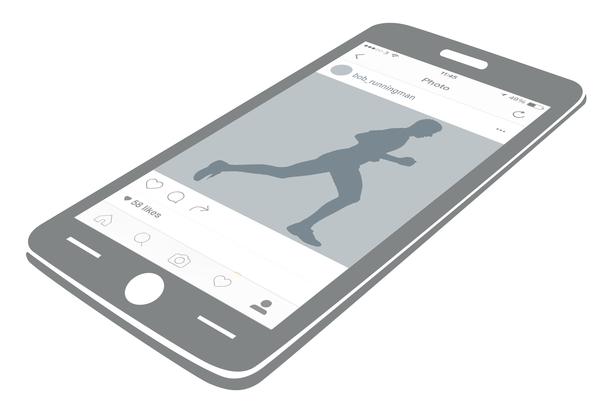
According to a recent feature in UK newspaper The Independent, Instagram is spurring the biggest shift the fitness world has seen in decades, thanks to users posting pictures of their workout regimes and healthy meals for their friends to see – they’re increasingly showing off not only the results they’re achieving in terms of their own physical appearance, but the process itself.

Seeing peers putting effort into their daily lives, finding the time to exercise and eating healthily, is apparently spurring their friends on to do the same.

So should gyms be encouraging their members to share results of runs, bike rides, gyms sessions and photos of salads? Is the guilt trip – seeing the evidence of other people’s hard work – really enough to make those viewing the photos ditch the carbs and don the trainers?

Word of mouth has always been a powerful tool, and social media is the ultimate word of mouth – particularly among Millennials. Used properly, it has potential as a tool for behaviour change. But how can operators make the best use of this tool, and are there pitfalls to avoid? We ask the experts…

Hanna Chalmers,

Research director,

Ipsos MORI

Hanna Chalmers
Hanna Chalmers

According to Ofcom, 90 per cent of 16- to 24-year-olds have a smartphone, spending between six and seven hours a day on them – of which an average of 90 minutes is spent on social media sites. So social media is very likely to be having an impact on their behaviour and their attitudes.

Encouragingly, Department of Education research has shown that engagement in risky behaviours among young people – such as drinking, smoking and drug taking – has dropped significantly in recent years, while teenage pregnancy is down an enormous 45 per cent since 2007. It’s good to see that obesity rates among young people are also stabilising.

While the reduction in risky behaviour is encouraging to see, what we’re also seeing is that young people are spending more time indoors and alone than ever before, so physical networks are being replaced with online social networks.

With Instagram and Snapchat, social media has become more visual. The selfie trend has made young people think of themselves as permanently on display and they’re now constantly bombarded with images of how they should look.

So it sadly isn’t surprising that, according to NSPCC figures, between 2013 and 2014 the number of children seeking counselling for eating disorders rose by 15 per cent, with 21 per cent reporting to have body image issues.

Given the allure and reach of social media, it’s important for fitness operators to understand that it’s a powerful way to engage with their customers, and potential customers – but it’s absolutely crucial to use responsible imagery and give credible advice. The industry needs to be in this space, but in a highly responsible way.

Debbie Lawrence,

Qualification lead (sport, active health and fitness),

VTCT

Debbie Lawrence
Debbie Lawrence

Social media is a good method of communication, with a big reach – and it’s free – so it makes sense to use it to promote activity and healthy eating. If the message is pitched right, there’s potential to use social media for behaviour change as it builds momentum.

However, it’s important to be mindful about its use so people don’t feel blamed, shamed or guilt tripped, as this can build resistance to making a change.

Content must be interesting, useful and engaging, with imagery that reflects everyone in society, including disabled people – not just photogenic people wearing lycra. It’s also vitally important to get facts right and, when posting photos and videos, the technique that’s shown has to be perfect.

Operators should be careful not to sell too hard, because pushing diet food, pills and meal supplements can be a turn-off and won’t promote healthy long-term behaviour. However, if clubs use encouraging messages presented in an accessible, fun way – “have you tried this workout yet?” – it can work well.

Social media has the potential to be very supportive, but can be part of the put-down culture too. With cyber-bullying an issue, and teenage suicides happening as a result, it does concern me that there’s a potential for people to respond negatively to a post. This could have a significant impact on self-esteem, especially among vulnerable people.

Currently I think that social media is working well in reinforcing the good behaviour of those who are already converted, but as an industry we need to keep working to engage with those who aren’t exercising at all.

"Social media certainly has the potential to be very supportive, but it can be part of the put-down culture too" – Debbie Lawrence

Simon Minchin,

Director,

Minchin & Grimshaw

Simon Minchin
Simon Minchin

Social media is a powerful tool and an undeniable force in modern society, but it’s not a magic bullet. Social media reflects trends and behaviours that are already going on in society rather more than it has a hand in shaping new ones.

What it can do is allow a two-way conversation, and it’s a proven way to build communities. This creates a good opportunity for the fitness industry to be at the centre of lifestyle changes.

Using social media to celebrate the successes of members reaching fitness milestones, however small, could be very supportive and effective; for the member, there’s more value in having the club celebrate their achievements than in celebrating themselves. This presents the club as friendly and welcoming and, if it goes onto the member’s timeline, can reach an audience of people who are currently not engaged with fitness.

If your club caters for a number of different markets, sub-divide groups and the messages – what’s appropriate for a 40-something mum looking to tone up after having kids won’t interest a teenage bodybuilder. Create communities of like-minded people where they can share their hurdles and hiccups and support each other.

The messages need to be focused on selling the benefits of exercise and being motivational and fun. The issue of body image is a sensitive one in today’s world and clubs should avoid appearing to put pressure on people to look a certain way.

Video content is being favoured by many of the social media platforms – Facebook is more likely to display it in people’s news feeds, for instance – and it’s highly appropriate for the health and fitness market, so operators need to get on board with this medium.

Finally, Facebook was originally seen as free media, but it isn’t now. Organic reach of posts to page fans – people seeing your updates for free – has dropped to a tiny percentage.

If operators want to reach new audiences, to engage people who are currently inactive, they will probably need to boost their posts or, even better, use Facebook Targeted Advertising, which can be highly effective. Adverts can be aimed at people who have expressed an interest in health and fitness, are of a certain age and live within defined geographic areas.

"Social media reflects trends and behaviours that are already going on in society rather more than it has a hand in shaping new ones" – Simon Minchin

Julia Buckley,

Online PT and author
,
Julia Buckley
Julia Buckley

People are influenced by social media at least as much as they are by old media now, and it’s very easy for us fitness professionals to get on it and share our messages. I get messages every day from people letting me know the tips and advice I post online have helped them.

In my latest 12-week fitness programme, Forge, I’m using social media to add another level of accountability, because most people are much more likely to follow through on what they start if people are watching. Participants post details of their goals on their social media channels, promising an update at the end of the 12-week programme.

It’s true that when we get fitter and healthier, it can make people look at their own lifestyle and feel bad about not taking better care of ourselves. But that’s definitely not a reason for us to keep quiet about it. Hiding our achievements, or pretending not to enjoy exercise, will not help those people at all. Sharing inspiring posts, pictures and comments about the amazing benefits fitness brings to all areas of lives just might help them work through that negativity and start something that could dramatically improve their lives.

 Motivational tips and images have their place, but don’t neglect to publish real practical advice that people can put to use. The wonderful thing about social media is that it’s about two-way interaction. So listen to your community, ask them what they need help with, and notice what type of content they engage with the most.

"Motivational images have their place, but don’t neglect to publish real advice" – Julie Buckley
Sign up here to get HCM's weekly ezine and every issue of HCM magazine free on digital.
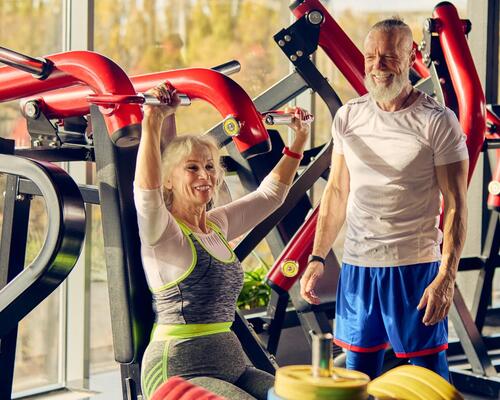
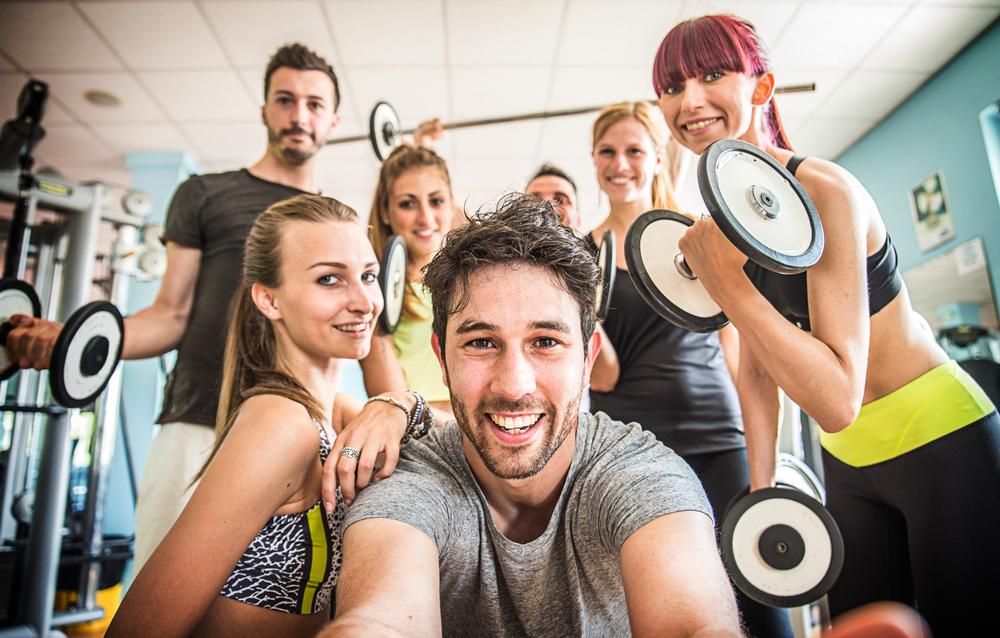
Gyms should avoid only posting images of photogenic people, instead reflecting the whole of society / PHOTO: SHUTTERSTOCK.COM
https://www.leisureopportunities.co.uk/images/991534_535288.jpg
Can clubs harness social media to get more people moving?
Hanna Chalmers, Research director, Ipsos MORI Debbie Lawrence, Qualification lead (sport, active health and fitness), VTCT Simon Minchin, Director, Minchin & Grimshaw Julia Buckley, Online PT and author ,Social media, behaviour change, Debbie Lawrence, Simon Minchin, Julie Buckley, Forge, Hanna Chalmers, Kath Hudson
HCM magazine
For every member with a tripod and a big following, there are others irritated at the way equipment is being hogged or wary they’ll be in the background on someone’s Insta feed. Do influencers offer valuable, free marketing or are they just a nuisance? Kath Hudson finds out how operators are responding
HCM magazine
If the health service is to survive, we must recognise that it is a disease service – and that wellbeing rests with us, says the activity advocate and healthy ageing champion. He talks to Kate Cracknell
HCM magazine
Collaborations with the medical profession and greater aspirations around wellbeing are creating a need for more experts in our sector. It’s time to reboot our thinking around the workforce
HCM magazine
As the entrepreneur who started Wexer, Fresh Fitness, Fitness DK and Repeat, as well as being a former elite athlete, Rasmus Ingerslev’s life looked perfect from the outside, but onthe inside it was a different story. He talks to Kath Hudson about healing old wounds
HCM magazine
Strength training is evolving, driven by changing consumer preferences. Julie Cramer talks to innovators about how their products are meeting this demand
HCM promotional features
Sponsored
David Lloyd is stepping up its commitment to women’s health as it continues to explore what fit-for-purpose looks like for the female population
HCM promotional features
Sponsored
Greg Bradley looks at the shift towards strength training in gyms and advises on how operators can create the ultimate training environment
HCM promotional features
Sponsored
Third Space partnered with IndigoFitness to deliver a bespoke training space for its new club at The Whiteley
HCM promotional features
Sponsored
SnowDome Fitness has added 50 per cent more space with cutting-edge Technogym solutions
HCM promotional features
Sponsored
Find out how your gym can tap into the corporate wellness boom
HCM promotional features
Sponsored
Starpool supports Olympic champion Marcell Jacobs, says Riccardo Turri
HCM promotional features
Sponsored
EGYM has opened a new HQ in Paternoster Square, London and revealed a range of new launches
HCM promotional features
Promotion
Performance Health Systems, manufacturer of Power Plate, has a new CEO, with an ambitious vision for the company
HCM promotional features
Sponsored
Active IQ is calling for greater accountability in online fitness advice with the launch of a new trustmark
HCM promotional features
Latest News
An ambitious women’s only strength and lifting studio concept is set to launch in Dallas this ...
Latest News
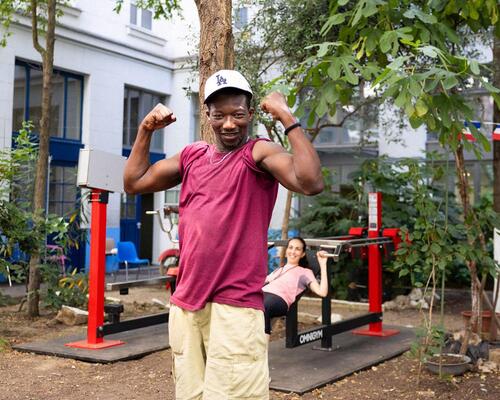
Finnish outdoor fitness equipment specialist, Omnigym, has partnered with charity, Emmaüs Solidarité, to launch an ...
Latest News
Virgin Active has officially opened its redesigned Mayfair club, unveiling its latest Social Wellness Club ...
Latest News
Europe’s largest low-cost operator, Basic-Fit, has agreed to acquire 41 Wellyou clubs in Germany for ...
Latest News
Longevity is the most important motivator for today’s exercisers and social connection is key, according ...
Latest News
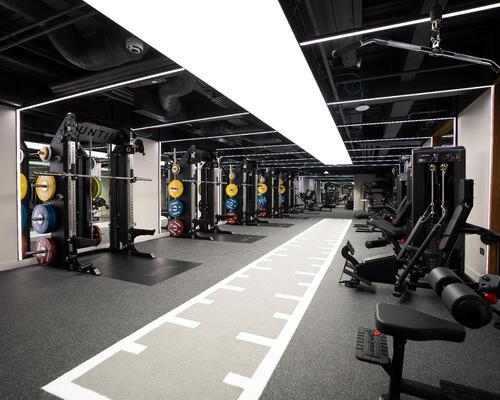
Until has opened its fourth club at Canary Wharf, in the iconic YY London building. ...
Latest News
Ben Allen has been appointed managing director at Common Bond. Having set the company up ...
Latest News
Les Mills, whose name became synonymous with one of the world's leading fitness brands, has ...
Opinion
promotion
Strength training has moved from the margins to the mainstream.
Opinion: Building smarter strength spaces for today’s operators
Featured supplier news
Featured supplier news: CoverMe extends matching service to personal training, rewriting how members and personal trainers connect
CoverMe, the global leader in fitness workforce management, today launches CoverMe PT, an on-demand personal training platform that connects the right personal trainer to the right client in under 10 seconds.
Featured supplier news
Featured supplier news: Cornerstone Connect helps Active Blackpool tackle health inequalities
Active Blackpool is deploying Cornerstone Connect, a new digital interface allowing disparate information from multiple systems to be aggregated into one dataset, to support its focus on reducing health inequalities and improving healthy life expectancy.
Company profiles
Company profile: EGYM UK Ltd
EGYM partners with companies to improve employee health by providing access to fitness and health ...
Company profiles
Company profile: Wellhub
Wellhub acts as a corporate sales channel, bringing new, highquality members to your business, by ...
Supplier Showcases
Supplier Showcase - Future-proofing
Catalogue Gallery
Click on a catalogue to view it online
Featured press releases
Panatta press release: On Air Fitness chooses Panatta and its Made in Italy fitness equipment
French fitness chain On Air Fitness, with 113 clubs across France and internationally (Spain, Morocco and Portugal) and more than 430,000 members, has chosen to introduce Panatta equipment — a 12-machine circuit from the premium Free Weight Special line —
Featured press releases
ukactive press release: UK Active announces plans for National Fitness Day 2026
UK Active has announced the details of National Fitness Day 2026, with the flagship campaign set to take place on Wednesday 16 September 2026.
Directory
Lockers
Crown Sports Lockers: Lockers
Fitness tracking platform
SpiviTech: Fitness tracking platform
Industrial washing machines
Miele Company Limited: Industrial washing machines
Water experiences and hydrotherapy solutions
Aquaform s.r.l.: Water experiences and hydrotherapy solutions
Spa and beauty equipment
Living Earth Crafts: Spa and beauty equipment
Hot tubs
MSpa International Ltd: Hot tubs
Property & Tenders
Stratford, East London.
Lee Valley Regional Park Authority
Property & Tenders
Y Felinheli, LL56 4QN
Newmark
Property & Tenders
Diary dates
21-24 Sep 2026
The Langham Huntington Pasadena , Pasadena, United States
Diary dates
06-08 Oct 2026
Messe Stuttgart, Stuttgart, Germany
Diary dates
22-22 Oct 2026
QEII Conference Centre, London,
Diary dates
26-29 Oct 2027
Koelnmesse Exhibition Centre, Cologne, Germany
Diary dates

features

Talking point: Influencing behaviour

Are ‘sweat selfies’ the way to motivate inactive people to start exercising? Kath Hudson reports on if, and how, social media can be harnessed to bring about behaviour change

By Kath Hudson | Published in Health Club Management 2016 issue 7
Influencing Behaviour

According to a recent feature in UK newspaper The Independent, Instagram is spurring the biggest shift the fitness world has seen in decades, thanks to users posting pictures of their workout regimes and healthy meals for their friends to see – they’re increasingly showing off not only the results they’re achieving in terms of their own physical appearance, but the process itself.

Seeing peers putting effort into their daily lives, finding the time to exercise and eating healthily, is apparently spurring their friends on to do the same.

So should gyms be encouraging their members to share results of runs, bike rides, gyms sessions and photos of salads? Is the guilt trip – seeing the evidence of other people’s hard work – really enough to make those viewing the photos ditch the carbs and don the trainers?

Word of mouth has always been a powerful tool, and social media is the ultimate word of mouth – particularly among Millennials. Used properly, it has potential as a tool for behaviour change. But how can operators make the best use of this tool, and are there pitfalls to avoid? We ask the experts…

Hanna Chalmers,

Research director,

Ipsos MORI

Hanna Chalmers
Hanna Chalmers

According to Ofcom, 90 per cent of 16- to 24-year-olds have a smartphone, spending between six and seven hours a day on them – of which an average of 90 minutes is spent on social media sites. So social media is very likely to be having an impact on their behaviour and their attitudes.

Encouragingly, Department of Education research has shown that engagement in risky behaviours among young people – such as drinking, smoking and drug taking – has dropped significantly in recent years, while teenage pregnancy is down an enormous 45 per cent since 2007. It’s good to see that obesity rates among young people are also stabilising.

While the reduction in risky behaviour is encouraging to see, what we’re also seeing is that young people are spending more time indoors and alone than ever before, so physical networks are being replaced with online social networks.

With Instagram and Snapchat, social media has become more visual. The selfie trend has made young people think of themselves as permanently on display and they’re now constantly bombarded with images of how they should look.

So it sadly isn’t surprising that, according to NSPCC figures, between 2013 and 2014 the number of children seeking counselling for eating disorders rose by 15 per cent, with 21 per cent reporting to have body image issues.

Given the allure and reach of social media, it’s important for fitness operators to understand that it’s a powerful way to engage with their customers, and potential customers – but it’s absolutely crucial to use responsible imagery and give credible advice. The industry needs to be in this space, but in a highly responsible way.

Debbie Lawrence,

Qualification lead (sport, active health and fitness),

VTCT

Debbie Lawrence
Debbie Lawrence

Social media is a good method of communication, with a big reach – and it’s free – so it makes sense to use it to promote activity and healthy eating. If the message is pitched right, there’s potential to use social media for behaviour change as it builds momentum.

However, it’s important to be mindful about its use so people don’t feel blamed, shamed or guilt tripped, as this can build resistance to making a change.

Content must be interesting, useful and engaging, with imagery that reflects everyone in society, including disabled people – not just photogenic people wearing lycra. It’s also vitally important to get facts right and, when posting photos and videos, the technique that’s shown has to be perfect.

Operators should be careful not to sell too hard, because pushing diet food, pills and meal supplements can be a turn-off and won’t promote healthy long-term behaviour. However, if clubs use encouraging messages presented in an accessible, fun way – “have you tried this workout yet?” – it can work well.

Social media has the potential to be very supportive, but can be part of the put-down culture too. With cyber-bullying an issue, and teenage suicides happening as a result, it does concern me that there’s a potential for people to respond negatively to a post. This could have a significant impact on self-esteem, especially among vulnerable people.

Currently I think that social media is working well in reinforcing the good behaviour of those who are already converted, but as an industry we need to keep working to engage with those who aren’t exercising at all.

"Social media certainly has the potential to be very supportive, but it can be part of the put-down culture too" – Debbie Lawrence

Simon Minchin,

Director,

Minchin & Grimshaw

Simon Minchin
Simon Minchin

Social media is a powerful tool and an undeniable force in modern society, but it’s not a magic bullet. Social media reflects trends and behaviours that are already going on in society rather more than it has a hand in shaping new ones.

What it can do is allow a two-way conversation, and it’s a proven way to build communities. This creates a good opportunity for the fitness industry to be at the centre of lifestyle changes.

Using social media to celebrate the successes of members reaching fitness milestones, however small, could be very supportive and effective; for the member, there’s more value in having the club celebrate their achievements than in celebrating themselves. This presents the club as friendly and welcoming and, if it goes onto the member’s timeline, can reach an audience of people who are currently not engaged with fitness.

If your club caters for a number of different markets, sub-divide groups and the messages – what’s appropriate for a 40-something mum looking to tone up after having kids won’t interest a teenage bodybuilder. Create communities of like-minded people where they can share their hurdles and hiccups and support each other.

The messages need to be focused on selling the benefits of exercise and being motivational and fun. The issue of body image is a sensitive one in today’s world and clubs should avoid appearing to put pressure on people to look a certain way.

Video content is being favoured by many of the social media platforms – Facebook is more likely to display it in people’s news feeds, for instance – and it’s highly appropriate for the health and fitness market, so operators need to get on board with this medium.

Finally, Facebook was originally seen as free media, but it isn’t now. Organic reach of posts to page fans – people seeing your updates for free – has dropped to a tiny percentage.

If operators want to reach new audiences, to engage people who are currently inactive, they will probably need to boost their posts or, even better, use Facebook Targeted Advertising, which can be highly effective. Adverts can be aimed at people who have expressed an interest in health and fitness, are of a certain age and live within defined geographic areas.

"Social media reflects trends and behaviours that are already going on in society rather more than it has a hand in shaping new ones" – Simon Minchin

Julia Buckley,

Online PT and author
,

Julia Buckley
Julia Buckley

People are influenced by social media at least as much as they are by old media now, and it’s very easy for us fitness professionals to get on it and share our messages. I get messages every day from people letting me know the tips and advice I post online have helped them.

In my latest 12-week fitness programme, Forge, I’m using social media to add another level of accountability, because most people are much more likely to follow through on what they start if people are watching. Participants post details of their goals on their social media channels, promising an update at the end of the 12-week programme.

It’s true that when we get fitter and healthier, it can make people look at their own lifestyle and feel bad about not taking better care of ourselves. But that’s definitely not a reason for us to keep quiet about it. Hiding our achievements, or pretending not to enjoy exercise, will not help those people at all. Sharing inspiring posts, pictures and comments about the amazing benefits fitness brings to all areas of lives just might help them work through that negativity and start something that could dramatically improve their lives.

 Motivational tips and images have their place, but don’t neglect to publish real practical advice that people can put to use. The wonderful thing about social media is that it’s about two-way interaction. So listen to your community, ask them what they need help with, and notice what type of content they engage with the most.

"Motivational images have their place, but don’t neglect to publish real advice" – Julie Buckley
Sign up here to get HCM's weekly ezine and every issue of HCM magazine free on digital.
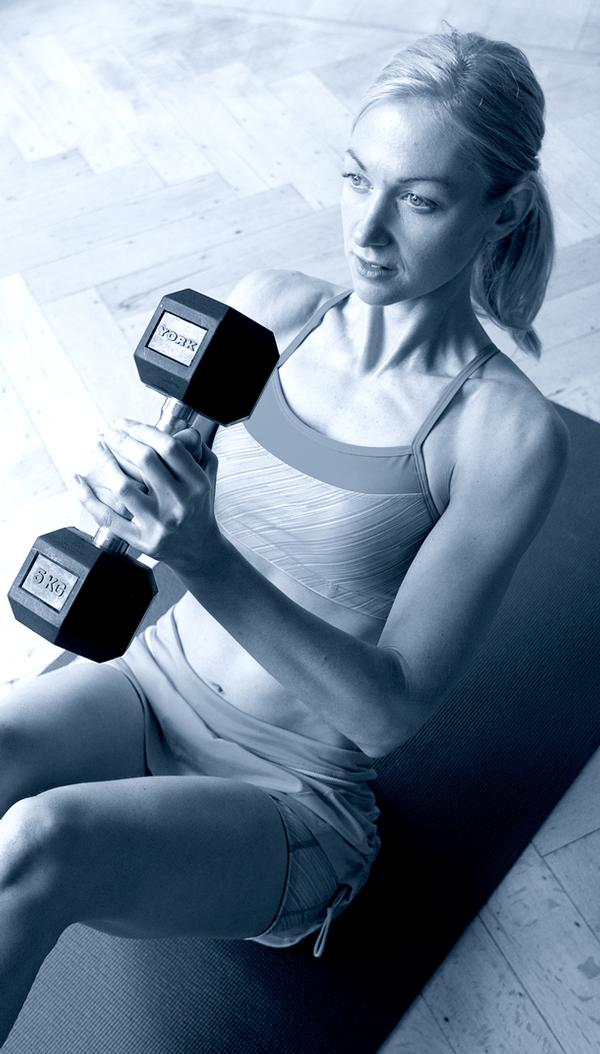
Gyms should avoid only posting images of photogenic people, instead reflecting the whole of society / PHOTO: SHUTTERSTOCK.COM
https://www.leisureopportunities.co.uk/images/991534_535288.jpg
Can clubs harness social media to get more people moving?
Hanna Chalmers, Research director, Ipsos MORI Debbie Lawrence, Qualification lead (sport, active health and fitness), VTCT Simon Minchin, Director, Minchin & Grimshaw Julia Buckley, Online PT and author ,Social media, behaviour change, Debbie Lawrence, Simon Minchin, Julie Buckley, Forge, Hanna Chalmers, Kath Hudson
Latest News
An ambitious women’s only strength and lifting studio concept is set to launch in Dallas this ...
Latest News
Finnish outdoor fitness equipment specialist, Omnigym, has partnered with charity, Emmaüs Solidarité, to launch an ...
Latest News
Virgin Active has officially opened its redesigned Mayfair club, unveiling its latest Social Wellness Club ...
Latest News
Europe’s largest low-cost operator, Basic-Fit, has agreed to acquire 41 Wellyou clubs in Germany for ...
Latest News
Longevity is the most important motivator for today’s exercisers and social connection is key, according ...
Latest News
Until has opened its fourth club at Canary Wharf, in the iconic YY London building. ...
Latest News
Ben Allen has been appointed managing director at Common Bond. Having set the company up ...
Latest News
Les Mills, whose name became synonymous with one of the world's leading fitness brands, has ...
Latest News
People taking GLP-1 weight loss medications such as Ozempic, Wegovy, Mounjaro and Zepbound may be ...
Latest News
Low-cost gym operator, PureGym, is trialling recovery zones at two of its UK sites, democratising ...
Latest News
In a milestone moment, mental health has become a core part of CIMSPA’s occupational professional ...
Opinion
promotion
Strength training has moved from the margins to the mainstream.
Opinion: Building smarter strength spaces for today’s operators
Featured supplier news
Featured supplier news: CoverMe extends matching service to personal training, rewriting how members and personal trainers connect
CoverMe, the global leader in fitness workforce management, today launches CoverMe PT, an on-demand personal training platform that connects the right personal trainer to the right client in under 10 seconds.
Featured supplier news
Featured supplier news: Cornerstone Connect helps Active Blackpool tackle health inequalities
Active Blackpool is deploying Cornerstone Connect, a new digital interface allowing disparate information from multiple systems to be aggregated into one dataset, to support its focus on reducing health inequalities and improving healthy life expectancy.
Company profiles
Company profile: EGYM UK Ltd
EGYM partners with companies to improve employee health by providing access to fitness and health ...
Company profiles
Company profile: Wellhub
Wellhub acts as a corporate sales channel, bringing new, highquality members to your business, by ...
Supplier Showcases
Supplier Showcase - Future-proofing
Catalogue Gallery
Click on a catalogue to view it online
Featured press releases
Panatta press release: On Air Fitness chooses Panatta and its Made in Italy fitness equipment
French fitness chain On Air Fitness, with 113 clubs across France and internationally (Spain, Morocco and Portugal) and more than 430,000 members, has chosen to introduce Panatta equipment — a 12-machine circuit from the premium Free Weight Special line —
Featured press releases
ukactive press release: UK Active announces plans for National Fitness Day 2026
UK Active has announced the details of National Fitness Day 2026, with the flagship campaign set to take place on Wednesday 16 September 2026.
Directory
Lockers
Crown Sports Lockers: Lockers
Fitness tracking platform
SpiviTech: Fitness tracking platform
Industrial washing machines
Miele Company Limited: Industrial washing machines
Water experiences and hydrotherapy solutions
Aquaform s.r.l.: Water experiences and hydrotherapy solutions
Spa and beauty equipment
Living Earth Crafts: Spa and beauty equipment
Hot tubs
MSpa International Ltd: Hot tubs
Property & Tenders
Stratford, East London.
Lee Valley Regional Park Authority

Property & Tenders
Y Felinheli, LL56 4QN
Newmark
Property & Tenders
Diary dates
21-24 Sep 2026
The Langham Huntington Pasadena , Pasadena, United States
Diary dates
06-08 Oct 2026
Messe Stuttgart, Stuttgart, Germany
Diary dates
22-22 Oct 2026
QEII Conference Centre, London,
Diary dates
26-29 Oct 2027
Koelnmesse Exhibition Centre, Cologne, Germany
Diary dates
Search news, features & products:
Find a supplier:
Partner sites