

























EGYM
EGYM
EGYM
Follow Health Club Management on Twitter Like Health Club Management on Facebook Join the discussion with Health Club Management on LinkedIn
FITNESS, HEALTH, WELLNESS

features

Health trends: The power of one

Today’s consumers are increasingly taking control of their own health. Louise Kennedy of The Futures Company looks at how this will shape the future of the fitness industry

By Louise Kennedy, The Futures Company | Published in Health Club Management 2013 issue 4
“We’re seeing the rise of the ‘Quantified Self’ – people using smartphone applications to capture details about their health”

As our population ages and we approach a world where people are living longer than ever, it’s important that people feel confident they will lead healthy lives as they age. However, while life expectancy is increasing, modern lifestyles are taking their toll on quality of life, with an increasing number of people globally suffering from chronic and lifestyle-related diseases.

People need to feel they can trust healthcare providers and professionals to facilitate a long-term healthy future. However, rising healthcare costs in markets such as the US, combined with a crisis of trust in markets such as the UK – with its recent NHS care scandals (see BBC News coverage: http://lei.sr?a=Y0L1L) – are eroding consumers’ confidence that healthcare providers will deliver.

As a result, people are seeking greater personal control over their health. In the UK, 64 per cent of people in the UK say they take proactive steps to manage their health, even when they are not ill. Self-diagnosis is also fast on the increase, with 44 per cent of people researching medical conditions themselves, often circumventing traditional, professional healthcare paths (source: TFC Global Monitor 2010).

Taking control
As part of this trend towards the self-management of health, we’re seeing more people adopting a range of ‘DIY health tools’ that help them stay in control of their wellbeing – whether that’s prevention, monitoring or management.

According to Diane Fruge, director of family health at The Pritikin Longevity Center in Miami, US, this is an important move for both consumers and the healthcare industry as a whole: “Prevention and health education are key to better and healthier living. Knowing how to take care of yourself can eliminate unwanted illness and disease, and could potentially help reduce healthcare costs.” (see Fox Business report: http://lei.sr?a=Z1z5V)

The trend is facilitated largely by the increasing adoption and development of mobile technologies and innovative devices. In the 2013 Mobile App Behaviour Survey – conducted in February by apigee (www.apigee.com) among over 760 smartphone users in the UK, US, Spain, France and Germany – 82 per cent of respondents felt there were critical apps they couldn’t go without for even a day, with email leading the way.

Spain topped the chart, with 93 per cent of those surveyed saying they couldn’t go one day without apps; in the US, 50 per cent of respondents claimed not to be able to last four hours. Meanwhile, in France, 18 per cent said they couldn’t order dinner without an app; 23 per cent of Spaniards felt apps were the only way they could find a date; and 40 per cent of Germans would rather stop drinking coffee than delete all the apps on their phone forever.

With health and wellbeing applications estimated to make up approximately 40 per cent of new smartphone apps being developed (see The Guardian online article: http://lei.sr?a=K1b6A), self-management of health represents big business. Indeed, when it comes to monitoring existing conditions and diagnosis of potential problems, we’re seeing a huge increase in mobile applications and devices – from monitoring moles to identifying malaria – that allow people to receive instant information and diagnostics about their current state of health.

Meanwhile, as social networking continues to be a valuable source of personal connection and influence – while trust in professionals has wavered – we’re seeing online citizen support networks such as CureTogether grow in popularity. CureTogether is a network of 26,000 members offering curative advice and support for people across hundreds of illnesses (www.curetogether.com).

Data analysis
However, the story doesn’t end with short-term solutions. Advancing technology has brought with it a data-driven movement. People are gaining comfort in, and confidence with, data, facts and measurements, and this appears to be particularly true within healthcare and fitness.

We’re therefore seeing the rise of the ‘Quantified Self’ – people using smartphone applications and devices to capture details about their health over time, in order to shape their lives based on enhanced knowledge and insights. Behaviour change is the goal of this movement, as Gina Neff, associate professor of communication at the University of Washington, explains. “Data leads to knowledge, and knowledge leads to action,” she says.

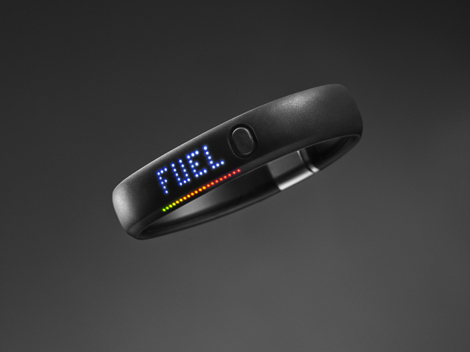
A wide variety of self-tracking and data capture applications and monitoring devices exist across the market, from the Zeo Sleep Manager that measures sleep cycles, through Jawbone and the Nike+ Fuel Band that measure daily movement, to the Withings range of apps that monitor everything from heart rate and activities to weight and calorie intake.

However, according to Christiaan Vorkink, principal at heath technology company True Ventures, adequate analysis of this data remains a challenge: “A huge Quantified Self problem is that our ability to measure has outpaced our modes and models for analysis.”

Analysis expertise is essential if data is to be translated into the right course of action for the user, in terms of a tailored healthcare plan. Knowing about yourself is one thing, but knowing what to do with that information is another thing entirely.

So what might happen next? In the future, we will see a greater focus on the importance of data analysis and healthcare integration. We may see the advance of remote healthcare, for example, where doctors monitor patients remotely – analysing data generated by monitoring apps and devices to give tailored treatment advice – thereby saving on GP visits and healthcare resource. Already devices such as Sensimed’s Triggerfish system – a wearable, sensor-filled contact lens for glaucoma sufferers – are able to wirelessly send data that doctors can monitor, adjusting medication as necessary.

As technologies advance, new devices will emerge that not only monitor health, but that can also administer treatments. Contact lens manufacturers are again leading the way, with a breakthrough drug-dispensing product – which sandwiches medicine between two layers of lens, administering it at constant rates over time – tested as long ago as 2009 (see Scientific American article: http://lei.sr?a=f8X7T).

Tapping the trend
So what might this mean for the fitness industry? The emergence of self-monitoring and data-driven behaviour change is of huge significance. As healthcare management becomes more people-centred, it’s important for the fitness industry to encourage and allow people to feel comfortable and confident in taking a proactive role in managing their own health and fitness activities.

As we have seen, new and accessible technologies have a vital role to play, and this cannot be ignored. The apps and device markets are growing and advancing, driven by the need for convenient and tailored solutions. These will become central to the way people plan their health and fitness activities, so it’s important for the industry to actively embrace these new technologies.

Here we outline three ways in which the fitness industry should tap into the up-and-coming ‘DIY Health’ trend:

Make lifestyle apps compulsory:
Gyms and health clubs should offer a lifestyle app including training, calorie and exercise functions as standard, to be used by all members from sign-up. This should be integrated into all fitness activity, making its usage compulsory both inside the gym and out. A bespoke branded gym app would be the ideal, helping to drive brand loyalty.

Deliver ultra-personal training:
Application and device data should be central to all fitness activity, both within and outside of the gym. Fitness professionals could be trained to spend time analysing the holistic lifestyle and fitness data received from the apps in order to offer the most personalised fitness plans and health advice possible.

Reward lifestyle change:
The continued usage of lifestyle apps and devices should be rewarded as a positive lifestyle change through discounts on other products or health club services, such as at-home equipment for additional workouts, or massages and other holistic treatments.

Louise Kennedy is a consultant at The Futures Company, specialising in strategic insight and innovation projects for a range of global consumer brands.

Email [email protected]
Twitter: @louise_kennedy_

The Futures Company is a strategic consultancy that helps clients unlock future sources of growth through consumer insight alongside foresight and futures expertise.

Web: www.thefuturescompany.com
Twitter: @FuturesCo

Sign up here to get HCM's weekly ezine and every issue of HCM magazine free on digital.
Gyms should use data from apps to give members personalised wellness plans / Pure Yoga
Fitness clubs should offer a lifestyle app as part of their membership / © shutterstock.com
The Nike+ Fuel Band is one of many new activity monitoring devices
https://www.leisureopportunities.co.uk/images/HCM2013_4trend.gif
As today's consumers start to take control of their own health, Louise Kennedy considers how this will shape the future fitness industry
Louise Kennedy The Futures Company,,Health trends, DIY health, quantified self, apps
HCM magazine
Collaborations with the medical profession and greater aspirations around wellbeing are creating a need for more experts in our sector. It’s time to reboot our thinking around the workforce
HCM magazine
HCM People

Stephen Price

Founder, SP&Co Group
Working in public health over the last few years has lit up parts of my brain again
HCM magazine
As the entrepreneur who started Wexer, Fresh Fitness, Fitness DK and Repeat, as well as being a former elite athlete, Rasmus Ingerslev’s life looked perfect from the outside, but onthe inside it was a different story. He talks to Kath Hudson about healing old wounds
HCM magazine
If the health service is to survive, we must recognise that it is a disease service – and that wellbeing rests with us, says the activity advocate and healthy ageing champion. He talks to Kate Cracknell
HCM magazine
Strength training is evolving, driven by changing consumer preferences. Julie Cramer talks to innovators about how their products are meeting this demand
HCM promotional features
Sponsored
Greg Bradley looks at the shift towards strength training in gyms and advises on how operators can create the ultimate training environment
HCM promotional features
Sponsored
Starpool supports Olympic champion Marcell Jacobs, says Riccardo Turri
HCM promotional features
Sponsored
SnowDome Fitness has added 50 per cent more space with cutting-edge Technogym solutions
HCM promotional features
Sponsored
Third Space partnered with IndigoFitness to deliver a bespoke training space for its new club at The Whiteley
HCM promotional features
Sponsored
David Lloyd is stepping up its commitment to women’s health as it continues to explore what fit-for-purpose looks like for the female population
HCM promotional features
Sponsored
Find out how your gym can tap into the corporate wellness boom
HCM promotional features
Sponsored
EGYM has opened a new HQ in Paternoster Square, London and revealed a range of new launches
HCM promotional features
Promotion
Performance Health Systems, manufacturer of Power Plate, has a new CEO, with an ambitious vision for the company
HCM promotional features
Sponsored
The industry is embracing consumer-facing tech. Now it’s time to streamline back-of-house systems with Orbit4, says Daniel Jones
HCM promotional features
Latest News
Elevate Arena is underway at London's Excel and the hot topic of AI was the ...
Latest News
PureGym Group has announced that group chief financial officer, Alex Wood, is taking over the ...
Latest News
Independent operator, Fitness Worx Gyms, is introducing private blood testing as a service to members. ...
Latest News
International industry lobbying associations are calling for physical activity and strength training to be deeply ...
Latest News
Global group exercise specialist, Les Mills, is inviting operators to sign up to its Workout ...
Latest News
Global luxury hospitality brand, Six Senses, has partnered with longevity healthcare provider, HUM2N, to launch ...
Latest News
Premium London health club, KX Chelsea, is gearing up to unveil its most significant redevelopment ...
Latest News
Researchers in the US have identified an antibody which could greatly reduce the loss of ...
Opinion
promotion
Strength training has moved from the margins to the mainstream.
Opinion: Building smarter strength spaces for today’s operators
Featured supplier news
Featured supplier news: Reaching the people most gyms miss: Bedford Gym & Swim Campaign delivers 410 new members
One of the biggest mistakes the fitness industry still makes is advertising almost exclusively to people who already look and live like gym members.
Featured supplier news
Featured supplier news: CoverMe extends matching service to personal training, rewriting how members and personal trainers connect
CoverMe, the global leader in fitness workforce management, today launches CoverMe PT, an on-demand personal training platform that connects the right personal trainer to the right client in under 10 seconds.
Company profiles
Company profile: Fold
Fold is the company behind the UK's leading at home foldable reformer pilates bed, bringing ...
Company profiles
Company profile: Zynk - wellness design experts
Zynk are a team of specialist interior architects and designers with more than 25 year’s ...
Supplier Showcases
Supplier Showcase - From nightclub to health club
Supplier Showcases
Supplier Showcase - Future-proofing
Catalogue Gallery
Click on a catalogue to view it online
Featured press releases
Create PT press release: Create sets a new standard with its new personal training diploma
Create's new Personal Training Diploma is built on the depth, real-client practice and coaching judgement that turn a qualification into genuine readiness - taught as one continuous course so that every skill is reinforced and applied, not cleared once and forgotten.
Featured press releases
Leisure Energy press release: Studley Leisure Centre solar panel installation project begins
Stratford-on-Avon District Council is delighted to announce a new solar panel installation project at Studley Leisure Centre, marking an important step towards improving the sustainability of this valued community facility.
Directory
Lockers
Crown Sports Lockers: Lockers
Hot tubs
MSpa International Ltd: Hot tubs
Fitness tracking platform
SpiviTech: Fitness tracking platform
Water experiences and hydrotherapy solutions
Aquaform s.r.l.: Water experiences and hydrotherapy solutions
Industrial washing machines
Miele Company Limited: Industrial washing machines
Spa and beauty equipment
Oakworks Inc: Spa and beauty equipment
Property & Tenders
Stratford, East London.
Lee Valley Regional Park Authority
Property & Tenders
Y Felinheli, LL56 4QN
Newmark
Property & Tenders
Diary dates
22-23 Jun 2026
WX Wakefield , Wakefield, United Kingdom
Diary dates
21-24 Sep 2026
The Langham Huntington Pasadena , Pasadena, United States
Diary dates
06-08 Oct 2026
Messe Stuttgart, Stuttgart, Germany
Diary dates
22-22 Oct 2026
QEII Conference Centre, London,
Diary dates
26-29 Oct 2027
Koelnmesse Exhibition Centre, Cologne, Germany
Diary dates

features

Health trends: The power of one

Today’s consumers are increasingly taking control of their own health. Louise Kennedy of The Futures Company looks at how this will shape the future of the fitness industry

By Louise Kennedy, The Futures Company | Published in Health Club Management 2013 issue 4
“We’re seeing the rise of the ‘Quantified Self’ – people using smartphone applications to capture details about their health”

As our population ages and we approach a world where people are living longer than ever, it’s important that people feel confident they will lead healthy lives as they age. However, while life expectancy is increasing, modern lifestyles are taking their toll on quality of life, with an increasing number of people globally suffering from chronic and lifestyle-related diseases.

People need to feel they can trust healthcare providers and professionals to facilitate a long-term healthy future. However, rising healthcare costs in markets such as the US, combined with a crisis of trust in markets such as the UK – with its recent NHS care scandals (see BBC News coverage: http://lei.sr?a=Y0L1L) – are eroding consumers’ confidence that healthcare providers will deliver.

As a result, people are seeking greater personal control over their health. In the UK, 64 per cent of people in the UK say they take proactive steps to manage their health, even when they are not ill. Self-diagnosis is also fast on the increase, with 44 per cent of people researching medical conditions themselves, often circumventing traditional, professional healthcare paths (source: TFC Global Monitor 2010).

Taking control
As part of this trend towards the self-management of health, we’re seeing more people adopting a range of ‘DIY health tools’ that help them stay in control of their wellbeing – whether that’s prevention, monitoring or management.

According to Diane Fruge, director of family health at The Pritikin Longevity Center in Miami, US, this is an important move for both consumers and the healthcare industry as a whole: “Prevention and health education are key to better and healthier living. Knowing how to take care of yourself can eliminate unwanted illness and disease, and could potentially help reduce healthcare costs.” (see Fox Business report: http://lei.sr?a=Z1z5V)

The trend is facilitated largely by the increasing adoption and development of mobile technologies and innovative devices. In the 2013 Mobile App Behaviour Survey – conducted in February by apigee (www.apigee.com) among over 760 smartphone users in the UK, US, Spain, France and Germany – 82 per cent of respondents felt there were critical apps they couldn’t go without for even a day, with email leading the way.

Spain topped the chart, with 93 per cent of those surveyed saying they couldn’t go one day without apps; in the US, 50 per cent of respondents claimed not to be able to last four hours. Meanwhile, in France, 18 per cent said they couldn’t order dinner without an app; 23 per cent of Spaniards felt apps were the only way they could find a date; and 40 per cent of Germans would rather stop drinking coffee than delete all the apps on their phone forever.

With health and wellbeing applications estimated to make up approximately 40 per cent of new smartphone apps being developed (see The Guardian online article: http://lei.sr?a=K1b6A), self-management of health represents big business. Indeed, when it comes to monitoring existing conditions and diagnosis of potential problems, we’re seeing a huge increase in mobile applications and devices – from monitoring moles to identifying malaria – that allow people to receive instant information and diagnostics about their current state of health.

Meanwhile, as social networking continues to be a valuable source of personal connection and influence – while trust in professionals has wavered – we’re seeing online citizen support networks such as CureTogether grow in popularity. CureTogether is a network of 26,000 members offering curative advice and support for people across hundreds of illnesses (www.curetogether.com).

Data analysis
However, the story doesn’t end with short-term solutions. Advancing technology has brought with it a data-driven movement. People are gaining comfort in, and confidence with, data, facts and measurements, and this appears to be particularly true within healthcare and fitness.

We’re therefore seeing the rise of the ‘Quantified Self’ – people using smartphone applications and devices to capture details about their health over time, in order to shape their lives based on enhanced knowledge and insights. Behaviour change is the goal of this movement, as Gina Neff, associate professor of communication at the University of Washington, explains. “Data leads to knowledge, and knowledge leads to action,” she says.

A wide variety of self-tracking and data capture applications and monitoring devices exist across the market, from the Zeo Sleep Manager that measures sleep cycles, through Jawbone and the Nike+ Fuel Band that measure daily movement, to the Withings range of apps that monitor everything from heart rate and activities to weight and calorie intake.

However, according to Christiaan Vorkink, principal at heath technology company True Ventures, adequate analysis of this data remains a challenge: “A huge Quantified Self problem is that our ability to measure has outpaced our modes and models for analysis.”

Analysis expertise is essential if data is to be translated into the right course of action for the user, in terms of a tailored healthcare plan. Knowing about yourself is one thing, but knowing what to do with that information is another thing entirely.

So what might happen next? In the future, we will see a greater focus on the importance of data analysis and healthcare integration. We may see the advance of remote healthcare, for example, where doctors monitor patients remotely – analysing data generated by monitoring apps and devices to give tailored treatment advice – thereby saving on GP visits and healthcare resource. Already devices such as Sensimed’s Triggerfish system – a wearable, sensor-filled contact lens for glaucoma sufferers – are able to wirelessly send data that doctors can monitor, adjusting medication as necessary.

As technologies advance, new devices will emerge that not only monitor health, but that can also administer treatments. Contact lens manufacturers are again leading the way, with a breakthrough drug-dispensing product – which sandwiches medicine between two layers of lens, administering it at constant rates over time – tested as long ago as 2009 (see Scientific American article: http://lei.sr?a=f8X7T).

Tapping the trend
So what might this mean for the fitness industry? The emergence of self-monitoring and data-driven behaviour change is of huge significance. As healthcare management becomes more people-centred, it’s important for the fitness industry to encourage and allow people to feel comfortable and confident in taking a proactive role in managing their own health and fitness activities.

As we have seen, new and accessible technologies have a vital role to play, and this cannot be ignored. The apps and device markets are growing and advancing, driven by the need for convenient and tailored solutions. These will become central to the way people plan their health and fitness activities, so it’s important for the industry to actively embrace these new technologies.

Here we outline three ways in which the fitness industry should tap into the up-and-coming ‘DIY Health’ trend:

Make lifestyle apps compulsory:
Gyms and health clubs should offer a lifestyle app including training, calorie and exercise functions as standard, to be used by all members from sign-up. This should be integrated into all fitness activity, making its usage compulsory both inside the gym and out. A bespoke branded gym app would be the ideal, helping to drive brand loyalty.

Deliver ultra-personal training:
Application and device data should be central to all fitness activity, both within and outside of the gym. Fitness professionals could be trained to spend time analysing the holistic lifestyle and fitness data received from the apps in order to offer the most personalised fitness plans and health advice possible.

Reward lifestyle change:
The continued usage of lifestyle apps and devices should be rewarded as a positive lifestyle change through discounts on other products or health club services, such as at-home equipment for additional workouts, or massages and other holistic treatments.

Louise Kennedy is a consultant at The Futures Company, specialising in strategic insight and innovation projects for a range of global consumer brands.

Email [email protected]
Twitter: @louise_kennedy_

The Futures Company is a strategic consultancy that helps clients unlock future sources of growth through consumer insight alongside foresight and futures expertise.

Web: www.thefuturescompany.com
Twitter: @FuturesCo

Sign up here to get HCM's weekly ezine and every issue of HCM magazine free on digital.

Gyms should use data from apps to give members personalised wellness plans / Pure Yoga
Fitness clubs should offer a lifestyle app as part of their membership / © shutterstock.com
The Nike+ Fuel Band is one of many new activity monitoring devices
https://www.leisureopportunities.co.uk/images/HCM2013_4trend.gif
As today's consumers start to take control of their own health, Louise Kennedy considers how this will shape the future fitness industry
Louise Kennedy The Futures Company,,Health trends, DIY health, quantified self, apps
Latest News
Elevate Arena is underway at London's Excel and the hot topic of AI was the ...
Latest News
PureGym Group has announced that group chief financial officer, Alex Wood, is taking over the ...
Latest News
Independent operator, Fitness Worx Gyms, is introducing private blood testing as a service to members. ...
Latest News
International industry lobbying associations are calling for physical activity and strength training to be deeply ...
Latest News
Global group exercise specialist, Les Mills, is inviting operators to sign up to its Workout ...
Latest News
Global luxury hospitality brand, Six Senses, has partnered with longevity healthcare provider, HUM2N, to launch ...
Latest News
Premium London health club, KX Chelsea, is gearing up to unveil its most significant redevelopment ...
Latest News
Researchers in the US have identified an antibody which could greatly reduce the loss of ...
Latest News
Peloton has made the strategic acquisition of Pilates start-up, Skōp, to support the expansion of ...
Latest News
Crunch Fitness has announced the launch of Crunch Reform Pilates – its own reformer concept ...
Latest News
The 20th State of the Industry Report from LeisureDB has revealed a resilient, expanding and ...
Opinion
promotion
Strength training has moved from the margins to the mainstream.
Opinion: Building smarter strength spaces for today’s operators
Featured supplier news
Featured supplier news: Reaching the people most gyms miss: Bedford Gym & Swim Campaign delivers 410 new members
One of the biggest mistakes the fitness industry still makes is advertising almost exclusively to people who already look and live like gym members.
Featured supplier news
Featured supplier news: CoverMe extends matching service to personal training, rewriting how members and personal trainers connect
CoverMe, the global leader in fitness workforce management, today launches CoverMe PT, an on-demand personal training platform that connects the right personal trainer to the right client in under 10 seconds.
Company profiles
Company profile: Fold
Fold is the company behind the UK's leading at home foldable reformer pilates bed, bringing ...
Company profiles
Company profile: Zynk - wellness design experts
Zynk are a team of specialist interior architects and designers with more than 25 year’s ...
Supplier Showcases
Supplier Showcase - From nightclub to health club
Supplier Showcases
Supplier Showcase - Future-proofing
Catalogue Gallery
Click on a catalogue to view it online
Featured press releases
Create PT press release: Create sets a new standard with its new personal training diploma
Create's new Personal Training Diploma is built on the depth, real-client practice and coaching judgement that turn a qualification into genuine readiness - taught as one continuous course so that every skill is reinforced and applied, not cleared once and forgotten.
Featured press releases
Leisure Energy press release: Studley Leisure Centre solar panel installation project begins
Stratford-on-Avon District Council is delighted to announce a new solar panel installation project at Studley Leisure Centre, marking an important step towards improving the sustainability of this valued community facility.
Directory
Lockers
Crown Sports Lockers: Lockers
Hot tubs
MSpa International Ltd: Hot tubs
Fitness tracking platform
SpiviTech: Fitness tracking platform
Water experiences and hydrotherapy solutions
Aquaform s.r.l.: Water experiences and hydrotherapy solutions
Industrial washing machines
Miele Company Limited: Industrial washing machines
Spa and beauty equipment
Oakworks Inc: Spa and beauty equipment
Property & Tenders
Stratford, East London.
Lee Valley Regional Park Authority
Property & Tenders
Y Felinheli, LL56 4QN
Newmark
Property & Tenders
Diary dates
22-23 Jun 2026
WX Wakefield , Wakefield, United Kingdom
Diary dates
21-24 Sep 2026
The Langham Huntington Pasadena , Pasadena, United States
Diary dates
06-08 Oct 2026
Messe Stuttgart, Stuttgart, Germany
Diary dates
22-22 Oct 2026
QEII Conference Centre, London,
Diary dates
26-29 Oct 2027
Koelnmesse Exhibition Centre, Cologne, Germany
Diary dates
Search news, features & products:
Find a supplier:
EGYM
EGYM
Partner sites