







Editor's letter



Generation Alpha is the first to grow up fully immersed in digital environments and as a result, technology is playing a major role in shaping their lifestyles. The Youth Sports Trust’s recent Class of 2035 report, produced in partnership with research agency Savanta, shows that more than a third of young people currently spend three hours or more per day on screens and – based on current trends – this is likely to grow.
This screen time often replaces active play, reducing the time spent outdoors and limiting spontaneous movement. Compared with previous generations, Gen Alpha’s free time is increasingly sedentary, meaning the traditional routes to staying active, such as playing outside, riding bikes and informal games with friends, are less popular.
While not unique to their generation, common barriers we continue to see affecting girls’ physical activity levels include concerns around body image and self-consciousness. Although our annual Girls Active reports continually finds that girls want to be active, as puberty hits, many report that enjoyment of PE drops significantly and their activity levels suffer as a result.
We see engagement in programmes at its strongest when they’re co-created with young people
We’re also seeing growing disengagement among boys, often driven by a reduced sense of belonging and connection. Much of their social world is now online, which can leave them feeling detached from real-life communities and activities. This lack of connection can dampen their motivation to get involved in physical activity, even when this could offer exactly the social interaction and positive connection they need.
Other barriers include accessibility and a lack of inclusive options. Children who feel they’re not sporty or don’t fit into traditional structures of provision often disengage early, creating habits of inactivity that can persist into adolescence.
Successful engagement
To engage Gen Alpha, the key is to rethink old approaches. Simply doing things the way they’ve always been done won’t capture the attention of those young people who are already disengaged. Instead, we need to be trying new ways to make movement exciting, relevant, and fun.
Despite some of the challenges it causes, technology can also provide powerful positive tools if we consider effective and healthy ways to integrate it. Gamified fitness apps, virtual challenges, progress tracking, and interactive experiences can harness Gen Alpha’s love of technology while promoting movement.
This generation is increasingly drawn to gamified, skill-based, and social forms of movement, and they respond particularly well to activities that feel like games, with goals, levels, challenges and visible progress built in.
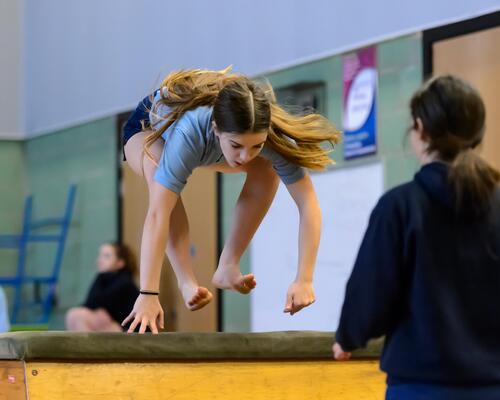
Offering new and unconventional forms of movement, from immersive studio experiences to Parkour and obstacle courses and from dance sessions to mixed-reality activities, gives more children the space to find what they enjoy most and, crucially, something they want to come back to. It’s being active, not the activity, that matters most.
Alongside this, building supportive communities where all participants can feel included and valued is essential. Our Youth Sports Trust programmes focus on creating environments where children of all abilities feel encouraged and able to take part and we would encourage all health and fitness operators to embed this ethos in everything they do for this cohort.
Engaging young people
Ahead of the Olympic Games in LA in 2028, at the Youth Sport Trust we’re now working with schools across the country, with Pentathlon GB and with British Obstacle Sports, to explore how obstacle-style activity can be introduced and trialled within their settings. The early signs are exciting and it’s clear that this type of activity could play a powerful role in engaging young people in movement over the coming years.
Members of Gen Alpha also care about the world around them. Many have grown up learning about climate change and sustainability and they see these values reflected online through influencers and campaigns. Offering outdoor activities, programmes in natural spaces, or initiatives that promote sustainable behaviour can resonate strongly with them. For example, our work with Sail GP demonstrates the power of combining physical activity with environmental awareness, allowing children to feel connected to nature while also being active.
At the same time, each child and community has unique motivations. Understanding local interests and tailoring programmes accordingly is far more effective than a blanket approach.
The best way to engage Gen Alpha is to listen to them. Don’t assume you know what they want. Involve and empower them in shaping the activities you offer. This generation wants to be heard and they need to know that their ideas and opinions matter and that they can influence what happens.
In our own programmes, we see engagement is at its strongest when they’re co-created with young people. When they see that their input makes a real difference, they’re far more likely to get involved, stay motivated and enjoy being active.

"Simply doing things the way they’ve always been done won’t capture the attention of those young people who are already disengaged"
Vicci Wells is assistant director of children and young people at the Youth Sports Trust
Editor's letter
HCM People
HCM People

Interview

Sponsored

Talking point
Supplier Showcase

Research
Insight
Show preview
Insight
Specifier
Specifier

Research


























Generation Alpha is the first to grow up fully immersed in digital environments and as a result, technology is playing a major role in shaping their lifestyles. The Youth Sports Trust’s recent Class of 2035 report, produced in partnership with research agency Savanta, shows that more than a third of young people currently spend three hours or more per day on screens and – based on current trends – this is likely to grow.
This screen time often replaces active play, reducing the time spent outdoors and limiting spontaneous movement. Compared with previous generations, Gen Alpha’s free time is increasingly sedentary, meaning the traditional routes to staying active, such as playing outside, riding bikes and informal games with friends, are less popular.
While not unique to their generation, common barriers we continue to see affecting girls’ physical activity levels include concerns around body image and self-consciousness. Although our annual Girls Active reports continually finds that girls want to be active, as puberty hits, many report that enjoyment of PE drops significantly and their activity levels suffer as a result.
We see engagement in programmes at its strongest when they’re co-created with young people
We’re also seeing growing disengagement among boys, often driven by a reduced sense of belonging and connection. Much of their social world is now online, which can leave them feeling detached from real-life communities and activities. This lack of connection can dampen their motivation to get involved in physical activity, even when this could offer exactly the social interaction and positive connection they need.
Other barriers include accessibility and a lack of inclusive options. Children who feel they’re not sporty or don’t fit into traditional structures of provision often disengage early, creating habits of inactivity that can persist into adolescence.
Successful engagement
To engage Gen Alpha, the key is to rethink old approaches. Simply doing things the way they’ve always been done won’t capture the attention of those young people who are already disengaged. Instead, we need to be trying new ways to make movement exciting, relevant, and fun.
Despite some of the challenges it causes, technology can also provide powerful positive tools if we consider effective and healthy ways to integrate it. Gamified fitness apps, virtual challenges, progress tracking, and interactive experiences can harness Gen Alpha’s love of technology while promoting movement.
This generation is increasingly drawn to gamified, skill-based, and social forms of movement, and they respond particularly well to activities that feel like games, with goals, levels, challenges and visible progress built in.
Offering new and unconventional forms of movement, from immersive studio experiences to Parkour and obstacle courses and from dance sessions to mixed-reality activities, gives more children the space to find what they enjoy most and, crucially, something they want to come back to. It’s being active, not the activity, that matters most.
Alongside this, building supportive communities where all participants can feel included and valued is essential. Our Youth Sports Trust programmes focus on creating environments where children of all abilities feel encouraged and able to take part and we would encourage all health and fitness operators to embed this ethos in everything they do for this cohort.
Engaging young people
Ahead of the Olympic Games in LA in 2028, at the Youth Sport Trust we’re now working with schools across the country, with Pentathlon GB and with British Obstacle Sports, to explore how obstacle-style activity can be introduced and trialled within their settings. The early signs are exciting and it’s clear that this type of activity could play a powerful role in engaging young people in movement over the coming years.
Members of Gen Alpha also care about the world around them. Many have grown up learning about climate change and sustainability and they see these values reflected online through influencers and campaigns. Offering outdoor activities, programmes in natural spaces, or initiatives that promote sustainable behaviour can resonate strongly with them. For example, our work with Sail GP demonstrates the power of combining physical activity with environmental awareness, allowing children to feel connected to nature while also being active.
At the same time, each child and community has unique motivations. Understanding local interests and tailoring programmes accordingly is far more effective than a blanket approach.
The best way to engage Gen Alpha is to listen to them. Don’t assume you know what they want. Involve and empower them in shaping the activities you offer. This generation wants to be heard and they need to know that their ideas and opinions matter and that they can influence what happens.
In our own programmes, we see engagement is at its strongest when they’re co-created with young people. When they see that their input makes a real difference, they’re far more likely to get involved, stay motivated and enjoy being active.
"Simply doing things the way they’ve always been done won’t capture the attention of those young people who are already disengaged"
Vicci Wells is assistant director of children and young people at the Youth Sports Trust
Editor's letter
HCM People
HCM People
Interview
Sponsored
Talking point
Supplier Showcase
Research
Insight
Show preview
Insight
Specifier
Specifier
Research