













Follow Health Club Management on Twitter Like Health Club Management on Facebook Join the discussion with Health Club Management on LinkedIn
FITNESS, HEALTH, WELLNESS

features

CSR: Doing social good

Does your business look beyond profit to embrace a more socially conscious agenda? Ray Algar reports on the findings of his new Fitness Sector Social Good Report

By Ray Algar, Gymtopia | Published in Health Club Management 2014 issue 5
The fitness industry has an incredibly strong social purpose: to help others. But it seems to forget about this and sees people as numbers

The Fitness Sector Social Good Report explores the idea that a business with a purpose beyond maximising self-interests can ensure long-term relevance with stakeholders, creating a more valued and sustainable organisation.

This report is written with the private fitness sector in mind, because the pursuit of profit is very often a key measure of how they keep score. The public and third sectors, by contrast, measure themselves by the social impact they create in their communities, while conscious of ensuring financial sustainability. However, all organisations in the fitness sector, however they may be legally constituted, have a fundamental obligation to inspire people to live more active, healthier lives and to pursue this purpose in a responsible, authentic and compassionate way.

The report is structured around eight themes: purposeful, responsible, authentic, generous, compassionate, connected, collaborative and influential. We will take a look at each of these themes in turn, and what they mean for your business.

Purposeful
When I discover a new and interesting new business, there are normally two things I immediately want to understand. First, what the business makes – its product. Then I want to know the founder’s back story: why did they start the business and what’s the big idea that’s fuelling it? Understanding its purpose – the shared understanding of the reason why the business exists – is the filter I use to help me decide if I’m going to care about this business. Remember, if I care, I’m inclined to share the organisation’s story with my friends and contacts. I believe clarity of purpose matters, because it unites people and drives actions.

As Nikos Mourkogiannis, global expert in strategic leadership, says: “Purpose is a reason for doing something that appeals to a person’s sense of what is right and what is worthwhile. So it creates a sense of obligation. Business purpose is the most powerful but least leveraged weapon in leadership.”

There are four distinct types of business purpose. The first is Heroism – driving the standards for the world to follow (Facebook, Zipcar). The second is Excellence – providing the best possible product or service, with an insatiable pursuit of ever-higher standards (Apple, Lego). Then there’s Discovery – a love of the new and innovative, where the founders are often intellectually curious and have a desire to re-invent industries (Twitter, Samsung). Finally, there’s Altruism – serving the needs of other people (Disney, Kickstarter).

The fitness sector is driven by an altruistic purpose. However, some external industry observers see a contradiction. Giles Gibbons, CEO of Good Business, comments: “What’s interesting about the fitness industry is that it has an incredibly strong social purpose: to help others. One that’s well understood by the general public. It’s a fantastic place to start and actually quite rare. I think the challenge for the fitness industry is that it seems to forget about this and sees people as numbers, thinking of it as a cost-driven business. As a result, I don’t think it’s achieving the aspiration, the loyalty and the warmth it should have from such an important societal function.”

So consider this… What does your organisation fundamentally stand for? Is your organisation creating a legacy that will be long remembered?

Responsible
In 1970, Milton Friedman, the Nobel prize-winning economist, wrote a famous essay in the New York Times magazine entitled ‘The Social Responsibility of Business is to Increase its Profits’.

More than 44 years have since passed and the world of business is now very different, with the ‘responsibilities’ of business arguably far more complex to define (Figure 1). Now, a growing number of businesses routinely invest in social and environmental projects that may seem well outside the scope of their core business activity.

For example, over this past winter, Innocent Drinks encouraged people across the UK to knit little woollen hats to adorn the tops of their smoothie bottles. The company donated 25 pence to the charity Age UK each time a bottle with a hat was sold. The motivation was to try and reduce the number of old and frail people dying from the cold weather in England and Wales. So what’s the connection between a business that liquidises fruit and an elderly person who has never purchased a smoothie? It seems as though many businesses are fundamentally redefining their role in society, which is reshaping their perspective of who is a stakeholder.

So consider this… How much clarity is there in your organisation about core responsibilities? Would a neutral person conclude that your organisation’s terms of business are transparent, fair and reasonable?

Authentic
‘Authentic’ means to be real or genuine. In a business context, it translates to: ‘This is who we are and this is what we stand for. Please come and join us if this matters to you as well.’ When an individual and a business do genuinely connect, there’s a meeting of both heart and mind. Customers become enthusiastic advocates who just love talking about your organisational story.

I believe an authentic business has many different facets or characteristics (see Figure 2).

So what’s your organisation’s story? Do you have one, and would it captivate a room full of strangers? This matters, because a remarkable story has the potential to rapidly spread through a person’s network – and networks today are larger and more efficient than at any other time in the history of humanity. Organisations with a remarkable story will get more mentions on social networks, powered by an individual’s passion and excitement to inform others. This means they spend less on paid advertising trying to convince others to ‘like’ them.

So consider this… Does your organisation have a compelling story that spreads far beyond your geographic boundaries? How good is your organisation at proving the difference it makes to the lives of customers?

Generous
Organisations need to have a reputation for authentic generosity if they’re to remain relevant to their stakeholders. Throwing out a few scraps of charity once a quarter is neither credible nor sufficient: it smells of putting the interests of the business first, especially when the press release is rushed out, talking more about the act itself while lacking proof of results and the difference made.

So is your business a ‘net giver’ or ‘net taker’, because communities will care if your club is perceived as the former. What is a ‘net giver’? Put simply, it’s a club that, over the course of time, gives more to its community than it takes out. A business never wants to have a reputation for being a ‘net taker’, as it’s a label that’s very hard to shrug off.

As Thomas Kolster said in his book Goodvertising: “Generosity can be a clear differentiator in a crowded market. Generosity is a powerful story to tell about a brand and can attract new customers, new suppliers and partnerships.”

So consider this… How generous is your organisation when the press and media aren’t looking? How could a sustained sense of generosity be embedded into your organisation?

Compassionate
Having compassion means feeling concern for the misfortune of others. Together with the feeling, there’s often a strong desire to relieve it.

Compassion comes naturally to organisations whose purpose – the reason the business exists – focuses on serving others. For example, Tata Group – the Indian conglomerate employing 450,000 people in 85 countries – says it exists to “improve the quality of life of the communities we serve”. Jamsetji Tata, the founder of the company, once said: “The community is not just another stakeholder in the business, but in fact the very purpose for its existence.”

Good Business’ Gibbons discusses the idea of organisations showing compassion at the right moment. Unfortunately, the fitness sector has an inconsistent track record in this respect. There are too many cases of members feeling let down when diagnosed with life-threatening conditions, for example, only to discover their gym insists on them fulfilling the full terms of their contract or requesting termination fees. The Office of Fair Trading has been working with the fitness sector for years to improve and simplify cancellation rights, but should it really require the intervention of a regulator to arrive at the compassionate thing to do?

Consider this… What is the typical response from your organisation when a community in which you operate is in need? Do staff within your organisation have the authority to exercise acts of compassion which may require a financial trade-off?

Connected
Being connected is now a perplexing thing, given that more of us are now digitally tethered than ever before. Around the globe, 2.4 billion people are now connected to the internet – that’s one third of the world’s population. Facebook reached the magic number of one billion active monthly users as long ago as October 2012 and Zuckerberg, Facebook’s founder, has said he would like to connect the other six billion too.

So it’s now becoming much easier for organisations to connect with our devices, but getting into our heads and hearts is far more challenging.

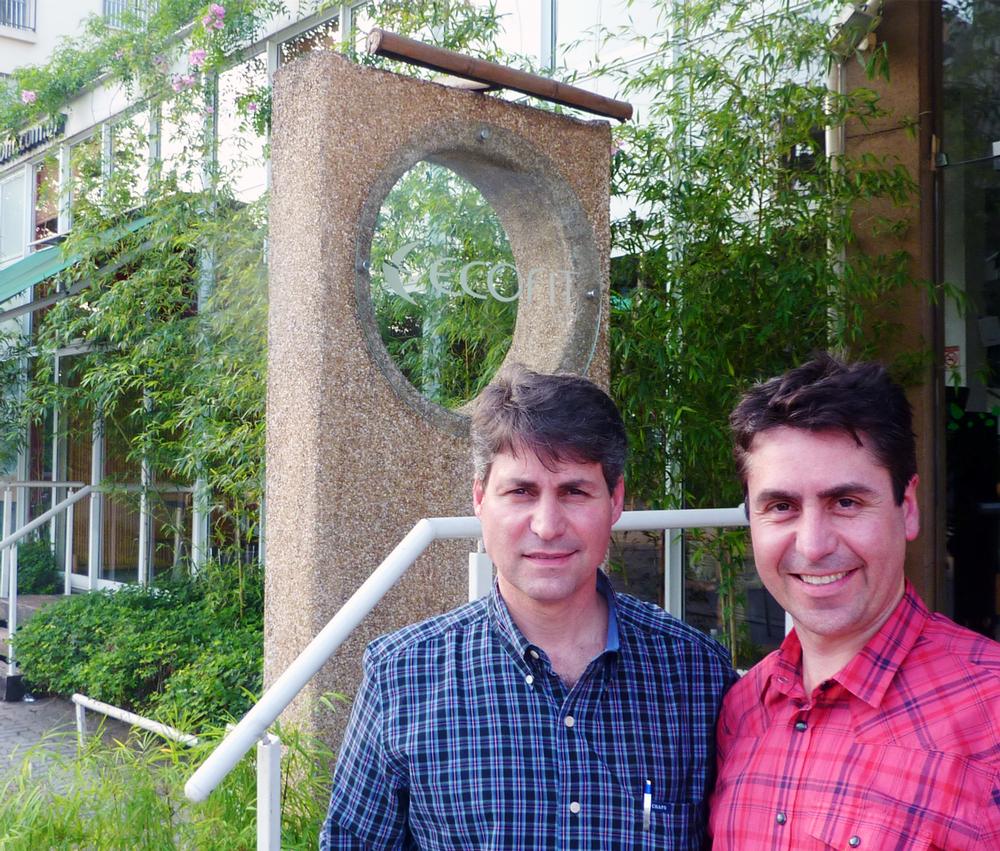
When an individual and a business do genuinely connect, it’s an extraordinary thing. It literally is a meeting of minds. During 2013, I was in Brazil and took the opportunity to visit the remarkable Ecofit club in São Paulo. Opened in 2005 by Antônio and Eduardo Gandra, Ecofit is probably the world’s most environmentally friendly fitness club. The brothers have intelligently combined their passion for the environment and wellbeing into a unique business that members love being a part of. The business has partnerships with Greenpeace Brazil, WWF and 14 other health and environmental organisations. This amazing club feels more like an environmental academy that also happens to be a fitness club. Members love the club and what it stands for.

So consider this… Do you truly understand why customers have chosen to forge a connection with your organisation? Are customers deeply connected to your organisation, or are most only there until something more remarkable comes along?

Collaborative
Organisations that reach out, rather than build from within, feel more relevant to the role that customers and other stakeholders now wish to play. Co-creating is becoming the new normal, whereby customers and organisations collaboratively innovate over the long term. It’s about working with stakeholders to address future challenges and unlock opportunities, giving stakeholders a vested interest.

Take Kiva.org, a remarkable American non-profit organisation with a “mission to connect people through lending to alleviate poverty”. Kiva leverages the web and a worldwide network of microfinance institutions to allow individuals anywhere to lend as little as US$25. These micro-loans support people wishing to start or grow a small business in 73 countries. Kiva recently reached US$500m (£307m) in loans made by its community of one million micro-lenders. Collaborative projects like Kiva are very exciting on so many levels: they allow anyone, anywhere with access to the web, to participate in solving social inequalities.

So consider this… Does your organisation possess a ‘we know best’ mindset, or does it collaborate with its customers? How many different ways does your organisation encourage a continuous conversation and feedback with stakeholders around service innovation?

Influential
The marketing team of one of the UK’s leading health club businesses is very excited as they recently reached 100,000 ‘likes’ on Facebook. It’s been a long journey of ‘nudging’ – ‘like’ our page and receive a free one-day gym pass – but in March the milestone was reached. So it’s official: according to Facebook, they’re one of the most popular gym brands in the country.

Of course, it feels good to be ‘popular’, but it’s influence that really matters. Popularity can be bought or faked, whereas influence is earned and authentic. Popular businesses do not necessarily have the authority to move people; influential ones do. Influence is the capacity to affect the way that people think and behave, and this only occurs if they believe in your organisation, loving what the organisation stands for and the way it’s championing a better future for others.

As fitness businesses grow in size, some begin to potentially accumulate greater levels of influence, which may not at first be apparent. Virgin Active, for example, now has more than 1.2 million global members in seven countries, while Planet Fitness, the American low-cost gym brand, has more than five million, equivalent to the population of Norway. Add to this employees, suppliers and other stakeholders, and you have businesses with the potential to create dramatic social impact – provided they’re motivated to harness it. This means more than improving the lives of members: it means the mobilisation of all stakeholders to enrich the lives of other, less fortunate people.

So consider this… Does your organisation pursue popularity or influence? Does your organisation possess sufficient influence to affect the way that people think and behave?

Pieces of the same puzzle
My report has focused on eight themes because they all seem so inter-connected. How can an organisation be socially responsible if its purpose is unclear? How can it be influential if it’s not authentic and connected?

What the recent global economic crisis has shown us is that the pursuit of a narrow and self-serving agenda is unsustainable and simply unfair. It may work for an organisation in the short term, but at some point Twitter will realise there’s an injustice taking place and its 241 million active users will get to work to right the wrong.

Figure 1: Multiple responsibilities of a modern business
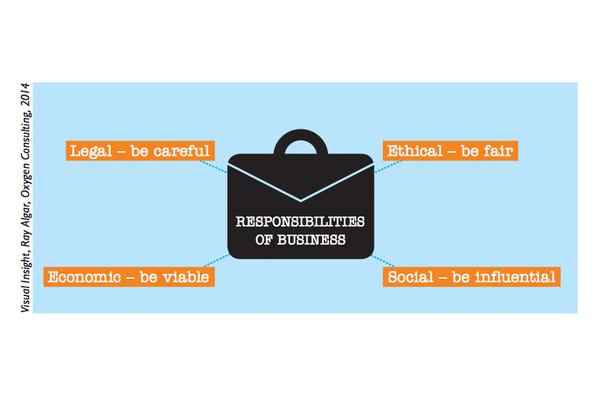
Figure 1
Figure 1

Figure 2: Characteristics of an authentic business
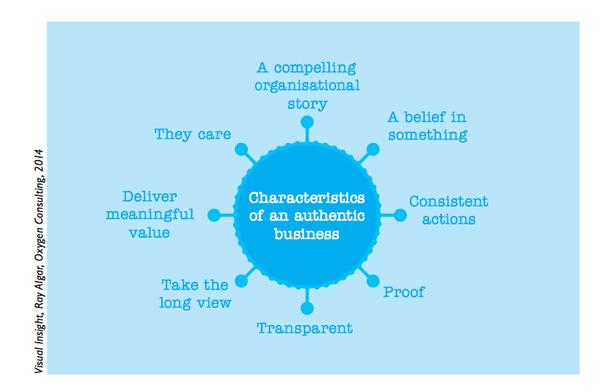
Figure 2
Figure 2

Ray Algar is managing director of Oxygen Consulting, a company that provides strategic business insights for organisations connected to the global health and fitness industry. He recently founded Gymtopia, a digital platform that shares stories about how the fitness industry is creating positive social impact in communities around the world – see p50.
Download a complimentary copy of the Fitness Sector Social Good Report:
http://bit.ly/SocialGoodReport

Sign up here to get HCM's weekly ezine and every issue of HCM magazine free on digital.
Ray Algar reports on the findings of his new Fitness Sector Social Good Report
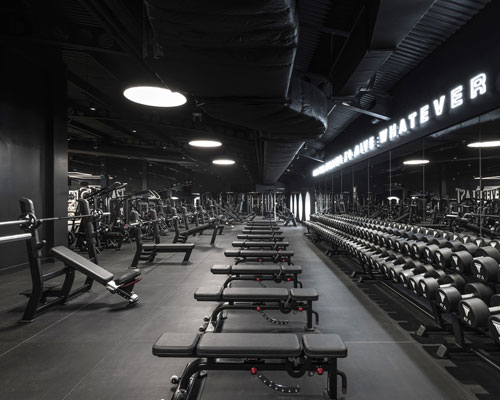
By mobilising their members and other stakeholders, gyms have an opportunity to have a real impact on their communities / photo: shutterstock.com/ Deklofenak
The Gandra brothers’ gym in Brazil: “Probably the world’s most eco-friendly”
Kiva’s micro-loans are changing lives
https://www.leisureopportunities.co.uk/images/HCM2014_5social.jpg
Does your business look beyond profit to deliver a more socially-conscious agenda? Ray Algar outlines the findings of his new report
Ray Algar, Managing director of Oxygen Consulting,The Social Good Report, socially-conscious, Ray Algar, corporate social responsibility, Kiva, Ecofit
HCM magazine
As the entrepreneur who started Wexer, Fresh Fitness, Fitness DK and Repeat, as well as being a former elite athlete, Rasmus Ingerslev’s life looked perfect from the outside, but onthe inside it was a different story. He talks to Kath Hudson about healing old wounds
HCM magazine
I experienced a blissful feeling of joy I hadn’t felt since I was a kid
HCM magazine
Raphael Cuomo explores the powerful link between addiction, health and behaviour change
HCM magazine
Collaborations with the medical profession and greater aspirations around wellbeing are creating a need for more experts in our sector. It’s time to reboot our thinking around the workforce
HCM magazine
Strength training is evolving, driven by changing consumer preferences. Julie Cramer talks to innovators about how their products are meeting this demand
HCM promotional features
Sponsored
Find out how your gym can tap into the corporate wellness boom
HCM promotional features
Sponsored
Starpool supports Olympic champion Marcell Jacobs, says Riccardo Turri
HCM promotional features
Sponsored
SnowDome Fitness has added 50 per cent more space with cutting-edge Technogym solutions
HCM promotional features
Sponsored
David Lloyd is stepping up its commitment to women’s health as it continues to explore what fit-for-purpose looks like for the female population
HCM promotional features
Sponsored
Third Space partnered with IndigoFitness to deliver a bespoke training space for its new club at The Whiteley
HCM promotional features
Sponsored
Greg Bradley looks at the shift towards strength training in gyms and advises on how operators can create the ultimate training environment
HCM promotional features
Sponsored
EGYM has opened a new HQ in Paternoster Square, London and revealed a range of new launches
HCM promotional features
Sponsored
The industry is embracing consumer-facing tech. Now it’s time to streamline back-of-house systems with Orbit4, says Daniel Jones
HCM promotional features
Promotion
Performance Health Systems, manufacturer of Power Plate, has a new CEO, with an ambitious vision for the company
HCM promotional features
Latest News
People taking GLP-1 weight loss medications such as Ozempic, Wegovy, Mounjaro and Zepbound may be ...
Latest News
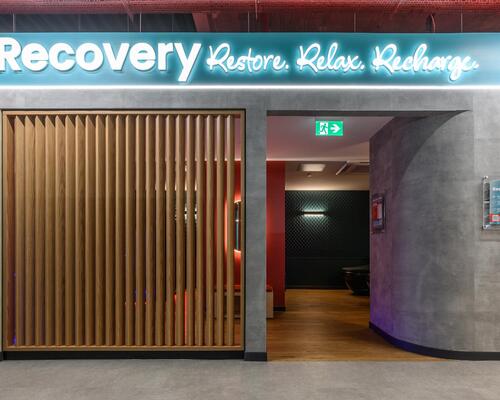
Low-cost gym operator, PureGym, is trialling recovery zones at two of its UK sites, democratising ...
Latest News
In a milestone moment, mental health has become a core part of CIMSPA’s occupational professional ...
Latest News
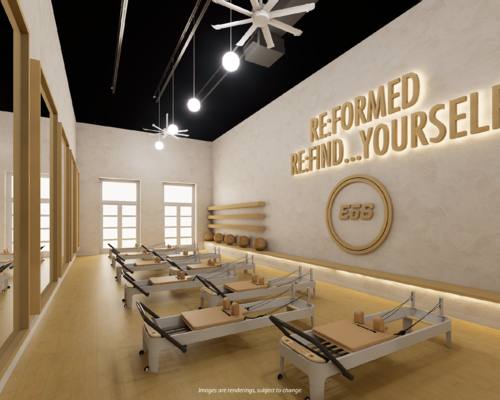
US high-value, low-price chain, Eos Fitness, has announced plans to pilot reformer Pilates in three ...
Latest News
Preventive healthcare company Neko Health has added body composition analysis to its full-body health scan ...
Latest News
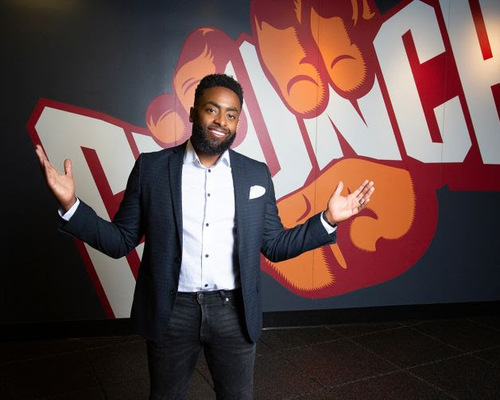
Chequan Lewis is the new CEO of Crunch Fitness, taking over from Jim Rowley, who ...
Latest News
Sea Lanes Canary Wharf has officially opened. The 50-metre, six-lane pool, which uses the natural ...
Latest News
London-based high-performance fitness club, ONE LDN, is raising funds for a multi-site expansion across London, ...
Opinion
promotion
Strength training has moved from the margins to the mainstream.
Opinion: Building smarter strength spaces for today’s operators
Featured supplier news
Featured supplier news: CoverMe extends matching service to personal training, rewriting how members and personal trainers connect
CoverMe, the global leader in fitness workforce management, today launches CoverMe PT, an on-demand personal training platform that connects the right personal trainer to the right client in under 10 seconds.
Featured supplier news
Featured supplier news: Reaching the people most gyms miss: Bedford Gym & Swim Campaign delivers 410 new members
One of the biggest mistakes the fitness industry still makes is advertising almost exclusively to people who already look and live like gym members.
Company profiles
Company profile: CET CryoSpas
CET have developed ice baths specifically for the fitness and wellness sectors in addition to ...
Company profiles
Company profile: Balanced Body
Founded nearly 50 years ago, Balanced Body works with the highest quality materials, and pride ...
Supplier Showcases
Supplier Showcase - From nightclub to health club
Supplier Showcases
Supplier Showcase - Future-proofing
Catalogue Gallery
Click on a catalogue to view it online
Featured press releases
Swim England press release: Swim England launches new Learn to Swim Growth Plan to support aquatic programme expansion
Swim England has strengthened its sector-leading Business Solutions offer with the launch of its Learn to Swim Growth Plan, designed to help aquatic providers unlock sustainable programme growth.
Featured press releases
CoverMe Ltd press release: CoverMe and Jobs In. Fitness partner to create end-to-end talent solution
CoverMe, the UK’s leading fitness workforce management and recruitment platform, has partnered with Jobs In. Fitness, the specialist executive search and advisory firm for the fitness and wellbeing sector, to give operators a single route to talent at every level – from frontline staffing to C-suite.
Directory
Fitness tracking platform
SpiviTech: Fitness tracking platform
Industrial washing machines
Miele Company Limited: Industrial washing machines
Spa and beauty equipment
Living Earth Crafts: Spa and beauty equipment
Water experiences and hydrotherapy solutions
Aquaform s.r.l.: Water experiences and hydrotherapy solutions
Lockers
Crown Sports Lockers: Lockers
Hot tubs
MSpa International Ltd: Hot tubs
Property & Tenders
Stratford, East London.
Lee Valley Regional Park Authority
Property & Tenders
Y Felinheli, LL56 4QN
Newmark
Property & Tenders
Diary dates
21-24 Sep 2026
The Langham Huntington Pasadena , Pasadena, United States
Diary dates
06-08 Oct 2026
Messe Stuttgart, Stuttgart, Germany
Diary dates
22-22 Oct 2026
QEII Conference Centre, London,
Diary dates
26-29 Oct 2027
Koelnmesse Exhibition Centre, Cologne, Germany
Diary dates

features

CSR: Doing social good

Does your business look beyond profit to embrace a more socially conscious agenda? Ray Algar reports on the findings of his new Fitness Sector Social Good Report

By Ray Algar, Gymtopia | Published in Health Club Management 2014 issue 5
The fitness industry has an incredibly strong social purpose: to help others. But it seems to forget about this and sees people as numbers

The Fitness Sector Social Good Report explores the idea that a business with a purpose beyond maximising self-interests can ensure long-term relevance with stakeholders, creating a more valued and sustainable organisation.

This report is written with the private fitness sector in mind, because the pursuit of profit is very often a key measure of how they keep score. The public and third sectors, by contrast, measure themselves by the social impact they create in their communities, while conscious of ensuring financial sustainability. However, all organisations in the fitness sector, however they may be legally constituted, have a fundamental obligation to inspire people to live more active, healthier lives and to pursue this purpose in a responsible, authentic and compassionate way.

The report is structured around eight themes: purposeful, responsible, authentic, generous, compassionate, connected, collaborative and influential. We will take a look at each of these themes in turn, and what they mean for your business.

Purposeful
When I discover a new and interesting new business, there are normally two things I immediately want to understand. First, what the business makes – its product. Then I want to know the founder’s back story: why did they start the business and what’s the big idea that’s fuelling it? Understanding its purpose – the shared understanding of the reason why the business exists – is the filter I use to help me decide if I’m going to care about this business. Remember, if I care, I’m inclined to share the organisation’s story with my friends and contacts. I believe clarity of purpose matters, because it unites people and drives actions.

As Nikos Mourkogiannis, global expert in strategic leadership, says: “Purpose is a reason for doing something that appeals to a person’s sense of what is right and what is worthwhile. So it creates a sense of obligation. Business purpose is the most powerful but least leveraged weapon in leadership.”

There are four distinct types of business purpose. The first is Heroism – driving the standards for the world to follow (Facebook, Zipcar). The second is Excellence – providing the best possible product or service, with an insatiable pursuit of ever-higher standards (Apple, Lego). Then there’s Discovery – a love of the new and innovative, where the founders are often intellectually curious and have a desire to re-invent industries (Twitter, Samsung). Finally, there’s Altruism – serving the needs of other people (Disney, Kickstarter).

The fitness sector is driven by an altruistic purpose. However, some external industry observers see a contradiction. Giles Gibbons, CEO of Good Business, comments: “What’s interesting about the fitness industry is that it has an incredibly strong social purpose: to help others. One that’s well understood by the general public. It’s a fantastic place to start and actually quite rare. I think the challenge for the fitness industry is that it seems to forget about this and sees people as numbers, thinking of it as a cost-driven business. As a result, I don’t think it’s achieving the aspiration, the loyalty and the warmth it should have from such an important societal function.”

So consider this… What does your organisation fundamentally stand for? Is your organisation creating a legacy that will be long remembered?

Responsible
In 1970, Milton Friedman, the Nobel prize-winning economist, wrote a famous essay in the New York Times magazine entitled ‘The Social Responsibility of Business is to Increase its Profits’.

More than 44 years have since passed and the world of business is now very different, with the ‘responsibilities’ of business arguably far more complex to define (Figure 1). Now, a growing number of businesses routinely invest in social and environmental projects that may seem well outside the scope of their core business activity.

For example, over this past winter, Innocent Drinks encouraged people across the UK to knit little woollen hats to adorn the tops of their smoothie bottles. The company donated 25 pence to the charity Age UK each time a bottle with a hat was sold. The motivation was to try and reduce the number of old and frail people dying from the cold weather in England and Wales. So what’s the connection between a business that liquidises fruit and an elderly person who has never purchased a smoothie? It seems as though many businesses are fundamentally redefining their role in society, which is reshaping their perspective of who is a stakeholder.

So consider this… How much clarity is there in your organisation about core responsibilities? Would a neutral person conclude that your organisation’s terms of business are transparent, fair and reasonable?

Authentic
‘Authentic’ means to be real or genuine. In a business context, it translates to: ‘This is who we are and this is what we stand for. Please come and join us if this matters to you as well.’ When an individual and a business do genuinely connect, there’s a meeting of both heart and mind. Customers become enthusiastic advocates who just love talking about your organisational story.

I believe an authentic business has many different facets or characteristics (see Figure 2).

So what’s your organisation’s story? Do you have one, and would it captivate a room full of strangers? This matters, because a remarkable story has the potential to rapidly spread through a person’s network – and networks today are larger and more efficient than at any other time in the history of humanity. Organisations with a remarkable story will get more mentions on social networks, powered by an individual’s passion and excitement to inform others. This means they spend less on paid advertising trying to convince others to ‘like’ them.

So consider this… Does your organisation have a compelling story that spreads far beyond your geographic boundaries? How good is your organisation at proving the difference it makes to the lives of customers?

Generous
Organisations need to have a reputation for authentic generosity if they’re to remain relevant to their stakeholders. Throwing out a few scraps of charity once a quarter is neither credible nor sufficient: it smells of putting the interests of the business first, especially when the press release is rushed out, talking more about the act itself while lacking proof of results and the difference made.

So is your business a ‘net giver’ or ‘net taker’, because communities will care if your club is perceived as the former. What is a ‘net giver’? Put simply, it’s a club that, over the course of time, gives more to its community than it takes out. A business never wants to have a reputation for being a ‘net taker’, as it’s a label that’s very hard to shrug off.

As Thomas Kolster said in his book Goodvertising: “Generosity can be a clear differentiator in a crowded market. Generosity is a powerful story to tell about a brand and can attract new customers, new suppliers and partnerships.”

So consider this… How generous is your organisation when the press and media aren’t looking? How could a sustained sense of generosity be embedded into your organisation?

Compassionate
Having compassion means feeling concern for the misfortune of others. Together with the feeling, there’s often a strong desire to relieve it.

Compassion comes naturally to organisations whose purpose – the reason the business exists – focuses on serving others. For example, Tata Group – the Indian conglomerate employing 450,000 people in 85 countries – says it exists to “improve the quality of life of the communities we serve”. Jamsetji Tata, the founder of the company, once said: “The community is not just another stakeholder in the business, but in fact the very purpose for its existence.”

Good Business’ Gibbons discusses the idea of organisations showing compassion at the right moment. Unfortunately, the fitness sector has an inconsistent track record in this respect. There are too many cases of members feeling let down when diagnosed with life-threatening conditions, for example, only to discover their gym insists on them fulfilling the full terms of their contract or requesting termination fees. The Office of Fair Trading has been working with the fitness sector for years to improve and simplify cancellation rights, but should it really require the intervention of a regulator to arrive at the compassionate thing to do?

Consider this… What is the typical response from your organisation when a community in which you operate is in need? Do staff within your organisation have the authority to exercise acts of compassion which may require a financial trade-off?

Connected
Being connected is now a perplexing thing, given that more of us are now digitally tethered than ever before. Around the globe, 2.4 billion people are now connected to the internet – that’s one third of the world’s population. Facebook reached the magic number of one billion active monthly users as long ago as October 2012 and Zuckerberg, Facebook’s founder, has said he would like to connect the other six billion too.

So it’s now becoming much easier for organisations to connect with our devices, but getting into our heads and hearts is far more challenging.

When an individual and a business do genuinely connect, it’s an extraordinary thing. It literally is a meeting of minds. During 2013, I was in Brazil and took the opportunity to visit the remarkable Ecofit club in São Paulo. Opened in 2005 by Antônio and Eduardo Gandra, Ecofit is probably the world’s most environmentally friendly fitness club. The brothers have intelligently combined their passion for the environment and wellbeing into a unique business that members love being a part of. The business has partnerships with Greenpeace Brazil, WWF and 14 other health and environmental organisations. This amazing club feels more like an environmental academy that also happens to be a fitness club. Members love the club and what it stands for.

So consider this… Do you truly understand why customers have chosen to forge a connection with your organisation? Are customers deeply connected to your organisation, or are most only there until something more remarkable comes along?

Collaborative
Organisations that reach out, rather than build from within, feel more relevant to the role that customers and other stakeholders now wish to play. Co-creating is becoming the new normal, whereby customers and organisations collaboratively innovate over the long term. It’s about working with stakeholders to address future challenges and unlock opportunities, giving stakeholders a vested interest.

Take Kiva.org, a remarkable American non-profit organisation with a “mission to connect people through lending to alleviate poverty”. Kiva leverages the web and a worldwide network of microfinance institutions to allow individuals anywhere to lend as little as US$25. These micro-loans support people wishing to start or grow a small business in 73 countries. Kiva recently reached US$500m (£307m) in loans made by its community of one million micro-lenders. Collaborative projects like Kiva are very exciting on so many levels: they allow anyone, anywhere with access to the web, to participate in solving social inequalities.

So consider this… Does your organisation possess a ‘we know best’ mindset, or does it collaborate with its customers? How many different ways does your organisation encourage a continuous conversation and feedback with stakeholders around service innovation?

Influential
The marketing team of one of the UK’s leading health club businesses is very excited as they recently reached 100,000 ‘likes’ on Facebook. It’s been a long journey of ‘nudging’ – ‘like’ our page and receive a free one-day gym pass – but in March the milestone was reached. So it’s official: according to Facebook, they’re one of the most popular gym brands in the country.

Of course, it feels good to be ‘popular’, but it’s influence that really matters. Popularity can be bought or faked, whereas influence is earned and authentic. Popular businesses do not necessarily have the authority to move people; influential ones do. Influence is the capacity to affect the way that people think and behave, and this only occurs if they believe in your organisation, loving what the organisation stands for and the way it’s championing a better future for others.

As fitness businesses grow in size, some begin to potentially accumulate greater levels of influence, which may not at first be apparent. Virgin Active, for example, now has more than 1.2 million global members in seven countries, while Planet Fitness, the American low-cost gym brand, has more than five million, equivalent to the population of Norway. Add to this employees, suppliers and other stakeholders, and you have businesses with the potential to create dramatic social impact – provided they’re motivated to harness it. This means more than improving the lives of members: it means the mobilisation of all stakeholders to enrich the lives of other, less fortunate people.

So consider this… Does your organisation pursue popularity or influence? Does your organisation possess sufficient influence to affect the way that people think and behave?

Pieces of the same puzzle
My report has focused on eight themes because they all seem so inter-connected. How can an organisation be socially responsible if its purpose is unclear? How can it be influential if it’s not authentic and connected?

What the recent global economic crisis has shown us is that the pursuit of a narrow and self-serving agenda is unsustainable and simply unfair. It may work for an organisation in the short term, but at some point Twitter will realise there’s an injustice taking place and its 241 million active users will get to work to right the wrong.

Figure 1: Multiple responsibilities of a modern business

Figure 1
Figure 1

Figure 2: Characteristics of an authentic business

Figure 2
Figure 2

Ray Algar is managing director of Oxygen Consulting, a company that provides strategic business insights for organisations connected to the global health and fitness industry. He recently founded Gymtopia, a digital platform that shares stories about how the fitness industry is creating positive social impact in communities around the world – see p50.
Download a complimentary copy of the Fitness Sector Social Good Report:
http://bit.ly/SocialGoodReport
Sign up here to get HCM's weekly ezine and every issue of HCM magazine free on digital.
Ray Algar reports on the findings of his new Fitness Sector Social Good Report


By mobilising their members and other stakeholders, gyms have an opportunity to have a real impact on their communities / photo: shutterstock.com/ Deklofenak
The Gandra brothers’ gym in Brazil: “Probably the world’s most eco-friendly”
Kiva’s micro-loans are changing lives
https://www.leisureopportunities.co.uk/images/HCM2014_5social.jpg
Does your business look beyond profit to deliver a more socially-conscious agenda? Ray Algar outlines the findings of his new report

Ray Algar, Managing director of Oxygen Consulting,The Social Good Report, socially-conscious, Ray Algar, corporate social responsibility, Kiva, Ecofit
Latest News
People taking GLP-1 weight loss medications such as Ozempic, Wegovy, Mounjaro and Zepbound may be ...
Latest News
Low-cost gym operator, PureGym, is trialling recovery zones at two of its UK sites, democratising ...
Latest News
In a milestone moment, mental health has become a core part of CIMSPA’s occupational professional ...
Latest News
US high-value, low-price chain, Eos Fitness, has announced plans to pilot reformer Pilates in three ...
Latest News
Preventive healthcare company Neko Health has added body composition analysis to its full-body health scan ...
Latest News
Chequan Lewis is the new CEO of Crunch Fitness, taking over from Jim Rowley, who ...
Latest News
Sea Lanes Canary Wharf has officially opened. The 50-metre, six-lane pool, which uses the natural ...
Latest News
London-based high-performance fitness club, ONE LDN, is raising funds for a multi-site expansion across London, ...
Latest News
A new brain clinic has opened in London, which uses non-invasive brain stimulation to treat ...
Latest News
Good Boost’s digital exercise programmes are helping adults with MSK at a lower cost than ...
Latest News
With Prime Minister, Keir Starmer, announcing his resignation this morning and Andy Burnham as a ...
Opinion
promotion
Strength training has moved from the margins to the mainstream.
Opinion: Building smarter strength spaces for today’s operators
Featured supplier news
Featured supplier news: CoverMe extends matching service to personal training, rewriting how members and personal trainers connect
CoverMe, the global leader in fitness workforce management, today launches CoverMe PT, an on-demand personal training platform that connects the right personal trainer to the right client in under 10 seconds.
Featured supplier news
Featured supplier news: Reaching the people most gyms miss: Bedford Gym & Swim Campaign delivers 410 new members
One of the biggest mistakes the fitness industry still makes is advertising almost exclusively to people who already look and live like gym members.
Company profiles
Company profile: CET CryoSpas
CET have developed ice baths specifically for the fitness and wellness sectors in addition to ...
Company profiles
Company profile: Balanced Body
Founded nearly 50 years ago, Balanced Body works with the highest quality materials, and pride ...
Supplier Showcases
Supplier Showcase - From nightclub to health club
Supplier Showcases
Supplier Showcase - Future-proofing
Catalogue Gallery
Click on a catalogue to view it online
Featured press releases
Swim England press release: Swim England launches new Learn to Swim Growth Plan to support aquatic programme expansion

Swim England has strengthened its sector-leading Business Solutions offer with the launch of its Learn to Swim Growth Plan, designed to help aquatic providers unlock sustainable programme growth.
Featured press releases
CoverMe Ltd press release: CoverMe and Jobs In. Fitness partner to create end-to-end talent solution
CoverMe, the UK’s leading fitness workforce management and recruitment platform, has partnered with Jobs In. Fitness, the specialist executive search and advisory firm for the fitness and wellbeing sector, to give operators a single route to talent at every level – from frontline staffing to C-suite.
Directory
Fitness tracking platform
SpiviTech: Fitness tracking platform
Industrial washing machines
Miele Company Limited: Industrial washing machines
Spa and beauty equipment
Living Earth Crafts: Spa and beauty equipment
Water experiences and hydrotherapy solutions
Aquaform s.r.l.: Water experiences and hydrotherapy solutions
Lockers
Crown Sports Lockers: Lockers
Hot tubs
MSpa International Ltd: Hot tubs
Property & Tenders
Stratford, East London.
Lee Valley Regional Park Authority
Property & Tenders
Y Felinheli, LL56 4QN
Newmark
Property & Tenders
Diary dates
21-24 Sep 2026
The Langham Huntington Pasadena , Pasadena, United States
Diary dates
06-08 Oct 2026
Messe Stuttgart, Stuttgart, Germany
Diary dates
22-22 Oct 2026
QEII Conference Centre, London,
Diary dates
26-29 Oct 2027
Koelnmesse Exhibition Centre, Cologne, Germany
Diary dates
Search news, features & products:
Find a supplier:
Partner sites