















GET HCM
magazine
Sign up for the FREE digital edition of HCM magazine and also get the HCM ezine and breaking news email alerts.
Not right now, thanksclose this window I've already subscribed!
Follow Health Club Management on Twitter Like Health Club Management on Facebook Join the discussion with Health Club Management on LinkedIn
FITNESS, HEALTH, WELLNESS

features

IHRSA interview – Adam Bryant:

The award-winning author and New York Times columnist will discuss the qualities of strong leaders during IHRSA 2015. Jon Feld reports
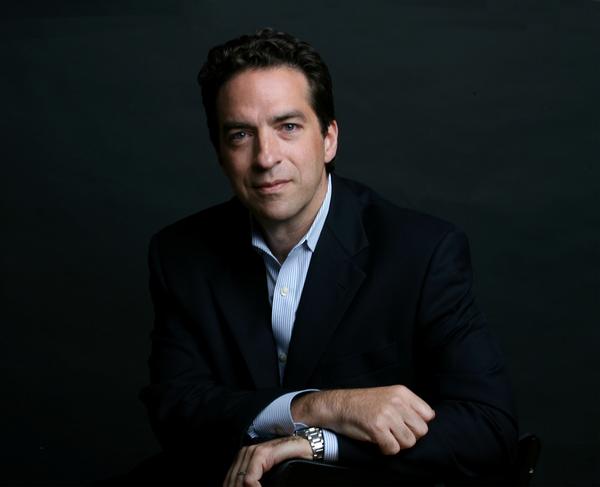
By Jon Feld | Published in Health Club Management 2015 issue 2
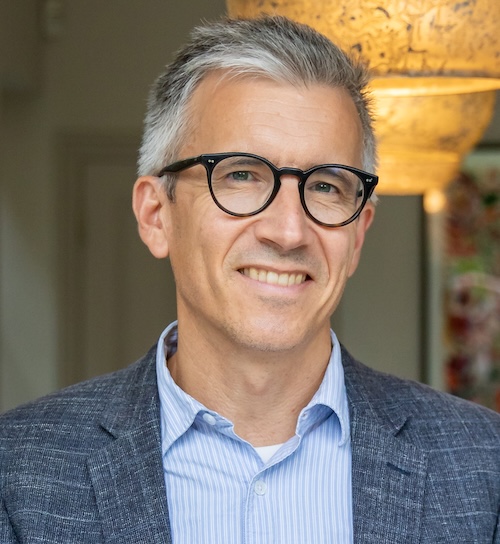
Adam Bryant
Adam Bryant
No CEO can have all the answers, even if that’s the impression they have to convey to customers and investors. Inside the company, their role is to ask smart questions

You’re best known for putting CEOs on the spot in your Corner Office column in The New York Times, but in March you’ll be in the spotlight at IHRSA 2015. Can you give a preview of your keynote?
I’ll be sharing highlights from my most recent book, Quick and Nimble, about leadership and the most important drivers of culture in all sorts of organisations. If these factors are managed well, they can have an outsized positive impact, but conversely, if overlooked or handled badly, they can have an outsized negative impact.

When you conduct your interviews for Corner Office, do your subjects find the process prompts them to contemplate themselves and their roles more deeply?
Yes. In fact, I’ve had a lot of CEOs tell me that, during the interview, they found themselves connecting the dots in their own lives. I ask them questions about such things as when they were younger, their parents, first management positions and so on, and sometimes the light bulb goes on, mid-interview, about the impact those early experiences and influences have had.

Might it be useful for clubs to employ a Corner Office-type process to make managers more aware of their strengths and weaknesses?
You know, it might. Over the years, I’ve received a lot of feedback from executives who’ve used my interviews to encourage forthright discussion in companies. The themes I touch on are universal, so they’re applicable to all sizes of firm, and to non-profit as well as for-profit organisations.

One of the interesting insights uncovered by your column is that, in quantifying performance, successful leaders focus on just three or even fewer metrics. Can you offer an example of a CEO who does that?
When Shivan Subramaniam was the CEO of FM Global – a global insurance firm based in Johnston, Rhode Island, US – he created a simple scoreboard for everyone in the company. The following is how he described the approach in his own words:
“We call them key result areas or KRAs. We’re multinational – we’ve got 5,100 people, 1,800 of whom are engineers. We’re very analytical, yet we have three KRAs – nothing fancy – and everybody focuses on them: profitability, retention of existing clients, and attracting new clients.

“You can talk to (our) people in San Francisco, Sydney or Singapore, and they’ll know what the three KRAs are. All of our incentive plans are designed around our KRAs, and every one of those KRAs is very transparent. Our employees know how we’re doing. And, most importantly, they understand them, whether they’re a senior manager or a file clerk. They know that, ‘If I do this, it helps this KRA in this manner’.”

You stress the importance of ‘adult conversations’ – but speaking openly can be difficult, especially if someone’s performance or job seems to be in question. Why are candid conversations so important?
A lot of people go out of their way to avoid difficult conversations at work. I’ve avoided my share of them myself. After all, they’re stressful. You don’t know how people are going to react. And we’d all rather have pleasant conversations than tough ones.
But sweeping issues under the rug doesn’t make them go away, and unaddressed they can fester and lead to even poorer performance. Often, some sort of misunderstanding lies at the heart of the problem, and once you’ve identified and worked through it, people feel energised. The key is just initiating the conversation.

In Quick and Nimble, you also stress the importance of a simple mindset. What exactly does that mean, and how is it helpful to a CEO?
The phrase describes the ability to take a lot of information or complicated ideas and boil them down to their essence – transforming complexity into simplicity.

Anyone can develop a list of 12 priorities for the year, but if you have that many, they’re not really priorities. A simple mindset makes it possible for you to say: “Here’s what matters. Here’s what we’re going to focus on.” And it shouldn’t be more than three things, because as research shows, most people can’t remember more than three things day-to-day.

Simplicity also fosters innovation, because it motivates people to tackle problems and challenges collaboratively. Without priorities, people tend to labour in their own sandboxes.

In your book, you describe two of the other drivers as ‘passionate curiosity’ and ‘team smarts’. What are these?
Curiosity is important because, with the business landscape changing so quickly – and with so many industries grappling with disruptive innovation – no CEO can have all the answers, even if that’s the impression they have to convey to customers and investors. Inside the company, their role is to ask smart questions, so they have to have a relentlessly questioning mind. That’s a characteristic of a lot of the CEOs I interview.

Team smarts involves recognising that the real hierarchy and power structure within an organisation often has little do with official organisational charts. You have to understand who has influence, how to get things done, and be able to read a room – like people’s body language in meetings.

Failure is a common theme in your columns. What role does it play in a CEO’s, or company’s, success?
You have to have a healthy relationship with failure if you’re going to succeed.

The ability to deal with failure is critical to innovation, for instance. You have to create an environment in which people are willing to try new things, and if they don’t work out, to wring insights and lessons from the experience and then move on quickly. People shouldn’t be penalised for their failures.

Your book tells the whole story, but in a nutshell, if you were to offer the CEO of a health club company your advice on how to be an effective manager and create a healthy, productive culture, what would you tell them?
I put trust and respect at the top of my list of key qualities for effective leaders. You have to be trustworthy in all senses of the word. Meanwhile, the best way to show respect on a consistent basis is to really listen to people. That doesn’t mean you always have to agree with your employees, but they have to feel their input matters. If the CEO practises that behaviour, others will follow.

Next, I think developing a clear and simple scoreboard – similar to Subramaniam’s three KRAs – is important, because it creates a sense of shared mission and fosters teamwork. Without such a simple plan, people find themselves working in silos, and that’s deadly for an organisation.

Third, codifying your company’s values is important too, but the list of values has to be short: three is best, and no more than four. They have to be specific and capture the DNA of the organisation. You have to live by these values every day, and make them part of your hiring – and firing – process. If your club doesn’t live by its stated values, people become cynical.

Does anyone you’ve interviewed in the hospitality or health club industries particularly personify the qualities and skills you feel are conducive to business success?
The person who comes to mind is J W ‘Bill’ Marriott Jr, the executive chair and chair of the board of Marriott International. He shared a particularly memorable insight with me. “The four most important words in the English language are: ‘What do you think?’” he said. “Listen to your people and learn.”

Introducing Adam Bryant

Adam Bryant, 52, has held a number of positions at The New York Times in a wide range of capacities – among them business reporter, deputy business editor, deputy national editor, and senior editor for features. However, he’s best known as the creator of the Corner Office, a widely read weekly column about leadership and management issues, which appears in the print and digital editions of The Times.

Since the column first appeared in 2009, Bryant has mined insights from more than 350 CEOs, which, in turn, has led to two books: The New York Times bestseller The Corner Office: Indispensable and unexpected lessons from CEOs on how to lead and succeed; and Quick and Nimble: Lessons from leading CEOs on how to create a culture of innovation.

In addition to writing The Corner Office, Bryant is a deputy science editor at The Times, overseeing its coverage of the environment and climate change.

Hear more from Adam

Bryant will discuss ‘Quick and Nimble: Lessons from leading CEOs on how to create a culture of innovation’ during IHRSA’s 34th Annual International Convention & Trade Show, which takes place on March 11–14 in Los Angeles, US. His keynote address will take place on Friday 13 March, 9.00–10.30am.

For more information or to register, log on to www.ihrsa.org/convention

This feature first appeared in the January 2015 issue of Club Business International, IHRSA’s magazine for the health and fitness industry.
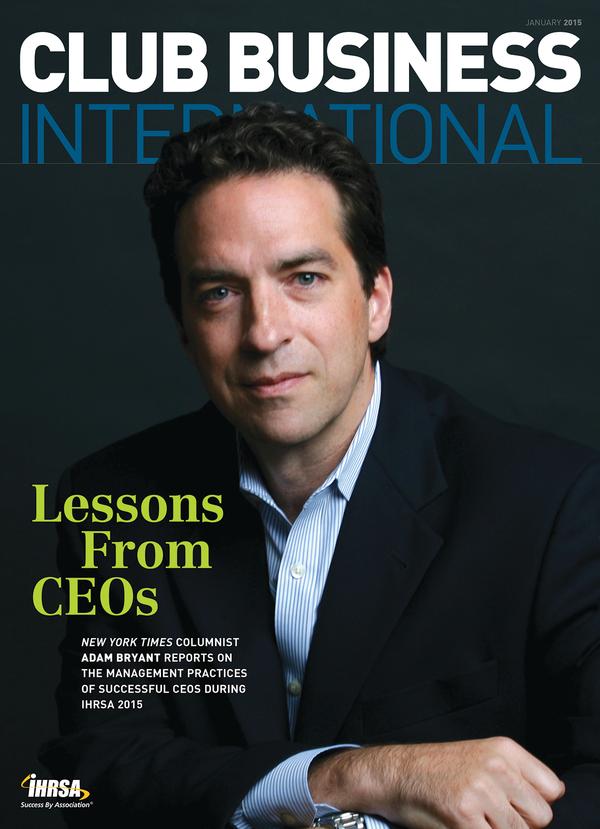

Club Business International
Sign up here to get HCM's weekly ezine and every issue of HCM magazine free on digital.
To quantify performance, you can focus on just three key areas: profitability, retention of existing clients, and attracting new clients / PHOTO: WWW.SHUTTERSTOCK.COM/MAKSYM PORIECHKIN
All staff need to know how their own performance can impact the club’s KRAs / PHOTO: WWW.SHUTTERSTOCK.COM/WAVEBREAKMEDIA
https://www.leisureopportunities.co.uk/images/957764_869944.jpg
The award-winning author and New York Times columnist will discuss the qualities of strong leaders at IHRSA 2015
Adam Bryant, New York Times Jon Feld,Adam Bryant, New York Times, Corner Office, leadership, leader, Jon Feld, IHRSA
HCM magazine
The fitness industry is mourning the passing of Les Mills, a founding father of fitness, as Kath Hudson reports
HCM magazine
HCM People

Shaun Grove

Owner, Stride Fitness
My goal was to invest in where fitness is going, not where it’s already been
HCM magazine
Software suppliers explain how AI, automation and connected digital experiences can work for the good of operators and consumers
HCM magazine
Would you stop selling memberships to prevent your club getting overcrowded? How do you strike the balance between maximising profits and prioritising the member experience? Kath Hudson talks to the experts
HCM magazine
We’ve reduced the level of council investment over the last three years by 40 per cent and increased our turnover by 9 per cent
HCM promotional features
Sponsored
Social fitness the missing link to member engagement, according to a new Myzone report
HCM promotional features
Sponsored
Third Space partnered with IndigoFitness to deliver a bespoke training space for its new club at The Whiteley
HCM promotional features
Sponsored
Find out how your gym can tap into the corporate wellness boom
HCM promotional features
Sponsored
Greg Bradley looks at the shift towards strength training in gyms and advises on how operators can create the ultimate training environment
HCM promotional features
Sponsored
David Lloyd is stepping up its commitment to women’s health as it continues to explore what fit-for-purpose looks like for the female population
HCM promotional features
Sponsored
Starpool supports Olympic champion Marcell Jacobs, says Riccardo Turri
HCM promotional features
Sponsored
SnowDome Fitness has added 50 per cent more space with cutting-edge Technogym solutions
HCM promotional features
Sponsored
EGYM has opened a new HQ in Paternoster Square, London and revealed a range of new launches
HCM promotional features
Latest News
Everlast Gyms expands its footprint outside of the UK this month with the imminent launch ...
Latest News
The UK's four Chief Medical Officers have published a refreshed edition of  Physical activity guidelines: ...
Latest News
Places Leisure has exchanged contracts to build and operate a flagship £60m water and wellness ...
Latest News
The Republic of Ireland will become the latest market in PureGym’s expanding international portfolio, with ...
Latest News
Sophie Lawler, CEO of Total Fitness, has launched a leadership coaching business aimed at helping ...
Latest News
Anytime Fitness opened more than one club a day in 2025 and is on track ...
Latest News
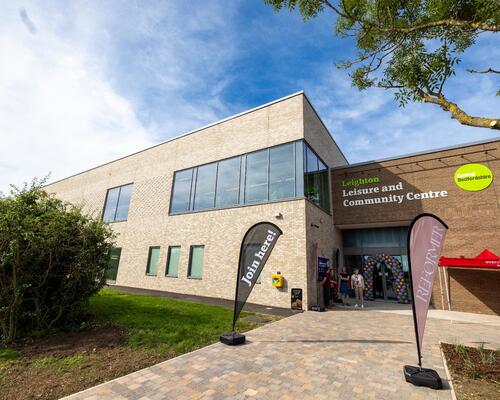
The £33.9 million Leighton Leisure and Community Centre has opened in Leighton Buzzard, UK, creating ...
Latest News
YogaSix, the yoga brand owned by Xponential Fitness, has launched a heated, Pilates-inspired class called ...
Opinion
promotion
Strength training has moved from the margins to the mainstream.
Opinion: Building smarter strength spaces for today’s operators
Featured supplier news
Featured supplier news: Cornerstone Connect helps Active Blackpool tackle health inequalities
Active Blackpool is deploying Cornerstone Connect, a new digital interface allowing disparate information from multiple systems to be aggregated into one dataset, to support its focus on reducing health inequalities and improving healthy life expectancy.
Featured supplier news
Featured supplier news: Legends never die: four legends, four philosophies of life
Panatta brought together four of the most influential figures in bodybuilding history on the stage of RiminiWellness 2026: Phil Heath, Lee Haney, Ronnie Coleman and Hany Rambod.
Company profiles
Company profile: Vor Technologies Ltd
Vor is the world’s most powerful workout generation tool, transforming how fitness businesses deliver personalised ...
Company profiles
Company profile: ukactive
ukactive is the UK’s leading trade body for the physical activity sector, bringing together more ...
Supplier Showcases
Supplier Showcase - From nightclub to health club
Supplier Showcases
Supplier Showcase - Future-proofing
Catalogue Gallery
Click on a catalogue to view it online
Featured press releases
Innerva press release: Wrightcare embeds wellness and active living into next-generation care homes
A care home provider is developing a new generation of care homes where health, wellbeing and active living are embedded into everyday life.
Featured press releases
Alliance Leisure Services (Design, Build and Fund) press release: Studio transformation completed at Burscough Wellbeing and Leisure Hub
Alliance Leisure are proud to have supported West Lancashire Borough Council to deliver a £300,000 studio transformation project at Burscough Wellbeing and Leisure Hub, creating a dedicated group exercise space designed to meet growing demand for fitness
Directory
Spa and beauty equipment
Living Earth Crafts: Spa and beauty equipment
Fitness tracking platform
SpiviTech: Fitness tracking platform
Industrial washing machines
Miele Company Limited: Industrial washing machines
Water experiences and hydrotherapy solutions
Aquaform s.r.l.: Water experiences and hydrotherapy solutions
Hot tubs
MSpa International Ltd: Hot tubs
Lockers
Crown Sports Lockers: Lockers
Property & Tenders
Stratford, East London.
Lee Valley Regional Park Authority
Property & Tenders
Y Felinheli, LL56 4QN
Newmark
Property & Tenders
Diary dates
21-24 Sep 2026
The Langham Huntington Pasadena , Pasadena, United States
Diary dates
06-08 Oct 2026
Messe Stuttgart, Stuttgart, Germany
Diary dates
22-22 Oct 2026
QEII Conference Centre, London,
Diary dates
26-29 Oct 2027
Koelnmesse Exhibition Centre, Cologne, Germany
Diary dates

features

IHRSA interview – Adam Bryant:

The award-winning author and New York Times columnist will discuss the qualities of strong leaders during IHRSA 2015. Jon Feld reports

By Jon Feld | Published in Health Club Management 2015 issue 2
Adam Bryant
Adam Bryant
No CEO can have all the answers, even if that’s the impression they have to convey to customers and investors. Inside the company, their role is to ask smart questions

You’re best known for putting CEOs on the spot in your Corner Office column in The New York Times, but in March you’ll be in the spotlight at IHRSA 2015. Can you give a preview of your keynote?
I’ll be sharing highlights from my most recent book, Quick and Nimble, about leadership and the most important drivers of culture in all sorts of organisations. If these factors are managed well, they can have an outsized positive impact, but conversely, if overlooked or handled badly, they can have an outsized negative impact.

When you conduct your interviews for Corner Office, do your subjects find the process prompts them to contemplate themselves and their roles more deeply?
Yes. In fact, I’ve had a lot of CEOs tell me that, during the interview, they found themselves connecting the dots in their own lives. I ask them questions about such things as when they were younger, their parents, first management positions and so on, and sometimes the light bulb goes on, mid-interview, about the impact those early experiences and influences have had.

Might it be useful for clubs to employ a Corner Office-type process to make managers more aware of their strengths and weaknesses?
You know, it might. Over the years, I’ve received a lot of feedback from executives who’ve used my interviews to encourage forthright discussion in companies. The themes I touch on are universal, so they’re applicable to all sizes of firm, and to non-profit as well as for-profit organisations.

One of the interesting insights uncovered by your column is that, in quantifying performance, successful leaders focus on just three or even fewer metrics. Can you offer an example of a CEO who does that?
When Shivan Subramaniam was the CEO of FM Global – a global insurance firm based in Johnston, Rhode Island, US – he created a simple scoreboard for everyone in the company. The following is how he described the approach in his own words:
“We call them key result areas or KRAs. We’re multinational – we’ve got 5,100 people, 1,800 of whom are engineers. We’re very analytical, yet we have three KRAs – nothing fancy – and everybody focuses on them: profitability, retention of existing clients, and attracting new clients.

“You can talk to (our) people in San Francisco, Sydney or Singapore, and they’ll know what the three KRAs are. All of our incentive plans are designed around our KRAs, and every one of those KRAs is very transparent. Our employees know how we’re doing. And, most importantly, they understand them, whether they’re a senior manager or a file clerk. They know that, ‘If I do this, it helps this KRA in this manner’.”

You stress the importance of ‘adult conversations’ – but speaking openly can be difficult, especially if someone’s performance or job seems to be in question. Why are candid conversations so important?
A lot of people go out of their way to avoid difficult conversations at work. I’ve avoided my share of them myself. After all, they’re stressful. You don’t know how people are going to react. And we’d all rather have pleasant conversations than tough ones.
But sweeping issues under the rug doesn’t make them go away, and unaddressed they can fester and lead to even poorer performance. Often, some sort of misunderstanding lies at the heart of the problem, and once you’ve identified and worked through it, people feel energised. The key is just initiating the conversation.

In Quick and Nimble, you also stress the importance of a simple mindset. What exactly does that mean, and how is it helpful to a CEO?
The phrase describes the ability to take a lot of information or complicated ideas and boil them down to their essence – transforming complexity into simplicity.

Anyone can develop a list of 12 priorities for the year, but if you have that many, they’re not really priorities. A simple mindset makes it possible for you to say: “Here’s what matters. Here’s what we’re going to focus on.” And it shouldn’t be more than three things, because as research shows, most people can’t remember more than three things day-to-day.

Simplicity also fosters innovation, because it motivates people to tackle problems and challenges collaboratively. Without priorities, people tend to labour in their own sandboxes.

In your book, you describe two of the other drivers as ‘passionate curiosity’ and ‘team smarts’. What are these?
Curiosity is important because, with the business landscape changing so quickly – and with so many industries grappling with disruptive innovation – no CEO can have all the answers, even if that’s the impression they have to convey to customers and investors. Inside the company, their role is to ask smart questions, so they have to have a relentlessly questioning mind. That’s a characteristic of a lot of the CEOs I interview.

Team smarts involves recognising that the real hierarchy and power structure within an organisation often has little do with official organisational charts. You have to understand who has influence, how to get things done, and be able to read a room – like people’s body language in meetings.

Failure is a common theme in your columns. What role does it play in a CEO’s, or company’s, success?
You have to have a healthy relationship with failure if you’re going to succeed.

The ability to deal with failure is critical to innovation, for instance. You have to create an environment in which people are willing to try new things, and if they don’t work out, to wring insights and lessons from the experience and then move on quickly. People shouldn’t be penalised for their failures.

Your book tells the whole story, but in a nutshell, if you were to offer the CEO of a health club company your advice on how to be an effective manager and create a healthy, productive culture, what would you tell them?
I put trust and respect at the top of my list of key qualities for effective leaders. You have to be trustworthy in all senses of the word. Meanwhile, the best way to show respect on a consistent basis is to really listen to people. That doesn’t mean you always have to agree with your employees, but they have to feel their input matters. If the CEO practises that behaviour, others will follow.

Next, I think developing a clear and simple scoreboard – similar to Subramaniam’s three KRAs – is important, because it creates a sense of shared mission and fosters teamwork. Without such a simple plan, people find themselves working in silos, and that’s deadly for an organisation.

Third, codifying your company’s values is important too, but the list of values has to be short: three is best, and no more than four. They have to be specific and capture the DNA of the organisation. You have to live by these values every day, and make them part of your hiring – and firing – process. If your club doesn’t live by its stated values, people become cynical.

Does anyone you’ve interviewed in the hospitality or health club industries particularly personify the qualities and skills you feel are conducive to business success?
The person who comes to mind is J W ‘Bill’ Marriott Jr, the executive chair and chair of the board of Marriott International. He shared a particularly memorable insight with me. “The four most important words in the English language are: ‘What do you think?’” he said. “Listen to your people and learn.”

Introducing Adam Bryant

Adam Bryant, 52, has held a number of positions at The New York Times in a wide range of capacities – among them business reporter, deputy business editor, deputy national editor, and senior editor for features. However, he’s best known as the creator of the Corner Office, a widely read weekly column about leadership and management issues, which appears in the print and digital editions of The Times.

Since the column first appeared in 2009, Bryant has mined insights from more than 350 CEOs, which, in turn, has led to two books: The New York Times bestseller The Corner Office: Indispensable and unexpected lessons from CEOs on how to lead and succeed; and Quick and Nimble: Lessons from leading CEOs on how to create a culture of innovation.

In addition to writing The Corner Office, Bryant is a deputy science editor at The Times, overseeing its coverage of the environment and climate change.

Hear more from Adam

Bryant will discuss ‘Quick and Nimble: Lessons from leading CEOs on how to create a culture of innovation’ during IHRSA’s 34th Annual International Convention & Trade Show, which takes place on March 11–14 in Los Angeles, US. His keynote address will take place on Friday 13 March, 9.00–10.30am.

For more information or to register, log on to www.ihrsa.org/convention

This feature first appeared in the January 2015 issue of Club Business International, IHRSA’s magazine for the health and fitness industry.

Club Business International
Sign up here to get HCM's weekly ezine and every issue of HCM magazine free on digital.
To quantify performance, you can focus on just three key areas: profitability, retention of existing clients, and attracting new clients / PHOTO: WWW.SHUTTERSTOCK.COM/MAKSYM PORIECHKIN
All staff need to know how their own performance can impact the club’s KRAs / PHOTO: WWW.SHUTTERSTOCK.COM/WAVEBREAKMEDIA
https://www.leisureopportunities.co.uk/images/957764_869944.jpg
The award-winning author and New York Times columnist will discuss the qualities of strong leaders at IHRSA 2015
Adam Bryant, New York Times Jon Feld,Adam Bryant, New York Times, Corner Office, leadership, leader, Jon Feld, IHRSA
Latest News
Everlast Gyms expands its footprint outside of the UK this month with the imminent launch ...
Latest News
The UK's four Chief Medical Officers have published a refreshed edition of  Physical activity guidelines: ...
Latest News
Places Leisure has exchanged contracts to build and operate a flagship £60m water and wellness ...
Latest News
The Republic of Ireland will become the latest market in PureGym’s expanding international portfolio, with ...
Latest News
Sophie Lawler, CEO of Total Fitness, has launched a leadership coaching business aimed at helping ...
Latest News
Anytime Fitness opened more than one club a day in 2025 and is on track ...
Latest News
The £33.9 million Leighton Leisure and Community Centre has opened in Leighton Buzzard, UK, creating ...
Latest News
YogaSix, the yoga brand owned by Xponential Fitness, has launched a heated, Pilates-inspired class called ...
Latest News
Walnuts Leisure Centre in Orpington, in the London Borough of Bromley, has reopened following a ...
Latest News
The Gym Group, has announced that it's sustained positive trading momentum has continued through the ...
Latest News
Hyrox has announced it will be working with a second charity in the upcoming season ...
Opinion
promotion
Strength training has moved from the margins to the mainstream.
Opinion: Building smarter strength spaces for today’s operators
Featured supplier news
Featured supplier news: Cornerstone Connect helps Active Blackpool tackle health inequalities
Active Blackpool is deploying Cornerstone Connect, a new digital interface allowing disparate information from multiple systems to be aggregated into one dataset, to support its focus on reducing health inequalities and improving healthy life expectancy.

Featured supplier news
Featured supplier news: Legends never die: four legends, four philosophies of life
Panatta brought together four of the most influential figures in bodybuilding history on the stage of RiminiWellness 2026: Phil Heath, Lee Haney, Ronnie Coleman and Hany Rambod.

Company profiles
Company profile: Vor Technologies Ltd
Vor is the world’s most powerful workout generation tool, transforming how fitness businesses deliver personalised ...
Company profiles
Company profile: ukactive
ukactive is the UK’s leading trade body for the physical activity sector, bringing together more ...
Supplier Showcases
Supplier Showcase - From nightclub to health club
Supplier Showcases
Supplier Showcase - Future-proofing
Catalogue Gallery
Click on a catalogue to view it online
Featured press releases
Innerva press release: Wrightcare embeds wellness and active living into next-generation care homes
A care home provider is developing a new generation of care homes where health, wellbeing and active living are embedded into everyday life.
Featured press releases
Alliance Leisure Services (Design, Build and Fund) press release: Studio transformation completed at Burscough Wellbeing and Leisure Hub
Alliance Leisure are proud to have supported West Lancashire Borough Council to deliver a £300,000 studio transformation project at Burscough Wellbeing and Leisure Hub, creating a dedicated group exercise space designed to meet growing demand for fitness
Directory
Spa and beauty equipment
Living Earth Crafts: Spa and beauty equipment
Fitness tracking platform
SpiviTech: Fitness tracking platform
Industrial washing machines
Miele Company Limited: Industrial washing machines
Water experiences and hydrotherapy solutions
Aquaform s.r.l.: Water experiences and hydrotherapy solutions
Hot tubs
MSpa International Ltd: Hot tubs
Lockers
Crown Sports Lockers: Lockers
Property & Tenders
Stratford, East London.
Lee Valley Regional Park Authority
Property & Tenders
Y Felinheli, LL56 4QN
Newmark
Property & Tenders
Diary dates
21-24 Sep 2026
The Langham Huntington Pasadena , Pasadena, United States
Diary dates
06-08 Oct 2026
Messe Stuttgart, Stuttgart, Germany
Diary dates
22-22 Oct 2026
QEII Conference Centre, London,
Diary dates
26-29 Oct 2027
Koelnmesse Exhibition Centre, Cologne, Germany
Diary dates
Search news, features & products:
Find a supplier:
Partner sites