








We Work Well Events
We Work Well Events
We Work Well Events
Follow Health Club Management on Twitter Like Health Club Management on Facebook Join the discussion with Health Club Management on LinkedIn
FITNESS, HEALTH, WELLNESS

people

Interview: Chrissie Wellington

The former triathlon and Ironman world champion, now part of the team at parkrun, talks to Kate Cracknell about breaking down barriers to participation, and about daring to find out what you’re capable of achieving
By Kate Cracknell | Published in Health Club Management 2015 issue 10
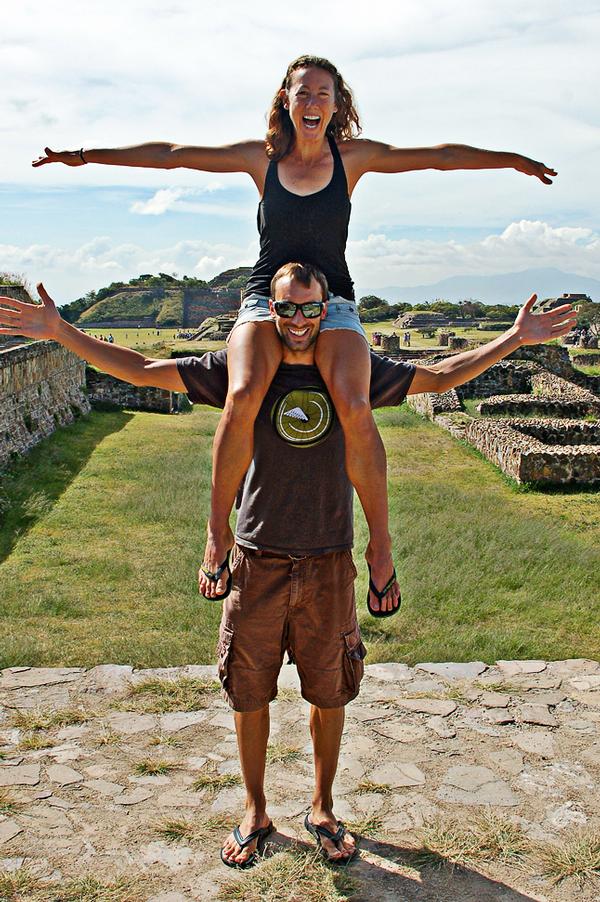
Overseas travel is still a passion for Wellington and her husband
Where the marathon was once the pinnacle, now you have to do an Ironman or ultra-marathon to set yourself apart

How did your sporting career start?
It’s a rather long-winded story, because I wasn’t one of those kids who always wanted to be a professional sportsperson.

I was always driven and determined, but I channelled it into my academic studies. I enjoyed being healthy and active, and I was in some of the school sports teams, but I didn’t perform to county standard or anything like that. I then went to university and my priority was getting first class honours. Sport was just something I did for the social aspect.

When I left uni I wanted to be a lawyer, so I signed a law contract and had nine months before I started to go travelling. In that time I did very little sport, and a lot of drinking, so when I came back to the UK I started running to lose weight.

I had no understanding of training or kit. I just went out and ran. I was studying international development by this stage – I’d decided this, rather than law, was actually what I wanted to do – and I simply enjoyed the relief that running gave me from my studies.

How did this progress to triathlons and Ironman events?
I decided to do the 2002 London Marathon and trained quite hard for it, but again not in a knowledgeable way. I was surprised to do it in three hours and eight minutes, and surprised by how much I enjoyed it. So I joined a running group at Battersea track with the legendary Frank Horwill. I definitely wasn’t a high flyer in his squad though – he had much better people than me.

I was aiming to do the 2003 marathon in under three hours, but I was hit by a car a few weeks before and couldn’t take part. So I started swimming again, which is when someone suggested I do a triathlon.

I did a few as a novice, using borrowed kit, and I did OK – I came third or fourth in a couple of Olympic distances – but I didn’t set the world on fire.

By then I was working in my dream job, as a government policy advisor on international development, and I wanted to get some experience working overseas. I took a sabbatical and went to live and work in Nepal. That’s where I gained my strength – both physical and psychological – in endurance activities.

I wasn’t very good technically, but I started mountain biking and I could keep going all day at high altitude.

On my return to the UK, however, my first triathlon was a disaster – my wetsuit didn’t fit, so I sank and had to be rescued. The second one went better and I qualified for the Amateur World Championship, so I got a coach and trained really hard on top of my full-time government job.

Much to my surprise I won the event, and based on that – at the age of 30, in February 2007 – I made the difficult decision to become a professional athlete.

But really my whole journey into triathlon was accidental: a case of tapping into a talent I never knew I had, and I guess being brave enough to throw myself into it without knowing if I’d be any good. We’re all so scared of failure, aren’t we, that it can be debilitating.

I worked incredibly hard; I had discipline, self-motivation, a willingness to hurt, an ability to bounce back from adversity; and I had physical talent.

But nevertheless every step along the way was a revelation to me. I honestly never expected to become four-time Ironman world champion or to break numerous world records.

Extreme events like Ironman are increasingly popular among the public. Why do you think this is?
I think people are slowly realising that the sense of achievement that comes from having a family, for example, or succeeding at work will only take them so far. They’re looking for new goals.

And it’s human nature to want bigger and better. Where the marathon was once the pinnacle, now so many people have done it that you have to do an Ironman or an ultra-marathon to set yourself apart from the crowd.

The crucial point is that it feels more attainable now, because more ‘normal’ people are doing it. When you see someone like me complete an Ironman, yes, it might be an inspiration – but what really inspires you is the person next door who might be a bit overweight, might not have been able to run very far, who goes on to do it. It’s that sense of ‘if they can do it, I can too’.

What about the other end of the scale – the people who don’t exercise at all. What do you believe are the barriers for people?
Different barriers affect different people. For some people it will be practical barriers – time, childcare, opportunities, access to transport. Then there are financial barriers, particularly for sports like triathlon. There are psychological barriers too: body image, fear of judgement. And there are barriers that affect whole groups: disabled people, for example, and women – the lack of female coaches or women higher up in our governance structures is an impediment to inspiring more people to get involved.

Also our media, while it can be a great catalyst, it can also be a barrier. The media can portray certain images, convey certain messages, that aren’t always facilitating the involvement of people in physical activity.

And finally government can be an amazing catalyst, but some of the policies it implements are an incredible barrier to participation. Look at what Michael Gove did with his education policy and sport in schools. Tore it apart. It’s going to take decades to recover.

But we all have the ability to bring about change: you can change people on a one-to-one level by inspiring them to do something they might not otherwise have thought to do. I try to do as much as I can at many different levels, whether it’s on a personal or governmental level, or through my work with parkrun.

Tell us about parkrun
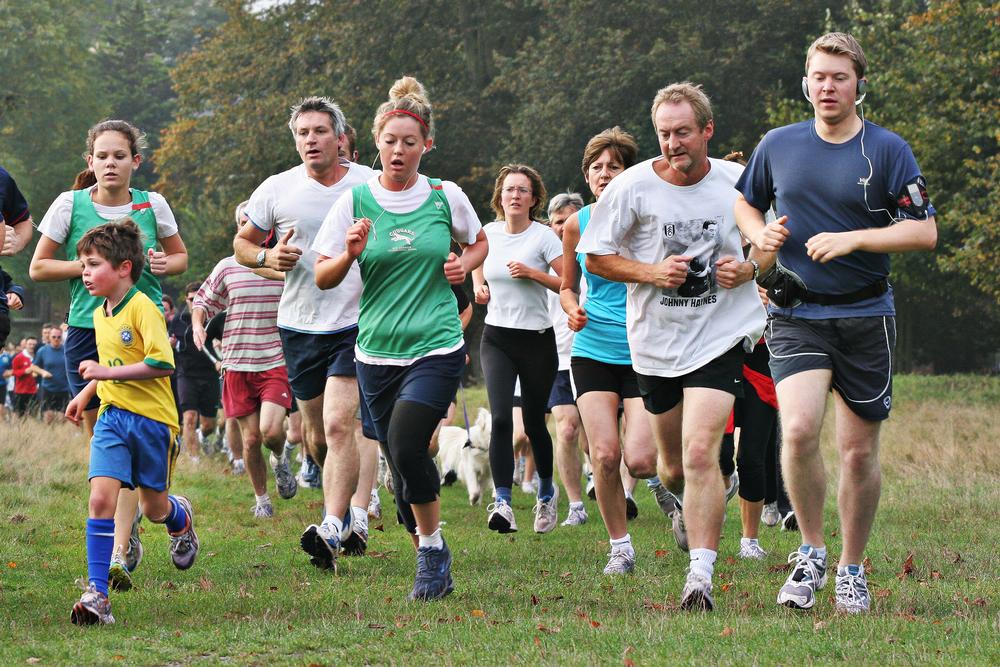
parkrun operates weekly 5km runs – or 2km for kids – which take place in local parks, and it’s free to participate. The philosophy is ‘weekly, free, 5km, for everyone, forever’.

That’s what’s so great about it: it breaks down all the barriers to participation. It’s free, so the financial barrier is broken. The runs take place in your local area, so they’re accessible. They’re regular, so it becomes habitual – that’s very important – although you don’t have to turn up every week. It isn’t intimidating because it isn’t a race. You don’t need any specialist equipment – you don’t even need running shoes. It’s as much a social occasion as it is a physical activity event, so people look forward to coming and seeing their friends. And there’s also the opportunity to volunteer for those who can’t run, which in turn brings its own kind of health benefits.

It’s a small organisation that’s achieved a lot on not very much in terms of human and financial resources. With 1.1 million registered participants, we deliver the majority of runs in the UK every week – yet other organisations currently get a lot more funding. That’s something we’re hoping will change.

Who are your 1.1 million participants?
It’s a diverse mix. When people register, we ask how much activity they do every week. Around 20 per cent of our female participants, and 18 per cent of male participants, are inactive or relatively inactive when they register – doing zero to one form of exercise a week.

That percentage is going up too – we’re increasingly successful at getting inactive people involved. My job is to look at the data and work out how we can do even better, getting groups such as disabled people, BME communities, young people – especially from deprived backgrounds – and women involved. Women represent 51 per cent of our registrants, but only 40–42 per cent of our participants, so we need to help them translate intention into action. We’ve done some research that’s being analysed at the moment, to understand why they’ve registered and then not come, and we’ll design interventions accordingly.

We can do more with our marketing too – using appropriate imagery and subtitles for videos to make them disability-friendly, for example. We’re also trying to train guide runners, so we can welcome visually impaired runners.

Finally, working with local leaders is crucial – finding the people who are best able to influence their communities, whether that’s individuals, charities or NGOs – rather than us trying to beat on about parkrun from our white middle class ivory tower.

What are parkrun’s growth plans?
We believe there can easily be around 1,000 venues in the United Kingdom alone. Junior parkrun in particular is growing at a rate of knots.

It’s a demand-led model – the community has to want a parkrun – but it isn’t expensive to set up. Each community has to contribute £3,000 – a sum that never comes from individuals but from local authorities, health authorities, trusts and grants and private sector donors – and we contribute another £3,000. And that’s all that’s needed for the lifetime of an event. We provide all the equipment, technology, support and training. You just need a team of volunteers, a suitable running course and permission from the relevant landowner.

What’s your view on the importance of physical activity?
Sport – and physical activity in general – is so powerful. It brings communities together, it builds bridges, informs, educates and empowers.

I never thought we’d see successful triathlons in the Middle East, but now we are – and women are taking part alongside men. And in Rwanda, I saw three million people – in a country of nine million – come out to support the Tour of Rwanda. Team Rwanda brought together Hutus and Tutsis, people from both sides of the genocide.

It’s such a powerful force for good in the world and I think it should be protected and promoted.
Sign up here to get HCM's weekly ezine and every issue of HCM magazine free on digital.
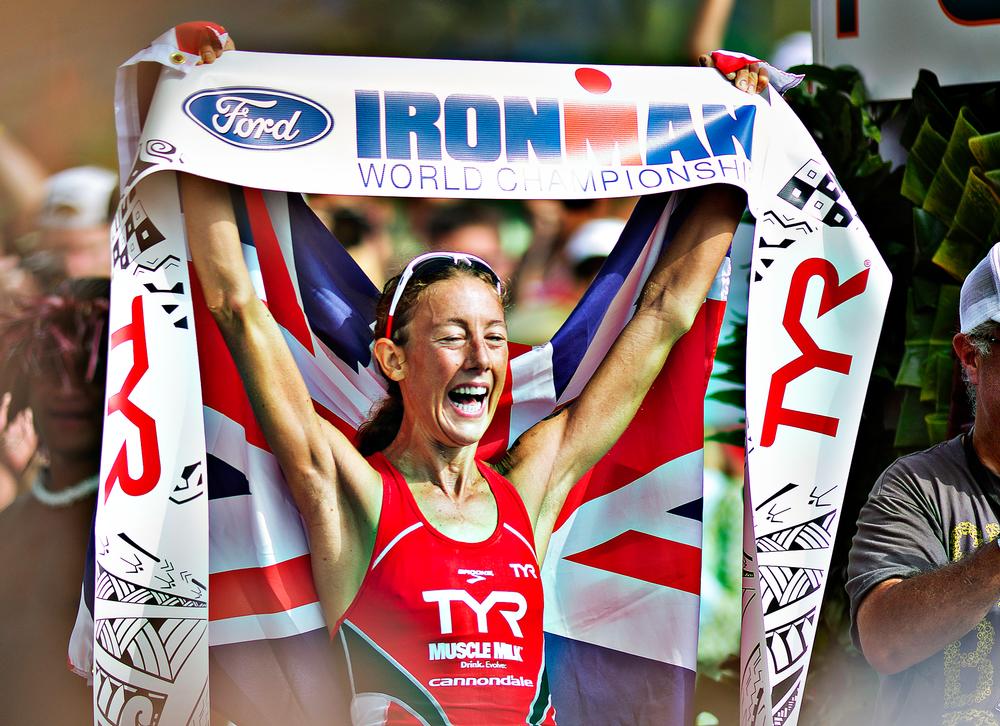
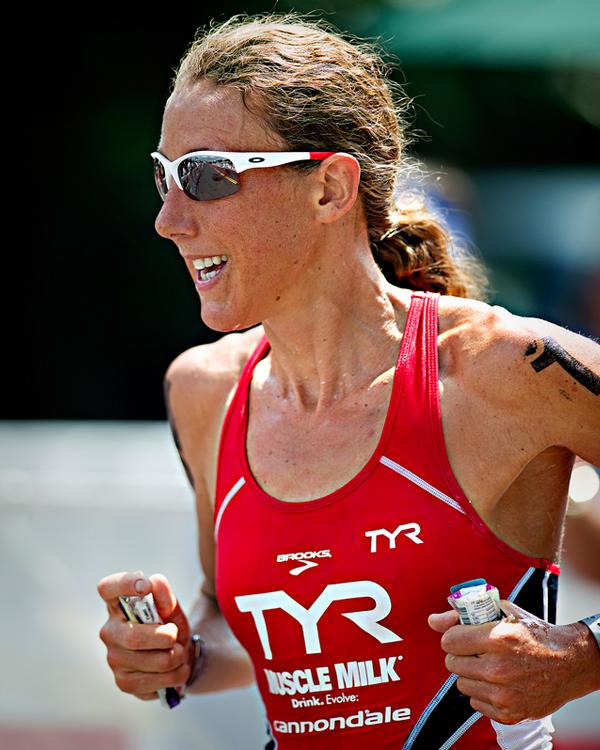
Chrissie Wellington is a four-time Ironman world champion / PHOTOS: LARRY MAURER
Wellington became a professional athlete in 2007, at the age of 30 / PHOTOS: LARRY MAURER
parkrun has over a million runners and is looking for new UK venues / PHOTOS: DAVID ROWE
https://www.leisureopportunities.co.uk/images/814760_209859.jpg
Ironman champion Chrissie Wellington is on a mission to bring down the barriers to participation
Kate Cracknell, Editor, Health Club Management,Chrissie Wellington, triathlon, Ironman, participation, parkrun, Kate Cracknell
HCM magazine
If the health service is to survive, we must recognise that it is a disease service – and that wellbeing rests with us, says the activity advocate and healthy ageing champion. He talks to Kate Cracknell
HCM magazine
For every member with a tripod and a big following, there are others irritated at the way equipment is being hogged or wary they’ll be in the background on someone’s Insta feed. Do influencers offer valuable, free marketing or are they just a nuisance? Kath Hudson finds out how operators are responding
HCM magazine
HCM People

Stephen Price

Founder, SP&Co Group
Working in public health over the last few years has lit up parts of my brain again
HCM magazine
As the entrepreneur who started Wexer, Fresh Fitness, Fitness DK and Repeat, as well as being a former elite athlete, Rasmus Ingerslev’s life looked perfect from the outside, but onthe inside it was a different story. He talks to Kath Hudson about healing old wounds
HCM magazine
Small improvements to sleep, diet and physical activity have major benefits for the heart, according to new research from the University of Sydney
HCM promotional features
Sponsored
Greg Bradley looks at the shift towards strength training in gyms and advises on how operators can create the ultimate training environment
HCM promotional features
Sponsored
Third Space partnered with IndigoFitness to deliver a bespoke training space for its new club at The Whiteley
HCM promotional features
Sponsored
SnowDome Fitness has added 50 per cent more space with cutting-edge Technogym solutions
HCM promotional features
Sponsored
David Lloyd is stepping up its commitment to women’s health as it continues to explore what fit-for-purpose looks like for the female population
HCM promotional features
Sponsored
Starpool supports Olympic champion Marcell Jacobs, says Riccardo Turri
HCM promotional features
Sponsored
Find out how your gym can tap into the corporate wellness boom
HCM promotional features
Sponsored
EGYM has opened a new HQ in Paternoster Square, London and revealed a range of new launches
HCM promotional features
Sponsored
Pulse Fitness has created a new health club delivering an elevated wellness experience
HCM promotional features
Promotion
Performance Health Systems, manufacturer of Power Plate, has a new CEO, with an ambitious vision for the company
HCM promotional features
Latest News
Australia’s fast-growing fitness network, Viva Leisure, is adding a low-cost gym brand to its already ...
Latest News
Speedflex has launched a strength training programme for 10 to 16-year-olds, to make it safer, ...
Latest News
Tewinbury Farm Hotel in Hertfordshire, UK is expanding its premium leisure proposition with the launch ...
Latest News

Work is underway in Madrid on one of Europe’s most significant multi-functional complexes, ...

Latest News
PureGym is encouraging people to step away from their screens and go for a walk, ...
Latest News
Small improvements to sleep, diet quality, and physical activity, made in combination lead to a ...
Latest News
Therme Manchester’s 28-acre development, which will include interconnected glass pavilions that measure 65,000sq m, will ...
Latest News
The Yard Gym (TYG) is to become Nike Training’s official global training partner in a ...
Opinion
promotion
Strength training has moved from the margins to the mainstream.
Opinion: Building smarter strength spaces for today’s operators
Featured supplier news
Featured supplier news: Elevate 2026 to mark 10-year anniversary with biggest ever waterfront drinks reception
Elevate is set to celebrate its 10th anniversary in style this June, with organisers confirming the event’s largest-ever drinks reception as registrations continue to run more than 10% ahead of last year.
Featured supplier news
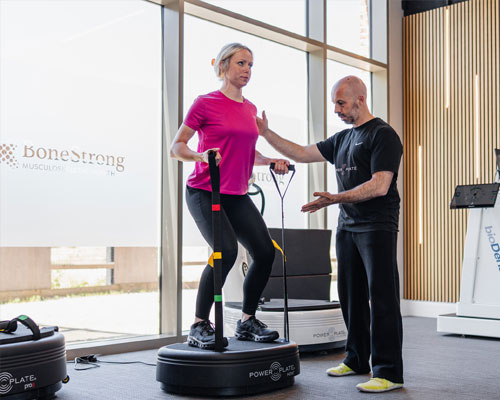
Featured supplier news: Supporting long-term health: why whole body vibration belongs in clinical settings
As healthcare continues to shift towards prevention, there’s a growing focus on helping people stay active, independent and feeling good for longer.
Company profiles
Company profile: GymNation
Ranging from 25,000 to 60,000 square feet, GymNation is open 24/7, 365 days a year ...
Company profiles
Company profile: Panatta Srl
Panatta's mission is to create machines that are aesthetically pleasing, functional and competitive in price ...
Supplier Showcases
Supplier Showcase - From nightclub to health club
Supplier Showcases
Supplier Showcase - Future-proofing
Catalogue Gallery
Click on a catalogue to view it online
Featured press releases
ukactive press release: Are they Fit for Office? UK Active and Technogym throw down the gauntlet to MPs
Hundreds of staff, MPs and Peers from across Westminster have signed up for the Fit for Office parliamentary physical activity challenge, which takes place throughout June and is hosted by ukactive and Technogym.
Featured press releases
Innerva press release: Lex Leisure’s power-assisted exercise suite smashes targets in record time
Crook Log Leisure Centre has more than doubled the membership target for its new power- assisted exercise suite in less than six months.
Directory
Lockers
Crown Sports Lockers: Lockers
Spa and beauty equipment
Living Earth Crafts: Spa and beauty equipment
Industrial washing machines
Miele Company Limited: Industrial washing machines
Water experiences and hydrotherapy solutions
Aquaform s.r.l.: Water experiences and hydrotherapy solutions
Fitness tracking platform
SpiviTech: Fitness tracking platform
Hot tubs
MSpa International Ltd: Hot tubs
Property & Tenders
Stratford, East London.
Lee Valley Regional Park Authority
Property & Tenders
Y Felinheli, LL56 4QN
Newmark
Property & Tenders
Diary dates
13-13 Jun 2026
Worldwide, Various,
Diary dates
21-24 Sep 2026
The Langham Huntington Pasadena , Pasadena, United States
Diary dates
06-08 Oct 2026
Messe Stuttgart, Stuttgart, Germany
Diary dates
22-22 Oct 2026
QEII Conference Centre, London,
Diary dates
26-29 Oct 2027
Koelnmesse Exhibition Centre, Cologne, Germany
Diary dates

people

Interview: Chrissie Wellington

The former triathlon and Ironman world champion, now part of the team at parkrun, talks to Kate Cracknell about breaking down barriers to participation, and about daring to find out what you’re capable of achieving

By Kate Cracknell | Published in Health Club Management 2015 issue 10
Overseas travel is still a passion for Wellington and her husband
Where the marathon was once the pinnacle, now you have to do an Ironman or ultra-marathon to set yourself apart

How did your sporting career start?
It’s a rather long-winded story, because I wasn’t one of those kids who always wanted to be a professional sportsperson.

I was always driven and determined, but I channelled it into my academic studies. I enjoyed being healthy and active, and I was in some of the school sports teams, but I didn’t perform to county standard or anything like that. I then went to university and my priority was getting first class honours. Sport was just something I did for the social aspect.

When I left uni I wanted to be a lawyer, so I signed a law contract and had nine months before I started to go travelling. In that time I did very little sport, and a lot of drinking, so when I came back to the UK I started running to lose weight.

I had no understanding of training or kit. I just went out and ran. I was studying international development by this stage – I’d decided this, rather than law, was actually what I wanted to do – and I simply enjoyed the relief that running gave me from my studies.

How did this progress to triathlons and Ironman events?
I decided to do the 2002 London Marathon and trained quite hard for it, but again not in a knowledgeable way. I was surprised to do it in three hours and eight minutes, and surprised by how much I enjoyed it. So I joined a running group at Battersea track with the legendary Frank Horwill. I definitely wasn’t a high flyer in his squad though – he had much better people than me.

I was aiming to do the 2003 marathon in under three hours, but I was hit by a car a few weeks before and couldn’t take part. So I started swimming again, which is when someone suggested I do a triathlon.

I did a few as a novice, using borrowed kit, and I did OK – I came third or fourth in a couple of Olympic distances – but I didn’t set the world on fire.

By then I was working in my dream job, as a government policy advisor on international development, and I wanted to get some experience working overseas. I took a sabbatical and went to live and work in Nepal. That’s where I gained my strength – both physical and psychological – in endurance activities.

I wasn’t very good technically, but I started mountain biking and I could keep going all day at high altitude.

On my return to the UK, however, my first triathlon was a disaster – my wetsuit didn’t fit, so I sank and had to be rescued. The second one went better and I qualified for the Amateur World Championship, so I got a coach and trained really hard on top of my full-time government job.

Much to my surprise I won the event, and based on that – at the age of 30, in February 2007 – I made the difficult decision to become a professional athlete.

But really my whole journey into triathlon was accidental: a case of tapping into a talent I never knew I had, and I guess being brave enough to throw myself into it without knowing if I’d be any good. We’re all so scared of failure, aren’t we, that it can be debilitating.

I worked incredibly hard; I had discipline, self-motivation, a willingness to hurt, an ability to bounce back from adversity; and I had physical talent.

But nevertheless every step along the way was a revelation to me. I honestly never expected to become four-time Ironman world champion or to break numerous world records.

Extreme events like Ironman are increasingly popular among the public. Why do you think this is?
I think people are slowly realising that the sense of achievement that comes from having a family, for example, or succeeding at work will only take them so far. They’re looking for new goals.

And it’s human nature to want bigger and better. Where the marathon was once the pinnacle, now so many people have done it that you have to do an Ironman or an ultra-marathon to set yourself apart from the crowd.

The crucial point is that it feels more attainable now, because more ‘normal’ people are doing it. When you see someone like me complete an Ironman, yes, it might be an inspiration – but what really inspires you is the person next door who might be a bit overweight, might not have been able to run very far, who goes on to do it. It’s that sense of ‘if they can do it, I can too’.

What about the other end of the scale – the people who don’t exercise at all. What do you believe are the barriers for people?
Different barriers affect different people. For some people it will be practical barriers – time, childcare, opportunities, access to transport. Then there are financial barriers, particularly for sports like triathlon. There are psychological barriers too: body image, fear of judgement. And there are barriers that affect whole groups: disabled people, for example, and women – the lack of female coaches or women higher up in our governance structures is an impediment to inspiring more people to get involved.

Also our media, while it can be a great catalyst, it can also be a barrier. The media can portray certain images, convey certain messages, that aren’t always facilitating the involvement of people in physical activity.

And finally government can be an amazing catalyst, but some of the policies it implements are an incredible barrier to participation. Look at what Michael Gove did with his education policy and sport in schools. Tore it apart. It’s going to take decades to recover.

But we all have the ability to bring about change: you can change people on a one-to-one level by inspiring them to do something they might not otherwise have thought to do. I try to do as much as I can at many different levels, whether it’s on a personal or governmental level, or through my work with parkrun.

Tell us about parkrun
parkrun operates weekly 5km runs – or 2km for kids – which take place in local parks, and it’s free to participate. The philosophy is ‘weekly, free, 5km, for everyone, forever’.

That’s what’s so great about it: it breaks down all the barriers to participation. It’s free, so the financial barrier is broken. The runs take place in your local area, so they’re accessible. They’re regular, so it becomes habitual – that’s very important – although you don’t have to turn up every week. It isn’t intimidating because it isn’t a race. You don’t need any specialist equipment – you don’t even need running shoes. It’s as much a social occasion as it is a physical activity event, so people look forward to coming and seeing their friends. And there’s also the opportunity to volunteer for those who can’t run, which in turn brings its own kind of health benefits.

It’s a small organisation that’s achieved a lot on not very much in terms of human and financial resources. With 1.1 million registered participants, we deliver the majority of runs in the UK every week – yet other organisations currently get a lot more funding. That’s something we’re hoping will change.

Who are your 1.1 million participants?
It’s a diverse mix. When people register, we ask how much activity they do every week. Around 20 per cent of our female participants, and 18 per cent of male participants, are inactive or relatively inactive when they register – doing zero to one form of exercise a week.

That percentage is going up too – we’re increasingly successful at getting inactive people involved. My job is to look at the data and work out how we can do even better, getting groups such as disabled people, BME communities, young people – especially from deprived backgrounds – and women involved. Women represent 51 per cent of our registrants, but only 40–42 per cent of our participants, so we need to help them translate intention into action. We’ve done some research that’s being analysed at the moment, to understand why they’ve registered and then not come, and we’ll design interventions accordingly.

We can do more with our marketing too – using appropriate imagery and subtitles for videos to make them disability-friendly, for example. We’re also trying to train guide runners, so we can welcome visually impaired runners.

Finally, working with local leaders is crucial – finding the people who are best able to influence their communities, whether that’s individuals, charities or NGOs – rather than us trying to beat on about parkrun from our white middle class ivory tower.

What are parkrun’s growth plans?
We believe there can easily be around 1,000 venues in the United Kingdom alone. Junior parkrun in particular is growing at a rate of knots.

It’s a demand-led model – the community has to want a parkrun – but it isn’t expensive to set up. Each community has to contribute £3,000 – a sum that never comes from individuals but from local authorities, health authorities, trusts and grants and private sector donors – and we contribute another £3,000. And that’s all that’s needed for the lifetime of an event. We provide all the equipment, technology, support and training. You just need a team of volunteers, a suitable running course and permission from the relevant landowner.

What’s your view on the importance of physical activity?
Sport – and physical activity in general – is so powerful. It brings communities together, it builds bridges, informs, educates and empowers.

I never thought we’d see successful triathlons in the Middle East, but now we are – and women are taking part alongside men. And in Rwanda, I saw three million people – in a country of nine million – come out to support the Tour of Rwanda. Team Rwanda brought together Hutus and Tutsis, people from both sides of the genocide.

It’s such a powerful force for good in the world and I think it should be protected and promoted.
Sign up here to get HCM's weekly ezine and every issue of HCM magazine free on digital.
Chrissie Wellington is a four-time Ironman world champion / PHOTOS: LARRY MAURER
Wellington became a professional athlete in 2007, at the age of 30 / PHOTOS: LARRY MAURER
parkrun has over a million runners and is looking for new UK venues / PHOTOS: DAVID ROWE
https://www.leisureopportunities.co.uk/images/814760_209859.jpg
Ironman champion Chrissie Wellington is on a mission to bring down the barriers to participation
Kate Cracknell, Editor, Health Club Management,Chrissie Wellington, triathlon, Ironman, participation, parkrun, Kate Cracknell
Latest News
Australia’s fast-growing fitness network, Viva Leisure, is adding a low-cost gym brand to its already ...
Latest News
Speedflex has launched a strength training programme for 10 to 16-year-olds, to make it safer, ...
Latest News
Tewinbury Farm Hotel in Hertfordshire, UK is expanding its premium leisure proposition with the launch ...
Latest News

Work is underway in Madrid on one of Europe’s most significant multi-functional complexes, ...

Latest News
PureGym is encouraging people to step away from their screens and go for a walk, ...
Latest News
Small improvements to sleep, diet quality, and physical activity, made in combination lead to a ...
Latest News
Therme Manchester’s 28-acre development, which will include interconnected glass pavilions that measure 65,000sq m, will ...
Latest News
The Yard Gym (TYG) is to become Nike Training’s official global training partner in a ...
Latest News
Everlast Gyms' York site has reopened following a refurbishment to bring it up to the ...
Latest News
Luxury hospitality and wellness pioneer Jeremy McCarthy has launched Leisure Alchemy, a digital platform that ...
Latest News
A contrast therapy and breathwork facility called Reset has opened in Islington, London, in the ...
Opinion
promotion
Strength training has moved from the margins to the mainstream.
Opinion: Building smarter strength spaces for today’s operators
Featured supplier news
Featured supplier news: Elevate 2026 to mark 10-year anniversary with biggest ever waterfront drinks reception
Elevate is set to celebrate its 10th anniversary in style this June, with organisers confirming the event’s largest-ever drinks reception as registrations continue to run more than 10% ahead of last year.
Featured supplier news
Featured supplier news: Supporting long-term health: why whole body vibration belongs in clinical settings
As healthcare continues to shift towards prevention, there’s a growing focus on helping people stay active, independent and feeling good for longer.
Company profiles
Company profile: GymNation
Ranging from 25,000 to 60,000 square feet, GymNation is open 24/7, 365 days a year ...
Company profiles
Company profile: Panatta Srl
Panatta's mission is to create machines that are aesthetically pleasing, functional and competitive in price ...
Supplier Showcases
Supplier Showcase - From nightclub to health club
Supplier Showcases
Supplier Showcase - Future-proofing
Catalogue Gallery
Click on a catalogue to view it online
Featured press releases
ukactive press release: Are they Fit for Office? UK Active and Technogym throw down the gauntlet to MPs
Hundreds of staff, MPs and Peers from across Westminster have signed up for the Fit for Office parliamentary physical activity challenge, which takes place throughout June and is hosted by ukactive and Technogym.
Featured press releases
Innerva press release: Lex Leisure’s power-assisted exercise suite smashes targets in record time
Crook Log Leisure Centre has more than doubled the membership target for its new power- assisted exercise suite in less than six months.
Directory
Lockers
Crown Sports Lockers: Lockers
Spa and beauty equipment
Living Earth Crafts: Spa and beauty equipment
Industrial washing machines
Miele Company Limited: Industrial washing machines
Water experiences and hydrotherapy solutions
Aquaform s.r.l.: Water experiences and hydrotherapy solutions
Fitness tracking platform
SpiviTech: Fitness tracking platform
Hot tubs
MSpa International Ltd: Hot tubs
Property & Tenders
Stratford, East London.
Lee Valley Regional Park Authority
Property & Tenders
Y Felinheli, LL56 4QN
Newmark
Property & Tenders
Diary dates
13-13 Jun 2026
Worldwide, Various,
Diary dates
21-24 Sep 2026
The Langham Huntington Pasadena , Pasadena, United States
Diary dates
06-08 Oct 2026
Messe Stuttgart, Stuttgart, Germany
Diary dates
22-22 Oct 2026
QEII Conference Centre, London,
Diary dates
26-29 Oct 2027
Koelnmesse Exhibition Centre, Cologne, Germany
Diary dates
Search news, features & products:
Find a supplier:
We Work Well Events
We Work Well Events
Partner sites