


















Follow Health Club Management on Twitter Like Health Club Management on Facebook Join the discussion with Health Club Management on LinkedIn
FITNESS, HEALTH, WELLNESS

features

Training & education: Social learning

Pete Banbury takes a look at the future of education and training in the fitness industry

Published in Health Club Management 2014 issue 9
Community-driven mobile learning encourages learners to be individual and show off their talents

Training and education are entering an explosive phase of development right now. Technology has blown the doors off convention and led to strong debate: some decry ‘cold electronic gimmickry’ that will never replace face-to-face learning; others herald technology as the gateway to a more creative, personalised education.

And the health and fitness industry isn’t immune to this debate. Mel Spooner, FitPro’s head of commercial operations UK, says: “Face-to-face learning is highly valuable and presents a powerful engagement platform between coach and learner. However, time and budget constraints, career lifecycles and the dilutive effect of classroom learning mean that face-to-face learning alone cannot future-proof professional development for our industry. Relying solely on face-to-face will present barriers to recruiting, developing and retaining great trainers in our industry. This shouldn’t be scary; it’s reality and, as an industry, we simply have to adapt.”

Mobile learning
Amid the mêlée of divided allegiances,
a new strain of online education is emerging: mobile learning. Also tagged as mLearning, it maximises all possible benefits of technology – viewing material via mobile phone, tablet or laptop and using multimedia engagement in a much more modern way, with social media mechanisms such as video uploads, downloads, podcasts, status updates and ‘likes’ to the fore.

Imagine a scenario where, instead of providing some text for students to learn or a video for them to view with a multiple choice question at the end, a training provider posts a small amount of content and sets a task. Let’s say the students are PTs at a health club chain that’s aiming to improve its customer-facing interpersonal skills on the gym floor and, for the club, the personal trainers’ compliance is essential.

The task sets the scene about what positive behaviours the trainers should be considering. They are then asked to go away and video-interview club members using their smartphones, asking the members about their top three bugbears when it comes to PTs’ behaviour in the gym. The trainers then have to upload these clips from their smartphones to the mobile learning platform and view other trainers’ videos. The final part of the task is to ‘like’ their three favourite video clips and comment on how they think that trainer could improve interactions with the customer.

How is that approach so different from what we’re doing in the fitness industry now? After all, online learning is not new, and we’ve had video presentation capability for some time. Why all the fuss?

Well when we analyse, that task took advantage of many important factors. Firstly it was experiential and contextual to the PTs’ work – tasks were done in a real environment and they would have learned so much more in the process than they would using hypothetical, theory-based task scenarios.

Secondly they collected their information in a fun way through interviews and used their ever-present mobile phones to film and then upload immediately to the mobile platform – a great use of accessible technology.

And finally, taking advantage of widely used social media mechanisms, the trainers invited their peers to ‘like’ their videos, and comment on what they thought of them and how they could improve. And that’s not even mentioning that all the learning evidence is charted and time-stamped.

Bev Williams, senior qualifications manager at CYQ, says: “Mobile learning isn’t something simply for the younger generation in our sector. We’re seeing how both learners and centres are benefiting from online access to awarding organisation documentation. To progress this into smartphone and tablet access is logical for us. And with social forums in mobile learning, we know the learners are being supported at all times with tutor comments and ‘likes’ – all of which are documented and time-stamped on the platform. It’s perfect evidence for their ePortfolios.”

And health club operators are already beginning to see the potential of mobile learning. Chris Ward, UK national personal training manager at Fitness First, comments: “With the rise of remote connectivity and social media platforms, ways of learning must follow suit. Today’s generation expect information at their fingertips, and our personal trainer workforce is no different. With limited time to step away from their busy client bases, the ability to learn on mobile learning platforms, in their own time, on demand, will shape the way fitness professionals are educated for many years to come.”

Customised, not standardised
The beauty of community-driven mobile learning is that it encourages learners to be individual and to show off their talents rather than adapting to prescribed, homogenised standards – we’ve all seen what YouTube has done to a generation of grandstanders and that trend is here to stay.

It all helps create a truly learner-centric, customised environment where learners’ individual skills are accentuated and experience, not content, is king. Sir Ken Robinson articulates this with his inspiring view: “The future for education is not in standardising but in customising; not in promoting groupthink and ‘deindividualisation’ but in cultivating the real depth and dynamism of human abilities of every sort.” 

Opportunity or threat?
But with mobile learning providing the perfect environment for peer-to-peer interaction – a learning feature that’s vital to gaining perspective, learning support and compliance – the idea that you need a teacher present for everything is under challenge.

That begs a paradigm-changing question: How much does the learner need the training provider now? The internet means all the content in the world is out there – for free – and the digital generation is used to getting an answer through Google, to any question, in under a second. They also have their peers online at any given time to pass comment. It truly is the world classroom.

So is the paradigm of education changing to become more learner-centric than ever before? Will providers have to surrender some control of learning and accept that, provided the learning goal is made clear, learners can find their own way to the answer with the help of their learning community?

Sugata Mitra, a leading pioneer in the field of peer-driven learning, carried out trials in which children were provided with no teacher, but simply a computer and a clear learning goal. His experiments showed that children in unsupervised groups are capable of answering questions many years ahead of the material they’re learning in school. In fact, they seem to enjoy the absence of adult supervision, and they are very confident of finding the right answer. Food for thought indeed.

Generation Y is upon us, and these people communicate and socialise via a multitude of apps. With few exceptions, content is not the problem companies need to solve for learners: learners can find content anywhere they want at the click of a button. Providers will have to let go of the content paradigm and think more about creating the right environment for learning to take place.

Proceed with caution
With these perspectives in mind, it’s pretty straightforward isn’t it? As time progresses, more and more online learning will be used by the fitness industry to effect a transition into the digitally-driven age. Staff will regularly be seen learning via their mobile phones on the train, and students will catch up on their studies via iPad when they are sat in the park. Well, yes and no.

Yes, putting the mobile learning platform in place for training providers is relatively inexpensive. But making the shift in learning culture is much harder, and simply putting content online doesn’t make a good course: fundamental principles of learning must be applied to harness the technology to its greatest effect.

Lucy Birch, head of training at The Training Room, sees online and mobile learning as economical, convenient options for people with busy lives, but also sees the stumbling blocks and cautions against going with electronic trends if it doesn’t suit the target audience: “It’s not for everyone. There’s a cultural shift, and arguably we’re pushing people into mobile learning as it’s the hip and trendy way to learn – but I’m not sure we’re always getting the quality out of it that we need.”

The right recipe
So what does all this mean for the health and wellness sector? The same as it does for every other sector. Many providers create eLearning that looks like yesteryear: lots of text interspersed with lots of headshot videos. What this doesn’t address, which Birch has rightly eluded to, is learning at distance and compliance: keeping eLearners on-course, engaged and journeying to completion takes much more than this. The experience needs to be much more engaging, leaning on social media to encourage peer-to-peer interaction.

If we do it right, we will bring individuals on-board who don’t require spoon-feeding in their education, but who thrive on being able to update and adapt, sharing continuously evolving information on the internet. This will steer us away from homogenisation and allow individuals to nurture individual strengths and creativity – be that as a sales, pool lifeguard or PT. The future of learning will be a thrilling place to be.

About the Author

Pete Banbury is an experienced education professional with 18 years in the fitness and professional sport industries, spanning careers at Premier Training International, Leicester Tigers RFC, MyCognition and mLearning Community. His ambition lies in bringing the key features of face-to-face learning into a mobile environment to change the face of world learning.

Email: [email protected]

Sign up here to get HCM's weekly ezine and every issue of HCM magazine free on digital.
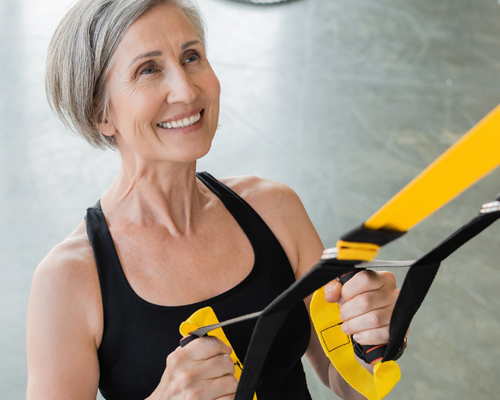
Mobile learning can nurture individual strengths in each employee / photo: www.shutterstock.com
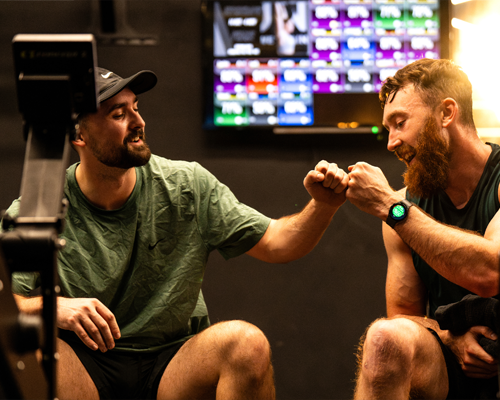
Mobile learning allows for high levels of engagement and interaction with peers / photo: www.shutterstock.com
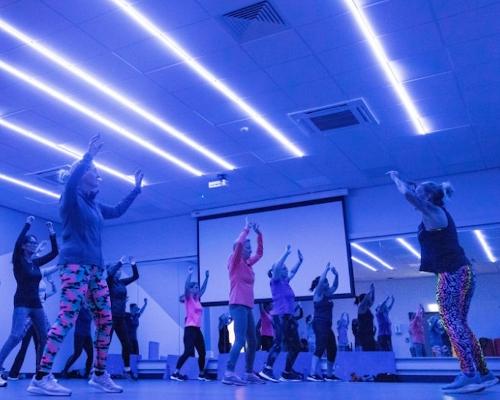
Nowadays, learning must address Generation Y, who have apps for everything / photo: www.shutterstock.com
https://www.leisureopportunities.co.uk/images/HCM2014_9social.jpg
Pete Banbury looks at the future of fitness education and learning
Pete Banbury, Education professional, Premier Training Internationl,Mobile learning, mLearning, social media, training, qualifications
HCM magazine
A new report puts physical activity at the heart of healthcare, says Muir Gray
HCM magazine
After decades of focusing on adult audiences, operators are starting to engage young people – unlocking growth opportunities while supporting the health and wellbeing of future generations
HCM magazine
New legislation is exposing weakness and potential liabilities in the management of customer data in health clubs, says Andy Chesterman
HCM magazine
HCM People

Shaun Grove

Owner, Stride Fitness
My goal was to invest in where fitness is going, not where it’s already been
HCM magazine
Shaping the future of the sector with a clear mission, unified voice and open channels of communication. This is the ambition of UK Active’s new chair
HCM promotional features
Sponsored
Social fitness the missing link to member engagement, according to a new Myzone report
HCM promotional features
Sponsored
Third Space partnered with IndigoFitness to deliver a bespoke training space for its new club at The Whiteley
HCM promotional features
Sponsored
Starpool supports Olympic champion Marcell Jacobs, says Riccardo Turri
HCM promotional features
Sponsored
David Lloyd is stepping up its commitment to women’s health as it continues to explore what fit-for-purpose looks like for the female population
HCM promotional features
Sponsored
Find out how your gym can tap into the corporate wellness boom
HCM promotional features
Sponsored
Greg Bradley looks at the shift towards strength training in gyms and advises on how operators can create the ultimate training environment
HCM promotional features
Sponsored
SnowDome Fitness has added 50 per cent more space with cutting-edge Technogym solutions
HCM promotional features
Sponsored
EGYM has opened a new HQ in Paternoster Square, London and revealed a range of new launches
HCM promotional features
Latest News
The UK's four Chief Medical Officers have published a refreshed edition of  Physical activity guidelines: ...
Latest News
Places Leisure has exchanged contracts to build and operate a flagship £60m water and wellness ...
Latest News
The Republic of Ireland will become the latest market in PureGym’s expanding international portfolio, with ...
Latest News
Sophie Lawler, CEO of Total Fitness, has launched a leadership coaching business aimed at helping ...
Latest News
Anytime Fitness opened more than one club a day in 2025 and is on track ...
Latest News
The £33.9 million Leighton Leisure and Community Centre has opened in Leighton Buzzard, UK, creating ...
Latest News
YogaSix, the yoga brand owned by Xponential Fitness, has launched a heated, Pilates-inspired class called ...
Latest News
Walnuts Leisure Centre in Orpington, in the London Borough of Bromley, has reopened following a ...
Opinion
promotion
Strength training has moved from the margins to the mainstream.
Opinion: Building smarter strength spaces for today’s operators
Featured supplier news
Featured supplier news: CoverMe extends matching service to personal training, rewriting how members and personal trainers connect
CoverMe, the global leader in fitness workforce management, today launches CoverMe PT, an on-demand personal training platform that connects the right personal trainer to the right client in under 10 seconds.
Featured supplier news
Featured supplier news: Cornerstone Connect helps Active Blackpool tackle health inequalities
Active Blackpool is deploying Cornerstone Connect, a new digital interface allowing disparate information from multiple systems to be aggregated into one dataset, to support its focus on reducing health inequalities and improving healthy life expectancy.
Company profiles
Company profile: Connect
Connect is a UK-based technology company redefining how the fitness and wellness industry builds digital ...
Company profiles
Company profile: BLK BOX
BLK BOX - where precision meets strength, and innovation never stops in the pursuit of ...
Supplier Showcases
Supplier Showcase - From nightclub to health club
Supplier Showcases
Supplier Showcase - Future-proofing
Catalogue Gallery
Click on a catalogue to view it online
Featured press releases
Alliance Leisure Services (Design, Build and Fund) press release: Studio transformation completed at Burscough Wellbeing and Leisure Hub
Alliance Leisure are proud to have supported West Lancashire Borough Council to deliver a £300,000 studio transformation project at Burscough Wellbeing and Leisure Hub, creating a dedicated group exercise space designed to meet growing demand for fitness
Featured press releases
Pure Energy Music press release: Could you be the last one standing? The new 3½-minute fitness challenge everyone's talking about
#HoldThatBody is a new 3½-minute fitness challenge inviting people everywhere to put their strength, determination and staying power to the test. All you need is a squat or a press- up, one specially engineered soundtrack and the determination not to give up.
Directory
Fitness tracking platform
SpiviTech: Fitness tracking platform
Industrial washing machines
Miele Company Limited: Industrial washing machines
Spa and beauty equipment
Living Earth Crafts: Spa and beauty equipment
Lockers
Crown Sports Lockers: Lockers
Water experiences and hydrotherapy solutions
Aquaform s.r.l.: Water experiences and hydrotherapy solutions
Hot tubs
MSpa International Ltd: Hot tubs
Property & Tenders
Stratford, East London.
Lee Valley Regional Park Authority
Property & Tenders
Y Felinheli, LL56 4QN
Newmark
Property & Tenders
Diary dates
21-24 Sep 2026
The Langham Huntington Pasadena , Pasadena, United States
Diary dates
06-08 Oct 2026
Messe Stuttgart, Stuttgart, Germany
Diary dates
22-22 Oct 2026
QEII Conference Centre, London,
Diary dates
26-29 Oct 2027
Koelnmesse Exhibition Centre, Cologne, Germany
Diary dates

features

Training & education: Social learning

Pete Banbury takes a look at the future of education and training in the fitness industry

Published in Health Club Management 2014 issue 9
Community-driven mobile learning encourages learners to be individual and show off their talents

Training and education are entering an explosive phase of development right now. Technology has blown the doors off convention and led to strong debate: some decry ‘cold electronic gimmickry’ that will never replace face-to-face learning; others herald technology as the gateway to a more creative, personalised education.

And the health and fitness industry isn’t immune to this debate. Mel Spooner, FitPro’s head of commercial operations UK, says: “Face-to-face learning is highly valuable and presents a powerful engagement platform between coach and learner. However, time and budget constraints, career lifecycles and the dilutive effect of classroom learning mean that face-to-face learning alone cannot future-proof professional development for our industry. Relying solely on face-to-face will present barriers to recruiting, developing and retaining great trainers in our industry. This shouldn’t be scary; it’s reality and, as an industry, we simply have to adapt.”

Mobile learning
Amid the mêlée of divided allegiances,
a new strain of online education is emerging: mobile learning. Also tagged as mLearning, it maximises all possible benefits of technology – viewing material via mobile phone, tablet or laptop and using multimedia engagement in a much more modern way, with social media mechanisms such as video uploads, downloads, podcasts, status updates and ‘likes’ to the fore.

Imagine a scenario where, instead of providing some text for students to learn or a video for them to view with a multiple choice question at the end, a training provider posts a small amount of content and sets a task. Let’s say the students are PTs at a health club chain that’s aiming to improve its customer-facing interpersonal skills on the gym floor and, for the club, the personal trainers’ compliance is essential.

The task sets the scene about what positive behaviours the trainers should be considering. They are then asked to go away and video-interview club members using their smartphones, asking the members about their top three bugbears when it comes to PTs’ behaviour in the gym. The trainers then have to upload these clips from their smartphones to the mobile learning platform and view other trainers’ videos. The final part of the task is to ‘like’ their three favourite video clips and comment on how they think that trainer could improve interactions with the customer.

How is that approach so different from what we’re doing in the fitness industry now? After all, online learning is not new, and we’ve had video presentation capability for some time. Why all the fuss?

Well when we analyse, that task took advantage of many important factors. Firstly it was experiential and contextual to the PTs’ work – tasks were done in a real environment and they would have learned so much more in the process than they would using hypothetical, theory-based task scenarios.

Secondly they collected their information in a fun way through interviews and used their ever-present mobile phones to film and then upload immediately to the mobile platform – a great use of accessible technology.

And finally, taking advantage of widely used social media mechanisms, the trainers invited their peers to ‘like’ their videos, and comment on what they thought of them and how they could improve. And that’s not even mentioning that all the learning evidence is charted and time-stamped.

Bev Williams, senior qualifications manager at CYQ, says: “Mobile learning isn’t something simply for the younger generation in our sector. We’re seeing how both learners and centres are benefiting from online access to awarding organisation documentation. To progress this into smartphone and tablet access is logical for us. And with social forums in mobile learning, we know the learners are being supported at all times with tutor comments and ‘likes’ – all of which are documented and time-stamped on the platform. It’s perfect evidence for their ePortfolios.”

And health club operators are already beginning to see the potential of mobile learning. Chris Ward, UK national personal training manager at Fitness First, comments: “With the rise of remote connectivity and social media platforms, ways of learning must follow suit. Today’s generation expect information at their fingertips, and our personal trainer workforce is no different. With limited time to step away from their busy client bases, the ability to learn on mobile learning platforms, in their own time, on demand, will shape the way fitness professionals are educated for many years to come.”

Customised, not standardised
The beauty of community-driven mobile learning is that it encourages learners to be individual and to show off their talents rather than adapting to prescribed, homogenised standards – we’ve all seen what YouTube has done to a generation of grandstanders and that trend is here to stay.

It all helps create a truly learner-centric, customised environment where learners’ individual skills are accentuated and experience, not content, is king. Sir Ken Robinson articulates this with his inspiring view: “The future for education is not in standardising but in customising; not in promoting groupthink and ‘deindividualisation’ but in cultivating the real depth and dynamism of human abilities of every sort.” 

Opportunity or threat?
But with mobile learning providing the perfect environment for peer-to-peer interaction – a learning feature that’s vital to gaining perspective, learning support and compliance – the idea that you need a teacher present for everything is under challenge.

That begs a paradigm-changing question: How much does the learner need the training provider now? The internet means all the content in the world is out there – for free – and the digital generation is used to getting an answer through Google, to any question, in under a second. They also have their peers online at any given time to pass comment. It truly is the world classroom.

So is the paradigm of education changing to become more learner-centric than ever before? Will providers have to surrender some control of learning and accept that, provided the learning goal is made clear, learners can find their own way to the answer with the help of their learning community?

Sugata Mitra, a leading pioneer in the field of peer-driven learning, carried out trials in which children were provided with no teacher, but simply a computer and a clear learning goal. His experiments showed that children in unsupervised groups are capable of answering questions many years ahead of the material they’re learning in school. In fact, they seem to enjoy the absence of adult supervision, and they are very confident of finding the right answer. Food for thought indeed.

Generation Y is upon us, and these people communicate and socialise via a multitude of apps. With few exceptions, content is not the problem companies need to solve for learners: learners can find content anywhere they want at the click of a button. Providers will have to let go of the content paradigm and think more about creating the right environment for learning to take place.

Proceed with caution
With these perspectives in mind, it’s pretty straightforward isn’t it? As time progresses, more and more online learning will be used by the fitness industry to effect a transition into the digitally-driven age. Staff will regularly be seen learning via their mobile phones on the train, and students will catch up on their studies via iPad when they are sat in the park. Well, yes and no.

Yes, putting the mobile learning platform in place for training providers is relatively inexpensive. But making the shift in learning culture is much harder, and simply putting content online doesn’t make a good course: fundamental principles of learning must be applied to harness the technology to its greatest effect.

Lucy Birch, head of training at The Training Room, sees online and mobile learning as economical, convenient options for people with busy lives, but also sees the stumbling blocks and cautions against going with electronic trends if it doesn’t suit the target audience: “It’s not for everyone. There’s a cultural shift, and arguably we’re pushing people into mobile learning as it’s the hip and trendy way to learn – but I’m not sure we’re always getting the quality out of it that we need.”

The right recipe
So what does all this mean for the health and wellness sector? The same as it does for every other sector. Many providers create eLearning that looks like yesteryear: lots of text interspersed with lots of headshot videos. What this doesn’t address, which Birch has rightly eluded to, is learning at distance and compliance: keeping eLearners on-course, engaged and journeying to completion takes much more than this. The experience needs to be much more engaging, leaning on social media to encourage peer-to-peer interaction.

If we do it right, we will bring individuals on-board who don’t require spoon-feeding in their education, but who thrive on being able to update and adapt, sharing continuously evolving information on the internet. This will steer us away from homogenisation and allow individuals to nurture individual strengths and creativity – be that as a sales, pool lifeguard or PT. The future of learning will be a thrilling place to be.

About the Author

Pete Banbury is an experienced education professional with 18 years in the fitness and professional sport industries, spanning careers at Premier Training International, Leicester Tigers RFC, MyCognition and mLearning Community. His ambition lies in bringing the key features of face-to-face learning into a mobile environment to change the face of world learning.

Email: [email protected]

Sign up here to get HCM's weekly ezine and every issue of HCM magazine free on digital.
Mobile learning can nurture individual strengths in each employee / photo: www.shutterstock.com
Mobile learning allows for high levels of engagement and interaction with peers / photo: www.shutterstock.com
Nowadays, learning must address Generation Y, who have apps for everything / photo: www.shutterstock.com
https://www.leisureopportunities.co.uk/images/HCM2014_9social.jpg
Pete Banbury looks at the future of fitness education and learning
Pete Banbury, Education professional, Premier Training Internationl,Mobile learning, mLearning, social media, training, qualifications
Latest News
The UK's four Chief Medical Officers have published a refreshed edition of  Physical activity guidelines: ...
Latest News
Places Leisure has exchanged contracts to build and operate a flagship £60m water and wellness ...
Latest News
The Republic of Ireland will become the latest market in PureGym’s expanding international portfolio, with ...
Latest News
Sophie Lawler, CEO of Total Fitness, has launched a leadership coaching business aimed at helping ...
Latest News
Anytime Fitness opened more than one club a day in 2025 and is on track ...
Latest News
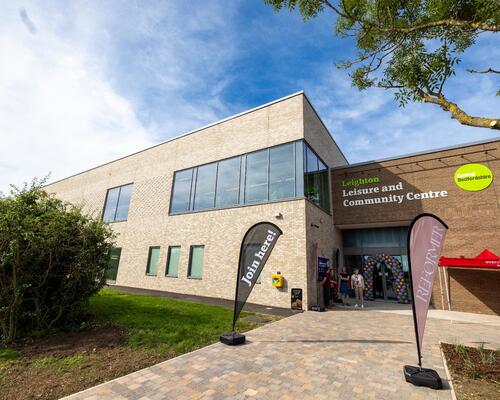
The £33.9 million Leighton Leisure and Community Centre has opened in Leighton Buzzard, UK, creating ...
Latest News
YogaSix, the yoga brand owned by Xponential Fitness, has launched a heated, Pilates-inspired class called ...
Latest News
Walnuts Leisure Centre in Orpington, in the London Borough of Bromley, has reopened following a ...
Latest News
The Gym Group, has announced that it's sustained positive trading momentum has continued through the ...
Latest News
Hyrox has announced it will be working with a second charity in the upcoming season ...
Latest News
US low-cost operator, Amped Fitness, has launched a flagship location in Texas, debuting its multi-sensory ...
Opinion
promotion
Strength training has moved from the margins to the mainstream.
Opinion: Building smarter strength spaces for today’s operators
Featured supplier news
Featured supplier news: CoverMe extends matching service to personal training, rewriting how members and personal trainers connect
CoverMe, the global leader in fitness workforce management, today launches CoverMe PT, an on-demand personal training platform that connects the right personal trainer to the right client in under 10 seconds.
Featured supplier news
Featured supplier news: Cornerstone Connect helps Active Blackpool tackle health inequalities
Active Blackpool is deploying Cornerstone Connect, a new digital interface allowing disparate information from multiple systems to be aggregated into one dataset, to support its focus on reducing health inequalities and improving healthy life expectancy.
Company profiles
Company profile: Connect
Connect is a UK-based technology company redefining how the fitness and wellness industry builds digital ...
Company profiles
Company profile: BLK BOX
BLK BOX - where precision meets strength, and innovation never stops in the pursuit of ...
Supplier Showcases
Supplier Showcase - From nightclub to health club
Supplier Showcases
Supplier Showcase - Future-proofing
Catalogue Gallery
Click on a catalogue to view it online
Featured press releases
Alliance Leisure Services (Design, Build and Fund) press release: Studio transformation completed at Burscough Wellbeing and Leisure Hub
Alliance Leisure are proud to have supported West Lancashire Borough Council to deliver a £300,000 studio transformation project at Burscough Wellbeing and Leisure Hub, creating a dedicated group exercise space designed to meet growing demand for fitness
Featured press releases
Pure Energy Music press release: Could you be the last one standing? The new 3½-minute fitness challenge everyone's talking about
#HoldThatBody is a new 3½-minute fitness challenge inviting people everywhere to put their strength, determination and staying power to the test. All you need is a squat or a press- up, one specially engineered soundtrack and the determination not to give up.
Directory
Fitness tracking platform
SpiviTech: Fitness tracking platform
Industrial washing machines
Miele Company Limited: Industrial washing machines
Spa and beauty equipment
Living Earth Crafts: Spa and beauty equipment
Lockers
Crown Sports Lockers: Lockers
Water experiences and hydrotherapy solutions
Aquaform s.r.l.: Water experiences and hydrotherapy solutions
Hot tubs
MSpa International Ltd: Hot tubs
Property & Tenders
Stratford, East London.
Lee Valley Regional Park Authority
Property & Tenders
Y Felinheli, LL56 4QN
Newmark
Property & Tenders
Diary dates
21-24 Sep 2026
The Langham Huntington Pasadena , Pasadena, United States
Diary dates
06-08 Oct 2026
Messe Stuttgart, Stuttgart, Germany
Diary dates
22-22 Oct 2026
QEII Conference Centre, London,
Diary dates
26-29 Oct 2027
Koelnmesse Exhibition Centre, Cologne, Germany
Diary dates
Search news, features & products:
Find a supplier:
Partner sites