






















Follow Health Club Management on Twitter Like Health Club Management on Facebook Join the discussion with Health Club Management on LinkedIn
FITNESS, HEALTH, WELLNESS

features

Swimming pools: Stop treading water

Pools cost around £10 to run per visit for every user. Most people don’t pay that much to use them, so how can we best mitigate the losses, maximise ROI and safeguard the future of pools? Kath Hudson reports
By Kath Hudson | Published in Health Club Management 2015 issue 2
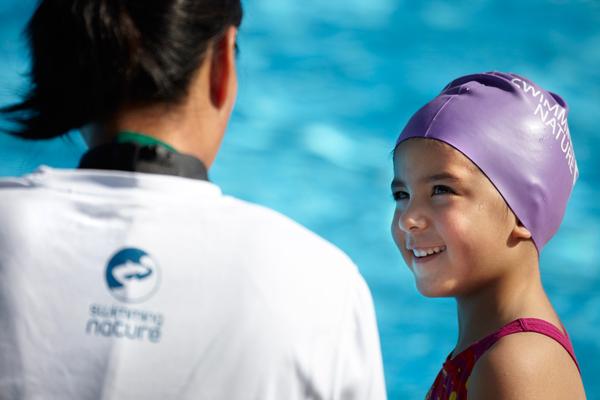
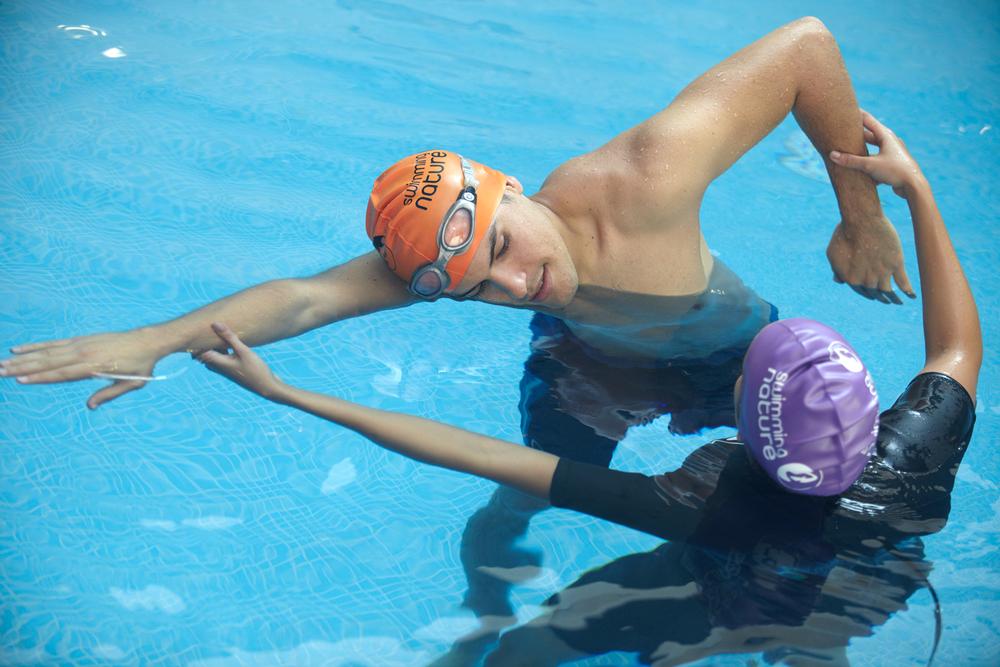
Swimming Nature’s technology logs and monitors students’ progress
During swimming lessons, the shallow end is rammed but the deep end is empty. Operators could optimise the whole pool by running programmes or other courses

Swimming is one of the best activities for all-round exercise: it’s beneficial for blood pressure, improves lung capacity and puts no pressure on the joints. It still remains one of the most popular activities in leisure centres but, despite this, swimming is very often the poor relation in the leisure centre mix.

In the gym and fitness studio, new classes and equipment are constantly being introduced to stop boredom setting in, PT and regularly updated programming are offered to help people meet their goals, technology allows for data collection, and there’s a buzzing environment. In contrast, nothing much has changed poolside for some 30 years. Swimming pools still tend to be the same size and shape, with the same activities on offer; there’s been very little innovation.

And there’s often a challenge to ROI from outside of the facility walls too, with swimming considered important at government level, almost to the point of it being institutionalised. Local authorities are protective about its pricing, ensuring it remains affordable – it was even offered for free a few years ago. And swimming lessons are part of the national curriculum.

So what can operators do to maintain a commercial focus on their swimming offering, ensuring the best possible ROI from their pool? Firstly it requires a change of focus. Tara Dillon, executive director at RLSS, says operators need to both increase revenue and take better control of their spending. “I suspect most managers don’t run their pools like their café or gym or crèche, where each square foot is accounted for,” she says.

But there’s plenty more operators could do to give their swimming offering new lease of life. We take a look at best practice from across the sector to understand what else operators might do to make the most of their pools.

Best use of time
On the up side, there’s plenty of demand for swimming pools and a growth in swimming-specific memberships. Whereas a few years ago swimming lessons were really only for school-aged kids, now even older adults are showing an interest in improving their stroke.

1Life’s contract manager in Wokingham, Tony Penge, says demand for swimming lessons has increased for three reasons: sporty people wanting to hone their technique so they can participate in many water-based activities, including triathlon; grandparents wanting lessons so they can take the grandchildren swimming; and more people regarding swimming as a good way to keep fit. “More people are also asking for one-to-one lessons and crash courses to supplement their children’s lessons,” he adds.

This is good news because lessons are the bread and butter of pools; now the learn-to-swim market has broadened, lessons can be scheduled outside of the busy 4.00pm to 8.00pm slot.

However, it’s important not to have the pool constantly tied up with lessons, otherwise the health and fitness swimmers will get disgruntled. Penge says tight programming is the way to overcome this issue. “You need to know the local population and keep looking at the stats,” he says. “We review our programme every six weeks, looking at head count and usage and identifying which sessions need to be changed.”

Lorenzo Clarke, operations director at Sheffield City Trust, agrees that efficient programming is key: “In Sheffield, we analyse every hour of every day. We review the programme every 14 weeks, like the fitness industry, and always introduce something new.”

Knowing the usage has helped both operators to expand certain areas. For example, 1Life increased the number of sessions it offers for Muslim ladies, from once a month to once a week, based on demand. Sheffield City Trust split the pool during its child swimming lessons so parents could do some lanes – a great way of optimising the use of the pool and bringing in a different user group.

And although early evening is busy, there are times when the pool is barely used. Friday night and Sunday nights are commonly dead periods, so Sheffield City Trust has hooked in teenagers and young adults with a disco on Friday nights, with subtle lighting, dry foam and food colouring to dye the water. Meanwhile 1Life reached out to community groups and clubs to offer niche activities, including a disability group, scuba diving club and canoe club.

Innovation
While the swimming industry is mired in tradition, things are beginning to change. To drive the industry forward, Mark Haslam, group swimming manager at Places for People Leisure, says it’s important to have a swim manager or aquatics manager in place who can champion the pool, identify the issues and create a strategy. A funding manager is also an asset – someone who can tap in to funding to put on sessions for certain groups, such as the BME population.

The Aquatics Centre in London, which opened to the public in March last year, is one facility not held back by tradition. “Because it’s new, there are no strongly entrenched user groups or programmes, so no-one gets upset if we try something different,” says GLL’s managing director Mark Sesnan.

One of the revolutionary changes GLL has introduced at the Aquatics Centre is running school swimming lessons in crash courses, whereby school pupils come every day for a week. “We’ve found this has far better results in terms of children learning to swim than if they come once a week for a term and then do nothing in between. It’s easier for the school to sort out transportation, the kids like it, and attendance and results are better,” says Sesnan.

He adds that GLL takes school swimming very seriously, because if people can’t swim they won’t go on to be customers. For this reason, any children who still can’t swim after coming with the school are offered free top-up courses.

Clarke says pool operators also need to make sure they have development pathways in place, so those who show potential can move on to train with elite squads or branch out into other sports such as diving or water polo. In addition, swimming is a very diverse sport that doesn’t stop at the point you can do 50 lengths: pools could be running lessons priming people for sports such as surfing and open water swimming.

New formats
Following the lead of the fitness industry, a number of operators are starting to introduce more classes and formats into swim programming, broadening the appeal and tempting in health swimmers.

Parkwood Leisure introduced Swimfit, the ASA’s circuits class, to all of its pools last month. Marketing manager Graeme McLennan says: “We introduced Swimfit to further engage our swimmers and hook them in for another weekly session. We want to grow swimming participation by growing membership and by finding new ways of encouraging people to use the pool more often.”

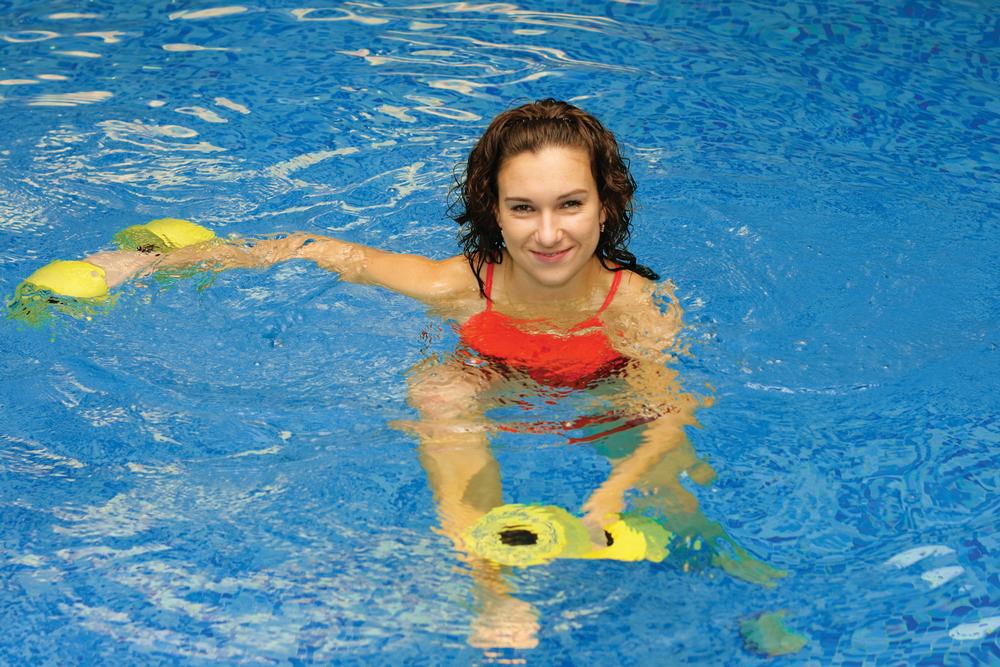
Places for People is also breaking down the lane mentality and is repositioning the pool as another exercise area. “Swimming has always been seen as a sport, but we’re now trying to position it as a health and wellness activity, by bringing in sociable programmes to use the pool for other forms of exercise, such as aquacise, aqua circuits and aqua box,” says Haslam.

Meanwhile GLL has invested in fun equipment for the Aquatics Centre to run assault courses that appeal to the family market and teenagers, broadening the usage of the pool beyond lessons and serious swimmers and making the deep water fun, safe and accessible.

Dillon believes there are a number of programmes pools could be running to get more return on investment: “Very often during swimming lessons, the shallow end is rammed but the deep end is empty. Operators could be optimising the whole pool by running programmes or other courses such as Rookie lifeguards, lifeguard or swimming instructor training.”

Another lucrative idea for quieter periods is pool parties, for which Dillon believes there’s a huge market. She also points out that operators should be doing everything they can to maximise secondary spend opportunities: course books, kit, badges, and even special meal deals for before and after swimming lessons.

Dual use for pools is something else we might see going forward. In its new developments, Places for People Leisure is putting moveable floors in the teaching pools so the whole area can swiftly be turned into a function room, which can help offset the costs of running the pool. “I think this will become the norm rather than the exception with new pools,” says Haslam.

Technology
Another lead that swimming pools could take from gyms would be to make better use of technology. Places for People Leisure has invested in tracking device SwimTag at all 70 of its sites to add value and improve retention. Members take a band from reception which they hand back after their swim. Afterwards, they can log onto their account to view a range of data including the distance they did in each stroke, how long they rested and how many calories they burned. They can also set themselves challenges, such as to swim the equivalent distance to the Isle of Wight. Haslam says the uptake has been massive.

Meanwhile, Speedo Fit is an app where data can be input manually or via a tracking device such as the Pebble Watch or Sony smartwatch. Swimmers get an algorithmic data sheet showing their stats, and the watch also offers motivation by allowing them to swim virtually against Michael Phelps.

Swimming Nature – which recently won the Innovative Concept of the Year at the Active Training Awards for its teaching systems – has brought technology into swimming lessons, thereby improving attendance and progression. The system ensures all student progression is logged and monitored, and teachers can record data from swimming lessons while poolside. Each level is made up of modules and, as each key stage is reached, the students receive an award. There are digital lesson plans that can easily be modified and tailored to individual students.

And at the Aquatic Centre, teachers also use technology to log attendance and attainment electronically, giving real-time feedback to parents.

There’s a practical application whereby technology can help cut costs too. Many operators, including Places for People Leisure and GLL, are looking at how to reduce staffing costs by using electronic equipment such as underwater cameras and radar support. Heating is the next biggest cost, so GLL is also looking to reduce costs by not only using pool covers but also heat recovery systems.
Sign up here to get HCM's weekly ezine and every issue of HCM magazine free on digital.
Places for People Leisure has introduced pool-based classes such as aqua circuits
Pool operators need to expand their activities to include options such as Rookie Lifeguard lessons
GLL has invested in fun equipment to enable water-based assault courses that appeal to teenagers and families
https://www.leisureopportunities.co.uk/images/345959_742800.jpg
Pools cost substantial amounts of money to run, so how can operators mitigate any losses, maximise ROI and safeguard the future of their swimming pools?
Kath Hudson, Journalist,Swimming pools, lifeguard, swimming lessons, scheduling, Kath Hudson
HCM magazine
HCM People

Jamie Clements

The Breath Coach
I experienced a blissful feeling of joy I hadn’t felt since I was a kid
HCM magazine
Raphael Cuomo explores the powerful link between addiction, health and behaviour change
HCM magazine
HCM People

Stephen Price

Founder, SP&Co Group
Working in public health over the last few years has lit up parts of my brain again
HCM magazine
As the entrepreneur who started Wexer, Fresh Fitness, Fitness DK and Repeat, as well as being a former elite athlete, Rasmus Ingerslev’s life looked perfect from the outside, but onthe inside it was a different story. He talks to Kath Hudson about healing old wounds
HCM magazine
If the health service is to survive, we must recognise that it is a disease service – and that wellbeing rests with us, says the activity advocate and healthy ageing champion. He talks to Kate Cracknell
HCM promotional features
Sponsored
Find out how your gym can tap into the corporate wellness boom
HCM promotional features
Sponsored
Starpool supports Olympic champion Marcell Jacobs, says Riccardo Turri
HCM promotional features
Sponsored
SnowDome Fitness has added 50 per cent more space with cutting-edge Technogym solutions
HCM promotional features
Sponsored
David Lloyd is stepping up its commitment to women’s health as it continues to explore what fit-for-purpose looks like for the female population
HCM promotional features
Sponsored
Third Space partnered with IndigoFitness to deliver a bespoke training space for its new club at The Whiteley
HCM promotional features
Sponsored
Greg Bradley looks at the shift towards strength training in gyms and advises on how operators can create the ultimate training environment
HCM promotional features
Sponsored
EGYM has opened a new HQ in Paternoster Square, London and revealed a range of new launches
HCM promotional features
Promotion
BLK BOX has been reimagining elite performance spaces for more than a decade. Founder and former athlete, Greg Bradley, tells us what it takes
HCM promotional features
Sponsored
Active IQ is calling for greater accountability in online fitness advice with the launch of a new trustmark
HCM promotional features
Latest News
People taking GLP-1 weight loss medications such as Ozempic, Wegovy, Mounjaro and Zepbound may be ...
Latest News
Low-cost gym operator, PureGym, is trialling recovery zones at two of its UK sites, democratising ...
Latest News
In a milestone moment, mental health has become a core part of CIMSPA’s occupational professional ...
Latest News
US high-value, low-price chain, Eos Fitness, has announced plans to pilot reformer Pilates in three ...
Latest News
Preventive healthcare company Neko Health has added body composition analysis to its full-body health scan ...
Latest News
Chequan Lewis is the new CEO of Crunch Fitness, taking over from Jim Rowley, who ...
Latest News
Sea Lanes Canary Wharf has officially opened. The 50-metre, six-lane pool, which uses the natural ...
Latest News
London-based high-performance fitness club, ONE LDN, is raising funds for a multi-site expansion across London, ...
Opinion
promotion
Strength training has moved from the margins to the mainstream.
Opinion: Building smarter strength spaces for today’s operators
Featured supplier news
Featured supplier news: Cornerstone Connect helps Active Blackpool tackle health inequalities
Active Blackpool is deploying Cornerstone Connect, a new digital interface allowing disparate information from multiple systems to be aggregated into one dataset, to support its focus on reducing health inequalities and improving healthy life expectancy.
Featured supplier news
Featured supplier news: CoverMe extends matching service to personal training, rewriting how members and personal trainers connect
CoverMe, the global leader in fitness workforce management, today launches CoverMe PT, an on-demand personal training platform that connects the right personal trainer to the right client in under 10 seconds.
Company profiles
Company profile: FIBO
FIBO pursues the vision of a strong and healthy society and as a global network ...
Company profiles
Company profile: IndigoFitness
IndigoFitness creates bespoke training spaces for commercial, education, public-sector, and specialist clients including the MoD ...
Supplier Showcases
Supplier Showcase - From nightclub to health club
Supplier Showcases
Supplier Showcase - Future-proofing
Catalogue Gallery
Click on a catalogue to view it online
Featured press releases
Swim England press release: Swim England launches new Learn to Swim Growth Plan to support aquatic programme expansion
Swim England has strengthened its sector-leading Business Solutions offer with the launch of its Learn to Swim Growth Plan, designed to help aquatic providers unlock sustainable programme growth.
Featured press releases
CoverMe Ltd press release: CoverMe and Jobs In. Fitness partner to create end-to-end talent solution
CoverMe, the UK’s leading fitness workforce management and recruitment platform, has partnered with Jobs In. Fitness, the specialist executive search and advisory firm for the fitness and wellbeing sector, to give operators a single route to talent at every level – from frontline staffing to C-suite.
Directory
Lockers
Crown Sports Lockers: Lockers
Industrial washing machines
Miele Company Limited: Industrial washing machines
Hot tubs
MSpa International Ltd: Hot tubs
Spa and beauty equipment
Oakworks Inc: Spa and beauty equipment
Fitness tracking platform
SpiviTech: Fitness tracking platform
Water experiences and hydrotherapy solutions
Aquaform s.r.l.: Water experiences and hydrotherapy solutions
Property & Tenders
Stratford, East London.
Lee Valley Regional Park Authority
Property & Tenders
Y Felinheli, LL56 4QN
Newmark
Property & Tenders
Diary dates
21-24 Sep 2026
The Langham Huntington Pasadena , Pasadena, United States
Diary dates
06-08 Oct 2026
Messe Stuttgart, Stuttgart, Germany
Diary dates
22-22 Oct 2026
QEII Conference Centre, London,
Diary dates
26-29 Oct 2027
Koelnmesse Exhibition Centre, Cologne, Germany
Diary dates

features

Swimming pools: Stop treading water

Pools cost around £10 to run per visit for every user. Most people don’t pay that much to use them, so how can we best mitigate the losses, maximise ROI and safeguard the future of pools? Kath Hudson reports

By Kath Hudson | Published in Health Club Management 2015 issue 2
Swimming Nature’s technology logs and monitors students’ progress
During swimming lessons, the shallow end is rammed but the deep end is empty. Operators could optimise the whole pool by running programmes or other courses

Swimming is one of the best activities for all-round exercise: it’s beneficial for blood pressure, improves lung capacity and puts no pressure on the joints. It still remains one of the most popular activities in leisure centres but, despite this, swimming is very often the poor relation in the leisure centre mix.

In the gym and fitness studio, new classes and equipment are constantly being introduced to stop boredom setting in, PT and regularly updated programming are offered to help people meet their goals, technology allows for data collection, and there’s a buzzing environment. In contrast, nothing much has changed poolside for some 30 years. Swimming pools still tend to be the same size and shape, with the same activities on offer; there’s been very little innovation.

And there’s often a challenge to ROI from outside of the facility walls too, with swimming considered important at government level, almost to the point of it being institutionalised. Local authorities are protective about its pricing, ensuring it remains affordable – it was even offered for free a few years ago. And swimming lessons are part of the national curriculum.

So what can operators do to maintain a commercial focus on their swimming offering, ensuring the best possible ROI from their pool? Firstly it requires a change of focus. Tara Dillon, executive director at RLSS, says operators need to both increase revenue and take better control of their spending. “I suspect most managers don’t run their pools like their café or gym or crèche, where each square foot is accounted for,” she says.

But there’s plenty more operators could do to give their swimming offering new lease of life. We take a look at best practice from across the sector to understand what else operators might do to make the most of their pools.

Best use of time
On the up side, there’s plenty of demand for swimming pools and a growth in swimming-specific memberships. Whereas a few years ago swimming lessons were really only for school-aged kids, now even older adults are showing an interest in improving their stroke.

1Life’s contract manager in Wokingham, Tony Penge, says demand for swimming lessons has increased for three reasons: sporty people wanting to hone their technique so they can participate in many water-based activities, including triathlon; grandparents wanting lessons so they can take the grandchildren swimming; and more people regarding swimming as a good way to keep fit. “More people are also asking for one-to-one lessons and crash courses to supplement their children’s lessons,” he adds.

This is good news because lessons are the bread and butter of pools; now the learn-to-swim market has broadened, lessons can be scheduled outside of the busy 4.00pm to 8.00pm slot.

However, it’s important not to have the pool constantly tied up with lessons, otherwise the health and fitness swimmers will get disgruntled. Penge says tight programming is the way to overcome this issue. “You need to know the local population and keep looking at the stats,” he says. “We review our programme every six weeks, looking at head count and usage and identifying which sessions need to be changed.”

Lorenzo Clarke, operations director at Sheffield City Trust, agrees that efficient programming is key: “In Sheffield, we analyse every hour of every day. We review the programme every 14 weeks, like the fitness industry, and always introduce something new.”

Knowing the usage has helped both operators to expand certain areas. For example, 1Life increased the number of sessions it offers for Muslim ladies, from once a month to once a week, based on demand. Sheffield City Trust split the pool during its child swimming lessons so parents could do some lanes – a great way of optimising the use of the pool and bringing in a different user group.

And although early evening is busy, there are times when the pool is barely used. Friday night and Sunday nights are commonly dead periods, so Sheffield City Trust has hooked in teenagers and young adults with a disco on Friday nights, with subtle lighting, dry foam and food colouring to dye the water. Meanwhile 1Life reached out to community groups and clubs to offer niche activities, including a disability group, scuba diving club and canoe club.

Innovation
While the swimming industry is mired in tradition, things are beginning to change. To drive the industry forward, Mark Haslam, group swimming manager at Places for People Leisure, says it’s important to have a swim manager or aquatics manager in place who can champion the pool, identify the issues and create a strategy. A funding manager is also an asset – someone who can tap in to funding to put on sessions for certain groups, such as the BME population.

The Aquatics Centre in London, which opened to the public in March last year, is one facility not held back by tradition. “Because it’s new, there are no strongly entrenched user groups or programmes, so no-one gets upset if we try something different,” says GLL’s managing director Mark Sesnan.

One of the revolutionary changes GLL has introduced at the Aquatics Centre is running school swimming lessons in crash courses, whereby school pupils come every day for a week. “We’ve found this has far better results in terms of children learning to swim than if they come once a week for a term and then do nothing in between. It’s easier for the school to sort out transportation, the kids like it, and attendance and results are better,” says Sesnan.

He adds that GLL takes school swimming very seriously, because if people can’t swim they won’t go on to be customers. For this reason, any children who still can’t swim after coming with the school are offered free top-up courses.

Clarke says pool operators also need to make sure they have development pathways in place, so those who show potential can move on to train with elite squads or branch out into other sports such as diving or water polo. In addition, swimming is a very diverse sport that doesn’t stop at the point you can do 50 lengths: pools could be running lessons priming people for sports such as surfing and open water swimming.

New formats
Following the lead of the fitness industry, a number of operators are starting to introduce more classes and formats into swim programming, broadening the appeal and tempting in health swimmers.

Parkwood Leisure introduced Swimfit, the ASA’s circuits class, to all of its pools last month. Marketing manager Graeme McLennan says: “We introduced Swimfit to further engage our swimmers and hook them in for another weekly session. We want to grow swimming participation by growing membership and by finding new ways of encouraging people to use the pool more often.”

Places for People is also breaking down the lane mentality and is repositioning the pool as another exercise area. “Swimming has always been seen as a sport, but we’re now trying to position it as a health and wellness activity, by bringing in sociable programmes to use the pool for other forms of exercise, such as aquacise, aqua circuits and aqua box,” says Haslam.

Meanwhile GLL has invested in fun equipment for the Aquatics Centre to run assault courses that appeal to the family market and teenagers, broadening the usage of the pool beyond lessons and serious swimmers and making the deep water fun, safe and accessible.

Dillon believes there are a number of programmes pools could be running to get more return on investment: “Very often during swimming lessons, the shallow end is rammed but the deep end is empty. Operators could be optimising the whole pool by running programmes or other courses such as Rookie lifeguards, lifeguard or swimming instructor training.”

Another lucrative idea for quieter periods is pool parties, for which Dillon believes there’s a huge market. She also points out that operators should be doing everything they can to maximise secondary spend opportunities: course books, kit, badges, and even special meal deals for before and after swimming lessons.

Dual use for pools is something else we might see going forward. In its new developments, Places for People Leisure is putting moveable floors in the teaching pools so the whole area can swiftly be turned into a function room, which can help offset the costs of running the pool. “I think this will become the norm rather than the exception with new pools,” says Haslam.

Technology
Another lead that swimming pools could take from gyms would be to make better use of technology. Places for People Leisure has invested in tracking device SwimTag at all 70 of its sites to add value and improve retention. Members take a band from reception which they hand back after their swim. Afterwards, they can log onto their account to view a range of data including the distance they did in each stroke, how long they rested and how many calories they burned. They can also set themselves challenges, such as to swim the equivalent distance to the Isle of Wight. Haslam says the uptake has been massive.

Meanwhile, Speedo Fit is an app where data can be input manually or via a tracking device such as the Pebble Watch or Sony smartwatch. Swimmers get an algorithmic data sheet showing their stats, and the watch also offers motivation by allowing them to swim virtually against Michael Phelps.

Swimming Nature – which recently won the Innovative Concept of the Year at the Active Training Awards for its teaching systems – has brought technology into swimming lessons, thereby improving attendance and progression. The system ensures all student progression is logged and monitored, and teachers can record data from swimming lessons while poolside. Each level is made up of modules and, as each key stage is reached, the students receive an award. There are digital lesson plans that can easily be modified and tailored to individual students.

And at the Aquatic Centre, teachers also use technology to log attendance and attainment electronically, giving real-time feedback to parents.

There’s a practical application whereby technology can help cut costs too. Many operators, including Places for People Leisure and GLL, are looking at how to reduce staffing costs by using electronic equipment such as underwater cameras and radar support. Heating is the next biggest cost, so GLL is also looking to reduce costs by not only using pool covers but also heat recovery systems.

Sign up here to get HCM's weekly ezine and every issue of HCM magazine free on digital.
Places for People Leisure has introduced pool-based classes such as aqua circuits
Pool operators need to expand their activities to include options such as Rookie Lifeguard lessons
GLL has invested in fun equipment to enable water-based assault courses that appeal to teenagers and families
https://www.leisureopportunities.co.uk/images/345959_742800.jpg
Pools cost substantial amounts of money to run, so how can operators mitigate any losses, maximise ROI and safeguard the future of their swimming pools?
Kath Hudson, Journalist,Swimming pools, lifeguard, swimming lessons, scheduling, Kath Hudson
Latest News
People taking GLP-1 weight loss medications such as Ozempic, Wegovy, Mounjaro and Zepbound may be ...
Latest News
Low-cost gym operator, PureGym, is trialling recovery zones at two of its UK sites, democratising ...
Latest News
In a milestone moment, mental health has become a core part of CIMSPA’s occupational professional ...
Latest News
US high-value, low-price chain, Eos Fitness, has announced plans to pilot reformer Pilates in three ...
Latest News
Preventive healthcare company Neko Health has added body composition analysis to its full-body health scan ...
Latest News
Chequan Lewis is the new CEO of Crunch Fitness, taking over from Jim Rowley, who ...
Latest News
Sea Lanes Canary Wharf has officially opened. The 50-metre, six-lane pool, which uses the natural ...
Latest News
London-based high-performance fitness club, ONE LDN, is raising funds for a multi-site expansion across London, ...
Latest News
A new brain clinic has opened in London, which uses non-invasive brain stimulation to treat ...
Latest News
Good Boost’s digital exercise programmes are helping adults with MSK at a lower cost than ...
Latest News
With Prime Minister, Keir Starmer, announcing his resignation this morning and Andy Burnham as a ...
Opinion
promotion
Strength training has moved from the margins to the mainstream.
Opinion: Building smarter strength spaces for today’s operators
Featured supplier news
Featured supplier news: Cornerstone Connect helps Active Blackpool tackle health inequalities
Active Blackpool is deploying Cornerstone Connect, a new digital interface allowing disparate information from multiple systems to be aggregated into one dataset, to support its focus on reducing health inequalities and improving healthy life expectancy.
Featured supplier news
Featured supplier news: CoverMe extends matching service to personal training, rewriting how members and personal trainers connect
CoverMe, the global leader in fitness workforce management, today launches CoverMe PT, an on-demand personal training platform that connects the right personal trainer to the right client in under 10 seconds.

Company profiles
Company profile: FIBO
FIBO pursues the vision of a strong and healthy society and as a global network ...

Company profiles
Company profile: IndigoFitness
IndigoFitness creates bespoke training spaces for commercial, education, public-sector, and specialist clients including the MoD ...
Supplier Showcases
Supplier Showcase - From nightclub to health club
Supplier Showcases
Supplier Showcase - Future-proofing
Catalogue Gallery
Click on a catalogue to view it online
Featured press releases
Swim England press release: Swim England launches new Learn to Swim Growth Plan to support aquatic programme expansion
Swim England has strengthened its sector-leading Business Solutions offer with the launch of its Learn to Swim Growth Plan, designed to help aquatic providers unlock sustainable programme growth.
Featured press releases
CoverMe Ltd press release: CoverMe and Jobs In. Fitness partner to create end-to-end talent solution
CoverMe, the UK’s leading fitness workforce management and recruitment platform, has partnered with Jobs In. Fitness, the specialist executive search and advisory firm for the fitness and wellbeing sector, to give operators a single route to talent at every level – from frontline staffing to C-suite.
Directory
Lockers
Crown Sports Lockers: Lockers
Industrial washing machines
Miele Company Limited: Industrial washing machines
Hot tubs
MSpa International Ltd: Hot tubs
Spa and beauty equipment
Oakworks Inc: Spa and beauty equipment
Fitness tracking platform
SpiviTech: Fitness tracking platform
Water experiences and hydrotherapy solutions
Aquaform s.r.l.: Water experiences and hydrotherapy solutions
Property & Tenders
Stratford, East London.
Lee Valley Regional Park Authority
Property & Tenders
Y Felinheli, LL56 4QN
Newmark
Property & Tenders
Diary dates
21-24 Sep 2026
The Langham Huntington Pasadena , Pasadena, United States
Diary dates
06-08 Oct 2026
Messe Stuttgart, Stuttgart, Germany
Diary dates
22-22 Oct 2026
QEII Conference Centre, London,
Diary dates
26-29 Oct 2027
Koelnmesse Exhibition Centre, Cologne, Germany
Diary dates
Search news, features & products:
Find a supplier:
Partner sites