Editor's letter





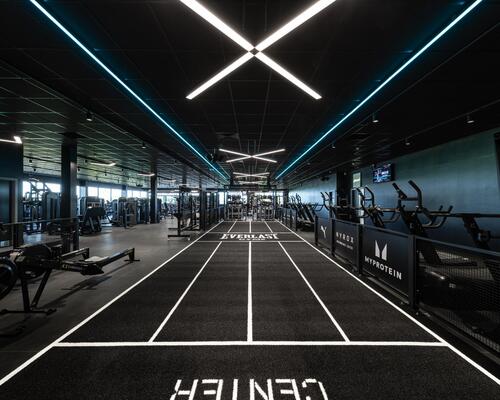
Although gym floor demand has shifted towards free-weights, racks, cables and functional training zones, many facilities are still planned around a cardio-led model of use.
That gap matters. When layouts fail to reflect how members train, capacity becomes harder to manage, the customer experience becomes less consistent and valuable space underperforms.
The opportunity lies in how the space is planned, so layout, flow, zoning, storage, flooring and acoustics all work together. In many health and fitness clubs, the pressure shows up quickly: overcrowded racks, busy dumbbell zones, congested walkways and members waiting for key pieces of kit.
The natural response is to add more equipment, but that only works if the space can support it.
Strength training kit no longer sits in a corner of the gym. It’s the main reason many members join, visit and stay
The right zoning
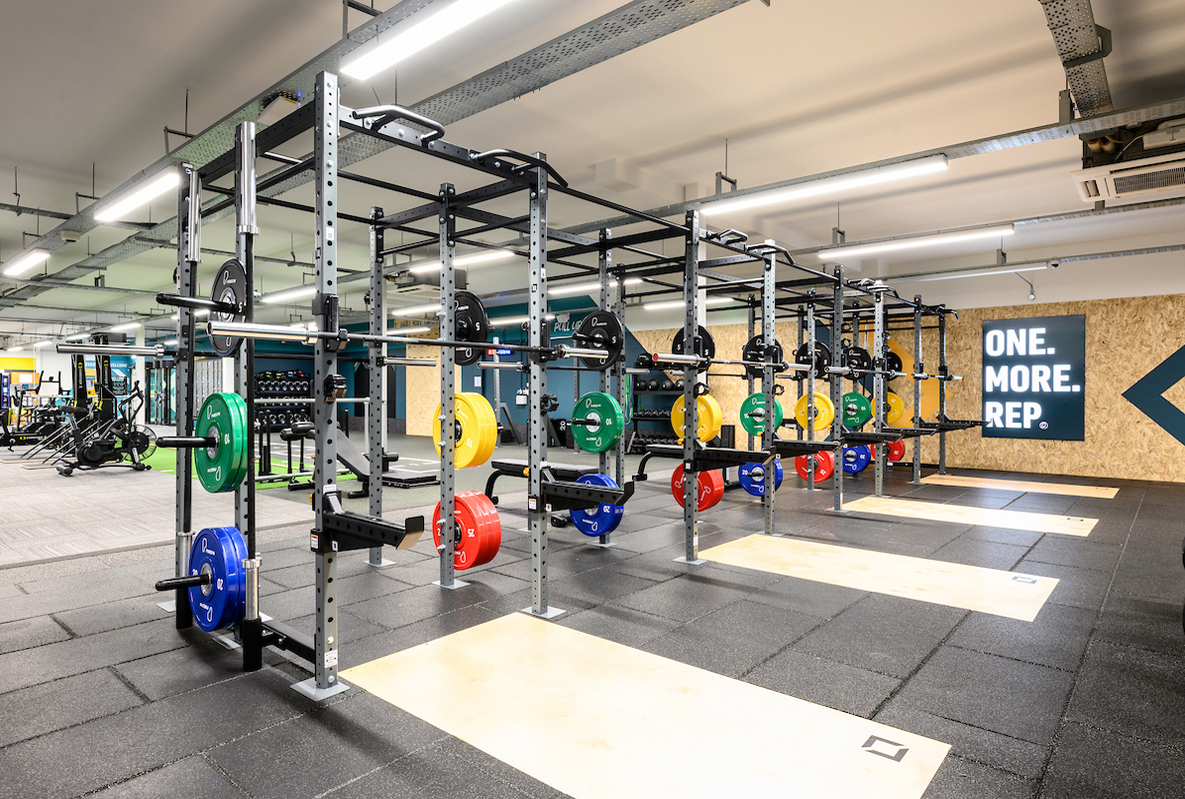
Strength training places different demands on a gym floor. It’s less linear than cardio. Members move between racks, benches, cables, dumbbells and open floor space. They share equipment, rest between sets and often train in small groups. That means layout, flow and zoning matter just as much as the equipment itself.
This is where operators need to look at the gym floor as one connected ecosystem where all elements are interdependent.
Racks, cables and storage can’t be planned in isolation. Storage, for example, is often treated as a background detail, but when it’s positioned properly, it can reduce clutter, improve flow and make the space feel more professionally managed. In some cases, storage can double as functional training equipment, helping operators get more value from the same footprint.
Meeting mixed demand
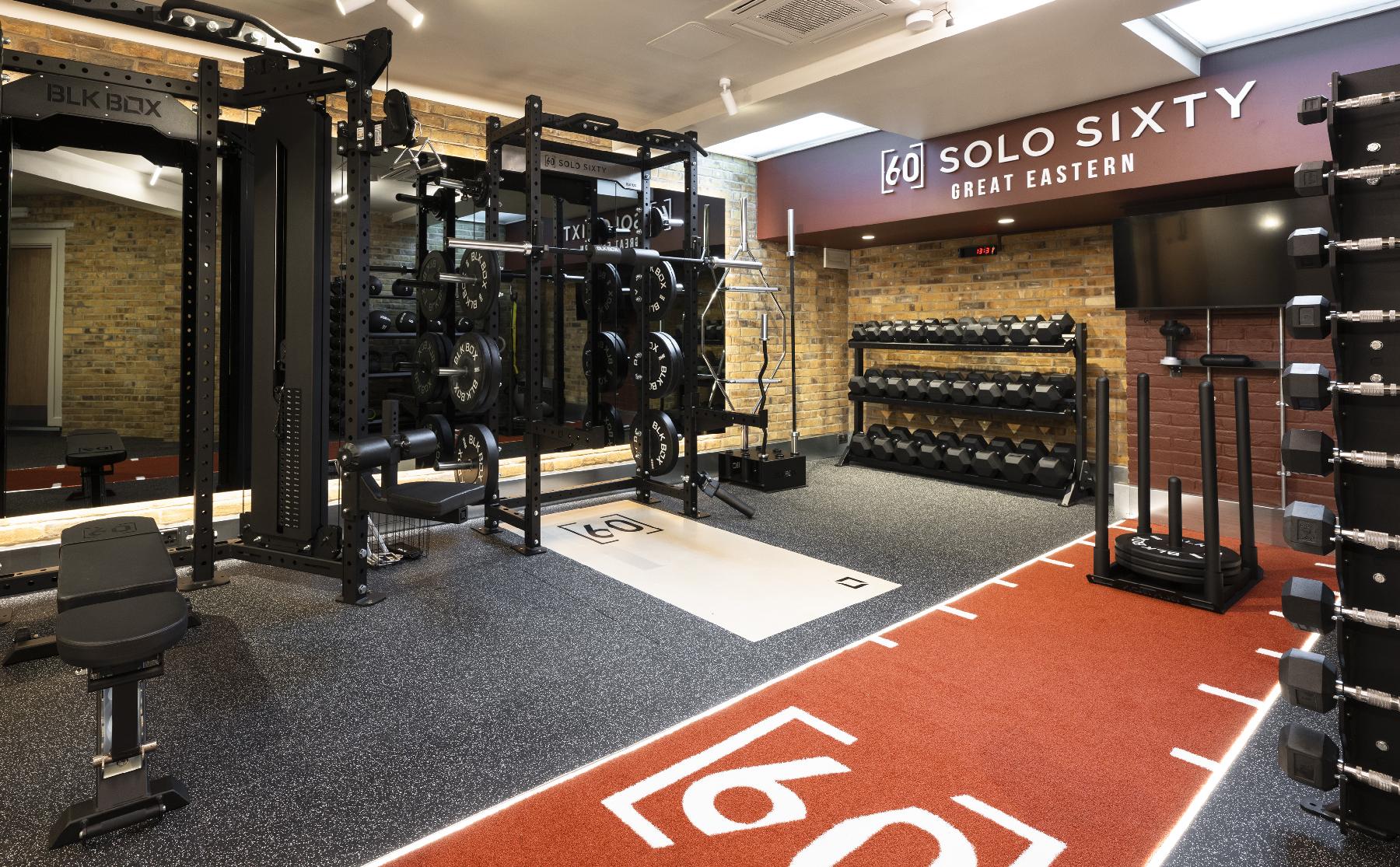
We see this across a wide range of projects. For high-footfall operators such as PureGym, the challenge is often capacity: how to allow more members to train at once without making the space feel crowded. For Nuffield Health, the requirement is often broader, supporting everyone from general fitness users to those following more structured strength programmes. In mixed-use destinations such as Solo60, the priority is creating a full-service training environment delivered in a small footprint.
The common thread is that good design has to remove friction. A well-planned functional or free-weights area shouldn’t feel cramped or intimidating; there needs to be space to move and clear guidance on where equipment should be stored when it’s not in use. It should reduce waiting time, improve safety and allow the floor to flex between individual training, group training and PT sessions.
It’s important that operators create evergreen, future-proofed spaces that can adapt as training styles evolve. Done well, modern gym design improves more than appearance. It supports capacity, member confidence, flexible training styles and retention.
Members are more likely to return to spaces that feel easy to use, well organised and culturally relevant – spaces that reflect how people want to train now, without becoming obsolete when the next trend in fitness takes hold.
Strength training should no longer be confined to a corner of the gym. For many operators, it’s one of the main reasons members join, visit and stay. If strength training isn’t front and centre of your member offering, you’re falling behind.
More: www.blkboxfitness.com
■ Members’ needs can usually be met with better layout, flow design and zoning
■ Don’t meet increased demand by just adding more strength machines, especially if the footprint is limited
■ Well-planned layout can create a space that flexes between training with friends, training alone and doing personal training
■ Clever storage can eliminate a cramped feel
■ Some storage can serve as functional training equipment where space is at a premium
Editor's letter

HCM People

HCM People

Sponsored

Interview

Sponsored

Talking point

Sponsored

Research

Sponsored

Life Lessons

Sponsored

Strength

Supplier Showcase

Sponsored

Research







Work is underway in Madrid on one of Europe’s most significant multi-functional complexes, ...


















Although gym floor demand has shifted towards free-weights, racks, cables and functional training zones, many facilities are still planned around a cardio-led model of use.
That gap matters. When layouts fail to reflect how members train, capacity becomes harder to manage, the customer experience becomes less consistent and valuable space underperforms.
The opportunity lies in how the space is planned, so layout, flow, zoning, storage, flooring and acoustics all work together. In many health and fitness clubs, the pressure shows up quickly: overcrowded racks, busy dumbbell zones, congested walkways and members waiting for key pieces of kit.
The natural response is to add more equipment, but that only works if the space can support it.
Strength training kit no longer sits in a corner of the gym. It’s the main reason many members join, visit and stay
The right zoning
Strength training places different demands on a gym floor. It’s less linear than cardio. Members move between racks, benches, cables, dumbbells and open floor space. They share equipment, rest between sets and often train in small groups. That means layout, flow and zoning matter just as much as the equipment itself.
This is where operators need to look at the gym floor as one connected ecosystem where all elements are interdependent.
Racks, cables and storage can’t be planned in isolation. Storage, for example, is often treated as a background detail, but when it’s positioned properly, it can reduce clutter, improve flow and make the space feel more professionally managed. In some cases, storage can double as functional training equipment, helping operators get more value from the same footprint.
Meeting mixed demand
We see this across a wide range of projects. For high-footfall operators such as PureGym, the challenge is often capacity: how to allow more members to train at once without making the space feel crowded. For Nuffield Health, the requirement is often broader, supporting everyone from general fitness users to those following more structured strength programmes. In mixed-use destinations such as Solo60, the priority is creating a full-service training environment delivered in a small footprint.
The common thread is that good design has to remove friction. A well-planned functional or free-weights area shouldn’t feel cramped or intimidating; there needs to be space to move and clear guidance on where equipment should be stored when it’s not in use. It should reduce waiting time, improve safety and allow the floor to flex between individual training, group training and PT sessions.
It’s important that operators create evergreen, future-proofed spaces that can adapt as training styles evolve. Done well, modern gym design improves more than appearance. It supports capacity, member confidence, flexible training styles and retention.
Members are more likely to return to spaces that feel easy to use, well organised and culturally relevant – spaces that reflect how people want to train now, without becoming obsolete when the next trend in fitness takes hold.
Strength training should no longer be confined to a corner of the gym. For many operators, it’s one of the main reasons members join, visit and stay. If strength training isn’t front and centre of your member offering, you’re falling behind.
More: www.blkboxfitness.com
■ Members’ needs can usually be met with better layout, flow design and zoning
■ Don’t meet increased demand by just adding more strength machines, especially if the footprint is limited
■ Well-planned layout can create a space that flexes between training with friends, training alone and doing personal training
■ Clever storage can eliminate a cramped feel
■ Some storage can serve as functional training equipment where space is at a premium
Editor's letter
HCM People
HCM People
Sponsored
Interview
Sponsored
Talking point
Sponsored
Research
Sponsored
Life Lessons
Sponsored
Strength
Supplier Showcase
Sponsored
Research
Work is underway in Madrid on one of Europe’s most significant multi-functional complexes, ...