














GET HCM
magazine
Sign up for the FREE digital edition of HCM magazine and also get the HCM ezine and breaking news email alerts.
Not right now, thanksclose this window I've already subscribed!
Follow Health Club Management on Twitter Like Health Club Management on Facebook Join the discussion with Health Club Management on LinkedIn
FITNESS, HEALTH, WELLNESS

features

SIBEC review: Talking points

SIBEC UK took place in May, attracting more than 150 operators and suppliers from the leisure and education sectors. Katie Lewis summarises the key points raised in the Question Time-style debate, hosted by Mike Hill of Leisure-net Solutions

Published in Health Club Management 2013 issue 7

Question 1: The leisure and education sectors are under huge pressure to address obesity. What initiatives and actions are going to make the
biggest impact?

Asked by: Wesley Hutchins, Assistant Director, Community Services, Borough of Broxbourne

Panel Members - Responses

John Wileman
Making local leisure provision more accessible to a wider demographic. Not everybody feels comfortable walking into a leisure centre. In Nottingham, we’re working with other community providers, such as resident and tenant associations, to deliver a wider leisure service in village halls and community centres. If we train residents to run activities such as walking or jogging sessions, we will hopefully break down some barriers. Once people feel comfortable exercising in familiar environments, we can signpost them into our leisure centres.

David Stalker
Better community engagement is the answer. The leisure sector will not make a significant impact on the obesity issue working in silos. Instead, we need to concentrate efforts on building partnerships with other community organisations to deliver activities. Initiatives such as The Responsibility Deal may also make it possible to attract private sector investment.

Neil Mosley
Many students are inactive during their time at university, with cost cited as a main reason for this. Higher Education organisations are now recognising this issue. In some cases, more effort is being made to provide smaller leisure facilities on residential campuses, negating travel fees and increasing ease of access. Many universities are also subsidising leisure provision, offering free use to students at scheduled times.

Lee Mason
Providing more choice of physical activity is what’s needed. A community has many different leisure needs and a ‘one size fits all’ approach does not work.

Many NGBs are having significant success in attracting new participants by remodelling their traditional game format to meet the needs of specific groups within the community. Perhaps the fitness sector needs to do the same.

Question 2: Do you think that the thousands of pounds spent on gym equipment every year, without data to support this investment, is money well spent?

Asked by: Rory McGown, MD, GYMetrix

Panel Members - Responses

David Stalker
There is little doubt that leisure operators need to become better at data collection and analysis. Without solid evidence to support the purchases we make and the actions we take, we’re going to struggle to stake our case for investment from either government or the private sector. Making better use of the technology available to measure, track and analyse is the key to the growth of the sector.

John Wileman
There’s little doubt that the purchase of gym equipment has had a huge impact on community leisure provision. Let’s not forget, it was the arrival of the gym into leisure centres that drove the direct debit model and enabled the sector to enjoy huge revenues, subsidising other physical activity services and provisions.

So yes, it has been money well spent. Moving forward we need to direct more resources to staff training. This will help ensure users receive the education necessary for them to make the right exercise choices.

Question 3: What are the key areas of focus moving forward, and what will success look like?

Asked by: Christian Harris, Director, Bonasystems

Panel Members - Responses

Martin Kay
Leisure provision used to be focused on community needs, but increasingly it’s becoming focused on reducing the subsidy and generating more revenue. Unfortunately, the balance sheet is now a Key Performance Indicator when it comes to leisure, which is a very short-sighted approach.

Neil Mosley
Our aim is to deliver a valuable experience to students while preparing them for the workforce. Success is a highly skilled, healthy labour pool.

Question 4: What role can Higher Education play in driving participation?

Asked by: Phil Steele, Director of Sport, UEA Sports Park

Panel Members - Responses

Lee Mason
Universities play a key role in driving participation. The CSP Network does not own any assets and is totally reliant on partners to deliver physical activity to the local community. Some of the Network’s activity centres are encouraging universities to open facilities to the community during evenings and weekends. This is a win-win scenario: it provides the local population with a wider choice of affordable facilities while generating extra income for the hosting site.

Question 5: If you were given £500,000, how would you spend it?

Asked by: Stuart Lockwood, CEO, Oldham
Community Leisure

Panel Members - Responses

Martin Kay
Investment in leisure assets and the development of partnerships that deliver a wider choice of leisure activities to the local community.

Lee Mason
I’d use it to leverage matched funding from government and employers. Funds could be used to train physical activity activators, thereby creating training and employment opportunities. The role of the activators would be to drive participation, resulting in a healthier, more active population.

John Wileman
I’d invest it in the development of a multi-functional sports band. Worn on the wrist, the sports band would log and track physical activity. It would also be used to collect reward points, for example in partnership with a large supermarket chain, which could be redeemed against activity sessions at the local leisure centre.

David Stalker
Gain matched funding from the commercial sector to grow the investment. Capital would then be used to fund peer-based research, to provide better evidence of the positive impact our leisure services are having on the local population. Strong evidence of success will, moving forward, enable the sector to stake a strong case for funding via bodies such as Public Health England.

Neil Mosley
I’d introduce a health, fitness and wellbeing qualification that carries as much weight as core GCSEs such as English and maths. Individuals would be assessed according to their health, and would achieve a grade depending on the state of their health and their efforts to improve it. This would give less academic youngsters a chance to excel, while giving employers a good indication of the health of potential new recruits.


Sign up here to get HCM's weekly ezine and every issue of HCM magazine free on digital.
Panel members: David Stalker, CEO, ukactive
Panel members: Neil Mosley, Head of sport, Imperial College 
London
Panel members: Neil Mosley, Head of sport, Imperial College London
Panel Members: Martin Kay, General Manager, Rossendale Leisure Trust, & Member of the National Sporta Executive Committee
Panel Member: Lee Mason, CEO, 
County Sports Partnership Network
Panel Member: Lee Mason, CEO, County Sports Partnership Network
Panel Member: John Wileman, Head of Sport & Leisure, Nottingham
https://www.leisureopportunities.co.uk/images/HCM2013_7review.gif
Katie Lewis summarises key points raised at the Question Time industry debate at SIBEC UK in May
Life Fitness, Keiser UK Ltd, Concept Fitness International, HUR (UK) Health and Fitness Equipement, MuJo, Telju, Precor, Matrix ,resistance products for fitness clubs ,SIBEC UK, education, gym equipment, obesity
Opinion
promotion
Strength training has moved from the margins to the mainstream.
Opinion: Building smarter strength spaces for today’s operators
Featured supplier news
Featured supplier news: Introducing a new era of Nautilus Leverage
Strength training has never been more important for member retention, facility differentiation and long-term commercial success.
Featured supplier news
Featured supplier news: Legends never die: four legends, four philosophies of life
Panatta brought together four of the most influential figures in bodybuilding history on the stage of RiminiWellness 2026: Phil Heath, Lee Haney, Ronnie Coleman and Hany Rambod.
Company profiles
Company profile: Parkwood Leisure
Parkwood Leisure provides bespoke management and professional support services for leisure, cultural, and health and ...
Company profiles
Company profile: Wellhub
Wellhub acts as a corporate sales channel, bringing new, highquality members to your business, by ...
Supplier Showcases
Supplier Showcase - Future-proofing
Featured press releases
Speedflex (UK press release: Inclusive Fitness in action: The Speedflex Blade at Gym Possible
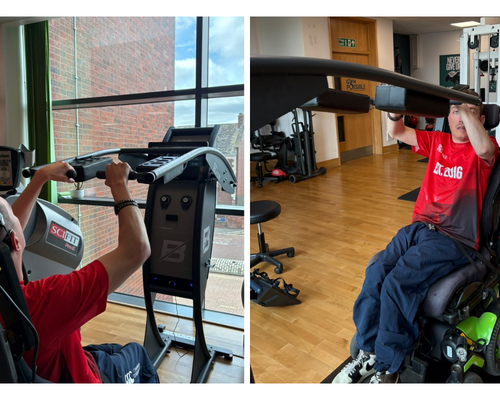
Following the successful installation of the Speedflex Blade at Gym Possible, the UK based charity gym dedicated to making exercise accessible for people with physical disabilities, the innovative training solution has quickly become one of the facility’s
Featured press releases
BLK BOX press release: Inside the Player Gym at The Open, equipped by BLK BOX
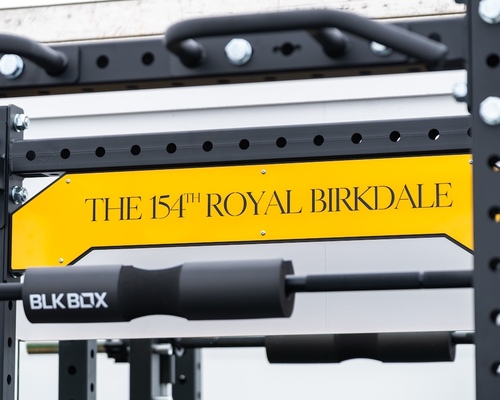
The performance facility at Royal Birkdale gives the world’s leading golfers access to strength, conditioning, mobility and recovery equipment throughout Championship week.
Directory
Lockers
Crown Sports Lockers: Lockers
Water experiences and hydrotherapy solutions
Aquaform s.r.l.: Water experiences and hydrotherapy solutions
Hot tubs
MSpa International Ltd: Hot tubs
Spa and beauty equipment
Living Earth Crafts: Spa and beauty equipment
Fitness tracking platform
SpiviTech: Fitness tracking platform
Industrial washing machines
Miele Company Limited: Industrial washing machines

features

SIBEC review: Talking points

SIBEC UK took place in May, attracting more than 150 operators and suppliers from the leisure and education sectors. Katie Lewis summarises the key points raised in the Question Time-style debate, hosted by Mike Hill of Leisure-net Solutions

Published in Health Club Management 2013 issue 7

Question 1: The leisure and education sectors are under huge pressure to address obesity. What initiatives and actions are going to make the
biggest impact?

Asked by: Wesley Hutchins, Assistant Director, Community Services, Borough of Broxbourne

Panel Members - Responses

John Wileman
Making local leisure provision more accessible to a wider demographic. Not everybody feels comfortable walking into a leisure centre. In Nottingham, we’re working with other community providers, such as resident and tenant associations, to deliver a wider leisure service in village halls and community centres. If we train residents to run activities such as walking or jogging sessions, we will hopefully break down some barriers. Once people feel comfortable exercising in familiar environments, we can signpost them into our leisure centres.

David Stalker
Better community engagement is the answer. The leisure sector will not make a significant impact on the obesity issue working in silos. Instead, we need to concentrate efforts on building partnerships with other community organisations to deliver activities. Initiatives such as The Responsibility Deal may also make it possible to attract private sector investment.

Neil Mosley
Many students are inactive during their time at university, with cost cited as a main reason for this. Higher Education organisations are now recognising this issue. In some cases, more effort is being made to provide smaller leisure facilities on residential campuses, negating travel fees and increasing ease of access. Many universities are also subsidising leisure provision, offering free use to students at scheduled times.

Lee Mason
Providing more choice of physical activity is what’s needed. A community has many different leisure needs and a ‘one size fits all’ approach does not work.

Many NGBs are having significant success in attracting new participants by remodelling their traditional game format to meet the needs of specific groups within the community. Perhaps the fitness sector needs to do the same.

Question 2: Do you think that the thousands of pounds spent on gym equipment every year, without data to support this investment, is money well spent?

Asked by: Rory McGown, MD, GYMetrix

Panel Members - Responses

David Stalker
There is little doubt that leisure operators need to become better at data collection and analysis. Without solid evidence to support the purchases we make and the actions we take, we’re going to struggle to stake our case for investment from either government or the private sector. Making better use of the technology available to measure, track and analyse is the key to the growth of the sector.

John Wileman
There’s little doubt that the purchase of gym equipment has had a huge impact on community leisure provision. Let’s not forget, it was the arrival of the gym into leisure centres that drove the direct debit model and enabled the sector to enjoy huge revenues, subsidising other physical activity services and provisions.

So yes, it has been money well spent. Moving forward we need to direct more resources to staff training. This will help ensure users receive the education necessary for them to make the right exercise choices.

Question 3: What are the key areas of focus moving forward, and what will success look like?

Asked by: Christian Harris, Director, Bonasystems

Panel Members - Responses

Martin Kay
Leisure provision used to be focused on community needs, but increasingly it’s becoming focused on reducing the subsidy and generating more revenue. Unfortunately, the balance sheet is now a Key Performance Indicator when it comes to leisure, which is a very short-sighted approach.

Neil Mosley
Our aim is to deliver a valuable experience to students while preparing them for the workforce. Success is a highly skilled, healthy labour pool.

Question 4: What role can Higher Education play in driving participation?

Asked by: Phil Steele, Director of Sport, UEA Sports Park

Panel Members - Responses

Lee Mason
Universities play a key role in driving participation. The CSP Network does not own any assets and is totally reliant on partners to deliver physical activity to the local community. Some of the Network’s activity centres are encouraging universities to open facilities to the community during evenings and weekends. This is a win-win scenario: it provides the local population with a wider choice of affordable facilities while generating extra income for the hosting site.

Question 5: If you were given £500,000, how would you spend it?

Asked by: Stuart Lockwood, CEO, Oldham
Community Leisure

Panel Members - Responses

Martin Kay
Investment in leisure assets and the development of partnerships that deliver a wider choice of leisure activities to the local community.

Lee Mason
I’d use it to leverage matched funding from government and employers. Funds could be used to train physical activity activators, thereby creating training and employment opportunities. The role of the activators would be to drive participation, resulting in a healthier, more active population.

John Wileman
I’d invest it in the development of a multi-functional sports band. Worn on the wrist, the sports band would log and track physical activity. It would also be used to collect reward points, for example in partnership with a large supermarket chain, which could be redeemed against activity sessions at the local leisure centre.

David Stalker
Gain matched funding from the commercial sector to grow the investment. Capital would then be used to fund peer-based research, to provide better evidence of the positive impact our leisure services are having on the local population. Strong evidence of success will, moving forward, enable the sector to stake a strong case for funding via bodies such as Public Health England.

Neil Mosley
I’d introduce a health, fitness and wellbeing qualification that carries as much weight as core GCSEs such as English and maths. Individuals would be assessed according to their health, and would achieve a grade depending on the state of their health and their efforts to improve it. This would give less academic youngsters a chance to excel, while giving employers a good indication of the health of potential new recruits.

Sign up here to get HCM's weekly ezine and every issue of HCM magazine free on digital.
Panel members: David Stalker, CEO, ukactive
Panel members: Neil Mosley, Head of sport, Imperial College 
London
Panel members: Neil Mosley, Head of sport, Imperial College London
Panel Members: Martin Kay, General Manager, Rossendale Leisure Trust, & Member of the National Sporta Executive Committee
Panel Member: Lee Mason, CEO, 
County Sports Partnership Network
Panel Member: Lee Mason, CEO, County Sports Partnership Network
Panel Member: John Wileman, Head of Sport & Leisure, Nottingham
https://www.leisureopportunities.co.uk/images/HCM2013_7review.gif
Katie Lewis summarises key points raised at the Question Time industry debate at SIBEC UK in May
Life Fitness, Keiser UK Ltd, Concept Fitness International, HUR (UK) Health and Fitness Equipement, MuJo, Telju, Precor, Matrix ,resistance products for fitness clubs ,SIBEC UK, education, gym equipment, obesity
Opinion
promotion
Strength training has moved from the margins to the mainstream.
Opinion: Building smarter strength spaces for today’s operators
Featured supplier news
Featured supplier news: Introducing a new era of Nautilus Leverage
Strength training has never been more important for member retention, facility differentiation and long-term commercial success.

Featured supplier news
Featured supplier news: Legends never die: four legends, four philosophies of life
Panatta brought together four of the most influential figures in bodybuilding history on the stage of RiminiWellness 2026: Phil Heath, Lee Haney, Ronnie Coleman and Hany Rambod.

Company profiles
Company profile: Parkwood Leisure
Parkwood Leisure provides bespoke management and professional support services for leisure, cultural, and health and ...
Company profiles
Company profile: Wellhub
Wellhub acts as a corporate sales channel, bringing new, highquality members to your business, by ...
Supplier Showcases
Supplier Showcase - Future-proofing
Featured press releases
Speedflex (UK press release: Inclusive Fitness in action: The Speedflex Blade at Gym Possible
Following the successful installation of the Speedflex Blade at Gym Possible, the UK based charity gym dedicated to making exercise accessible for people with physical disabilities, the innovative training solution has quickly become one of the facility’s
Featured press releases
BLK BOX press release: Inside the Player Gym at The Open, equipped by BLK BOX
The performance facility at Royal Birkdale gives the world’s leading golfers access to strength, conditioning, mobility and recovery equipment throughout Championship week.
Directory
Lockers
Crown Sports Lockers: Lockers
Water experiences and hydrotherapy solutions
Aquaform s.r.l.: Water experiences and hydrotherapy solutions
Hot tubs
MSpa International Ltd: Hot tubs
Spa and beauty equipment
Living Earth Crafts: Spa and beauty equipment
Fitness tracking platform
SpiviTech: Fitness tracking platform
Industrial washing machines
Miele Company Limited: Industrial washing machines
Search news, features & products:
Find a supplier:
Partner sites