



















Follow Health Club Management on Twitter Like Health Club Management on Facebook Join the discussion with Health Club Management on LinkedIn
FITNESS, HEALTH, WELLNESS

features

Retention: Reaching capacity

Getting retention right is the key to success in gyms with memberships. Paul Bedford has turned retention into a science. We share case studies and top tips from the latest retention research
By Dr Paul Bedford PhD, Retention Guru | Published in Health Club Management 2019 issue 2
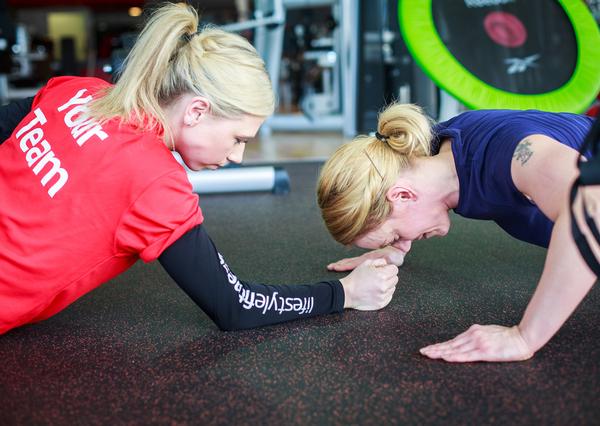
Lifestyle Fitness saw retention improve when they set up a digital retention journey, with emails and videos to guide new users

etention expert Dr Paul Bedford runs a ‘Zero Zero’ workshop as part of his Retention Academy, which asks operators what would happen if they had zero new members sign up.

“Rather than identifying that they’d eventually lose all their members, most simply recognise they’d be out of business within a few months,” he says.

“The opposite, however, is what if none of them left? The club would quickly reach capacity and start turning people away. That’s why holding onto members is so important.”

Wellington club
Situated on a private college campus, you’d be forgiven for thinking Wellington Health and Fitness Club caters for a young audience. In fact, more than half the Berkshire club’s 2,500 private members (there are also 500 staff members) are over 50, with 820 of those aged 59-79 and 136 between 80-95. Over 350 members are aged between 40-49.

“A staggering 600 have been members between 10-30 years. We have a very loyal group,” says Ian Davis, commercial manager of Wellington College Enterprises, which manages the club. In particular, it has a long-running 50+ group called ‘The Invincibles’, whose 490 members meet three times a week to exercise and socialise.

Embracing this, everyone’s given free membership on their 90th birthday and there’s a celebration for members on their 80th birthday too. “Telling us how important the club is to them is always part of their speech,” says Davis.

“It’s very emotional and ties in with lessons from Paul Bedford on creating clubs within clubs; a community where people have a sense of belonging. Many members have lost their partner and/or live far away from family, so this group provides a lifeline for them.”

While the club’s Net Promoter Score (NPS) may not always reflect this, it’s currently lower than the national average and Davis believes they’re doing a good job. “The key is knowing why the NPS is at the level it is. Our two biggest complaints are that it’s difficult to park; we’ve temporarily lost parking spaces due to building work, and that they can’t book a class; so we’ve capped our membership at 3,000.

“Being grumpy is a privilege of age, but if they’ve scored low they’ll add a positive comment, usually about the staff. For us it’s about eye contact, smiling and talking to the members. We know it works because our NPS tells us so.

“If you look after people they’ll repay you with loyalty. Our annual renewal rates sit at 86 per cent and we have more than 150 people on the waiting list.”

Lifestyle Fitness
A few years ago, Lifestyle Fitness’s retention rate was heavily reliant on contract length and non-targeted engagement activity. Analysis showed that by week four, many members used the gym less than once per month and 15 per cent of online joiners never attended.

“We needed to put measures in place that would have a genuine impact on retention across our mixed portfolio of local authority sites and low cost clubs, says commercial manager, James Lawrence. “Paul Bedford helped us identify a new member journey and create an interaction programme, encouraging members to attend from the start to help build routines.”

“We created a digital retention journey to help new members feel comfortable with what to expect, and set up trigger-based emails, including videos that cover everything from how you enter the club and use the fingerprint system, to where the toilets and changing areas are, so nothing is a surprise.

“Access control informs us who’s visited, so we can tailor the content, tone and frequency of follow up messages around each member’s visit behaviour.

Lawrence continues: “Early emails might suggest a group exercise class and show how to log on and book, what happens in the class and what to bring with them, so they won’t feel out of place. We support the digital side with human interaction; a welcome call to make sure they’ve booked in for an induction. Basically breaking down barriers to attending during those early days.”

Lifestyle Fitness started the programme six months ago, but it’s already boosted new member visit frequency from 1.7 to 2.2 times a week. Lawrence continues: “The additional half a visit has made a huge difference to new member life. The next challenge is maintaining this to impact lifetime membership.

“Our ultimate aim is to offer more flexible membership options; not selling on the basis that they can leave, but reducing barriers to join and providing an excellent service so they stay.”

Ian Davis, Wellington College Enterprises
"If you look after people they’ll repay you with loyalty. Our annual renewal rates sit at 86 per cent and we have more than 150 people on the waiting list"
10 retention tips
It costs operators far less to keep existing members than to constantly find new ones. Implementing these tips could make a big difference to retention rates and revenues

1. Customer visits
On average, 53 per cent of customers visit less than once per week and 20 per cent once a week. How much change can they experience? It’s like going on a diet once every eight days! Around 15 per cent of new members take two weeks to get started, but the longer it takes, the quicker they quit, so getting them to visit is vital.
We need to create routines; a regular fixture in their diary.
Talk to customers about the number of visits that they’re going to make each month, not each week. Encourage them to attend between four and 12 times per month. It’s much easier for them to manage if they’ve got a whole month to achieve it.
Compared to people who visit once a week, members who visit twice per week stay an extra seven months. Two to three visits adds an extra 19 months and three times a week or more results in 28 months of extra membership.

2. Interactions
Members who are ignored are more than twice as likely to cancel than members who are always spoken to. So simply saying hello to them halves the risk of them cancelling.
In fact, both reception and fitness staff speaking to members reduces cancellations by 44 per cent, whilst simply speaking to a member once a month increases the chance of them staying by 20 per cent. Up that to two to three times a month and it increases by 50 per cent. If a member is spoken to on four separate visits each month it jumps by 80 per cent. But these need to be separate visits – three interactions in one visit won’t cut it!

3. Programming
Exercises must directly relate to the member’s goal. They will drop anything they don’t think’s relevant.

4. Goals
People join health clubs to achieve something, so progressing towards their goal impacts retention. The risk of cancellation goes down by 10 per cent for each goal the member makes progress on. This can simply be visits. It doesn’t need to be weight lost or distance run.
There’s a strong association between progression towards goals and whether the member is spoken to. It’s called cognitive bias. The brain has to justify why you’re putting in the effort when nothing’s changing. But if a member is spoken to it feels as though they’re achieving something, building a relationship with the gym team.
Members who report lower progress, but who are always spoken to are 50 per cent less likely to cancel each month, compared to members with low progress and who are never spoken to. If all low progress members were frequently spoken to, 10 percent of cancellations would be avoided.

5. Inductions
A well-structured induction has a big impact on how long a new exerciser stays. During my PhD I studied two groups. Both had a one-hour gym induction/orientation, including goal-setting, how to use the equipment and an exercise programme. But with Group B we added 30 minutes on the gym floor the first week, using reinforcing positive psychological language and behaviour change techniques. An extra 20 minutes the second week and 10 minutes in the third week or fourth week, to build their confidence and competence. Group B stayed an additional seven months.

6. Group training
Some level of group training reduces cancellations by 18 per cent because it creates routines, as the class takes place on a certain day and time. So getting people involved in classes, training with partners or doing small group PT will assist with retention.

7. Contracts
People who commit to 12 months stay longer than those paying month by month. Savvy exercisers are more likely to buy a 12-month agreement because they get a deal and know they’ll use it. Conversely, new exercisers are more likely to buy monthly.
The North America research I carried out for IHRSA found people paying month by month stay for 15 months, compared to 36 months for those on 12 month agreements.

8. Queues
People don’t like empty gyms; a good atmosphere reinforces that they’ve done the right thing, so don’t get hung up on people queuing for equipment, it really has very little impact on member cancellations – just 5 per cent.

9. Marketing
Younger members quit faster than older members – 16- to 24-year-olds have an average 15 months membership, compared to 55 and overs at 22 months. So simply having older customers will increase retention. Over 35s are more likely to be in employment with a fixed location, making it easier to create routine. If all members were at least 35, operators could reduce cancellations by 30 per cent.

10. Distance
Only having to travel five minutes adds an extra 11 months to a membership, so targeted marketing is essential. Aim to attract the people who live close and work nearby to your facility.

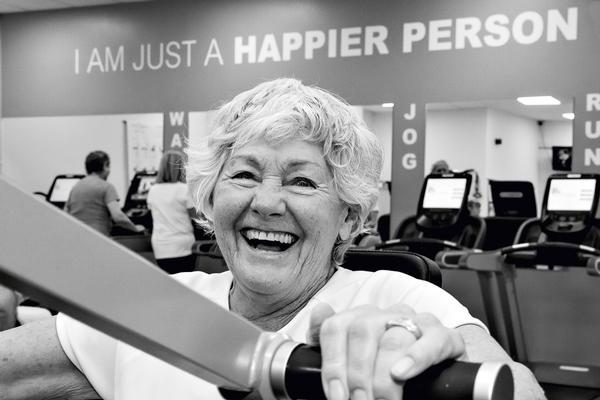
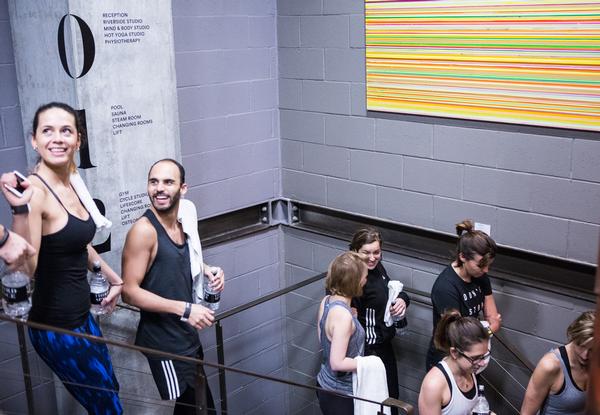
If a member is spoken to it helps them feel like they’re achieving something IMAGE COURTESY OF PUREGYM
Member retention
What makes an impact?

Members complete an induction
+ 7 months

Members come at least twice a week
+ 7 months

Five minutes travel time to the gym
+ 11 months

Members are aged 34-35
+ 12 months
Sign up here to get HCM's weekly ezine and every issue of HCM magazine free on digital.
Older members stay much longer than younger members. If all members were over 35, cancellations would be cut by 30 per cent
Members who pay annually stay for more than twice as long as those paying monthly / IMAGE COURTESY OF THIRD SPACE
https://www.leisureopportunities.co.uk/images/imagesX/52460_605720.jpg
'On average, 53 per cent of customers visit the gym less than once per week, and 20 per cent visit once a week. How much change can they experience?' – Retention expert Paul Bedford shares his tips
Paul Bedford Ian Davis, Wellington College Enterprises,Paul Bedford, Retention, retention research, Wellington College Enterprises
HCM magazine
Shaping the future of the sector with a clear mission, unified voice and open channels of communication. This is the ambition of UK Active’s new chair
HCM magazine
Software suppliers explain how AI, automation and connected digital experiences can work for the good of operators and consumers
HCM magazine
The fitness industry is mourning the passing of Les Mills, a founding father of fitness, as Kath Hudson reports
HCM magazine
After decades of focusing on adult audiences, operators are starting to engage young people – unlocking growth opportunities while supporting the health and wellbeing of future generations
HCM magazine
The new CEO of UK Active talks to HCM about the gym-curious and why he believes the sector can double in size by the end of the next decade
HCM promotional features
Sponsored
Social fitness the missing link to member engagement, according to a new Myzone report
HCM promotional features
Sponsored
Greg Bradley looks at the shift towards strength training in gyms and advises on how operators can create the ultimate training environment
HCM promotional features
Sponsored
Third Space partnered with IndigoFitness to deliver a bespoke training space for its new club at The Whiteley
HCM promotional features
Sponsored
Starpool supports Olympic champion Marcell Jacobs, says Riccardo Turri
HCM promotional features
Sponsored
David Lloyd is stepping up its commitment to women’s health as it continues to explore what fit-for-purpose looks like for the female population
HCM promotional features
Sponsored
Find out how your gym can tap into the corporate wellness boom
HCM promotional features
Sponsored
SnowDome Fitness has added 50 per cent more space with cutting-edge Technogym solutions
HCM promotional features
Sponsored
EGYM has opened a new HQ in Paternoster Square, London and revealed a range of new launches
HCM promotional features
Latest News
The UK's four Chief Medical Officers have published a refreshed edition of  Physical activity guidelines: ...
Latest News
Places Leisure has exchanged contracts to build and operate a flagship £60m water and wellness ...
Latest News
The Republic of Ireland will become the latest market in PureGym’s expanding international portfolio, with ...
Latest News
Sophie Lawler, CEO of Total Fitness, has launched a leadership coaching business aimed at helping ...
Latest News
Anytime Fitness opened more than one club a day in 2025 and is on track ...
Latest News
The £33.9 million Leighton Leisure and Community Centre has opened in Leighton Buzzard, UK, creating ...
Latest News
YogaSix, the yoga brand owned by Xponential Fitness, has launched a heated, Pilates-inspired class called ...
Latest News
Walnuts Leisure Centre in Orpington, in the London Borough of Bromley, has reopened following a ...
Opinion
promotion
Strength training has moved from the margins to the mainstream.
Opinion: Building smarter strength spaces for today’s operators
Featured supplier news
Featured supplier news: Cornerstone Connect helps Active Blackpool tackle health inequalities
Active Blackpool is deploying Cornerstone Connect, a new digital interface allowing disparate information from multiple systems to be aggregated into one dataset, to support its focus on reducing health inequalities and improving healthy life expectancy.
Featured supplier news
Featured supplier news: Legends never die: four legends, four philosophies of life
Panatta brought together four of the most influential figures in bodybuilding history on the stage of RiminiWellness 2026: Phil Heath, Lee Haney, Ronnie Coleman and Hany Rambod.
Company profiles
Company profile: FIBO
FIBO pursues the vision of a strong and healthy society and as a global network ...
Company profiles
Company profile: Speedflex (UK & Ireland) Limited
Speedflex offers safe and effective, high intensity, low impact HIIT training in a variety of ...
Supplier Showcases
Supplier Showcase - Future-proofing
Catalogue Gallery
Click on a catalogue to view it online
Featured press releases
Alliance Leisure Services (Design, Build and Fund) press release: Studio transformation completed at Burscough Wellbeing and Leisure Hub
Alliance Leisure are proud to have supported West Lancashire Borough Council to deliver a £300,000 studio transformation project at Burscough Wellbeing and Leisure Hub, creating a dedicated group exercise space designed to meet growing demand for fitness
Featured press releases
Pure Energy Music press release: Could you be the last one standing? The new 3½-minute fitness challenge everyone's talking about
#HoldThatBody is a new 3½-minute fitness challenge inviting people everywhere to put their strength, determination and staying power to the test. All you need is a squat or a press- up, one specially engineered soundtrack and the determination not to give up.
Directory
Spa and beauty equipment
Living Earth Crafts: Spa and beauty equipment
Lockers
Crown Sports Lockers: Lockers
Industrial washing machines
Miele Company Limited: Industrial washing machines
Fitness tracking platform
SpiviTech: Fitness tracking platform
Hot tubs
MSpa International Ltd: Hot tubs
Water experiences and hydrotherapy solutions
Aquaform s.r.l.: Water experiences and hydrotherapy solutions
Property & Tenders
Stratford, East London.
Lee Valley Regional Park Authority
Property & Tenders
Y Felinheli, LL56 4QN
Newmark
Property & Tenders
Diary dates
21-24 Sep 2026
The Langham Huntington Pasadena , Pasadena, United States
Diary dates
06-08 Oct 2026
Messe Stuttgart, Stuttgart, Germany
Diary dates
22-22 Oct 2026
QEII Conference Centre, London,
Diary dates
26-29 Oct 2027
Koelnmesse Exhibition Centre, Cologne, Germany
Diary dates

features

Retention: Reaching capacity

Getting retention right is the key to success in gyms with memberships. Paul Bedford has turned retention into a science. We share case studies and top tips from the latest retention research

By Dr Paul Bedford PhD, Retention Guru | Published in Health Club Management 2019 issue 2
Lifestyle Fitness saw retention improve when they set up a digital retention journey, with emails and videos to guide new users

etention expert Dr Paul Bedford runs a ‘Zero Zero’ workshop as part of his Retention Academy, which asks operators what would happen if they had zero new members sign up.

“Rather than identifying that they’d eventually lose all their members, most simply recognise they’d be out of business within a few months,” he says.

“The opposite, however, is what if none of them left? The club would quickly reach capacity and start turning people away. That’s why holding onto members is so important.”

Wellington club
Situated on a private college campus, you’d be forgiven for thinking Wellington Health and Fitness Club caters for a young audience. In fact, more than half the Berkshire club’s 2,500 private members (there are also 500 staff members) are over 50, with 820 of those aged 59-79 and 136 between 80-95. Over 350 members are aged between 40-49.

“A staggering 600 have been members between 10-30 years. We have a very loyal group,” says Ian Davis, commercial manager of Wellington College Enterprises, which manages the club. In particular, it has a long-running 50+ group called ‘The Invincibles’, whose 490 members meet three times a week to exercise and socialise.

Embracing this, everyone’s given free membership on their 90th birthday and there’s a celebration for members on their 80th birthday too. “Telling us how important the club is to them is always part of their speech,” says Davis.

“It’s very emotional and ties in with lessons from Paul Bedford on creating clubs within clubs; a community where people have a sense of belonging. Many members have lost their partner and/or live far away from family, so this group provides a lifeline for them.”

While the club’s Net Promoter Score (NPS) may not always reflect this, it’s currently lower than the national average and Davis believes they’re doing a good job. “The key is knowing why the NPS is at the level it is. Our two biggest complaints are that it’s difficult to park; we’ve temporarily lost parking spaces due to building work, and that they can’t book a class; so we’ve capped our membership at 3,000.

“Being grumpy is a privilege of age, but if they’ve scored low they’ll add a positive comment, usually about the staff. For us it’s about eye contact, smiling and talking to the members. We know it works because our NPS tells us so.

“If you look after people they’ll repay you with loyalty. Our annual renewal rates sit at 86 per cent and we have more than 150 people on the waiting list.”

Lifestyle Fitness
A few years ago, Lifestyle Fitness’s retention rate was heavily reliant on contract length and non-targeted engagement activity. Analysis showed that by week four, many members used the gym less than once per month and 15 per cent of online joiners never attended.

“We needed to put measures in place that would have a genuine impact on retention across our mixed portfolio of local authority sites and low cost clubs, says commercial manager, James Lawrence. “Paul Bedford helped us identify a new member journey and create an interaction programme, encouraging members to attend from the start to help build routines.”

“We created a digital retention journey to help new members feel comfortable with what to expect, and set up trigger-based emails, including videos that cover everything from how you enter the club and use the fingerprint system, to where the toilets and changing areas are, so nothing is a surprise.

“Access control informs us who’s visited, so we can tailor the content, tone and frequency of follow up messages around each member’s visit behaviour.

Lawrence continues: “Early emails might suggest a group exercise class and show how to log on and book, what happens in the class and what to bring with them, so they won’t feel out of place. We support the digital side with human interaction; a welcome call to make sure they’ve booked in for an induction. Basically breaking down barriers to attending during those early days.”

Lifestyle Fitness started the programme six months ago, but it’s already boosted new member visit frequency from 1.7 to 2.2 times a week. Lawrence continues: “The additional half a visit has made a huge difference to new member life. The next challenge is maintaining this to impact lifetime membership.

“Our ultimate aim is to offer more flexible membership options; not selling on the basis that they can leave, but reducing barriers to join and providing an excellent service so they stay.”

Ian Davis, Wellington College Enterprises
"If you look after people they’ll repay you with loyalty. Our annual renewal rates sit at 86 per cent and we have more than 150 people on the waiting list"
10 retention tips
It costs operators far less to keep existing members than to constantly find new ones. Implementing these tips could make a big difference to retention rates and revenues

1. Customer visits
On average, 53 per cent of customers visit less than once per week and 20 per cent once a week. How much change can they experience? It’s like going on a diet once every eight days! Around 15 per cent of new members take two weeks to get started, but the longer it takes, the quicker they quit, so getting them to visit is vital.
We need to create routines; a regular fixture in their diary.
Talk to customers about the number of visits that they’re going to make each month, not each week. Encourage them to attend between four and 12 times per month. It’s much easier for them to manage if they’ve got a whole month to achieve it.
Compared to people who visit once a week, members who visit twice per week stay an extra seven months. Two to three visits adds an extra 19 months and three times a week or more results in 28 months of extra membership.

2. Interactions
Members who are ignored are more than twice as likely to cancel than members who are always spoken to. So simply saying hello to them halves the risk of them cancelling.
In fact, both reception and fitness staff speaking to members reduces cancellations by 44 per cent, whilst simply speaking to a member once a month increases the chance of them staying by 20 per cent. Up that to two to three times a month and it increases by 50 per cent. If a member is spoken to on four separate visits each month it jumps by 80 per cent. But these need to be separate visits – three interactions in one visit won’t cut it!

3. Programming
Exercises must directly relate to the member’s goal. They will drop anything they don’t think’s relevant.

4. Goals
People join health clubs to achieve something, so progressing towards their goal impacts retention. The risk of cancellation goes down by 10 per cent for each goal the member makes progress on. This can simply be visits. It doesn’t need to be weight lost or distance run.
There’s a strong association between progression towards goals and whether the member is spoken to. It’s called cognitive bias. The brain has to justify why you’re putting in the effort when nothing’s changing. But if a member is spoken to it feels as though they’re achieving something, building a relationship with the gym team.
Members who report lower progress, but who are always spoken to are 50 per cent less likely to cancel each month, compared to members with low progress and who are never spoken to. If all low progress members were frequently spoken to, 10 percent of cancellations would be avoided.

5. Inductions
A well-structured induction has a big impact on how long a new exerciser stays. During my PhD I studied two groups. Both had a one-hour gym induction/orientation, including goal-setting, how to use the equipment and an exercise programme. But with Group B we added 30 minutes on the gym floor the first week, using reinforcing positive psychological language and behaviour change techniques. An extra 20 minutes the second week and 10 minutes in the third week or fourth week, to build their confidence and competence. Group B stayed an additional seven months.

6. Group training
Some level of group training reduces cancellations by 18 per cent because it creates routines, as the class takes place on a certain day and time. So getting people involved in classes, training with partners or doing small group PT will assist with retention.

7. Contracts
People who commit to 12 months stay longer than those paying month by month. Savvy exercisers are more likely to buy a 12-month agreement because they get a deal and know they’ll use it. Conversely, new exercisers are more likely to buy monthly.
The North America research I carried out for IHRSA found people paying month by month stay for 15 months, compared to 36 months for those on 12 month agreements.

8. Queues
People don’t like empty gyms; a good atmosphere reinforces that they’ve done the right thing, so don’t get hung up on people queuing for equipment, it really has very little impact on member cancellations – just 5 per cent.

9. Marketing
Younger members quit faster than older members – 16- to 24-year-olds have an average 15 months membership, compared to 55 and overs at 22 months. So simply having older customers will increase retention. Over 35s are more likely to be in employment with a fixed location, making it easier to create routine. If all members were at least 35, operators could reduce cancellations by 30 per cent.

10. Distance
Only having to travel five minutes adds an extra 11 months to a membership, so targeted marketing is essential. Aim to attract the people who live close and work nearby to your facility.

If a member is spoken to it helps them feel like they’re achieving something IMAGE COURTESY OF PUREGYM
Member retention
What makes an impact?

Members complete an induction
+ 7 months

Members come at least twice a week
+ 7 months

Five minutes travel time to the gym
+ 11 months

Members are aged 34-35
+ 12 months
Sign up here to get HCM's weekly ezine and every issue of HCM magazine free on digital.

Older members stay much longer than younger members. If all members were over 35, cancellations would be cut by 30 per cent
Members who pay annually stay for more than twice as long as those paying monthly / IMAGE COURTESY OF THIRD SPACE
https://www.leisureopportunities.co.uk/images/imagesX/52460_605720.jpg
'On average, 53 per cent of customers visit the gym less than once per week, and 20 per cent visit once a week. How much change can they experience?' – Retention expert Paul Bedford shares his tips
Paul Bedford Ian Davis, Wellington College Enterprises,Paul Bedford, Retention, retention research, Wellington College Enterprises
Latest News
The UK's four Chief Medical Officers have published a refreshed edition of  Physical activity guidelines: ...
Latest News
Places Leisure has exchanged contracts to build and operate a flagship £60m water and wellness ...
Latest News
The Republic of Ireland will become the latest market in PureGym’s expanding international portfolio, with ...
Latest News
Sophie Lawler, CEO of Total Fitness, has launched a leadership coaching business aimed at helping ...
Latest News
Anytime Fitness opened more than one club a day in 2025 and is on track ...
Latest News
The £33.9 million Leighton Leisure and Community Centre has opened in Leighton Buzzard, UK, creating ...
Latest News
YogaSix, the yoga brand owned by Xponential Fitness, has launched a heated, Pilates-inspired class called ...
Latest News
Walnuts Leisure Centre in Orpington, in the London Borough of Bromley, has reopened following a ...
Latest News
The Gym Group, has announced that it's sustained positive trading momentum has continued through the ...
Latest News
Hyrox has announced it will be working with a second charity in the upcoming season ...
Latest News
US low-cost operator, Amped Fitness, has launched a flagship location in Texas, debuting its multi-sensory ...
Opinion
promotion
Strength training has moved from the margins to the mainstream.
Opinion: Building smarter strength spaces for today’s operators
Featured supplier news
Featured supplier news: Cornerstone Connect helps Active Blackpool tackle health inequalities
Active Blackpool is deploying Cornerstone Connect, a new digital interface allowing disparate information from multiple systems to be aggregated into one dataset, to support its focus on reducing health inequalities and improving healthy life expectancy.
Featured supplier news
Featured supplier news: Legends never die: four legends, four philosophies of life
Panatta brought together four of the most influential figures in bodybuilding history on the stage of RiminiWellness 2026: Phil Heath, Lee Haney, Ronnie Coleman and Hany Rambod.
Company profiles
Company profile: FIBO
FIBO pursues the vision of a strong and healthy society and as a global network ...
Company profiles
Company profile: Speedflex (UK & Ireland) Limited
Speedflex offers safe and effective, high intensity, low impact HIIT training in a variety of ...
Supplier Showcases
Supplier Showcase - Future-proofing
Catalogue Gallery
Click on a catalogue to view it online
Featured press releases
Alliance Leisure Services (Design, Build and Fund) press release: Studio transformation completed at Burscough Wellbeing and Leisure Hub
Alliance Leisure are proud to have supported West Lancashire Borough Council to deliver a £300,000 studio transformation project at Burscough Wellbeing and Leisure Hub, creating a dedicated group exercise space designed to meet growing demand for fitness
Featured press releases
Pure Energy Music press release: Could you be the last one standing? The new 3½-minute fitness challenge everyone's talking about
#HoldThatBody is a new 3½-minute fitness challenge inviting people everywhere to put their strength, determination and staying power to the test. All you need is a squat or a press- up, one specially engineered soundtrack and the determination not to give up.
Directory
Spa and beauty equipment
Living Earth Crafts: Spa and beauty equipment
Lockers
Crown Sports Lockers: Lockers
Industrial washing machines
Miele Company Limited: Industrial washing machines
Fitness tracking platform
SpiviTech: Fitness tracking platform
Hot tubs
MSpa International Ltd: Hot tubs
Water experiences and hydrotherapy solutions
Aquaform s.r.l.: Water experiences and hydrotherapy solutions
Property & Tenders
Stratford, East London.
Lee Valley Regional Park Authority
Property & Tenders
Y Felinheli, LL56 4QN
Newmark
Property & Tenders
Diary dates
21-24 Sep 2026
The Langham Huntington Pasadena , Pasadena, United States
Diary dates
06-08 Oct 2026
Messe Stuttgart, Stuttgart, Germany
Diary dates
22-22 Oct 2026
QEII Conference Centre, London,
Diary dates
26-29 Oct 2027
Koelnmesse Exhibition Centre, Cologne, Germany
Diary dates
Search news, features & products:
Find a supplier:
Partner sites