


















GET HCM
magazine
Sign up for the FREE digital edition of HCM magazine and also get the HCM ezine and breaking news email alerts.
Not right now, thanksclose this window I've already subscribed!
Follow Health Club Management on Twitter Like Health Club Management on Facebook Join the discussion with Health Club Management on LinkedIn
FITNESS, HEALTH, WELLNESS

features

Pricing strategy: The language of numbers

The mid-market is a good place to be – you just need to know how to pitch your pricing. Tim Baker of research consultancy Touchstone Partners explains

By Tim Baker, Touchstone Partners | Published in Health Club Management 2015 issue 6
Just as vinyl is being revived, mid-market gyms are coming back stronger / photos: www.shutterstock.com
Don’t necessarily drop an option just because nobody buys it – this could be the key package that trades members into higher value options

The squeezed middle. Everyone knows what it is. Challenged from above and particularly below, dire predictions were made about the death of the mid-market gym, which have happily proved untrue. The sector has survived, has adapted and – although some say there’s more pain to come before the corner is finally turned – the general consensus is that, while low-cost gyms may be here to stay, this does not mean the mid-market gym is an endangered species.

This process is typical of so many markets. A new proposition is lauded as a market game changer, grows rapidly as it’s adopted, and then hits a plateau and it becomes another player.

Consider TV: we’re too young to remember when this new kid on the block was going to kill off radio. Or more recently e-books: it was reported recently that electronic book sales declined slightly last year. And what about digital radio, which was predicted to wipe out analogue services? (This may still happen, but it will be driven by government demand rather than simple market forces.) Or vinyl records: I’ve lost count of the times I’ve been told recently that this medium, so much warmer and realistic than CD and electronic versions, is recovering. Sales of turntables, as well as vinyl, are growing.

Sure, there are also examples where products and services have died a death: cassette tapes, floppy disks, VHS tapes, video hire shops to name a few. These have generally been replaced because something came along that could do exactly the same thing, only better and often cheaper. Television can’t do everything that radio can. Readers have come to value the physical book, unless perhaps it’s one they don’t want to be seen holding on their commute. There’s something special about holding a vinyl LP.

Benefits that ensure survival and growth can be emotional or functional. Unless it’s a direct replacement, price is only one element of the marketing mix – and this is as true for the gym market as it is for every other one.

Effective segmentation
In fact, the mid-market is a pretty good place to be – if you get it right. It’s clear at the moment that low-cost offerings are popular, but these tend to thrive when times are hard and incumbents have taken their eye off the ball: while Aldi and Lidl are currently driving the grocery market, a key reason for this is that the mainstream mid-market operators were complacent. They failed to give their customers good reasons to keep using them, and they failed to spot significant changes in shopping behaviour.

There’s almost certainly going to be consolidation before things turn around, but it would be a brave pundit who forecasts the death of the grocery mid-market. The leading players have woken up and are reviewing, re-configuring and re-presenting themselves so they have a distinct positioning in the new landscape. Sound familiar?

So how does a mid-market gym operator get it right? We’re constantly told we need to differentiate, to create a clear space that’s easily understood, and to stick to it. We can – and should – do this by understanding the neighbourhood where the gym sits, by listening to members (not forgetting leavers, to understand why they didn’t want to stay), by understanding their emotional as well as their physical needs, and by investing in the right equipment, facilities and staff. And by charging the right price for that differentiated offer.

There’s only point in differentiating if it’s in ways that are meaningful to the customer. A large pub company I know which has 750 pubs does this successfully. It has six core brands, ranging from gastro pubs through traditional locals, city centre and sports pubs to family-orientated offers where provision is made for the kids to let off steam. Each pub is assigned to a brand according to the location, what the customers there want, and what they’re most likely to buy.

Customers in all markets are driven by a range of factors which – depending on the individual member’s characteristics – are ‘dialled up or down’. We all know the person who’s driven by value, or convenience, or personal service and so on. Price is obviously another of these factors, but with gyms, other factors are likely to include staff numbers, staff attentiveness and expertise, sophistication of equipment, amount and range of equipment, size of premises, facilities, classes, information, support, ‘extra curricular’ activities and changing facilities (size, style etc).

Some of these will be hygiene factors – what you have to offer just to get into the consideration set – and some will be real differentiators. An effective segmentation will let you determine which factors are more important to the different member types, and which are real deal-breakers for them.

Predictably irrational
But while research can place relative values on each of these factors, we can’t ask people directly what these factors are as none of us, from a rational point of view, actually think that way. People don’t use rational criteria to buy goods, services or memberships.

Dan Ariely’s excellent book Predictably Irrational gives countless examples of ways we can be manipulated to buy what the seller wants us to buy and how, in his words, we don’t actually know what our preferences are. We’re not rational beings who consider all the implications of the choices we make. This is why segmentation and differentiation is a tricky business: direct questions will yield direct answers which are over-rationalised and often bear no relation to reality.

One of Ariely’s favourite examples concerns subscription charges for The Economist. Two scenarios were tested among different groups: the first offered an online subscription for US$59 and a print + online subscription for US$125, while the second offered these two plus a print-only subscription, also at US$125. Table 1 shows the choices respondents made in the two scenarios.

When offered, the print-only subscription gets no buyers, so it’s an apparently useless offer. Yet its presence has a significant effect on the choices buyers actually make. Offer this ‘useless’ option and five in six will trade up and buy the bundle. Remove it as an individual option and the proportion of people who buy the bundle falls to two in six. That’s a loss of US$66 for every potential subscriber who chooses the online-only option. Put another way, for every 100 subscribers, the presence of an option that’s never actually purchased means The Economist would take an additional US$3,432. It’s clear the seller can, to an extent, affect the choices we make by controlling the environment in which we make those choices.

User-friendly pricing
It’s better to be as simple and clear as possible with price. Have a finite number of options and don’t keep changing them. Create bundles that contain mixes of the important factors for your market, in ways that are easily understood. See if your mother could easily work out which rate she would like to be on, and whether you can – realistically – justify all elements.

Joining fees could come into this bracket: how do you justify them? Does it cover an induction? If so, all well and good, but if it’s for pressing a few buttons on the keyboard it will be harder to keep in place.

One option might be higher value bundles that allow people to move across services and sites through their membership period – eg drop the pool as I’m not using it, add sauna as I benefit from that, take a multi-site membership for a month as I’m moving around (and let me do that from the place I’ve come to as well as from my regular gym).

And don’t necessarily drop an option just because nobody buys it – this could be the key package that trades members into higher value options.

Table 1:

Economist subscription options
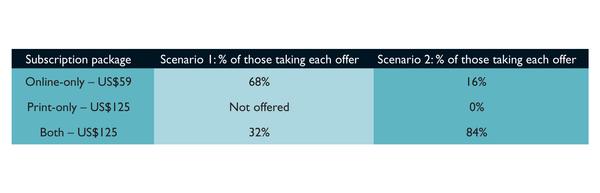
Table 1: Economist subscription options

ABOUT THE AUTHOR

Tim Baker is chair of Touchstone Partners, a leading research consultancy in the leisure, consumer and shopper sectors.  Touchstone Partners’ core expertise is in market exploration (to identify opportunities), pricing, brand equity and proposition development. 

E: [email protected]
T: +44 1865 261442
T: +44 7710 633211
www.touchstonepartners.co.uk

Sign up here to get HCM's weekly ezine and every issue of HCM magazine free on digital.
Readers have come to value the physical book – unless it’s one they don’t want to be seen holding / www.shutterstock.com
Some members may use the sauna but not the pool, so offer them a price bundle to reflect that / www.shutterstock.com
https://www.leisureopportunities.co.uk/images/773977_530631.jpg
The mid-market is a good place to be – you just need to know how to pitch your pricing
Tim Baker of research consultancy Touchstone Partners,Price, pricing, mid-market, Tim Baker, Economist, Dan Ariely
HCM magazine
Lisa Starr tries the Ammortal Chamber to see whether layering 10 modalities into one experience really delivers more
HCM magazine
Fuel the debate about issues and opportunities across the industry. We’d love to hear from you. Write to [email protected]
HCM magazine
We’ve reduced the level of council investment over the last three years by 40 per cent and increased our turnover by 9 per cent
HCM magazine
A new report puts physical activity at the heart of healthcare, says Muir Gray
HCM magazine
Shaping the future of the sector with a clear mission, unified voice and open channels of communication. This is the ambition of UK Active’s new chair
HCM promotional features
Sponsored
Social fitness the missing link to member engagement, according to a new Myzone report
HCM promotional features
Sponsored
Third Space partnered with IndigoFitness to deliver a bespoke training space for its new club at The Whiteley
HCM promotional features
Sponsored
SnowDome Fitness has added 50 per cent more space with cutting-edge Technogym solutions
HCM promotional features
Sponsored
Starpool supports Olympic champion Marcell Jacobs, says Riccardo Turri
HCM promotional features
Sponsored
David Lloyd is stepping up its commitment to women’s health as it continues to explore what fit-for-purpose looks like for the female population
HCM promotional features
Sponsored
Greg Bradley looks at the shift towards strength training in gyms and advises on how operators can create the ultimate training environment
HCM promotional features
Sponsored
Find out how your gym can tap into the corporate wellness boom
HCM promotional features
Sponsored
EGYM has opened a new HQ in Paternoster Square, London and revealed a range of new launches
HCM promotional features
Latest News
According to research which tracked more than 147,000 people for 30 years, 90-120 minutes of ...
Latest News
Everlast Gyms expands its footprint outside of the UK this month with the imminent launch ...
Latest News
The UK's four Chief Medical Officers have published a refreshed edition of  Physical activity guidelines: ...
Latest News
Places Leisure has exchanged contracts to build and operate a flagship £60m water and wellness ...
Latest News
The Republic of Ireland will become the latest market in PureGym’s expanding international portfolio, with ...
Latest News
Sophie Lawler, CEO of Total Fitness, has launched a leadership coaching business aimed at helping ...
Latest News
Anytime Fitness reaches a milestone this week with the launch of its 6000th site. The ...
Latest News
The £33.9 million Leighton Leisure and Community Centre has opened in Leighton Buzzard, UK, creating ...
Opinion
promotion
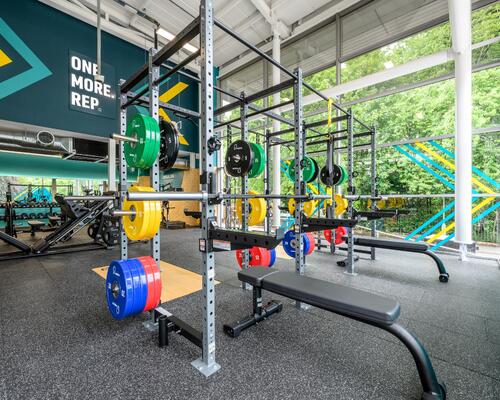
Strength training has moved from the margins to the mainstream.
Opinion: Building smarter strength spaces for today’s operators
Featured supplier news
Featured supplier news: Cornerstone Connect helps Active Blackpool tackle health inequalities
Active Blackpool is deploying Cornerstone Connect, a new digital interface allowing disparate information from multiple systems to be aggregated into one dataset, to support its focus on reducing health inequalities and improving healthy life expectancy.
Featured supplier news
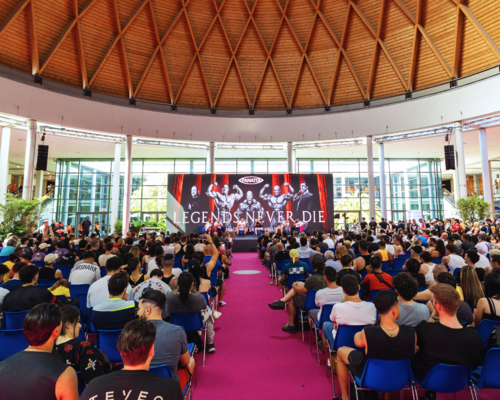
Featured supplier news: Legends never die: four legends, four philosophies of life
Panatta brought together four of the most influential figures in bodybuilding history on the stage of RiminiWellness 2026: Phil Heath, Lee Haney, Ronnie Coleman and Hany Rambod.
Company profiles
Company profile: Gantner
Gantner optimizes and simplifies the organisation of fitness clubs. Using touchless RFID/NFC credentials (member cards, ...
Company profiles
Company profile: Les Mills UK
Every week, millions of people get fit in 21,000 clubs, across 100 countries with the ...
Supplier Showcases
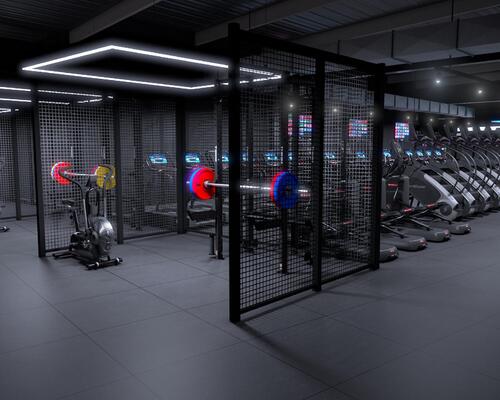
Supplier Showcase - From nightclub to health club
Supplier Showcases
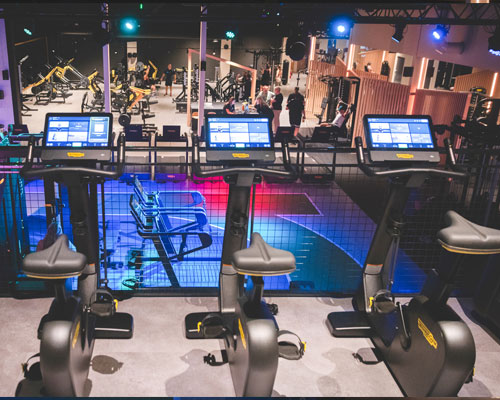
Supplier Showcase - Future-proofing
Catalogue Gallery
Click on a catalogue to view it online
Featured press releases
Precor Fitness Ltd press release: BH Live partners with Precor, transforming the Mountbatten Leisure Centre Gym
Alongside Precor, BH Live, the registered charity and social enterprise operating sport and leisure facilities across southern England, has completed a major refurbishment of the gym at Mountbatten Leisure Centre in Portsmouth as a part of a £750,000 inve
Featured press releases
Innerva press release: Wrightcare embeds wellness and active living into next-generation care homes
A care home provider is developing a new generation of care homes where health, wellbeing and active living are embedded into everyday life.
Directory
Hot tubs
MSpa International Ltd: Hot tubs
Lockers
Crown Sports Lockers: Lockers
Fitness tracking platform
SpiviTech: Fitness tracking platform
Water experiences and hydrotherapy solutions
Aquaform s.r.l.: Water experiences and hydrotherapy solutions
Spa and beauty equipment
Oakworks Inc: Spa and beauty equipment
Industrial washing machines
Miele Company Limited: Industrial washing machines
Property & Tenders
Stratford, East London.
Lee Valley Regional Park Authority
Property & Tenders
Y Felinheli, LL56 4QN
Newmark
Property & Tenders
Diary dates
21-24 Sep 2026
The Langham Huntington Pasadena , Pasadena, United States
Diary dates
06-08 Oct 2026
Messe Stuttgart, Stuttgart, Germany
Diary dates
22-22 Oct 2026
QEII Conference Centre, London,
Diary dates
26-29 Oct 2027
Koelnmesse Exhibition Centre, Cologne, Germany
Diary dates

features

Pricing strategy: The language of numbers

The mid-market is a good place to be – you just need to know how to pitch your pricing. Tim Baker of research consultancy Touchstone Partners explains

By Tim Baker, Touchstone Partners | Published in Health Club Management 2015 issue 6
Just as vinyl is being revived, mid-market gyms are coming back stronger / photos: www.shutterstock.com
Don’t necessarily drop an option just because nobody buys it – this could be the key package that trades members into higher value options

The squeezed middle. Everyone knows what it is. Challenged from above and particularly below, dire predictions were made about the death of the mid-market gym, which have happily proved untrue. The sector has survived, has adapted and – although some say there’s more pain to come before the corner is finally turned – the general consensus is that, while low-cost gyms may be here to stay, this does not mean the mid-market gym is an endangered species.

This process is typical of so many markets. A new proposition is lauded as a market game changer, grows rapidly as it’s adopted, and then hits a plateau and it becomes another player.

Consider TV: we’re too young to remember when this new kid on the block was going to kill off radio. Or more recently e-books: it was reported recently that electronic book sales declined slightly last year. And what about digital radio, which was predicted to wipe out analogue services? (This may still happen, but it will be driven by government demand rather than simple market forces.) Or vinyl records: I’ve lost count of the times I’ve been told recently that this medium, so much warmer and realistic than CD and electronic versions, is recovering. Sales of turntables, as well as vinyl, are growing.

Sure, there are also examples where products and services have died a death: cassette tapes, floppy disks, VHS tapes, video hire shops to name a few. These have generally been replaced because something came along that could do exactly the same thing, only better and often cheaper. Television can’t do everything that radio can. Readers have come to value the physical book, unless perhaps it’s one they don’t want to be seen holding on their commute. There’s something special about holding a vinyl LP.

Benefits that ensure survival and growth can be emotional or functional. Unless it’s a direct replacement, price is only one element of the marketing mix – and this is as true for the gym market as it is for every other one.

Effective segmentation
In fact, the mid-market is a pretty good place to be – if you get it right. It’s clear at the moment that low-cost offerings are popular, but these tend to thrive when times are hard and incumbents have taken their eye off the ball: while Aldi and Lidl are currently driving the grocery market, a key reason for this is that the mainstream mid-market operators were complacent. They failed to give their customers good reasons to keep using them, and they failed to spot significant changes in shopping behaviour.

There’s almost certainly going to be consolidation before things turn around, but it would be a brave pundit who forecasts the death of the grocery mid-market. The leading players have woken up and are reviewing, re-configuring and re-presenting themselves so they have a distinct positioning in the new landscape. Sound familiar?

So how does a mid-market gym operator get it right? We’re constantly told we need to differentiate, to create a clear space that’s easily understood, and to stick to it. We can – and should – do this by understanding the neighbourhood where the gym sits, by listening to members (not forgetting leavers, to understand why they didn’t want to stay), by understanding their emotional as well as their physical needs, and by investing in the right equipment, facilities and staff. And by charging the right price for that differentiated offer.

There’s only point in differentiating if it’s in ways that are meaningful to the customer. A large pub company I know which has 750 pubs does this successfully. It has six core brands, ranging from gastro pubs through traditional locals, city centre and sports pubs to family-orientated offers where provision is made for the kids to let off steam. Each pub is assigned to a brand according to the location, what the customers there want, and what they’re most likely to buy.

Customers in all markets are driven by a range of factors which – depending on the individual member’s characteristics – are ‘dialled up or down’. We all know the person who’s driven by value, or convenience, or personal service and so on. Price is obviously another of these factors, but with gyms, other factors are likely to include staff numbers, staff attentiveness and expertise, sophistication of equipment, amount and range of equipment, size of premises, facilities, classes, information, support, ‘extra curricular’ activities and changing facilities (size, style etc).

Some of these will be hygiene factors – what you have to offer just to get into the consideration set – and some will be real differentiators. An effective segmentation will let you determine which factors are more important to the different member types, and which are real deal-breakers for them.

Predictably irrational
But while research can place relative values on each of these factors, we can’t ask people directly what these factors are as none of us, from a rational point of view, actually think that way. People don’t use rational criteria to buy goods, services or memberships.

Dan Ariely’s excellent book Predictably Irrational gives countless examples of ways we can be manipulated to buy what the seller wants us to buy and how, in his words, we don’t actually know what our preferences are. We’re not rational beings who consider all the implications of the choices we make. This is why segmentation and differentiation is a tricky business: direct questions will yield direct answers which are over-rationalised and often bear no relation to reality.

One of Ariely’s favourite examples concerns subscription charges for The Economist. Two scenarios were tested among different groups: the first offered an online subscription for US$59 and a print + online subscription for US$125, while the second offered these two plus a print-only subscription, also at US$125. Table 1 shows the choices respondents made in the two scenarios.

When offered, the print-only subscription gets no buyers, so it’s an apparently useless offer. Yet its presence has a significant effect on the choices buyers actually make. Offer this ‘useless’ option and five in six will trade up and buy the bundle. Remove it as an individual option and the proportion of people who buy the bundle falls to two in six. That’s a loss of US$66 for every potential subscriber who chooses the online-only option. Put another way, for every 100 subscribers, the presence of an option that’s never actually purchased means The Economist would take an additional US$3,432. It’s clear the seller can, to an extent, affect the choices we make by controlling the environment in which we make those choices.

User-friendly pricing
It’s better to be as simple and clear as possible with price. Have a finite number of options and don’t keep changing them. Create bundles that contain mixes of the important factors for your market, in ways that are easily understood. See if your mother could easily work out which rate she would like to be on, and whether you can – realistically – justify all elements.

Joining fees could come into this bracket: how do you justify them? Does it cover an induction? If so, all well and good, but if it’s for pressing a few buttons on the keyboard it will be harder to keep in place.

One option might be higher value bundles that allow people to move across services and sites through their membership period – eg drop the pool as I’m not using it, add sauna as I benefit from that, take a multi-site membership for a month as I’m moving around (and let me do that from the place I’ve come to as well as from my regular gym).

And don’t necessarily drop an option just because nobody buys it – this could be the key package that trades members into higher value options.

Table 1:

Economist subscription options

Table 1: Economist subscription options

ABOUT THE AUTHOR

Tim Baker is chair of Touchstone Partners, a leading research consultancy in the leisure, consumer and shopper sectors.  Touchstone Partners’ core expertise is in market exploration (to identify opportunities), pricing, brand equity and proposition development. 

E: [email protected]
T: +44 1865 261442
T: +44 7710 633211
www.touchstonepartners.co.uk

Sign up here to get HCM's weekly ezine and every issue of HCM magazine free on digital.
Readers have come to value the physical book – unless it’s one they don’t want to be seen holding / www.shutterstock.com
Some members may use the sauna but not the pool, so offer them a price bundle to reflect that / www.shutterstock.com
https://www.leisureopportunities.co.uk/images/773977_530631.jpg
The mid-market is a good place to be – you just need to know how to pitch your pricing
Tim Baker of research consultancy Touchstone Partners,Price, pricing, mid-market, Tim Baker, Economist, Dan Ariely
Latest News
According to research which tracked more than 147,000 people for 30 years, 90-120 minutes of ...
Latest News
Everlast Gyms expands its footprint outside of the UK this month with the imminent launch ...
Latest News
The UK's four Chief Medical Officers have published a refreshed edition of  Physical activity guidelines: ...
Latest News
Places Leisure has exchanged contracts to build and operate a flagship £60m water and wellness ...
Latest News
The Republic of Ireland will become the latest market in PureGym’s expanding international portfolio, with ...
Latest News
Sophie Lawler, CEO of Total Fitness, has launched a leadership coaching business aimed at helping ...
Latest News
Anytime Fitness reaches a milestone this week with the launch of its 6000th site. The ...
Latest News
The £33.9 million Leighton Leisure and Community Centre has opened in Leighton Buzzard, UK, creating ...
Latest News
YogaSix, the yoga brand owned by Xponential Fitness, has launched a heated, Pilates-inspired class called ...
Latest News
Walnuts Leisure Centre in Orpington, in the London Borough of Bromley, has reopened following a ...
Latest News
The Gym Group, has announced that it's sustained positive trading momentum has continued through the ...
Opinion
promotion
Strength training has moved from the margins to the mainstream.
Opinion: Building smarter strength spaces for today’s operators
Featured supplier news
Featured supplier news: Cornerstone Connect helps Active Blackpool tackle health inequalities
Active Blackpool is deploying Cornerstone Connect, a new digital interface allowing disparate information from multiple systems to be aggregated into one dataset, to support its focus on reducing health inequalities and improving healthy life expectancy.
Featured supplier news
Featured supplier news: Legends never die: four legends, four philosophies of life
Panatta brought together four of the most influential figures in bodybuilding history on the stage of RiminiWellness 2026: Phil Heath, Lee Haney, Ronnie Coleman and Hany Rambod.
Company profiles
Company profile: Gantner
Gantner optimizes and simplifies the organisation of fitness clubs. Using touchless RFID/NFC credentials (member cards, ...
Company profiles
Company profile: Les Mills UK
Every week, millions of people get fit in 21,000 clubs, across 100 countries with the ...
Supplier Showcases
Supplier Showcase - From nightclub to health club
Supplier Showcases
Supplier Showcase - Future-proofing
Catalogue Gallery
Click on a catalogue to view it online
Featured press releases
Precor Fitness Ltd press release: BH Live partners with Precor, transforming the Mountbatten Leisure Centre Gym
Alongside Precor, BH Live, the registered charity and social enterprise operating sport and leisure facilities across southern England, has completed a major refurbishment of the gym at Mountbatten Leisure Centre in Portsmouth as a part of a £750,000 inve
Featured press releases
Innerva press release: Wrightcare embeds wellness and active living into next-generation care homes
A care home provider is developing a new generation of care homes where health, wellbeing and active living are embedded into everyday life.
Directory
Hot tubs
MSpa International Ltd: Hot tubs
Lockers
Crown Sports Lockers: Lockers
Fitness tracking platform
SpiviTech: Fitness tracking platform
Water experiences and hydrotherapy solutions
Aquaform s.r.l.: Water experiences and hydrotherapy solutions
Spa and beauty equipment
Oakworks Inc: Spa and beauty equipment
Industrial washing machines
Miele Company Limited: Industrial washing machines
Property & Tenders
Stratford, East London.
Lee Valley Regional Park Authority
Property & Tenders
Y Felinheli, LL56 4QN
Newmark
Property & Tenders
Diary dates
21-24 Sep 2026
The Langham Huntington Pasadena , Pasadena, United States
Diary dates
06-08 Oct 2026
Messe Stuttgart, Stuttgart, Germany
Diary dates
22-22 Oct 2026
QEII Conference Centre, London,
Diary dates
26-29 Oct 2027
Koelnmesse Exhibition Centre, Cologne, Germany
Diary dates
Search news, features & products:
Find a supplier:
Partner sites