





















The Leisure Media Company Ltd
Follow Health Club Management on Twitter Like Health Club Management on Facebook Join the discussion with Health Club Management on LinkedIn
FITNESS, HEALTH, WELLNESS

features

Market analysis: State of play

Where does the UK fitness sector currently sit within its product lifecycle, and what comes next? Kate Cracknell asks the experts for their thoughts

By Kate Cracknell | Published in Health Club Management 2015 issue 1
Are clubs now in direct competition with technology? / photo: www.shutterstock.com/: lzf

Where does the health and fitness industry currently sit within its product lifecycle?

After years of maintaining more or less the same level of population penetration, are there any signs of green shoots that mark a possible turning point for the sector – a point at which it will leave its plateau behind and grow once more?

The product lifecycle theory states that there are four key phases in a product’s life. The introduction phase involves researching, developing and then launching the product. This is followed by the growth stage, when sales are increasing at their fastest rate. Maturity is characterised by sales being near their highest point, but with the rate of growth slowing down due to factors such as market saturation and higher levels of competition. Decline is the final stage of the cycle, when sales begin to fall, but this may be avoided if the product is revitalised through innovation; not all products will reach this stage.

While different sectors of the UK fitness industry are at different stages of their lifecycle, the overall picture is of an industry in the stage of maturity: high levels of competition, with some viewing the market as already saturated, and overall population penetration rates holding steady. So what comes next? Do we decline, hold steady, or grow through reinvention?

Some sectors of the fitness industry are already in a growth phase – budget clubs, for example, and the microgyms – but for now the overall sector holds steady. However, at the recent IHRSA European Congress, industry consultant Ray Algar explained how the sector had now lost its “temporary monopoly”, with competition arising not only in the form of other gyms but also from other fast-evolving sectors such as technology. And Christophe Andanson, stalwart of the fitness industry in France, warned that the health club model is genuinely at risk for the very same hi-tech reason.

So might we actually hit the final stage of the cycle: decline? Or is there anything else that might fall in alongside the low-cost gyms and slingshot us into growth – the continuing emergence of the microgyms, new partnerships with organisations both in and outside of our sector, or perhaps harnessing the fast pace of technological innovation to help us move outside of bricks and mortar facilities altogether?

Alternatively, will the sector simply opt for gentler reinvention to ensure it remains relevant – thus steering clear of decline – but remaining within the maturity phase? We ask the experts.

Nigel Bland
Partner, corporate finance travel & leisure
Deloitte LLP

Nigel Bland
Nigel Bland

As far as the concept of health club membership goes, I believe there’s no product lifecycle in the classic sense: Romans had baths and Victorians had running clubs.

There may be a tech revolution that we can’t yet imagine, and there’s already a risk of substitution as technology impacts the market: almost two-thirds of adults now own smartphones, which has led to an increase in the number of health and fitness apps available, many of which don’t require the use of a health club. However, my guess would be that, in 2100, there will still be gyms with members – they will simply offer more advanced machines and classes.

The sector has also seen a new generation of specialist operators emerging that specifically concentrate on classes, such as Cyclebeat and Barry’s Bootcamp. These allow for a more flexible membership approach, with consumers only paying for classes attended.

However, although recently the budget operators have grown at the expense of the mid-market, I believe there’s room for everyone going forward if they provide a clear brand proposition, have the right locations and are value for money. Although the UK health club market is forecast to grow at a slow rate (around 1 per cent a year), I believe the established operators can re-group and begin to grow their businesses, for four key reasons.

Firstly, health and fitness is an established, mainstream market that’s here to stay, with many macro factors underpinning demand. Second, while the growth in memberships may be modest, the improving economy will allow membership pricing to increase, giving a much greater growth in the value and profitability of the sector.

Third, this is not retail, which is suffering long-term online substitution by online shopping. Operators can respond to technology innovations by incorporating them: DLL and Pure Gym among others have started to do this, creating mobile apps offering exercise programmes and dietary advice.

And finally, the sector was overbuilt in the 90s and the noughties, but capacity has gone out of the market through restructurings. In addition, with most balance sheets now much stronger, ongoing investment is being made (eg Fitness First) to keep the groups relevant and competitive.

But while there is a case for investors to re-engage, management will need to work hard to make those cases, as investors will be wary given the recent history of the established businesses.
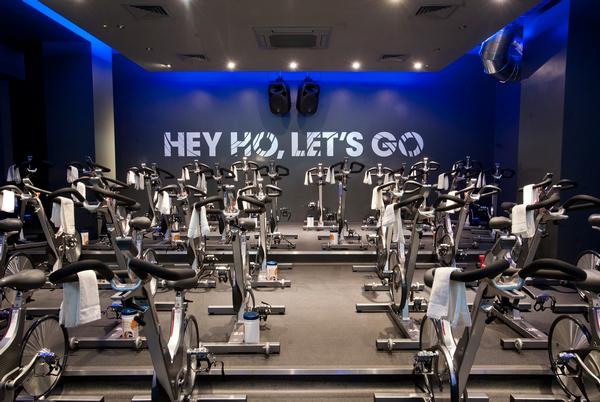
Specialist brands like Cyclebeat offer flexibility

Jacques de Bruin
COO
Pure Gym

Jacques de Bruin
Jacques de Bruin

Penetration rates across the UK health and fitness market will remain stable at their current levels, averaging between 12 and 13 per cent, for the foreseeable future.

The mid-level and high-end sectors of the market will remain fairly consistent in their current penetration levels, with the potential for a very slight decline in membership numbers as the budget operators continue to grow over the next 12 to 24 months. Any decline will be minimal, though, with the businesses operating in these sectors offloading the poorest performing clubs and consolidating into fewer, but more profitable, clubs.

The major shift within the industry will be the number of operators within the budget sector of the market. Lower financial outputs and operating costs have reduced barriers for entry into the affordable sector, which in turn has rapidly increased the number of operators within this sector – and consequently competition levels.

With expected overall market penetration levels remaining stable, the affordable sector cannot sustain the continued growth across different operators for a long-term period. The next 12 to 24 months will be a critical time for budget operators as the affordable sector begins to consolidate.

During this consolidation stage, business success within the affordable sector will be determined by two factors: differentiation through innovation, and the successful entry into new markets and locations, specifically London.

Budget operators who correctly identify the changes in consumer demand and strategically tailor a business model to meet more niche requirements, while still following a budget operating model, will continue to expand their membership base by creating a new market for the affordable sector to operate in. Crucial to this success is early entry into new market opportunities. Microgyms that meet consumer demands are central to this niche offering, as they will allow financially viable diversification into markets that have no affordable operator presence.
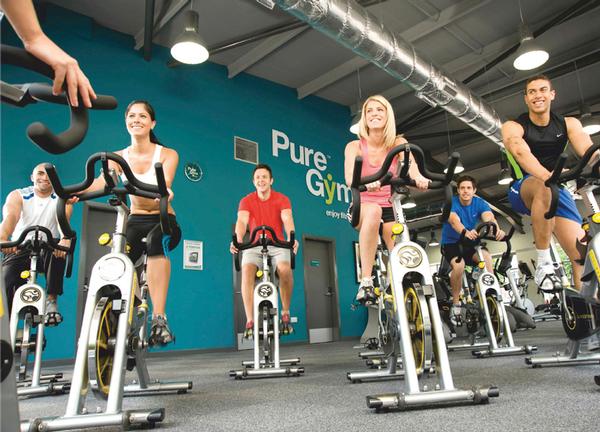
The next 12–24 months could see consolidation within the affordable sector

Martin Seibold
MD
Fitness First UK

Martin Seibold
Martin Seibold

To better understand the market, we need to differentiate between fitness and gyms. Fitness in the UK is still in a growth phase, but the traditional gym concept is at risk of saturation, with more and more new chains and clubs popping up all the time.

The majority of these clubs, however, tend to look the same – just boxes full of equipment – so all have similar offerings, just in different price brackets. Club operators face a choice: to continue this trend or make a change. It’s through embracing change that individual operators will be able to take advantage of the growth phase fitness finds itself in and grow themselves.?The challenge is how to re-invent the model and create an offer that goes beyond the traditional gym. Create a product, a proposition and a way of dealing with people on their own terms, and create new trends inside and outside of the gym to engage and excite people into fitness.

There’s a huge opportunity to get a fresh breeze into the industry by joining all the dots and truly understanding consumer needs rather than competing over price. Fitness overall is still quite a young sector. We have an ageing population, growing knowledge about the benefits of exercise, and activity high on the government agenda. So we know that more people than ever want to get active, maintain their health and feel happy and confident. New insights can unveil the key to maintaining, and indeed growing, the appeal of and the demand for the industry. A better understanding of the consumer enables us to offer products and services on their terms. This can come in various forms, whether it’s new partnerships, an integrated digital experience or exclusive in-club programmes and services.

Most importantly, it’s about the connection with members. Understanding true needs and being more agile in addressing them, as well as setting the trends, is the key to building stronger relationships for a flourishing future, adding to the ‘traditional’ gym and enabling the industry to grow far beyond a 12–13 per cent penetration.  

While the gym concept is at risk of saturation, ‘fitness’ is still a young sector

Neil Harmsworth
Co-founder
PayasUgym.com

Neil Harmsworth
Neil Harmsworth

There’s little doubt that the fitness industry has occupied the ‘mature’ phase of the product lifecycle for some time – a period during which market share has been won and lost by individual operators, but overall market value has hardly changed. At the same time, however, the demands of our customers have evolved more rapidly than at any time in the previous 20 years.

This is great news for the sector, as it represents a real opportunity for innovative operators to develop effective extension strategies and deliver genuine market growth. But to achieve that, more must be done to understand and influence the factors that will drive that growth.

At PayasUgym.com, we’ve been working to understand what these factors may be, and our analysis repeatedly shows that the two biggest factors that genuinely influence the decision-making process of a potential customer remain price and convenience of location, in that order.

On that basis, it’s easy to see why the budget sector has grown so rapidly through a strategy of modest price points and intense competition for prime locations. It’s also encouraging to see just how many operators have started to embrace technology in order to minimise costs for the customer, and to reach them regardless of their location. This can be delivered through something as simple as improving website user experience, or the integration of expensive wearable devices.

These factors also explain the rise of ‘single experience’ venues, which focus on being famous for one thing rather than average at a lot. These venues require less space and can therefore be innovative with the locations they select. By focusing on one activity, they also minimise wastage and reduce costs for the customer.

Price and convenience of location will be the factors that grow our industry once again, with winners and losers emerging over the coming years based on the willingness and ability of operators to recognise and influence these growth factors.

Arthur McColl
COO
LA fitness

Arthur McColl
Arthur McColl

I often compare health clubs to the hotel sector, where the landscape has changed over the past 15 years, with an emerging low-cost market including brands such as Days Inn. Mid-market has turned into ‘midscale’ and ‘upper midscale’ in order to differentiate, and the boutique and luxury market has prospered.

A key difference for the health club sector is the emergence of technology. Nearly 75 per cent of regular exercisers use technology in their workouts, and 69 per cent of participants in the US are now self-tracking. That makes it hardly surprising that there was an expected growth of 25 per cent in the fitness tech market in 2014.

Member experience is key. In a consumer-focused, technology-savvy world, we can no longer rely on traditional routes to consumption. We need programmes and interaction to engage, educate and motivate our members. These need to be convenient, fun and motivational to get the disengaged active, fit and healthy. The emergence of microgyms, albeit gradual, embraces the changing requirements of the consumer for more convenient, personalised, social interactions. We must adopt these principles and offer the ‘microgym’ experience in our clubs.

We’re in danger of becoming too insular, focusing too much on each other to notice the changes around us. We’re also guilty of being led by manufacturers and often fit out our clubs based on untested assumptions, with new machines that prove unpopular.

We need to put members at the heart of our product and service and extend our reach beyond just bricks and mortar. Look to adopt the use of new technology to create a 24/7 service for members. This could take the form of virtual classes, Skype PT sessions, online goal tracking, online nutritional and fitness support. We must encourage our members to embrace devices that will support a healthier lifestyle, but vitally we need to be the lynchpin that connects the online space with the in-club experience.

The future is bright for the industry. The 20%er’s will always thrive in the gym environment, so we need to continue to develop products and services to appeal to the remainder of the population and be open to change. We need to be willing to embrace new technology to ensure we can deliver a motivational, highly personalised and educational service.

Sign up here to get HCM's weekly ezine and every issue of HCM magazine free on digital.
Fitness First is investing in its product to ensure it remains relevant
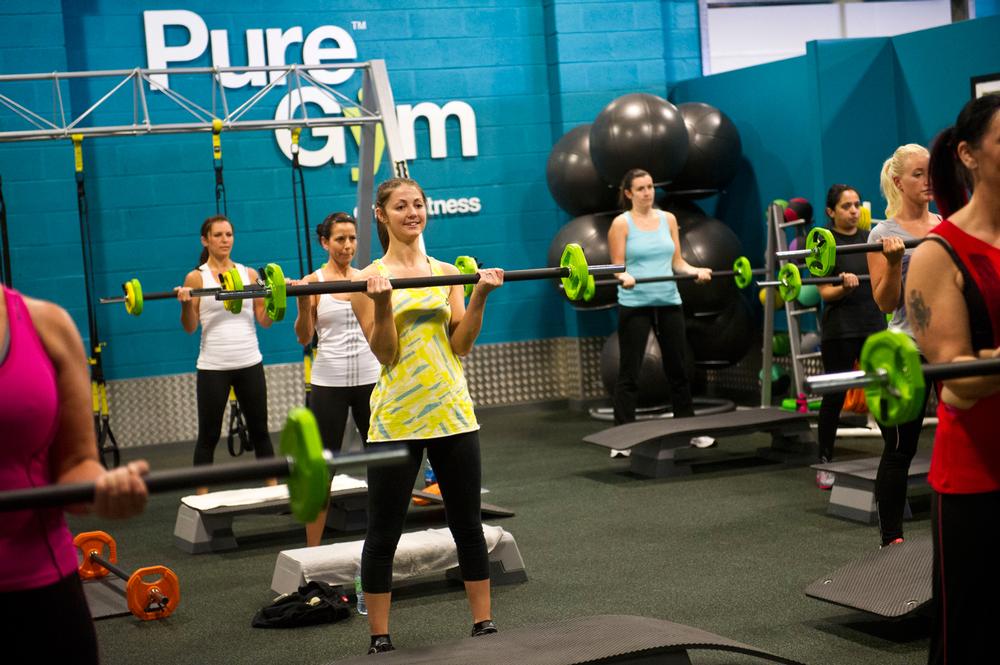
The rapid number of entrants into the budget sector has fuelled competition
Operators need to be the lynchpin that connects the online space to the club / www.shutterstock.com
https://www.leisureopportunities.co.uk/images/104658_159862.jpg
Where does the UK health and fitness sector currently sit in its product lifecycle, and what comes next? Kate Cracknell asks the experts for their thoughts
Kate Cracknell, Nigel Bland, Jacques de Bruin, Martin Seibold, Neil Harmsworth, Arthur McColl ,Product lifecycle, microgyms, budget clubs, Nigel Bland, Jacques de Bruin, Martin Seibold, Neil Harmsworth, Arthur McColl
HCM magazine
Collaborations with the medical profession and greater aspirations around wellbeing are creating a need for more experts in our sector. It’s time to reboot our thinking around the workforce
HCM magazine
Strength training is evolving, driven by changing consumer preferences. Julie Cramer talks to innovators about how their products are meeting this demand
HCM magazine
Raphael Cuomo explores the powerful link between addiction, health and behaviour change
HCM magazine
HCM People

Stephen Price

Founder, SP&Co Group
Working in public health over the last few years has lit up parts of my brain again
HCM magazine
I experienced a blissful feeling of joy I hadn’t felt since I was a kid
HCM promotional features
Sponsored
SnowDome Fitness has added 50 per cent more space with cutting-edge Technogym solutions
HCM promotional features
Sponsored
Greg Bradley looks at the shift towards strength training in gyms and advises on how operators can create the ultimate training environment
HCM promotional features
Sponsored
David Lloyd is stepping up its commitment to women’s health as it continues to explore what fit-for-purpose looks like for the female population
HCM promotional features
Sponsored
Starpool supports Olympic champion Marcell Jacobs, says Riccardo Turri
HCM promotional features
Sponsored
Find out how your gym can tap into the corporate wellness boom
HCM promotional features
Sponsored
Third Space partnered with IndigoFitness to deliver a bespoke training space for its new club at The Whiteley
HCM promotional features
Sponsored
EGYM has opened a new HQ in Paternoster Square, London and revealed a range of new launches
HCM promotional features
Promotion
Performance Health Systems, manufacturer of Power Plate, has a new CEO, with an ambitious vision for the company
HCM promotional features
Sponsored
The industry is embracing consumer-facing tech. Now it’s time to streamline back-of-house systems with Orbit4, says Daniel Jones
HCM promotional features
Latest News
Nuffield Health has told HCM that it takes its responsibilities towards its colleagues seriously and ...
Latest News
Technogym has announced the launch of the Run X World Treadmill Championship, the first world ...
Latest News
Shocked by the UK loneliness statistics, charitable trust Mytime Active has been doubling down on ...
Latest News
Portugal’s leading operator, SC Fitness, is celebrating a milestone by reaching 100 gyms.  The company ...
Latest News
Australia’s fast-growing fitness network, Viva Leisure, is adding a low-cost gym brand to its already ...
Latest News
Speedflex has launched a strength training programme for 10 to 16-year-olds, to make it safer, ...
Latest News
Tewinbury Farm Hotel in Hertfordshire, UK is expanding its premium leisure proposition with the launch ...
Latest News

Work is underway in Madrid on one of Europe’s most significant multi-functional complexes, ...

Opinion
promotion
Strength training has moved from the margins to the mainstream.
Opinion: Building smarter strength spaces for today’s operators
Featured supplier news
Featured supplier news: Supporting long-term health: why whole body vibration belongs in clinical settings
As healthcare continues to shift towards prevention, there’s a growing focus on helping people stay active, independent and feeling good for longer.
Featured supplier news
Featured supplier news: W3Fit EMEA celebrates its fifth anniversary
Celebrating its milestone 5th anniversary, W3Fit EMEA returns in 2026 with an unmissable gathering of the Health & Fitness industry’s most influential leaders.
Company profiles
Company profile: Make Your Gym (MYG)
Make Your Gym offers a full-service, strategic partner supporting gym owners with all aspects of ...
Company profiles
Company profile: ukactive
ukactive is the UK’s leading trade body for the physical activity sector, bringing together more ...
Supplier Showcases
Supplier Showcase - From nightclub to health club
Supplier Showcases
Supplier Showcase - Future-proofing
Catalogue Gallery
Click on a catalogue to view it online
Featured press releases
GYMNATION press release: Massive ‘Good Luck’ message appears in Saudi Desert as Green Falcons head to World Cup
Passengers flying out of Riyadh this week have been treated to an extraordinary sight from the skies after GymNation unveiled a giant desert sand mural supporting the Saudi Arabia National Football Team ahead of the FIFA World Cup in the United States.
Featured press releases
BLK BOX press release: BLK BOX strengthens European growth with the appointment of Germany country manager Timo Garrels
BLK BOX is proud to welcome Timo Garrels as Germany country manager, marking another important step in the brand’s continued growth across Europe.
Directory
Fitness tracking platform
SpiviTech: Fitness tracking platform
Lockers
Crown Sports Lockers: Lockers
Water experiences and hydrotherapy solutions
Aquaform s.r.l.: Water experiences and hydrotherapy solutions
Spa and beauty equipment
Living Earth Crafts: Spa and beauty equipment
Industrial washing machines
Miele Company Limited: Industrial washing machines
Hot tubs
MSpa International Ltd: Hot tubs
Property & Tenders
Stratford, East London.
Lee Valley Regional Park Authority
Property & Tenders
Y Felinheli, LL56 4QN
Newmark
Property & Tenders
Diary dates
13-13 Jun 2026
Worldwide, Various,
Diary dates
21-24 Sep 2026
The Langham Huntington Pasadena , Pasadena, United States
Diary dates
06-08 Oct 2026
Messe Stuttgart, Stuttgart, Germany
Diary dates
22-22 Oct 2026
QEII Conference Centre, London,
Diary dates
26-29 Oct 2027
Koelnmesse Exhibition Centre, Cologne, Germany
Diary dates

features

Market analysis: State of play

Where does the UK fitness sector currently sit within its product lifecycle, and what comes next? Kate Cracknell asks the experts for their thoughts

By Kate Cracknell | Published in Health Club Management 2015 issue 1
Are clubs now in direct competition with technology? / photo: www.shutterstock.com/: lzf

Where does the health and fitness industry currently sit within its product lifecycle?

After years of maintaining more or less the same level of population penetration, are there any signs of green shoots that mark a possible turning point for the sector – a point at which it will leave its plateau behind and grow once more?

The product lifecycle theory states that there are four key phases in a product’s life. The introduction phase involves researching, developing and then launching the product. This is followed by the growth stage, when sales are increasing at their fastest rate. Maturity is characterised by sales being near their highest point, but with the rate of growth slowing down due to factors such as market saturation and higher levels of competition. Decline is the final stage of the cycle, when sales begin to fall, but this may be avoided if the product is revitalised through innovation; not all products will reach this stage.

While different sectors of the UK fitness industry are at different stages of their lifecycle, the overall picture is of an industry in the stage of maturity: high levels of competition, with some viewing the market as already saturated, and overall population penetration rates holding steady. So what comes next? Do we decline, hold steady, or grow through reinvention?

Some sectors of the fitness industry are already in a growth phase – budget clubs, for example, and the microgyms – but for now the overall sector holds steady. However, at the recent IHRSA European Congress, industry consultant Ray Algar explained how the sector had now lost its “temporary monopoly”, with competition arising not only in the form of other gyms but also from other fast-evolving sectors such as technology. And Christophe Andanson, stalwart of the fitness industry in France, warned that the health club model is genuinely at risk for the very same hi-tech reason.

So might we actually hit the final stage of the cycle: decline? Or is there anything else that might fall in alongside the low-cost gyms and slingshot us into growth – the continuing emergence of the microgyms, new partnerships with organisations both in and outside of our sector, or perhaps harnessing the fast pace of technological innovation to help us move outside of bricks and mortar facilities altogether?

Alternatively, will the sector simply opt for gentler reinvention to ensure it remains relevant – thus steering clear of decline – but remaining within the maturity phase? We ask the experts.

Nigel Bland
Partner, corporate finance travel & leisure
Deloitte LLP

Nigel Bland
Nigel Bland

As far as the concept of health club membership goes, I believe there’s no product lifecycle in the classic sense: Romans had baths and Victorians had running clubs.

There may be a tech revolution that we can’t yet imagine, and there’s already a risk of substitution as technology impacts the market: almost two-thirds of adults now own smartphones, which has led to an increase in the number of health and fitness apps available, many of which don’t require the use of a health club. However, my guess would be that, in 2100, there will still be gyms with members – they will simply offer more advanced machines and classes.

The sector has also seen a new generation of specialist operators emerging that specifically concentrate on classes, such as Cyclebeat and Barry’s Bootcamp. These allow for a more flexible membership approach, with consumers only paying for classes attended.

However, although recently the budget operators have grown at the expense of the mid-market, I believe there’s room for everyone going forward if they provide a clear brand proposition, have the right locations and are value for money. Although the UK health club market is forecast to grow at a slow rate (around 1 per cent a year), I believe the established operators can re-group and begin to grow their businesses, for four key reasons.

Firstly, health and fitness is an established, mainstream market that’s here to stay, with many macro factors underpinning demand. Second, while the growth in memberships may be modest, the improving economy will allow membership pricing to increase, giving a much greater growth in the value and profitability of the sector.

Third, this is not retail, which is suffering long-term online substitution by online shopping. Operators can respond to technology innovations by incorporating them: DLL and Pure Gym among others have started to do this, creating mobile apps offering exercise programmes and dietary advice.

And finally, the sector was overbuilt in the 90s and the noughties, but capacity has gone out of the market through restructurings. In addition, with most balance sheets now much stronger, ongoing investment is being made (eg Fitness First) to keep the groups relevant and competitive.

But while there is a case for investors to re-engage, management will need to work hard to make those cases, as investors will be wary given the recent history of the established businesses.

Specialist brands like Cyclebeat offer flexibility

Jacques de Bruin
COO
Pure Gym

Jacques de Bruin
Jacques de Bruin

Penetration rates across the UK health and fitness market will remain stable at their current levels, averaging between 12 and 13 per cent, for the foreseeable future.

The mid-level and high-end sectors of the market will remain fairly consistent in their current penetration levels, with the potential for a very slight decline in membership numbers as the budget operators continue to grow over the next 12 to 24 months. Any decline will be minimal, though, with the businesses operating in these sectors offloading the poorest performing clubs and consolidating into fewer, but more profitable, clubs.

The major shift within the industry will be the number of operators within the budget sector of the market. Lower financial outputs and operating costs have reduced barriers for entry into the affordable sector, which in turn has rapidly increased the number of operators within this sector – and consequently competition levels.

With expected overall market penetration levels remaining stable, the affordable sector cannot sustain the continued growth across different operators for a long-term period. The next 12 to 24 months will be a critical time for budget operators as the affordable sector begins to consolidate.

During this consolidation stage, business success within the affordable sector will be determined by two factors: differentiation through innovation, and the successful entry into new markets and locations, specifically London.

Budget operators who correctly identify the changes in consumer demand and strategically tailor a business model to meet more niche requirements, while still following a budget operating model, will continue to expand their membership base by creating a new market for the affordable sector to operate in. Crucial to this success is early entry into new market opportunities. Microgyms that meet consumer demands are central to this niche offering, as they will allow financially viable diversification into markets that have no affordable operator presence.

The next 12–24 months could see consolidation within the affordable sector

Martin Seibold
MD
Fitness First UK

Martin Seibold
Martin Seibold

To better understand the market, we need to differentiate between fitness and gyms. Fitness in the UK is still in a growth phase, but the traditional gym concept is at risk of saturation, with more and more new chains and clubs popping up all the time.

The majority of these clubs, however, tend to look the same – just boxes full of equipment – so all have similar offerings, just in different price brackets. Club operators face a choice: to continue this trend or make a change. It’s through embracing change that individual operators will be able to take advantage of the growth phase fitness finds itself in and grow themselves.?The challenge is how to re-invent the model and create an offer that goes beyond the traditional gym. Create a product, a proposition and a way of dealing with people on their own terms, and create new trends inside and outside of the gym to engage and excite people into fitness.

There’s a huge opportunity to get a fresh breeze into the industry by joining all the dots and truly understanding consumer needs rather than competing over price. Fitness overall is still quite a young sector. We have an ageing population, growing knowledge about the benefits of exercise, and activity high on the government agenda. So we know that more people than ever want to get active, maintain their health and feel happy and confident. New insights can unveil the key to maintaining, and indeed growing, the appeal of and the demand for the industry. A better understanding of the consumer enables us to offer products and services on their terms. This can come in various forms, whether it’s new partnerships, an integrated digital experience or exclusive in-club programmes and services.

Most importantly, it’s about the connection with members. Understanding true needs and being more agile in addressing them, as well as setting the trends, is the key to building stronger relationships for a flourishing future, adding to the ‘traditional’ gym and enabling the industry to grow far beyond a 12–13 per cent penetration.  

While the gym concept is at risk of saturation, ‘fitness’ is still a young sector

Neil Harmsworth
Co-founder
PayasUgym.com

Neil Harmsworth
Neil Harmsworth

There’s little doubt that the fitness industry has occupied the ‘mature’ phase of the product lifecycle for some time – a period during which market share has been won and lost by individual operators, but overall market value has hardly changed. At the same time, however, the demands of our customers have evolved more rapidly than at any time in the previous 20 years.

This is great news for the sector, as it represents a real opportunity for innovative operators to develop effective extension strategies and deliver genuine market growth. But to achieve that, more must be done to understand and influence the factors that will drive that growth.

At PayasUgym.com, we’ve been working to understand what these factors may be, and our analysis repeatedly shows that the two biggest factors that genuinely influence the decision-making process of a potential customer remain price and convenience of location, in that order.

On that basis, it’s easy to see why the budget sector has grown so rapidly through a strategy of modest price points and intense competition for prime locations. It’s also encouraging to see just how many operators have started to embrace technology in order to minimise costs for the customer, and to reach them regardless of their location. This can be delivered through something as simple as improving website user experience, or the integration of expensive wearable devices.

These factors also explain the rise of ‘single experience’ venues, which focus on being famous for one thing rather than average at a lot. These venues require less space and can therefore be innovative with the locations they select. By focusing on one activity, they also minimise wastage and reduce costs for the customer.

Price and convenience of location will be the factors that grow our industry once again, with winners and losers emerging over the coming years based on the willingness and ability of operators to recognise and influence these growth factors.

Arthur McColl
COO
LA fitness

Arthur McColl
Arthur McColl

I often compare health clubs to the hotel sector, where the landscape has changed over the past 15 years, with an emerging low-cost market including brands such as Days Inn. Mid-market has turned into ‘midscale’ and ‘upper midscale’ in order to differentiate, and the boutique and luxury market has prospered.

A key difference for the health club sector is the emergence of technology. Nearly 75 per cent of regular exercisers use technology in their workouts, and 69 per cent of participants in the US are now self-tracking. That makes it hardly surprising that there was an expected growth of 25 per cent in the fitness tech market in 2014.

Member experience is key. In a consumer-focused, technology-savvy world, we can no longer rely on traditional routes to consumption. We need programmes and interaction to engage, educate and motivate our members. These need to be convenient, fun and motivational to get the disengaged active, fit and healthy. The emergence of microgyms, albeit gradual, embraces the changing requirements of the consumer for more convenient, personalised, social interactions. We must adopt these principles and offer the ‘microgym’ experience in our clubs.

We’re in danger of becoming too insular, focusing too much on each other to notice the changes around us. We’re also guilty of being led by manufacturers and often fit out our clubs based on untested assumptions, with new machines that prove unpopular.

We need to put members at the heart of our product and service and extend our reach beyond just bricks and mortar. Look to adopt the use of new technology to create a 24/7 service for members. This could take the form of virtual classes, Skype PT sessions, online goal tracking, online nutritional and fitness support. We must encourage our members to embrace devices that will support a healthier lifestyle, but vitally we need to be the lynchpin that connects the online space with the in-club experience.

The future is bright for the industry. The 20%er’s will always thrive in the gym environment, so we need to continue to develop products and services to appeal to the remainder of the population and be open to change. We need to be willing to embrace new technology to ensure we can deliver a motivational, highly personalised and educational service.

Sign up here to get HCM's weekly ezine and every issue of HCM magazine free on digital.
Fitness First is investing in its product to ensure it remains relevant
The rapid number of entrants into the budget sector has fuelled competition
Operators need to be the lynchpin that connects the online space to the club / www.shutterstock.com
https://www.leisureopportunities.co.uk/images/104658_159862.jpg
Where does the UK health and fitness sector currently sit in its product lifecycle, and what comes next? Kate Cracknell asks the experts for their thoughts
Kate Cracknell, Nigel Bland, Jacques de Bruin, Martin Seibold, Neil Harmsworth, Arthur McColl ,Product lifecycle, microgyms, budget clubs, Nigel Bland, Jacques de Bruin, Martin Seibold, Neil Harmsworth, Arthur McColl
Latest News
Nuffield Health has told HCM that it takes its responsibilities towards its colleagues seriously and ...
Latest News
Technogym has announced the launch of the Run X World Treadmill Championship, the first world ...
Latest News
Shocked by the UK loneliness statistics, charitable trust Mytime Active has been doubling down on ...
Latest News
Portugal’s leading operator, SC Fitness, is celebrating a milestone by reaching 100 gyms.  The company ...
Latest News
Australia’s fast-growing fitness network, Viva Leisure, is adding a low-cost gym brand to its already ...
Latest News
Speedflex has launched a strength training programme for 10 to 16-year-olds, to make it safer, ...
Latest News
Tewinbury Farm Hotel in Hertfordshire, UK is expanding its premium leisure proposition with the launch ...
Latest News

Work is underway in Madrid on one of Europe’s most significant multi-functional complexes, ...

Latest News
PureGym is encouraging people to step away from their screens and go for a walk, ...
Latest News
Small improvements to sleep, diet quality, and physical activity, made in combination lead to a ...
Latest News
Therme Manchester’s 28-acre development, which will include interconnected glass pavilions that measure 65,000sq m, will ...
Opinion
promotion
Strength training has moved from the margins to the mainstream.
Opinion: Building smarter strength spaces for today’s operators
Featured supplier news
Featured supplier news: Supporting long-term health: why whole body vibration belongs in clinical settings
As healthcare continues to shift towards prevention, there’s a growing focus on helping people stay active, independent and feeling good for longer.
Featured supplier news
Featured supplier news: W3Fit EMEA celebrates its fifth anniversary
Celebrating its milestone 5th anniversary, W3Fit EMEA returns in 2026 with an unmissable gathering of the Health & Fitness industry’s most influential leaders.
Company profiles
Company profile: Make Your Gym (MYG)
Make Your Gym offers a full-service, strategic partner supporting gym owners with all aspects of ...
Company profiles
Company profile: ukactive
ukactive is the UK’s leading trade body for the physical activity sector, bringing together more ...
Supplier Showcases
Supplier Showcase - From nightclub to health club
Supplier Showcases
Supplier Showcase - Future-proofing
Catalogue Gallery
Click on a catalogue to view it online
Featured press releases
GYMNATION press release: Massive ‘Good Luck’ message appears in Saudi Desert as Green Falcons head to World Cup
Passengers flying out of Riyadh this week have been treated to an extraordinary sight from the skies after GymNation unveiled a giant desert sand mural supporting the Saudi Arabia National Football Team ahead of the FIFA World Cup in the United States.
Featured press releases
BLK BOX press release: BLK BOX strengthens European growth with the appointment of Germany country manager Timo Garrels
BLK BOX is proud to welcome Timo Garrels as Germany country manager, marking another important step in the brand’s continued growth across Europe.
Directory
Fitness tracking platform
SpiviTech: Fitness tracking platform
Lockers
Crown Sports Lockers: Lockers
Water experiences and hydrotherapy solutions
Aquaform s.r.l.: Water experiences and hydrotherapy solutions
Spa and beauty equipment
Living Earth Crafts: Spa and beauty equipment
Industrial washing machines
Miele Company Limited: Industrial washing machines
Hot tubs
MSpa International Ltd: Hot tubs
Property & Tenders
Stratford, East London.
Lee Valley Regional Park Authority
Property & Tenders
Y Felinheli, LL56 4QN
Newmark
Property & Tenders
Diary dates
13-13 Jun 2026
Worldwide, Various,
Diary dates
21-24 Sep 2026
The Langham Huntington Pasadena , Pasadena, United States
Diary dates
06-08 Oct 2026
Messe Stuttgart, Stuttgart, Germany
Diary dates
22-22 Oct 2026
QEII Conference Centre, London,
Diary dates
26-29 Oct 2027
Koelnmesse Exhibition Centre, Cologne, Germany
Diary dates
Search news, features & products:
Find a supplier:
The Leisure Media Company Ltd
Partner sites