






Follow Health Club Management on Twitter Like Health Club Management on Facebook Join the discussion with Health Club Management on LinkedIn
FITNESS, HEALTH, WELLNESS

features

Kids' fitness: Invest in the future

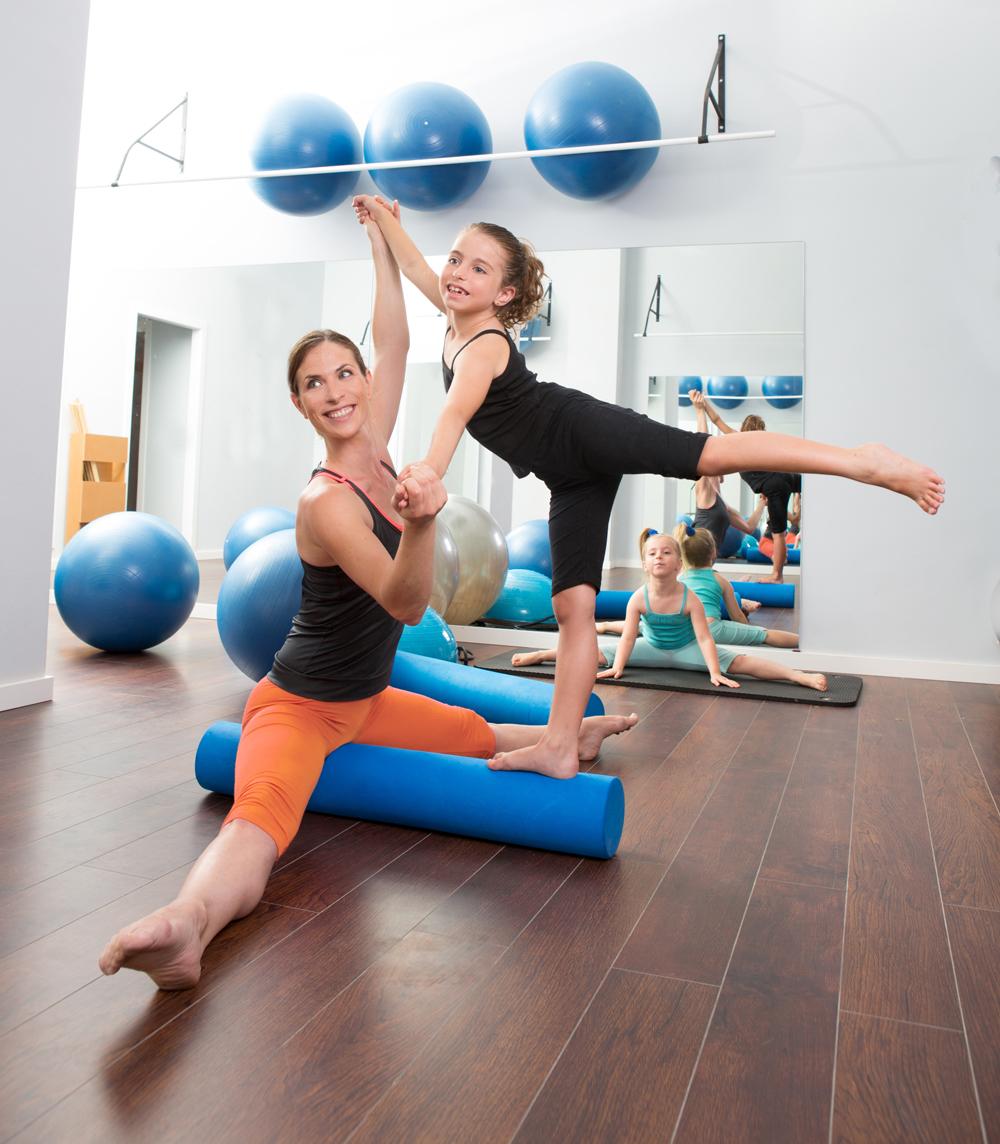
Is the health and fitness industry approaching kids’ fitness in the right way? Kate Cracknell asks the experts

By Kate Cracknell | Published in Health Club Management 2013 issue 1

Afew years ago, I interviewed Magnus Scheving, aka LazyTown’s Sportacus, about kids’ fitness: how to motivate children to be active, how to make it fun, how to put all-encompassing programming together (see HCM March 07, p62). By that time, he’d already achieved outstanding results in his home country of Iceland, running initiatives in which every child in the country took part, leading to soaring sales of fruit and vegetables, plummeting sales of fizzy drinks, and 80 per cent of parents noticing a change in diet and motivation levels in their kids.

He was, when I spoke to him, turning his attention to the UK, and I admit I was genuinely optimistic about the prospects – there was something about his infectious energy and enthusiasm that made me feel, if anyone could get the UK’s kids moving, it would be him. Yet here we are, almost six years on, and even the indefatigable Scheving seems to have hit his head against a brick wall of British politics and ‘can’t do’ attitude.

So what’s going on in the UK – why can’t we get our kids moving? Is the problem political, cultural, environmental, financial – or indeed all of the above? Certainly the recent insolvency of MEND – which saw a sustained drop in the number of its evidence-based programmes due to the transfer of public health to local authorities – suggests that reducing childhood obesity is something people prefer to talk about, rather than do anything meaningful about or pay for.

So is the fitness industry taking the leading role it could – indeed, should – in addressing these issues? Doug Werner, fitness industry veteran and author of Abbie Gets Fit, thinks not: “The industry could benefit tremendously from being the authority in a new youth fitness movement, taking the lead on battling childhood obesity. To date however, I believe that, with few exceptions, the industry has missed the boat on this.”

So why aren’t we being more proactive in this area? And when we do implement programmes and initiatives, are we going about it in the right way? A recent review – published in the British Medical Journal in September 2012 – looked at outcomes data from 30 kids’ physical activity interventions published globally between January 1990 and March 2012. It found that the interventions almost never increased overall daily physical activity – the kids simply went back to their sedentary behaviour in between.

So if structured interventions aren’t working, do health clubs and leisure centres need to change their model? Should activity be less formalised, with indoor/outdoor spaces clearly dedicated to play and fun rather than exercise? Are more outreach programmes with schools needed? Are parent-child sessions the way forward?

Overall, is our strategy right regarding kids’ fitness? We ask the experts.

Tam Fry,

Honorary chair, Child Growth Foundation, and spokesperson for the National Obesity Forum
,

Tam Fry
Tam Fry

Just over a year ago, I attended a Physical Activity Network seminar in Westminster, organised to report on the progress of this offshoot of the government’s much-vaunted Responsibility Deal. The Deal, you will remember, is the government’s strategy to lower obesity in the UK, and I had hoped to find that the work being led by the FIA (now ukactive) and supported by health clubs was significantly more successful than what I perceived to be the very limited achievements of the Deal’s Food Network. I came away, however, bitterly disappointed. My impression was that the seminar had been a session going nowhere, populated by club owners far more interested in mixing with friends than in getting adults and children back into regular activity.

I had wanted to know, in particular, how advanced club owners’ plans might be to ensure the government’s pledge for an Olympic physical activity legacy would be honoured. I didn’t hear of any! How awful. The result is that today, just over a year later, children especially are finding it difficult or impossible to find the sporting facilities needed in their quest to emulate their Olympic heroes. Team GB exceeded its expected medal haul, but no owners appeared to have had the faith to plan for that possibility.

With the connections to Whitehall that this think-tank has, how much had it clamoured for the minimum hours of physical activity in primary schools to be mandatory rather than aspirational? Not much it seemed. Children need one hour of moderately intensive exercise every day; the two hours a week they get of scheduled time is paltry. In some schools they may not even get that. Owners of health clubs across the UK should now be urgently linking up with schools, offering schemes to get their pupils active, if they are not to fail the children on whom our success in Rio and Chicago will depend.

If there are enlightened club owners who are already doing what I ask, I will apologise rapidly for my criticism – I’m quite sure that I will be hearing from them. On the other hand, a miniscule number of rebukes received may prove my point. My email inbox awaits.

Doug Werner,

VP, Healthtrax Fitness and Wellness, and author of Abbie Gets Fit
,

Doug Werner
Doug Werner

Childhood obesity levels continue to rise dramatically. The NHS predicts a 10 per cent rise in the prevalence of obesity among people under 20 years of age by 2015, and 14 per cent by 2025. Meanwhile, a recent study by the Peninsula Medical School in Plymouth, UK, indicated that 75 per cent of parents of overweight children do not even realise their children are overweight. Parents, schools, the NHS and the community at large are not getting the job done.

Our industry could therefore benefit tremendously by being the authority in a new youth fitness movement, taking the lead on battling this epidemic. We need to ask ourselves: do we want to trust less informed, less resourceful influences to solve this problem and develop our future customers for us, or should we be taking the lead now?

To become the leaders in this worthy crusade, more clubs will need to form long-term strategies focused on developing these emerging markets patiently and systematically over time. This is counter-intuitive to our traditional monthly cash flow business model, whose success is frequently dependent on membership sales strategies that are short-sighted and intense. However, it’s not necessarily a risky proposition either: consider the fact that most obese children also have one or more obese parents, who also need our help.

If I were a young and ambitious trainer today, I’d be spending time developing new business opportunities outside the four walls of the gym, targeting this market with entry level family training options that eventually prepare those people for enrolment into a gym as well. Our entire industry would do well to develop similar strategies to capitalise on this huge opportunity.

Our industry could benefit tremendously by being the authority in a new youth fitness movement

Jonathan Williams
,

Chief Executive Officer of kids’ fitness franchise SHOKKénergie
,

Jonathan Williams
Jonathan Williams

As a paediatric exercise scientist, this is something that’s very close to my heart. Personally I have gone full circle with this debate, from supplier to now operator, and that was partly due to attitudes within the industry.

I have a burning passion for the youth activity market, and that helped form the original SHOKK concept and brand 15 years ago. In the early days, everyone loved what SHOKK did and appreciated our passion, but this is where the commitment and input seemed to stop.

The key to any successful delivery to children is to employ quality staff and keep it varied and fresh. Many other activity offerings in this field criticised whether a youth gym could not only work but also sustain interest. “Kids should be running in the fields” was a typical response from some. To a certain extent I agree, but it shouldn’t be forgotten that a physical activity venue offers all of the same advantages to a child as it does to an adult.

So what’s the gap in thinking? Well it’s not rocket science: you need great people, great service, varied and wide-ranging activities, and you must do everything with a smile on your face. Very importantly, you must also do everything with the end customer in mind – the child. Combine that with marketing to parents and children alike and you’ll achieve sustained activity and the beginnings of adherence to exercise.

Unfortunately the philosophy of some operators suggests that kids are an after-thought, so it’s no surprise when the business outputs reflect this. Put children to the top of your agenda and understand the parent and child requirements and you’re halfway there. Drop in oodles of structured sales, marketing and retention activity – in the same way you would at a quality adult facility – promoting an environment that’s been designed specifically for kids, and you’ve cracked it.

We can learn from others too: go to the Disney store to see how it’s done for the under-eights, or Apple for teenagers.

In the early days of SHOKK, everyone appreciated our passion, but this was where the commitment seemed to stop


Sign up here to get HCM's weekly ezine and every issue of HCM magazine free on digital.
Is the health and fitness industry approaching kids’ fitness in the right way? / © windu/shutterstock.com
Most obese children also have one or more obese parents, who also need our help / © bikeriderlondon/shutterstock.com
Experts say children need one hour of moderate physical activity each day – more than the two hours of PE offered in schools / © holbox/shutterstock.com
Gyms must do everything with the end consumer in mind – the child / © pressmasters/shutterstock.com
https://www.leisureopportunities.co.uk/images/HCM2013_1kidsfitness.gif
Is the health and fitness industry approaching children's fitness in the right way? Kate Cracknell asks the experts for their views
Tam Fry, Honorary chair, Child Growth Foundation, and spokesperson for the National Obesity Forum, Doug Werner, VP, Healthtrax Fitness and Wellness, and author of Abbie Gets Fit, Jonathan Williams, Chief executive officer of kids’ fitness franchise SHOKKénergie ,Kids fitness, Obesity,
HCM magazine
As the entrepreneur who started Wexer, Fresh Fitness, Fitness DK and Repeat, as well as being a former elite athlete, Rasmus Ingerslev’s life looked perfect from the outside, but onthe inside it was a different story. He talks to Kath Hudson about healing old wounds
HCM magazine
HCM People

Stephen Price

Founder, SP&Co Group
Working in public health over the last few years has lit up parts of my brain again
HCM magazine
I experienced a blissful feeling of joy I hadn’t felt since I was a kid
HCM magazine
Collaborations with the medical profession and greater aspirations around wellbeing are creating a need for more experts in our sector. It’s time to reboot our thinking around the workforce
HCM magazine
Small improvements to sleep, diet and physical activity have major benefits for the heart, according to new research from the University of Sydney
HCM promotional features
Sponsored
Find out how your gym can tap into the corporate wellness boom
HCM promotional features
Sponsored
Third Space partnered with IndigoFitness to deliver a bespoke training space for its new club at The Whiteley
HCM promotional features
Sponsored
SnowDome Fitness has added 50 per cent more space with cutting-edge Technogym solutions
HCM promotional features
Sponsored
David Lloyd is stepping up its commitment to women’s health as it continues to explore what fit-for-purpose looks like for the female population
HCM promotional features
Sponsored
Greg Bradley looks at the shift towards strength training in gyms and advises on how operators can create the ultimate training environment
HCM promotional features
Sponsored
Starpool supports Olympic champion Marcell Jacobs, says Riccardo Turri
HCM promotional features
Sponsored
EGYM has opened a new HQ in Paternoster Square, London and revealed a range of new launches
HCM promotional features
Sponsored
The industry is embracing consumer-facing tech. Now it’s time to streamline back-of-house systems with Orbit4, says Daniel Jones
HCM promotional features
Sponsored
Pulse Fitness has created a new health club delivering an elevated wellness experience
HCM promotional features
Latest News
Preventive healthcare company Neko Health has added body composition analysis to its full-body health scan ...
Latest News
Chequan Lewis is the new CEO of Crunch Fitness, taking over from Jim Rowley, who ...
Latest News
Sea Lanes Canary Wharf has officially opened. The 50-metre, six-lane pool, which uses the natural ...
Latest News
London-based high-performance fitness club, ONE LDN, is raising funds for a multi-site expansion across London, ...
Latest News
A new brain clinic has opened in London, which uses non-invasive brain stimulation to treat ...
Latest News
Good Boost’s digital exercise programmes are helping adults with MSK at a lower cost than ...
Latest News
With Prime Minister, Keir Starmer, announcing his resignation this morning and Andy Burnham as a ...
Latest News
Koru Health Club launched recently within Luxembourg’s multi-experience destination, GRID X, which combines culture, retail ...
Opinion
promotion
Strength training has moved from the margins to the mainstream.
Opinion: Building smarter strength spaces for today’s operators
Featured supplier news
Featured supplier news: Cornerstone Connect helps Active Blackpool tackle health inequalities
Active Blackpool is deploying Cornerstone Connect, a new digital interface allowing disparate information from multiple systems to be aggregated into one dataset, to support its focus on reducing health inequalities and improving healthy life expectancy.
Featured supplier news
Featured supplier news: Supporting long-term health: why whole body vibration belongs in clinical settings
As healthcare continues to shift towards prevention, there’s a growing focus on helping people stay active, independent and feeling good for longer.
Company profiles
Company profile: Safe Space Lockers
We provide a full turn-key solution for clients from design and consultation, through to bespoke ...
Company profiles
Company profile: Xplor Fitness & Leisure
Today’s fitness and leisure brands need technology that powers standout fitness experiences and keeps pace ...
Supplier Showcases
Supplier Showcase - Future-proofing
Catalogue Gallery
Click on a catalogue to view it online
Featured press releases
BLK BOX press release: Inside the build: Salt 
To bring their concept to life, Salt partnered with BLK BOX to design and equip a facility that would deliver a premium training experience while supporting the needs of a diverse and growing community.
Featured press releases
Swimming Teachers' Association (STA) press release: The Ripple Effect delivers first success as learners qualify and secure employment
STA's The Ripple Effect initiative has reached an important milestone after learners completed the charity's first fully funded swimming teacher training programme, resulting in seven newly qualified swimming teachers.
Directory
Spa and beauty equipment
Living Earth Crafts: Spa and beauty equipment
Water experiences and hydrotherapy solutions
Aquaform s.r.l.: Water experiences and hydrotherapy solutions
Lockers
Crown Sports Lockers: Lockers
Industrial washing machines
Miele Company Limited: Industrial washing machines
Hot tubs
MSpa International Ltd: Hot tubs
Fitness tracking platform
SpiviTech: Fitness tracking platform
Property & Tenders
Stratford, East London.
Lee Valley Regional Park Authority
Property & Tenders
Y Felinheli, LL56 4QN
Newmark
Property & Tenders
Diary dates
21-24 Sep 2026
The Langham Huntington Pasadena , Pasadena, United States
Diary dates
06-08 Oct 2026
Messe Stuttgart, Stuttgart, Germany
Diary dates
22-22 Oct 2026
QEII Conference Centre, London,
Diary dates
26-29 Oct 2027
Koelnmesse Exhibition Centre, Cologne, Germany
Diary dates

features

Kids' fitness: Invest in the future

Is the health and fitness industry approaching kids’ fitness in the right way? Kate Cracknell asks the experts

By Kate Cracknell | Published in Health Club Management 2013 issue 1

Afew years ago, I interviewed Magnus Scheving, aka LazyTown’s Sportacus, about kids’ fitness: how to motivate children to be active, how to make it fun, how to put all-encompassing programming together (see HCM March 07, p62). By that time, he’d already achieved outstanding results in his home country of Iceland, running initiatives in which every child in the country took part, leading to soaring sales of fruit and vegetables, plummeting sales of fizzy drinks, and 80 per cent of parents noticing a change in diet and motivation levels in their kids.

He was, when I spoke to him, turning his attention to the UK, and I admit I was genuinely optimistic about the prospects – there was something about his infectious energy and enthusiasm that made me feel, if anyone could get the UK’s kids moving, it would be him. Yet here we are, almost six years on, and even the indefatigable Scheving seems to have hit his head against a brick wall of British politics and ‘can’t do’ attitude.

So what’s going on in the UK – why can’t we get our kids moving? Is the problem political, cultural, environmental, financial – or indeed all of the above? Certainly the recent insolvency of MEND – which saw a sustained drop in the number of its evidence-based programmes due to the transfer of public health to local authorities – suggests that reducing childhood obesity is something people prefer to talk about, rather than do anything meaningful about or pay for.

So is the fitness industry taking the leading role it could – indeed, should – in addressing these issues? Doug Werner, fitness industry veteran and author of Abbie Gets Fit, thinks not: “The industry could benefit tremendously from being the authority in a new youth fitness movement, taking the lead on battling childhood obesity. To date however, I believe that, with few exceptions, the industry has missed the boat on this.”

So why aren’t we being more proactive in this area? And when we do implement programmes and initiatives, are we going about it in the right way? A recent review – published in the British Medical Journal in September 2012 – looked at outcomes data from 30 kids’ physical activity interventions published globally between January 1990 and March 2012. It found that the interventions almost never increased overall daily physical activity – the kids simply went back to their sedentary behaviour in between.

So if structured interventions aren’t working, do health clubs and leisure centres need to change their model? Should activity be less formalised, with indoor/outdoor spaces clearly dedicated to play and fun rather than exercise? Are more outreach programmes with schools needed? Are parent-child sessions the way forward?

Overall, is our strategy right regarding kids’ fitness? We ask the experts.

Tam Fry,

Honorary chair, Child Growth Foundation, and spokesperson for the National Obesity Forum
,

Tam Fry
Tam Fry

Just over a year ago, I attended a Physical Activity Network seminar in Westminster, organised to report on the progress of this offshoot of the government’s much-vaunted Responsibility Deal. The Deal, you will remember, is the government’s strategy to lower obesity in the UK, and I had hoped to find that the work being led by the FIA (now ukactive) and supported by health clubs was significantly more successful than what I perceived to be the very limited achievements of the Deal’s Food Network. I came away, however, bitterly disappointed. My impression was that the seminar had been a session going nowhere, populated by club owners far more interested in mixing with friends than in getting adults and children back into regular activity.

I had wanted to know, in particular, how advanced club owners’ plans might be to ensure the government’s pledge for an Olympic physical activity legacy would be honoured. I didn’t hear of any! How awful. The result is that today, just over a year later, children especially are finding it difficult or impossible to find the sporting facilities needed in their quest to emulate their Olympic heroes. Team GB exceeded its expected medal haul, but no owners appeared to have had the faith to plan for that possibility.

With the connections to Whitehall that this think-tank has, how much had it clamoured for the minimum hours of physical activity in primary schools to be mandatory rather than aspirational? Not much it seemed. Children need one hour of moderately intensive exercise every day; the two hours a week they get of scheduled time is paltry. In some schools they may not even get that. Owners of health clubs across the UK should now be urgently linking up with schools, offering schemes to get their pupils active, if they are not to fail the children on whom our success in Rio and Chicago will depend.

If there are enlightened club owners who are already doing what I ask, I will apologise rapidly for my criticism – I’m quite sure that I will be hearing from them. On the other hand, a miniscule number of rebukes received may prove my point. My email inbox awaits.

Doug Werner,

VP, Healthtrax Fitness and Wellness, and author of Abbie Gets Fit
,

Doug Werner
Doug Werner

Childhood obesity levels continue to rise dramatically. The NHS predicts a 10 per cent rise in the prevalence of obesity among people under 20 years of age by 2015, and 14 per cent by 2025. Meanwhile, a recent study by the Peninsula Medical School in Plymouth, UK, indicated that 75 per cent of parents of overweight children do not even realise their children are overweight. Parents, schools, the NHS and the community at large are not getting the job done.

Our industry could therefore benefit tremendously by being the authority in a new youth fitness movement, taking the lead on battling this epidemic. We need to ask ourselves: do we want to trust less informed, less resourceful influences to solve this problem and develop our future customers for us, or should we be taking the lead now?

To become the leaders in this worthy crusade, more clubs will need to form long-term strategies focused on developing these emerging markets patiently and systematically over time. This is counter-intuitive to our traditional monthly cash flow business model, whose success is frequently dependent on membership sales strategies that are short-sighted and intense. However, it’s not necessarily a risky proposition either: consider the fact that most obese children also have one or more obese parents, who also need our help.

If I were a young and ambitious trainer today, I’d be spending time developing new business opportunities outside the four walls of the gym, targeting this market with entry level family training options that eventually prepare those people for enrolment into a gym as well. Our entire industry would do well to develop similar strategies to capitalise on this huge opportunity.

Our industry could benefit tremendously by being the authority in a new youth fitness movement

Jonathan Williams
,

Chief Executive Officer of kids’ fitness franchise SHOKKénergie
,

Jonathan Williams
Jonathan Williams

As a paediatric exercise scientist, this is something that’s very close to my heart. Personally I have gone full circle with this debate, from supplier to now operator, and that was partly due to attitudes within the industry.

I have a burning passion for the youth activity market, and that helped form the original SHOKK concept and brand 15 years ago. In the early days, everyone loved what SHOKK did and appreciated our passion, but this is where the commitment and input seemed to stop.

The key to any successful delivery to children is to employ quality staff and keep it varied and fresh. Many other activity offerings in this field criticised whether a youth gym could not only work but also sustain interest. “Kids should be running in the fields” was a typical response from some. To a certain extent I agree, but it shouldn’t be forgotten that a physical activity venue offers all of the same advantages to a child as it does to an adult.

So what’s the gap in thinking? Well it’s not rocket science: you need great people, great service, varied and wide-ranging activities, and you must do everything with a smile on your face. Very importantly, you must also do everything with the end customer in mind – the child. Combine that with marketing to parents and children alike and you’ll achieve sustained activity and the beginnings of adherence to exercise.

Unfortunately the philosophy of some operators suggests that kids are an after-thought, so it’s no surprise when the business outputs reflect this. Put children to the top of your agenda and understand the parent and child requirements and you’re halfway there. Drop in oodles of structured sales, marketing and retention activity – in the same way you would at a quality adult facility – promoting an environment that’s been designed specifically for kids, and you’ve cracked it.

We can learn from others too: go to the Disney store to see how it’s done for the under-eights, or Apple for teenagers.

In the early days of SHOKK, everyone appreciated our passion, but this was where the commitment seemed to stop
Sign up here to get HCM's weekly ezine and every issue of HCM magazine free on digital.
Is the health and fitness industry approaching kids’ fitness in the right way? / © windu/shutterstock.com
Most obese children also have one or more obese parents, who also need our help / © bikeriderlondon/shutterstock.com
Experts say children need one hour of moderate physical activity each day – more than the two hours of PE offered in schools / © holbox/shutterstock.com
Gyms must do everything with the end consumer in mind – the child / © pressmasters/shutterstock.com
https://www.leisureopportunities.co.uk/images/HCM2013_1kidsfitness.gif
Is the health and fitness industry approaching children's fitness in the right way? Kate Cracknell asks the experts for their views
Tam Fry, Honorary chair, Child Growth Foundation, and spokesperson for the National Obesity Forum, Doug Werner, VP, Healthtrax Fitness and Wellness, and author of Abbie Gets Fit, Jonathan Williams, Chief executive officer of kids’ fitness franchise SHOKKénergie ,Kids fitness, Obesity,
Latest News
Preventive healthcare company Neko Health has added body composition analysis to its full-body health scan ...
Latest News
Chequan Lewis is the new CEO of Crunch Fitness, taking over from Jim Rowley, who ...
Latest News
Sea Lanes Canary Wharf has officially opened. The 50-metre, six-lane pool, which uses the natural ...
Latest News
London-based high-performance fitness club, ONE LDN, is raising funds for a multi-site expansion across London, ...
Latest News
A new brain clinic has opened in London, which uses non-invasive brain stimulation to treat ...
Latest News
Good Boost’s digital exercise programmes are helping adults with MSK at a lower cost than ...
Latest News
With Prime Minister, Keir Starmer, announcing his resignation this morning and Andy Burnham as a ...
Latest News
Koru Health Club launched recently within Luxembourg’s multi-experience destination, GRID X, which combines culture, retail ...
Latest News
Celebrating its 10th anniversary, Elevate has had its busiest show to date, with almost 200 ...
Latest News
A new report from Your Personal Training (YPT) suggests UK gym operators could be missing ...
Latest News
Eighty-four per cent of consumers now say wellness is a top priority in their lives, ...
Opinion
promotion
Strength training has moved from the margins to the mainstream.
Opinion: Building smarter strength spaces for today’s operators
Featured supplier news
Featured supplier news: Cornerstone Connect helps Active Blackpool tackle health inequalities
Active Blackpool is deploying Cornerstone Connect, a new digital interface allowing disparate information from multiple systems to be aggregated into one dataset, to support its focus on reducing health inequalities and improving healthy life expectancy.
Featured supplier news
Featured supplier news: Supporting long-term health: why whole body vibration belongs in clinical settings
As healthcare continues to shift towards prevention, there’s a growing focus on helping people stay active, independent and feeling good for longer.
Company profiles
Company profile: Safe Space Lockers
We provide a full turn-key solution for clients from design and consultation, through to bespoke ...
Company profiles
Company profile: Xplor Fitness & Leisure
Today’s fitness and leisure brands need technology that powers standout fitness experiences and keeps pace ...
Supplier Showcases
Supplier Showcase - Future-proofing
Catalogue Gallery
Click on a catalogue to view it online
Featured press releases
BLK BOX press release: Inside the build: Salt 
To bring their concept to life, Salt partnered with BLK BOX to design and equip a facility that would deliver a premium training experience while supporting the needs of a diverse and growing community.
Featured press releases
Swimming Teachers' Association (STA) press release: The Ripple Effect delivers first success as learners qualify and secure employment
STA's The Ripple Effect initiative has reached an important milestone after learners completed the charity's first fully funded swimming teacher training programme, resulting in seven newly qualified swimming teachers.
Directory
Spa and beauty equipment
Living Earth Crafts: Spa and beauty equipment
Water experiences and hydrotherapy solutions
Aquaform s.r.l.: Water experiences and hydrotherapy solutions
Lockers
Crown Sports Lockers: Lockers
Industrial washing machines
Miele Company Limited: Industrial washing machines
Hot tubs
MSpa International Ltd: Hot tubs
Fitness tracking platform
SpiviTech: Fitness tracking platform
Property & Tenders
Stratford, East London.
Lee Valley Regional Park Authority
Property & Tenders
Y Felinheli, LL56 4QN
Newmark
Property & Tenders
Diary dates
21-24 Sep 2026
The Langham Huntington Pasadena , Pasadena, United States
Diary dates
06-08 Oct 2026
Messe Stuttgart, Stuttgart, Germany
Diary dates
22-22 Oct 2026
QEII Conference Centre, London,
Diary dates
26-29 Oct 2027
Koelnmesse Exhibition Centre, Cologne, Germany
Diary dates
Search news, features & products:
Find a supplier:
Partner sites