

















GET HCM
magazine
Sign up for the FREE digital edition of HCM magazine and also get the HCM ezine and breaking news email alerts.
Not right now, thanksclose this window I've already subscribed!
EGYM
EGYM
EGYM
Follow Health Club Management on Twitter Like Health Club Management on Facebook Join the discussion with Health Club Management on LinkedIn
FITNESS, HEALTH, WELLNESS

features

Interview: Colin Milner

The CEO of the ICAA talks to Kate Cracknell about the sheer business logic of catering for older adults in health clubs – and why many operators are still falling at the first hurdle

By Kate Cracknell | Published in Health Club Management 2016 issue 11
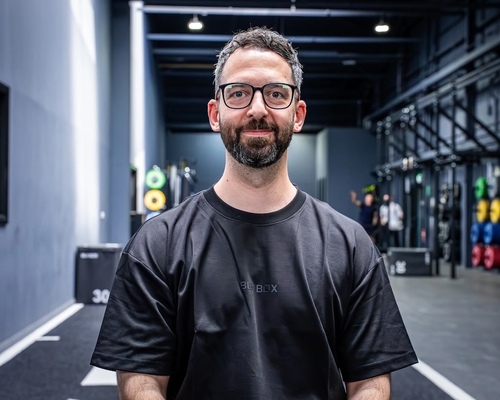
Colin Milner / KAROLINA TUREK PHOTOGRAPHY 
82 per cent of older adults in the US do some form of exercise one day a week. How do we turn that into two or three times a week?

There’s a loud wake-up call for health and fitness providers,” says Colin Milner, CEO of the Canada-based International Council on Active Aging (ICAA). “You can’t just focus on young people, because they simply don’t have the money to spend with you.”

He continues: “So many businesses seem to think all the opportunity lies with the young – that this is where the money is to be made – but just taking the UK as an example, 79 per cent of all disposable income is in fact in the hands of people aged 50 years and over.

“Yet 90 per cent of all marketing globally – across all sectors, not just health and fitness, which probably has even more of a bias towards the younger generations – focuses on people under the age of 50.

“Anyone over that age is effectively invisible. And they want to be visible. They want to be part of the community and not simply shoved away in a room labelled ‘seniors’.”

A need for education
It’s this lack of regard for the ageing market, a lack of awareness across the fitness sector of how to even begin to work with this population, that led Milner to set up the ICAA in 2001 (see briefing panel, p36) – an organisation dedicated to “changing the way we age”.

So how does he hope to achieve this mission? His one-word answer: “Education.” He elaborates: “There are four different groups we try to influence. First are the organisations who provide services to older adults, from health clubs to retirement communities to hospital wellness centres. We educate them on how to market to, and programme for, this group – and why it’s worth their while doing this.

“Because there’s a huge opportunity here for the private sector to step in and say: ‘We offer services that can help you delay the onset of disease.’ There’s a very deep appetite for healthy ageing right now – not just among older people, but among people as young as 25–30 years who want to age well.”

He continues: “The second group is government, which is always tough but we’re making great inroads with governments around the world, from the United States to the United Kingdom, Australia to China.

“The toughest of all is the third group: suppliers, not just in fitness but across all sectors. There’s a real lack of products and services geared towards the older population, and that really boils down to three things – people simply not even considering it, not taking the time to become knowledgeable, or actually being ageist in their views.

“Finally you have the educators – the people who are going to talk about what makes this older market interesting and unique. Some of those groups are open to the conversation. Others are not.”

Defining ‘old’
One big question I had for Milner was how the ICAA defines ‘old’. At what point does youth move into middle age, and where does old age kick in? Certainly as the population continues to age – and with expectations of good quality later years – what used to be ‘old’ is now far from being so. So how do we address the outdated view still prevalent in fitness whereby passing the age of 50 seems to warrant being given a specialist ‘over-50s’ programme?

“We don’t use age or labels at all,” says Milner. “We focus on functional abilities. If I’m a marathon runner, it doesn’t matter if I’m young or old – I’ll have similar interests and similarly high functional ability as other marathon runners. If I’m a dependent individual, young or old, my functional abilities are extremely low. There are five levels of function across the spectrum: athlete, fit individual, independent individual, frail individual and dependent individual. We work everything we do around those.

“This function-based approach sits well with the latest recommendations from the World Health Organization too, which were published in a report on active ageing in September. One of the new definitions of healthy ageing is less about disease or the absence of disease, and more about what WHO is classifying as functional ability. It’s what we’ve been talking about for 15 years, but what’s exciting is that this might now translate into funding, which translates into opportunities that might not have been there before.”

Age of independence
He continues: “The vast majority of people live in the independent category: 50 per cent of older adults in the United States meet the US physical activity guidelines of 150 minutes a week, and 82 per cent do some form of exercise one day a week. That’s where the real opportunity is. How do you turn that into two or three times a week, and how do you bring that activity into your club or leisure centre?

“One of the great misconceptions about older people is that they don’t exercise. Maybe they don’t exercise in the way some health clubs would like them to, but they are being active – so where are they doing it? I always ask the question: ‘Why aren’t they doing it in your centre, especially in the middle of winter?’ And the problem is, nobody knows, because nobody asks. Nobody’s bothered to find out what this group wants, let alone cater for that.

“What I believe you need is an inclusive facility where everyone feels comfortable, and the way I’d create that would be to sit down with a group of people, young and old, and talk to them about what turns them on and off.

“Many years ago, I wrote on an article on hiring a group of older people to go for a tour through other facilities, and then through yours, before asking them to rate how yours compares to the others: what they like, what they don’t like, what the issues are. Once you have that information, you can start brainstorming how you’re going to overcome those issues. Because there are lots of ways of getting around many of them.

“I certainly don’t think you need to create an exclusive facility for older people – although there are some successful examples of that – because older people want very similar stuff to the younger population. In fact, another US stat shows that 85 per cent of those aged between 40 and 90 don’t see themselves as old. My 104-year-old grandmother doesn’t even see herself as old – she talks about ‘those old people’. So offering senior programmes gets you a very small percentage of the market.

“What this group wants is an environment that’s social, that’s clean – it’s basic stuff. And what they’re really interested in is going somewhere that understands them and that genuinely wants their business.

“The problem is that few health club operators seem to be in that mindset right now, in spite of the size and the value of this market. They’re turning their backs on one in every two people who could potentially walk through their doors.”

A multi-dimensional model
So are there any examples of best practice Milner could highlight from around the world?

“The examples I’d pick aren’t health clubs,” says Milner. “I believe change and inspiration will come from outside the sector. One place that’s really cracked it is Willow Valley, an active adult community in the United States. Their population is aged 65 and above, and they have three very large clubhouses for various activities – but one important factor is that one of these clubhouses is inter-generational. There are activities for them to do with their kids and grandkids – bowling, tennis, fitness, pinball – and shared dining areas. They’re creating the all-important social connection.

“Then you could look at somewhere like destination spa Canyon Ranch. As a club, you may not be able to replicate its facilities, but you can replicate its programmes – and they do a really, really great job of programming.

“In fact, a lot of the very high-end spas offer a really good look at the kinds of programming which could and should be available in health clubs – programming that goes beyond just fitness.

“One of the keys with this older market is moving beyond just the physical towards a multi-dimensional model of wellness: physical, spiritual, emotional, social, cognitive, vocational and environmental. Each of those dimensions offers a door to bring new people in.

“We spend so much money on cardio equipment, and yes, cardiovascular disease is a major health issue – but by the year 2020, WHO predicts that depression will be the second biggest cause of premature death and disability globally. So what are you offering in your club for that – what life balance programming, what social programming? There are some real basics that clubs are missing.”

Providing solutions
Milner concludes: “I think the burning issue is acceptance: acceptance of the market and acceptance that we all grow older. Some of the older club owners I know say they feel youthful being around young people – I’m not sure they want to recognise their own ageing process.

“But we do all age, and people are spending lots of money to try to delay this process. They’re buying a few ounces of anti-ageing face cream for US$300. They’re buying drugs and supplements to help them age well. People are looking for solutions. The question is: are you providing them or do they look elsewhere?”

COLIN MILNER

FROM INSTRUCTOR TO ICAA
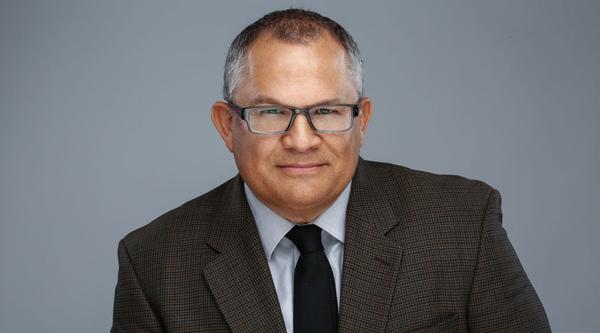
Colin Milner launched the ICAA in 2001 / KAROLINA TUREK PHOTOGRAPHY 
Colin Milner launched the ICAA in 2001,

“This coming March will mark my 35th year in the fitness industry,” says ICAA CEO Colin Milner. “I started as an instructor, worked my way up to club management, and then had the idea of opening a fitness publication for Canada when I was about 25.

“It went well and I sold the magazine after about five years – for not quite enough to retire on! – and was offered a job as vice president of sales and marketing for fitness equipment manufacturer Keiser. I was there for eight years, and that’s where I really got into the area of active ageing.

“Operators would often say to us: ‘We’d really like to get into the older market, but we’re not sure what to do.’ And providers of elderly care would say: ‘We know about older adults, but we don’t know about fitness and wellness.’

“We therefore launched the Keiser Institute on Aging, which in many ways was the precursor of the ICAA. There was so much research being done about Keiser’s equipment, and how you could transform someone’s life simply by getting them to become stronger and participate more in life. I found it amazing.

“I was then recruited by IDEA Health and Fitness Association to be its president, and was hoping to take across with me the sort of active ageing concept we’d developed at Keiser. That didn’t really materialise though, so aged 40 I resigned and launched the ICAA in 2001. Its mission: to change the way people age.

“We now have 10,000 members across 37 different countries, and I’m hoping we’ll grow even further, because the World Health Assembly recently set out plans to make 2020–2030 the decade of healthy ageing. There’s going to be so much focus on this. They’re looking for partners, they’re focusing on function, they’re focusing on trying to change healthcare systems more rapidly.”
Sign up here to get HCM's weekly ezine and every issue of HCM magazine free on digital.
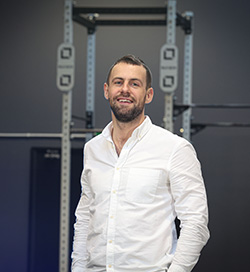
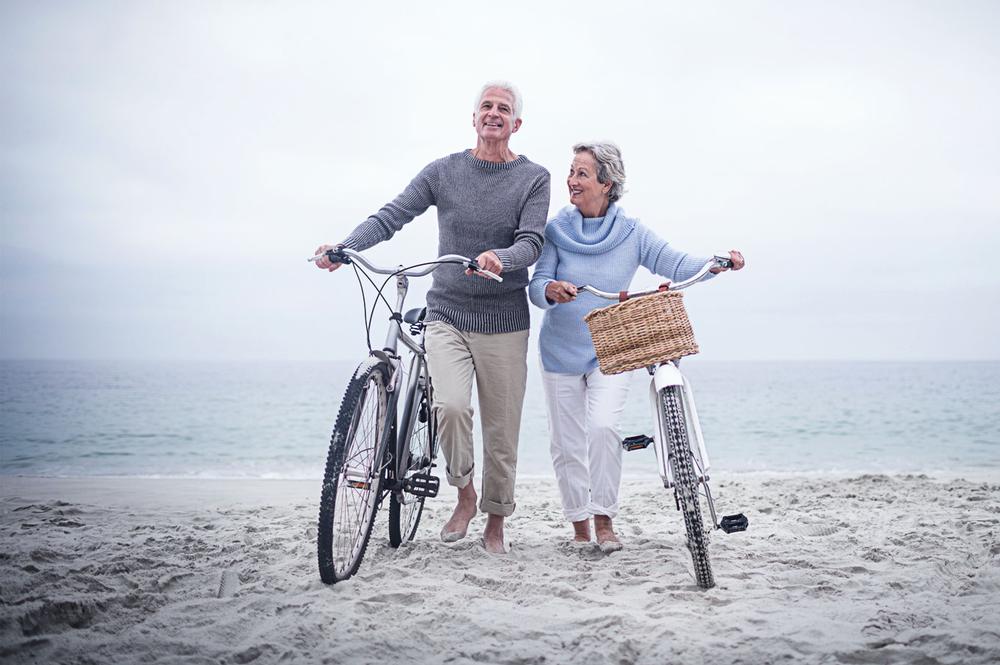
UK over-50s account for 79 per cent of disposable income / PHOTO: Shutterstock
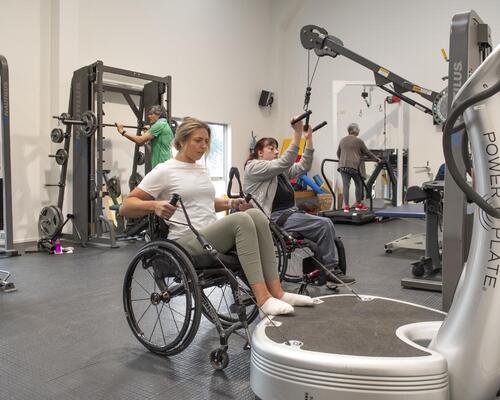
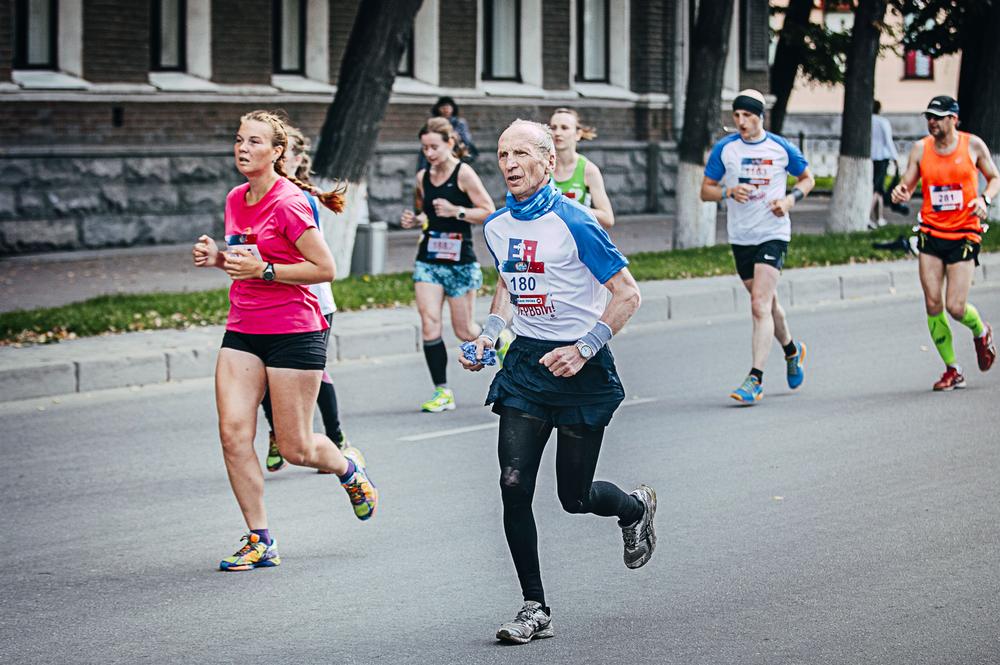
Functional ability is a more important factor in determining people’s needs than actual age / PHOTO: Shutterstock
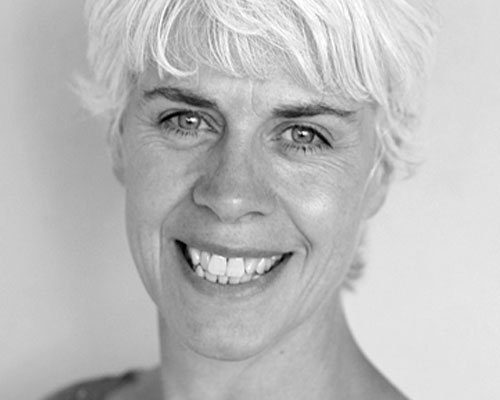
Senior fitness should offer a broader mind-body approach / PHOTO: Shutterstock
https://www.leisureopportunities.co.uk/images/819315_874931.jpg
"So many businesses seem to think all the opportunity lies with the young, but in the UK, for example, 79 per cent of all disposable income is in the hands of people aged 50 years and over." Colin Milner on why health clubs should cater for older adults.
Kate Cracknell, Editor, Health Club Management Magazine,ICAA, inclusive health clubs, Health club operators, older adults, WHO
HCM magazine
As the entrepreneur who started Wexer, Fresh Fitness, Fitness DK and Repeat, as well as being a former elite athlete, Rasmus Ingerslev’s life looked perfect from the outside, but onthe inside it was a different story. He talks to Kath Hudson about healing old wounds
HCM magazine
Small improvements to sleep, diet and physical activity have major benefits for the heart, according to new research from the University of Sydney
HCM magazine
For every member with a tripod and a big following, there are others irritated at the way equipment is being hogged or wary they’ll be in the background on someone’s Insta feed. Do influencers offer valuable, free marketing or are they just a nuisance? Kath Hudson finds out how operators are responding
HCM magazine
Raphael Cuomo explores the powerful link between addiction, health and behaviour change
HCM magazine
If the health service is to survive, we must recognise that it is a disease service – and that wellbeing rests with us, says the activity advocate and healthy ageing champion. He talks to Kate Cracknell
HCM promotional features
Sponsored
Greg Bradley looks at the shift towards strength training in gyms and advises on how operators can create the ultimate training environment
HCM promotional features
Sponsored
Find out how your gym can tap into the corporate wellness boom
HCM promotional features
Sponsored
SnowDome Fitness has added 50 per cent more space with cutting-edge Technogym solutions
HCM promotional features
Sponsored
Starpool supports Olympic champion Marcell Jacobs, says Riccardo Turri
HCM promotional features
Sponsored
Third Space partnered with IndigoFitness to deliver a bespoke training space for its new club at The Whiteley
HCM promotional features
Sponsored
David Lloyd is stepping up its commitment to women’s health as it continues to explore what fit-for-purpose looks like for the female population
HCM promotional features
Sponsored
EGYM has opened a new HQ in Paternoster Square, London and revealed a range of new launches
HCM promotional features
Sponsored
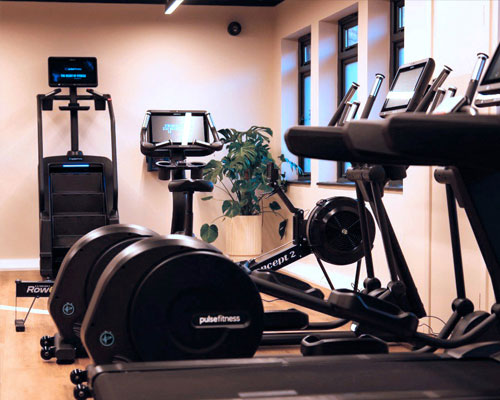
Pulse Fitness has created a new health club delivering an elevated wellness experience
HCM promotional features
Sponsored
Active IQ is calling for greater accountability in online fitness advice with the launch of a new trustmark
HCM promotional features
Latest News
Australia’s fast-growing fitness network, Viva Leisure, is adding a low-cost gym brand to its already ...
Latest News
Speedflex has launched a strength training programme for 10 to 16-year-olds, to make it safer, ...
Latest News
Tewinbury Farm Hotel in Hertfordshire, UK is expanding its premium leisure proposition with the launch ...
Latest News

Work is underway in Madrid on one of Europe’s most significant multi-functional complexes, ...

Latest News
PureGym is encouraging people to step away from their screens and go for a walk, ...
Latest News
Small improvements to sleep, diet quality, and physical activity, made in combination lead to a ...
Latest News
Therme Manchester’s 28-acre development, which will include interconnected glass pavilions that measure 65,000sq m, will ...
Latest News
The Yard Gym (TYG) is to become Nike Training’s official global training partner in a ...
Opinion
promotion
Strength training has moved from the margins to the mainstream.
Opinion: Building smarter strength spaces for today’s operators
Featured supplier news
Featured supplier news: Elevate 2026 to mark 10-year anniversary with biggest ever waterfront drinks reception
Elevate is set to celebrate its 10th anniversary in style this June, with organisers confirming the event’s largest-ever drinks reception as registrations continue to run more than 10% ahead of last year.
Featured supplier news
Featured supplier news: W3Fit EMEA celebrates its fifth anniversary
Celebrating its milestone 5th anniversary, W3Fit EMEA returns in 2026 with an unmissable gathering of the Health & Fitness industry’s most influential leaders.
Company profiles
Company profile: Panatta Srl
Panatta's mission is to create machines that are aesthetically pleasing, functional and competitive in price ...
Company profiles
Company profile: Balanced Body
Founded nearly 50 years ago, Balanced Body works with the highest quality materials, and pride ...
Supplier Showcases
Supplier Showcase - Future-proofing
Catalogue Gallery
Click on a catalogue to view it online
Featured press releases
ukactive press release: Are they Fit for Office? UK Active and Technogym throw down the gauntlet to MPs
Hundreds of staff, MPs and Peers from across Westminster have signed up for the Fit for Office parliamentary physical activity challenge, which takes place throughout June and is hosted by ukactive and Technogym.
Featured press releases
Innerva press release: Lex Leisure’s power-assisted exercise suite smashes targets in record time
Crook Log Leisure Centre has more than doubled the membership target for its new power- assisted exercise suite in less than six months.
Directory
Fitness tracking platform
SpiviTech: Fitness tracking platform
Industrial washing machines
Miele Company Limited: Industrial washing machines
Spa and beauty equipment
Oakworks Inc: Spa and beauty equipment
Water experiences and hydrotherapy solutions
Aquaform s.r.l.: Water experiences and hydrotherapy solutions
Hot tubs
MSpa International Ltd: Hot tubs
Lockers
Crown Sports Lockers: Lockers
Property & Tenders
Stratford, East London.
Lee Valley Regional Park Authority
Property & Tenders
Y Felinheli, LL56 4QN
Newmark
Property & Tenders
Diary dates
13-13 Jun 2026
Worldwide, Various,
Diary dates
21-24 Sep 2026
The Langham Huntington Pasadena , Pasadena, United States
Diary dates
06-08 Oct 2026
Messe Stuttgart, Stuttgart, Germany
Diary dates
22-22 Oct 2026
QEII Conference Centre, London,
Diary dates
26-29 Oct 2027
Koelnmesse Exhibition Centre, Cologne, Germany
Diary dates

features

Interview: Colin Milner

The CEO of the ICAA talks to Kate Cracknell about the sheer business logic of catering for older adults in health clubs – and why many operators are still falling at the first hurdle

By Kate Cracknell | Published in Health Club Management 2016 issue 11
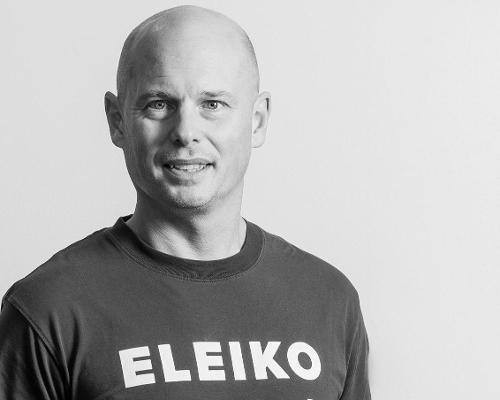
Colin Milner / KAROLINA TUREK PHOTOGRAPHY 
82 per cent of older adults in the US do some form of exercise one day a week. How do we turn that into two or three times a week?

There’s a loud wake-up call for health and fitness providers,” says Colin Milner, CEO of the Canada-based International Council on Active Aging (ICAA). “You can’t just focus on young people, because they simply don’t have the money to spend with you.”

He continues: “So many businesses seem to think all the opportunity lies with the young – that this is where the money is to be made – but just taking the UK as an example, 79 per cent of all disposable income is in fact in the hands of people aged 50 years and over.

“Yet 90 per cent of all marketing globally – across all sectors, not just health and fitness, which probably has even more of a bias towards the younger generations – focuses on people under the age of 50.

“Anyone over that age is effectively invisible. And they want to be visible. They want to be part of the community and not simply shoved away in a room labelled ‘seniors’.”

A need for education
It’s this lack of regard for the ageing market, a lack of awareness across the fitness sector of how to even begin to work with this population, that led Milner to set up the ICAA in 2001 (see briefing panel, p36) – an organisation dedicated to “changing the way we age”.

So how does he hope to achieve this mission? His one-word answer: “Education.” He elaborates: “There are four different groups we try to influence. First are the organisations who provide services to older adults, from health clubs to retirement communities to hospital wellness centres. We educate them on how to market to, and programme for, this group – and why it’s worth their while doing this.

“Because there’s a huge opportunity here for the private sector to step in and say: ‘We offer services that can help you delay the onset of disease.’ There’s a very deep appetite for healthy ageing right now – not just among older people, but among people as young as 25–30 years who want to age well.”

He continues: “The second group is government, which is always tough but we’re making great inroads with governments around the world, from the United States to the United Kingdom, Australia to China.

“The toughest of all is the third group: suppliers, not just in fitness but across all sectors. There’s a real lack of products and services geared towards the older population, and that really boils down to three things – people simply not even considering it, not taking the time to become knowledgeable, or actually being ageist in their views.

“Finally you have the educators – the people who are going to talk about what makes this older market interesting and unique. Some of those groups are open to the conversation. Others are not.”

Defining ‘old’
One big question I had for Milner was how the ICAA defines ‘old’. At what point does youth move into middle age, and where does old age kick in? Certainly as the population continues to age – and with expectations of good quality later years – what used to be ‘old’ is now far from being so. So how do we address the outdated view still prevalent in fitness whereby passing the age of 50 seems to warrant being given a specialist ‘over-50s’ programme?

“We don’t use age or labels at all,” says Milner. “We focus on functional abilities. If I’m a marathon runner, it doesn’t matter if I’m young or old – I’ll have similar interests and similarly high functional ability as other marathon runners. If I’m a dependent individual, young or old, my functional abilities are extremely low. There are five levels of function across the spectrum: athlete, fit individual, independent individual, frail individual and dependent individual. We work everything we do around those.

“This function-based approach sits well with the latest recommendations from the World Health Organization too, which were published in a report on active ageing in September. One of the new definitions of healthy ageing is less about disease or the absence of disease, and more about what WHO is classifying as functional ability. It’s what we’ve been talking about for 15 years, but what’s exciting is that this might now translate into funding, which translates into opportunities that might not have been there before.”

Age of independence
He continues: “The vast majority of people live in the independent category: 50 per cent of older adults in the United States meet the US physical activity guidelines of 150 minutes a week, and 82 per cent do some form of exercise one day a week. That’s where the real opportunity is. How do you turn that into two or three times a week, and how do you bring that activity into your club or leisure centre?

“One of the great misconceptions about older people is that they don’t exercise. Maybe they don’t exercise in the way some health clubs would like them to, but they are being active – so where are they doing it? I always ask the question: ‘Why aren’t they doing it in your centre, especially in the middle of winter?’ And the problem is, nobody knows, because nobody asks. Nobody’s bothered to find out what this group wants, let alone cater for that.

“What I believe you need is an inclusive facility where everyone feels comfortable, and the way I’d create that would be to sit down with a group of people, young and old, and talk to them about what turns them on and off.

“Many years ago, I wrote on an article on hiring a group of older people to go for a tour through other facilities, and then through yours, before asking them to rate how yours compares to the others: what they like, what they don’t like, what the issues are. Once you have that information, you can start brainstorming how you’re going to overcome those issues. Because there are lots of ways of getting around many of them.

“I certainly don’t think you need to create an exclusive facility for older people – although there are some successful examples of that – because older people want very similar stuff to the younger population. In fact, another US stat shows that 85 per cent of those aged between 40 and 90 don’t see themselves as old. My 104-year-old grandmother doesn’t even see herself as old – she talks about ‘those old people’. So offering senior programmes gets you a very small percentage of the market.

“What this group wants is an environment that’s social, that’s clean – it’s basic stuff. And what they’re really interested in is going somewhere that understands them and that genuinely wants their business.

“The problem is that few health club operators seem to be in that mindset right now, in spite of the size and the value of this market. They’re turning their backs on one in every two people who could potentially walk through their doors.”

A multi-dimensional model
So are there any examples of best practice Milner could highlight from around the world?

“The examples I’d pick aren’t health clubs,” says Milner. “I believe change and inspiration will come from outside the sector. One place that’s really cracked it is Willow Valley, an active adult community in the United States. Their population is aged 65 and above, and they have three very large clubhouses for various activities – but one important factor is that one of these clubhouses is inter-generational. There are activities for them to do with their kids and grandkids – bowling, tennis, fitness, pinball – and shared dining areas. They’re creating the all-important social connection.

“Then you could look at somewhere like destination spa Canyon Ranch. As a club, you may not be able to replicate its facilities, but you can replicate its programmes – and they do a really, really great job of programming.

“In fact, a lot of the very high-end spas offer a really good look at the kinds of programming which could and should be available in health clubs – programming that goes beyond just fitness.

“One of the keys with this older market is moving beyond just the physical towards a multi-dimensional model of wellness: physical, spiritual, emotional, social, cognitive, vocational and environmental. Each of those dimensions offers a door to bring new people in.

“We spend so much money on cardio equipment, and yes, cardiovascular disease is a major health issue – but by the year 2020, WHO predicts that depression will be the second biggest cause of premature death and disability globally. So what are you offering in your club for that – what life balance programming, what social programming? There are some real basics that clubs are missing.”

Providing solutions
Milner concludes: “I think the burning issue is acceptance: acceptance of the market and acceptance that we all grow older. Some of the older club owners I know say they feel youthful being around young people – I’m not sure they want to recognise their own ageing process.

“But we do all age, and people are spending lots of money to try to delay this process. They’re buying a few ounces of anti-ageing face cream for US$300. They’re buying drugs and supplements to help them age well. People are looking for solutions. The question is: are you providing them or do they look elsewhere?”

COLIN MILNER

FROM INSTRUCTOR TO ICAA

Colin Milner launched the ICAA in 2001 / KAROLINA TUREK PHOTOGRAPHY 
Colin Milner launched the ICAA in 2001,

“This coming March will mark my 35th year in the fitness industry,” says ICAA CEO Colin Milner. “I started as an instructor, worked my way up to club management, and then had the idea of opening a fitness publication for Canada when I was about 25.

“It went well and I sold the magazine after about five years – for not quite enough to retire on! – and was offered a job as vice president of sales and marketing for fitness equipment manufacturer Keiser. I was there for eight years, and that’s where I really got into the area of active ageing.

“Operators would often say to us: ‘We’d really like to get into the older market, but we’re not sure what to do.’ And providers of elderly care would say: ‘We know about older adults, but we don’t know about fitness and wellness.’

“We therefore launched the Keiser Institute on Aging, which in many ways was the precursor of the ICAA. There was so much research being done about Keiser’s equipment, and how you could transform someone’s life simply by getting them to become stronger and participate more in life. I found it amazing.

“I was then recruited by IDEA Health and Fitness Association to be its president, and was hoping to take across with me the sort of active ageing concept we’d developed at Keiser. That didn’t really materialise though, so aged 40 I resigned and launched the ICAA in 2001. Its mission: to change the way people age.

“We now have 10,000 members across 37 different countries, and I’m hoping we’ll grow even further, because the World Health Assembly recently set out plans to make 2020–2030 the decade of healthy ageing. There’s going to be so much focus on this. They’re looking for partners, they’re focusing on function, they’re focusing on trying to change healthcare systems more rapidly.”

Sign up here to get HCM's weekly ezine and every issue of HCM magazine free on digital.
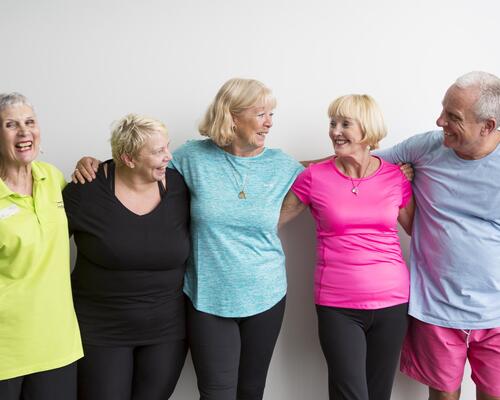
UK over-50s account for 79 per cent of disposable income / PHOTO: Shutterstock
Functional ability is a more important factor in determining people’s needs than actual age / PHOTO: Shutterstock
Senior fitness should offer a broader mind-body approach / PHOTO: Shutterstock
https://www.leisureopportunities.co.uk/images/819315_874931.jpg
"So many businesses seem to think all the opportunity lies with the young, but in the UK, for example, 79 per cent of all disposable income is in the hands of people aged 50 years and over." Colin Milner on why health clubs should cater for older adults.
Kate Cracknell, Editor, Health Club Management Magazine,ICAA, inclusive health clubs, Health club operators, older adults, WHO
Latest News
Australia’s fast-growing fitness network, Viva Leisure, is adding a low-cost gym brand to its already ...
Latest News
Speedflex has launched a strength training programme for 10 to 16-year-olds, to make it safer, ...
Latest News
Tewinbury Farm Hotel in Hertfordshire, UK is expanding its premium leisure proposition with the launch ...
Latest News

Work is underway in Madrid on one of Europe’s most significant multi-functional complexes, ...

Latest News
PureGym is encouraging people to step away from their screens and go for a walk, ...
Latest News
Small improvements to sleep, diet quality, and physical activity, made in combination lead to a ...
Latest News
Therme Manchester’s 28-acre development, which will include interconnected glass pavilions that measure 65,000sq m, will ...
Latest News
The Yard Gym (TYG) is to become Nike Training’s official global training partner in a ...
Latest News
Everlast Gyms' York site has reopened following a refurbishment to bring it up to the ...
Latest News
Luxury hospitality and wellness pioneer Jeremy McCarthy has launched Leisure Alchemy, a digital platform that ...
Latest News
A contrast therapy and breathwork facility called Reset has opened in Islington, London, in the ...
Opinion
promotion
Strength training has moved from the margins to the mainstream.
Opinion: Building smarter strength spaces for today’s operators
Featured supplier news
Featured supplier news: Elevate 2026 to mark 10-year anniversary with biggest ever waterfront drinks reception
Elevate is set to celebrate its 10th anniversary in style this June, with organisers confirming the event’s largest-ever drinks reception as registrations continue to run more than 10% ahead of last year.
Featured supplier news
Featured supplier news: W3Fit EMEA celebrates its fifth anniversary
Celebrating its milestone 5th anniversary, W3Fit EMEA returns in 2026 with an unmissable gathering of the Health & Fitness industry’s most influential leaders.
Company profiles
Company profile: Panatta Srl
Panatta's mission is to create machines that are aesthetically pleasing, functional and competitive in price ...
Company profiles
Company profile: Balanced Body
Founded nearly 50 years ago, Balanced Body works with the highest quality materials, and pride ...
Supplier Showcases
Supplier Showcase - Future-proofing
Catalogue Gallery
Click on a catalogue to view it online
Featured press releases
ukactive press release: Are they Fit for Office? UK Active and Technogym throw down the gauntlet to MPs
Hundreds of staff, MPs and Peers from across Westminster have signed up for the Fit for Office parliamentary physical activity challenge, which takes place throughout June and is hosted by ukactive and Technogym.
Featured press releases
Innerva press release: Lex Leisure’s power-assisted exercise suite smashes targets in record time
Crook Log Leisure Centre has more than doubled the membership target for its new power- assisted exercise suite in less than six months.
Directory
Fitness tracking platform
SpiviTech: Fitness tracking platform
Industrial washing machines
Miele Company Limited: Industrial washing machines
Spa and beauty equipment
Oakworks Inc: Spa and beauty equipment
Water experiences and hydrotherapy solutions
Aquaform s.r.l.: Water experiences and hydrotherapy solutions
Hot tubs
MSpa International Ltd: Hot tubs
Lockers
Crown Sports Lockers: Lockers
Property & Tenders
Stratford, East London.
Lee Valley Regional Park Authority
Property & Tenders
Y Felinheli, LL56 4QN
Newmark
Property & Tenders
Diary dates
13-13 Jun 2026
Worldwide, Various,
Diary dates
21-24 Sep 2026
The Langham Huntington Pasadena , Pasadena, United States
Diary dates
06-08 Oct 2026
Messe Stuttgart, Stuttgart, Germany
Diary dates
22-22 Oct 2026
QEII Conference Centre, London,
Diary dates
26-29 Oct 2027
Koelnmesse Exhibition Centre, Cologne, Germany
Diary dates
Search news, features & products:
Find a supplier:
EGYM
EGYM
Partner sites