
















features
Insight: Winning group training
The path from the gym floor to the studio is paved with gold, says Jo Bryce. Operators are boosting lifetime value by helping more members make the journey



Every decade or so, studio innovations come along that completely change the game – Spinning, Tai-Bo, Bodypump, Barry’s, SoulCycle. Often it’s a product or style of training, but when it transforms the entire category, that’s when things really get exciting.
Demand for live fitness experiences is at an all-time high. McKinsey’s Future of Wellness report (www.hcmmag.com/FOW) flagged in-person fitness spending as an area primed for growth and clubs have a huge opportunity to seize this spend and turbocharge growth by leaning on the most engaging elements of the club – especially the studio. Class participants attend more frequently, have a higher lifetime value and refer more friends to clubs.
This is partly because consumers – particularly Gen Z – are experiencing unprecedented levels of isolation and loneliness. The American Time Use survey found people in the US – for example – are spending 70 per cent less time with friends than they did a decade ago, driving a desperate need for in-person connection and community. The World Health Organization has even flagged loneliness as a risk to longevity – with people lacking social connection facing a 30 per cent higher risk of early death (www.hcmmag.com/WHOloneliness).
A NEW WORLD OF GROUP EX
But the old rules of group exercise no longer apply. Some new consumers coming into fitness are blighted by conflicting interests – they crave community but need help finding it and getting started. The Gen Z Fitness: Cracking the Code report (www.hcmmag.com/lesmillsgenz) discovered that 50 per cent of Gen Z want to start working out, but 14 per cent are too intimidated to start. Meanwhile, 22 per cent say they have no one to work out with. Operators who fail to acknowledge these nuances with personalisation from the start – including bulletproof onboarding, honest conversations about time available and realistic goals – risk burning marketing dollars trying to replace members who leave disappointed.
So how can operators bridge the gap and help consumers by supporting their need for guidance and new ways to work out together?
Enter group training – where the best of traditional group exercise (community, motivation, results) is blended with innovations, such as:
• Added personalisation through things such as enhanced floor coaching
• Fresh music and movement patterns to challenge and excite
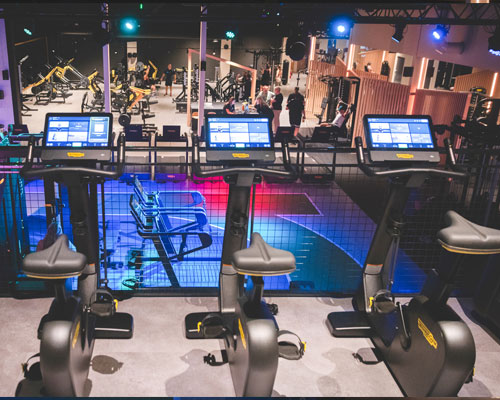
• Immersive experiences in dynamic environments
• Classes on the gym floor amping up the energy and attracting new recruits
• Frictionless journeys to recruit and train the next generation of instructors
The health and fitness industry is in the motivation business – and we must never stop striving to create better experiences to keep members coming back. This is why Les Mills is innovating its programme offering to usher in a new age of group training.
This includes continuing to update existing favorites in the Les Mills Signature Collection – such as Bodypump and Bodycombat – to keep them current, while introducing new programs via the Les Mills Innovation Collection to invigorate timetables and help health clubs stay at the leading edge of fitness.
The new age of group training is upon us and bold operators are stealing a march. Here are some examples of how early adopters are reaping the rewards.
DRIVING GROWTH
Martin Seibold, CEO of LifeFit Group, is committing to a strong growth trajectory for his 210-strong chain of clubs. LifeFit’s ‘buy and build’ plan to add 30-50 sites per year for the foreseeable future is underpinned by a strategy that sees group training fueling growth. “We don’t see too much opportunity for further innovation on the gym floor in the next couple of years, so now we’ve decided to shift our focus back to our studios and group training,” says Seibold. “There’s a lot of investment going into our studios to improve the lighting, sound, floor equipment and of course the programming.”
With member growth comes the risk of attrition and with a current retention rate of 80 per cent, Seibold is keen for his Fitness First clubs to harness the power of group training to sustain that figure, adding: “We want to maintain that level, so we want more people using our studios because we can facilitate a lot more of them in classes. At the same time, you create strong communities, sparked by instructors mingling with the members and helping them forge connections. It means our members are forming more friendships, making them far less likely to leave the gym, so our studios are a central pillar of our growth strategy. The investment is small in comparison to the returns we’ll see if we can keep our retention rate high, so we see group training as offering a great ROI.”
“There’s also a big focus on operational excellence to support our business,” says Seibold, “There’s no point worrying about differentiation in the development of the product if you’re not doing the basics right.
“If our competitors are offering the same programming as us then I’m very relaxed about that,” he says. “Les Mills puts a stunning amount of investment and resources into the creation of each and every programme release. So why would we start building studio programmes ourselves when they’re going to be nowhere near as good?”
WINNING NEW AUDIENCES
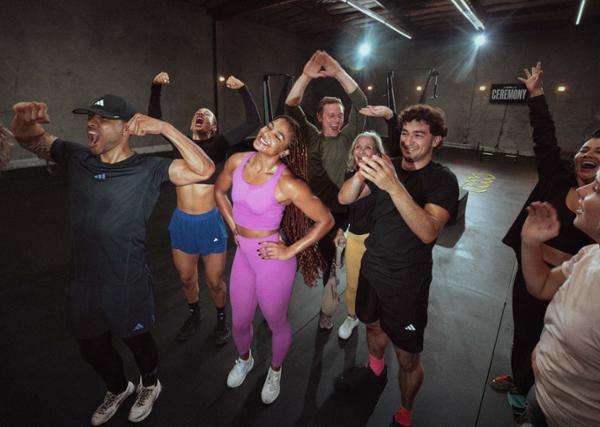
Like many operators, attracting new audiences to the studio was a key priority for Bannatyne, when it recently introduced the Les Mills Ceremony workout.
“We were keen to attract younger members to our classes, and ease pressure on the gym floor at peak times by offering the studio as an exciting alternative,” says Oliver Cox, Bannatyne’s former head of programming. Ceremony was an opportunity to present all our members with something more experiential. As group training goes, it feels very different.
“Two really special things have happened. Our existing group training participants are enjoying the addition of this programme alongside their usual activities, such as Les Mills workouts from the Signature Collection. Even more excitingly, we’re attracting entirely new audiences into the studio, with 25 per cent of Ceremony participants being completely new to group training.
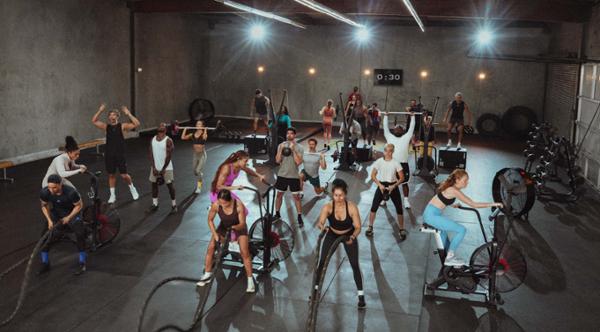
“Occupancy is strong and Ceremony has won over members who would have previously done functional training alone on the gym floor. The lure of a group training class that delivers functional strength in a thrilling environment has encouraged them to try something new, and that’s fantastic.”
The success of Ceremony means Bannatyne is now rolling out the programme across its estate.
“Ceremony was instrumental in helping bring staff on the journey,” says Cox. “There were plenty of site visits before launch, starting with scoping meetings to give our GFM the full rundown of the proposition, plus a training overview meeting with our AGM to ensure the programme would land effectively. The team also delivered education to all club teammates on the new format prior to launch, so they were fully briefed on Ceremony and able to educate members.”
ATTRACTING MORE MEN
The new age of group training is helping operators capture the attention of another traditionally elusive demographic – men. Nicole Grainger, national group fitness manager for Fitness and Lifestyle Group says Ceremony has helped the brand bring men over to group training and consolidated its position in the market. “The format has strengthened our appeal to younger members and men, two demographics that can be harder to attract to traditional group fitness,” says Grainger. “At our Richmond club in Australia, 65 per cent of Ceremony attendees are men and the average participant age is 34, which is significantly younger than the rest of our classes.
“The programme’s positioning as a hybrid of group fitness and gym-floor training has enhanced our reputation for innovation and quality.
“Les Mills has been an incredible partner and really hands-on throughout this process – from training our head coaches to hosting information sessions for our sales and marketing teams. Their guidance in designing the studios has been invaluable,” says Grainger.
PT AND INSTRUCTOR GROWTH
Attracted by the flexibility and ‘coaching’ style that innovative new programming unlocks, early adopter clubs are also bolstering their instructor squads by successfully training PTs to lead classes.
Operators can drive greater value from their in-house teams by engaging more of their employed fitness professionals to deliver group training and elevate the member experience.
Erika Zaleta, vice president, clubs at The Edge Fitness Clubs in the US, recently recruited 90 per cent of new group training instructors for Les Mills Ceremony from the existing PT team. The journey began by breaking down preconceived ideas about the category and educating them.
“Before our PTs understood the new methods of coaching Les Mills is opening up, they were uncertain how it could be relevant for them, says Zaleta. “Being able to hear about the science behind the training, and the extensive testing the workouts go through before launching really shifted the mindset,” she says.
“Having access to existing instructors helped with the mentoring process. They were amazing, and helped cover off all the questions the trainers had. Our PTs were open to learning what Les Mills is all about, and they left that eight-hour training with a completely different mindset.”
US Trainer Sarah Gruba, who oversaw the training with The Edge, adds that the enhanced floor coaching in programmes such as Ceremony is a further incentive for PTs. “I think sometimes as a PT, there’s a reluctance to step onto the stage in the group setting. That’s maybe why some of them put the brakes on when stepping into that space,” she explains. “What new workouts such as Ceremony have done is given them the same amazing, safe, effective workout, but in a vessel that feels more comfortable and natural. It’s freed them from their preconceived notions around choreography and they’re able to focus on what matters to them the most, which is the technique in the coaching.”