











features
Insight: A second Renaissance
We’re in the middle of a second renaissance driven by a growing focus on health policy and more educated consumers, says David Minton


The Renaissance began in Florence in the 15th century and quickly spread across Europe, marking the transition between the middle-ages and modernity.
It was a period of great social change driven by power – best exemplified by the House of Medici – and also by increased awareness of nature and humanistic learning. Painting, sculpture, architecture, music, literature and individualism all blossomed.
The 21st century Renaissance will be driven by Gen Alpha, the first generation to be born entirely in the new century.
During their lifetime, they’ll see parallel worlds collide synergistically, with health, nutrition and tech flourishing and change driven by those who see no boundaries.
All this comes against a backdrop of concern about nature and climate. Gen Zers have put both of these high on the geopolitical agenda, pointing out the need to avoid environmental tipping points and this baton will be taken up by Gen Alpha.
Members of this 21st century generation realise they can’t take generational progress for granted and their mission will be to achieve good personal health and build stronger communities, so improving the health of nations and the planet.
The power of community is increasingly being recognised – in the US, a century-long study tells us the best predictor of longevity and happiness is the quality of people’s social capital.
Blue Zones acknowledge this impact and UNESCO has extended the definition of the Mediterranean diet to categorise it as a holistic entity – fifty per cent healthy diet and fifty per cent the social capital elements of shopping, preparing, cooking and eating together.
The longevity universe
For the last two years I’ve toured the Health Optimisation Summit with Neil King from Longevity Network to experience a weekend of biohacking, nutrition, longevity, functional and preventative medicines and health technologies that are shifting the optimal health paradigm.
King deems this to be a parallel universe and the health and fitness industry isn’t changing fast enough to keep up with this pace of innovation. This Summit was just the jolt we needed to drive new thinking.
Nutrition is another parallel world the health and fitness sector needs to embrace.
Katie Lewis from Brand Chatter also sent me Dr Robert Lustig’s book Fat Chance and I introduced Katie to my book of the year, Dark Matter by Dr James Kinross. These are two seminal works on – respectively – hidden sugar and the microbiome. Both essential for a greater understanding of how what you consume affects your body, mind and longevity.
Health is everything
King Charles mentioned community and health more than once in his last Christmas message and both he and Catherine, Princess of Wales, are certain to be paying more attention to their own self-care than before their cancer treatments. Charles also talked about the power of ‘repairing’ and ‘listening’.
From Royalty to the wider population, no matter how much wealth you have, without your health, it’s worthless. Or, as my mother was fond of saying, “if you don’t have your health, you have nothing”.
A UK Parliamentary Committee on End of Life Care estimated the cost of delivering this at between £1.8 and £4.5 billion per annum and after helping extend my mother’s life of independence until she was 97 and my father-in-law to 101, I know firsthand how personal investment in health saves the government time and money. Here’s my personal journey from anxiety to aspiration so far.
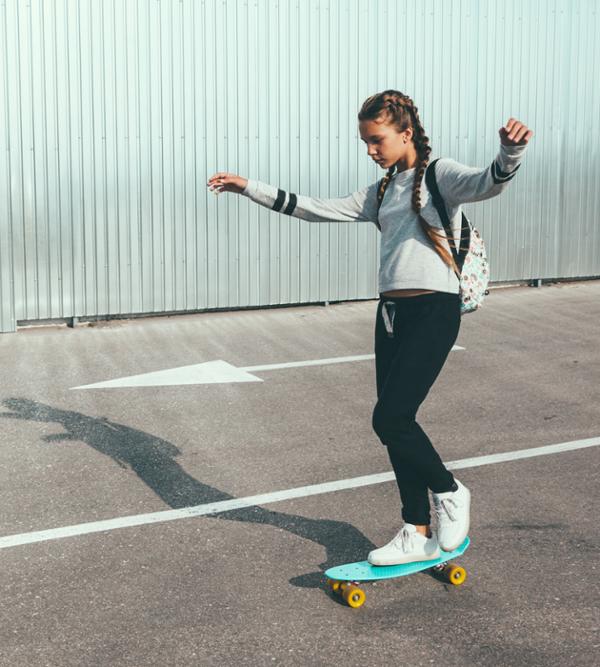
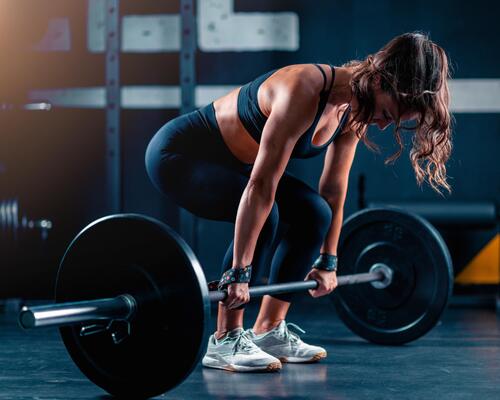
Patterns of physical activity, strength, power, speed, acceleration, flexibility, agility and functional movement have a direct effect on bone density, mental ability, V02 max and, therefore, active ageing.
I have to thank Richard Brennan from Hoste Health for this insight as I work towards my goal of maintaining healthy movement.
Hugely knowledgeable both in the medical and exercise worlds. Brennan tells me that 77 of the new Clinical Exercise Physiologists being appointed by the health service have been certified, with a further 200 on the way. They start on the National Health Service Grade 5 pay scale.
>>> As the health service forges ahead in training people to this high-level of expertise, what’s the fitness certification equivalent?
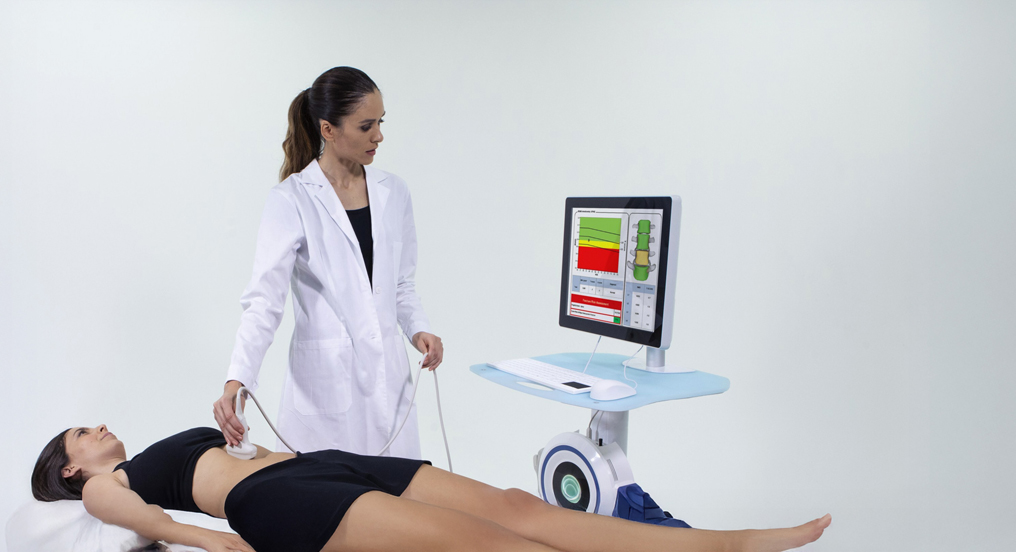
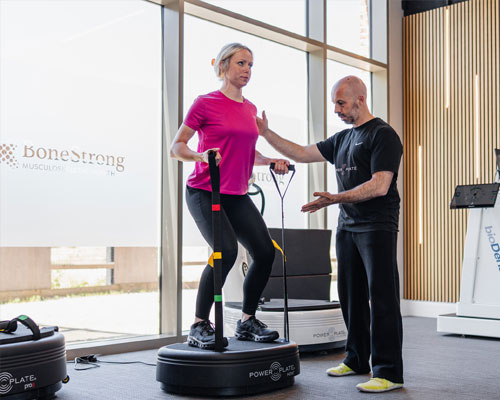
Gary Rhodes and Iain Murray at Performance Health Systems (PHS) introduced me to Steven Bartlett and Vishal Amin at Until in London, where PHS did my bone screening using the portable Echolight diagnostic system (www.echolightmedical.com).
I now know my bone density T score is -1.7 and my fragility scores for hips is 52.1 while my spine is an age-defying 39.8. To help improve these scores I’m working on ‘force’ – pull, push and twist to help in the development of stronger bones. Thankfully my fracture risk assessment is low.
A look at National Joint Registry data and current costs shows that bone screening could save the UK’s health service an estimated £5.6 billion over the next ten years.
>>> Do you know your T Score?
One of my cycling buddies runs the John Black Foundation which was established to support medical research into prostate cancer. He recommends during our annual blood tests that we ask for a PSA (Prostate-Specific Antigen) number.
Although breast, bowl, and cervical cancers all have screening programmes, prostate cancer does not and this simple blood test could save the NHS over £1 billion over five years.
Two sporting celebrities, Garry Lineker and Olympian cyclist Sir Chris Hoy, 48 – who went public recently with his terminal prostate cancer diagnosis – have both called for routine testing to be introduced.
My annual PSA numbers have been 2.0, 2.1, 1.7, 1.9, which are all low for my age.
>>> Do you know your PSA? If you’re over 50 you should.
Cycling and sitting at computers are not posture-friendly so supported movements have become part of my programme.
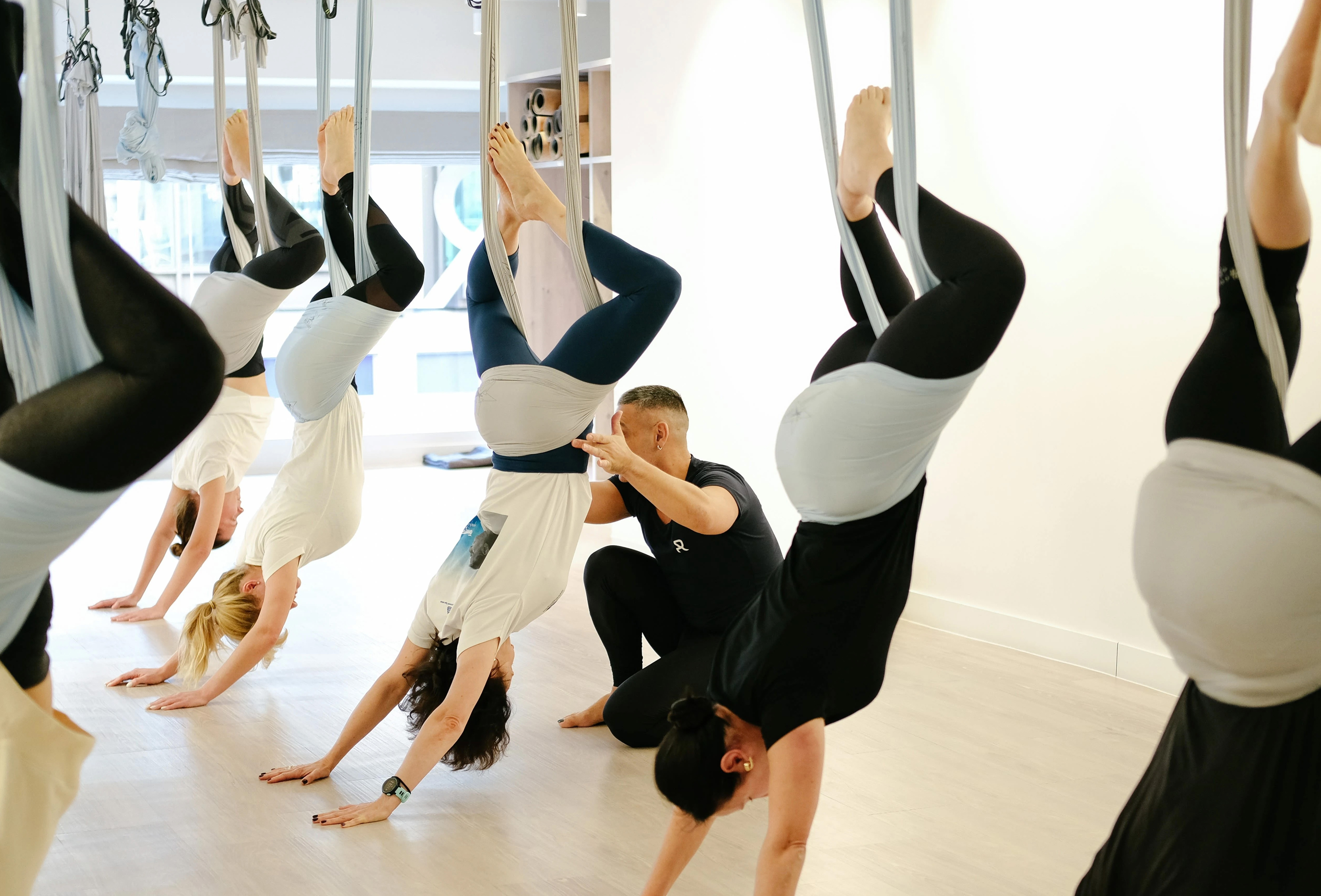
Aerial fitness by Antigravity has been pushing my personal boundaries in the safe hands of Nuno Campos at Repose in Kensington High Street.
Antigravity has been educating trainers on aerial yoga and fitness since 2007 and as I discovered, it’s great for stretching muscles while supporting the body.
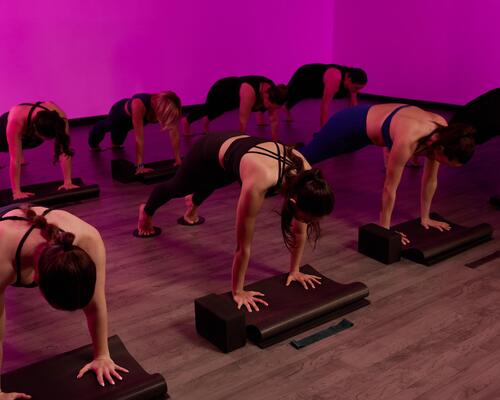
Although a late adopter of Pilates I now practice reformer one-to-one with Lucy Raetz-O’Connell. I’m an avid convert to the precise movements and muscle engagement. No wonder it’s one of the fastest growing studio concepts in the world.
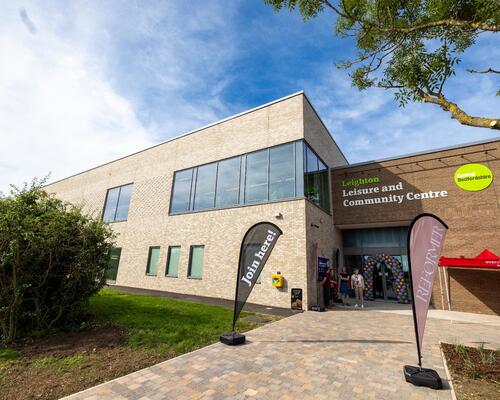
In the past twelve months I’ve also experienced reformer at 180 The Strand, The Island, Cat and Cow, Sentire, Pilates Lab, Ayla Recoleta, Level Out, Body Lab and Third Space, with all this rounded out by a trip to Hitchin, UK for the launch of reformer at Everyone Active and a flight to Berlin for Les Mills Live where I took three of the six new Les Mills’ Pilates programmes.
>>> Do you include postural health in your routine? If not, I highly recommend it.