

















GET HCM
magazine
Sign up for the FREE digital edition of HCM magazine and also get the HCM ezine and breaking news email alerts.
Not right now, thanksclose this window I've already subscribed!
Follow Health Club Management on Twitter Like Health Club Management on Facebook Join the discussion with Health Club Management on LinkedIn
FITNESS, HEALTH, WELLNESS

features

Research: India emerges

New research from Deloitte China and IHRSA shows the market for health and fitness in India is starting to grow, as Kirsten Walsh reports
By Kristen Walsh, IHRSA | Published in Health Club Management 2019 issue 4
 / 9nong/SHUTTERSTOCK
/ 9nong/SHUTTERSTOCK
With a population exceeding one billion, the health club industry in India is in a unique position to serve the health and fitness needs of Indian consumers

With a population exceeding 1 billion, the health club industry in India is in a strong position to serve the health and fitness needs of consumers,” says John Holsinger, IHRSA’s director of the Asia-Pacific.

In efforts to grow the industry in India, the United Health & Fitness Forum (UHFF) was formed in 2016. Led by the top club operators, UHFF and its members organise events such as training workshops, bootcamps, walkathons, and group exercise classes, along with other health and fitness initiatives.

According to The IHRSA Indian Health Club Report, published recently, India ranks fifth in market size among Asia-Pacific health club markets, and there’s room for continued growth.

Produced in collaboration with Deloitte China, the research contains an in-depth analysis of the fitness industry in India, along with a snapshot of the country’s leading health club companies.

Home to one of the global economic powers, the health club market in India is one of the largest in the Asia-Pacific region.

India ranks fifth in market size among Asia-Pacific markets at US$821m in annual revenue, according to the report.

The number of health club locations ranks third, with 3,813 sites, while the country’s two million members rank fifth.

Opportunities remain for the industry in India, as the country has the lowest member penetration rate in the Asia-Pacific region.

Club Types
The fitness club market in India is highly fragmented. Chained top-10 organised players comprise only 15-20 per cent of the overall market in terms of number of clubs. Independent players that are mostly smaller businesses make up the rest of the market.

Commercial fitness clubs can be categorised into three segments:

High-end premium
High-end health clubs account for approximately 5 per cent of the overall market in terms of number of locations and include operators such as Fitness First and Ozone Clubs, which are over 600sq m in size.

Clubs in the high-end premium sector charge membership fees of over US$800.

Mid-market
These gyms account for approximately 25 per cent of the overall market in terms of number of clubs and include fitness chains such as Talwalkars, Snap Fitness, and Anytime Fitness, which have an average club size of 300-500 sq m. Clubs categorised in the mid-market sector charge annual memberships of US$350-400.

Low-cost
The remaining 60-70 per cent of clubs are primarily standalone and under 200sq m. They typically charge less than US$200 for an annual membership.

Other gyms
Despite the growth of the hospitality industry in India, hotel gyms don’t pose direct competition to commercial clubs, as they mainly serve hotel guests and focus on spa and swimming services.

Public gyms located in community centres are mostly equipped with low-end facilities and are not comparable to commercial clubs, and have, therefore, been excluded from this study.

Penetration Rate
Even with considerable growth over the past decade, the market in India is still relatively immature compared to other countries in the Asia-Pacific region.

India’s fitness market currently has a penetration rate of 0.15 per cent. Furthermore, penetration rates are significantly higher in tier-one cities, such as Delhi and Mumbai, than in tier-two and -three cities such as Hyderabad and Ahmedabad, where fitness awareness and spending power are much lower.

Target Demographics
In the Indian fitness club market, the target audience consists mainly of younger consumers between the ages of 20 and 40 who account for around 70 per cent of members and are more focused on staying fit and looking good than their elders.
The majority of club memberships are purchased by working-class professionals, while students also constitute a significant group of consumers.

Though traditionally overlooked, women have become more actively involved in weight-management and fitness training and account for approximately 40 per cent of the total membership.

Retention rates are low in the Indian fitness club market. From a cultural standpoint, members treat fitness as a goal to be achieved and have yet to see it as a lifestyle to be maintained. Once the primary fitness goal is achieved, they tend to drop out at the end of the membership. As a result, the dropout rate tends to be around 70-80 per cent, according to industry estimates.

As the majority of members belong to low- and mid-end fitness clubs, value-for-money is a primary consideration for customers. Meanwhile, Indian consumers are reluctant to commute a great distance to a fitness club, due to the lack of developed transport infrastructure.

Membership Plans
Annual contracts are the most common membership plan in the market and account for over 80 per cent of all membership sales at conventional clubs.
Monthly, quarterly and semi-annual memberships are also available, but are less popular. Multi-year membership contracts offered at a significant discount rate are generally uncommon.

The majority of fitness clubs require an upfront lump sum membership payment with credit card, debit card, or cash. Monthly payment is generally not accepted, although customers may choose to arrange a monthly loan with their financial institutions for club membership payment.

Some fitness clubs have started to utilise Paytm, an Indian mobile payment platform, to process payments.

At average mid-end clubs in India, 10-15 per cent of members hire personal trainers. At a high-end fitness club, such as Fitness First, where members have higher purchasing power, this ratio could be over 20 per cent. In cities such as Delhi and Mumbai, personal trainers typically charge $100-$250 (USD) for 12 sessions over a one-month period.

Revenue generated from personal training typically accounts for 20-25 per cent of a club’s total revenue, and merchandising contributes less than 2 per cent, while the majority of fees (75-80 per cent) are derived from membership sales.

Club Locations
Large urban cities, known as metros in India, have fostered the fitness culture among urban residents and have become thriving hotbeds that attract fitness club chains to expand their footprints and establish state-of-the-art clubs.

Chain commercial fitness clubs are concentrated in the top eight metros of India, including Delhi NCR, Mumbai, Bangalore, Chennai, Kolkata, Hyderabad, Pune and Ahmedabad.

While market growth is expected to continue in these metros, high real estate rental costs will influence the established players to shift their focus to the suburban areas of metros and tier-two and -three cities. In these areas, the fitness trend is also burgeoning and the market is highly underpenetrated and currently dominated by local mid- and low-end standalone clubs.

The mid- to high-end segment is projected to grow in these cities as disposable income increases.

In terms of locations, most mid- and low-end fitness clubs are sited in residential neighborhoods to serve a larger population – usually in a catchment area within a radius of one to three kilometers.

Conversely, high-end fitness clubs are generally located in shopping malls or business districts for enhanced accessibility and visibility. Where real estate is available, competitors tend to be clustered into certain areas to compete for wealthy customers in the region.

INDIA HEALTH CLUB MARKET

Number of members 2m

Number of clubs 3,813

Number of clubs $821m

INDIA HEALTH CLUB MARKET

Get The IHRSA Indian Health Club Report, Contact [email protected] or call +1 (617) 951-0055

Sign up here to get HCM's weekly ezine and every issue of HCM magazine free on digital.
John Holsinger
John Holsinger
Women have become more actively involved in weight management and fitness / PHOTO: StockImageFactory/SHUTTERSTOCK
Members treat fitness as a goal to be achieved rather than a lifestyle to be maintained / PHOTO: Prostock-studio/SHUTTERSTOCK
https://www.leisureopportunities.co.uk/images/imagesX/305832_339415.jpg
New research from IHRSA and Deloitte China shows the fitness market in India – which currently has a penetration rate of 1.5 per cent – is poised for growth
John Holsinger, Director, IHRSA Kirsten Walsh, IHRSA,Fitness market India, Deloitte China, The IHRSA Indian Health Club Report,
HCM magazine
As the entrepreneur who started Wexer, Fresh Fitness, Fitness DK and Repeat, as well as being a former elite athlete, Rasmus Ingerslev’s life looked perfect from the outside, but onthe inside it was a different story. He talks to Kath Hudson about healing old wounds
HCM magazine
I experienced a blissful feeling of joy I hadn’t felt since I was a kid
HCM magazine
If the health service is to survive, we must recognise that it is a disease service – and that wellbeing rests with us, says the activity advocate and healthy ageing champion. He talks to Kate Cracknell
HCM magazine
Raphael Cuomo explores the powerful link between addiction, health and behaviour change
HCM magazine
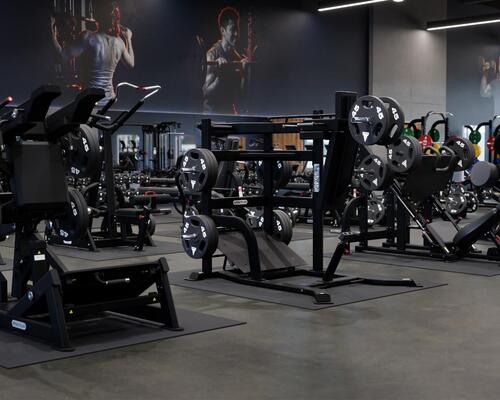
Strength training is evolving, driven by changing consumer preferences. Julie Cramer talks to innovators about how their products are meeting this demand
HCM promotional features
Sponsored
Third Space partnered with IndigoFitness to deliver a bespoke training space for its new club at The Whiteley
HCM promotional features
Sponsored
David Lloyd is stepping up its commitment to women’s health as it continues to explore what fit-for-purpose looks like for the female population
HCM promotional features
Sponsored
SnowDome Fitness has added 50 per cent more space with cutting-edge Technogym solutions
HCM promotional features
Sponsored
Greg Bradley looks at the shift towards strength training in gyms and advises on how operators can create the ultimate training environment
HCM promotional features
Sponsored
Find out how your gym can tap into the corporate wellness boom
HCM promotional features
Sponsored
Starpool supports Olympic champion Marcell Jacobs, says Riccardo Turri
HCM promotional features
Sponsored
EGYM has opened a new HQ in Paternoster Square, London and revealed a range of new launches
HCM promotional features
Promotion
BLK BOX has been reimagining elite performance spaces for more than a decade. Founder and former athlete, Greg Bradley, tells us what it takes
HCM promotional features
Sponsored
The industry is embracing consumer-facing tech. Now it’s time to streamline back-of-house systems with Orbit4, says Daniel Jones
HCM promotional features
Latest News
People taking GLP-1 weight loss medications such as Ozempic, Wegovy, Mounjaro and Zepbound may be ...
Latest News
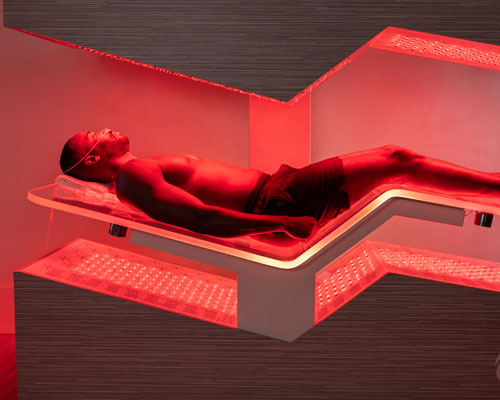
Low-cost gym operator, PureGym, is trialling recovery zones at two of its UK sites, democratising ...
Latest News
In a milestone moment, mental health has become a core part of CIMSPA’s occupational professional ...
Latest News
US high-value, low-price chain, Eos Fitness, has announced plans to pilot reformer Pilates in three ...
Latest News
Preventive healthcare company Neko Health has added body composition analysis to its full-body health scan ...
Latest News
Chequan Lewis is the new CEO of Crunch Fitness, taking over from Jim Rowley, who ...
Latest News
Sea Lanes Canary Wharf has officially opened. The 50-metre, six-lane pool, which uses the natural ...
Latest News
London-based high-performance fitness club, ONE LDN, is raising funds for a multi-site expansion across London, ...
Opinion
promotion
Strength training has moved from the margins to the mainstream.
Opinion: Building smarter strength spaces for today’s operators
Featured supplier news
Featured supplier news: Reaching the people most gyms miss: Bedford Gym & Swim Campaign delivers 410 new members
One of the biggest mistakes the fitness industry still makes is advertising almost exclusively to people who already look and live like gym members.
Featured supplier news
Featured supplier news: Cornerstone Connect helps Active Blackpool tackle health inequalities
Active Blackpool is deploying Cornerstone Connect, a new digital interface allowing disparate information from multiple systems to be aggregated into one dataset, to support its focus on reducing health inequalities and improving healthy life expectancy.
Company profiles
Company profile: GymNation
Ranging from 25,000 to 60,000 square feet, GymNation is open 24/7, 365 days a year ...
Company profiles
Company profile: Energym
At Energym, we’re redefining the role of fitness in a sustainable future. Our award-winning British ...
Supplier Showcases
Supplier Showcase - From nightclub to health club
Supplier Showcases
Supplier Showcase - Future-proofing
Catalogue Gallery
Click on a catalogue to view it online
Featured press releases
Swim England press release: Swim England launches new Learn to Swim Growth Plan to support aquatic programme expansion
Swim England has strengthened its sector-leading Business Solutions offer with the launch of its Learn to Swim Growth Plan, designed to help aquatic providers unlock sustainable programme growth.
Featured press releases
CoverMe Ltd press release: CoverMe and Jobs In. Fitness partner to create end-to-end talent solution
CoverMe, the UK’s leading fitness workforce management and recruitment platform, has partnered with Jobs In. Fitness, the specialist executive search and advisory firm for the fitness and wellbeing sector, to give operators a single route to talent at every level – from frontline staffing to C-suite.
Directory
Hot tubs
MSpa International Ltd: Hot tubs
Lockers
Crown Sports Lockers: Lockers
Water experiences and hydrotherapy solutions
Aquaform s.r.l.: Water experiences and hydrotherapy solutions
Fitness tracking platform
SpiviTech: Fitness tracking platform
Industrial washing machines
Miele Company Limited: Industrial washing machines
Spa and beauty equipment
Oakworks Inc: Spa and beauty equipment
Property & Tenders
Stratford, East London.
Lee Valley Regional Park Authority
Property & Tenders
Y Felinheli, LL56 4QN
Newmark
Property & Tenders
Diary dates
21-24 Sep 2026
The Langham Huntington Pasadena , Pasadena, United States
Diary dates
06-08 Oct 2026
Messe Stuttgart, Stuttgart, Germany
Diary dates
22-22 Oct 2026
QEII Conference Centre, London,
Diary dates
26-29 Oct 2027
Koelnmesse Exhibition Centre, Cologne, Germany
Diary dates

features

Research: India emerges

New research from Deloitte China and IHRSA shows the market for health and fitness in India is starting to grow, as Kirsten Walsh reports

By Kristen Walsh, IHRSA | Published in Health Club Management 2019 issue 4
 / 9nong/SHUTTERSTOCK
/ 9nong/SHUTTERSTOCK
With a population exceeding one billion, the health club industry in India is in a unique position to serve the health and fitness needs of Indian consumers

With a population exceeding 1 billion, the health club industry in India is in a strong position to serve the health and fitness needs of consumers,” says John Holsinger, IHRSA’s director of the Asia-Pacific.

In efforts to grow the industry in India, the United Health & Fitness Forum (UHFF) was formed in 2016. Led by the top club operators, UHFF and its members organise events such as training workshops, bootcamps, walkathons, and group exercise classes, along with other health and fitness initiatives.

According to The IHRSA Indian Health Club Report, published recently, India ranks fifth in market size among Asia-Pacific health club markets, and there’s room for continued growth.

Produced in collaboration with Deloitte China, the research contains an in-depth analysis of the fitness industry in India, along with a snapshot of the country’s leading health club companies.

Home to one of the global economic powers, the health club market in India is one of the largest in the Asia-Pacific region.

India ranks fifth in market size among Asia-Pacific markets at US$821m in annual revenue, according to the report.

The number of health club locations ranks third, with 3,813 sites, while the country’s two million members rank fifth.

Opportunities remain for the industry in India, as the country has the lowest member penetration rate in the Asia-Pacific region.

Club Types
The fitness club market in India is highly fragmented. Chained top-10 organised players comprise only 15-20 per cent of the overall market in terms of number of clubs. Independent players that are mostly smaller businesses make up the rest of the market.

Commercial fitness clubs can be categorised into three segments:

High-end premium
High-end health clubs account for approximately 5 per cent of the overall market in terms of number of locations and include operators such as Fitness First and Ozone Clubs, which are over 600sq m in size.

Clubs in the high-end premium sector charge membership fees of over US$800.

Mid-market
These gyms account for approximately 25 per cent of the overall market in terms of number of clubs and include fitness chains such as Talwalkars, Snap Fitness, and Anytime Fitness, which have an average club size of 300-500 sq m. Clubs categorised in the mid-market sector charge annual memberships of US$350-400.

Low-cost
The remaining 60-70 per cent of clubs are primarily standalone and under 200sq m. They typically charge less than US$200 for an annual membership.

Other gyms
Despite the growth of the hospitality industry in India, hotel gyms don’t pose direct competition to commercial clubs, as they mainly serve hotel guests and focus on spa and swimming services.

Public gyms located in community centres are mostly equipped with low-end facilities and are not comparable to commercial clubs, and have, therefore, been excluded from this study.

Penetration Rate
Even with considerable growth over the past decade, the market in India is still relatively immature compared to other countries in the Asia-Pacific region.

India’s fitness market currently has a penetration rate of 0.15 per cent. Furthermore, penetration rates are significantly higher in tier-one cities, such as Delhi and Mumbai, than in tier-two and -three cities such as Hyderabad and Ahmedabad, where fitness awareness and spending power are much lower.

Target Demographics
In the Indian fitness club market, the target audience consists mainly of younger consumers between the ages of 20 and 40 who account for around 70 per cent of members and are more focused on staying fit and looking good than their elders.
The majority of club memberships are purchased by working-class professionals, while students also constitute a significant group of consumers.

Though traditionally overlooked, women have become more actively involved in weight-management and fitness training and account for approximately 40 per cent of the total membership.

Retention rates are low in the Indian fitness club market. From a cultural standpoint, members treat fitness as a goal to be achieved and have yet to see it as a lifestyle to be maintained. Once the primary fitness goal is achieved, they tend to drop out at the end of the membership. As a result, the dropout rate tends to be around 70-80 per cent, according to industry estimates.

As the majority of members belong to low- and mid-end fitness clubs, value-for-money is a primary consideration for customers. Meanwhile, Indian consumers are reluctant to commute a great distance to a fitness club, due to the lack of developed transport infrastructure.

Membership Plans
Annual contracts are the most common membership plan in the market and account for over 80 per cent of all membership sales at conventional clubs.
Monthly, quarterly and semi-annual memberships are also available, but are less popular. Multi-year membership contracts offered at a significant discount rate are generally uncommon.

The majority of fitness clubs require an upfront lump sum membership payment with credit card, debit card, or cash. Monthly payment is generally not accepted, although customers may choose to arrange a monthly loan with their financial institutions for club membership payment.

Some fitness clubs have started to utilise Paytm, an Indian mobile payment platform, to process payments.

At average mid-end clubs in India, 10-15 per cent of members hire personal trainers. At a high-end fitness club, such as Fitness First, where members have higher purchasing power, this ratio could be over 20 per cent. In cities such as Delhi and Mumbai, personal trainers typically charge $100-$250 (USD) for 12 sessions over a one-month period.

Revenue generated from personal training typically accounts for 20-25 per cent of a club’s total revenue, and merchandising contributes less than 2 per cent, while the majority of fees (75-80 per cent) are derived from membership sales.

Club Locations
Large urban cities, known as metros in India, have fostered the fitness culture among urban residents and have become thriving hotbeds that attract fitness club chains to expand their footprints and establish state-of-the-art clubs.

Chain commercial fitness clubs are concentrated in the top eight metros of India, including Delhi NCR, Mumbai, Bangalore, Chennai, Kolkata, Hyderabad, Pune and Ahmedabad.

While market growth is expected to continue in these metros, high real estate rental costs will influence the established players to shift their focus to the suburban areas of metros and tier-two and -three cities. In these areas, the fitness trend is also burgeoning and the market is highly underpenetrated and currently dominated by local mid- and low-end standalone clubs.

The mid- to high-end segment is projected to grow in these cities as disposable income increases.

In terms of locations, most mid- and low-end fitness clubs are sited in residential neighborhoods to serve a larger population – usually in a catchment area within a radius of one to three kilometers.

Conversely, high-end fitness clubs are generally located in shopping malls or business districts for enhanced accessibility and visibility. Where real estate is available, competitors tend to be clustered into certain areas to compete for wealthy customers in the region.

INDIA HEALTH CLUB MARKET

Number of members 2m

Number of clubs 3,813

Number of clubs $821m

INDIA HEALTH CLUB MARKET

Get The IHRSA Indian Health Club Report, Contact [email protected] or call +1 (617) 951-0055

Sign up here to get HCM's weekly ezine and every issue of HCM magazine free on digital.
John Holsinger
John Holsinger
Women have become more actively involved in weight management and fitness / PHOTO: StockImageFactory/SHUTTERSTOCK
Members treat fitness as a goal to be achieved rather than a lifestyle to be maintained / PHOTO: Prostock-studio/SHUTTERSTOCK
https://www.leisureopportunities.co.uk/images/imagesX/305832_339415.jpg
New research from IHRSA and Deloitte China shows the fitness market in India – which currently has a penetration rate of 1.5 per cent – is poised for growth
John Holsinger, Director, IHRSA Kirsten Walsh, IHRSA,Fitness market India, Deloitte China, The IHRSA Indian Health Club Report,
Latest News
People taking GLP-1 weight loss medications such as Ozempic, Wegovy, Mounjaro and Zepbound may be ...
Latest News
Low-cost gym operator, PureGym, is trialling recovery zones at two of its UK sites, democratising ...

Latest News
In a milestone moment, mental health has become a core part of CIMSPA’s occupational professional ...

Latest News
US high-value, low-price chain, Eos Fitness, has announced plans to pilot reformer Pilates in three ...
Latest News
Preventive healthcare company Neko Health has added body composition analysis to its full-body health scan ...
Latest News
Chequan Lewis is the new CEO of Crunch Fitness, taking over from Jim Rowley, who ...
Latest News
Sea Lanes Canary Wharf has officially opened. The 50-metre, six-lane pool, which uses the natural ...
Latest News
London-based high-performance fitness club, ONE LDN, is raising funds for a multi-site expansion across London, ...
Latest News
A new brain clinic has opened in London, which uses non-invasive brain stimulation to treat ...
Latest News
Good Boost’s digital exercise programmes are helping adults with MSK at a lower cost than ...
Latest News
With Prime Minister, Keir Starmer, announcing his resignation this morning and Andy Burnham as a ...
Opinion
promotion
Strength training has moved from the margins to the mainstream.
Opinion: Building smarter strength spaces for today’s operators
Featured supplier news
Featured supplier news: Reaching the people most gyms miss: Bedford Gym & Swim Campaign delivers 410 new members
One of the biggest mistakes the fitness industry still makes is advertising almost exclusively to people who already look and live like gym members.
Featured supplier news
Featured supplier news: Cornerstone Connect helps Active Blackpool tackle health inequalities
Active Blackpool is deploying Cornerstone Connect, a new digital interface allowing disparate information from multiple systems to be aggregated into one dataset, to support its focus on reducing health inequalities and improving healthy life expectancy.
Company profiles
Company profile: GymNation
Ranging from 25,000 to 60,000 square feet, GymNation is open 24/7, 365 days a year ...
Company profiles
Company profile: Energym
At Energym, we’re redefining the role of fitness in a sustainable future. Our award-winning British ...
Supplier Showcases
Supplier Showcase - From nightclub to health club
Supplier Showcases
Supplier Showcase - Future-proofing
Catalogue Gallery
Click on a catalogue to view it online
Featured press releases
Swim England press release: Swim England launches new Learn to Swim Growth Plan to support aquatic programme expansion
Swim England has strengthened its sector-leading Business Solutions offer with the launch of its Learn to Swim Growth Plan, designed to help aquatic providers unlock sustainable programme growth.
Featured press releases
CoverMe Ltd press release: CoverMe and Jobs In. Fitness partner to create end-to-end talent solution
CoverMe, the UK’s leading fitness workforce management and recruitment platform, has partnered with Jobs In. Fitness, the specialist executive search and advisory firm for the fitness and wellbeing sector, to give operators a single route to talent at every level – from frontline staffing to C-suite.
Directory
Hot tubs
MSpa International Ltd: Hot tubs
Lockers
Crown Sports Lockers: Lockers
Water experiences and hydrotherapy solutions
Aquaform s.r.l.: Water experiences and hydrotherapy solutions
Fitness tracking platform
SpiviTech: Fitness tracking platform
Industrial washing machines
Miele Company Limited: Industrial washing machines
Spa and beauty equipment
Oakworks Inc: Spa and beauty equipment
Property & Tenders
Stratford, East London.
Lee Valley Regional Park Authority
Property & Tenders
Y Felinheli, LL56 4QN
Newmark
Property & Tenders
Diary dates
21-24 Sep 2026
The Langham Huntington Pasadena , Pasadena, United States
Diary dates
06-08 Oct 2026
Messe Stuttgart, Stuttgart, Germany
Diary dates
22-22 Oct 2026
QEII Conference Centre, London,
Diary dates
26-29 Oct 2027
Koelnmesse Exhibition Centre, Cologne, Germany
Diary dates
Search news, features & products:
Find a supplier:
Partner sites