






















Follow Health Club Management on Twitter Like Health Club Management on Facebook Join the discussion with Health Club Management on LinkedIn
FITNESS, HEALTH, WELLNESS

features

Virtual fitness: Here to stay

Virtual classes have been adopted by most of the world’s top 25 health club groups. So what’s led this drive into the mainstream and what comes next? Rasmus Ingerslev reports
By Rasmus Ingerslev, Wexer Virtual | Published in Health Club Management 2015 issue 9
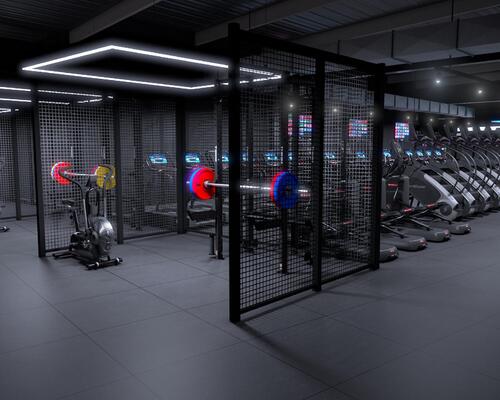
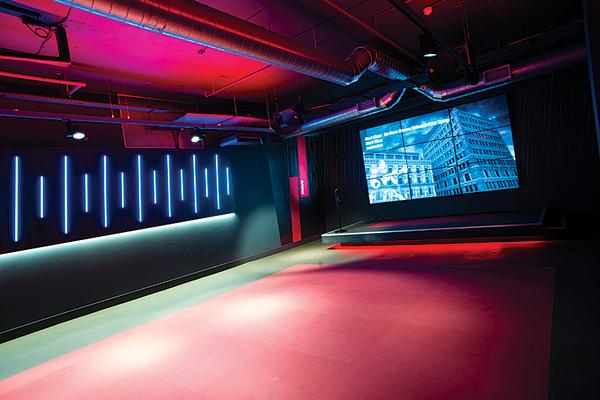
Fitness First has started designing studios with virtual classes in mind
It’s no different from going to the cinema: the cinema can be the best in the world, but if the film isn’t great, people aren’t engaged

Few people would argue that building beautiful group exercise and cycling studios and then not running classes in them for the majority of the day makes good business sense – which is one key reason why, over recent years, a growing number of operators have turned to virtual classes.

Martin Seibold, managing director of Fitness First UK, explains: “We’re constantly pushing the boundaries of our member experience and virtual helps us do this; it adds value to our studio space and gives members flexibility and more varied training options.

“We see the investment return through its marketing value and improved opportunities to retain group fitness users. Additionally, our club managers are reporting that virtual feeds a lot of new people into our live classes, which increases the value proposition of virtual still further.”

In a different segment of the industry, low-cost operator BasicFit uses virtual in the majority of its more than 350 clubs across Europe. CEO Rene Moos explains why: “The virtual classes allow us to increase our offering significantly at a cost of less than two treadmills. Approximately 25 per cent of our members make use of the virtual classes and it’s clear that it attracts members we would not otherwise have had. When you compare virtual to any other service or product, the return on investment is very high.”

One of the largest club groups in the world, US-based 24 Hour Fitness, has recently started implementing virtual across its more than 650 studios. “Virtual enhances the overall member experience and is a highly effective member acquisition and digital marketing vehicle,” says executive vice president Tom Lapcevic.

“We use virtual for many different applications. Firstly, virtual classes introduce our members to group exercise in a non-intimidating, fun and convenient manner. Second, virtual injects audiovisual energy and powerful member marketing and messaging into our live classes. Third, virtual is the ideal platform to uniformly and simultaneously train our 20,000+ employees scattered across the country. And finally, virtual is a powerful communication platform for our third-party sponsors and advertisers.” 

Virtual success
As with all new technologies, getting the application right is a challenge. Although virtual is now fairly widespread and growing fast, there are still significant differences in terms of the level of participation across clubs offering virtual classes.

So what do the operators with the highest participation levels do differently from those with lower numbers? “Club groups that use virtual as a tool rather than a product are significantly more successful, as they understand what’s required to integrate virtual into their member journey,” says Paul Bowman of Wexer Virtual. “They recognise that the tool is dynamic and ever-evolving, and therefore embrace this with a clear integration and execution strategy. Highest participation is seen when virtual is managed like live programming, through attendance tracking, launch events, and regular new releases and re-launches.”

Garrett Marshall from Fitness On Demand agrees. “A great virtual group fitness programme needs implementation, not just installation,” he says, adding that promotion that’s mindful of the audience and the traffic demands of the particular facility determine overall effectiveness.

Marshall’s top tips for virtual success are firstly to tailor programming to the audience – including identifying opportunities to go beyond conventional programming to accommodate special populations.

Secondly, he says clubs must get the right balance of instructor-led classes, pre-scheduled virtual classes and on-demand access – all at the right times of the day – to attract the widest audience. Just as offering a variety of formats attracts a variety of people, so too will offering the right mix of class types, he explains.

Finally, he recommends clubs fully integrate virtual with live programming. This means using the right language when talking about virtual, educating staff, and presenting one consolidated timetable to members. The desired outcome for the team should be focused on increasing participation across the entire group fitness department.

The team at Wellbeats, another of the original virtual class providers, believes the tipping point for virtual occurred when clubs realised virtual group fitness isn’t necessarily a replacement for live, but rather a supplement to it. “While it will never replace live instruction, it will continually progress how clubs can engage and support more of their membership base,” says CEO Jason Von Banks.

“Virtual can remove barriers that exist with traditional programmes: the flexibility to offer a large number of virtual classes means it’s possible to offer age-appropriate sessions, as well as programming to serve niche groups. Classes of different lengths can be made available 24/7. And virtual can be more emotionally accessible: letting people try out group exercise without feeling intimidated.”

Les Mills International CEO Phillip Mills is both a provider of virtual classes and a club operator. He has implemented virtual programming in his own New Zealand clubs and observed the growing momentum of the trend around the world. “It’s actually been the low-tech stuff that’s been holding adoption up – the ability to get the studio properly dark and so on,” he observes. But when it’s done well, the impact can be significant, he adds: “Usage of Les Mills cycle studios has gone up 50 per cent by adding 30 virtual classes a week to the timetable.”

Not just virtual
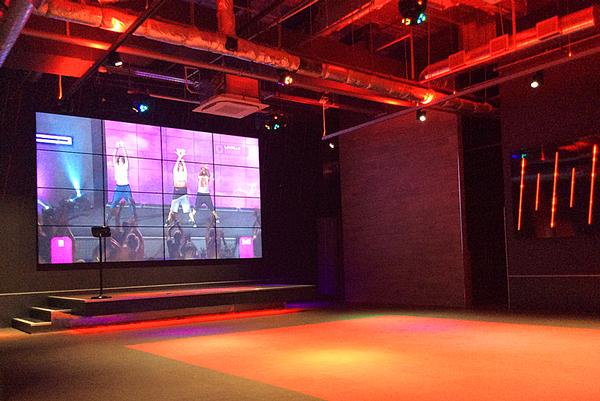
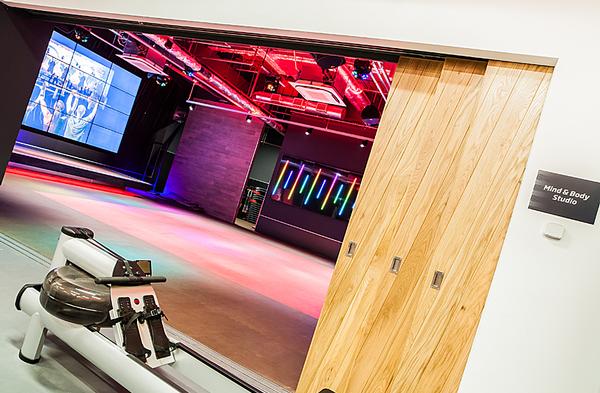
Creating the right environment is certainly key, as Fitness First’s Seibold explains: “Virtual is a key focus in our studios – our Move Virtual schedule includes over 250 classes on demand – and our new clubs include specially designed studios where we can control the ambience through automation of mirror screens, lighting and blinds to create a cinematic feel. We believe that makes the way we deliver virtual classes exclusive to Fitness First.”

Tony DeLeede, CEO of Fit ’n’ Fast in Australia, is also taking the delivery of virtual in a direction of his own. “We believe that, to maximise the value of virtual, we need to enhance the experience in the virtual room. We’ve significantly improved the sensory experience in our rooms, stimulating the three main senses: sight, sound and smell. When the member presses the content button, sight (lighting and content), sound (music) and smell (lavender, eucalyptus or frangipani) will be delivered in an automated way to provide what we think is a unique and engaging experience.”

Enhanced content
But it isn’t just about the environment: high quality content is also critical. When virtual emerged, classes were often fairly low-budget productions or re-use of DVD productions meant for home usage. But as virtual has grown, production budgets have increased and with it the quality of the content, which is now developed specifically for virtual.

Moos was an early adopter and observes: “I believe a significant driver for the rapid growth of virtual is that the quality and variety in content has increased significantly. It’s no different from going to the cinema: the cinema can be the best in the world, but if the film isn’t great, people aren’t engaged and they either leave or they don’t come back.”

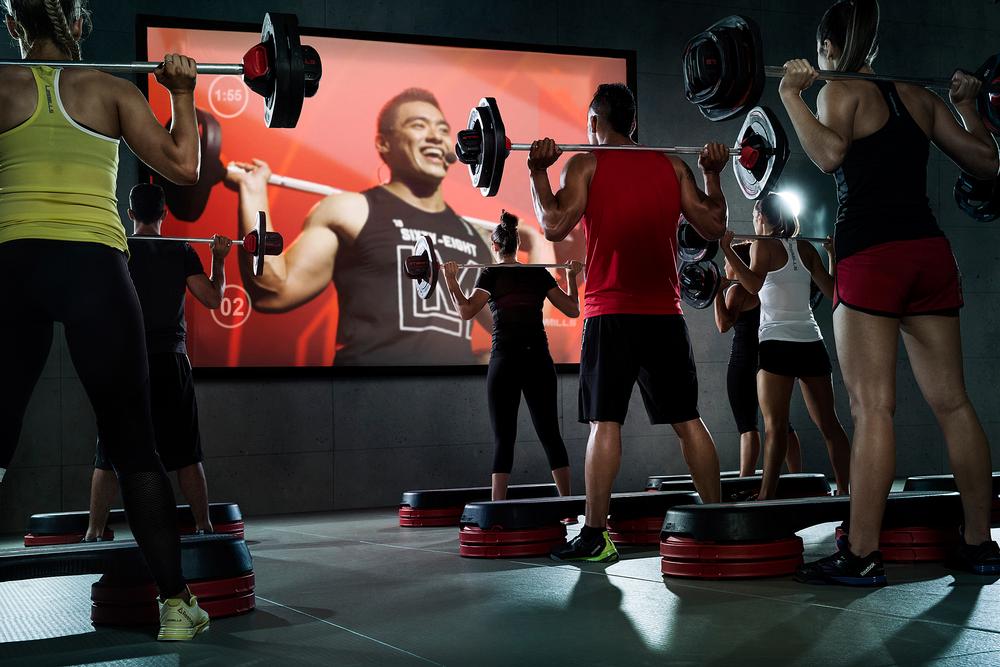
“Every year, we invest millions filming the latest workouts in a way that will inspire the 100,000 instructors teaching them,” says Mills. “We started out repurposing this footage for virtual classes, but now we create virtual-specific content. This includes tailored graphics and cues, along with all the things that we know effectively engage exercisers: fresh choreography, hit music and the world’s best instructors.”

Meanwhile, a few operators have engaged in producing their own content. DeLeede explains why his operation decided to go down that route. “We were very early adopters of virtual, and the main challenge for us was that the majority of content available at that time wasn’t really suitable for our beginner members who would use virtual. We also found that most of the content wasn’t produced to fit our scheduled class timeslots. 

“Because of this, we started making what we think is the correct type of content for the beginner exerciser – and in more consistent timeframes, so they fit perfectly into our clubs’ class schedules.”

An alternative to producing your own content is private labelled content, available from suppliers such as ClubJoy. “Big fitness chains put a lot of money into building their brand, so they need virtual content that fits with their look and feel,” explains CEO Marc Neijland. “We also deliver the workouts in the native language for each club. The feedback we get is that these two USPs are creating a lot of extra value.”

Virtual future
Virtual was initially thought out as a studio-optimising tool – but some operators are now taking it to the gym floor. “We’re seeing first-movers using a virtual set-up on the gym floor to give members programming when fitness instructor interaction isn’t possible,” says Bowman.

Virtual is also expanding outside the four walls of the clubs, with more virtual class suppliers offering – or preparing to offer – streaming services that allow members to do classes online and through apps. This out of the box thinking is a natural development, with clubs already coming up against external technologies: wearable devices, fitness apps and streaming services. “Not only are virtual classes here to stay, but they’re just the tip of the iceberg,” concludes Mills. “As technical capacity expands and creativity fires, there’s huge scope to grow this category.”

About the author

Rasmus E Ingerslev
Rasmus E Ingerslev

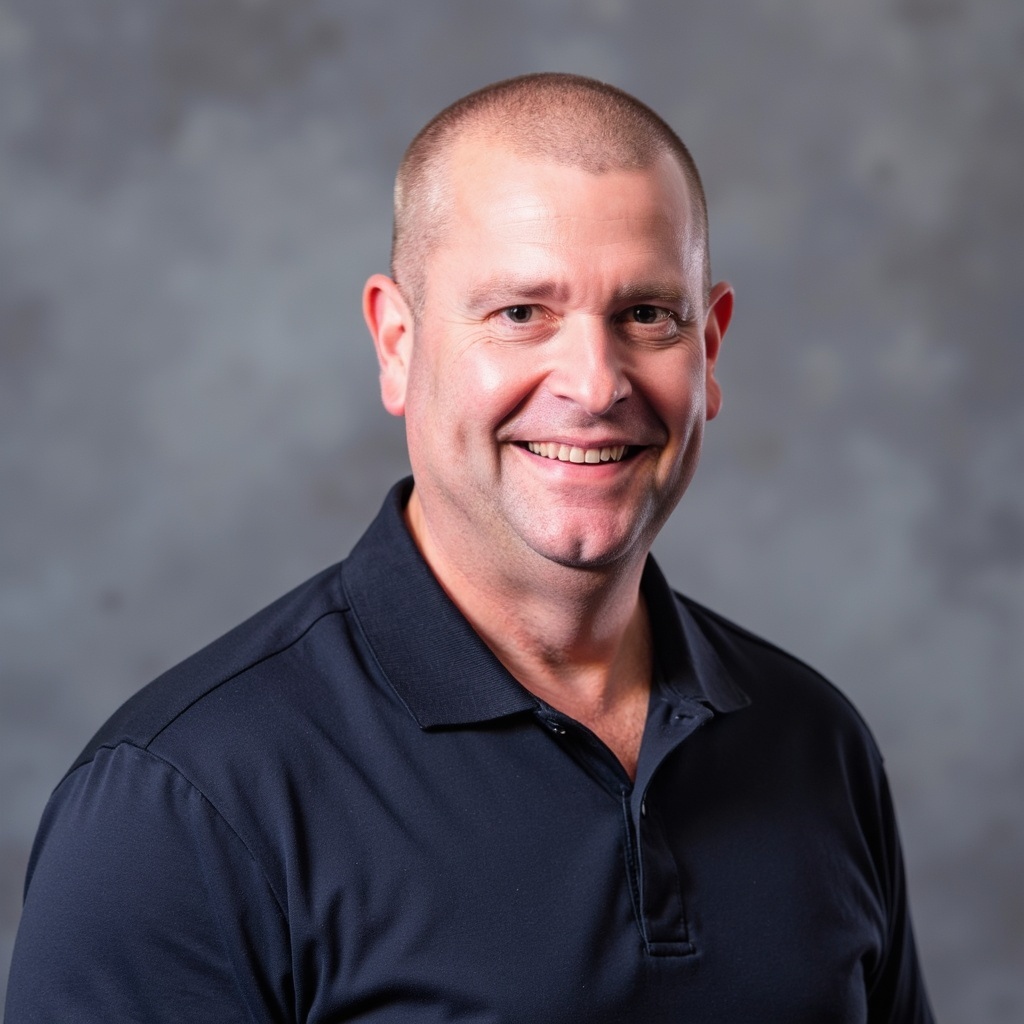
Rasmus E Ingerslev is the founder and former CEO of two of Denmark’s three largest club groups. He is also the founder and current executive vice chair of Wexer Virtual, as well as the vice chair of IHRSA.
Sign up here to get HCM's weekly ezine and every issue of HCM magazine free on digital.
Fitness First has started designing studios with virtual classes in mind
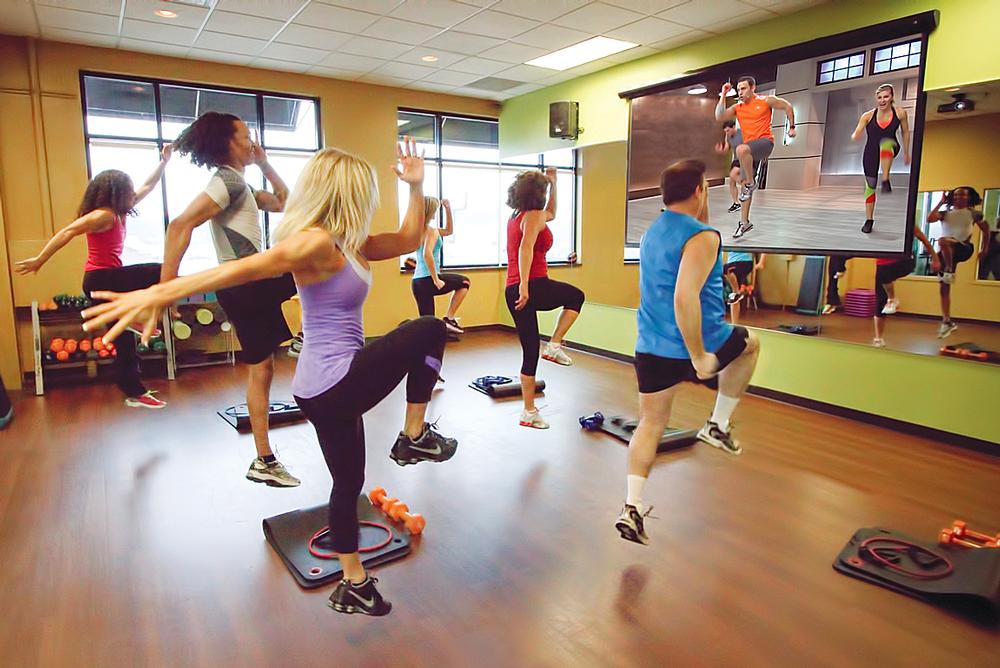
Les Mills’ virtual-specific content includes on-screen cues
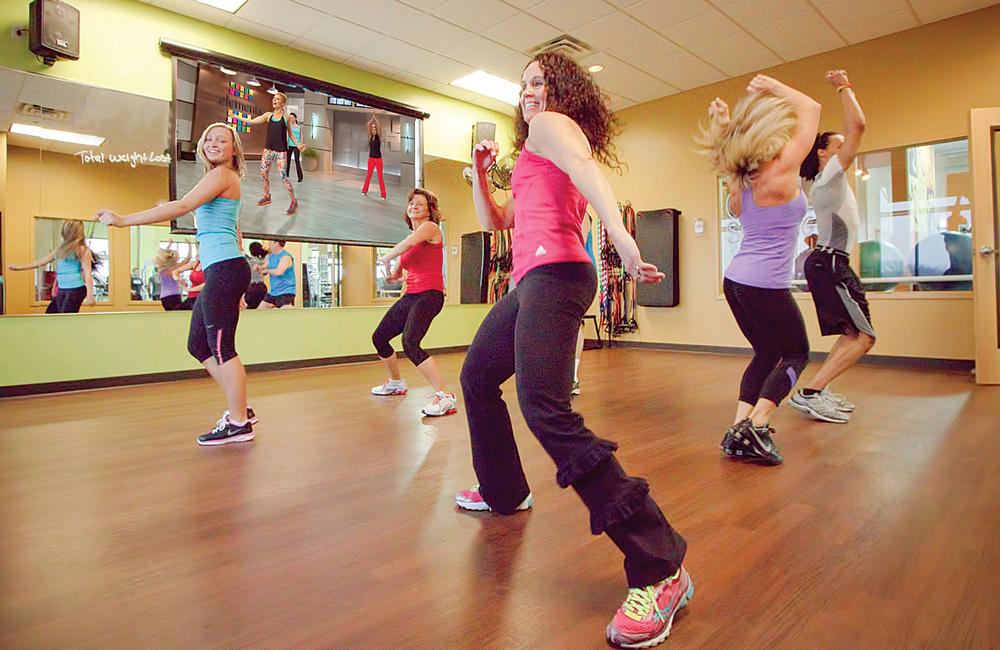
Some members try a virtual class before doing a live class
Les Mills offers virtual classes in its New Zealand clubs
The quality and content of virtual classes has been greatly increasing
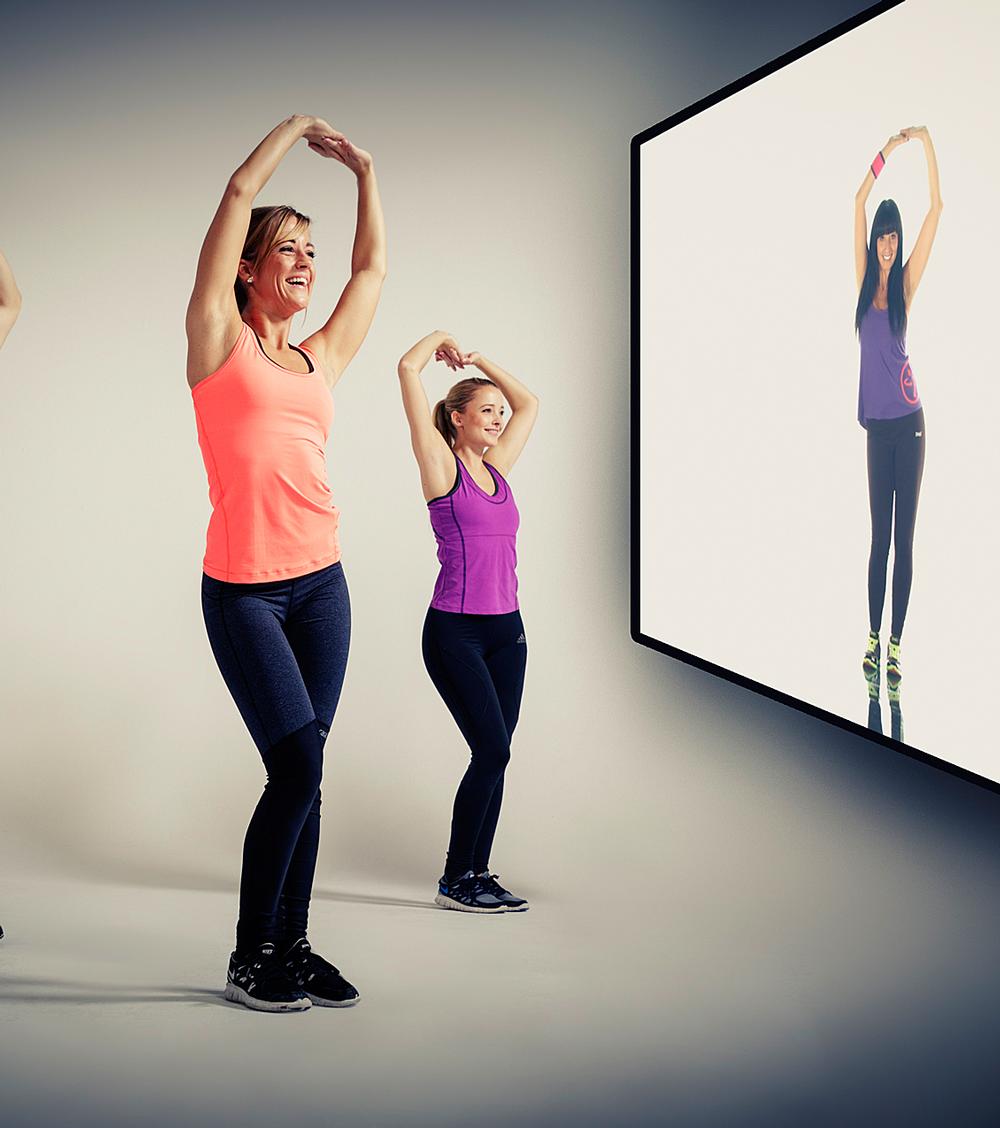
Wellbeats says virtual classes can be easily tailored to niche groups
https://www.leisureopportunities.co.uk/images/176128_147831.jpg
Is it time your club adopted virtual classes? We talk to the operators already making it work for them
Rasmus E Ingerslev ,Virtual, classes, group exercise, Rasmus Ingerslev, BasicFit, Rene Moos, 24 Hour Fitness, Tom Lapcevic, Paul Bowman, Wexer, Garrett Marshall, Fitness On Demand, Wellbeats, Jason Von Banks, Les Mills, Phillip Mills, Fitness First, Martin Seibold, Tony de Leede, Fit n Fast,
HCM magazine
Small improvements to sleep, diet and physical activity have major benefits for the heart, according to new research from the University of Sydney
HCM magazine
I experienced a blissful feeling of joy I hadn’t felt since I was a kid
HCM magazine
Strength training is evolving, driven by changing consumer preferences. Julie Cramer talks to innovators about how their products are meeting this demand
HCM magazine
As the entrepreneur who started Wexer, Fresh Fitness, Fitness DK and Repeat, as well as being a former elite athlete, Rasmus Ingerslev’s life looked perfect from the outside, but onthe inside it was a different story. He talks to Kath Hudson about healing old wounds
HCM magazine
HCM People

Stephen Price

Founder, SP&Co Group
Working in public health over the last few years has lit up parts of my brain again
HCM promotional features
Sponsored
Find out how your gym can tap into the corporate wellness boom
HCM promotional features
Sponsored
Third Space partnered with IndigoFitness to deliver a bespoke training space for its new club at The Whiteley
HCM promotional features
Sponsored
David Lloyd is stepping up its commitment to women’s health as it continues to explore what fit-for-purpose looks like for the female population
HCM promotional features
Sponsored
Greg Bradley looks at the shift towards strength training in gyms and advises on how operators can create the ultimate training environment
HCM promotional features
Sponsored
SnowDome Fitness has added 50 per cent more space with cutting-edge Technogym solutions
HCM promotional features
Sponsored
Starpool supports Olympic champion Marcell Jacobs, says Riccardo Turri
HCM promotional features
Sponsored
EGYM has opened a new HQ in Paternoster Square, London and revealed a range of new launches
HCM promotional features
Sponsored
The industry is embracing consumer-facing tech. Now it’s time to streamline back-of-house systems with Orbit4, says Daniel Jones
HCM promotional features
Sponsored
New launch, Salus House, elevates boutique wellness with high service levels and a partnership with Technogym
HCM promotional features
Latest News
People taking GLP-1 weight loss medications such as Ozempic, Wegovy, Mounjaro and Zepbound may be ...
Latest News
Low-cost gym operator, PureGym, is trialling recovery zones at two of its UK sites, democratising ...
Latest News
In a milestone moment, mental health has become a core part of CIMSPA’s occupational professional ...
Latest News
US high-value, low-price chain, Eos Fitness, has announced plans to pilot reformer Pilates in three ...
Latest News
Preventive healthcare company Neko Health has added body composition analysis to its full-body health scan ...
Latest News
Chequan Lewis is the new CEO of Crunch Fitness, taking over from Jim Rowley, who ...
Latest News
Sea Lanes Canary Wharf has officially opened. The 50-metre, six-lane pool, which uses the natural ...
Latest News
London-based high-performance fitness club, ONE LDN, is raising funds for a multi-site expansion across London, ...
Opinion
promotion
Strength training has moved from the margins to the mainstream.
Opinion: Building smarter strength spaces for today’s operators
Featured supplier news
Featured supplier news: Supporting long-term health: why whole body vibration belongs in clinical settings
As healthcare continues to shift towards prevention, there’s a growing focus on helping people stay active, independent and feeling good for longer.
Featured supplier news
Featured supplier news: Cornerstone Connect helps Active Blackpool tackle health inequalities
Active Blackpool is deploying Cornerstone Connect, a new digital interface allowing disparate information from multiple systems to be aggregated into one dataset, to support its focus on reducing health inequalities and improving healthy life expectancy.
Company profiles
Company profile: Gladstone Software
Gladstone’s software is built to streamline operations, reduce admin burden, and boost engagement. Operators can ...
Company profiles
Company profile: Your Personal Training
Your Personal Training is the UK’s leading personal training brand, committed to raising industry standards ...
Supplier Showcases
Supplier Showcase - Future-proofing
Catalogue Gallery
Click on a catalogue to view it online
Featured press releases
Swim England press release: Swim England launches new Learn to Swim Growth Plan to support aquatic programme expansion
Swim England has strengthened its sector-leading Business Solutions offer with the launch of its Learn to Swim Growth Plan, designed to help aquatic providers unlock sustainable programme growth.
Featured press releases
CoverMe Ltd press release: CoverMe and Jobs In. Fitness partner to create end-to-end talent solution
CoverMe, the UK’s leading fitness workforce management and recruitment platform, has partnered with Jobs In. Fitness, the specialist executive search and advisory firm for the fitness and wellbeing sector, to give operators a single route to talent at every level – from frontline staffing to C-suite.
Directory
Fitness tracking platform
SpiviTech: Fitness tracking platform
Water experiences and hydrotherapy solutions
Aquaform s.r.l.: Water experiences and hydrotherapy solutions
Spa and beauty equipment
Living Earth Crafts: Spa and beauty equipment
Lockers
Crown Sports Lockers: Lockers
Industrial washing machines
Miele Company Limited: Industrial washing machines
Hot tubs
MSpa International Ltd: Hot tubs
Property & Tenders
Stratford, East London.
Lee Valley Regional Park Authority
Property & Tenders
Y Felinheli, LL56 4QN
Newmark
Property & Tenders
Diary dates
21-24 Sep 2026
The Langham Huntington Pasadena , Pasadena, United States
Diary dates
06-08 Oct 2026
Messe Stuttgart, Stuttgart, Germany
Diary dates
22-22 Oct 2026
QEII Conference Centre, London,
Diary dates
26-29 Oct 2027
Koelnmesse Exhibition Centre, Cologne, Germany
Diary dates

features

Virtual fitness: Here to stay

Virtual classes have been adopted by most of the world’s top 25 health club groups. So what’s led this drive into the mainstream and what comes next? Rasmus Ingerslev reports

By Rasmus Ingerslev, Wexer Virtual | Published in Health Club Management 2015 issue 9
Fitness First has started designing studios with virtual classes in mind
It’s no different from going to the cinema: the cinema can be the best in the world, but if the film isn’t great, people aren’t engaged

Few people would argue that building beautiful group exercise and cycling studios and then not running classes in them for the majority of the day makes good business sense – which is one key reason why, over recent years, a growing number of operators have turned to virtual classes.

Martin Seibold, managing director of Fitness First UK, explains: “We’re constantly pushing the boundaries of our member experience and virtual helps us do this; it adds value to our studio space and gives members flexibility and more varied training options.

“We see the investment return through its marketing value and improved opportunities to retain group fitness users. Additionally, our club managers are reporting that virtual feeds a lot of new people into our live classes, which increases the value proposition of virtual still further.”

In a different segment of the industry, low-cost operator BasicFit uses virtual in the majority of its more than 350 clubs across Europe. CEO Rene Moos explains why: “The virtual classes allow us to increase our offering significantly at a cost of less than two treadmills. Approximately 25 per cent of our members make use of the virtual classes and it’s clear that it attracts members we would not otherwise have had. When you compare virtual to any other service or product, the return on investment is very high.”

One of the largest club groups in the world, US-based 24 Hour Fitness, has recently started implementing virtual across its more than 650 studios. “Virtual enhances the overall member experience and is a highly effective member acquisition and digital marketing vehicle,” says executive vice president Tom Lapcevic.

“We use virtual for many different applications. Firstly, virtual classes introduce our members to group exercise in a non-intimidating, fun and convenient manner. Second, virtual injects audiovisual energy and powerful member marketing and messaging into our live classes. Third, virtual is the ideal platform to uniformly and simultaneously train our 20,000+ employees scattered across the country. And finally, virtual is a powerful communication platform for our third-party sponsors and advertisers.” 

Virtual success
As with all new technologies, getting the application right is a challenge. Although virtual is now fairly widespread and growing fast, there are still significant differences in terms of the level of participation across clubs offering virtual classes.

So what do the operators with the highest participation levels do differently from those with lower numbers? “Club groups that use virtual as a tool rather than a product are significantly more successful, as they understand what’s required to integrate virtual into their member journey,” says Paul Bowman of Wexer Virtual. “They recognise that the tool is dynamic and ever-evolving, and therefore embrace this with a clear integration and execution strategy. Highest participation is seen when virtual is managed like live programming, through attendance tracking, launch events, and regular new releases and re-launches.”

Garrett Marshall from Fitness On Demand agrees. “A great virtual group fitness programme needs implementation, not just installation,” he says, adding that promotion that’s mindful of the audience and the traffic demands of the particular facility determine overall effectiveness.

Marshall’s top tips for virtual success are firstly to tailor programming to the audience – including identifying opportunities to go beyond conventional programming to accommodate special populations.

Secondly, he says clubs must get the right balance of instructor-led classes, pre-scheduled virtual classes and on-demand access – all at the right times of the day – to attract the widest audience. Just as offering a variety of formats attracts a variety of people, so too will offering the right mix of class types, he explains.

Finally, he recommends clubs fully integrate virtual with live programming. This means using the right language when talking about virtual, educating staff, and presenting one consolidated timetable to members. The desired outcome for the team should be focused on increasing participation across the entire group fitness department.

The team at Wellbeats, another of the original virtual class providers, believes the tipping point for virtual occurred when clubs realised virtual group fitness isn’t necessarily a replacement for live, but rather a supplement to it. “While it will never replace live instruction, it will continually progress how clubs can engage and support more of their membership base,” says CEO Jason Von Banks.

“Virtual can remove barriers that exist with traditional programmes: the flexibility to offer a large number of virtual classes means it’s possible to offer age-appropriate sessions, as well as programming to serve niche groups. Classes of different lengths can be made available 24/7. And virtual can be more emotionally accessible: letting people try out group exercise without feeling intimidated.”

Les Mills International CEO Phillip Mills is both a provider of virtual classes and a club operator. He has implemented virtual programming in his own New Zealand clubs and observed the growing momentum of the trend around the world. “It’s actually been the low-tech stuff that’s been holding adoption up – the ability to get the studio properly dark and so on,” he observes. But when it’s done well, the impact can be significant, he adds: “Usage of Les Mills cycle studios has gone up 50 per cent by adding 30 virtual classes a week to the timetable.”

Not just virtual
Creating the right environment is certainly key, as Fitness First’s Seibold explains: “Virtual is a key focus in our studios – our Move Virtual schedule includes over 250 classes on demand – and our new clubs include specially designed studios where we can control the ambience through automation of mirror screens, lighting and blinds to create a cinematic feel. We believe that makes the way we deliver virtual classes exclusive to Fitness First.”

Tony DeLeede, CEO of Fit ’n’ Fast in Australia, is also taking the delivery of virtual in a direction of his own. “We believe that, to maximise the value of virtual, we need to enhance the experience in the virtual room. We’ve significantly improved the sensory experience in our rooms, stimulating the three main senses: sight, sound and smell. When the member presses the content button, sight (lighting and content), sound (music) and smell (lavender, eucalyptus or frangipani) will be delivered in an automated way to provide what we think is a unique and engaging experience.”

Enhanced content
But it isn’t just about the environment: high quality content is also critical. When virtual emerged, classes were often fairly low-budget productions or re-use of DVD productions meant for home usage. But as virtual has grown, production budgets have increased and with it the quality of the content, which is now developed specifically for virtual.

Moos was an early adopter and observes: “I believe a significant driver for the rapid growth of virtual is that the quality and variety in content has increased significantly. It’s no different from going to the cinema: the cinema can be the best in the world, but if the film isn’t great, people aren’t engaged and they either leave or they don’t come back.”

“Every year, we invest millions filming the latest workouts in a way that will inspire the 100,000 instructors teaching them,” says Mills. “We started out repurposing this footage for virtual classes, but now we create virtual-specific content. This includes tailored graphics and cues, along with all the things that we know effectively engage exercisers: fresh choreography, hit music and the world’s best instructors.”

Meanwhile, a few operators have engaged in producing their own content. DeLeede explains why his operation decided to go down that route. “We were very early adopters of virtual, and the main challenge for us was that the majority of content available at that time wasn’t really suitable for our beginner members who would use virtual. We also found that most of the content wasn’t produced to fit our scheduled class timeslots. 

“Because of this, we started making what we think is the correct type of content for the beginner exerciser – and in more consistent timeframes, so they fit perfectly into our clubs’ class schedules.”

An alternative to producing your own content is private labelled content, available from suppliers such as ClubJoy. “Big fitness chains put a lot of money into building their brand, so they need virtual content that fits with their look and feel,” explains CEO Marc Neijland. “We also deliver the workouts in the native language for each club. The feedback we get is that these two USPs are creating a lot of extra value.”

Virtual future
Virtual was initially thought out as a studio-optimising tool – but some operators are now taking it to the gym floor. “We’re seeing first-movers using a virtual set-up on the gym floor to give members programming when fitness instructor interaction isn’t possible,” says Bowman.

Virtual is also expanding outside the four walls of the clubs, with more virtual class suppliers offering – or preparing to offer – streaming services that allow members to do classes online and through apps. This out of the box thinking is a natural development, with clubs already coming up against external technologies: wearable devices, fitness apps and streaming services. “Not only are virtual classes here to stay, but they’re just the tip of the iceberg,” concludes Mills. “As technical capacity expands and creativity fires, there’s huge scope to grow this category.”

About the author

Rasmus E Ingerslev
Rasmus E Ingerslev

Rasmus E Ingerslev is the founder and former CEO of two of Denmark’s three largest club groups. He is also the founder and current executive vice chair of Wexer Virtual, as well as the vice chair of IHRSA.
Sign up here to get HCM's weekly ezine and every issue of HCM magazine free on digital.

Fitness First has started designing studios with virtual classes in mind
Les Mills’ virtual-specific content includes on-screen cues
Some members try a virtual class before doing a live class
Les Mills offers virtual classes in its New Zealand clubs
The quality and content of virtual classes has been greatly increasing
Wellbeats says virtual classes can be easily tailored to niche groups
https://www.leisureopportunities.co.uk/images/176128_147831.jpg
Is it time your club adopted virtual classes? We talk to the operators already making it work for them
Rasmus E Ingerslev ,Virtual, classes, group exercise, Rasmus Ingerslev, BasicFit, Rene Moos, 24 Hour Fitness, Tom Lapcevic, Paul Bowman, Wexer, Garrett Marshall, Fitness On Demand, Wellbeats, Jason Von Banks, Les Mills, Phillip Mills, Fitness First, Martin Seibold, Tony de Leede, Fit n Fast,
Latest News
People taking GLP-1 weight loss medications such as Ozempic, Wegovy, Mounjaro and Zepbound may be ...
Latest News
Low-cost gym operator, PureGym, is trialling recovery zones at two of its UK sites, democratising ...
Latest News
In a milestone moment, mental health has become a core part of CIMSPA’s occupational professional ...
Latest News
US high-value, low-price chain, Eos Fitness, has announced plans to pilot reformer Pilates in three ...
Latest News
Preventive healthcare company Neko Health has added body composition analysis to its full-body health scan ...
Latest News
Chequan Lewis is the new CEO of Crunch Fitness, taking over from Jim Rowley, who ...
Latest News
Sea Lanes Canary Wharf has officially opened. The 50-metre, six-lane pool, which uses the natural ...
Latest News
London-based high-performance fitness club, ONE LDN, is raising funds for a multi-site expansion across London, ...
Latest News
A new brain clinic has opened in London, which uses non-invasive brain stimulation to treat ...
Latest News
Good Boost’s digital exercise programmes are helping adults with MSK at a lower cost than ...
Latest News
With Prime Minister, Keir Starmer, announcing his resignation this morning and Andy Burnham as a ...
Opinion
promotion
Strength training has moved from the margins to the mainstream.
Opinion: Building smarter strength spaces for today’s operators
Featured supplier news
Featured supplier news: Supporting long-term health: why whole body vibration belongs in clinical settings
As healthcare continues to shift towards prevention, there’s a growing focus on helping people stay active, independent and feeling good for longer.
Featured supplier news
Featured supplier news: Cornerstone Connect helps Active Blackpool tackle health inequalities
Active Blackpool is deploying Cornerstone Connect, a new digital interface allowing disparate information from multiple systems to be aggregated into one dataset, to support its focus on reducing health inequalities and improving healthy life expectancy.
Company profiles
Company profile: Gladstone Software
Gladstone’s software is built to streamline operations, reduce admin burden, and boost engagement. Operators can ...
Company profiles
Company profile: Your Personal Training
Your Personal Training is the UK’s leading personal training brand, committed to raising industry standards ...
Supplier Showcases
Supplier Showcase - Future-proofing
Catalogue Gallery
Click on a catalogue to view it online
Featured press releases
Swim England press release: Swim England launches new Learn to Swim Growth Plan to support aquatic programme expansion
Swim England has strengthened its sector-leading Business Solutions offer with the launch of its Learn to Swim Growth Plan, designed to help aquatic providers unlock sustainable programme growth.
Featured press releases
CoverMe Ltd press release: CoverMe and Jobs In. Fitness partner to create end-to-end talent solution
CoverMe, the UK’s leading fitness workforce management and recruitment platform, has partnered with Jobs In. Fitness, the specialist executive search and advisory firm for the fitness and wellbeing sector, to give operators a single route to talent at every level – from frontline staffing to C-suite.
Directory
Fitness tracking platform
SpiviTech: Fitness tracking platform
Water experiences and hydrotherapy solutions
Aquaform s.r.l.: Water experiences and hydrotherapy solutions
Spa and beauty equipment
Living Earth Crafts: Spa and beauty equipment
Lockers
Crown Sports Lockers: Lockers
Industrial washing machines
Miele Company Limited: Industrial washing machines
Hot tubs
MSpa International Ltd: Hot tubs
Property & Tenders
Stratford, East London.
Lee Valley Regional Park Authority
Property & Tenders
Y Felinheli, LL56 4QN
Newmark
Property & Tenders
Diary dates
21-24 Sep 2026
The Langham Huntington Pasadena , Pasadena, United States
Diary dates
06-08 Oct 2026
Messe Stuttgart, Stuttgart, Germany
Diary dates
22-22 Oct 2026
QEII Conference Centre, London,
Diary dates
26-29 Oct 2027
Koelnmesse Exhibition Centre, Cologne, Germany
Diary dates
Search news, features & products:
Find a supplier:
Partner sites