











Follow Health Club Management on Twitter Like Health Club Management on Facebook Join the discussion with Health Club Management on LinkedIn
FITNESS, HEALTH, WELLNESS

features

HCM People: Danielle ObeChair, The Black Swimming Association

Our vision is a future with ethnic diversity in aquatics
Published in Health Club Management 2021 issue 9
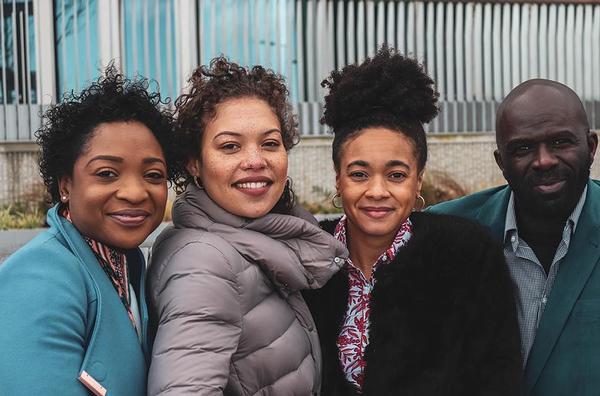
Obe (left) and the BSA board want to spread their mission worldwide / Danielle Obe, Black Swimming Association
For the first time, thousands of Black British children see someone who looks like them in a sport that isn’t as inclusive as it could be. It’s about representation

Why is the Black Swimming Association needed?
Swimming isn’t just a sport, it’s a gateway into the world of aquatics and most importantly, an essential life skill everyone should have for their safety and wellbeing.

In spite of this, however, our research shows that 95 per cent of Black adults, 80 per cent of Black children, 93 per cent of Asian adults and 79 per cent of Asian children in England either can’t or don’t swim.

Between 2016 and 2019, of the 10 per cent of athletes funded by UK Sport who were of Asian, Black and mixed heritage, only 1 per cent were Black, while among the aquatic workforce only 3 per cent of lifeguards, 3 per cent swimming volunteers and 2 per cent of swimming coaches are of African, Caribbean and Asian heritage. There is no representation at senior leadership or board level.

We can’t drive forward inclusion and diversity in aquatics without first tackling inherent systemic and institutional inequalities – we need to address the economic and social disparities between ethnic groups in the aquatics sector in the UK, which have led to these disproportionately low participation rates within African, Caribbean and Asian communities.

Established in 2020, the Black Swimming Association (BSA) began with a single commitment – to be the bridge between the aquatics sector and these disenfranchised communities.

This isn’t a simple boardroom activity or quick fix, neither is it a one-size-fits all approach, the sector must take a systematic, long-term and integrated approach to change.

This begins with community engagement, research and collaboration to build trust, accountability and most importantly, build bridges into these disengaged communities the sector wishes to attract.

What inspired the establishment of the BSA?
The opportunities and benefits of participation in all types of aquatics are truly phenomenal and unmatched – from sport, careers and physical and mental wellbeing, to all important water safety
The mission of the BSA is to ensure everyone – regardless of age, gender, status or ethnicity – should have equal access, feel included and have a quality and safe experience in and around water.

According to the World Health Organization, a person – usually a child or young adult – dies by drowning every 90 seconds around the world. That means that on average, every hour of every day, more than 40 people lose their lives this way.

In the UK, 19 per cent of people living within 1km of waterways are from African, Caribbean and Asian heritage – that’s above the national average of 14 per cent.

Although there’s been no data captured to date on drowning by ethnicity, the disproportionate number of people of African, Caribbean and Asian heritage who don’t swim is a nationwide issue which puts these communities at a higher risk.

How are things going?
Our first year was spent engaging with key stakeholders as we embarked on a journey of discovery to understanding exactly where the sector is in regards to ethnic diversity.

We’ve built strategic partnerships with governing bodies, operators, aquatic brands, swimming bodies, lifesaving agencies and other charities in the aquatics sector.

We’ve also been championing the need for more inclusion and water safety education for ethnically diverse communities and more visibility when it comes to access and awareness for both participation and career pathways.

Following the global impact of the Black Lives Matter movement in 2020/21, awareness of inequalities is high, as is the collective need to do something tangible to urgently address these issues.

This context represents a ‘moment in time’ and an opportunity to drive the aquatic agenda for under-represented communities in the UK.

BSA has commissioned research (academic, social and scientific) with the core aim of understanding the aquatic behaviours and attitudes of African, Caribbean and Asian communities and addressing and removing barriers that preclude them from participating in aquatics.

How can health and fitness and sports facility owners and operators help and support the BSA?
Through direct community engagement, messaging campaigns, research and co-creation with the BSA. We’re actively welcoming collaboration and engagement, so please get in touch.

How will you measure success?
We’ve set ourselves a number of goals between now and 2024.

Firstly, to reduce the number of drownings in Black and Asian communities in the UK by 20 per cent – we also want to see drowning data recorded by ethnicity.

We’re also aiming to increase the number of children and adults from Black and Asian communities who swim by 30 per cent and to increase the number of Black and Asian people in the aquatic workforce by 25 per cent.

Why have Black people traditionally not got involved with aquatics?
There are a number of underlying reasons why they’re disengaged – this can be to do with a wide range of factors, such as access, culture, finance and representation.

As a result, many people from these communities believe the sector is ‘not for them’.

In addition, the aquatics sector hasn’t accommodated the specific needs of Britain’s diverse populations, thus it becomes a catch-22 situation.

As the BSA, our ongoing work with governing bodies in the aquatics sector has given us a unique perspective. We’re finding that although there’s a willingness to work towards swimming being a more inclusive sport, there is very little knowledge and understanding of the unique aquatic barriers, behaviours and attitudes that preclude Black communities from engaging widely in aquatics.

This is why the BSA has commissioned industry pioneering research, as mentioned, through direct community engagement with the under-represented communities we want to see represented.

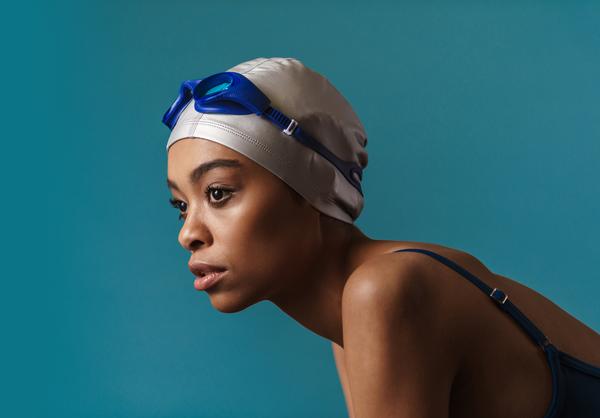
You’ve had a bad decision from FINA about the wearing of the Soul Cap in international swimming competitions. Tell us what’s happening
FINA’s original ban on the Soul Cap [the swimming cap designed to accommodate Black hair] was about much more than just these types of products, it was about the message FINA is sending not only to African, Caribbean and Asian communities, but also to elite swimming NGBs on a national and international level that the sport is not for everyone.

The Soul Cap decision is in direct breach of Section C4 of FINA’s own constitution and objectives which concern the promotion and encouragement of aquatics in all possible regards throughout the world and the encouragement of participation in aquatic disciplines at all levels, regardless of age, gender or race.

We believe putting a ban in place on products such as the Soul Cap, that make the sport more inclusive, will discourage younger athletes from ethnic minority backgrounds from not only pursuing swimming competitively, but also from engaging with aquatics.

The BSA is aiming to work with FINA to build bridges into disenfranchised communities, so they too have equal access, feel included and can have a safe and quality experience in the water.

We already know the vast majority do not swim. We can’t afford to have more children from these backgrounds feeling disengaged.

Do you think FINA will back down and change the ruling about the Soul Cap in light of public outrage?
FINA has already released a statement indicating its intention to review the original statement. The BSA, British Swimming, Soul Cap and FINA have been in dialogue to agree a resolution and next steps.

How important is it that Swim England are backing the BSA?
Swim England is our primary NGB and we hope our partnership can help Swim England to increase visibility, representation and participation of African, Caribbean and Asian groups. This partnership is enabling us to look forward and work more closely to increase the impact of its work.

The strength lies in our working together to understand, address and overcome significant age-long barriers.

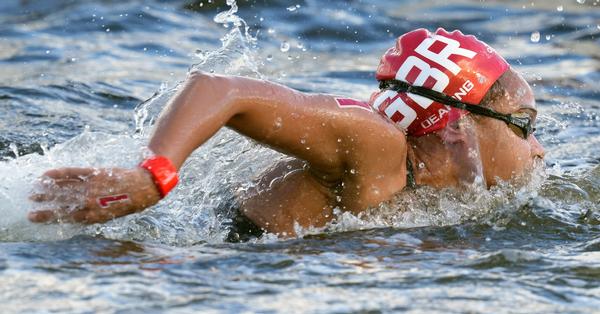
A Black swimmer [Alice Dearing] was in the GB team at the Tokyo Olympics. What impact is this having?
Alice Dearing qualifying for the Olympics as the first Black woman to represent Team GB is a huge milestone in British elite swimming.

For the community, her achievements are all about representation. For the first time, thousands of Black British children are seeing someone who looks like them in a sport that isn’t as inclusive as it could be. It’s about representation.

Do you see BSA becoming a global organisation and if so, what’s your vision?
Absolutely! Our vision is a future with ethnic diversity in aquatics. In the long term the vision remains the same.

This isn’t just a British issue – it starts at home, but it’s a global one.

The origins of the freestyle
Swimming has never been ‘all white’

Swimming has long been thought of as a white sport but right from the conception of the strokes, swimming has been ethnically diverse.

In 1844, the British Swimming Society invited the two men, Wenishkaweabee (Flying Gull) and Sahma (Tobacco), of the Ojibwe people from Canada to swim a race in London. Their swimming style was different from anything they had ever seen before and much faster.

Instead of being wowed by their impressive times, the British press found the swimmers’ movements to be “totally un-European,” and “grotesque.” One paper reported that the Ojibwe men “thrashed the water violently with their arms, like sails of a windmill, and beat downward with their feet, blowing with force and forming grotesque antics.”

So even though the revolutionary style of Flying Gull and Tobacco was considerably faster, it was not copied and British swimmers continued paddling along in their accustomed manner.

Yet this revolutionary advancement was really centuries old. The original inhabitants of the Americas, West Africa and some Pacific islands had been using a version of front crawl for generations.

It wasn’t until three decades later that John Arthur Trudgen, a British swimmer, took the prize for the 100-yard race in a major British swimming competition, using a stroke that combined the arm movements of the front crawl with the frog kick of the breaststroke. He had learned to swim the new style in Brazil and combined the speed of the front crawl’s arm movements with the accepted breaststroke kicking style. His stroke was less “un-European” and his time to cover 100 yards was 1 minute and 16 seconds.

Trudgen began teaching others the new arm movement and even though swimmers continued using the frog kick of the breaststroke, the overhand arm action gave them significantly more speed and power.

Using the Trudgen stroke – as it came to be called – swimmers whittled the record for the 100 yards down from 70 seconds to 60 seconds.

© Atlas Obscura, courtesy of the Black Swimming Association
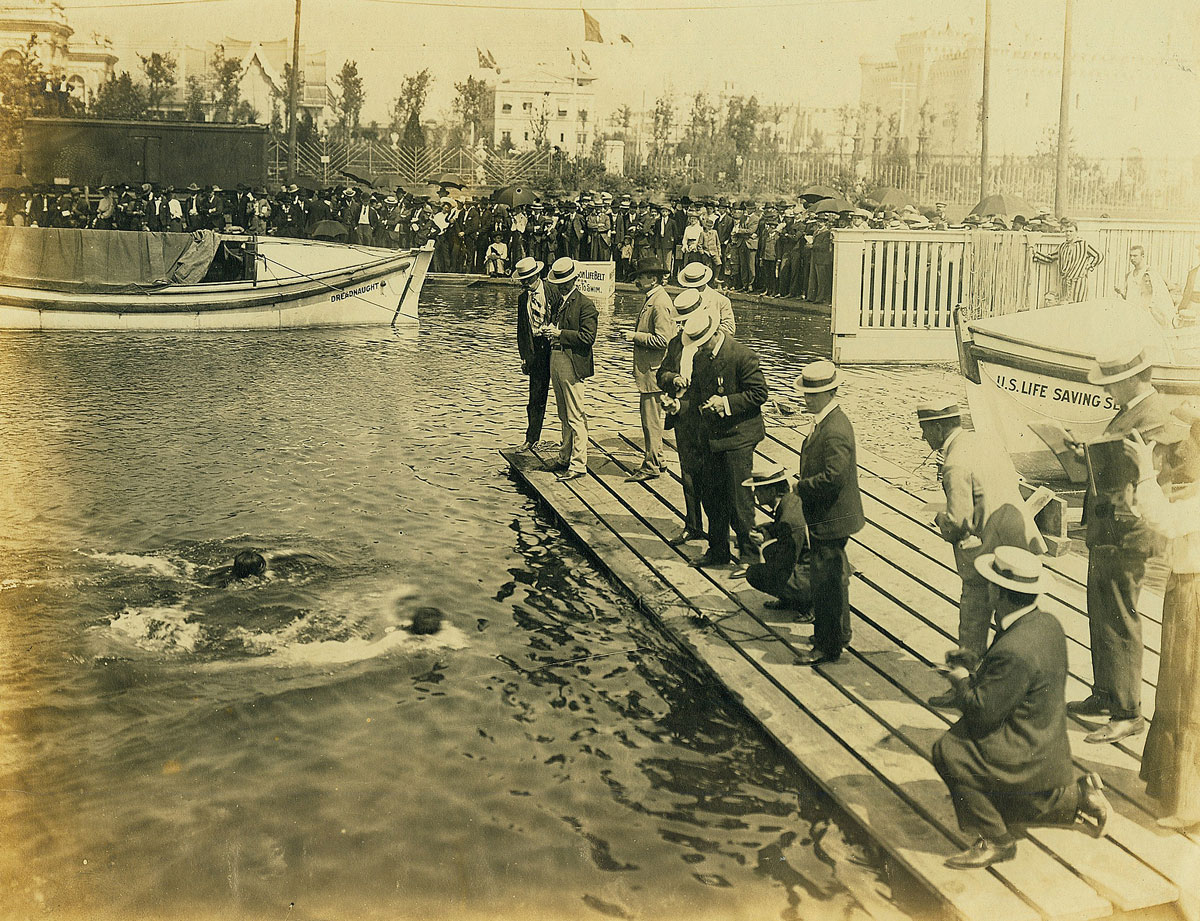
photo: Missouri History Museum
95 per cent of black adults in England don’t or can’t swim / Rawpixel.com/shutterstock
Team GB’s Alice Dearing is inspiring a younger generation / Getty Images - Alice Dearing Team GB
/ Dean Drobot/shutterstock
https://www.leisureopportunities.co.uk/images/2021/787236_356157.jpg
The chair of the Black Swimming Association, Danielle Obe, explains how fitness operators can support people of colour in getting fitter
HCM magazine
World Athletics president, Sebastian Coe talks to Liz Terry about the launch of Run X in partnership with Technogym
HCM magazine
Software suppliers explain how AI, automation and connected digital experiences can work for the good of operators and consumers
HCM magazine
HCM People

Shaun Grove

Owner, Stride Fitness
My goal was to invest in where fitness is going, not where it’s already been
HCM magazine
After decades of focusing on adult audiences, operators are starting to engage young people – unlocking growth opportunities while supporting the health and wellbeing of future generations
HCM magazine
The fitness industry is mourning the passing of Les Mills, a founding father of fitness, as Kath Hudson reports
HCM promotional features
Sponsored
Social fitness the missing link to member engagement, according to a new Myzone report
HCM promotional features
Sponsored
David Lloyd is stepping up its commitment to women’s health as it continues to explore what fit-for-purpose looks like for the female population
HCM promotional features
Sponsored
SnowDome Fitness has added 50 per cent more space with cutting-edge Technogym solutions
HCM promotional features
Sponsored
Starpool supports Olympic champion Marcell Jacobs, says Riccardo Turri
HCM promotional features
Sponsored
Third Space partnered with IndigoFitness to deliver a bespoke training space for its new club at The Whiteley
HCM promotional features
Sponsored
Greg Bradley looks at the shift towards strength training in gyms and advises on how operators can create the ultimate training environment
HCM promotional features
Sponsored
Find out how your gym can tap into the corporate wellness boom
HCM promotional features
Sponsored
EGYM has opened a new HQ in Paternoster Square, London and revealed a range of new launches
HCM promotional features
Latest News
Les Mills has launched a reformer Pilates workout. The 45-minute workout blends traditional reformer movements ...
Latest News
The inaugural HCM Invest event has opened applications for pitching slots ahead of its launch ...
Latest News
Girls in the UK are missing out on 280 million hours of sport every year ...
Latest News
According to research which tracked more than 147,000 people for 30 years, 90-120 minutes of ...
Latest News
Everlast Gyms expands its footprint outside of the UK this month with the imminent launch ...
Latest News
The UK's four Chief Medical Officers have published a refreshed edition of  Physical activity guidelines: ...
Latest News
Places Leisure has exchanged contracts to build and operate a flagship £60m water and wellness ...
Latest News
The Republic of Ireland will become the latest market in PureGym’s expanding international portfolio, with ...
Opinion
promotion
Strength training has moved from the margins to the mainstream.
Opinion: Building smarter strength spaces for today’s operators
Featured supplier news
Featured supplier news: Introducing a new era of Nautilus Leverage
Strength training has never been more important for member retention, facility differentiation and long-term commercial success.
Featured supplier news
Featured supplier news: Legends never die: four legends, four philosophies of life
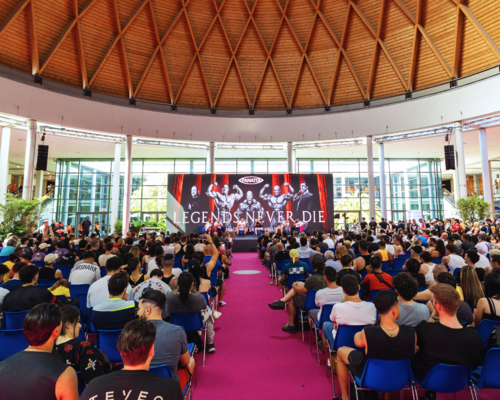
Panatta brought together four of the most influential figures in bodybuilding history on the stage of RiminiWellness 2026: Phil Heath, Lee Haney, Ronnie Coleman and Hany Rambod.
Company profiles
Company profile: Xplor Fitness & Leisure
Today’s fitness and leisure brands need technology that powers standout fitness experiences and keeps pace ...
Company profiles
Company profile: Orbit4
Orbit4 is a digital operations platform designed to help fitness and leisure operators manage assets, ...
Supplier Showcases
Supplier Showcase - From nightclub to health club
Supplier Showcases
Supplier Showcase - Future-proofing
Catalogue Gallery
Click on a catalogue to view it online
Featured press releases
Speedflex (UK press release: Inclusive Fitness in action: The Speedflex Blade at Gym Possible
Following the successful installation of the Speedflex Blade at Gym Possible, the UK based charity gym dedicated to making exercise accessible for people with physical disabilities, the innovative training solution has quickly become one of the facility’s
Featured press releases
BLK BOX press release: Inside the Player Gym at The Open, equipped by BLK BOX
The performance facility at Royal Birkdale gives the world’s leading golfers access to strength, conditioning, mobility and recovery equipment throughout Championship week.
Directory
Hot tubs
MSpa International Ltd: Hot tubs
Lockers
Crown Sports Lockers: Lockers
Spa and beauty equipment
Living Earth Crafts: Spa and beauty equipment
Industrial washing machines
Miele Company Limited: Industrial washing machines
Water experiences and hydrotherapy solutions
Aquaform s.r.l.: Water experiences and hydrotherapy solutions
Fitness tracking platform
SpiviTech: Fitness tracking platform
Property & Tenders
Stratford, East London.
Lee Valley Regional Park Authority
Property & Tenders
Y Felinheli, LL56 4QN
Newmark
Property & Tenders
Diary dates
21-24 Sep 2026
The Langham Huntington Pasadena , Pasadena, United States
Diary dates
06-08 Oct 2026
Messe Stuttgart, Stuttgart, Germany
Diary dates
22-22 Oct 2026
QEII Conference Centre, London,
Diary dates
26-29 Oct 2027
Koelnmesse Exhibition Centre, Cologne, Germany
Diary dates

features

HCM People: Danielle ObeChair, The Black Swimming Association

Our vision is a future with ethnic diversity in aquatics

Published in Health Club Management 2021 issue 9
Obe (left) and the BSA board want to spread their mission worldwide / Danielle Obe, Black Swimming Association
For the first time, thousands of Black British children see someone who looks like them in a sport that isn’t as inclusive as it could be. It’s about representation

Why is the Black Swimming Association needed?
Swimming isn’t just a sport, it’s a gateway into the world of aquatics and most importantly, an essential life skill everyone should have for their safety and wellbeing.

In spite of this, however, our research shows that 95 per cent of Black adults, 80 per cent of Black children, 93 per cent of Asian adults and 79 per cent of Asian children in England either can’t or don’t swim.

Between 2016 and 2019, of the 10 per cent of athletes funded by UK Sport who were of Asian, Black and mixed heritage, only 1 per cent were Black, while among the aquatic workforce only 3 per cent of lifeguards, 3 per cent swimming volunteers and 2 per cent of swimming coaches are of African, Caribbean and Asian heritage. There is no representation at senior leadership or board level.

We can’t drive forward inclusion and diversity in aquatics without first tackling inherent systemic and institutional inequalities – we need to address the economic and social disparities between ethnic groups in the aquatics sector in the UK, which have led to these disproportionately low participation rates within African, Caribbean and Asian communities.

Established in 2020, the Black Swimming Association (BSA) began with a single commitment – to be the bridge between the aquatics sector and these disenfranchised communities.

This isn’t a simple boardroom activity or quick fix, neither is it a one-size-fits all approach, the sector must take a systematic, long-term and integrated approach to change.

This begins with community engagement, research and collaboration to build trust, accountability and most importantly, build bridges into these disengaged communities the sector wishes to attract.

What inspired the establishment of the BSA?
The opportunities and benefits of participation in all types of aquatics are truly phenomenal and unmatched – from sport, careers and physical and mental wellbeing, to all important water safety
The mission of the BSA is to ensure everyone – regardless of age, gender, status or ethnicity – should have equal access, feel included and have a quality and safe experience in and around water.

According to the World Health Organization, a person – usually a child or young adult – dies by drowning every 90 seconds around the world. That means that on average, every hour of every day, more than 40 people lose their lives this way.

In the UK, 19 per cent of people living within 1km of waterways are from African, Caribbean and Asian heritage – that’s above the national average of 14 per cent.

Although there’s been no data captured to date on drowning by ethnicity, the disproportionate number of people of African, Caribbean and Asian heritage who don’t swim is a nationwide issue which puts these communities at a higher risk.

How are things going?
Our first year was spent engaging with key stakeholders as we embarked on a journey of discovery to understanding exactly where the sector is in regards to ethnic diversity.

We’ve built strategic partnerships with governing bodies, operators, aquatic brands, swimming bodies, lifesaving agencies and other charities in the aquatics sector.

We’ve also been championing the need for more inclusion and water safety education for ethnically diverse communities and more visibility when it comes to access and awareness for both participation and career pathways.

Following the global impact of the Black Lives Matter movement in 2020/21, awareness of inequalities is high, as is the collective need to do something tangible to urgently address these issues.

This context represents a ‘moment in time’ and an opportunity to drive the aquatic agenda for under-represented communities in the UK.

BSA has commissioned research (academic, social and scientific) with the core aim of understanding the aquatic behaviours and attitudes of African, Caribbean and Asian communities and addressing and removing barriers that preclude them from participating in aquatics.

How can health and fitness and sports facility owners and operators help and support the BSA?
Through direct community engagement, messaging campaigns, research and co-creation with the BSA. We’re actively welcoming collaboration and engagement, so please get in touch.

How will you measure success?
We’ve set ourselves a number of goals between now and 2024.

Firstly, to reduce the number of drownings in Black and Asian communities in the UK by 20 per cent – we also want to see drowning data recorded by ethnicity.

We’re also aiming to increase the number of children and adults from Black and Asian communities who swim by 30 per cent and to increase the number of Black and Asian people in the aquatic workforce by 25 per cent.

Why have Black people traditionally not got involved with aquatics?
There are a number of underlying reasons why they’re disengaged – this can be to do with a wide range of factors, such as access, culture, finance and representation.

As a result, many people from these communities believe the sector is ‘not for them’.

In addition, the aquatics sector hasn’t accommodated the specific needs of Britain’s diverse populations, thus it becomes a catch-22 situation.

As the BSA, our ongoing work with governing bodies in the aquatics sector has given us a unique perspective. We’re finding that although there’s a willingness to work towards swimming being a more inclusive sport, there is very little knowledge and understanding of the unique aquatic barriers, behaviours and attitudes that preclude Black communities from engaging widely in aquatics.

This is why the BSA has commissioned industry pioneering research, as mentioned, through direct community engagement with the under-represented communities we want to see represented.

You’ve had a bad decision from FINA about the wearing of the Soul Cap in international swimming competitions. Tell us what’s happening
FINA’s original ban on the Soul Cap [the swimming cap designed to accommodate Black hair] was about much more than just these types of products, it was about the message FINA is sending not only to African, Caribbean and Asian communities, but also to elite swimming NGBs on a national and international level that the sport is not for everyone.

The Soul Cap decision is in direct breach of Section C4 of FINA’s own constitution and objectives which concern the promotion and encouragement of aquatics in all possible regards throughout the world and the encouragement of participation in aquatic disciplines at all levels, regardless of age, gender or race.

We believe putting a ban in place on products such as the Soul Cap, that make the sport more inclusive, will discourage younger athletes from ethnic minority backgrounds from not only pursuing swimming competitively, but also from engaging with aquatics.

The BSA is aiming to work with FINA to build bridges into disenfranchised communities, so they too have equal access, feel included and can have a safe and quality experience in the water.

We already know the vast majority do not swim. We can’t afford to have more children from these backgrounds feeling disengaged.

Do you think FINA will back down and change the ruling about the Soul Cap in light of public outrage?
FINA has already released a statement indicating its intention to review the original statement. The BSA, British Swimming, Soul Cap and FINA have been in dialogue to agree a resolution and next steps.

How important is it that Swim England are backing the BSA?
Swim England is our primary NGB and we hope our partnership can help Swim England to increase visibility, representation and participation of African, Caribbean and Asian groups. This partnership is enabling us to look forward and work more closely to increase the impact of its work.

The strength lies in our working together to understand, address and overcome significant age-long barriers.

A Black swimmer [Alice Dearing] was in the GB team at the Tokyo Olympics. What impact is this having?
Alice Dearing qualifying for the Olympics as the first Black woman to represent Team GB is a huge milestone in British elite swimming.

For the community, her achievements are all about representation. For the first time, thousands of Black British children are seeing someone who looks like them in a sport that isn’t as inclusive as it could be. It’s about representation.

Do you see BSA becoming a global organisation and if so, what’s your vision?
Absolutely! Our vision is a future with ethnic diversity in aquatics. In the long term the vision remains the same.

This isn’t just a British issue – it starts at home, but it’s a global one.

The origins of the freestyle
Swimming has never been ‘all white’

Swimming has long been thought of as a white sport but right from the conception of the strokes, swimming has been ethnically diverse.

In 1844, the British Swimming Society invited the two men, Wenishkaweabee (Flying Gull) and Sahma (Tobacco), of the Ojibwe people from Canada to swim a race in London. Their swimming style was different from anything they had ever seen before and much faster.

Instead of being wowed by their impressive times, the British press found the swimmers’ movements to be “totally un-European,” and “grotesque.” One paper reported that the Ojibwe men “thrashed the water violently with their arms, like sails of a windmill, and beat downward with their feet, blowing with force and forming grotesque antics.”

So even though the revolutionary style of Flying Gull and Tobacco was considerably faster, it was not copied and British swimmers continued paddling along in their accustomed manner.

Yet this revolutionary advancement was really centuries old. The original inhabitants of the Americas, West Africa and some Pacific islands had been using a version of front crawl for generations.

It wasn’t until three decades later that John Arthur Trudgen, a British swimmer, took the prize for the 100-yard race in a major British swimming competition, using a stroke that combined the arm movements of the front crawl with the frog kick of the breaststroke. He had learned to swim the new style in Brazil and combined the speed of the front crawl’s arm movements with the accepted breaststroke kicking style. His stroke was less “un-European” and his time to cover 100 yards was 1 minute and 16 seconds.

Trudgen began teaching others the new arm movement and even though swimmers continued using the frog kick of the breaststroke, the overhand arm action gave them significantly more speed and power.

Using the Trudgen stroke – as it came to be called – swimmers whittled the record for the 100 yards down from 70 seconds to 60 seconds.

© Atlas Obscura, courtesy of the Black Swimming Association
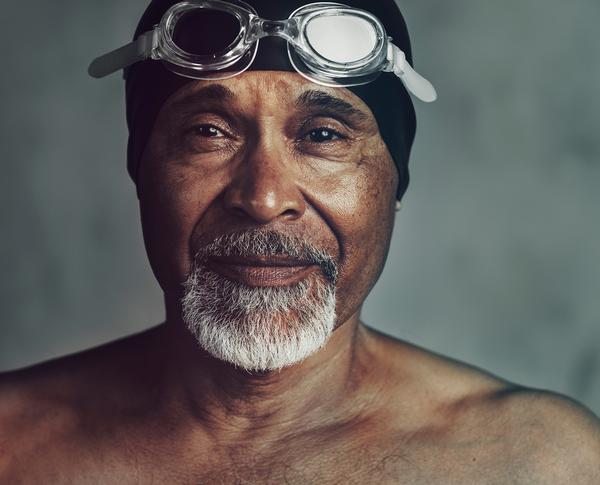
photo: Missouri History Museum
95 per cent of black adults in England don’t or can’t swim / Rawpixel.com/shutterstock
Team GB’s Alice Dearing is inspiring a younger generation / Getty Images - Alice Dearing Team GB
/ Dean Drobot/shutterstock
https://www.leisureopportunities.co.uk/images/2021/787236_356157.jpg
The chair of the Black Swimming Association, Danielle Obe, explains how fitness operators can support people of colour in getting fitter
Latest News
Les Mills has launched a reformer Pilates workout. The 45-minute workout blends traditional reformer movements ...
Latest News
The inaugural HCM Invest event has opened applications for pitching slots ahead of its launch ...
Latest News
Girls in the UK are missing out on 280 million hours of sport every year ...
Latest News
According to research which tracked more than 147,000 people for 30 years, 90-120 minutes of ...
Latest News
Everlast Gyms expands its footprint outside of the UK this month with the imminent launch ...
Latest News
The UK's four Chief Medical Officers have published a refreshed edition of  Physical activity guidelines: ...
Latest News
Places Leisure has exchanged contracts to build and operate a flagship £60m water and wellness ...
Latest News
The Republic of Ireland will become the latest market in PureGym’s expanding international portfolio, with ...
Latest News
Sophie Lawler, CEO of Total Fitness, has launched a leadership coaching business aimed at helping ...
Latest News
Anytime Fitness reaches a milestone this week with the launch of its 6000th site. The ...
Latest News
The £33.9 million Leighton Leisure and Community Centre has opened in Leighton Buzzard, UK, creating ...
Opinion
promotion
Strength training has moved from the margins to the mainstream.
Opinion: Building smarter strength spaces for today’s operators
Featured supplier news
Featured supplier news: Introducing a new era of Nautilus Leverage
Strength training has never been more important for member retention, facility differentiation and long-term commercial success.

Featured supplier news
Featured supplier news: Legends never die: four legends, four philosophies of life
Panatta brought together four of the most influential figures in bodybuilding history on the stage of RiminiWellness 2026: Phil Heath, Lee Haney, Ronnie Coleman and Hany Rambod.
Company profiles
Company profile: Xplor Fitness & Leisure
Today’s fitness and leisure brands need technology that powers standout fitness experiences and keeps pace ...
Company profiles
Company profile: Orbit4
Orbit4 is a digital operations platform designed to help fitness and leisure operators manage assets, ...
Supplier Showcases
Supplier Showcase - From nightclub to health club
Supplier Showcases
Supplier Showcase - Future-proofing
Catalogue Gallery
Click on a catalogue to view it online
Featured press releases
Speedflex (UK press release: Inclusive Fitness in action: The Speedflex Blade at Gym Possible
Following the successful installation of the Speedflex Blade at Gym Possible, the UK based charity gym dedicated to making exercise accessible for people with physical disabilities, the innovative training solution has quickly become one of the facility’s


Featured press releases
BLK BOX press release: Inside the Player Gym at The Open, equipped by BLK BOX
The performance facility at Royal Birkdale gives the world’s leading golfers access to strength, conditioning, mobility and recovery equipment throughout Championship week.
Directory
Hot tubs
MSpa International Ltd: Hot tubs
Lockers
Crown Sports Lockers: Lockers
Spa and beauty equipment
Living Earth Crafts: Spa and beauty equipment
Industrial washing machines
Miele Company Limited: Industrial washing machines
Water experiences and hydrotherapy solutions
Aquaform s.r.l.: Water experiences and hydrotherapy solutions
Fitness tracking platform
SpiviTech: Fitness tracking platform
Property & Tenders
Stratford, East London.
Lee Valley Regional Park Authority
Property & Tenders
Y Felinheli, LL56 4QN
Newmark
Property & Tenders
Diary dates
21-24 Sep 2026
The Langham Huntington Pasadena , Pasadena, United States
Diary dates
06-08 Oct 2026
Messe Stuttgart, Stuttgart, Germany
Diary dates
22-22 Oct 2026
QEII Conference Centre, London,
Diary dates
26-29 Oct 2027
Koelnmesse Exhibition Centre, Cologne, Germany

Diary dates
Search news, features & products:
Find a supplier:
Partner sites