












Elevate Arena
Elevate Arena
Elevate Arena
Follow Health Club Management on Twitter Like Health Club Management on Facebook Join the discussion with Health Club Management on LinkedIn
FITNESS, HEALTH, WELLNESS

features

HCM People: Anna Milani Founder, Sparkd Fitness

I was particularly motivated to develop this concept as we lost my grandfather to Alzheimer’s
Published in Health Club Management 2023 issue 9
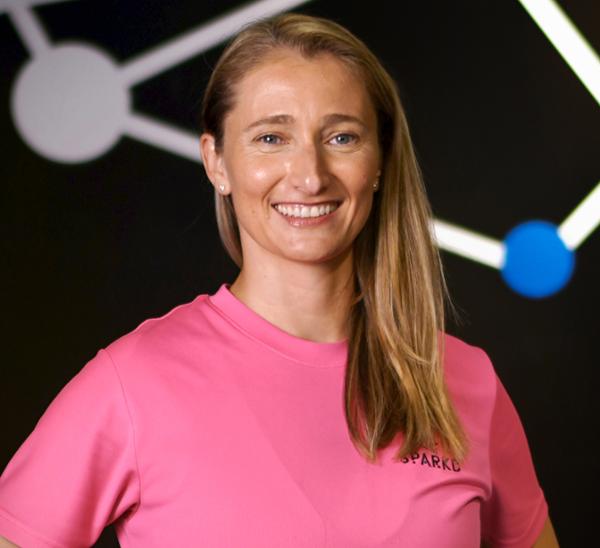
Milani has been in the industry for 20 years / photo: SPARKD
I strongly believe that what we do is uniting fitness, wellness and the medical space and I am very excited about the opportunities

Tell us about Sparkd Fitness
Sparkd is a gym delivering brain-body fitness training solutions that work on both physical and cognitive abilities.

The aim is to improve longevity and brain-body performance so people are fit for life and fit for success.

We launched in Singapore and are planning to expand globally – we’re currently looking for funding to enable us to scale.

What is brain health training?
Brain-body fitness training is a multi-component training modality that includes cardiovascular and strength training, coordination and motor skill training, as well as cognitive motor training or dual-task training.

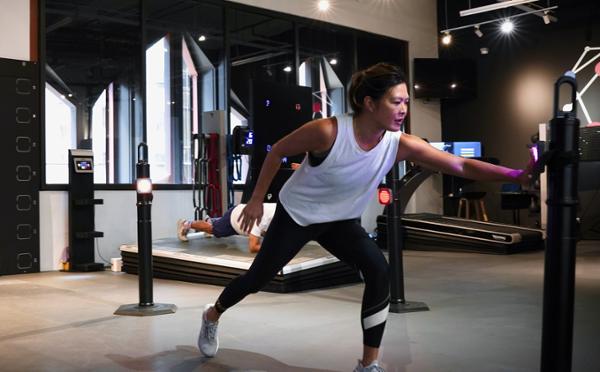
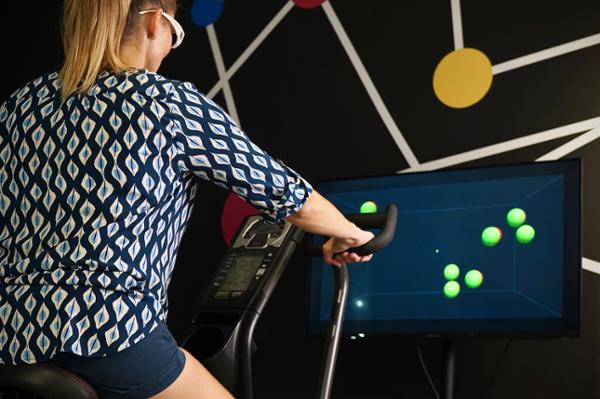
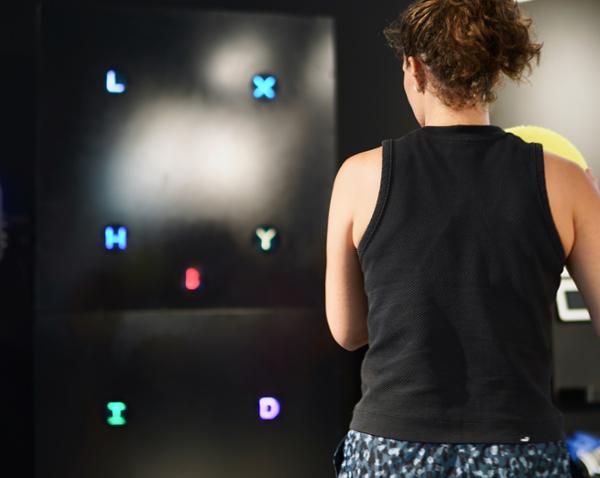
Cognitive motor training and dual-task training require people to simultaneously perform a physical and a cognitive task. For example doing squats while doing maths or memory games on a technology screen.

Recent studies show that dual-tasking – literally doing two things at the same time (which is different from switching your attention from one stimuli to another) increases neuroplasticity, which in turn yields brain health benefits in our everyday life.

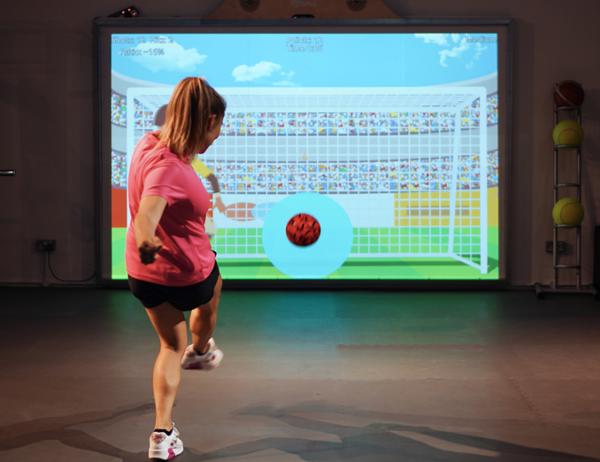
This type of training is also fun, gamified and extremely engaging, as participants have to pay attention to the task they’re undertaking, as opposed to getting bored on a treadmill or elliptical machine.

What’s your background?
I’ve been in the health and fitness industry for 20 years. After graduating in contemporary dance, I became a PT and worked for Matt Roberts Personal Training for almost a decade, eventually managing a couple of his centres.

A move to Singapore followed, where I completed an MBA and continued my club management career, while developing the concept for Sparkd.

During this time I became fascinated by neuroscience and the impact movement, exercise and sport have on both our brains and performance and undertook various certifications in neuroscience and coaching.

What inspired its creation?
When I first started conceptualising Sparkd I had a vision of the gym of the future, one that would fulfil people’s needs as we age. I was envisioning a gym for my mum and dad – and myself in the future.

I was particularly motivated to develop this concept as we lost my grandfather to Alzheimer’s and the idea of losing my brain when I’m older scares me a lot.

People’s physical and mental needs change a lot after a certain age and they become more aware of their health and not just their looks.

Fitness becomes more than just pumping the guns and having a six pack. They start realising there’s more to their wellbeing than that.

What journey did you go on to bring it to fruition?
I researched the market for about 18 months, looking at what people were doing across the globe – especially in the US – and came across a few concepts that were sort of going in the direction we were envisioning, but not exactly.

This type of training at the time was only available for elite athletes and people with neurological conditions, but I wanted to make it available to the general population. I was also looking at it from a prevention perspective.

So my mission with Sparkd is to democratise this type of training and create awareness of brain-body health and how it’s never too late to start exercising and therefore improving our brains and bodies.

Did the concept change between theory and implementation?
While I tried to stay as close as possible to what I’d envisioned, I had to adapt along the way.

Launching a new concept is very challenging, as people don’t understand your vision at the beginning.

We’ve spent a lot of time educating our audience on the benefits of doing this type of training. The messaging and the evolution of it has been very interesting. As much as we want to stick to the science, we also have to be approachable and explain the training in lay terms.

We also listen to clients’ feedback while we pursue our vision and mission.

We’re working to improve the technology, our own software and our customer journey constantly to make everything more smooth for users. Things evolve continuously.

What does it take to become a brain health trainer?
The trainers we select need to be cognitively flexible and to be open to upskilling themselves and getting out of their comfort zone, as they need to alter what they’ve been used to doing – sometimes for years.

Once we hire new trainers, they join our online academy and this delivers a variety of training courses from the Brain Health Trainer course in relation to the technologies we use at Sparkd.

Is recruitment straightforward?
Typically trainers hear about us, get attracted by the concept and that’s how conversations start. We then see if they’re a fit for the business.

Recruitment can be challenging, but so far we’ve been fortunate to find people with very different backgrounds. Some have 20 years’ experience, some have PhDs and others come from the corporate world. They range in age too, but what unites us is the training and our mission.

What’s the customer journey?
We offer group classes, personal training sessions and also team building sessions. We also have a booking app.

People attending group classes tend to mix and match according to the classes they want to attend, choosing across a variety of classes targeting cardio, strength and HIIT, combined with the different domains of cognition, such as memory, processing speed, executive function and visuospatial skills.

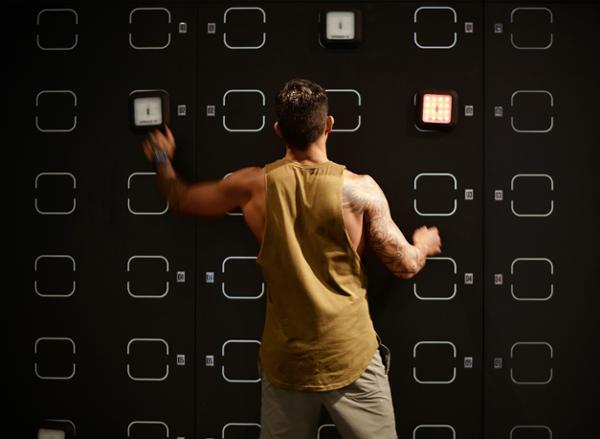
Groups that come for team building are split into teams and compete against each other on fun, challenging stations – once again targeting both physical and cognitive domains. The teams score points across stations and there’s an overall winning team.

The sessions are very inclusive and have enough variety to cater for participants with different skills – some people are better at memory, some at maths, some at spelling, for example and the same applies to the physical aspect.

The journey for PT customers is more personalised. Each person starts with validated physical and cognitive tests which provide a full report on their cognition and physical capabilities.

These tests create the baseline from which the programme is devised, according to the client’s needs and goals.

The programme consists of two to three sessions a week, during which data is recorded and then every two to three months clients get re-tested, so we can track progress and change their programme accordingly to maintain progression.

Tell us about your customers
Team building events attract a wide variety of clients, with people aged 25 to 60+. Prices for groups of 10 start at S$1,000 (£600, US$730) and upwards, according to the number of people in the sessions. These last for around 90 minutes.

Group classes in Singapore are typically attended by a wide range of people aged 25 to 60+. Prices are approximately S$25-35 (£15-21, US$18-25), depending on the package. Classes are 45 minutes long. PT packages are predominantly attended by people aged 45 and above, or those with specific health conditions.

These groups of people tend to have more specific goals and are predominantly looking at performance and longevity – they want to perform at a high level for as long as possible, whether at work, in their amateur sports, or in life generally.

Though we don’t advertise specifically around neurological conditions, we still attract a group of people that have conditions such as Parkinson’s, mild cognitive impairments and early stage dementia or who are post-stroke or post-cancer. They love training at Sparkd as opposed to a hospital setting, as they feel encouraged and able to accomplish fun tasks and see the improvements in daily living.

Personal training packages start from S$120 (£72, US$88) per session and range up to S$220 £132, US$161) per session.

What equipment is used?
Our technology comes from a variety of suppliers in the USA, Canada, Uruguay, Italy and Germany.

Some of the companies we work with are Reaxing, Smartfit, Reflexion and Neurotracker.

The key to what we do is the blending of physical exercises with the different technologies to create sessions that integrate them in a seamless way.

We’re always scouting and researching new products as they enter the market to remain at the top of our game and evolve as the industry evolves.

How does the tech drive the experience?
Sessions are pre-programmed through our technology to make the experience seamless and each station takes people through a different drill.

Personal training clients can also see their data and how they’re progressing. This isn’t yet an option for group class participants, but it’s something we’re working on.

Clients love seeing their scores and how they’re performing and as the company expands, we’ll evolve and add to this.

Is there an on-demand element?
We’re developing an on-demand, anytime solution which will be very important when it comes to scaling the business. Clients can currently do the online cognitive test at home, as well as using the Neurotracker.

This means they can train with the Neurotracker anywhere – it only takes around six minutes a day and can be done anytime. A minimum of three sessions a week is recommended.

What future do you see for brain body fitness?
There’s huge potential in a variety of populations. Sparkd’s training applications can be enjoyed by children, adults and seniors in health clubs, schools, colleges and universities. In addition, they can complete existing offerings for hotels and corporates.

We also see applications in senior living facilities, as well as huge potential in smart cities, where these techniques could be built into everyday life.

We’re getting more interest from the medical sector where they’re interested in offering what we do to patients in hospitals as an extension of their ecosystem, as well as to complement what they do for continuing care. I strongly believe that what we do is uniting fitness, wellness and the medical space and I am very excited about the opportunities.

What’s your roll-out plan?
We started in Singapore and are currently expanding into Thailand and exploring other areas in South East Asia. We’re also getting interest from Europe and are exploring ways to enter the market there.

The US is the biggest potential market and in time we’d love to be there too.

Who is financing the business?
We have silent investors and are currently looking for our next round of investment to scale our business.

What’s your ultimate goal?
Our goal is to empower people to live a fulfilled life in both body and brain, and enable everyone to be able to train like an elite athlete.
We believe that everyone can improve their brain-body performance.
Sign up here to get HCM's weekly ezine and every issue of HCM magazine free on digital.
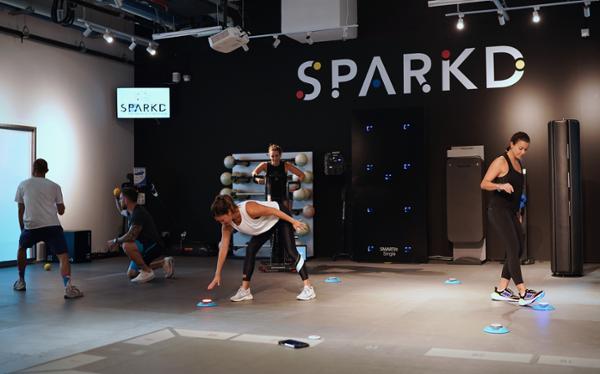
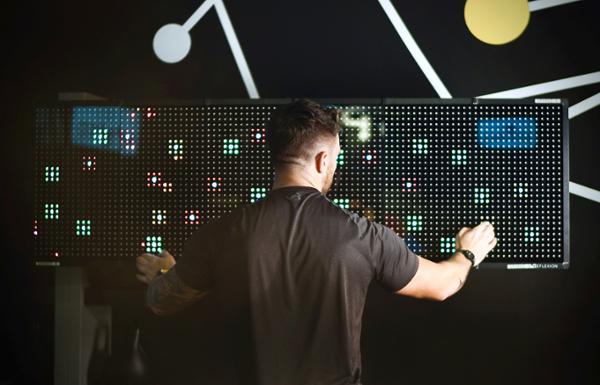
Dual-tasking is known to boost neuroplasticity / photo: SPARKD
/ photo: SPARKD
Sparkd trainers must be prepared to change their thinking around delivery / photo: SPARKD
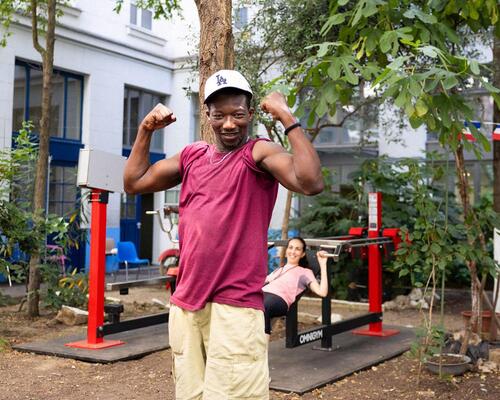
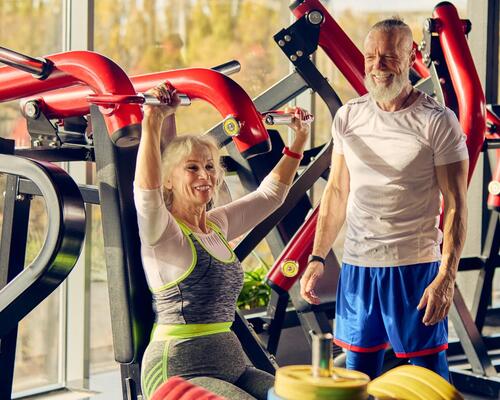
Classes are attended by a wide range of people, from ages 25 to 60+ / photo: SPARKD
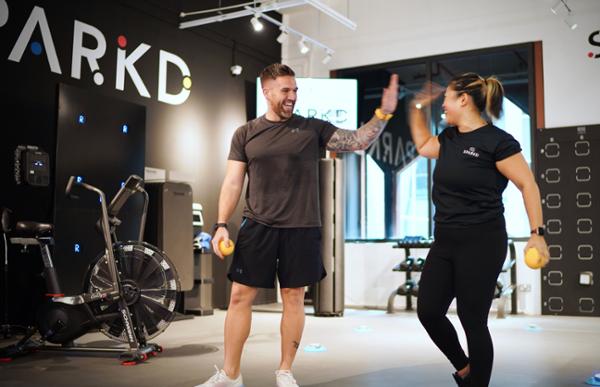
Groups that come for team building can compete against each other on fun, challenging stations / photo: SPARKD
/ photo: SPARKD
/ photo: SPARKD
/ photo: SPARKD
https://www.leisureopportunities.co.uk/images/2023/159803_617799.jpg
Brain-body training is the focus at Sparkd Fitness, which is expanding in Asia. HCM magazine talks to founder, Anna Milani
Anna Milani, Sparkd Fitness ,Brain body training
HCM magazine
Strength training is evolving, driven by changing consumer preferences. Julie Cramer talks to innovators about how their products are meeting this demand
HCM magazine
Small improvements to sleep, diet and physical activity have major benefits for the heart, according to new research from the University of Sydney
HCM magazine
HCM People

Stephen Price

Founder, SP&Co Group
Working in public health over the last few years has lit up parts of my brain again
HCM magazine
As the entrepreneur who started Wexer, Fresh Fitness, Fitness DK and Repeat, as well as being a former elite athlete, Rasmus Ingerslev’s life looked perfect from the outside, but onthe inside it was a different story. He talks to Kath Hudson about healing old wounds
HCM magazine
If the health service is to survive, we must recognise that it is a disease service – and that wellbeing rests with us, says the activity advocate and healthy ageing champion. He talks to Kate Cracknell
HCM promotional features
Sponsored
Third Space partnered with IndigoFitness to deliver a bespoke training space for its new club at The Whiteley
HCM promotional features
Sponsored
Starpool supports Olympic champion Marcell Jacobs, says Riccardo Turri
HCM promotional features
Sponsored
David Lloyd is stepping up its commitment to women’s health as it continues to explore what fit-for-purpose looks like for the female population
HCM promotional features
Sponsored
SnowDome Fitness has added 50 per cent more space with cutting-edge Technogym solutions
HCM promotional features
Sponsored
Greg Bradley looks at the shift towards strength training in gyms and advises on how operators can create the ultimate training environment
HCM promotional features
Sponsored
Find out how your gym can tap into the corporate wellness boom
HCM promotional features
Sponsored
EGYM has opened a new HQ in Paternoster Square, London and revealed a range of new launches
HCM promotional features
Sponsored
The industry is embracing consumer-facing tech. Now it’s time to streamline back-of-house systems with Orbit4, says Daniel Jones
HCM promotional features
Sponsored
Pulse Fitness has created a new health club delivering an elevated wellness experience
HCM promotional features
Latest News
Global group exercise specialist, Les Mills, is inviting operators to sign up to its Workout ...
Latest News
Global luxury hospitality brand, Six Senses, has partnered with longevity healthcare provider, HUM2N, to launch ...
Latest News
Premium London health club, KX Chelsea, is gearing up to unveil its most significant redevelopment ...
Latest News
Researchers in the US have identified an antibody which could greatly reduce the loss of ...
Latest News
Peloton has made the strategic acquisition of Pilates start-up, Skōp, to support the expansion of ...
Latest News
Crunch Fitness has announced the launch of Crunch Reform Pilates – its own reformer concept ...
Latest News
The 20th State of the Industry Report from LeisureDB has revealed a resilient, expanding and ...
Latest News
Purpose Brands has announced its entry into the Italian market, having sold the franchise rights ...
Opinion
promotion
Strength training has moved from the margins to the mainstream.
Opinion: Building smarter strength spaces for today’s operators
Featured supplier news
Featured supplier news: CoverMe extends matching service to personal training, rewriting how members and personal trainers connect
CoverMe, the global leader in fitness workforce management, today launches CoverMe PT, an on-demand personal training platform that connects the right personal trainer to the right client in under 10 seconds.
Featured supplier news
Featured supplier news: Supporting long-term health: why whole body vibration belongs in clinical settings
As healthcare continues to shift towards prevention, there’s a growing focus on helping people stay active, independent and feeling good for longer.
Company profiles
Company profile: Gladstone Software
Gladstone’s software is built to streamline operations, reduce admin burden, and boost engagement. Operators can ...
Company profiles
Company profile: Gantner
Gantner optimizes and simplifies the organisation of fitness clubs. Using touchless RFID/NFC credentials (member cards, ...
Supplier Showcases
Supplier Showcase - From nightclub to health club
Supplier Showcases
Supplier Showcase - Future-proofing
Catalogue Gallery
Click on a catalogue to view it online
Featured press releases
Dyaco International press release: How i-Strength redefines strength training
For decades, strength training equipment at commercial fitness facilities has remained virtually unchanged: rows of pin-selected weight stacks, heavy plates, and racks of dumbbells. i-Strength is here to change the game with its adaptive strength training system.
Featured press releases
ukactive press release: UK Active launches next phase of Digital Futures to support digital maturity across the physical activity sector
UK Active has announced the next phase of its Digital Futures programme, supporting organisations across the physical activity sector to develop their digital capability.
Directory
Water experiences and hydrotherapy solutions
Aquaform s.r.l.: Water experiences and hydrotherapy solutions
Fitness tracking platform
SpiviTech: Fitness tracking platform
Spa and beauty equipment
Oakworks Inc: Spa and beauty equipment
Hot tubs
MSpa International Ltd: Hot tubs
Lockers
Crown Sports Lockers: Lockers
Industrial washing machines
Miele Company Limited: Industrial washing machines
Property & Tenders
Stratford, East London.
Lee Valley Regional Park Authority
Property & Tenders
Y Felinheli, LL56 4QN
Newmark
Property & Tenders
Diary dates
21-24 Sep 2026
The Langham Huntington Pasadena , Pasadena, United States
Diary dates
06-08 Oct 2026
Messe Stuttgart, Stuttgart, Germany
Diary dates
22-22 Oct 2026
QEII Conference Centre, London,
Diary dates
26-29 Oct 2027
Koelnmesse Exhibition Centre, Cologne, Germany
Diary dates

features

HCM People: Anna Milani Founder, Sparkd Fitness

I was particularly motivated to develop this concept as we lost my grandfather to Alzheimer’s

Published in Health Club Management 2023 issue 9
Milani has been in the industry for 20 years / photo: SPARKD
I strongly believe that what we do is uniting fitness, wellness and the medical space and I am very excited about the opportunities

Tell us about Sparkd Fitness
Sparkd is a gym delivering brain-body fitness training solutions that work on both physical and cognitive abilities.

The aim is to improve longevity and brain-body performance so people are fit for life and fit for success.

We launched in Singapore and are planning to expand globally – we’re currently looking for funding to enable us to scale.

What is brain health training?
Brain-body fitness training is a multi-component training modality that includes cardiovascular and strength training, coordination and motor skill training, as well as cognitive motor training or dual-task training.

Cognitive motor training and dual-task training require people to simultaneously perform a physical and a cognitive task. For example doing squats while doing maths or memory games on a technology screen.

Recent studies show that dual-tasking – literally doing two things at the same time (which is different from switching your attention from one stimuli to another) increases neuroplasticity, which in turn yields brain health benefits in our everyday life.

This type of training is also fun, gamified and extremely engaging, as participants have to pay attention to the task they’re undertaking, as opposed to getting bored on a treadmill or elliptical machine.

What’s your background?
I’ve been in the health and fitness industry for 20 years. After graduating in contemporary dance, I became a PT and worked for Matt Roberts Personal Training for almost a decade, eventually managing a couple of his centres.

A move to Singapore followed, where I completed an MBA and continued my club management career, while developing the concept for Sparkd.

During this time I became fascinated by neuroscience and the impact movement, exercise and sport have on both our brains and performance and undertook various certifications in neuroscience and coaching.

What inspired its creation?
When I first started conceptualising Sparkd I had a vision of the gym of the future, one that would fulfil people’s needs as we age. I was envisioning a gym for my mum and dad – and myself in the future.

I was particularly motivated to develop this concept as we lost my grandfather to Alzheimer’s and the idea of losing my brain when I’m older scares me a lot.

People’s physical and mental needs change a lot after a certain age and they become more aware of their health and not just their looks.

Fitness becomes more than just pumping the guns and having a six pack. They start realising there’s more to their wellbeing than that.

What journey did you go on to bring it to fruition?
I researched the market for about 18 months, looking at what people were doing across the globe – especially in the US – and came across a few concepts that were sort of going in the direction we were envisioning, but not exactly.

This type of training at the time was only available for elite athletes and people with neurological conditions, but I wanted to make it available to the general population. I was also looking at it from a prevention perspective.

So my mission with Sparkd is to democratise this type of training and create awareness of brain-body health and how it’s never too late to start exercising and therefore improving our brains and bodies.

Did the concept change between theory and implementation?
While I tried to stay as close as possible to what I’d envisioned, I had to adapt along the way.

Launching a new concept is very challenging, as people don’t understand your vision at the beginning.

We’ve spent a lot of time educating our audience on the benefits of doing this type of training. The messaging and the evolution of it has been very interesting. As much as we want to stick to the science, we also have to be approachable and explain the training in lay terms.

We also listen to clients’ feedback while we pursue our vision and mission.

We’re working to improve the technology, our own software and our customer journey constantly to make everything more smooth for users. Things evolve continuously.

What does it take to become a brain health trainer?
The trainers we select need to be cognitively flexible and to be open to upskilling themselves and getting out of their comfort zone, as they need to alter what they’ve been used to doing – sometimes for years.

Once we hire new trainers, they join our online academy and this delivers a variety of training courses from the Brain Health Trainer course in relation to the technologies we use at Sparkd.

Is recruitment straightforward?
Typically trainers hear about us, get attracted by the concept and that’s how conversations start. We then see if they’re a fit for the business.

Recruitment can be challenging, but so far we’ve been fortunate to find people with very different backgrounds. Some have 20 years’ experience, some have PhDs and others come from the corporate world. They range in age too, but what unites us is the training and our mission.

What’s the customer journey?
We offer group classes, personal training sessions and also team building sessions. We also have a booking app.

People attending group classes tend to mix and match according to the classes they want to attend, choosing across a variety of classes targeting cardio, strength and HIIT, combined with the different domains of cognition, such as memory, processing speed, executive function and visuospatial skills.

Groups that come for team building are split into teams and compete against each other on fun, challenging stations – once again targeting both physical and cognitive domains. The teams score points across stations and there’s an overall winning team.

The sessions are very inclusive and have enough variety to cater for participants with different skills – some people are better at memory, some at maths, some at spelling, for example and the same applies to the physical aspect.

The journey for PT customers is more personalised. Each person starts with validated physical and cognitive tests which provide a full report on their cognition and physical capabilities.

These tests create the baseline from which the programme is devised, according to the client’s needs and goals.

The programme consists of two to three sessions a week, during which data is recorded and then every two to three months clients get re-tested, so we can track progress and change their programme accordingly to maintain progression.

Tell us about your customers
Team building events attract a wide variety of clients, with people aged 25 to 60+. Prices for groups of 10 start at S$1,000 (£600, US$730) and upwards, according to the number of people in the sessions. These last for around 90 minutes.

Group classes in Singapore are typically attended by a wide range of people aged 25 to 60+. Prices are approximately S$25-35 (£15-21, US$18-25), depending on the package. Classes are 45 minutes long. PT packages are predominantly attended by people aged 45 and above, or those with specific health conditions.

These groups of people tend to have more specific goals and are predominantly looking at performance and longevity – they want to perform at a high level for as long as possible, whether at work, in their amateur sports, or in life generally.

Though we don’t advertise specifically around neurological conditions, we still attract a group of people that have conditions such as Parkinson’s, mild cognitive impairments and early stage dementia or who are post-stroke or post-cancer. They love training at Sparkd as opposed to a hospital setting, as they feel encouraged and able to accomplish fun tasks and see the improvements in daily living.

Personal training packages start from S$120 (£72, US$88) per session and range up to S$220 £132, US$161) per session.

What equipment is used?
Our technology comes from a variety of suppliers in the USA, Canada, Uruguay, Italy and Germany.

Some of the companies we work with are Reaxing, Smartfit, Reflexion and Neurotracker.

The key to what we do is the blending of physical exercises with the different technologies to create sessions that integrate them in a seamless way.

We’re always scouting and researching new products as they enter the market to remain at the top of our game and evolve as the industry evolves.

How does the tech drive the experience?
Sessions are pre-programmed through our technology to make the experience seamless and each station takes people through a different drill.

Personal training clients can also see their data and how they’re progressing. This isn’t yet an option for group class participants, but it’s something we’re working on.

Clients love seeing their scores and how they’re performing and as the company expands, we’ll evolve and add to this.

Is there an on-demand element?
We’re developing an on-demand, anytime solution which will be very important when it comes to scaling the business. Clients can currently do the online cognitive test at home, as well as using the Neurotracker.

This means they can train with the Neurotracker anywhere – it only takes around six minutes a day and can be done anytime. A minimum of three sessions a week is recommended.

What future do you see for brain body fitness?
There’s huge potential in a variety of populations. Sparkd’s training applications can be enjoyed by children, adults and seniors in health clubs, schools, colleges and universities. In addition, they can complete existing offerings for hotels and corporates.

We also see applications in senior living facilities, as well as huge potential in smart cities, where these techniques could be built into everyday life.

We’re getting more interest from the medical sector where they’re interested in offering what we do to patients in hospitals as an extension of their ecosystem, as well as to complement what they do for continuing care. I strongly believe that what we do is uniting fitness, wellness and the medical space and I am very excited about the opportunities.

What’s your roll-out plan?
We started in Singapore and are currently expanding into Thailand and exploring other areas in South East Asia. We’re also getting interest from Europe and are exploring ways to enter the market there.

The US is the biggest potential market and in time we’d love to be there too.

Who is financing the business?
We have silent investors and are currently looking for our next round of investment to scale our business.

What’s your ultimate goal?
Our goal is to empower people to live a fulfilled life in both body and brain, and enable everyone to be able to train like an elite athlete.
We believe that everyone can improve their brain-body performance.
Sign up here to get HCM's weekly ezine and every issue of HCM magazine free on digital.

Dual-tasking is known to boost neuroplasticity / photo: SPARKD
/ photo: SPARKD
Sparkd trainers must be prepared to change their thinking around delivery / photo: SPARKD
Classes are attended by a wide range of people, from ages 25 to 60+ / photo: SPARKD
Groups that come for team building can compete against each other on fun, challenging stations / photo: SPARKD
/ photo: SPARKD
/ photo: SPARKD
/ photo: SPARKD
https://www.leisureopportunities.co.uk/images/2023/159803_617799.jpg
Brain-body training is the focus at Sparkd Fitness, which is expanding in Asia. HCM magazine talks to founder, Anna Milani
Anna Milani, Sparkd Fitness ,Brain body training
Latest News
Global group exercise specialist, Les Mills, is inviting operators to sign up to its Workout ...
Latest News
Global luxury hospitality brand, Six Senses, has partnered with longevity healthcare provider, HUM2N, to launch ...
Latest News
Premium London health club, KX Chelsea, is gearing up to unveil its most significant redevelopment ...
Latest News
Researchers in the US have identified an antibody which could greatly reduce the loss of ...
Latest News
Peloton has made the strategic acquisition of Pilates start-up, Skōp, to support the expansion of ...
Latest News
Crunch Fitness has announced the launch of Crunch Reform Pilates – its own reformer concept ...
Latest News
The 20th State of the Industry Report from LeisureDB has revealed a resilient, expanding and ...
Latest News
Purpose Brands has announced its entry into the Italian market, having sold the franchise rights ...
Latest News
Fitness First UK is integrating red light therapy into its yoga and Pilates classes through ...
Latest News
Nuffield Health has told HCM that it takes its responsibilities towards its colleagues seriously and ...
Latest News
Technogym has announced the launch of the Run X World Treadmill Championship, the first world ...
Opinion
promotion
Strength training has moved from the margins to the mainstream.
Opinion: Building smarter strength spaces for today’s operators
Featured supplier news
Featured supplier news: CoverMe extends matching service to personal training, rewriting how members and personal trainers connect
CoverMe, the global leader in fitness workforce management, today launches CoverMe PT, an on-demand personal training platform that connects the right personal trainer to the right client in under 10 seconds.
Featured supplier news
Featured supplier news: Supporting long-term health: why whole body vibration belongs in clinical settings
As healthcare continues to shift towards prevention, there’s a growing focus on helping people stay active, independent and feeling good for longer.
Company profiles
Company profile: Gladstone Software
Gladstone’s software is built to streamline operations, reduce admin burden, and boost engagement. Operators can ...
Company profiles
Company profile: Gantner
Gantner optimizes and simplifies the organisation of fitness clubs. Using touchless RFID/NFC credentials (member cards, ...
Supplier Showcases
Supplier Showcase - From nightclub to health club
Supplier Showcases
Supplier Showcase - Future-proofing
Catalogue Gallery
Click on a catalogue to view it online
Featured press releases
Dyaco International press release: How i-Strength redefines strength training
For decades, strength training equipment at commercial fitness facilities has remained virtually unchanged: rows of pin-selected weight stacks, heavy plates, and racks of dumbbells. i-Strength is here to change the game with its adaptive strength training system.
Featured press releases
ukactive press release: UK Active launches next phase of Digital Futures to support digital maturity across the physical activity sector
UK Active has announced the next phase of its Digital Futures programme, supporting organisations across the physical activity sector to develop their digital capability.
Directory
Water experiences and hydrotherapy solutions
Aquaform s.r.l.: Water experiences and hydrotherapy solutions
Fitness tracking platform
SpiviTech: Fitness tracking platform
Spa and beauty equipment
Oakworks Inc: Spa and beauty equipment
Hot tubs
MSpa International Ltd: Hot tubs
Lockers
Crown Sports Lockers: Lockers
Industrial washing machines
Miele Company Limited: Industrial washing machines
Property & Tenders
Stratford, East London.
Lee Valley Regional Park Authority
Property & Tenders
Y Felinheli, LL56 4QN
Newmark
Property & Tenders
Diary dates
21-24 Sep 2026
The Langham Huntington Pasadena , Pasadena, United States
Diary dates
06-08 Oct 2026
Messe Stuttgart, Stuttgart, Germany
Diary dates
22-22 Oct 2026
QEII Conference Centre, London,
Diary dates
26-29 Oct 2027
Koelnmesse Exhibition Centre, Cologne, Germany
Diary dates
Search news, features & products:
Find a supplier:
Elevate Arena
Elevate Arena
Partner sites