


















The Leisure Media Company Ltd
Follow Health Club Management on Twitter Like Health Club Management on Facebook Join the discussion with Health Club Management on LinkedIn
FITNESS, HEALTH, WELLNESS

features

Everyone’s talking about: Pricing

Despite the renewed interest in health, a proportion of people remain nervous about going back to health clubs because of infection levels in the wider community. Would making adjustments to pricing help overcome these barriers? Kath Hudson investigates

Published in Health Club Management 2021 issue 11
Is flexible pricing the way to get members back to the gym? / photo: Evolution Wellness

As reported in HCM issue 10 2021, Fitness First is one of the first UK health club operators to change its membership options in the era of COVID.

The company is offering a flexible membership with no contract and no joining fee, giving members the option to access all its 45 clubs.

Members opting for the new Fitness First FFX flexible memberships are signed up on a rolling contract, which can be cancelled at any point with a month’s notice. The estate has been divided into seven pricing tiers and members can use any club in their tier or lower.

Membership rates have also been refined, with the price for the highest tier, which gives access to 35 gyms in London, having been reduced from £139 to £99.

Fitness First UK MD, Lee Matthews, says this is to allow flexibility and not put limits on members’ access to fitness.

Will others follow suit? We ask this month’s HCM panel...

Simon Flint
Evolution Wellness

From a business perspective, a subscription model is still highly desirable, due to its high visibility, the relative consistency of future revenues and the relative simplicity of automatic billing.

Having said that, providing the customer with a choice is usually the best approach, rather than just a binary buy/don’t buy decision.

Presenting good-better-best options, such as a pay-as-you-go and pre-paid, is a great way to look at it.

Dynamic yield management models are absolutely the golden chalice if they can be implemented intelligently in order for operators to generate maximum returns on investment.

In general, in Asia, where capacity restrictions still remain, the ‘effective value’ of a spot in busy times has risen significantly, so measures that reflect value through yield optimisation will be even more important.

However, at the present time, peak-time spots in central business district clubs are not as premium as before the pandemic, due to the work-from-home hybrid pattern.

It does seem illogical to offer a discount to overcome consumers’ hesitancy over safety, but we have seen evidence that it does play a part in the extrinsic motivating factors to get people back to good habits.

Some of this is born from a few operators offering very attractive price-based incentives, which tends to mean others will need to follow suit to maintain market share – in this scenario, strength of brand is a big factor in being able to hold onto yield while also driving volume.

In Asia, post-lockdown confidence is varied and seems to be lower than North America, Europe and Australia. Several factors appear to sit behind this, specifically governments placing us last in the queue to reopen, which indicated an implicit concern over gym safety, despite evidence to the contrary.

Providing the customer with a choice is usually the best approach, rather than just a binary buy/don’t buy decision

Some families live with three generations together in Asia, so there’s concern for children and especially elderly relatives. This has meant some customers have de-prioritised their return to the gym through an abundance of caution.

The relative lack of government assistance – such as furlough schemes and job-keeper programmes – also means some have tightened the purse strings for a period, compared to other parts of the world, where significant government assistance has preserved spending power to a larger degree than in Asia.

These are all challenges we have to deal with, however, pre-pandemic we undertook measures to widen our appeal, with a range of new prices and a lower entry point based on utility. This is something we’ll continue to do as we recover.

In all parts of the world we can see people placing a higher value on health, so there’s an underlying impetus which will assist the trajectory of the recovery in the coming months.

We see the recovery as a steady climb rather than a bounceback and it’s my personal hope and belief that by the second half of 2022, most markets will be adapting to live with COVID-19 and the trajectory will steepen.
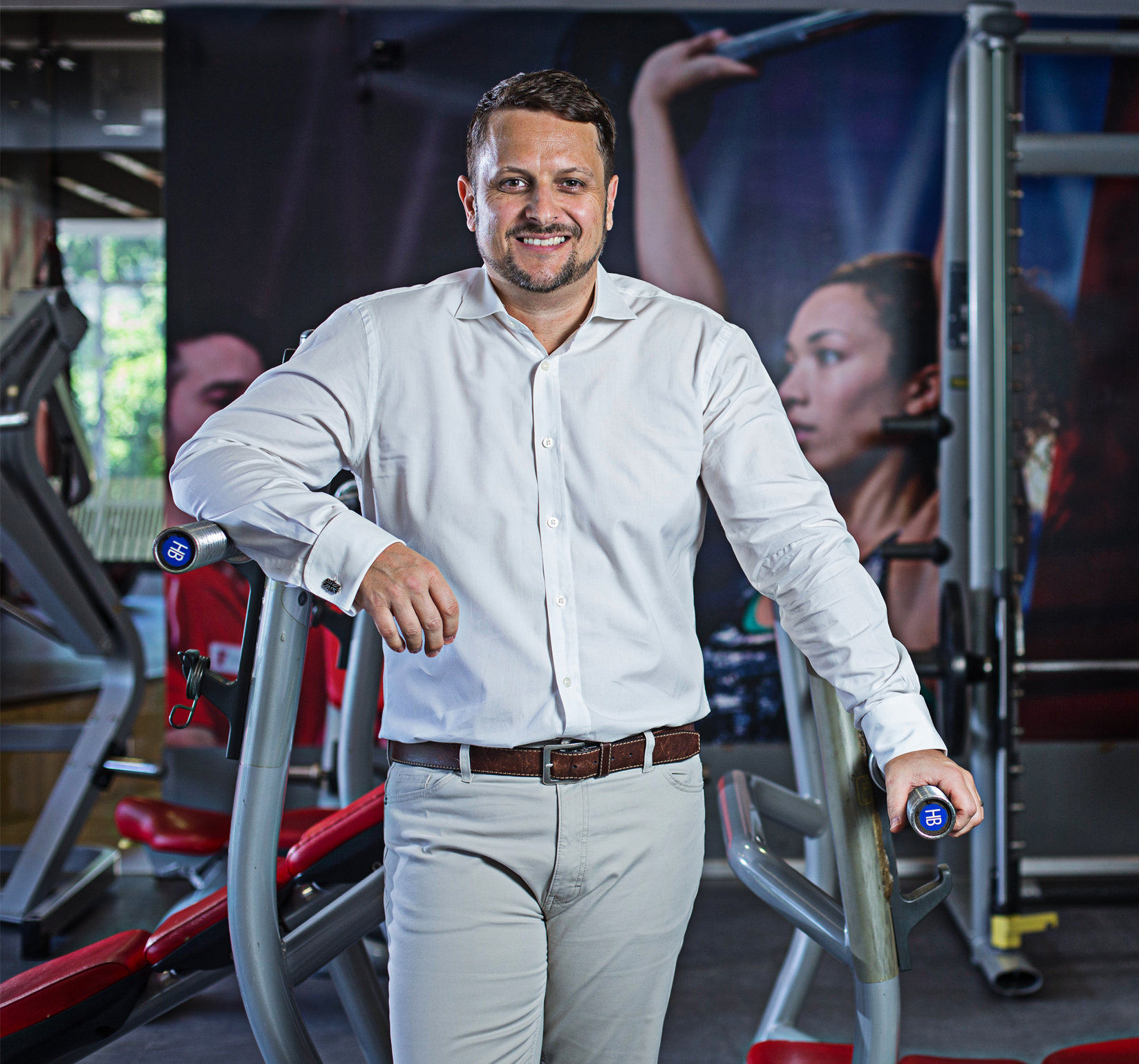
Flint says Evolution Wellness has found flexible pricing effective / photo: Evolution wellness
Sophie Lawler
Total Fitness

The subscription model is still the best for the industry. Members benefit from a lower monthly subscription, and gyms benefit from surety over future revenues, giving a more solid foundation from which to invest back into their products and services, from which members benefit again. It’s a win:win.

If members need more flexibility, then that should absolutely be an option too, but it may need to be a premium option so it stays viable for the business, as well as the member.

Dynamic pricing is something we may start to see, but we would need to employ it in a way that best serves our members. The gym sector is one that could be better trusted than it currently is, and pricing is always an influencing factor. On this basis, dynamic pricing should be approached with care, to ensure it’s used to enhance transparency and trust and never in a way that risks that.

If it’s used at membership subscription level, and/or at a frequency where prices change too sporadically, then trust will erode. If it’s used at product/service level to reward greater numbers of participants as part of a shared service – ie, more people share the same cost – then I think it can increase transparency and trust.

If we reduce our cost-to-serve too far we deny our responsibility and duty to help our members retain an exercise habit

When it comes to heavy discounting, if ever there was a time to demonstrate the value of what we do, it’s now. Never before have we experienced an awakening to the importance of physical fitness such as this one and my view is that it’s time to stand proudly behind our purpose. We should also recognise that serving members meaningfully and meeting their efforts with our own means we should always be operationally leveraged – we have costs that we need to cover and need to charge a premium for the service.

If we reduce our cost-to-serve too far we deny our responsibility and duty to help our members retain an exercise habit.

Our focus should always be on how to meet our members’ efforts with the right level of value to reward them.


Frequent price changes can erode consumer trust, says Lawler / photo: Total Fitness
Dennis Mathias
RTS
Price is rarely the real reason people don’t buy, says Mathias

The subscription model is the best in any business and especially for our industry. It hasn’t changed in 40 years and I doubt it will.

Give people too many options and they won’t pick any, which is why it’s best to keep it simple with a flat rate membership, rather than using surge pricing or yield management techniques.

If you give people options to pay less for off-peak periods, or to use less amenities, they’ll pick the lower option and worry about the restrictions later. Or, they won’t pick any unless they get the lower option with the higher value.

After 40 years’ in the industry, I’ve seen it go down the rabbit hole of discounting multiple times. The same thing happens every single time. First, it negatively impacts current members, which creates attrition. Second, if it works at all it has a short lifespan and then you’re back to pulling teeth but getting less from each sale.

Third, if you really push it to drive numbers it’s very hard to come back from. The team gets used to selling at that rate and new members get used to buying at that rate, so most clubs that discount get stuck there. Honestly, it can signal the beginning of the end for a club.

If you make it about price, so will the customer. It always seems like a quick fix until you do it

Fourth, it’s never the price. I know membership sales people say everyone who doesn’t buy tells them it’s a price objection, but it’s not. So discounting creates more problems than solutions. Fifth, there are now multiple low entry point clubs everywhere, so price discounting isn’t what it was in the old days when everyone was around the same rate.

Sixth, in the past, when we discounted it often started a local landslide and everyone else dropped as well. If that happens, your drop gets buried in with everyone else’s and clubs simply devalue themselves. The word gets out that shopping for clubs in that area is like car shopping. Prospects won’t pay full rate and closing becomes a price negotiation, not a needs and value-based sale.  

If you make it about price, so will the customer. It always seems like a quick fix until you do it. My advice is, avoid it at all costs and try to find out why you need to do it and fix that problem instead. 

Jeff Bladt
Classpass
A two-channel approach is more effective, says Bladt / photo: Classpass

For most operators, direct discounting is a money-losing proposition – immediately and in the long-term. For a 25 per cent discount to merely break even in the short term, sales need to increase by 33 per cent.

But, without significant marketing spend, what most often happens is that an operator ends up primarily selling discounted packages to the same set of leads and customers who were prepared to pay full price.

The marketing that’s needed to reach new audiences only pushes the break-even point higher. Tactics such as limiting discounts to first time users can help, but conversions from discounted first visits can be very low, making the marketing costs hard to justify. Moreover, the monitoring of discount fraud is time consuming, and never ends. Repeated discounting can also train customers to wait for the sales, further eroding a business pricing power over time. 

A better way to maximise revenue is by selling at full prices to direct customers who have a higher willingness to pay, while working with an aggregator to target a more price-sensitive audience and clear remnant inventory with a different offer. That way the spots which otherwise wouldn’t be sold can be sold to customers the club wouldn’t usually be able to reach.

Studios should ideally skip a direct discount-driven sales cycle, and instead focus on getting as many direct customers through the door at full price, while providing them with the best possible studio experience.

Repeated discounting can train customers to wait for the sales, further eroding pricing power over time

These customers will be willing to pay more in exchange for reserving their favourite bike and guaranteeing they get booked into their favourite class. Whatever spots are left – often at less popular times or with lesser known instructors – can be opaquely cleared on the aggregator platform. 

This two-channel approach allows a studio to serve two different audiences, with two different offers, while maintaining their direct pricing power. Eighty per cent of our customers have never been to the studios they visit with us, meaning nearly every dollar or pound they spend is incremental. Moreover, less than five per cent of customers will ever end up switching their booking behaviour from direct booking to our service.

https://www.leisureopportunities.co.uk/images/2021/803051_823385.jpg
What pricing models can operators deploy to rebuild business after lockdowns? HCM asked the experts
HCM magazine
Collaborations with the medical profession and greater aspirations around wellbeing are creating a need for more experts in our sector. It’s time to reboot our thinking around the workforce
HCM magazine
For every member with a tripod and a big following, there are others irritated at the way equipment is being hogged or wary they’ll be in the background on someone’s Insta feed. Do influencers offer valuable, free marketing or are they just a nuisance? Kath Hudson finds out how operators are responding
HCM magazine
If the health service is to survive, we must recognise that it is a disease service – and that wellbeing rests with us, says the activity advocate and healthy ageing champion. He talks to Kate Cracknell
HCM magazine
As the entrepreneur who started Wexer, Fresh Fitness, Fitness DK and Repeat, as well as being a former elite athlete, Rasmus Ingerslev’s life looked perfect from the outside, but onthe inside it was a different story. He talks to Kath Hudson about healing old wounds
HCM magazine
I experienced a blissful feeling of joy I hadn’t felt since I was a kid
HCM promotional features
Sponsored
Third Space partnered with IndigoFitness to deliver a bespoke training space for its new club at The Whiteley
HCM promotional features
Sponsored
David Lloyd is stepping up its commitment to women’s health as it continues to explore what fit-for-purpose looks like for the female population
HCM promotional features
Sponsored
Starpool supports Olympic champion Marcell Jacobs, says Riccardo Turri
HCM promotional features
Sponsored
SnowDome Fitness has added 50 per cent more space with cutting-edge Technogym solutions
HCM promotional features
Sponsored
Find out how your gym can tap into the corporate wellness boom
HCM promotional features
Sponsored
Greg Bradley looks at the shift towards strength training in gyms and advises on how operators can create the ultimate training environment
HCM promotional features
Sponsored
EGYM has opened a new HQ in Paternoster Square, London and revealed a range of new launches
HCM promotional features
Sponsored
Active IQ is calling for greater accountability in online fitness advice with the launch of a new trustmark
HCM promotional features
Promotion
BLK BOX has been reimagining elite performance spaces for more than a decade. Founder and former athlete, Greg Bradley, tells us what it takes
HCM promotional features
Latest News
Australia’s fast-growing fitness network, Viva Leisure, is adding a low-cost gym brand to its already ...
Latest News
Speedflex has launched a strength training programme for 10 to 16-year-olds, to make it safer, ...
Latest News
Tewinbury Farm Hotel in Hertfordshire, UK is expanding its premium leisure proposition with the launch ...
Latest News

Work is underway in Madrid on one of Europe’s most significant multi-functional complexes, ...

Latest News
PureGym is encouraging people to step away from their screens and go for a walk, ...
Latest News
Small improvements to sleep, diet quality, and physical activity, made in combination lead to a ...
Latest News
Therme Manchester’s 28-acre development, which will include interconnected glass pavilions that measure 65,000sq m, will ...
Latest News
The Yard Gym (TYG) is to become Nike Training’s official global training partner in a ...
Opinion
promotion
Strength training has moved from the margins to the mainstream.
Opinion: Building smarter strength spaces for today’s operators
Featured supplier news
Featured supplier news: Elevate 2026 to mark 10-year anniversary with biggest ever waterfront drinks reception
Elevate is set to celebrate its 10th anniversary in style this June, with organisers confirming the event’s largest-ever drinks reception as registrations continue to run more than 10% ahead of last year.
Featured supplier news
Featured supplier news: Supporting long-term health: why whole body vibration belongs in clinical settings
As healthcare continues to shift towards prevention, there’s a growing focus on helping people stay active, independent and feeling good for longer.
Company profiles
Company profile: BLK BOX
BLK BOX - where precision meets strength, and innovation never stops in the pursuit of ...
Company profiles
Company profile: Spirit Commercial Fitness
Spirit Fitness is a premier brand within the Dyaco International Inc. portfolio, a global leader ...
Supplier Showcases
Supplier Showcase - From nightclub to health club
Supplier Showcases
Supplier Showcase - Future-proofing
Catalogue Gallery
Click on a catalogue to view it online
Featured press releases
ukactive press release: Are they Fit for Office? UK Active and Technogym throw down the gauntlet to MPs
Hundreds of staff, MPs and Peers from across Westminster have signed up for the Fit for Office parliamentary physical activity challenge, which takes place throughout June and is hosted by ukactive and Technogym.
Featured press releases
Innerva press release: Lex Leisure’s power-assisted exercise suite smashes targets in record time
Crook Log Leisure Centre has more than doubled the membership target for its new power- assisted exercise suite in less than six months.
Directory
Lockers
Crown Sports Lockers: Lockers
Hot tubs
MSpa International Ltd: Hot tubs
Spa and beauty equipment
Oakworks Inc: Spa and beauty equipment
Fitness tracking platform
SpiviTech: Fitness tracking platform
Industrial washing machines
Miele Company Limited: Industrial washing machines
Water experiences and hydrotherapy solutions
Aquaform s.r.l.: Water experiences and hydrotherapy solutions
Property & Tenders
Stratford, East London.
Lee Valley Regional Park Authority
Property & Tenders
Y Felinheli, LL56 4QN
Newmark
Property & Tenders
Diary dates
13-13 Jun 2026
Worldwide, Various,
Diary dates
21-24 Sep 2026
The Langham Huntington Pasadena , Pasadena, United States
Diary dates
06-08 Oct 2026
Messe Stuttgart, Stuttgart, Germany
Diary dates
22-22 Oct 2026
QEII Conference Centre, London,
Diary dates
26-29 Oct 2027
Koelnmesse Exhibition Centre, Cologne, Germany
Diary dates

features

Everyone’s talking about: Pricing

Despite the renewed interest in health, a proportion of people remain nervous about going back to health clubs because of infection levels in the wider community. Would making adjustments to pricing help overcome these barriers? Kath Hudson investigates

Published in Health Club Management 2021 issue 11
Is flexible pricing the way to get members back to the gym? / photo: Evolution Wellness

As reported in HCM issue 10 2021, Fitness First is one of the first UK health club operators to change its membership options in the era of COVID.

The company is offering a flexible membership with no contract and no joining fee, giving members the option to access all its 45 clubs.

Members opting for the new Fitness First FFX flexible memberships are signed up on a rolling contract, which can be cancelled at any point with a month’s notice. The estate has been divided into seven pricing tiers and members can use any club in their tier or lower.

Membership rates have also been refined, with the price for the highest tier, which gives access to 35 gyms in London, having been reduced from £139 to £99.

Fitness First UK MD, Lee Matthews, says this is to allow flexibility and not put limits on members’ access to fitness.

Will others follow suit? We ask this month’s HCM panel...

Simon Flint
Evolution Wellness

From a business perspective, a subscription model is still highly desirable, due to its high visibility, the relative consistency of future revenues and the relative simplicity of automatic billing.

Having said that, providing the customer with a choice is usually the best approach, rather than just a binary buy/don’t buy decision.

Presenting good-better-best options, such as a pay-as-you-go and pre-paid, is a great way to look at it.

Dynamic yield management models are absolutely the golden chalice if they can be implemented intelligently in order for operators to generate maximum returns on investment.

In general, in Asia, where capacity restrictions still remain, the ‘effective value’ of a spot in busy times has risen significantly, so measures that reflect value through yield optimisation will be even more important.

However, at the present time, peak-time spots in central business district clubs are not as premium as before the pandemic, due to the work-from-home hybrid pattern.

It does seem illogical to offer a discount to overcome consumers’ hesitancy over safety, but we have seen evidence that it does play a part in the extrinsic motivating factors to get people back to good habits.

Some of this is born from a few operators offering very attractive price-based incentives, which tends to mean others will need to follow suit to maintain market share – in this scenario, strength of brand is a big factor in being able to hold onto yield while also driving volume.

In Asia, post-lockdown confidence is varied and seems to be lower than North America, Europe and Australia. Several factors appear to sit behind this, specifically governments placing us last in the queue to reopen, which indicated an implicit concern over gym safety, despite evidence to the contrary.

Providing the customer with a choice is usually the best approach, rather than just a binary buy/don’t buy decision

Some families live with three generations together in Asia, so there’s concern for children and especially elderly relatives. This has meant some customers have de-prioritised their return to the gym through an abundance of caution.

The relative lack of government assistance – such as furlough schemes and job-keeper programmes – also means some have tightened the purse strings for a period, compared to other parts of the world, where significant government assistance has preserved spending power to a larger degree than in Asia.

These are all challenges we have to deal with, however, pre-pandemic we undertook measures to widen our appeal, with a range of new prices and a lower entry point based on utility. This is something we’ll continue to do as we recover.

In all parts of the world we can see people placing a higher value on health, so there’s an underlying impetus which will assist the trajectory of the recovery in the coming months.

We see the recovery as a steady climb rather than a bounceback and it’s my personal hope and belief that by the second half of 2022, most markets will be adapting to live with COVID-19 and the trajectory will steepen.

Flint says Evolution Wellness has found flexible pricing effective / photo: Evolution wellness
Sophie Lawler
Total Fitness

The subscription model is still the best for the industry. Members benefit from a lower monthly subscription, and gyms benefit from surety over future revenues, giving a more solid foundation from which to invest back into their products and services, from which members benefit again. It’s a win:win.

If members need more flexibility, then that should absolutely be an option too, but it may need to be a premium option so it stays viable for the business, as well as the member.

Dynamic pricing is something we may start to see, but we would need to employ it in a way that best serves our members. The gym sector is one that could be better trusted than it currently is, and pricing is always an influencing factor. On this basis, dynamic pricing should be approached with care, to ensure it’s used to enhance transparency and trust and never in a way that risks that.

If it’s used at membership subscription level, and/or at a frequency where prices change too sporadically, then trust will erode. If it’s used at product/service level to reward greater numbers of participants as part of a shared service – ie, more people share the same cost – then I think it can increase transparency and trust.

If we reduce our cost-to-serve too far we deny our responsibility and duty to help our members retain an exercise habit

When it comes to heavy discounting, if ever there was a time to demonstrate the value of what we do, it’s now. Never before have we experienced an awakening to the importance of physical fitness such as this one and my view is that it’s time to stand proudly behind our purpose. We should also recognise that serving members meaningfully and meeting their efforts with our own means we should always be operationally leveraged – we have costs that we need to cover and need to charge a premium for the service.

If we reduce our cost-to-serve too far we deny our responsibility and duty to help our members retain an exercise habit.

Our focus should always be on how to meet our members’ efforts with the right level of value to reward them.

Frequent price changes can erode consumer trust, says Lawler / photo: Total Fitness
Dennis Mathias
RTS
Price is rarely the real reason people don’t buy, says Mathias

The subscription model is the best in any business and especially for our industry. It hasn’t changed in 40 years and I doubt it will.

Give people too many options and they won’t pick any, which is why it’s best to keep it simple with a flat rate membership, rather than using surge pricing or yield management techniques.

If you give people options to pay less for off-peak periods, or to use less amenities, they’ll pick the lower option and worry about the restrictions later. Or, they won’t pick any unless they get the lower option with the higher value.

After 40 years’ in the industry, I’ve seen it go down the rabbit hole of discounting multiple times. The same thing happens every single time. First, it negatively impacts current members, which creates attrition. Second, if it works at all it has a short lifespan and then you’re back to pulling teeth but getting less from each sale.

Third, if you really push it to drive numbers it’s very hard to come back from. The team gets used to selling at that rate and new members get used to buying at that rate, so most clubs that discount get stuck there. Honestly, it can signal the beginning of the end for a club.

If you make it about price, so will the customer. It always seems like a quick fix until you do it

Fourth, it’s never the price. I know membership sales people say everyone who doesn’t buy tells them it’s a price objection, but it’s not. So discounting creates more problems than solutions. Fifth, there are now multiple low entry point clubs everywhere, so price discounting isn’t what it was in the old days when everyone was around the same rate.

Sixth, in the past, when we discounted it often started a local landslide and everyone else dropped as well. If that happens, your drop gets buried in with everyone else’s and clubs simply devalue themselves. The word gets out that shopping for clubs in that area is like car shopping. Prospects won’t pay full rate and closing becomes a price negotiation, not a needs and value-based sale.  

If you make it about price, so will the customer. It always seems like a quick fix until you do it. My advice is, avoid it at all costs and try to find out why you need to do it and fix that problem instead. 

Jeff Bladt
Classpass
A two-channel approach is more effective, says Bladt / photo: Classpass

For most operators, direct discounting is a money-losing proposition – immediately and in the long-term. For a 25 per cent discount to merely break even in the short term, sales need to increase by 33 per cent.

But, without significant marketing spend, what most often happens is that an operator ends up primarily selling discounted packages to the same set of leads and customers who were prepared to pay full price.

The marketing that’s needed to reach new audiences only pushes the break-even point higher. Tactics such as limiting discounts to first time users can help, but conversions from discounted first visits can be very low, making the marketing costs hard to justify. Moreover, the monitoring of discount fraud is time consuming, and never ends. Repeated discounting can also train customers to wait for the sales, further eroding a business pricing power over time. 

A better way to maximise revenue is by selling at full prices to direct customers who have a higher willingness to pay, while working with an aggregator to target a more price-sensitive audience and clear remnant inventory with a different offer. That way the spots which otherwise wouldn’t be sold can be sold to customers the club wouldn’t usually be able to reach.

Studios should ideally skip a direct discount-driven sales cycle, and instead focus on getting as many direct customers through the door at full price, while providing them with the best possible studio experience.

Repeated discounting can train customers to wait for the sales, further eroding pricing power over time

These customers will be willing to pay more in exchange for reserving their favourite bike and guaranteeing they get booked into their favourite class. Whatever spots are left – often at less popular times or with lesser known instructors – can be opaquely cleared on the aggregator platform. 

This two-channel approach allows a studio to serve two different audiences, with two different offers, while maintaining their direct pricing power. Eighty per cent of our customers have never been to the studios they visit with us, meaning nearly every dollar or pound they spend is incremental. Moreover, less than five per cent of customers will ever end up switching their booking behaviour from direct booking to our service.

https://www.leisureopportunities.co.uk/images/2021/803051_823385.jpg
What pricing models can operators deploy to rebuild business after lockdowns? HCM asked the experts
Latest News
Australia’s fast-growing fitness network, Viva Leisure, is adding a low-cost gym brand to its already ...

Latest News
Speedflex has launched a strength training programme for 10 to 16-year-olds, to make it safer, ...
Latest News
Tewinbury Farm Hotel in Hertfordshire, UK is expanding its premium leisure proposition with the launch ...
Latest News

Work is underway in Madrid on one of Europe’s most significant multi-functional complexes, ...

Latest News
PureGym is encouraging people to step away from their screens and go for a walk, ...
Latest News
Small improvements to sleep, diet quality, and physical activity, made in combination lead to a ...
Latest News
Therme Manchester’s 28-acre development, which will include interconnected glass pavilions that measure 65,000sq m, will ...
Latest News
The Yard Gym (TYG) is to become Nike Training’s official global training partner in a ...
Latest News
Everlast Gyms' York site has reopened following a refurbishment to bring it up to the ...
Latest News
Luxury hospitality and wellness pioneer Jeremy McCarthy has launched Leisure Alchemy, a digital platform that ...
Latest News
A contrast therapy and breathwork facility called Reset has opened in Islington, London, in the ...
Opinion
promotion
Strength training has moved from the margins to the mainstream.
Opinion: Building smarter strength spaces for today’s operators
Featured supplier news
Featured supplier news: Elevate 2026 to mark 10-year anniversary with biggest ever waterfront drinks reception
Elevate is set to celebrate its 10th anniversary in style this June, with organisers confirming the event’s largest-ever drinks reception as registrations continue to run more than 10% ahead of last year.
Featured supplier news
Featured supplier news: Supporting long-term health: why whole body vibration belongs in clinical settings
As healthcare continues to shift towards prevention, there’s a growing focus on helping people stay active, independent and feeling good for longer.
Company profiles
Company profile: BLK BOX
BLK BOX - where precision meets strength, and innovation never stops in the pursuit of ...
Company profiles
Company profile: Spirit Commercial Fitness
Spirit Fitness is a premier brand within the Dyaco International Inc. portfolio, a global leader ...
Supplier Showcases
Supplier Showcase - From nightclub to health club
Supplier Showcases
Supplier Showcase - Future-proofing
Catalogue Gallery
Click on a catalogue to view it online
Featured press releases
ukactive press release: Are they Fit for Office? UK Active and Technogym throw down the gauntlet to MPs
Hundreds of staff, MPs and Peers from across Westminster have signed up for the Fit for Office parliamentary physical activity challenge, which takes place throughout June and is hosted by ukactive and Technogym.
Featured press releases
Innerva press release: Lex Leisure’s power-assisted exercise suite smashes targets in record time
Crook Log Leisure Centre has more than doubled the membership target for its new power- assisted exercise suite in less than six months.
Directory
Lockers
Crown Sports Lockers: Lockers
Hot tubs
MSpa International Ltd: Hot tubs
Spa and beauty equipment
Oakworks Inc: Spa and beauty equipment
Fitness tracking platform
SpiviTech: Fitness tracking platform
Industrial washing machines
Miele Company Limited: Industrial washing machines
Water experiences and hydrotherapy solutions
Aquaform s.r.l.: Water experiences and hydrotherapy solutions
Property & Tenders
Stratford, East London.
Lee Valley Regional Park Authority
Property & Tenders
Y Felinheli, LL56 4QN
Newmark
Property & Tenders
Diary dates
13-13 Jun 2026
Worldwide, Various,
Diary dates
21-24 Sep 2026
The Langham Huntington Pasadena , Pasadena, United States
Diary dates
06-08 Oct 2026
Messe Stuttgart, Stuttgart, Germany
Diary dates
22-22 Oct 2026
QEII Conference Centre, London,
Diary dates
26-29 Oct 2027
Koelnmesse Exhibition Centre, Cologne, Germany
Diary dates
Search news, features & products:
Find a supplier:
The Leisure Media Company Ltd
Partner sites