























GET HCM
magazine
Sign up for the FREE digital edition of HCM magazine and also get the HCM ezine and breaking news email alerts.
Not right now, thanksclose this window I've already subscribed!
We Work Well Events
We Work Well Events
We Work Well Events
Follow Health Club Management on Twitter Like Health Club Management on Facebook Join the discussion with Health Club Management on LinkedIn
FITNESS, HEALTH, WELLNESS

features

Energy: No pain, just lots to gain

Adopting a more intelligent approach to your energy usage can save thousands of pounds a year without compromising service. Simon Wright of energy consultancy Pure World Energy shares his top tips for leisure operators

By Simon Wright , Pure World Energy | Published in Health Club Management 2015 issue 5
Before installing solar panels, check which way the roof faces: the closer the alignment to south, the more electricity generated / www.shutterstock.com

Anyone who runs a health club, especially if it comes with a swimming pool, will be no stranger to eye-watering energy bills. It’s one of the sizeable operating costs all owners face, and despite recent dramatic falls in the price of oil, long-term energy costs continue to rise. According to the Office for National Statistics, the past decade has seen energy costs rise 52 per cent above the rate of inflation. Electricity alone has risen by 130 per cent since 2000 – approximately four times the rise in the retail price index over the same period.

It’s easy to feel powerless about these costs in the face of global geo-political trends, and club owners often assume there’s little they can do to reduce their energy bills without compromising service and potentially upsetting members: no-one likes a pool that’s too cold or towel warmers that have been turned off as part of an economy drive.

But the fact is that, alongside some exciting new technology, there are many straightforward, simple steps owners and managers can take that will drastically reduce their bills without affecting the quality of service they extend to their customers.

Out of sight, out of mind?
Many club owners would be shocked to discover just how much of their monthly energy bill can be attributed to sheer thoughtlessness. A recent example was a health club where the lights and heating were left on 24 hours a day for the cleaners, even though they didn’t come in until 5.00am. In another instance, a leisure centre was keeping the pool heating and air handling on constantly, simply because a duty manager had changed the settings six months previously and no-one had remembered to change them back.

Because the plant operating these essential services is often out of sight and therefore out of mind, it tends to be overshadowed by the more visible front of house facilities when it comes to operational decisions, investment and allocating funds for ongoing refurbishment. What’s becoming increasingly clear, though, is that by adopting a proactive approach to energy management, clubs of all sizes are able to significantly reduce their costs.

Steve Bambury, head of commercial operations at 1Life – which won the Go Green ukactive FLAME Award 2014 – says “ongoing proactive energy management is essential for the long-term control of energy consumption and costs”. 1Life’s programme to optimise its building controls contributed to a 12 per cent reduction in energy consumption. This contributed to 1Life rising to seventh in the CRC league tables – the highest position by a leisure company.

What are you paying?
Energy experts identify three key areas where an impact can be made. The first is price: what you’re actually paying for the energy you use. The second is the energy hardware, namely the systems and controls you use to introduce energy into your facility. And the final area is energy strategy, which is about the way you use the hardware to deliver the energy you’ve purchased.

Energy price is the amount you’re charged for the electricity, oil, gas and water you use. The first step towards regaining control of your costs is to familiarise yourself with your bill and understand the breakdown of your charges. Some suppliers bundle everything together, while others break bills down into different components, with significantly different prices charged for different times of the day. It’s by no means uncommon to be charged four times more for a unit of energy at certain peak times, such as late afternoon or early evening, than at others.

If you’re a larger organisation, you may be liable for TRIAD charges. This is where huge premiums, sometimes exceeding £30/kwh as against the normal 10p/kwh, are charged during three key half-hour periods each year.

You may not be able to negotiate these charges down, but knowing what they are and planning your energy usage with them in mind can make a huge difference. Shop around, or work with an independent broker to secure the best deal. Energy companies make millions of pounds a year out of customer apathy and ignorance, from people who could be buying their energy more intelligently but don’t bother and settle unquestioningly for the first package they’re offered.

Investing in hardware
Energy hardware covers everything that delivers and controls your energy supply. It can range from a light bulb to full-scale plant room solutions such as Combined Heat and Power (CHP), which involves simultaneously producing electricity and heat from a single fuel source, such as natural gas, biomass, biogas, ground source, coal, waste heat or oil. For a club with a pool, which needs heating all year round, CHP can significantly reduce energy costs and carbon footprint.

Solar photo-voltaic panels have gained a lot of publicity in recent years. As their name suggests, they generate electricity from the sun, resulting in no fuel costs and virtually no maintenance costs. Installing Solar PV panels is supported by the government’s Feed-In-Tariff scheme, and while the rates for the scheme have dropped over the last three years, this has been more than matched by falling implementation costs.

However, any health club considering going down this route should first ask themselves whether they have the rights to put panels on the roof, and also consider the direction their roof faces. Put simply, the closer the alignment to south, the more electricity will be produced. Finally, they should check there are no obstructions, such as adjoining buildings, that will block the sun from hitting the panels.

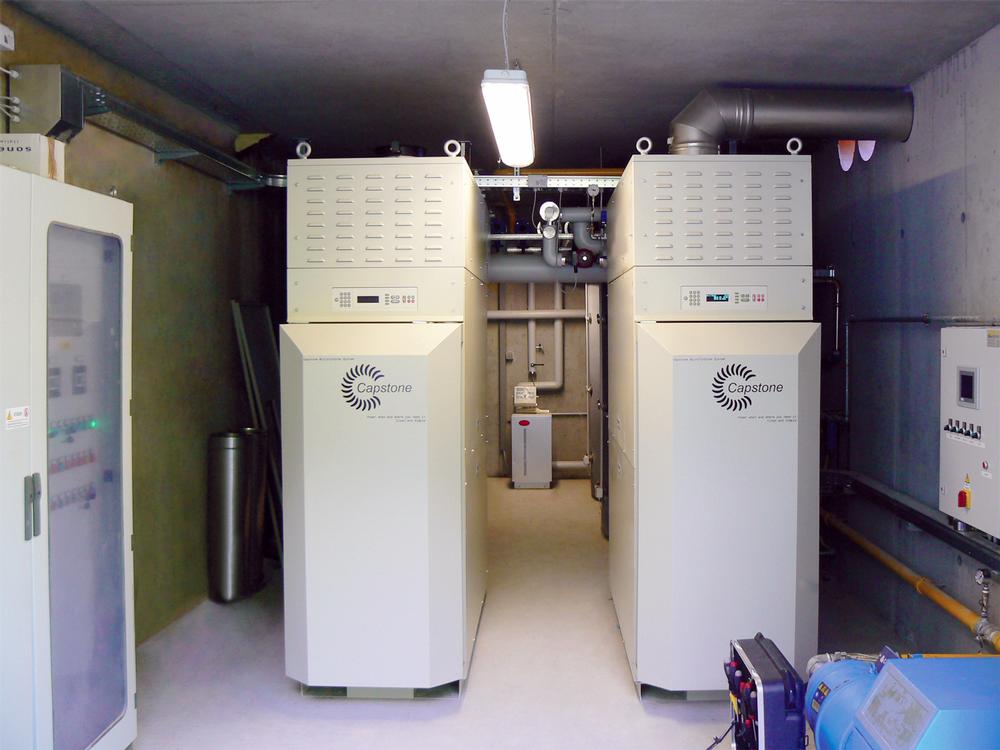
Microturbines are becoming more and more popular among larger sports and leisure sites under pressure to reduce energy bills and minimise their carbon footprint. A microturbine is similar to a miniature jet engine and is contained in a case the size of a standard refrigerator. It has a single moving part supported by air bearings, and can operate on a variety of gaseous or liquid fuels.

The Sports Centre De Scheg in the Netherlands – which has a 400m ice skating track as well as a sub-tropical pool, sauna and competition pool – was struggling to cope with a 17-year-old reciprocating engine. When that eventually gave up, the centre opted for a Capstone C200 microturbine linked to a gas compressor, heat exchanger and industrial ventilator. Hot exhaust air from the microturbine is diverted through the heat exchanger to increase overall efficiency and deliver ultra-low emissions. Other benefits include low noise levels, low maintenance costs and increased reliability.

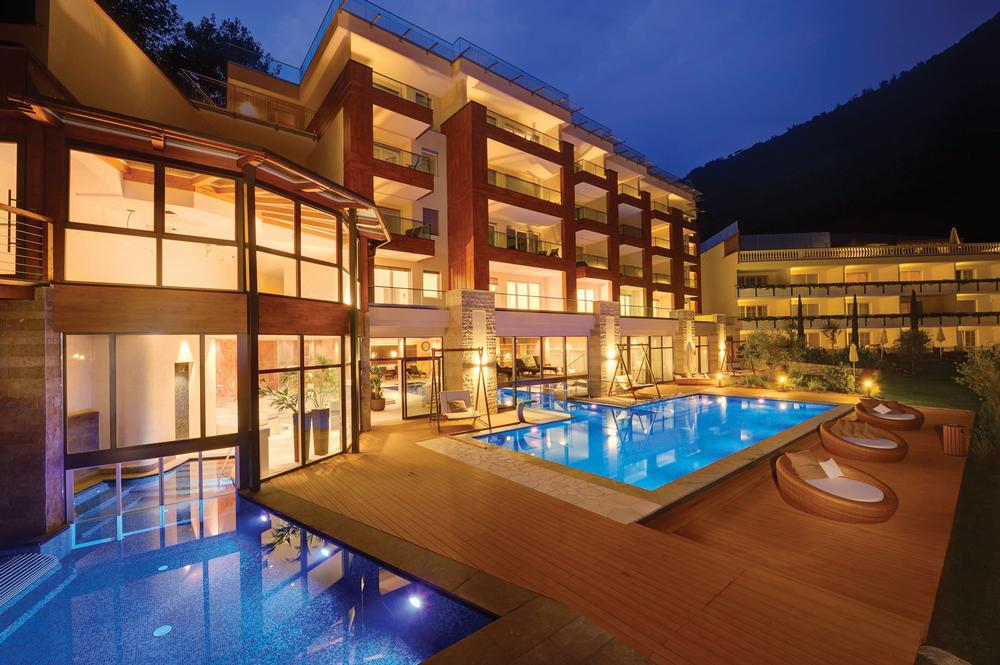
The Quellenhof Sport and Wellness Resort in Italy is another convert to microturbines. With 150 rooms, 20 spas, eight saunas and 20 swimming pools, it’s a significant energy consumer. Having relied on traditional boilers and local utility companies for its heating requirements, the family-owned firm took the decision in 2010 to install two Capstone C65 ICHP microturbines, with heat recovery modules installed on each unit to capture any wasted heat. Not only has the resort reduced its carbon dioxide emissions by 800 tonnes a year, but it’s also saved E75,000 a year – some E10,000 of which is in reduced maintenance costs. The return on the initial investment was achieved within three years.

And if you can’t afford that?
While these state-of-the-art systems look set to provide benefits to places like De Scheg and Quellenhof for years to come, just because you’re not in a position to make a similar outlay doesn’t mean you can’t do anything about your energy consumption. What many owners and managers don’t realise is the controls managing and operating these systems can be every bit as important as the systems themselves. The most advanced system in the world will still yield disappointing returns if it’s not managed properly, while the intelligent application of controls can squeeze savings out of the most antiquated boiler.

The Carbon Trust, a government body set up to advise businesses on ways of reducing carbon emissions, estimates that up to 90 per cent of heating, ventilation and air conditioning building control systems are inadequate in some way, at an annual cost to industry of over £500m. According to its findings, fitting a full set of controls to an older heating system that previously had none can save over 15 per cent on energy bills.

Controls can range from a simple timer bought from a DIY shop to a full building control system. Increasingly, facility managers and those responsible for maintaining large buildings such as schools, offices, hotels, leisure centres and health clubs are turning towards Building Automation Systems (BAS). These are centralised, interlinked networks of hardware and software that monitor and control the environment. The system ensures the operational performance of the facility as well as the comfort and safety of building occupants.

Typically, such control systems are installed in new buildings or as part of a renovation where they replace an outdated control system. Most of the automation comes in the form of devices mounted to equipment, or hidden underfloor or in the ceiling, and some personalised control can be added through thermostat-like devices.

From a central management perspective, the BAS resides as software on a computer or as a web page. Different controllers manage the equipment and the various parts of the network, while sensors provide input data to the controllers.

What’s your strategy?
It’s clear there are some exciting systems, and increasingly sophisticated controls that make the most of their potential. But what shines through is that, whatever system you have or can afford, an energy strategy is key to successfully managing your energy costs.

Before you can programme your systems and controls, or instruct your staff when to switch off the lights or turn down the heating, you need to ask yourself some basic questions. When do you want the lights on? What lighting is essential for security? When should the heating come on, and at what time does the building need to be at its optimum temperature? What temperature do you want your pool to be set at? This could vary according to your customer profile – for example, competitive swimmers prefer training in a cooler pool than schoolchildren might like.

Take nothing for granted and challenge every assumption, no matter how long you’ve held it. The rewards are out there and can be yours for the taking.

ABOUT THE AUTHOR

Simon Wright
Simon Wright
Simon Wright,

Finance Director,

Pure World Energy


Simon Wright is Finance Director of Pure World Energy, a specialist energy consultancy that aims to give its clients real, long-term control over their energy expenditure without the need for capital investment or additional resource. Pure World Energy installs the technology and resources needed to implement the ongoing analysis, optimisation and generation of energy; it is remunerated through the savings it makes for its clients.

W: www.pureworldenergy.com
T: @pwtenergy
Sign up here to get HCM's weekly ezine and every issue of HCM magazine free on digital.
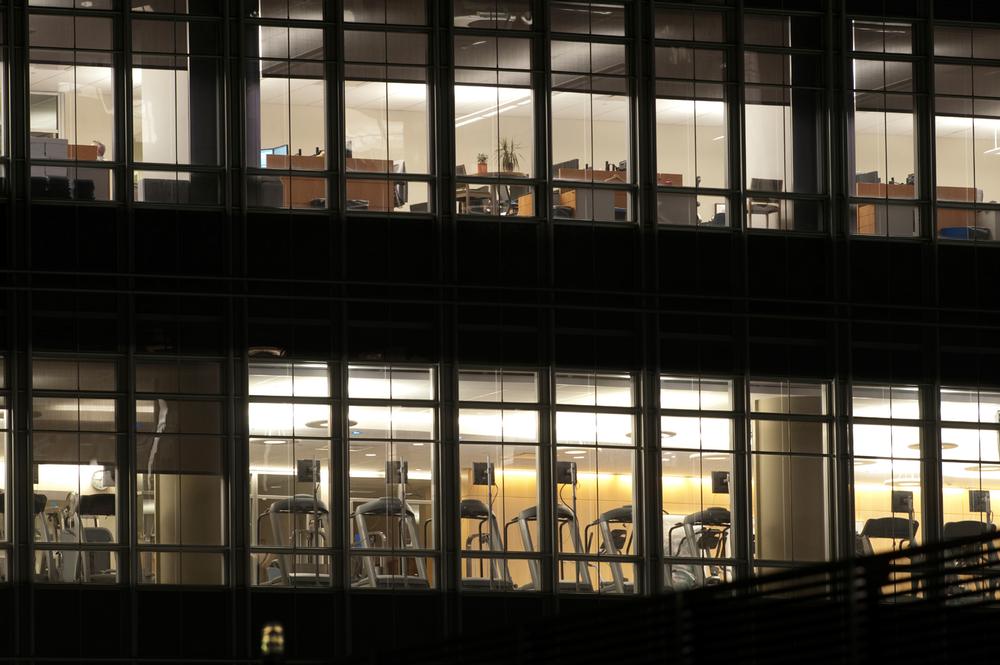
Health clubs can make huge savings simply by turning their lights off overnight
Pools are a major contributor to a facility’s energy costs as they need year-round heating / photo: www.shutterstock.com
Sports Centre de Scheg in the Netherlands offers a 400m ice skating rink
Quellenhof and de Scheg’s microturbines allow for heat recovery and exchange
Quellenhof Sport and Wellness Resort’s 20 pools mean energy demands are high
https://www.leisureopportunities.co.uk/images/909766_949348.jpg
How to knock thousands of pounds off leisure facilities’ energy bills without compromising service
Simon Wright of energy consultancy Pure World Energy ,Energy, electricity, gas, bills, Simon Wright, Pure World Energy
HCM magazine
Raphael Cuomo explores the powerful link between addiction, health and behaviour change
HCM magazine
I experienced a blissful feeling of joy I hadn’t felt since I was a kid
HCM magazine
HCM People

Stephen Price

Founder, SP&Co Group
Working in public health over the last few years has lit up parts of my brain again
HCM magazine
For every member with a tripod and a big following, there are others irritated at the way equipment is being hogged or wary they’ll be in the background on someone’s Insta feed. Do influencers offer valuable, free marketing or are they just a nuisance? Kath Hudson finds out how operators are responding
HCM magazine
Collaborations with the medical profession and greater aspirations around wellbeing are creating a need for more experts in our sector. It’s time to reboot our thinking around the workforce
HCM promotional features
Sponsored
Starpool supports Olympic champion Marcell Jacobs, says Riccardo Turri
HCM promotional features
Sponsored
Greg Bradley looks at the shift towards strength training in gyms and advises on how operators can create the ultimate training environment
HCM promotional features
Sponsored
SnowDome Fitness has added 50 per cent more space with cutting-edge Technogym solutions
HCM promotional features
Sponsored
Third Space partnered with IndigoFitness to deliver a bespoke training space for its new club at The Whiteley
HCM promotional features
Sponsored
Find out how your gym can tap into the corporate wellness boom
HCM promotional features
Sponsored
David Lloyd is stepping up its commitment to women’s health as it continues to explore what fit-for-purpose looks like for the female population
HCM promotional features
Sponsored
EGYM has opened a new HQ in Paternoster Square, London and revealed a range of new launches
HCM promotional features
Sponsored
New launch, Salus House, elevates boutique wellness with high service levels and a partnership with Technogym
HCM promotional features
Sponsored
Active IQ is calling for greater accountability in online fitness advice with the launch of a new trustmark
HCM promotional features
Latest News
Peloton has made the strategic acquisition of Pilates start-up, Skōp, to support the expansion of ...
Latest News
Crunch Fitness has announced the launch of Crunch Reform Pilates – its own reformer concept ...
Latest News
The 20th State of the Industry Report from LeisureDB has revealed a resilient, expanding and ...
Latest News
Purpose Brands has announced its entry into the Italian market, having sold the franchise rights ...
Latest News
Fitness First UK is integrating red light therapy into its yoga and Pilates classes through ...
Latest News
Nuffield Health has told HCM that it takes its responsibilities towards its colleagues seriously and ...
Latest News
Technogym has announced the launch of the Run X World Treadmill Championship, the first world ...
Latest News
Shocked by the UK loneliness statistics, charitable trust Mytime Active has been doubling down on ...
Opinion
promotion
Strength training has moved from the margins to the mainstream.
Opinion: Building smarter strength spaces for today’s operators
Featured supplier news
Featured supplier news: Supporting long-term health: why whole body vibration belongs in clinical settings
As healthcare continues to shift towards prevention, there’s a growing focus on helping people stay active, independent and feeling good for longer.
Featured supplier news
Featured supplier news: Reaching the people most gyms miss: Bedford Gym & Swim Campaign delivers 410 new members
One of the biggest mistakes the fitness industry still makes is advertising almost exclusively to people who already look and live like gym members.
Company profiles
Company profile: Les Mills UK
Every week, millions of people get fit in 21,000 clubs, across 100 countries with the ...
Company profiles
Company profile: Kodobi Ltd
Running a fast-paced fitness business while ensuring safety and compliance is no easy feat. That’s ...
Supplier Showcases
Supplier Showcase - Future-proofing
Catalogue Gallery
Click on a catalogue to view it online
Featured press releases
GLL press release: GLL joins National Year of Reading as research reveals books beat social media for post-exercise recovery
GLL, the charitable social enterprise operating Libraries and Leisure Centres across the UK, has today (9 June 2026) announced that it will be supporting the National Year of Reading as a major campaign partner alongside national organisations, including BBC Sport, Audible, DC Thomson and Tesco.
Featured press releases
BLK BOX press release: Inside the build: Ironbound
When brothers Patrick and Kevin first approached BLK BOX, they had a vision and an unusual space. Beneath a building in Embrach, Switzerland, sat an underground facility with huge potential. What it needed was the right layout, the right equipment, and a partner who understood functional fitness.
Directory
Spa and beauty equipment
Oakworks Inc: Spa and beauty equipment
Industrial washing machines
Miele Company Limited: Industrial washing machines
Fitness tracking platform
SpiviTech: Fitness tracking platform
Lockers
Crown Sports Lockers: Lockers
Water experiences and hydrotherapy solutions
Aquaform s.r.l.: Water experiences and hydrotherapy solutions
Hot tubs
MSpa International Ltd: Hot tubs
Property & Tenders
Stratford, East London.
Lee Valley Regional Park Authority
Property & Tenders
Y Felinheli, LL56 4QN
Newmark
Property & Tenders
Diary dates
13-13 Jun 2026
Worldwide, Various,
Diary dates
21-24 Sep 2026
The Langham Huntington Pasadena , Pasadena, United States
Diary dates
06-08 Oct 2026
Messe Stuttgart, Stuttgart, Germany
Diary dates
22-22 Oct 2026
QEII Conference Centre, London,
Diary dates
26-29 Oct 2027
Koelnmesse Exhibition Centre, Cologne, Germany
Diary dates

features

Energy: No pain, just lots to gain

Adopting a more intelligent approach to your energy usage can save thousands of pounds a year without compromising service. Simon Wright of energy consultancy Pure World Energy shares his top tips for leisure operators

By Simon Wright , Pure World Energy | Published in Health Club Management 2015 issue 5
Before installing solar panels, check which way the roof faces: the closer the alignment to south, the more electricity generated / www.shutterstock.com

Anyone who runs a health club, especially if it comes with a swimming pool, will be no stranger to eye-watering energy bills. It’s one of the sizeable operating costs all owners face, and despite recent dramatic falls in the price of oil, long-term energy costs continue to rise. According to the Office for National Statistics, the past decade has seen energy costs rise 52 per cent above the rate of inflation. Electricity alone has risen by 130 per cent since 2000 – approximately four times the rise in the retail price index over the same period.

It’s easy to feel powerless about these costs in the face of global geo-political trends, and club owners often assume there’s little they can do to reduce their energy bills without compromising service and potentially upsetting members: no-one likes a pool that’s too cold or towel warmers that have been turned off as part of an economy drive.

But the fact is that, alongside some exciting new technology, there are many straightforward, simple steps owners and managers can take that will drastically reduce their bills without affecting the quality of service they extend to their customers.

Out of sight, out of mind?
Many club owners would be shocked to discover just how much of their monthly energy bill can be attributed to sheer thoughtlessness. A recent example was a health club where the lights and heating were left on 24 hours a day for the cleaners, even though they didn’t come in until 5.00am. In another instance, a leisure centre was keeping the pool heating and air handling on constantly, simply because a duty manager had changed the settings six months previously and no-one had remembered to change them back.

Because the plant operating these essential services is often out of sight and therefore out of mind, it tends to be overshadowed by the more visible front of house facilities when it comes to operational decisions, investment and allocating funds for ongoing refurbishment. What’s becoming increasingly clear, though, is that by adopting a proactive approach to energy management, clubs of all sizes are able to significantly reduce their costs.

Steve Bambury, head of commercial operations at 1Life – which won the Go Green ukactive FLAME Award 2014 – says “ongoing proactive energy management is essential for the long-term control of energy consumption and costs”. 1Life’s programme to optimise its building controls contributed to a 12 per cent reduction in energy consumption. This contributed to 1Life rising to seventh in the CRC league tables – the highest position by a leisure company.

What are you paying?
Energy experts identify three key areas where an impact can be made. The first is price: what you’re actually paying for the energy you use. The second is the energy hardware, namely the systems and controls you use to introduce energy into your facility. And the final area is energy strategy, which is about the way you use the hardware to deliver the energy you’ve purchased.

Energy price is the amount you’re charged for the electricity, oil, gas and water you use. The first step towards regaining control of your costs is to familiarise yourself with your bill and understand the breakdown of your charges. Some suppliers bundle everything together, while others break bills down into different components, with significantly different prices charged for different times of the day. It’s by no means uncommon to be charged four times more for a unit of energy at certain peak times, such as late afternoon or early evening, than at others.

If you’re a larger organisation, you may be liable for TRIAD charges. This is where huge premiums, sometimes exceeding £30/kwh as against the normal 10p/kwh, are charged during three key half-hour periods each year.

You may not be able to negotiate these charges down, but knowing what they are and planning your energy usage with them in mind can make a huge difference. Shop around, or work with an independent broker to secure the best deal. Energy companies make millions of pounds a year out of customer apathy and ignorance, from people who could be buying their energy more intelligently but don’t bother and settle unquestioningly for the first package they’re offered.

Investing in hardware
Energy hardware covers everything that delivers and controls your energy supply. It can range from a light bulb to full-scale plant room solutions such as Combined Heat and Power (CHP), which involves simultaneously producing electricity and heat from a single fuel source, such as natural gas, biomass, biogas, ground source, coal, waste heat or oil. For a club with a pool, which needs heating all year round, CHP can significantly reduce energy costs and carbon footprint.

Solar photo-voltaic panels have gained a lot of publicity in recent years. As their name suggests, they generate electricity from the sun, resulting in no fuel costs and virtually no maintenance costs. Installing Solar PV panels is supported by the government’s Feed-In-Tariff scheme, and while the rates for the scheme have dropped over the last three years, this has been more than matched by falling implementation costs.

However, any health club considering going down this route should first ask themselves whether they have the rights to put panels on the roof, and also consider the direction their roof faces. Put simply, the closer the alignment to south, the more electricity will be produced. Finally, they should check there are no obstructions, such as adjoining buildings, that will block the sun from hitting the panels.

Microturbines are becoming more and more popular among larger sports and leisure sites under pressure to reduce energy bills and minimise their carbon footprint. A microturbine is similar to a miniature jet engine and is contained in a case the size of a standard refrigerator. It has a single moving part supported by air bearings, and can operate on a variety of gaseous or liquid fuels.

The Sports Centre De Scheg in the Netherlands – which has a 400m ice skating track as well as a sub-tropical pool, sauna and competition pool – was struggling to cope with a 17-year-old reciprocating engine. When that eventually gave up, the centre opted for a Capstone C200 microturbine linked to a gas compressor, heat exchanger and industrial ventilator. Hot exhaust air from the microturbine is diverted through the heat exchanger to increase overall efficiency and deliver ultra-low emissions. Other benefits include low noise levels, low maintenance costs and increased reliability.

The Quellenhof Sport and Wellness Resort in Italy is another convert to microturbines. With 150 rooms, 20 spas, eight saunas and 20 swimming pools, it’s a significant energy consumer. Having relied on traditional boilers and local utility companies for its heating requirements, the family-owned firm took the decision in 2010 to install two Capstone C65 ICHP microturbines, with heat recovery modules installed on each unit to capture any wasted heat. Not only has the resort reduced its carbon dioxide emissions by 800 tonnes a year, but it’s also saved E75,000 a year – some E10,000 of which is in reduced maintenance costs. The return on the initial investment was achieved within three years.

And if you can’t afford that?
While these state-of-the-art systems look set to provide benefits to places like De Scheg and Quellenhof for years to come, just because you’re not in a position to make a similar outlay doesn’t mean you can’t do anything about your energy consumption. What many owners and managers don’t realise is the controls managing and operating these systems can be every bit as important as the systems themselves. The most advanced system in the world will still yield disappointing returns if it’s not managed properly, while the intelligent application of controls can squeeze savings out of the most antiquated boiler.

The Carbon Trust, a government body set up to advise businesses on ways of reducing carbon emissions, estimates that up to 90 per cent of heating, ventilation and air conditioning building control systems are inadequate in some way, at an annual cost to industry of over £500m. According to its findings, fitting a full set of controls to an older heating system that previously had none can save over 15 per cent on energy bills.

Controls can range from a simple timer bought from a DIY shop to a full building control system. Increasingly, facility managers and those responsible for maintaining large buildings such as schools, offices, hotels, leisure centres and health clubs are turning towards Building Automation Systems (BAS). These are centralised, interlinked networks of hardware and software that monitor and control the environment. The system ensures the operational performance of the facility as well as the comfort and safety of building occupants.

Typically, such control systems are installed in new buildings or as part of a renovation where they replace an outdated control system. Most of the automation comes in the form of devices mounted to equipment, or hidden underfloor or in the ceiling, and some personalised control can be added through thermostat-like devices.

From a central management perspective, the BAS resides as software on a computer or as a web page. Different controllers manage the equipment and the various parts of the network, while sensors provide input data to the controllers.

What’s your strategy?
It’s clear there are some exciting systems, and increasingly sophisticated controls that make the most of their potential. But what shines through is that, whatever system you have or can afford, an energy strategy is key to successfully managing your energy costs.

Before you can programme your systems and controls, or instruct your staff when to switch off the lights or turn down the heating, you need to ask yourself some basic questions. When do you want the lights on? What lighting is essential for security? When should the heating come on, and at what time does the building need to be at its optimum temperature? What temperature do you want your pool to be set at? This could vary according to your customer profile – for example, competitive swimmers prefer training in a cooler pool than schoolchildren might like.

Take nothing for granted and challenge every assumption, no matter how long you’ve held it. The rewards are out there and can be yours for the taking.

ABOUT THE AUTHOR

Simon Wright
Simon Wright
Simon Wright,

Finance Director,

Pure World Energy


Simon Wright is Finance Director of Pure World Energy, a specialist energy consultancy that aims to give its clients real, long-term control over their energy expenditure without the need for capital investment or additional resource. Pure World Energy installs the technology and resources needed to implement the ongoing analysis, optimisation and generation of energy; it is remunerated through the savings it makes for its clients.

W: www.pureworldenergy.com
T: @pwtenergy

Sign up here to get HCM's weekly ezine and every issue of HCM magazine free on digital.
Health clubs can make huge savings simply by turning their lights off overnight
Pools are a major contributor to a facility’s energy costs as they need year-round heating / photo: www.shutterstock.com
Sports Centre de Scheg in the Netherlands offers a 400m ice skating rink
Quellenhof and de Scheg’s microturbines allow for heat recovery and exchange
Quellenhof Sport and Wellness Resort’s 20 pools mean energy demands are high
https://www.leisureopportunities.co.uk/images/909766_949348.jpg
How to knock thousands of pounds off leisure facilities’ energy bills without compromising service
Simon Wright of energy consultancy Pure World Energy ,Energy, electricity, gas, bills, Simon Wright, Pure World Energy
Latest News
Peloton has made the strategic acquisition of Pilates start-up, Skōp, to support the expansion of ...
Latest News
Crunch Fitness has announced the launch of Crunch Reform Pilates – its own reformer concept ...
Latest News
The 20th State of the Industry Report from LeisureDB has revealed a resilient, expanding and ...
Latest News
Purpose Brands has announced its entry into the Italian market, having sold the franchise rights ...
Latest News
Fitness First UK is integrating red light therapy into its yoga and Pilates classes through ...
Latest News
Nuffield Health has told HCM that it takes its responsibilities towards its colleagues seriously and ...
Latest News
Technogym has announced the launch of the Run X World Treadmill Championship, the first world ...
Latest News
Shocked by the UK loneliness statistics, charitable trust Mytime Active has been doubling down on ...
Latest News
Portugal’s leading operator, SC Fitness, is celebrating a milestone by reaching 100 gyms.  The company ...
Latest News
Australia’s fast-growing fitness network, Viva Leisure, is adding a low-cost gym brand to its already ...
Latest News
Speedflex has launched a strength training programme for 10 to 16-year-olds, to make it safer, ...
Opinion
promotion
Strength training has moved from the margins to the mainstream.
Opinion: Building smarter strength spaces for today’s operators
Featured supplier news
Featured supplier news: Supporting long-term health: why whole body vibration belongs in clinical settings
As healthcare continues to shift towards prevention, there’s a growing focus on helping people stay active, independent and feeling good for longer.
Featured supplier news
Featured supplier news: Reaching the people most gyms miss: Bedford Gym & Swim Campaign delivers 410 new members
One of the biggest mistakes the fitness industry still makes is advertising almost exclusively to people who already look and live like gym members.
Company profiles
Company profile: Les Mills UK
Every week, millions of people get fit in 21,000 clubs, across 100 countries with the ...
Company profiles
Company profile: Kodobi Ltd
Running a fast-paced fitness business while ensuring safety and compliance is no easy feat. That’s ...
Supplier Showcases
Supplier Showcase - Future-proofing
Catalogue Gallery
Click on a catalogue to view it online
Featured press releases
GLL press release: GLL joins National Year of Reading as research reveals books beat social media for post-exercise recovery
GLL, the charitable social enterprise operating Libraries and Leisure Centres across the UK, has today (9 June 2026) announced that it will be supporting the National Year of Reading as a major campaign partner alongside national organisations, including BBC Sport, Audible, DC Thomson and Tesco.
Featured press releases
BLK BOX press release: Inside the build: Ironbound
When brothers Patrick and Kevin first approached BLK BOX, they had a vision and an unusual space. Beneath a building in Embrach, Switzerland, sat an underground facility with huge potential. What it needed was the right layout, the right equipment, and a partner who understood functional fitness.
Directory
Spa and beauty equipment
Oakworks Inc: Spa and beauty equipment
Industrial washing machines
Miele Company Limited: Industrial washing machines
Fitness tracking platform
SpiviTech: Fitness tracking platform
Lockers
Crown Sports Lockers: Lockers
Water experiences and hydrotherapy solutions
Aquaform s.r.l.: Water experiences and hydrotherapy solutions
Hot tubs
MSpa International Ltd: Hot tubs
Property & Tenders
Stratford, East London.
Lee Valley Regional Park Authority
Property & Tenders
Y Felinheli, LL56 4QN
Newmark
Property & Tenders
Diary dates
13-13 Jun 2026
Worldwide, Various,
Diary dates
21-24 Sep 2026
The Langham Huntington Pasadena , Pasadena, United States
Diary dates
06-08 Oct 2026
Messe Stuttgart, Stuttgart, Germany
Diary dates
22-22 Oct 2026
QEII Conference Centre, London,
Diary dates
26-29 Oct 2027
Koelnmesse Exhibition Centre, Cologne, Germany
Diary dates
Search news, features & products:
Find a supplier:
We Work Well Events
We Work Well Events
Partner sites